Uncategorized

UCT in the process of renaming Smuts Hall

NYAKALLO TEFU|

The University of Cape Town (UCT) says it will start the process of renaming the Smuts Hall residence. 

Smuts Hall residence was named after General Jan Smuts, a South African lawyer and statesman who ultimately became deputy prime minister of the Union of South Africa.

During the war, Smuts was Minister of Defence, Finance and Mines. He served for a time in German South West Africa before commanding the Imperial forces in East Africa for ten months in 1916.

UCT management met at the weekend where they deliberated on changing the name of the student residence on the upper campus.

READ: UCT burns: Classes suspended for the next two days

There are many creative possibilities for reimagining the UCT campus in ways that will build inclusivity and look to the future, they said.

“Over the coming months, UCT will be holding discussions across the campus community about the new name for the Upper Campus Residence, as well as for other buildings,” said the university in a statement.

On Monday, a group of Student Representative Council (SRC) members demonstrated outside the institution calling for the name to be changed. They had been campaigning for the name change for three months. 

UCT council chairperson Babalwa Ngonyama said this indicated how far the institution had come under the current executive leadership since the time of #RhodesMustFall.

“Council’s decision will take immediate effect and the name Smuts Hall will be removed from the residence and in the interim the name Upper Campus Residence will be used until the process of determining a new name was formally concluded,” said Ngonyama.

Adding that the changing of names should not be seen as merely replacing what we do not like with what we feel resonates well with us or what we feel we relate better to.

“It should go beyond the view that the names we are changing is a source of discomfort or pain for those advocating for change,” she said.

The post UCT in the process of renaming Smuts Hall appeared first on Inside Education is where you will find the latest education features and news, full coverage in learning, skills, educational methods including teach and leadership..

Uncategorized

‘The country’s vaccination programme is classist’, UJ study

NALEDI SHOTA| 

Research by the University of Johannesburg (UJ)  has found that in some communities there is hesitancy about the Covid-19 vaccine programme because of  lack of information from the government about vaccination. 

The UJ Social Change Vaccine Rollout Project was conducted in May under the leadership of Professor Kate Alexander, South African Research Chair in Social Change, and published earlier this month. 

A researcher spent three weeks at Protea South, an informal settlement in Soweto. And it is in this community that the research uncovered that some people did not take vaccination seriously and turned it into “ political jokes”, while other people said they would vaccinate when they saw other people doing so. 

“The researcher met with a group of four sangomas, of whom three were opposed to vaccination and only one was in favour. They each had between five and 20 clients a day, so could be ‘influencers’ but also a potential vector for transmission. They did not understand ‘waves’ and were angry about their exclusion from education around the vaccine,” reads the research. 

The research also uncovered that it was difficult for people who wanted to vaccinate to register in that area. There were Community Health Workers who went door to door to register using paper and pencil. 

“Using pencil and paper to register is laborious and some people complained they had registered but had not received an acknowledgment on their phone. The system could be improved by using cheap smartphones to register people. Greater use could be made of unemployed youth, but most of them are hungry and need food.” 

READ: Africa countries have highest global death rate among critically ill Covid-19 patients – says study

The research found that people in poorer communities do not have the right information “to make informed decisions about vaccination”. It found that people with smartphones and computers could read information online in English but this was not the case for people in Protea South. 

According to the research communities like Protea South need information in posters on walls and flyers in their own language, and also coverage on radio and TV. 

“…Even though it is free and relatively easy to register by phone, the steps are not adequately conveyed and, again, messaging has prioritised an online process. People without access to any kind of phone, and there are still many of them, must not be excluded from information and registration,”  reads the research. 

The research  revealed that some people in that community did not have the means to travel to the vaccination site. According to the research, to get to the vaccination site in Lenasia clinic people have to take two taxis at a cost of R44. 

“This is too much for most people in the settlement, so unless transport is provided many will be left unvaccinated, even though they want to be safe, and some will doubtless die as a consequence.

“People with cars and petrol money can drive around vaccination sites until they find a relatively short queue for ‘walk-ins’. This is not possible for poor people, who, as seen in this case study, do not have the funds to reach their nearest site, let alone go from one to another.” 

Some of the recommendations by the research is that the government needs to make transport available to poorer people in order for them to reach vaccination sites. Recruit young people who can help with education and registration, and also provide them with smartphones and data in order to register people

“The position facing the poor of Protea South is very different from that confronting the middle classes in Africa’s richest city. Defeating the virus is not only about securing vaccines, it is also about combatting class division,”  reads the research. 

The post ‘The country’s vaccination programme is classist’, UJ study appeared first on Inside Education is where you will find the latest education features and news, full coverage in learning, skills, educational methods including teach and leadership..

Uncategorized

All systems go for the basic education vaccination programme

NALEDI SHOTA|

By the end of the two weeks of the vaccination programme in the basic education sector, 90 480 jabs would have been administered nationally. 

Basic Education Minister Angie Motshekga announced at a press briefing on Saturday that 582 000 people in the sector will be vaccinated from Wednesday until 8 July. The number includes all teachers in public and private schools as well as administrative and support staff in public schools. 

According to the sector’s vaccine plan document, which the department shared on Saturday, the majority of the people that are going to be vaccinated are teachers in public schools at 395 682.

The majority of these teachers are found in the Eastern Cape (52 844), Gauteng (71 276) and KwaZulu-Natal (92 995). 

There are 40 100 teachers from private schools that will be vaccinated. 

While there are 104 111 non-educators’ staff at public schools that will receive the jab, followed by 42 671 school governing body employed teachers, Early Childhood practitioners employed at public schools.

READ: Union calls for educators not to go to work for two days

On Saturday acting Director-General at the department, Granville Whittle, said that the details of all people employed by government and of SGB employed teachers, as well as those teachers from private schools has been provided to the Department of Health. He said as a result, these people do not need to register to vaccinate. 

However, he said anyone not registered on the system will not be vaccinated.  

“We are talking to health about exceptions that we can pick up as part of a mop up,” he said. 

Whittle said the process of vaccination will also include people over 60 even though they do qualify at the moment for the general population programme. 

The distribution of vaccines to the provinces happened on Monday and Tuesday. 

There will be 281 sites nationally. KwaZulu-Natal accounts for the province with the most sites at 69, followed by the Eastern Cape (41), Limpopo (37) and Free State (29). 

Whittle said there were talks that Gauteng does not have enough sites and that the province was working to rectifying that. 

In a statement on Monday, the Gauteng Department of Education said it had 46 vaccine sites, this is up from 25 that was presented at the Saturday briefing. 

Whittle said mobile sites, instead of fixed sites, will be used in provinces such as the Eastern Cape in order to accommodate people in far flung rural areas.

He said the Eastern Cape has identified a lot of schools as vaccination sites. 

“We are very happy with the progress of the Eastern Cape,” he said. 

He added that the Free State province is at an advanced level in terms of its sites and that the department did not expect any problems in that province. This was the same with KZN. 

Whittle raised concerns about the preparedness of the Northern Cape. He said because of the geographic size of that province, “we are concerned about the long distances so there is additional support that we will provide to the Northern Cape”. 

The department will liaise with principals about the appointment of the school for vaccination. 

READ: The basic education sector to start its vaccination programme on Wednesday

The vaccination plan document states that teachers will not be provided with transport to vaccination sites. 

However, Whittle said schools have been encouraged to make a plan for teachers who might not have the means to reach the sites. 

“We are saying to schools that when it is difficult for teachers to access these sights on their own, then they make a plan to ensure that teachers get to the sites,” he said.  

Uber has offered 100 000 free rides to teachers in the metros to get into the vaccination sites, according to the vaccination plan document. 

Gauteng MEC for Education Panyaza Lesufi will be vaccinated with the first batch of educators in the province on Wednesday at Rabasotho Community Hall in Tembisa.

In a statement spokesperson of the Department of Education Steve Mabona said Lesufi will be joined by the Head of Department Edward Mosuwe, senior management, and representatives from various teacher unions. 

Meanwhile, the KwaZulu-Natal department has said that MEC for Education Kwazi Mshengu will be making a “ground-breaking announcement” on the vaccination of teachers on Wednesday in Umlazi. 

In a statement released on Monday, Motshekga said for the two weeks school communities need to “drop all and vaccinate”.

“We need to work extremely hard and around the clock to vaccinate as many people as possible as sector,” she said. 

READ: Basic education minister says not to worry about the return of school children to full-time classes

In an interview with Inside Education, a teacher based in the Free State who asked not to be named for fear of being victimised said he is willing to be vaccinated.

“We were sent messages by the department [of basic education] and were asked whether we want to be vaccinated or not. The consensus is that we want to be vaccinated because the kids (sic) carry diseases, so it is very easy to fall sick when you work with children.

“The main concern is around the vaccines that will be used. We do not want the contaminated vaccines that we heard about last week or even the ones that were found to cause blood clots.

“Having said that, everybody is willing. We are willing participants in this. However, we are just worried about the fact that they might give us vaccines that have not been properly tested,” said the teacher.

The post All systems go for the basic education vaccination programme appeared first on Inside Education is where you will find the latest education features and news, full coverage in learning, skills, educational methods including teach and leadership..

Uncategorized

Ntuli brothers set to represent South Africa at the Tokyo Olympics

University of Pretoria’s Nqobile Ntuli and Siphesihle Ntuli are set to compete at the Olympic Games in Tokyo.

Siphesihle is the men’s hockey team’s assistant coach while Nqobile will be on the field.

Siphesihle – who is seven years older than Nqobile – played for South Africa’s U16 & U18 schools team and the U21 national team. 

Siphesihle was part of the South African men’s senior squad but unfortunately suffered a lower back injury which forced him to retire as a player when he was only 23. 

The two brothers both played football at school, but we ended up preferring to play hockey.

READ: Student athletes vaccinated ahead of the Tokyo Olympics

They said their main goal is to compete every time they play.

“It sets us up for individual flair, and who knows what that may lead to. The nice thing about being South Africans is that we know how to ‘fight’,” they said.

Nqobile said for him, playing hockey for South Africa is like being an “ambassador of hope” for those younger than him.

“I want aspiring young black hockey players to take note that anything is possible if you are prepared to put your mind to it.

“In the past, many thought it was an unrealistic goal to play for South Africa. So every time I take to the Astroturf, it feels like I am representing their hopes,” he said.

Nqobile plays as a forward for the South African national team.

He said he and his brother have also represented South Africa at the previous World Cup Tournament, as a player and as a coach.

“Both of us going to the Olympics is going to make my mom and the family proud again,” said Nqobile.

Denied a shot at competing at the Rio Olympics, Siphesihle said they are very excited to be part of the team going to Tokyo.

He said playing in Tokyo will not only be about winning medals but making a more lasting impression for the sport in this country.

READ: ‘Siyaya eJapan, Tokyo here we come,’ say UJ sportsmen, women in SA squad

The post Ntuli brothers set to represent South Africa at the Tokyo Olympics appeared first on Inside Education is where you will find the latest education features and news, full coverage in learning, skills, educational methods including teach and leadership..

Uncategorized

Wits University will compete in the international RoboCup tournament

Wits University students will participate in this year’s 3D RoboCup simulation league tournament – a world cup for soccer robots tournament taking place virtually from 22 – 28 June 2021.

The Wits FC team consists of computer science students from the School of Computer Science and Applied Mathematics (CSAM) in the Faculty of Science and is headed by PhD candidate Branden Ingram and MSc student Andries Bingani.

The team is being supported by Associate Professor Benjamin Rosman and Dr Pravesh Ranchod from the Robotics, Autonomous Intelligence and Learning (RAIL) research group in CSAM.

Up to 24 teams will participate in this league that focuses on AI and team strategy.

Teams are also required to submit a conference-style paper which is reviewed by the RoboCup committee.

RoboCup, the world cup for soccer robots, is a major annual event on the artificial intelligence (AI) and robotics calendar with a goal to advance the state of the art of intelligent robots.

Teams from across the globe compete in different soccer leagues to show their mastery in AI and machine learning. The soccer robots can either be working physical robots or simulation robots.

Rosman said in order for development and innovation to be promoted there is an added requirement that each teams’ contribution contains some element of a novel approach on the problem of RoboCup.

“The code itself should also demonstrate the use and benefit of this new approach,” said Rosman.

Adding that the soccer robots tournament teams are all required to develop and submit a team of independent intelligent moving agents (players) that play soccer on a virtual field inside a computer.

Rosman said RoboCup presents a great opportunity for students to work together as a team and then compete against other students from around the world. Representation from Africa has always been minimal, at best.

“For our team to be able to compete in the tournament is important both for Wits’ representation internationally, and for providing our students with more exposure to international AI and robotics,” said Rosman

Ingram said the Wits FC robotics team have been in development for roughly two years.

Ingram said it was slow going in the beginning as they first had to understand what is available to them to develop their entry.

“Then installing the necessary software packages was difficult at the start but has been worthwhile, they say, because the experienced gained has resulted in them being able to create a far simpler method of doing things.

“These processes were then captured in tutorials that can benefit future Wits teams,” said Ingram.

Bingani said the 3D league increases the realism of the simulated environment by adding an extra dimension and more complex physics.

“We didn’t create the simulation but had to develop the AI and strategy for a group of agents which play within the simulated environment. In other words, we tell the players what to do given a certain situation, but we did not build the stadium they play in,” said Bingani.

According to Rosman these kinds of activities help promote science and technology by providing our students with a fun application of the theory in which they are so deeply immersed in their studies.

“It is an accessible means of outreach to the general public as many of the challenges we tackle in research can be explained in relatable terms,” said Rosman.

Adding that in taking part in RoboCup, they are also hoping to use their experience to help other local universities start their own teams, and then to stablish local leagues and tournaments to further advance science and technology in the region.

The post Wits University will compete in the international RoboCup tournament appeared first on Inside Education is where you will find the latest education features and news, full coverage in learning, skills, educational methods including teach and leadership..

Uncategorized

South Africa needs tech classrooms

We have got to get technology into South Africa’s schools – now. This is according to head of education for the socio-economic development and responsible partnerships at Anglo American Zaheera Soomar.

Soomar said South Africa must do more to embed information and communication technology (ICT) into the country’s schools and curriculums.

She said young people who do not have digital skills and who cannot access the internet will not be equipped to participate in the digital economy. 

“The internet improves the quality of education in many ways. It opens doors to a wealth of information, knowledge and educational resources, increasing opportunities for different approaches to learning in, and beyond, the classroom.

“Learners who are comfortable using everyday technology and devices to access content and to self-learn are far better positioned to build a life outside of school,” said Soomar.

She added that this is critical for any form of economic participation post-secondary school.

READ: 2021 Basic Education Lekgotla: Ramaphosa Calls On DBE To Prioritize Technology Skills Needed For The 4IR

According to United Nations Educational, Scientific and Cultural Organization, the number of poor people in the world could be reduced by more than half if all adults completed secondary education.

In South Africa, education has long been identified as a critical lever in the fight against the country’s triple challenges of poverty, inequality, and unemployment.

A significant number of schools in South Africa have limited to no internet connectivity, which is essential for modern education and school administration.

Research shows that the country’s quintile one to three schools – the poorest schools in the country – do not have access to the devices, skills and bandwidth needed to provide any form of ICT education.

Soomar said there are several reasons for this, including the associated costs and the poor return on investment for internet service providers. However, she said this is a challenge we must be overcome.

“We should aim to provide a meaningful future for our youth that goes beyond employability. Simply getting children through matric is not enough.

“In a country where more than 8.5 million young people are unemployed, we have got to give them the skills they need to survive and thrive in the Fourth Industrial Revolution,” she said.

Soomar said Anglo American has an education programme whose focus is on partnering with teachers to empower them to advance their own technology skills.

She said during 2020, the programme provided over 600 devices and training to teachers in the host community schools.

Now we want to go further and support learners too, she said.

“Earlier this year, we launched our ICT Education Project, where we are working with a range of partners – including infrastructure providers, content creators, device providers, civil society and the Department of [Basic] Education – to build a model for effective ICT in lower-quintile schools that can be scaled across the country,” she said

She added that through the programme’s ICT project and solution, they are taking a strong partnership approach and working very closely with the DBE on a solution.

Soomar said organisations such as The Impact Catalyst, Altron and Cisco are helping to provide infrastructure and connectivity in local schools.

She said the Digital Council is also supporting with best practices and insights that are guiding the initiative while Harambee is helping think through the setup of micro enterprises and sustainable options for these communities.

She added that Accenture, Google and Microsoft have offered to provide software and content solution elements.  

“We are also exploring various other partnerships around devices, maintenance, data and incentive challenges.

“As part of this initiative, Anglo American has committed to repurposing its technology devices for the ICT Education initiative by refurbishing devices no longer required by our employees,” she said.

She said the approach they use is built on years of experience in delivering technology into South African schools.

“The big learning is that it is not enough to focus on one aspect of ICT. One cannot simply provide a room full of devices and think learning will change,” she said.

Adding that we need all the elements to come together.

“We must take teachers with us on the journey, provide the relevant content, ensure the devices and bandwidth are in place, and even give learners the entrepreneurial skills they need to start creating their own small businesses during or post-secondary school.”

The post South Africa needs tech classrooms appeared first on Inside Education is where you will find the latest education features and news, full coverage in learning, skills, educational methods including teach and leadership..

Uncategorized

North West teacher assaulted by a parent in class

NALEDI SHOTA| 

A teacher at a North West primary school was allegedly assaulted by a parent of two learners at the school on claims that she had sent the children back for late coming. 

The incident happened at Phera Primary school in Tsetse village near Mafikeng last Monday. 

MEC for education in the province Mmaphefo Matsemela condemned the incident on Monday afternoon and expressed displeasure with the parent’s behaviour.

In a statement the North West department of education said the 53-year-old female teacher was allegedly assaulted inside a grade six classroom by the mother of two children who are in grades R and four at the school. 

“It is alleged the parent complained last week Thursday on why the teacher turned back her children for coming late. Upon investigation the department found that the two learners never arrived at school as their names did not appear on the screeners register on the said day,” reads the statement. 

The statement further read that a case of assault has been opened with the police, and also that the department has sent a team of psychologists to conduct counselling to both teachers and learners at the school.

“On behalf of the department I would like to strongly condemn the alleged incident against one of our teachers. I am perturbed by the incident and the actions of this specific parent. Our teachers are beacons of hope and should be treated as such for their huge revolutionary role they play in  educating our society,” she said, adding that teachers need to protect teachers. 

The post North West teacher assaulted by a parent in class appeared first on Inside Education is where you will find the latest education features and news, full coverage in learning, skills, educational methods including teach and leadership..

Uncategorized

Limpopo education department concerned about the number of coronavirus cases at schools

NYAKALLO TEFU| 

The education department in Limpopo says it is seeing a sharp increase of reported Covid-19 cases in the at schools particularly in the Capricorn District.

This comes as the country is in the third wave of the coronavirus pandemic, recording over 13 000 cases in the past 24 hours.

53 learners at Marobathota High School in Limpopo tested positive for Covid-19 last week which resulted in the closure the school.

“The school was closed last week for deep cleaning, with lessons initially set to resume on Monday 21 June 2021,” said spokesperson Tidimalo Chuene.

Chuene said however, the department decided that the school remain closed until Thursday 24 June 2021.

READ: Basic education minister says not to worry about the return of school children to full-time classes

In Noordeland High School in Polokwane, six learners tested positive, while at Selelo Primary in Blouberg, six educators tested positive.

Last week, the education department in Limpopo reported that 31 learners and 16 educators tested positive in the Waterberg District.

“We are concerned about the situation at all schools that are reporting positive cases and we will continue to monitor them closely,” added Chuene.

Despite the high number of Covid-19 cases, schools across the country will remain open as announced by Minister of Basic Education, Angie Motshekga.

“We are not insensitive to concerns raised about the rising infections, we need to continue to handle Covid cases according to the differentiated strategy on a school-by-school basis,” said Motshekga. 

The department of education in Limpopo has called for increased vigilance and strict adherence to sanitising, wearing of masks properly and maintain the required social distance.

READ: Malema gives Motshekga seven days to shut down schools as Covid-19 cases rise in children

The post Limpopo education department concerned about the number of coronavirus cases at schools appeared first on Inside Education is where you will find the latest education features and news, full coverage in learning, skills, educational methods including teach and leadership..

Uncategorized

Union calls for educators not to go to work for two days

NYAKALLO TEFU|  

The Educators Union of South Africa (EUSA) has called on teachers across the country to withdraw their labour from Monday 21 June.

The union said this is in protest against the Department of Basic Education (DBE) ’s decision to keep schools open during the third wave of the coronavirus pandemic.

“EUSA calls on teachers to take action against the bully employer by taking by taking two-day sick leave on Monday 21 June and 22 June,” said EUSA’s spokesperson Kabelo Mahlobongwane.

DBE Minister Angie Motshekga at the weekend said schools will remain open until 9 July 2021.

READ: The basic education sector to start its vaccination programme on Wednesday

“I take my cue, with due respect, based on facts and nothing else. So, if parents said children must go to school, I am happy; if teachers said they will be at school, I am happy; if principals say we feel that we can continue, I am happy. That is where I get my mandate, that is where I get my guidance from,” said Motshekga during her briefing on Saturday. 

Concerns have been raised about learners and teachers continuing to go to school regardless of the country officially experiencing its third wave.

Last week, World Health Organization (WHO) Director General Tedros Ghebreyesus said he was worried about African countries as the number of cases seem to be on a rise.

“Cases have increased by 52% just in the past week, and deaths have increased by 32%, and we’re expecting things to only get worse,” said Ghebreyesus.

In the past 24 hours, South Africa recorded 13 155 cases of Covid-19 and 112 new deaths.

Mahlobongwane accused Motshekga of consulting with certain favourable organisations and stakeholders regarding the decision to keep schools open.

Mahlobngwane said this move clearly shows that the lives of teachers and learners are not taken seriously by the minister, her department and the stakeholders she consulted.

During her briefing at the weekend, Motshekga said all provinces agreed that any infection is one too many but that the current situation the sector finds itself in does not warrant that schools should be closed. 

“Should there be infections, there is a strategy to deal with this and that will be on a school to school and province to province basis,” she said.

EUSA has also slammed the DBE’s efforts urging teachers not to take the vaccine.

READ: Basic education minister says not to worry about the return of school children to full-time classes

According to reports, nearly half a million teachers set to be vaccinated starting this week Wednesday.

“We categorically reject any vaccine that is still under trial as teachers are not guinea pigs,” said Mahlobongwane.

Adding that the Minister announced a long time ago that her intention was to test waters with the lives of teachers.

EUSA also advised that government consider vaccines from countries that have proven to have successfully dealt with the virus.

Mahlobongwane said China and Russia are examples of countries that have proven to have dealt with Covid-19 vaccinations successfully.

He said should the department fail to take educators seriously this week when they take sick leave, they will shut down schools physically.

Mahlobongwane did not make clear on how they plan on taking this further. However, he said should the department not respond to their action accordingly by day two, the union will this week head to schools and shut them down.

READ: Unions wait in bated breath for details on the vaccination of educators

The post Union calls for educators not to go to work for two days appeared first on Inside Education is where you will find the latest education features and news, full coverage in learning, skills, educational methods including teach and leadership..

Uncategorized

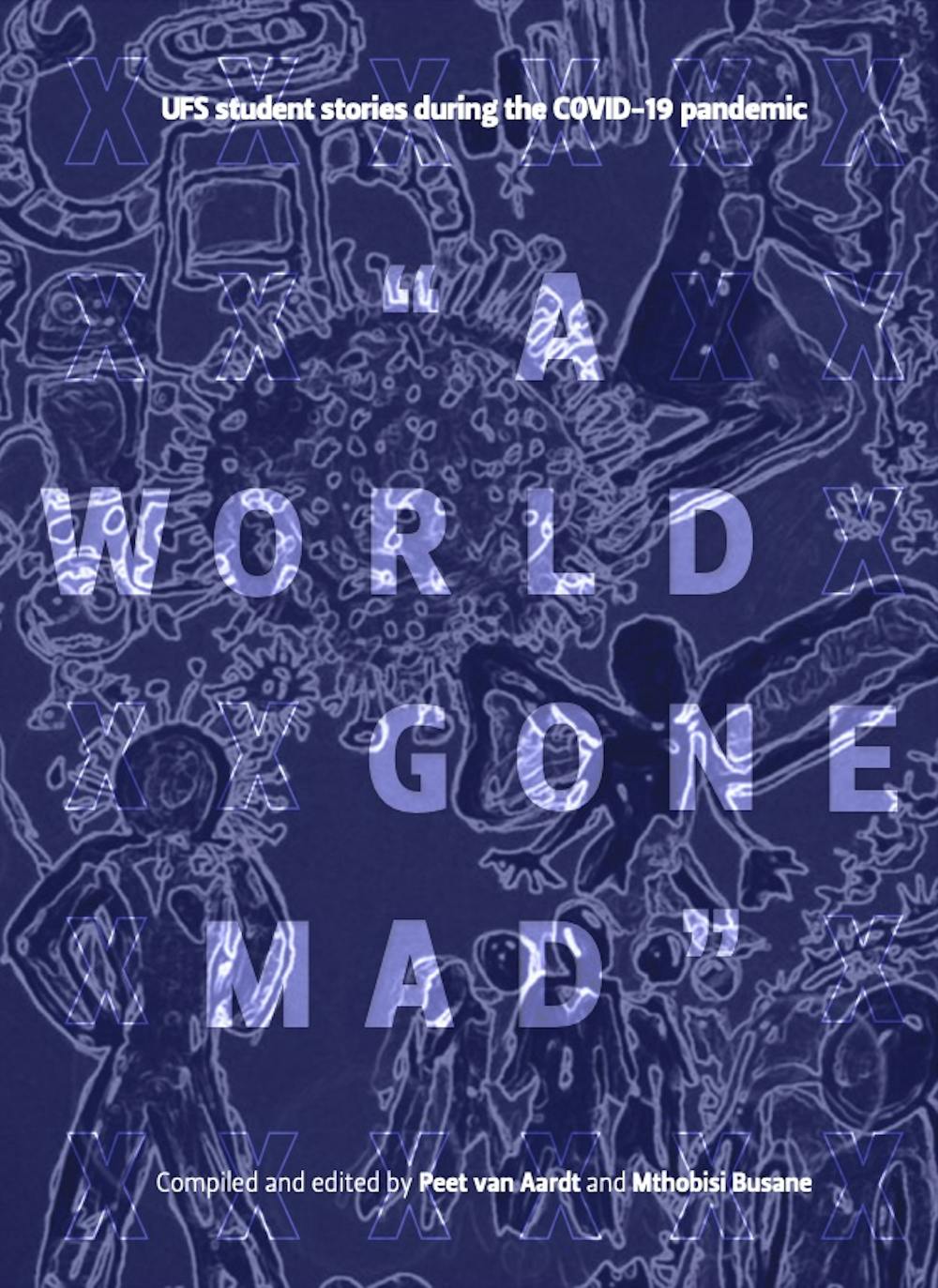
During lockdown, South African students wrote a book about ‘a world gone mad’

PEET VAN AARDT AND BRIAN SIBANDA|  

South African student voices have largely remained unheard in formal discussions around COVID-19. A pandemic that should not be put to waste, COVID-19, on some podiums, is seen as laying the groundwork for germination of seeds of change.

The students in this collection of stories by the Initiative for Creative African Narratives (iCAN, a project within the Academy for Multilingualism at the University of the Free State in South Africa) have refused to be silenced amid this pandemic.

A World Gone Mad is a collection of 15 stories written by the students. All come from rural villages or low income, highly populated settlements on the edge of metropolitan areas (also known as “townships”). Some of them wrote their stories on their cell phones.

In March 2020, when South African president Cyril Ramaphosa announced the country’s first lockdown, students had to evacuate campus and return to their homes. During this lockdown, citizens were not allowed to travel, shops had to close and people had to remain indoors.

The strict rules created fear in people from densely populated areas such as townships, and within the first week the country saw a 30% increase in gender-based violence compared to the previous year.

The students reflecting on the experiences of this life in lockdown are predominantly undergraduate students from all disciplines at the University of the Free State. The project is a decolonisation initiative by the university that motivates students to write short stories that can be published and then used in a transformed curriculum.

iCAN/University of the Free State

The iCAN, now in its fourth year, has published five anthologies. The majority of texts are based on real life experiences, but many students submit purely fictional stories. We decided to include the COVID-19 stories in a separate collection.

Writing can be used as a coping mechanism, a way to digest the world around us. We found that the stories have drawn attention to the experiences of students during the COVID moment.

The stories

In one story, My COVID-19 Nightmare, the writer illustrates the anxieties and prejudice encountered in a small village. When the main character experiences strange behaviour from her neighbours, she learns why on Facebook: One of the Maswanganyi daughters has Corona. She was seen a few days back in hospital coughing to death and she was admitted by the doctor. Now she is back and has infected her whole family. Be careful around them, guys. #staysafe #covid19 #stayathome.

The writer was shocked. She had gone to hospital due to a cough she developed the night before when she wanted to clear her room from mosquitoes with pesticide.

Internet connection and device access has highlighted the gap between the rich and the poor students in South Africa. In the story The COVID-19 Stumbling Block the protagonist is forced to return to the densely populated township of Diepsloot, Gauteng.

She thought she saw her future jumping out of the window when the university introduced an online learning system. She saw it as a waste of time; she had no electronic device other than her cell phone.

Other themes include greeting a loved one at a rushed funeral (The 60 Minute Farewell), one’s belief in God being challenged (Faith is Not Under Lockdown) and having to abandon campus life (A Story of House Akasia).

One student relied on his imagination, painting a bleak picture of a post-COVID world where virtual reality has become safer than real life (Death of the Human Race).

The students also addressed the pandemic within the pandemic: gender-based violence. In Ngenxa Kamama the story is about a mother and daughter trapped inside their house during lockdown with a violent father.

Hope

In A World Gone Mad, the students speak for themselves, presenting the world with an authentic expression of the lived experience. It’s one that negates a Western, canonised form of thinking that views the philosophies and literatures of the global North as the only intellectual authority.

It is our aim to ensure these stories make a considerable contribution to the curriculum and the ongoing efforts to reconstruct knowledge and a sense of being in an effort to decolonise higher education in South Africa.

Some of the texts will form part of the extensive reading component of the English Academic Literacy courses at the university, where students will do online quizzes on the stories. The idea is that students will learn about each other and from each other.

The stories are also a contribution to decolonising languages. In the English language written stories, students have tamed the language to their advantage; they have used it to carry the weight of their experiences. The one written in isiZulu also tells us that these indigenous languages, which are often marginalised and tokenised, are equally valid in carrying lived experiences and have space in higher education.

Lastly, the stories give hope in surviving the pandemics and gesture towards a post-COVID future that is socially and cognitively just.

The post During lockdown, South African students wrote a book about ‘a world gone mad’ appeared first on Inside Education is where you will find the latest education features and news, full coverage in learning, skills, educational methods including teach and leadership..