The City of Johannesburg has introduced weekend operating hours at 11 libraries to provide learners and students with additional study spaces during the final examination period.
The libraries will be open on Saturdays and Sundays from October 24 to November 22, between 09:00 and 14:00.
The libraries include Diepsloot Library, Ivory Park North Library, Linden Library, Florida Library, Jabavu Library, Alexandra 8th Avenue Library, Sandton Library, Glenanda Library, Orange Farm Library, Louisa Prince Public Library in Ennerdale Extension 9, and Johannesburg City Library.
“The initiative aims to give learners and students access to quiet study environments and essential library resources as they prepare for their final examinations,” the city said.
The extended library hours come as the Class of 2026 writes the National Senior Certificate (NSC) exams, which began on 13 October and are scheduled to conclude on 26 November.
In Gauteng, 203,794 candidates have registered for the exams, including 152,527 full-time candidates and 51,267 part-time candidates and repeaters. The examinations cover 77 subjects and are being administered at 1,065 examination centres across the province.
The city said its Library and Information Services (LIS) management and staff are continuing a separate voluntary pilot programme to test Saturday access at selected facilities, including Florida Library, Johannesburg City Library and Sandton Library.
These branches will participate on a rotating basis, subject to staff availability, as the city assesses community demand and explores sustainable ways to extend library services.
The South African Democratic Teachers’ Union (SADTU) is aiming to train 5,000 Intermediate Phase teachers across the country through its Mother-Tongue Based Bilingual Education (MTbBE) programme.
As part of the Teacher Union Collaboration (TUC), SADTU announced on Sunday that a training programme for 180 master trainers would begin on Monday, 26 October, and run until Wednesday, 28 October.
The first group of 90 master trainers, drawn from five of South Africa’s nine provinces, was scheduled to undergo training at the Garden Court Hotel in Isando, Gauteng.
The training will equip them with the knowledge and skills needed to support the implementation of bilingual education in schools before extending the programme to Intermediate Phase teachers through provincial education structures.
“MTbBE enables learners to be taught and assessed in their home language while the learner also develops competence in another language, usually English,” SADTU said.
“It is therefore bilingual education, not the rejection of English.”
The union said the approach supported learners’ conceptual understanding and cognitive development while strengthening their proficiency in the language of learning and teaching.
SADTU said mother-tongue education was a longstanding commitment rooted in its vision for an equitable, inclusive and decolonised education system, rather than a new initiative introduced through the TUC.
It has consistently challenged the historical marginalisation of African languages in education and called for greater investment in their development and use as languages of teaching and learning.
“MTbBE recognises that African languages can be used to teach Mathematics, Science and other complex subjects,” SADTU said.
“This challenges the colonial assumption that meaningful academic knowledge can be produced or communicated only in English or Afrikaans.”
It said expanding MTbBE would help address linguistic inequalities inherited from apartheid and colonialism.
“No learner should be disadvantaged academically because they are expected to learn complex concepts in a language they have not yet sufficiently mastered.”
“Every learner deserves an education that builds on their existing knowledge, language, and lived experiences.”
But SADTU also said that successful implementation would require sustained investment in teacher development, appropriate teaching and learning materials, the development of terminology in African languages, and continued support for teachers.
“By investing in teachers and advancing Mother-Tongue Based Bilingual Education, the union is helping to lay the foundation for an education system in which every learner can learn with confidence, succeed academically, and take pride in their language and identity,” it said.
The latest training follows the national MTbBE Summit, held in February 2026, where the Department of Basic Education (DBE) reviewed implementation progress and discussed expanding bilingual education throughout the schooling system.
President Cyril Ramaphosa also emphasised the importance of expanding mother-tongue bilingual education during his State of the Nation Address and at the Basic Education Sector Lekgotla in January.
During the lekgotla, Ramaphosa said: “Since 1996, our Constitution has enshrined multilingualism as a social, educational and economic norm. By the end of 2025, nearly 12,000 schools had access to Mother Tongue-based Bilingual Education (MTbBE)”.
Ramaphosa encouraged the department to expand teacher training in appropriate methodologies, align curricula and assessments, and integrate language development across literacy and numeracy.
South Africa’s Under-15 boys’ national football team secured an emphatic 13-1 victory over Anguilla in their third match of the FIFA U-15 World Cup and Festival in Baku, Azerbaijan, on Sunday.
The victory at the Hövsan Competition Complex saw SA bounce back from their earlier defeat to Kosovo, with the youngsters producing a dominant attacking performance to take their goal tally to 22 in three matches at the inaugural tournament.
Tshiamo Mashishi and Camden Schaper were the standout performers, scoring three goals each as South Africa recorded their second victory in three matches at the inaugural tournament.
Lesedi Hlalele and Katlego Mokhabuki also made important contributions, scoring two goals apiece, while Neo Dhlamini, Bohlale Finger and Keanu Moses added one goal each.
South Africa led 5-1 at half-time before continuing their scoring spree in the second half.
The result took South Africa to six points in Group A, placing them third in the standings after three matches.
The team’s impressive goal-scoring record has made them one of the standout attacking sides in the group, having scored 22 goals and conceded only three in their opening three matches.
South Africa opened their campaign with an 8-0 demolition of the Maldives, getting their tournament off to a flying start.
Mashishi scored twice in that encounter, while Moses, Finger, Reatlegile Mosimane, Hlalele, Tumelo Moerane and Inganathi Saliwa also found the back of the net.
However, their second match proved more challenging, as they suffered a narrow 2-1 defeat to Kosovo.
The young South Africans responded emphatically against Anguilla, rediscovering their attacking rhythm to register their second victory of the tournament.
With 22 goals scored across three matches, South Africa will look to carry their attacking momentum into their remaining group fixtures against Estonia and France.
Coached by Selekedi Mogale, South Africa are scheduled to face Estonia and France on Monday, 26 October, in their remaining qualification-stage matches.
The FIFA U-15 World Cup and Festival is being held in Baku, Azerbaijan, from October 24 to 30, bringing together young players from around the world in the competition’s inaugural edition.
Unlike conventional 11-a-side football, the tournament uses an eight-a-side format, with matches played on smaller pitches over two 20-minute halves. The competition also features modified rules, including kick-ins instead of throw-ins, as part of FIFA’s youth development initiative.
As South Africa’s higher education students work through the examination period, the pressure to perform can intensify.
With multiple assessments, demanding workloads and limited time between exams, many students find it difficult to stay focused, manage stress and maintain effective study routines, according to Pertunia Nkomo-Mofokeng, Deputy Dean: Teaching and Learning at Rosebank International.
She said students can still improve their preparation by prioritising the material they need to understand, using effective revision techniques and taking steps to protect their well-being throughout the examination period.
“Exam success is not determined by how much time you spend studying in the final few days before an assessment. It is achieved through consistent effort, effective study techniques and a balanced approach to learning throughout the examination period.
“Students who plan ahead and engage actively with their learning material place themselves in a much stronger position to succeed,” said Nkomo-Mofokeng.
Exam pressure can affect students’ mental and physical well-being, as well as their academic performance. For South African students, these pressures are compounded by financial difficulties, demanding workloads and uncertainty about their future prospects.
She advised that whether preparing for an upcoming paper or moving between assessments, students can adopt strategies to make their study time more productive.
Tip 1: Create a realistic study plan
With exams under way, students may need to adjust their original study plans to accommodate remaining assessments and areas where they need additional support.
Prioritise subjects that require more attention and set daily goals to keep yourself on track. A well-structured plan can reduce stress and help you feel more in control.
Tip 2: Focus on understanding, not memorising
Higher education assessments often require students to analyse, evaluate and apply knowledge rather than simply recall facts.
Instead of memorising notes word-for-word, focus on understanding key concepts and how they connect to real-world scenarios. Ask yourself how theories, frameworks or principles can be applied in practice.
Tip 3: Use active learning techniques
Passive reading is rarely enough to retain information effectively. Try active learning methods such as:
Summarising concepts in your own words
Creating mind maps
Using flashcards
Teaching a concept to a friend or study partner
Testing yourself with practice questions
These techniques improve understanding and help strengthen long-term memory.
Tip 4: Practise with past papers and mock assessments
One of the most effective ways to prepare for exams is to practise under exam conditions. Past papers help you become familiar with question formats, identify knowledge gaps and improve time management. Completing practice assessments under timed conditions can also build confidence and reduce exam-day anxiety.
Tip 5: Break big tasks into smaller goals
Looking at an entire semester’s worth of work can feel overwhelming. Instead of focusing on everything at once, break study sessions into smaller, achievable objectives. Completing one chapter, one topic or one set of practice questions at a time creates momentum and makes studying more manageable.
Tip 6: Take care of your physical and mental well-being
Academic performance is closely linked to overall well-being. During the exams, make sure you:
Get sufficient sleep each night
Stay hydrated
Eat balanced meals
Take regular breaks
Make time for physical activity
A healthy body and mind can improve concentration, memory retention and productivity.
Tip 7: Minimise distractions
Your study environment plays an important role in your ability to focus. Choose a quiet study space and reduce distractions by putting your phone on silent, closing unnecessary browser tabs and limiting social media use during study sessions. Even short periods of uninterrupted focus can significantly improve productivity.
Tip 8: Prepare for an exam a day in advance
Avoid unnecessary stress by planning ahead. Make sure you know your examination venue, time and requirements. Gather any materials you may need the night before and aim to arrive early. On the day, trust the preparation you have done and focus on answering the questions one step at a time
Nkomo-Mofokeng said that effective study habits during the exam season can contribute not only to academic success, but also to the lifelong skills needed in the workplace and beyond.
“Examinations are an opportunity for students to demonstrate what they have learnt and how they can apply that knowledge. By approaching exams with preparation, confidence and a positive mindset, students can maximise their potential and achieve their academic goals,” she said.
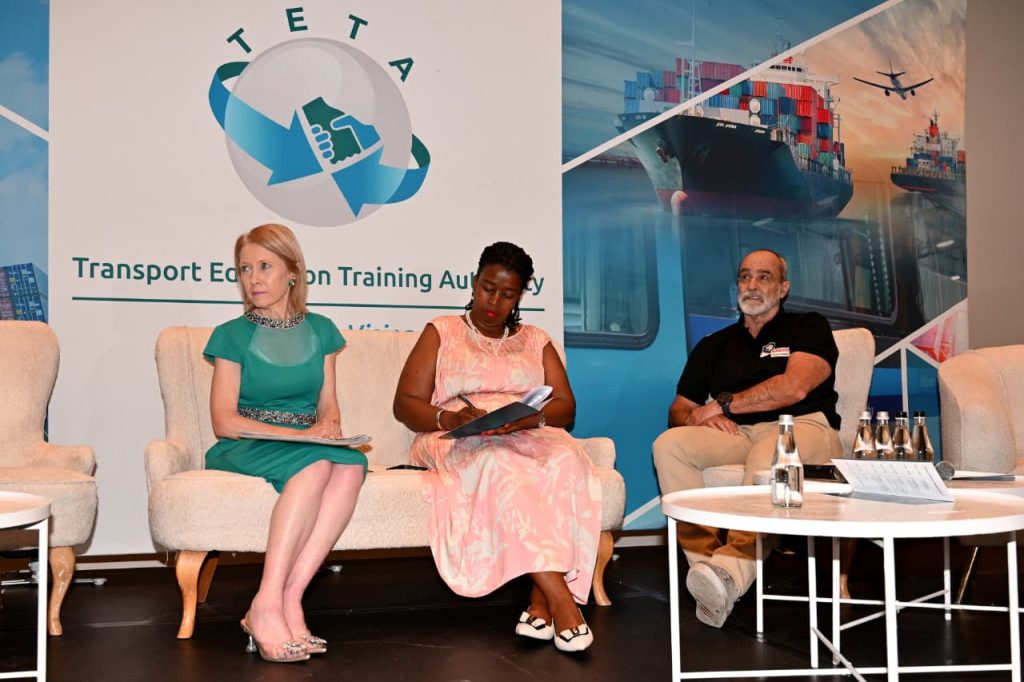
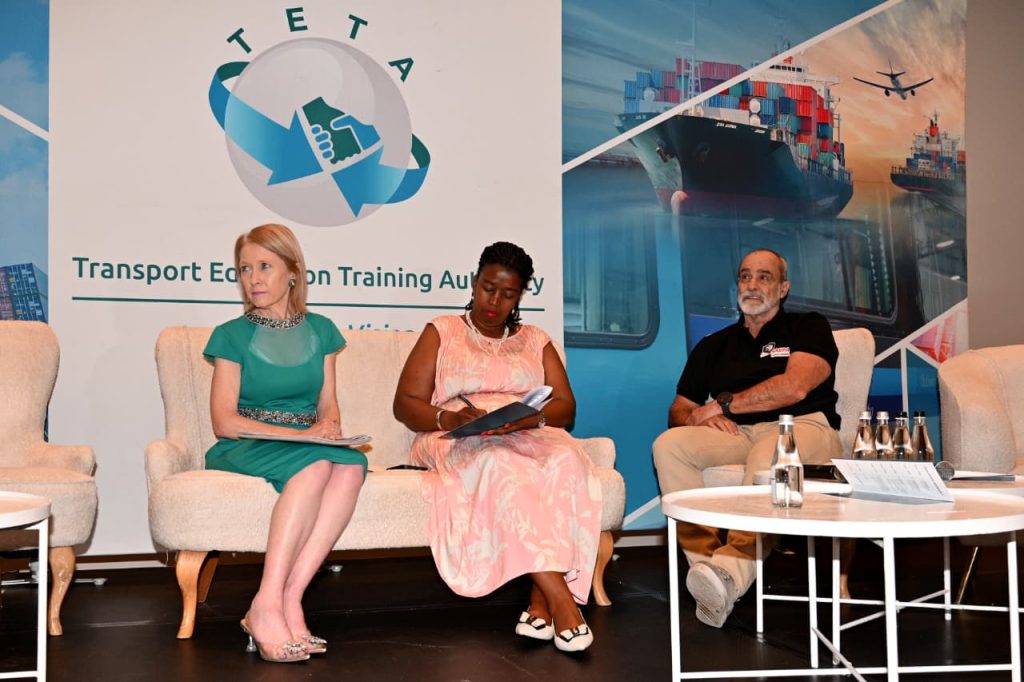
An expert-led panel at the Transport Education and Training Authority (TETA) Transport Month Dialogue has identified information and networking gaps as major barriers hindering the meaningful participation of small businesses in the transport sector.
Speaking during the joint TETA and Inside Education dialogue on Thursday in Sandton, executive director of the Chartered Institute of Logistics and Transport, Catherine Larkin, said opportunities often emerged through professional networks, making it important to guide and educate young people on the value of networking.
“Often we find opportunities travel through networks; it is not always what you know but who you know. I think when it comes to youngsters, we really need to guide and teach around networking,” Larkin said.
The panel also featured South African Express Parcel Association (SAEPA) chief executive officer Tony d’Almeida, and Gautrain Management Agency executive manager for knowledge management, Viwe Mgedezi.
The discussion focused on the topic “From Capability to Participation: Enabling an Inclusive Transport Sector”, which explored how capable individuals and enterprises could be supported to participate meaningfully in the sector.
Larkin urged entrepreneurs to maintain professionalism when marketing their businesses, highlighting the importance of identifying and promoting the attributes that set them apart from competitors. She also emphasised the use of the internet to expand their reach and attract a wider customer base.
She said that a strong branding strategy was essential to business success, noting that while professional qualifications were important, they alone were not enough to guarantee success.
Mgedezi identified policy and legislative constraints as some of the barriers hindering business growth, calling for certain policies to be relaxed to create a more enabling environment for businesses to operate.
During one of the breakaway sessions, participants discussed ways to address the barriers preventing enterprises from meaningfully contributing to an inclusive transport sector.
The discussions highlighted the inadequacy of TETA’s budget allocations to support skills development on a wider scale, as well as lengthy funding procurement processes, some of which can take years to complete.
Participants noted that such delays risk rendering the qualifications for which organisations initially sought funding irrelevant by the time the funding is approved.
The session also highlighted the need to reduce the six month waiting period between the completion of learnership programmes and the writing of the External Integrated Summative Assessment (EISA).
Participants recommended that relevant stakeholders, including the South African Qualifications Authority (SAQA), the Quality Council for Trades and Occupations (QCTO) and Education and Training Quality Assurance (ETQA) bodies convene to review the process and ensure that learners write the EISA shortly after completing their learnerships.
The discussions also emphasised the importance of tracking learners after completing their programmes to support their smooth transition into the industry and ensure that theoretical knowledge is translated into practical workplace skills.
Participants recommended that future curriculum development take technological advancements into account to ensure that training remains relevant, innovative and responsive to current and emerging challenges in the transport sector.
As measures of success, participants agreed on the need for quarterly meetings among stakeholders to strengthen collaboration and monitor progress.
They also identified the absorption of learners into the workforce after completing their learnership programmes as a key indicator of effective skills development and industry integration.
uThukela District Municipality manager Langelihle Jili has been arrested on corruption charges after allegedly accepting R100,000 from a service provider and subsequently offering Hawks investigators R600,000 to avoid arrest.
The Hawks said in a statement on Friday that Jili, 46, was arrested on Wednesday alongside one Bongumenzi Dlamini, 26, following an undercover operation conducted by the Durban Serious Corruption Investigation unit. Both were charged with corruption.
Jili allegedly demanded money from a service provider in exchange for processing payment for services already rendered to the municipality.
The service provider reported the matter to the Hawks, prompting an investigation and an undercover operation.
Jili was arrested after allegedly accepting R100,000 from the complainant.
During his arrest, he allegedly offered investigating officers R600,000 and arranged for the cash to be delivered to the Hawks’ offices in Durban.
Dlamini was arrested for allegedly giving the gratification to the officers.
The Hawks seized the R600,000 as evidence and said the money would be referred for an asset forfeiture investigation.
Both accused appeared in the Durban Specialised Commercial Crime Court, where they were remanded in custody.
The case was postponed to 27 October for a bail application.
KwaZulu-Natal acting Hawks provincial head Brigadier Zenobia Mulligan welcomed the arrests and praised the investigators for their good work.
“This arrest is a result of the good working relationship between the Directorate for Priority Crime Investigation and the National Prosecuting Authority in the province.”
She added: “Our members demonstrated that their integrity is beyond reproach when they further charged the accused for offering a gratification.”
Stakeholders have called for a future-ready transport workforce equipped with technical expertise, soft skills and the ability to adapt to technological advances, automation and AI.
They said training must go beyond preparing people for existing jobs, equipping workers to acquire new skills, respond to changing industry demands and adapt as technology transforms the transport sector.
On Thursday, Inside Education, in partnership with the Transport Education Training Authority (TETA), hosted the TETA Dialogue in Sandton, where speakers discussed the skills needed to prepare the sector for the future.
Prof Rutendo Hwindingwi of Wits Business School said research examining the skills required by 2035 highlighted the scale of the challenge posed by technological disruption.
According to Hwindingwi, the research estimated that AI could contribute to a global shortage of workers with the required skills by 2030, as the skills available in the labour market would not necessarily match those needed by employers.
“So they estimated that because of AI, by 2030, there will be a shortage of skills of 85 million jobs globally,” Hwindingwi said.
He explained that technological disruption would create an imbalance between the skills employers needed and those available in the labour market.
However, he said the challenge also presented an opportunity for Africa, particularly given the continent’s high unemployment levels and the potential to provide skills for work that could be delivered across borders.
“Part of the solution for the world is skill the people that are here using the gig economy offshoring to do those jobs,” he said.
“There’s opportunity, there’s challenge, but obviously it’s the mind shift in terms of technical, analytical, transformative skills and covers across a whole lot of things,” he said.
He called for changes in how people were trained to meet emerging industry needs.
“We need to change how we’re skilling, to adapt to the new world,” he said, adding that developing new talent alone would not be enough.
“You can’t do it in one pipeline.”
TETA Manager for Research and Knowledge Mashabane Ledwaba highlighted the importance of incorporating soft skills into education and training programmes.
She said graduates could possess the technical knowledge required for their qualifications but still struggle with communication and problem-solving.
“We still lack soft skill modules in our qualifications,” she said.
“They know what they need to do in terms of technical capabilities, but they don’t know how to communicate, they don’t know how to solve problems,” Ledwaba said.
“We now, with this evolving transport sector, we need people who are analytical thinkers, who can think on their feet, and take problems and bring solutions instantly.”
Ledwaba said these skills would remain relevant as the industry continued to change.
TETA Acting Senior Manager for Skills Development and Learning Programmes Marore Mapeko said workers would increasingly need to interpret information generated by technology and use it to make informed decisions.
He said receiving information from machines was not enough, as workers also needed to understand what it meant and how to respond.
“When a driver is on the road, and he receives an alert about traffic in the next three kilometres, or whatever form of disruptions on the road, what does he do with that information?” Mapeko asked.
He said effective communication was also necessary to ensure that information about delays reached colleagues and clients.
“How do you effectively inform the colleagues back in the office to ensure that the information is properly disseminated to the client, that there are delays on the road?”
Mapeko said the ability to interpret information generated by technology would become increasingly important and called on employers to prioritise continuous workplace learning alongside business performance.
“So we are still a long way off, and I think the responsibility is on us, like-minded people like us, to ensure that we encourage continuous learning in the workplace,” he said.
He cautioned against focusing exclusively on profitability at the expense of employee development.
“It can be detrimental for a business not to consider skills and continuous learning,” he said.
“Yes, you need to make a profit, but considering having your driver off the road for that three days to improve them or to give them new information on how to problem solve could benefit you in the long run.”
Mapeko said employers, industry stakeholders, workers and unions needed to work together to support changes in workplace training.
Hwindingwi said technological advances were developing faster than traditional education and training systems could adapt, widening the gap between institutional learning and industry requirements.
“The rate that technology is disrupting infrastructure capabilities is so fast that our traditional models of institutional learning and development is behind, and it’s going to be like that for a period of time,” he said.
However, he stressed that the gap should be viewed as an opportunity to improve how institutions prepared learners for changing occupations.
“That’s not a negative thing. It just highlights opportunity,” he said.
Hwindingwi said education needed to produce workers who could adapt when their existing skills or occupations became less relevant.
He used the prospect of self-driving vehicles to illustrate the risks of training people for a single occupation without preparing them for future changes.
“The biggest danger you can do right now, I’m using a simple thing, is teach your child how to be a driver and end there. To teach your child how to drive a combi or a truck or a bus and end there.”
He said automation could change demand for traditional driving roles, making adaptability and the ability to acquire new skills increasingly important.
Hwindingwi encouraged educators and employers to cultivate a mindset that would enable workers to adjust as technology evolved.
“It’s saying let’s produce drivers but who are equipped with the mindset to be able to pivot, learn, and unlearn.”
He added that future workers might need to analyse trends, develop strategic plans and identify solutions in response to changes in the industry.
Ledwaba said career guidance should begin at an early age to help learners understand the range of opportunities available across the transport sector.
She said young people often associated transport careers with familiar occupations such as taxi and truck driving, overlooking the many other roles involved in moving people and goods.
“If you ask a young person right now about a transport sector, if they are interested in the sector itself, we won’t get a lot of them showing interest,” she said.
“Why? Because when they think of a transport sector, they think about a taxi driver, a truck driver.”
“But there’s a whole lot of occupations that are in the transport sector.”
Ledwaba said learners needed greater exposure to the different occupations and qualifications available in the industry, including opportunities beyond road transport.
She also highlighted TETA’s online Career Portal, which allows learners, particularly unemployed young people, to submit their information and indicate their interests in the transport sector.
The platform also enables training providers and employers to access learner information when recruiting participants for training programmes.
“That platform also has functions where they can also see the other occupations within the transport sector, from aerospace to maritime,” she said.
Ledwaba said learners could use the platform to explore different professions and better understand their responsibilities.
“When we talk about a marine engineer, for example, they will go in there and see what a marine engineer does in their everyday life at their specific workplaces,” she said.
The panel discussion highlighted the need for closer collaboration between education providers, employers and industry stakeholders to ensure that training kept pace with technological change and emerging workforce demands.
Speakers agreed that preparing the transport sector for the future required more than technical qualifications. Workers would also need to communicate effectively, interpret information, solve problems and continue learning throughout their careers.
The Free State Department of Education has suspended a school principal after a matric pupil was allegedly prevented from writing an examination because of outstanding school fees.
The incident occurred at Selelekela Secondary School in QwaQwa, in the Thabo Mofutsanyana District, last week, when the female candidate was denied entry to the exam room for the English First Additional Language Paper 3 exam.
The department confirmed on Friday that the principal, who also served as the school’s chief invigilator, had been suspended with immediate effect pending an investigation.
The deputy principal has been appointed chief invigilator for the remainder of the 2026 National Senior Certificate (NSC) examinations.
The department said the pupil had resumed writing her remaining examinations and had received psychosocial support.
“The Department is finalising all reports and supporting documentation for submission to Umalusi through the Department of Basic Education (DBE), to request a concession in respect of English FAL P3,” it said.
“This is to ensure that the candidate is not required to rewrite the paper in June 2027.”
The department said the concession remained subject to approval.
It has also held an urgent virtual meeting with chief invigilators from public, private and independent schools to reinforce examination regulations prohibiting schools from barring eligible candidates over unpaid fees.
The department cited DBE Examination Instruction E06 of 2026, which prohibits candidates from being denied access to examination rooms for reasons unrelated to their eligibility to write.
“School fee disputes must never compromise a candidate’s opportunity to write,” the department said.
“Non-compliance with examination instructions will not be tolerated and will be dealt with through disciplinary processes.”
The Free State has 41,009 candidates registered for the 2026 NSC exams.
An educator accused of raping a nine-year-old Grade 4 learner at Busisiwe Primary School in Zola, Soweto, appeared in the Protea Magistrates’ Court on Thursday, as Gauteng Education MEC Lebogang Maile called on communities to unite against sexual abuse and gender-based violence.
The court appearance followed the educator’s arrest after he reportedly handed himself over to police on Wednesday evening.
The outcome of Thursday’s proceedings could not be independently confirmed at the time of publication.
The allegations have sparked outrage among parents and community members, who gathered outside the school earlier this week to demand accountability and answers about how the matter was handled.
Maile attended the court proceedings on Thursday.
In a statement, the Gauteng Department of Education said the government had established a coordinated intervention involving the departments of Education, Social Development and Health, the South African Police Service (SAPS) and other child-protection stakeholders.
“The protection and recovery of children affected by sexual abuse require coordinated and compassionate government assistance,” the department said.
Maile called on families, educators, religious leaders, communities and civil society organisations to work together to prevent child abuse and gender-based violence.
“It takes a village to raise a child, and it equally takes a united village to protect a child,” he said.
“We cannot allow moral decay, sexual violence and the abuse of vulnerable people to become normalised in our communities.”
He urged communities to allow law enforcement authorities and the judicial process to take their course without interference or prejudice.
Maile also appealed to the media to report responsibly, stressing that the learner’s identity, dignity and wellbeing must be protected throughout the proceedings.
The case came to public attention after allegations emerged that the learner had been sexually assaulted on the school premises.
According to reports, the alleged incident occurred on 8 October, when the learner reportedly asked to go to the toilet during class and the educator allegedly followed her.
The learner’s family subsequently raised concerns about the incident, while parents questioned the school’s response and demanded action against the educator.
On Tuesday, 20 October, parents and community members protested outside Busisiwe Primary School, expressing concern over the handling of the allegations.
Reports also indicated that the learner had been reluctant to return to school following the alleged incident.
The Gauteng Department of Education dispatched officials to investigate the matter.
On Wednesday, the department confirmed that the educator had been placed on precautionary suspension pending the finalisation of internal disciplinary proceedings.
The police investigation is separate from the department’s internal disciplinary process.
The department said the coordinated intervention would continue throughout the judicial process and beyond, with the aim of safeguarding the learner’s emotional, psychological and physical wellbeing.
The Portfolio Committee on Basic Education also condemned the allegations and called for swift justice and stronger safeguards to ensure that schools remain safe environments for children.
“Any act of violence against a child within a school environment, particularly by an educator, constitutes an egregious breach of trust and the law,” committee chairperson Joy Maimela said.
The educator remains accused, and the allegations have not been proven in court.
The Gauteng Department of Health is testing toys and paint at Early Childhood Development (ECD) centres to identify potential sources of lead exposure as part of an awareness campaign aimed at protecting children from poisoning.
The initiative coincides with International Lead Poisoning Prevention Week, observed from 18 to 24 October 2026 under the theme “From Detection to Prevention”.
The campaign aims to educate communities, parents, caregivers and educators about the dangers of lead exposure, how it occurs and the precautions they can take to protect vulnerable groups.
Lead is a toxic substance that can enter the body through exposure to contaminated dust, paint, toys and other materials containing the metal.
Children are particularly vulnerable because exposure can cause irreversible damage to brain development, affecting learning abilities, behaviour and overall growth.
The effects are not always immediately noticeable, making prevention and early identification essential.
The department said it had received no reports of lead poisoning cases in Gauteng over the past two years, but stressed that continued public awareness and vigilance remained important.
As part of its response, the department investigates reported or suspected exposure, identifies possible sources of contamination and recommends measures to reduce or eliminate the risks.
According to the World Health Organisation (WHO), lead exposure affects multiple organs and contributes to cardiovascular and kidney disease in adults.
The WHO estimates that more than 3.5 million deaths worldwide were attributable to lead exposure in 2023, primarily due to cardiovascular effects.
This year’s campaign theme highlights the importance of identifying potentially harmful sources of lead before exposure results in serious or irreversible health complications.
The department has urged residents to keep their homes clean and minimise exposure to dust that may contain lead.
Parents and caregivers have been advised to keep children away from toys suspected of containing lead and surfaces with peeling or deteriorating paint.
Workers who handle lead-containing materials have also been urged to follow occupational health and safety procedures, change out of contaminated clothing and footwear before entering their homes, and wash thoroughly to avoid bringing lead dust into their living environments.
Anyone who suspects that they or their children have been exposed to lead, or who experiences symptoms associated with exposure, has been advised to visit their nearest clinic or community health centre for a clinical assessment.