The Transport Education Training Authority (TETA) today hosted the Transport Month Dialogue 2026 alongside Inside Education, bringing together industry leaders, policymakers, educators and stakeholders to engage on the future of South Africa’s transport sector.
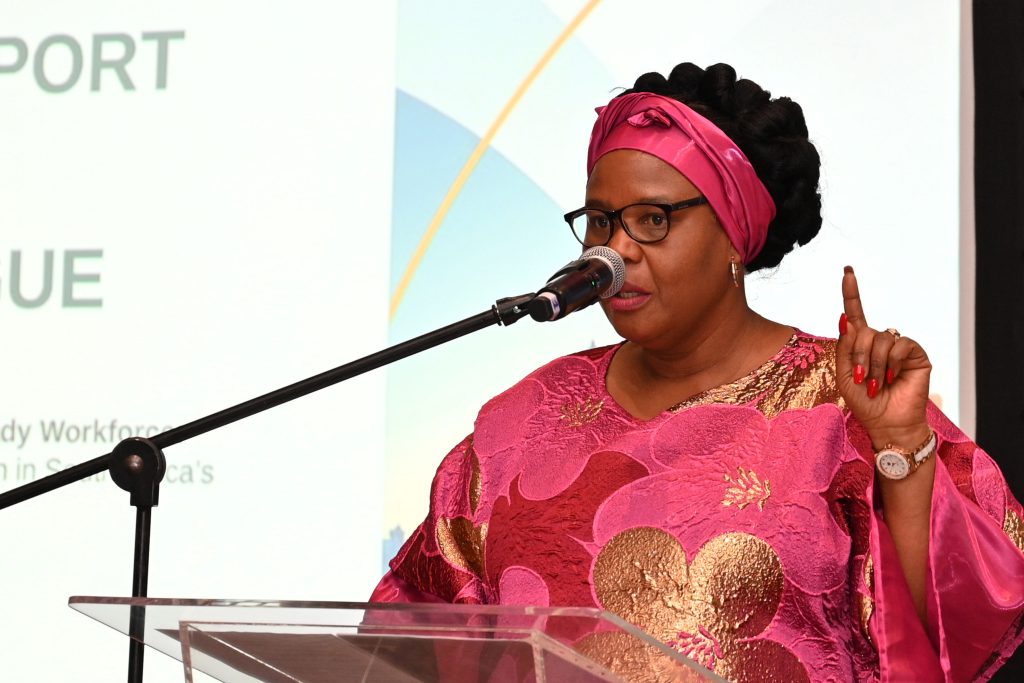
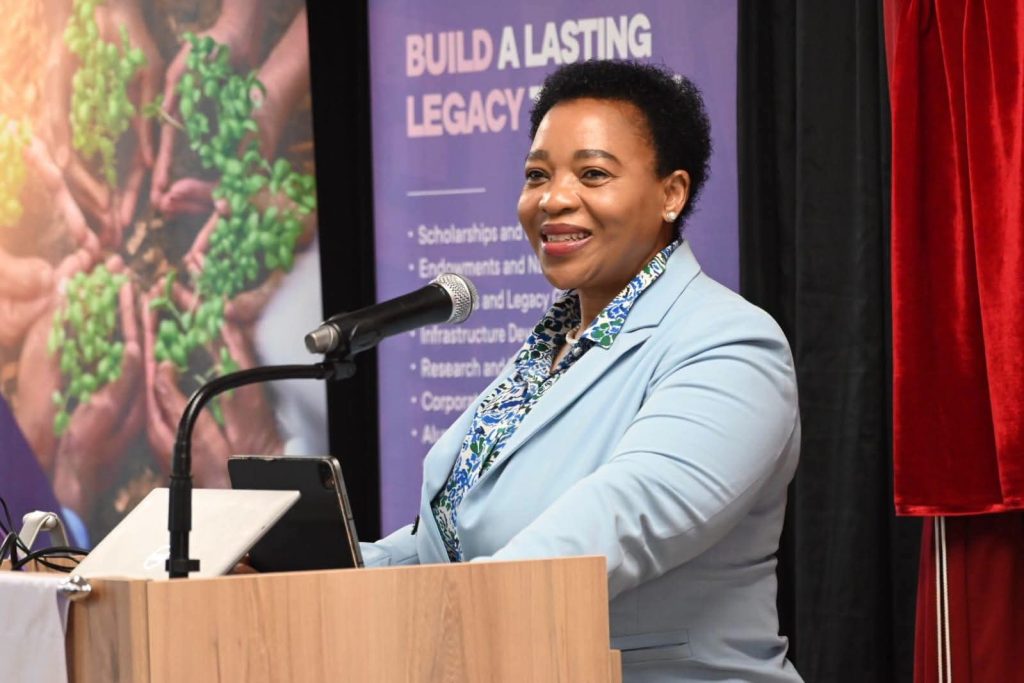
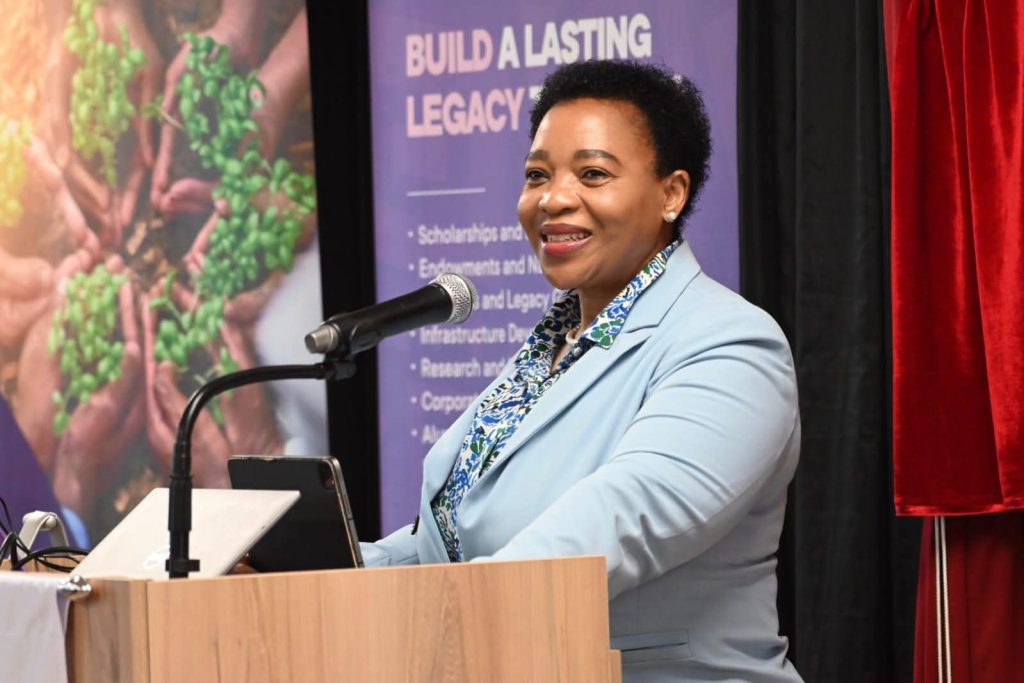
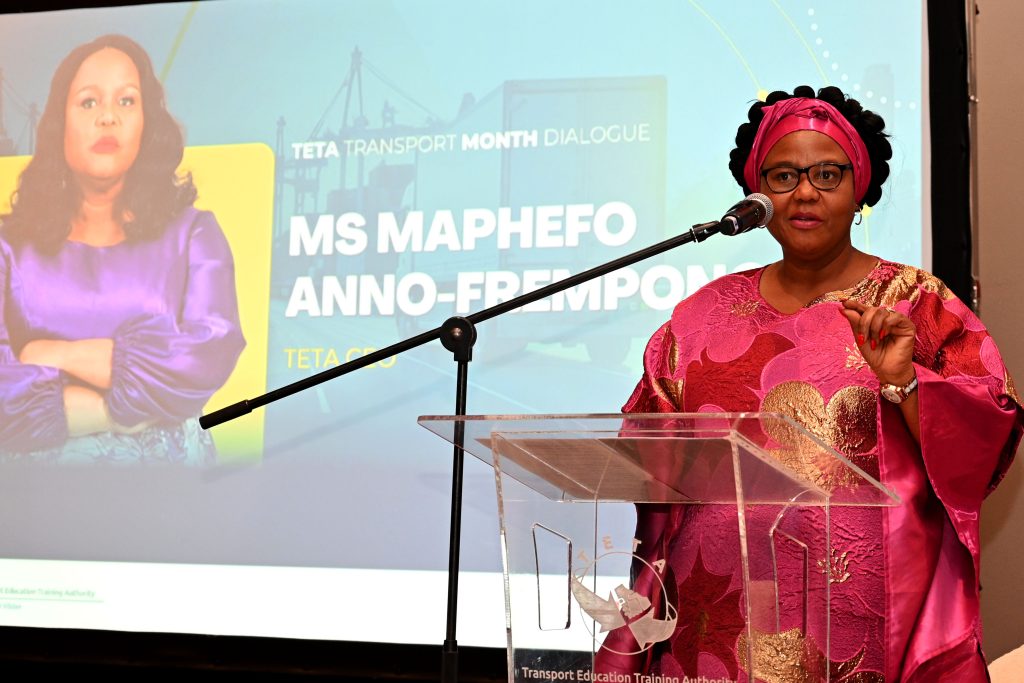
TETA CEO: Maphefo Anno Frempong. Photo: Eddie Mtsweni
The dialogue focused on a key question: Is the sector ready for the future of transport?
Discussions explore topics including skills development, innovation, accessibility and participation, highlighting the opportunities and challenges that will shape the industry’s future.
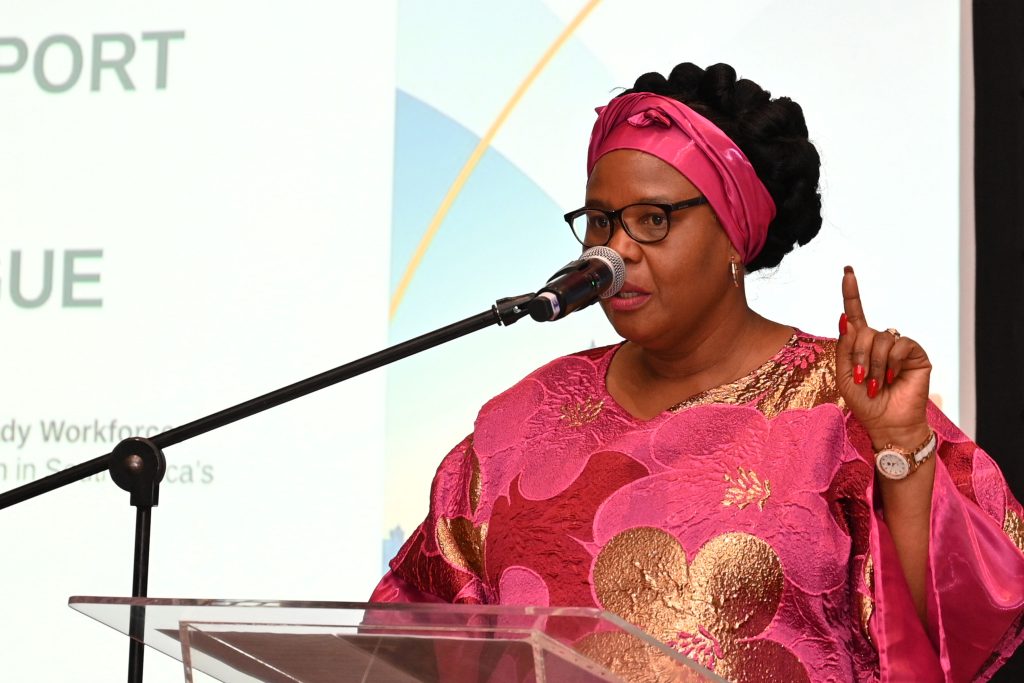
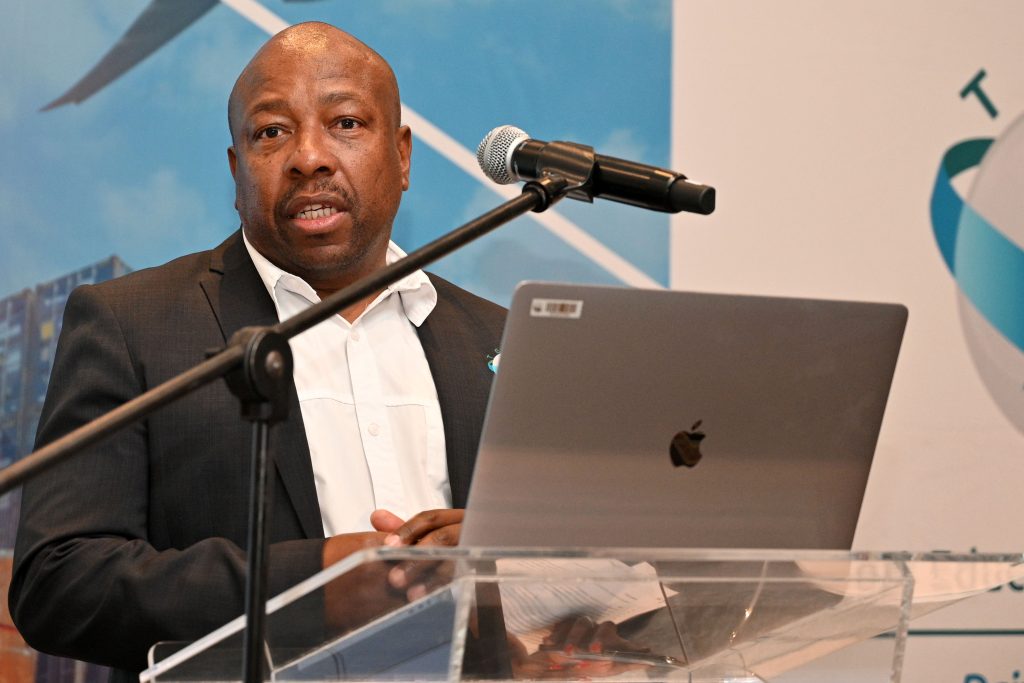
Thabiso Mokoetla, Acting Corporate Communications and Media Liaison Officer. Photo: Eddie Mtsweni.
Participants examined how emerging technologies, changing workforce demands and inclusive growth can help drive the sector forward while ensuring that no one is left behind.
The event is being streamed live on Inside Education, providing audiences across the country with an opportunity to follow the discussions and contribute their own questions, ideas and perspectives through the comments section.
The dialogue aims to foster collaboration and encourage practical solutions to advance a more sustainable, innovative and accessible transport sector.
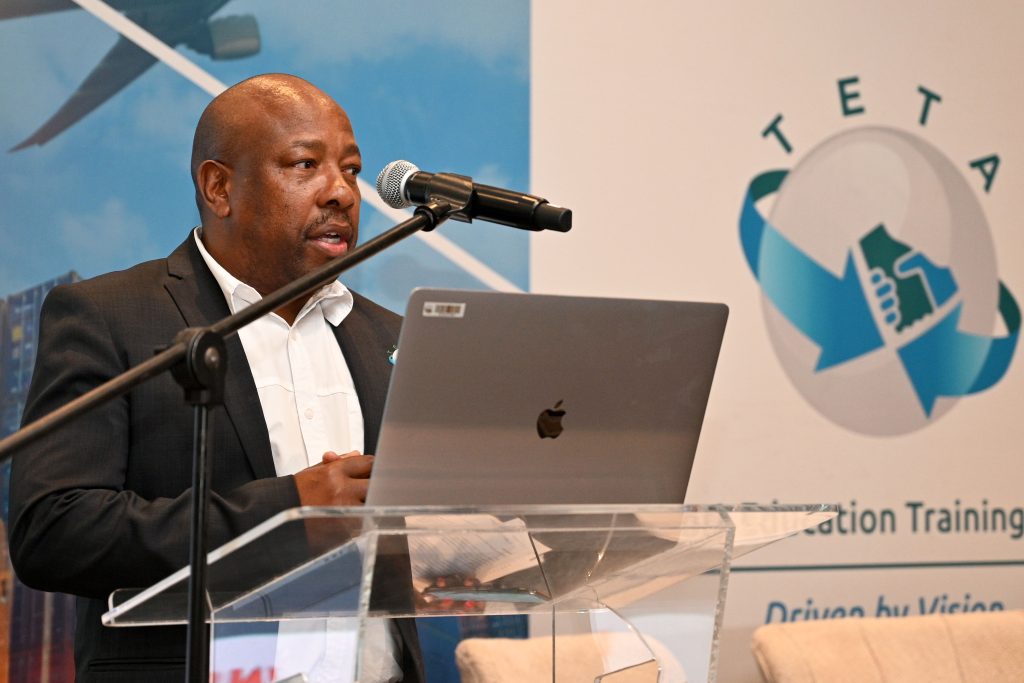
Contributing Editor for Inside Metros, Thebe Mabanga. Photo: Eddie Mtsweni.
University of Fort Hare (UFH) Vice-Chancellor Prof. Sakhela Buhlungu has resigned, but the university’s council says he cannot leave immediately because his contract requires him to serve a notice period.
Buhlungu, who had been suspended, submitted his resignation on Monday. This was shortly before he was due to begin presenting his defence at a disciplinary hearing.
He is facing charges including gross misconduct, insubordination and bringing the institution into disrepute. One of the allegations against him is that he unlawfully appointed two executive directors.
Buhlungu’s resignation came while the disciplinary process was still underway, with Council saying he had chosen not to use the opportunity to respond to the allegations against him.
“By doing so, he has elected not to make use of the fair and meaningful opportunity afforded to him to respond to the serious allegations levelled against him,” the council said in a communiqué issued on Tuesday.
The council said that it had reserved the right to continue with the disciplinary process during the applicable notice period in accordance with the university’s employee relations policy.
“Although Professor Buhlungu has chosen to resign while the disciplinary process is still underway, his resignation does not resolve the allegations against him,” it said.
The council also rejected claims contained in Buhlungu’s resignation correspondence that the independent disciplinary process was designed to produce a predetermined outcome. He believes he has been subjected to unfair treatment.
“These matters remain contested and should not be understood as having been established as fact,” the council said.
The university said Buhlungu’s resignation and the statements contained in his resignation letter did not determine the merits of the allegations against him.
It said a similar process had been followed in respect of other employees implicated in breaches of the University Statute, with each affected employee given an opportunity to respond to the allegations.
It also referred to established case law concerning resignations with immediate effect, saying an employee who is contractually required to serve notice cannot unilaterally avoid the applicable notice period where the employer has not waived the requirement.
“The employment relationship therefore continues for the duration of the applicable notice period,” the council said.
The university said it would keep the UFH community informed of material developments as appropriate.
The Gauteng Department of Education (GDE) has placed an educator at Busisiwe Primary School in Zola, Soweto, on precautionary suspension following allegations that the teacher sexually assaulted a nine-year-old Grade four learner.
The department said it had arranged psychological support for the child and her family.
Angry parents and community members gathered outside the school on Tuesday, disrupting teaching and demanding answers about the alleged incident and asking why the educator was reportedly still attending classes while the matter was being investigated.
Gauteng Education MEC Lebogang Maile visited the school on Wednesday, where he received a briefing from school management, the School Governing Body (SGB), the South African Police Service (SAPS) and community stakeholders about the allegations.
“The department confirms that the educator would remain on precautionary suspension pending the finalisation of disciplinary proceedings,” the department said.
“We understand the concerns and emotions surrounding these disturbing allegations. However, we appeal for calm and urge everyone to allow the necessary processes to unfold. We must ensure that justice is not compromised by interference or speculation,” Maile said.
He said the department had a zero-tolerance stance on sexual abuse.
The Sowetan reported that the child’s family friend said she started refusing to attend school around 8 October, before disclosing the alleged assault to relatives the following day.
The family alleged that the assault occurred on 8 October, when the learner reportedly asked to go to the toilet during class and the educator allegedly followed her.
According to The Sowetan, a family friend said the SGB said that it only became aware of the allegations on Monday, 19 October, after claims of the alleged assault were circulated via a video clip on social media.
The video reportedly showed the learner recounting the alleged incident.
Police spokesperson Dimakatso Nevhuhulwi confirmed that a rape case was reported at Jabulani Police Station on 11 October and that the Family Violence, Child Protection and Sexual Offences Unit was investigating.
Maile said police were gathering statements and indicated that an arrest could follow once the necessary processes had been completed.
“One of the things we will be doing going forward is to verify when teachers are appointed to make sure that you verify their history,” Maile said during his visit.
He added that educators found guilty of sexual offences should be placed on the National Register for Sex Offenders to prevent them from being employed in positions that expose children to potential harm.
“It takes a village to raise a child, and it equally takes a village to protect a child,” Maile said.
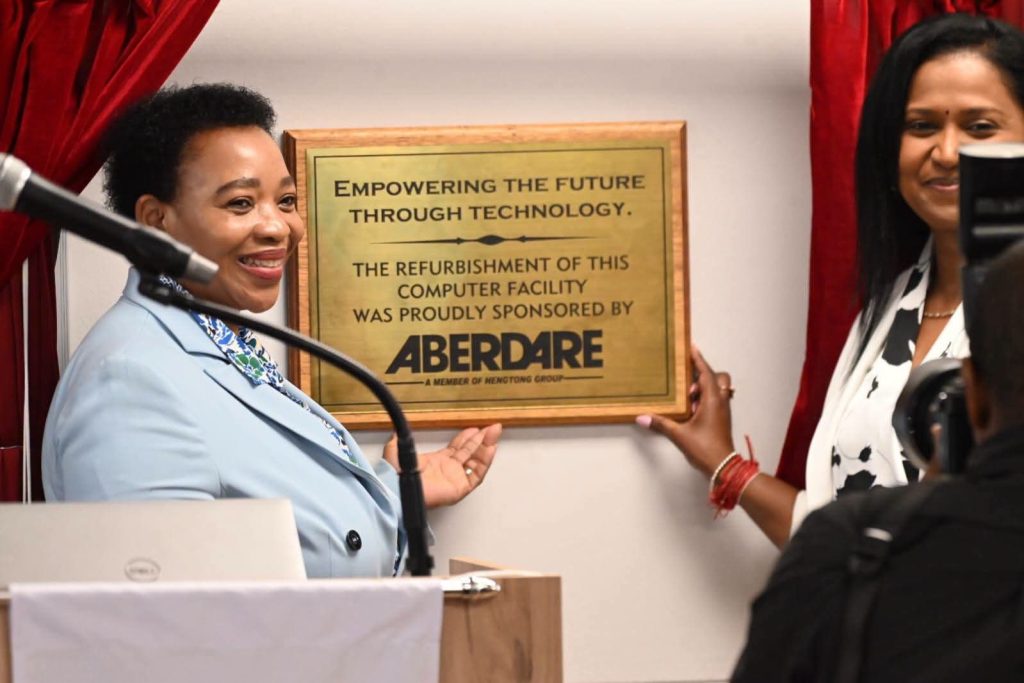
The University of KwaZulu-Natal’s School of Engineering has expanded its laboratory capacity from 80 to 163 students following a R2.2 million investment by Aberdare Cables, with Deputy Minister of Higher Education and Training Nomusa Dube-Ncube calling for the partnership to translate into more workplace opportunities for graduates.
The newly upgraded AberTech LAN was officially launched on Wednesday, providing students with modern workstations, 175 new network access points, upgraded projection systems and improved lighting to support teaching and learning.
Speaking at the launch, Dube-Ncube, representing Higher Education and Training Minister Buti Manamela, said partnerships between universities and industry were essential to ensuring graduates acquired skills relevant to the needs of employers.
She welcomed Aberdare Cables’ investment, saying the company’s existing partnership with UKZN, which included bursaries for engineering and information and communications technology students, had now expanded to infrastructure development.
“We particularly welcome Aberdare’s view that this is a foundational step towards a broader, long-term engagement. That is exactly the kind of partnership our post-school system needs,” she said.
Dube-Ncube said the improved laboratory would give students access to modern technology, helping them develop practical skills needed in an increasingly technology-driven economy.
“A student who learns on outdated machines risks graduating with outdated skills. A student who models, simulates, codes and designs on current systems enters the workplace ready to contribute from the first day,” she said.
She urged the company and the university to build on the investment by creating work-integrated learning opportunities, internships and workplace placements for students.
According to Dube-Ncube, such opportunities would help connect classroom learning with practical experience while enabling employers to contribute to the development of graduates with the skills their industries require.
“When a cable manufacturer invests in a computer laboratory, it is investing in its own future workforce, and in the energy security of our nation: the grids, the renewable energy projects and the transmission networks that will power South Africa’s growth,” she said.
In his 2026 State of the Nation Address, President Cyril Ramaphosa placed the Skills Revolution at the centre of the country’s development agenda and directed the ministers of finance and higher education to develop a proposal for more universities and TVET colleges with specialised areas of focus.
Dube-Ncube said the Department of Higher Education and Training’s 2026/27 Annual Performance Plan also prioritised expanding access, improving educational quality and making institutions more responsive to the economy.
“Partnerships like this one are how those commitments become real,” she said.
Aberdare Cables, a supplier of energy interconnection products and services, operates three manufacturing sites in South Africa, located in Pietermaritzburg, Gqeberha and Gauteng. The company also has customer service centres across the country and in Maputo, Mozambique.
Dube-Ncube said modern infrastructure was increasingly important as artificial intelligence and technological developments changed the skills required in the workplace.
“In an age of artificial intelligence and rapid technological change, South Africa cannot compete with yesterday’s tools. The young people who sit at these 163 workstations will write the code, design the systems and lead the breakthroughs that place our country among the innovators of the world,” she said.
She also called on UKZN to ensure the laboratory remained functional through regular maintenance, software licensing and the replacement of ageing equipment.
“In the spirit of the Batho Pele principle of value for money, every rand invested, whether public or private, must deliver lasting value,” she said.
Addressing students, Dube-Ncube urged them to take responsibility for protecting the upgraded facility and ensuring it benefited future generations.
“This facility is yours, but it is not only yours. It was built for you and for those who will come after you,” she said.
She further called for safe and inclusive university environments, highlighting gender-based violence and femicide as ongoing national challenges. She urged students, particularly young men, to promote respect and equality on campus.
Dube-Ncube also addressed tensions following UKZN’s Student Representative Council elections, including an incident at the Westville campus in which staff members were injured.
She said disagreements should be resolved through dialogue, institutional processes and the law, rather than violence or intimidation.
“Violence against the staff who keep our campuses safe is unacceptable,” she said.
The deputy minister concluded by encouraging more businesses to invest in higher education and establish partnerships that support students beyond their academic studies.
“Our people say: umuntu ngumuntu ngabantu. A person is a person through other people. Today Aberdare Cables, UKZN and government have shown what that means in practice. I call on more industry partners to follow this example,” she said.
South Africa has the skills to compete with some of the world’s most developed nations in technology, transport and other critical industries, according to Transport Education Training Authority (TETA) CEO Maphefo Anno-Frempong.
Speaking at the Inside Education and TETA Transport Month Dialogue in Sandton on Thursday, she emphasised the need to align skills development with industry demand and provide relevant qualifications that prepare workers to address the transport sector’s future challenges.
“South Africa does not have skills problems. It is just a matter of matching demand with where the opportunity is, with where the relevant work is and giving our young people an opportunity to go and show off in the world that SA can and still does have the best skills set than anybody else,” she said.
The dialogue falls during Transport Month in October. It brought together transport experts, interest groups and community members to engage and solicit solutions on how to enhance the transport industry in light of the technological advancement confronting it.
Anno-Frempong emphasised that TETA is often met with a predicament when implementing its mandate as it dictates that it spends 80% towards programmes that lead to a qualification.
She highlighted, however, that the entity continues to look for a balance between funding qualifications and skills development as many companies now prioritise skills over qualifications.
She said it was more feasible to invest in “micro credentials”. They are short programmes, which expose young people to opportunities leading to jobs as compared to investing in degrees.
“The skills development levy base, which is 1%, can never train the transport sector because the demand is higher than 1%. We [must] hold hands, look at co-funding opportunities and see how we can leverage on other funding opportunities, and not only in transport but in other industries with a main purpose of giving a South African child an opportunity to get into a job or to be able to make a living,” Anno-Frimpong said.
The CEO highlighted that technological and economic transformation is moving at a high pace globally. She said South Africa must assess the impact of this transformation to identify and prioritise the skills needed to remain competitive and maximise the resulting economic opportunities.
Anno-Frempong further underscored the need for collaboration amongst government and private entities to drive investment in people while creating opportunities.
She emphasised that the transport sector remains one of the major industries driving economic growth and stressed the significance of a well-functioning transport sector.
“It is so important that for the recognition of SA’s advancement in line with other countries that transport becomes one of the key indicators of how far SA as a country has advanced,” Anno-Frempong added.
TETA acting corporate communications manager Thabiso Mokoetla said that technological advancements, digitalisation, innovation and the transition towards a greener economy are reshaping occupations across road, rail, aviation, maritime, freight and logistics.
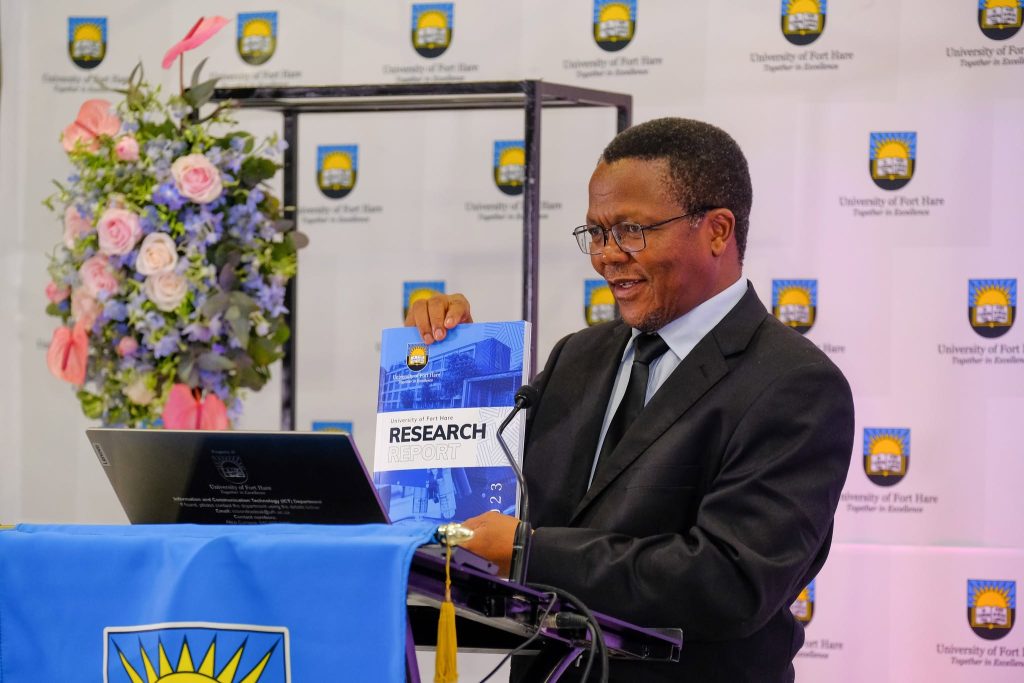
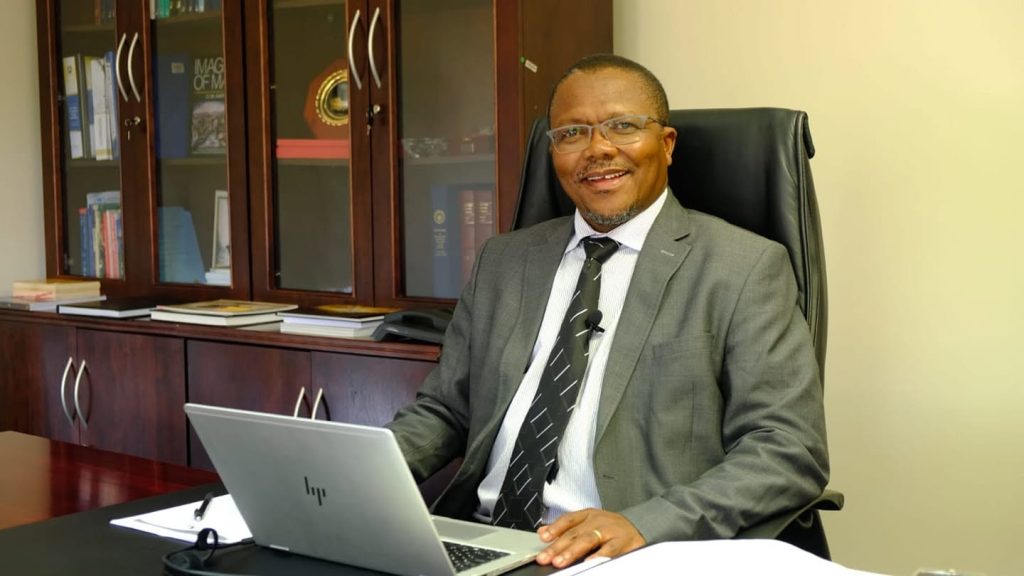
TETA acting corporate communications manager Thabiso Mokoetla. Photo: Eddie Mtsweni
“As a transport sector, we have a critical role to play to ensure that education and training remain responsive to these changes,” Mokoetla said.
He emphasised the importance of collaboration among industry, government, the education sector and training institutions to identify future skills requirements and prepare learners and workers for both current and emerging occupations.
“Doing so requires an ongoing conversation between the industry, the government, the education sector and the training institutions about where the sector is heading, which skills will be required, and how learners and workers can better prepare for both the current and emerging occupations,” he said.
He also highlighted the challenge of an ageing workforce and the need to attract younger people to the sector.
“So upskilling the workforce, also we have a challenge of an ageing workforce. We still need those learners. We still do need the youth to come into this space,”
He called on stakeholders to participate actively in shaping the future of transport skills development, stressing that the responsibility extended beyond TETA.
“The future of transport leaves us with an opportunity to call the participants, which is not only TETA, but also you who are seated before us,” he said.
Mokoetla said discussions must translate into practical outcomes.
The South African Police Service (SAPS) has opened applications for 5,500 police trainee positions for citizens aged 18 to under 35, with recruitment running until 13 November 2026.
The nationwide online recruitment drive opened on Wednesday, 21 October.
“If you are disciplined, physically fit, committed to serving your community and determined to help build a safer South Africa, this could be your moment,” SAPS said.
Eligible applicants with no criminal records or pending criminal cases are encouraged to apply through the official SAPS eRecruitment portal at www.erecruitment.saps.gov.za.
“The online application process, introduced in 2025, makes it easier for young people from all walks of life to apply for entry-level police trainee posts,” SAPS said.
Prospective applicants must create a profile on the portal and verify their accounts using a code sent to their email addresses.
Once their accounts have been verified, they can follow the step-by-step process to apply for available trainee posts.
“A QR code providing direct access to the portal will also be shared on SAPS’s official social media platforms,” SAPS said.
SAPS said it was seeking young people who could bring knowledge, skills, fresh perspectives and a commitment to excellence to the fight against crime.
“As part of its targeted recruitment drive, the SAPS will identify suitably qualified applicants with specific skills for consideration in specialised policing environments,” SAPS said.
“Graduates in Law, Policing, Criminology, Law Enforcement, Forensic Investigation and Information Technology may be considered for placement within the Directorate for Priority Crime Investigation (DPCI), also known as the Hawks; Detective and Forensic Services; and Crime Intelligence.”
The recruitment process would also seek to identify suitably qualified young people from underrepresented racial groups who meet the prescribed requirements.
All applicants will undergo a selection process that includes fitness, psychometric and integrity testing, a medical evaluation and an interview.
“These assessments are designed to ensure that those selected possess the physical fitness, mental resilience, discipline and integrity required to serve and protect the people of South Africa,” SAPS said.
Successful recruits who hold a relevant National Qualifications Framework (NQF) Level 6 or higher qualification will undergo six months of training at a SAPS training academy, while those without such qualifications will complete the standard nine-month training programme.
All police trainees will receive a monthly stipend of R5,000 during their training.
“Applicants must remain vigilant against fraudsters who may demand money in exchange for employment or promise to influence the recruitment process,” SAPS said.
The Gauteng Department of Education (GDE) has confirmed that the principal of Franklin D Roosevelt Primary School in Randburg was sanctioned following an investigation into allegations that a school governing body (SGB) member was asked to pay about R5,000 to renew a contract.
GDE spokesperson Onwabile Lubhelwana told Inside Education that the internal disciplinary process had been concluded, while separate allegations of selling teaching posts and intimidation had not been formally reported to the department.
“The Gauteng Department of Education (GDE) can confirm that the allegation relating to the demand for approximately R5000 has been investigated and internal disciplinary process concluded, and the principal was sanctioned accordingly,” Lubhelwana said.
The department not disclose the nature of the sanction or when it was imposed.
“However, no formal complaints on the allegation of selling of posts and intimidation have been reported to the Department. Once reported, the department will determine the cause of action.”
The Democratic Alliance (DA) this week called for an independent investigation into alleged financial irregularities, intimidation and staffing concerns at the school.
“We want an independent investigation into the allegations against the principal and disciplinary action against anyone found responsible for wrongdoing,” the DA said.
In a statement issued on Monday, DA Gauteng shadow MEC for education Sergio Isa Dos Santos accused the department of failing to resolve longstanding complaints involving the school’s management.
The controversy follows a protest by parents and SGB members outside the school on 13 October, when demonstrators called for the removal of principal Victor Matloga over allegations concerning his management.
Matloga had previously been dismissed and subsequently reinstated following proceedings at the Education Labour Relations Council (ELRC).
The DA alleged that his reinstatement followed the department’s failure to submit required documentation within the prescribed timeframe.
However, in February, the Northcliff Melville Times reported that the department had given a different account of the proceedings.
Then-GDE spokesperson Steve Mabona told the publication that Matloga had been found guilty in an earlier disciplinary process, but that the finding did not warrant dismissal. He said Matloga successfully challenged the finding at arbitration and was exonerated.
The DA also raised concerns about educator shortages, including claims that Grade 5 Afrikaans classes were being combined because of a lack of qualified teachers.
“The situation has worsened, with 10 educators leaving the school and daily absences of at least four to five teachers,” the DA said.
The department disputed the allegations of a teacher shortage.
Lubhelwana said seven SGB employees and two GDE employees had resigned since September 2025 to pursue better employment opportunities, but that their positions had been filled.
“Numerous academic and leadership monitoring and support visits were conducted at the said school. District Officials have been allocated to mediate between the SGB and the school principal, to resolve differences and improve working relations, moving forward,” he said.
The DA has called on Gauteng Education MEC Lebogang Maile to commission an independent investigation into the broader allegations and determine whether departmental officials failed in their duties.
The party said it would submit questions to Maile to establish the history of the dispute and assess whether the department’s handling of the matter was consistent with the documentary evidence it had obtained.
The Democratic Alliance (DA) has called for an independent investigation into alleged financial irregularities, intimidation and staff shortages at a Johannesburg primary school, months after parents raised concerns about its principal’s reinstatement, and just a week after a protest at the school.
In a statement on Monday, the party accused the Gauteng Department of Education (GDE) of failing to resolve longstanding complaints involving the management of Franklin D Roosevelt Primary School in Randburg.
DA Gauteng Shadow MEC for Education Sergio Isa Dos Santos said the allegations included the sale of posts, extortion and intimidation involving the school’s principal.
One complaint involved a school governing body (SGB) member who was allegedly asked to pay R5,000 to renew a contract.
The party also raised concerns about staffing shortages.
“The situation has worsened, with 10 educators leaving the school and daily absences of at least four to five teachers,” the DA said.
It claimed that Grade 5 Afrikaans classes were being combined because of a shortage of qualified educators, with some learners being taught by unqualified staff.
On 13 October, parents and SGB members protested outside the school, demanding the removal of principal Victor Matloga over longstanding allegations concerning his management.
In February, the Northcliff Melville Times reported that parents had protested against the reinstatement of Matloga following disciplinary proceedings.
SGB chairperson Fagmoedien Otto told the publication that complaints involving alleged financial mismanagement, intimidation, abuse of power and extortion had been raised with the department several years earlier.
Otto claimed that procedural failures by the department had undermined disciplinary proceedings against the principal.
However, the GDE disputed the suggestion that Matloga had escaped accountability solely because of procedural failures.
Department spokesperson Steve Mabona told the publication at the time that the principal had been found guilty in disciplinary proceedings, but that the outcome did not warrant dismissal.
“Accordingly, he appealed the guilty verdict, and, as such, he was exonerated at arbitration, consequently there is no questionable conduct on his part,” Mabona said.
The department said it respected the arbitration outcome.
The DA has now questioned the handling of the case, alleging that the principal was reinstated by the Education Labour Relations Council (ELRC) after the department failed to submit required documentation within the prescribed timeframe.
The party wants Gauteng Education MEC Lebogang Maile to investigate the department’s handling of the matter and establish whether officials failed to carry out their responsibilities.
“We will submit questions to the MEC to establish the history of this case and determine whether it aligns with all the documentary evidence obtained,” the DA said.
It also wants an independent investigation into the allegations against the principal and disciplinary action against anyone found responsible for wrongdoing.
The department did not respond to questions from Inside Education. Their responses will be added once received.
The Gauteng Department of Roads and Transport (GDRT) has urged scholar transport operators to comply with licensing requirements and road safety regulations to improve learner safety across the province.
The call was made during an engagement with operators at Boekenhoutkloof Traffic College in Tshwane, as part of the department’s Learner Transport Education and Awareness Programme (LTEAP).
The programme focuses on operating licences, vehicle roadworthiness and responsible driving practices following concerns about learner transport incidents.
“Ensuring the safety of learners remains a shared responsibility,” the department said.
“Through responsible driving, regulatory compliance and sustained cooperation among all stakeholders, Gauteng can continue working towards safer and more reliable learner transport services across the province.”
Under the National Land Transport Act, individuals and businesses transporting passengers for a fee must hold valid operating licences.
Applicants must submit supporting documents, including copies of pupils’ identity documents, business registration paperwork, transport route maps and tax compliance certificates, among other requirements.
The engagement also highlighted the Gauteng Public Transport Regulatory Information System (GPTRIS), which aims to streamline licensing applications and allow operators to track their progress and identify outstanding requirements.
Operators were given an opportunity to raise concerns and discuss challenges affecting their businesses. The department said their feedback would inform further interventions to improve compliance and coordination.
The department has handed over 526 operating licences to compliant scholar transport and minibus taxi operators.
Since November last year, it has processed, issued and handed over more than 8,000 operating licences across the province.
The department plans to expand the LTEAP through a structured roadshow across Gauteng’s five regions to provide operators with guidance on their legal responsibilities and safety obligations.
Equal Education (EE) and the Equal Education Law Centre (EELC) have demanded that Basic Education Minister Siviwe Gwarube explain why school capacity regulations remain unpublished 10 days after a court-ordered deadline.
In a joint statement on Monday, the organisations called for the immediate publication of the final Minimum Uniform Norms and Standards for School Capacity, saying that continued delays were leaving learners in overcrowded classrooms without adequate space and resources.
The deadline expired on 9 October, three years after the Gauteng High Court ordered the Minister of Basic Education to develop and publish the regulations in a case involving the South African Teachers’ Union (SAOU).
“This court order was not a suggestion; it was a directive that must be complied with. Learners cannot continue to wait while they are forced to learn in overcrowded classrooms without the space and resources they need,” the organisations said.
The Department of Basic Education (DBE) did not respond to requests for comment from Inside Education.
The regulations are intended to establish clear rules governing how many learners schools can accommodate, how much space should be allocated to each learner and teacher, and when additional classrooms, teachers or other resources are required.
EE and the EELC said the absence of binding capacity regulations continued to undermine efforts to address overcrowding and ensure that learners had access to safe and adequate learning environments.
They warned that overcrowding limited individual attention from teachers, contributed to mobile classrooms becoming permanent structures and exacerbated the ongoing school admissions crisis.
The DBE published the first draft of the proposed regulations for public comment on 7 August 2025.
Following its release, EE and the EELC held workshops with learners and school communities to gather input on the proposals. They also hosted a public meeting attended by learners, community members and DBE representatives.
The organisations submitted consolidated comments to the department in December 2025, identifying several shortcomings in the draft.
These included the absence of a definition of overcrowding, clear implementation deadlines and clarity on the responsibilities of different stakeholders.
They also raised concerns about inconsistencies between the proposed formula for calculating classroom capacity and the teacher-to-learner ratios contained in the draft regulations.
EE, with support from the EELC, subsequently developed alternative proposals, known as shadow capacity norms, to account for the conditions faced by schools that were already overcrowded and under-resourced.
The organisations said they had sought an opportunity to present these proposals to the DBE but had not received the feedback they expected.
“We sought an opportunity to present these proposals to the DBE. However, despite the expectation that the DBE would respond, we have yet to receive the promised feedback,” they said.
EE and the EELC are now demanding the “immediate release” of the final regulations, a public explanation from Gwarube for missing the court-ordered deadline and binding implementation timelines supported by clear accountability mechanisms.
They also want the regulations to include a definition of overcrowding that prioritises schools most severely affected by the problem.