Category: Uncategorized

Uncategorized

Aid reaches flood victims in Hluvukani as families rebuild after devastating rains

By Levy Masiteng

Families in the greater Hluvukani region affected by recent floods received essential household items on Wednesday as government departments, municipalities and humanitarian organisations joined forces to assist communities still recovering from the disaster.

The relief initiative was led by the Department of Social Development in partnership with the Industrial Development Corporation (IDC), Ashraful Aid International Humanitarian Organisation, Ehlanzeni District Municipality and Bushbuckridge Local Municipality.

ALSO READ: Durban-born researcher advances personalised TB treatment

Hundreds of residents gathered to receive aid packages containing grocery hampers, cleaning materials, gas stoves, gas cylinders, kitchen utensils, blankets, plastic containers and other household essentials aimed at helping families rebuild their lives after the floods destroyed property and displaced residents.

Bushbuckridge mayor Moroane thanked stakeholders and humanitarian partners for their continued support to struggling families.

The intervention follows severe flooding in Bushbuckridge earlier this year after persistent heavy rains battered parts of Mpumalanga, causing rivers to overflow, roads to become inaccessible and homes to be damaged across several communities.

ALSO READ: Malema tells EFF youth to drive voter registration

The Mpumalanga Department of Education temporarily suspended classes in Bushbuckridge due to dangerous weather conditions and flooded roads affecting learners and teachers.

Government assessments later revealed that more than 2,000 households in Bushbuckridge were affected by the floods, with several wards suffering extensive damage to homes and infrastructure.

Wednesday’s handover in Hluvukani formed part of an ongoing humanitarian response aimed at helping affected residents recover from months of hardship caused by the severe weather conditions.

INSIDE EDUCATION

The post Aid reaches flood victims in Hluvukani as families rebuild after devastating rains appeared first on Inside Education..
Uncategorized

Durban-born researcher advances personalised TB treatment

By Lebone Rodah Mosima

Durban-born researcher Dr Sahil Tulsi has provided important new insights into how genetic differences among South Africans may influence responses to TB treatment.

Tulsi, who earned his Doctor of Philosophy in Virology from the University of KwaZulu-Natal, examined how genetic variation affects the way patients process anti-TB medication in his study, Influence of Drug Transporter Gene Polymorphisms on Pharmacogenetic and Treatment Outcomes in African Mycobacterium tuberculosis Cohorts.

His research highlights a critical gap in global health science — the underrepresentation of African genetic data in studies that inform treatment approaches.

“South African patients may respond differently to TB treatment because of their unique genetic makeup,” Tulsi said.

“Understanding these differences moves us closer to more personalised treatment for TB and HIV rather than a one-size-fits-all approach.”

Tulsi’s work highlights how genetic diversity can influence drug absorption, distribution and elimination.

Analysing data from 1,407 black South African participants in KwaZulu-Natal, he identified specific genetic variants that affect how the body processes moxifloxacin, a key anti-TB drug.

One variant in particular was linked to reduced drug concentrations, suggesting that some patients may metabolise the drug more rapidly than others.

While these variants were not directly associated with TB susceptibility, HIV infection or recurrence, further genome-wide analysis revealed additional understudied genetic markers linked to HIV and TB co-infection, as well as TB recurrence, with notable differences compared to non-African populations.

“These findings show that understudied genetic variants unique to African populations potentially influence treatment outcomes,” Tulsi said.

“Future studies may help to validate the potential of these variants to serve as biomarkers to guide dosing strategies and improve treatment success.”

Professor Veron Ramsuran, who supervised Tulsi’s study, said the implications were significant.

“By paving the way for precision medicine approaches tailored to African populations, the research could help reduce treatment failure and relapse rates, ultimately strengthening healthcare outcomes in communities hardest hit by TB,” Ramsuran said.

Tulsi said completing his PhD was a rewarding achievement.  

“I feel a great sense of pride in having achieved this personal goal and in contributing, even in a small way, to the advancement of science,” he said.

Tulsi completed his undergraduate and postgraduate studies at UKZN.

Inspired by early exposure to infectious disease research during his time with the Medical Research Council TB Unit and the Centre for the AIDS Programme of Research, Tulsi developed a passion for understanding the intersection of microbiology and human health.

He credited his success to the support of Ramsuran, as well as funding from GlaxoSmithKline and Novartis, and encouragement from his wife, Nazley Tulsi.

Currently a Senior Genomics Sales Specialist at Illumina, Tulsi works across Southern and East Africa, supporting advanced genomic technologies, including next-generation sequencing and microarray workflows.

INSIDE EDUCATION

The post Durban-born researcher advances personalised TB treatment appeared first on Inside Education..
Chikunga says youth training must match future jobs and growing sectors
Uncategorized

Chikunga says youth training must match future jobs and growing sectors

By Akani Nkuna

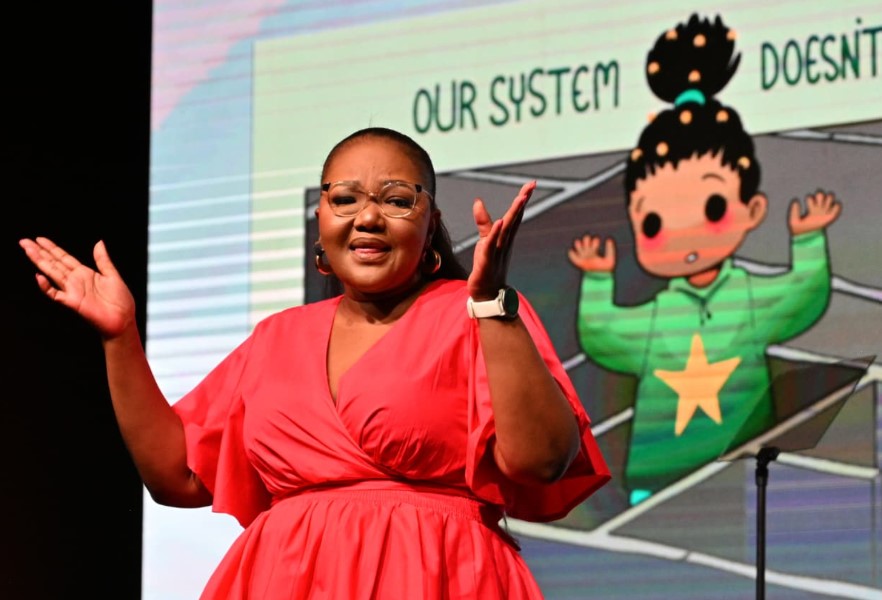
Minister in the Presidency for Women, Youth and Persons with Disabilities Sindisiwe Chikunga has said that education, training and support for youth-led enterprises must be linked to growing sectors and the practicalities of employment.  

Chikunga said government, the private sector, higher education institutions, SETAs and industry needed to work more closely to ensure young people are trained for the economic demands of the present and the future.

DWYPD Minister Sindisiwe Chikunga at the launch of the 50th Anniversary of the 1976 Youth Uprising in Soweto. Photo Cred: GCIS (X)

“It is not enough for young people to enter education if they do not complete [it], and if completion does not lead to work, enterprise or further training. It is not enough to train young people if those skills are not linked to growing sectors, real employers and productive opportunities,” she said.

“It is not enough to support young people with ideas, businesses and digital access if they remain outside finance, procurement, markets, value chains and the digital economy.”

ALSO READ: Services SETA commits R90m to boost community education and training  

Chikunga was delivering a keynote address at the media launch of the Golden Jubilee Commemoration of the 1976 Youth Uprising in Soweto on Thursday.

The launch marked the start of a year-long government programme to reflect on and honour the sacrifices of the 1976 student uprising, while mobilising young people around the challenges facing the country today.

Held under the theme “RESET@50 — The Future Calls”, the commemoration seeks to connect the legacy of the 1976 generation with present-day struggles.

The 1976 uprising was sparked by resistance to the apartheid government’s enforcement of Afrikaans as a medium of instruction in black secondary schools.

Chikunga said the contribution of the 1976 generation remained relevant to the lives of young South Africans today, although the struggle had shifted to include unemployment, economic exclusion and the need for access to future industries.

She said that more than 30 years after the attainment of democracy, government could not measure progress only by access to institutions.

Rather, she said, “it must be measured by completion, transition, absorption, ownership and dignity”.

ALSO READ: Cleanest Mpumalanga school to receive more than R200,000

Chikunga called for a “social reset” aimed at rebuilding the social fabric around young people through social cohesion, patriotism, national identity and shared responsibility.

She said confronting social ills affecting young people was essential to unlocking economic development and growth.

“When young people are no longer ashamed of saying on TV that ‘I drink alcohol’, it cannot be,” Chikunga said, warning about the dangers of alcohol abuse.

The minister said youth had an integral role to play in shaping South Africa’s future.

She urged them to help ensure that the country’s development goals for the next 50 years are met.

“We must ask young people to help shape the next 50 years — towards a National Youth Development Plan 2076 that speaks to digital inclusion, future industries, innovation, ethical and patriotic leadership, economic ownership and a society where no young person is left behind,” said Chikunga.

INSIDE EDUCATION

The post Chikunga says youth training must match future jobs and growing sectors appeared first on Inside Education..
Services SETA commits R90m to boost community education and training  
Uncategorized

Services SETA commits R90m to boost community education and training  

By Lebone Rodah Mosima

The Services SETA says R10 million will be allocated to each province to support Community Education and Training (CET) development.

The commitment was formally made on Tuesday during the launch of the National Adult Literacy for Empowerment Campaign 2026–2030, led by Deputy Minister of Higher Education and Training Mimmy Gondwe at Lovedale TVET College in King William’s Town.

Gondwe emphasised the importance of CET colleges as key institutions for lifelong learning and second chances.

“If we are serious about repositioning CET Colleges as centres of lifelong learning and community renewal, then we must also be serious about investing in the conditions that will allow proper teaching and learning to flourish in our CET Colleges,” Gondwe said.

ALSO READ: Cleanest Mpumalanga school to receive more than R200,000

“These institutions must become places where a young person who left school due to pregnancy can return with dignity; where an unemployed adult can acquire skills and training; where a grandmother can learn to read and write; and where a mineworker can gain digital skills.”

The R90 million commitment was first announced by Administrator, Lehlogonolo Masoga, during the launch of a R5 million infrastructure upgrade project at Mlandeleni Community Learning Centre in Ndwedwe, KwaZulu-Natal, on Monday.

Thembinkosi Mosia, Manager for Real Estate and Related Services Chamber at Services SETA, reiterated the organisation’s dedication to driving change in the perception, quality and scope of education at CETs.

“The intervention supports Service SETA’s broader mandate, which includes skills development, economic development, rural and township development, and youth development,” Mosia said.

“Now is the time for CETs to receive the dignity, opportunity, and respect they deserve.”

ALSO READ: OPINION| Universities must strengthen link between academics, employability

Services SETA said the National Adult Literacy for Empowerment Campaign aims to reach one million adult learners by 2030.

It responds to the challenge of approximately 3.8 million functionally illiterate adults in South Africa, and will deliver basic and functional literacy, numeracy, digital, financial, entrepreneurial and civic skills.

“The campaign will focus on rural, mining, and marginalised communities, where access to education and skills development remains critical,” Services SETA said.

Services SETA said its intervention will support needs-based improvements across CET colleges, including classrooms, workshops, ICT facilities, digital learning infrastructure, skills training spaces, refurbished facilities and enhanced learner support environments.

INSIDE EDUCATION

The post Services SETA commits R90m to boost community education and training   appeared first on Inside Education..
Cleanest Mpumalanga school to receive more than R200,000
Uncategorized

Cleanest Mpumalanga school to receive more than R200,000

By Lebone Rodah Mosima

Mpumalanga’s cleanest school will receive more than R200,000 this year as the provincial education department relaunches a campaign aimed at improving school safety, cleanliness, infrastructure, and community ownership.

Education MEC Lindi Masina announced the prize on Tuesday during the launch of the 2026 Rhandza Xikolo Xa Wena Campaign at Mahhushe Agricultural Secondary School in Nkomazi.

ALSO READ: OPINION| Universities must strengthen link between academics, employability

“This year, the winning school will receive prize money exceeding R200,000, as part of our commitment to incentivise excellence and promote sustainable school environments,” Masina said.

The prize will be awarded through the 2026 Cleanest School Competition, which will follow district activations across Mpumalanga later this month. Each of the province’s 71 circuit managers will be expected to submit one school per circuit to their district by 30 June.

Districts will then adjudicate the entries and submit one winning school each to represent them at provincial level. The provincial winner will be announced in September, aligned with International Clean-up Day celebrations.

Masina said the campaign was intended to do more than encourage schools to clean their premises.

“This campaign goes beyond infrastructure and cleanliness. It is about instilling pride, reinforcing values, strengthening accountability and building a culture of excellence within our schooling system,” Masina said.

She said the objectives of the campaign included improving teaching and learning surroundings, promoting “safe, disciplined, and drug-free school environments”, encouraging the planting of vegetable gardens and enhancing food sustainability through education.

The campaign is being driven through partnerships with the Department of Agriculture, Rural Development, Land and Environmental Affairs, Correctional Services, municipalities, non-governmental organisations, the private sector, school governing bodies and learner formations.

ALSO READ: Dube-Ncube joins launch of coding and robotics centre in Soweto

Masina said schools should be seen as community assets, not only as government institutions.

“The Rhandza Xikolo Xa Wena Campaign must continue to inspire every one of us to take full responsibility for our schools and, by extension, the future of our beautiful province – Mpumalanga,” she said.

She said communities had to take a direct role in protecting and developing schools.

“We have joined hands across sectors to mobilise our communities to become the first line of defence in protecting and developing our schools,” Masina said.

The district activations are scheduled for 19 May in Nkangala, 22 May in Gert Sibande, 26 May in Ehlanzeni and 27 May in Bohlabela.

Masina urged schools to embrace the campaign with “innovation, commitment, and inclusivity” and to involve parents, learners, school governing bodies, traditional leaders, churches, businesses and civil society.

“We remain resolute in our belief that when a community protects its school, it protects its future and when a community invests in education, it invests in its own prosperity,” Masina said.

INSIDE EDUCATION

The post Cleanest Mpumalanga school to receive more than R200,000 appeared first on Inside Education..
Uncategorized

OPINION| Universities must strengthen link between academics, employability

By Peter Kriel

One of the most important expectations placed on higher education today is that it prepares students for successful careers. 

While intellectual development remains central to the mission of universities, students increasingly seek – rightly so – educational experiences that provide clear pathways into professional life.

Career-focused education, therefore, plays a vital role in connecting academic learning with the practical realities of the workplace. 

For this reason, it is incumbent on universities to actively strengthen the link between learning and employability.

Students enter higher education with the hope that their qualifications will enable them to build meaningful careers. Institutions therefore have a responsibility to ensure that academic programmes provide both theoretical depth and opportunities for practical application.

Career-focused education does not diminish the intellectual value of higher education. Rather, it enhances it by ensuring that academic knowledge can be applied to real-world contexts.

In today’s economy, employers seek graduates who can demonstrate both subject knowledge and practical capabilities. Skills such as teamwork, communication, critical thinking, and problem-solving are highly valued across industries.

Universities must help students develop these competencies by integrating practical life skills opportunities into academic programmes. Work-integrated learning, internships, project-based learning, and industry collaborations also provide students with valuable opportunities to apply what they have learned in real-world settings.

These experiences help students build confidence while also developing the professional skills that employers seek. 

Institutions seeking to strengthen career-focused education can consider the following approaches:

Expand work-integrated learning opportunities

Internships, practical placements, and industry projects allow students to gain direct exposure to professional environments. This means that students graduate with practical experience that enhances employability.

Strengthen career guidance and development services

Career counselling, CV workshops, and interview preparation help students transition successfully into the workplace. Students, therefore, gain clarity about career pathways and develop stronger job-search skills.

Develop strong employer partnerships

Collaboration with industry partners can provide insights into emerging skills requirements and new employment opportunities. Institutions must strengthen their alignment with labour market needs.

Embed professional skills – including AI skills – within curricula

Communication, teamwork, leadership, and problem-solving skills should be integrated into academic programmes rather than treated as separate activities. This would allow graduates to become well-rounded professionals capable of contributing effectively in the workplace.

In addition, universities should explicitly teach students how to responsibly and effectively use AI tools, given the rapidly changing nature of the workplace. This includes developing critical AI literacy skills such as prompt engineering, ethical AI use, evaluating AI-generated outputs, and integrating AI to augment human capabilities rather than replace them.

Encourage entrepreneurship and innovation

Not all graduates will follow traditional employment pathways. Institutions that promote entrepreneurial thinking help students identify opportunities to create their own ventures. 

It is also a fact that entrepreneurship contributes to job creation and economic development.

Given all this, it is clear that career-focused education delivers benefits that extend beyond individual graduates.

For students, it increases confidence and preparedness as they transition from study to employment. Exposure to professional environments helps students better understand industry expectations and workplace dynamics.

For institutions, strong employability outcomes enhance reputation and strengthen relationships with industry partners.

For society, career-focused education contributes to economic growth by ensuring that graduates possess the skills required to support innovation and productivity.

Higher education institutions have a unique opportunity to shape the future workforce by designing programmes that combine academic excellence with practical relevance. 

Institutions that embrace career-focused education ultimately strengthen their contribution to society.

When higher education institutions actively connect learning with professional opportunity, they empower graduates to build careers that are both personally fulfilling and economically productive. 

As economies evolve and industries continue to transform, the ability of higher education to bridge the gap between learning and the workplace is essential.

 Peter Kriel is Executive: Operations at The Independent Institute of Education.

INSIDE EDUCATION

The post OPINION| Universities must strengthen link between academics, employability appeared first on Inside Education..
Uncategorized

Dube-Ncube joins launch of coding and robotics centre in Soweto

By Akani Nkuna

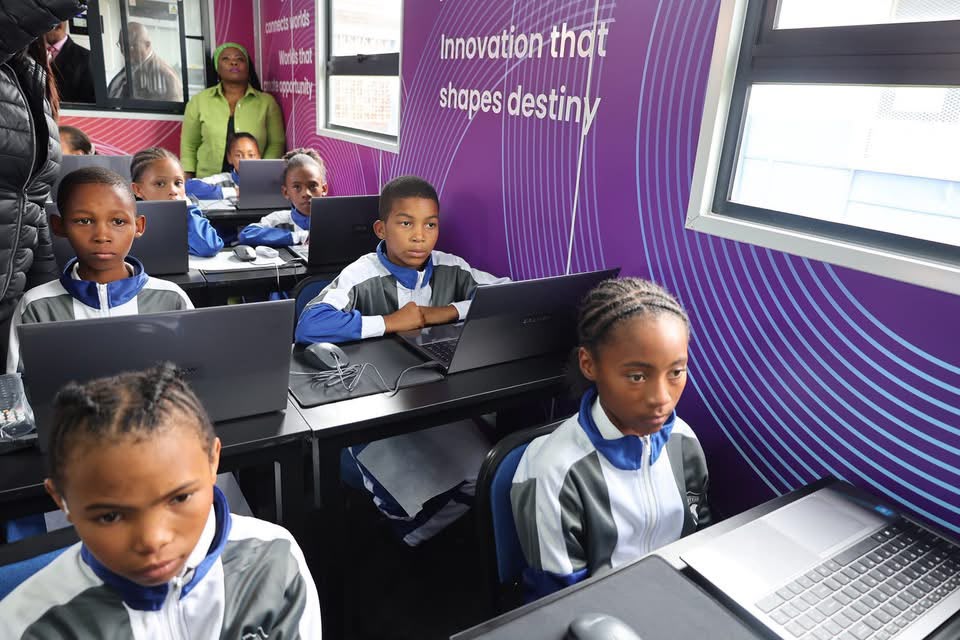
Deputy Minister of Higher Education and Training, Nomusa Dube-Ncube, has joined iStore Education and iSchoolAfrica for the launch of the iSchoolAfrica Coding and Robotics Centre at Igugu Primary School in Soweto, calling for equal access to 4th Industrial Revolution tools across the country.

Dube-Ncube said the centre was a significant step towards advancing digital literacy and equipping learners, especially those from township schools, with future-ready technological skills while helping to address the country’s digital divide.

ALSO READ: OPINION| How SA nurses are becoming their own bosses

“Coding is a language. Robotics is a language. Artificial Intelligence is a language. These are the dialects of the Fourth Industrial Revolution. And just as our forebears refused to be excluded from learning in Sesotho, isiZulu, Setswana, isiXhosa — we refuse to allow our children to be excluded from the language of the future,” she said on Tuesday.

“For too long, digital literacy, coding skills, and access to technology have been the exclusive privilege of children in Model C schools. Children whose parents could afford tablets, whose schools had fibre internet, whose classrooms had smartboards.”

The centre seeks to empower education leaders, teachers and learners by helping schools and other institutions integrate Apple technology into their learning environments and strengthen digital education.

DHET said the launch was in line with South Africa’s 4IR skills agenda, aimed at preparing the country to meet global digitalisation standards by taking digital skills into under-resourced schools.

The deputy minister said the centre formed part of a skills revolution, with a focus on the foundation phase to ensure future-ready skills are introduced to learners at an early stage.

ALSO READ: Malema tells EFF youth to drive voter registration

“The 4IR is transforming every single industry. It is changing how we manufacture, how we farm, how we heal the sick, how we move from place to place, and yes — how we learn. Countries that prepare their young people for this revolution will thrive. Countries that don’t will be left behind,” said Dube-Ncube.

She told learners, parents and community leaders at the launch that a “new world” shaped by technology was emerging, and urged pupils to become active and positive participants in it.

She said electric vehicles, artificial intelligence, data science, renewable energy and the green economy, drones and aerospace were among the strategic areas of the new economy in which young people should seek to participate.

Dube-Ncube said the department was committed to ensuring that teacher and lecturer development matched the standards required for digital skills, while also strengthening NSFAS to ensure students were afforded opportunities.

She said the department had also renewed its commitment to investing in digital infrastructure at schools and colleges, warning that isolated coding centres would not be effective if they operated in silos.

INSIDE EDUCATION

The post Dube-Ncube joins launch of coding and robotics centre in Soweto appeared first on Inside Education..
Uncategorized

AI, digital innovation must be tools of liberation, says Manamela

By Levy Masiteng 

Higher Education and Training Minister Buti Manamela has warned that artificial intelligence could deepen inequality in South Africa and across the Global South unless developing countries help shape the rules governing the technology.

Speaking at the World Digital Education Conference in Hangzhou, China, on Tuesday, Manamela said AI and digital innovation must become tools of liberation rather than another mechanism of exclusion for millions of young people.

Manamela said the governance of artificial intelligence was being shaped mainly by a small number of technologically advanced countries and powerful corporations.  

ALSO READ: OPINION| How SA nurses are becoming their own bosses

“The Global South is, for the most part, an observer of this process rather than a participant in shaping it. This must change, and it must change urgently,” Manamela said.

He said South Africa approached digital transformation and artificial intelligence not as a neutral technical exercise, but as a political project shaped by the country’s history of colonial dispossession, racial exclusion and structured inequality.

Manamela warned that artificial intelligence would reproduce and intensify existing inequality if governments failed to govern it “deliberately, with justice and inclusion as organising principles”.

“What does digital exclusion look like in practice? It looks like a student without affordable connectivity who cannot access a virtual lecture. It looks like a TVET college without adequate devices, bandwidth, or digital learning systems, competing in name only against institutions that have all three,” he said.

Manamela said the future economy would not be built only by data scientists, AI researchers and elite universities, but also by artisans, technicians, renewable energy specialists, robotics engineers, healthcare technologists and digitally capable workers across every sector of production and service.

ALSO READ: Gauteng graduates over 2,500 youth in skills drive to fix schools, hospitals

He said this made technical and vocational education central to any serious African development agenda, especially as tens of millions of young people enter labour markets every year, many without access to university education.

“If AI and digital transformation are to contribute meaningfully to African development, they must connect directly to industrialisation, manufacturing, infrastructure, and employment creation,” Manamela said.

He said South Africa was increasingly prioritising industry-linked learning, work-integrated learning, micro-credentials and flexible pathways that allowed people to enter, exit and re-enter learning throughout their lives.

Manamela also pointed to South Africa’s growing cooperation with China in vocational education, technical training and digital skills development.

“China’s experience with large-scale technical education, including the Luban Workshop model and the deliberate integration of digital skills into vocational curricula offers genuine lessons for the African context,” he said.

He said responsible AI governance required transparency, accountability, redress when AI systems caused harm, and protection against algorithmic discrimination.

ALSO READ: UKZN staffer Phumelele Basi earns PhD at 25 after completing doctorate in two years

He also warned against the unchecked commercialisation of educational AI, saying education must remain a public good and a human right.

“When AI systems in education are designed primarily to extract profit, the interests of learners and the public interest are subordinated to the interests of shareholders. That is not a technical failure. It is a political failure, and we must name it as such,” he said.

He said Africa could not simply consume technologies designed elsewhere or be governed by frameworks it had no hand in crafting.

“We must be producers of the norms that will define this era, not merely subjects of them,” Manamela said.

INSIDE EDUCATION

The post AI, digital innovation must be tools of liberation, says Manamela appeared first on Inside Education..
Uncategorized

OPINION| How SA nurses are becoming their own bosses

By Linda Dunkley

For decades, nurses were the backbone of South Africa’s healthcare system, present in every ward, every emergency and every recovery room, but rarely in positions of ownership and leadership.

Now, as South Africa marks International Nurses Day on May 12 under the global theme “Empowered Nurses Save Lives”, a growing network of township clinics is transforming nurses from employees into entrepreneurs while helping to ease pressure on overcrowded public healthcare facilities.

ALSO READ: Malema tells EFF youth to drive voter registration

In communities where patients often endure long queues at public clinics or cannot afford private healthcare, nurse-led Mpathy Clinics are emerging as an accessible and affordable alternative rooted in empowerment, dignity and community-based care.

The model, driven by NPO Rhiza Babuyile, currently operates 11 clinics in township areas including Umlazi, Naledi, Gugulethu, Tembisa and Diepsloot. Beyond expanding primary healthcare access, the initiative is creating something rarely seen in South Africa’s nursing

South Africa’s public sector serves roughly 80% of the population, yet clinics routinely face long queues, staff shortages and medicine stockouts.

Most primary healthcare services fall within the legal scope of a Professional Nurse and policies like NIMART (Nurse Initiated Management of Antiretroviral Treatment) – leaning on nurses is the only way to scale primary healthcare capacity at a cost the country can afford.

For Mpathy, this means helping the Department of Health extend healthcare services into underserved communities while aligning with the Ideal Clinic Realisation programme and supporting the long-term National Health Insurance (NHI) rollout, where accredited primary healthcare facilities serve as the first point of entry.

ALSO READ: Amajimbos team named ahead of U17 Afcon in Morocco

Nurse-led PHC clinics like Mpathy are where early detection is possible, response rates are highest, and the cost to both the patient and the public system is lowest.

The clinics were designed to complement, rather than compete with, the public healthcare system. Mpathy is positioned explicitly as an extension of the Department of Health rather than a parallel system.

The clinics also contribute to local economic development, not only creating jobs for administrators and community health workers, but enabling non-nursing entrepreneurs to own clinics and employ qualified nurses, broadening community-based healthcare investment and expanding access to care.

This month alone, a new Mpathy Clinic will open in Orange Farm on 21 May, led by nursepreneur Sister Mbalenhle, and on 19 May an entrepreneur will be inducted into the model in Zithobeni, Bronkhorstspruit.

‘It’s My Answered Prayer’ — A Nurse Returns Home as Nursepreneur

For professional nurse and nursepreneur Sindiswa Nhlabathi, the model has become deeply personal.  Nhlabathi will this week open the  Mpathy Clinic in Naledi, Orange Farm on 14 May, serving the same community where she was born and raised.

“I was born at Zola, right across from where the Naledi clinic is based. I grew up in a family where no one was formally employed but they were ‘business people’,” she said.

Her mother and grandmother sold cakes and goods to support the family. “It wasn’t easy as there was no money for university,” she said.

Before nursing, she worked at a government hospital as a personal assistant manager, until a friend changed everything.

“One day my friend came to me with nursing application forms and persuaded me to apply. I refused telling her that ‘you know I don’t like nursing’ but she insisted. I was accepted and the minute I was exposed to clinical experiments I knew I was born for this.”

ALSO READ: All Western Cape schools closed on Tuesday as severe weather batters province

After years in public healthcare, including at Zola Clinic, Nhlabathi resigned from her permanent post and was later offered the opportunity to run the Naledi clinic.

“When I was studying it never crossed my mind that one day I might own a clinic. It’s my answered prayer. I feel empowered and I don’t even have the words to articulate my heart but one thing I know is that I intend to take this opportunity and make the best out of it,” says Nhlabathi.

At the clinic, children can receive treatment for under R200, while adult consultations with medication cost up to R350.

“Our clinic is private but very affordable. Our community relies on social grants and low incomes, while public clinics remain overwhelmed. Mpathy Clinics are a bridge between private and public healthcare and our priority is to build trusted relationships with the community,” she said.

Linda Dunkley is Managing Director of Rhiza Ventures.

INSIDE EDUCATION

The post OPINION| How SA nurses are becoming their own bosses appeared first on Inside Education..

Malema tells EFF youth to drive voter registration
Uncategorized

Malema tells EFF youth to drive voter registration

By Lebone Rodah Mosima

Economic Freedom Fighters (EFF) leader Julius Malema has told the party’s youth structures to drive voter registration among young South Africans ahead of the 2026 local government elections.

Addressing the EFF’s Central Youth Elections Task Force in Johannesburg on Monday, Malema said the party would increase efforts to identify unregistered supporters, including through ID checks at rallies and other party activities.

ALSO READ: Amajimbos team named ahead of U17 Afcon in Morocco

“We’re not going to have an FNB full of unregistered people; we would rather have fewer people at the FNB, but know that this fewer number is better because they are registered to vote,” Malema said.

Political parties are stepping up mobilisation efforts ahead of what is expected to be a fiercely contested local government election on 4 November.

The Electoral Commission has previously raised concern about low registration levels among young South Africans, making first-time and younger voters a key battleground for parties.

Malema told the task force that young activists were best placed to reach their peers and persuade them to register.

“It’s only you who can speak the language of the youth, only you can attract the youth and ensure that the youth vote, because the target given to you is so small, that it is possible for you to register those young people in order to meet the youth’s target,” he said.

“For now, we are not speaking to voters; we are speaking to unregistered voters. We want new voters.”

ALSO READ: All Western Cape schools closed on Tuesday as severe weather batters province

Malema said the EFF wanted young people to become champions of the poor and campaign for free education, better-equipped schools and improved conditions for students.

“You’re the ones fighting so that NSFAS can allocate allowances on time and pay rental on time because you don’t want to see the children of the poor being chased out of their accommodation,” he said.

He urged students to become activists on campuses, organise around issues affecting them and develop themselves as future leaders.

He also called on the task force to focus on high schools and universities as key sites for voter registration.

INSIDE EDUCATION

The post Malema tells EFF youth to drive voter registration appeared first on Inside Education..