King Edward VII (KES) has dethroned defending champions Hoërskool Waterkloof in a four-run thriller to lift the Wildeklawer Noord-Suid T20 Tournament trophy, with KES player Troy Gordon’s match-winning 78 proving decisive.
Playing at Camp Discovery, in the Dinokeng Conservation Area in Limpopo on Sunday, Gordon struck 10 fours in his 57-ball innings to rescue KES from a modest batting display, powering them to 148/7 before a disciplined bowling performance restricted Waterkloof to 144/7.
The victory denied Waterkloof a fourth title in five editions of the prestigious schoolboy competition and gave KES a tournament triumph built on resilience, composure and a bowling unit that repeatedly delivered under pressure.
Speaking to the media after the match, KES head coach Pieter van Rooyen praised his players for defending modest totals throughout the knockout stages, with their quarterfinal, semifinal and final victories all decided by single-digit margins.
“The boys showed great character, composure, and good application in defending fairly modest totals in the quarterfinal, semifinal, and the final. Our bowlers showed some really good discipline to be able to get us over the line in those three games, where it all went down to single-digit wins,” Van Rooyen said.
Gordon was central to KES’ success in the final, anchoring the innings while wickets fell around him.
Batting at number three, he struck 10 fours and contributed more than half of his side’s total in an innings that ultimately proved the difference between the two finalists.
His best partnership was a 48-run stand for the second wicket with Tiago Dias, who scored 17.
Dias was KES’s second-highest scorer, underlining just how important Gordon’s contribution was to giving his team a competitive total.
Morné Steyn added 14, while Kyle Henenne remained unbeaten on 11.
KES’s other batters struggled to make substantial contributions, but Gordon ensured they had enough runs to challenge Waterkloof.
His performance earned him the Player of the Match award, although the tournament’s individual batting honour went to Paarl Boys’ High’s 14-year-old Gilmer Horn.
Grey College’s Wilhelmus van der Schyff was named Bowler of the Tournament.
Defending 149, KES needed their bowlers to reproduce the discipline that had carried them through the knockout rounds, and they responded with another determined effort.
Steele Grooteman led the attack, claiming 3/21 from three overs, including the crucial dismissal of Waterkloof’s Juan Swart.
Swart had threatened to turn the contest in the defending champions’ favour, scoring 33 off just 20 deliveries.
But, Grooteman’s intervention prevented him from building on his promising start.
Connor Kuijers, Matthew de Jong, Morné Steyn and Tyler Cloete also contributed with wickets, taking one apiece as KES kept Waterkloof from establishing the partnerships needed to take control of the chase.
Waterkloof remained in contention until the closing overs, with Vorster de Villiers launching a late assault, finishing unbeaten on 31 from 18 balls, while Juan Cloete contributed an unbeaten 25.
Their efforts brought the defending champions within touching distance, but KES held firm to seal the four-run victory and lift the trophy.
Van Rooyen said his team had expected a fierce challenge from Waterkloof and knew they would have to remain composed until the final delivery.
“We always knew that Waterkloof was going to fight to the very end. We just had to stay in the fight for as long as possible to be able to get over the line,” he said.
Elsewhere, Northwood claimed third place after beating Menlopark by 11 runs; St David’s Marist Inanda finished fifth after crushing Affies by 63 runs; and St Andrew’s School secured seventh place with a 64-run victory over Paarl Boys’ High.
The Gauteng Department of Education (GDE) has registered 203,794 candidates for the 2026 National Senior Certificate (NSC) examinations, an increase of 11,049 from last year.
The cohort comprises 152,527 full-time candidates and 51,267 part-time and repeater candidates. The examinations will run from October 13 to November 26.
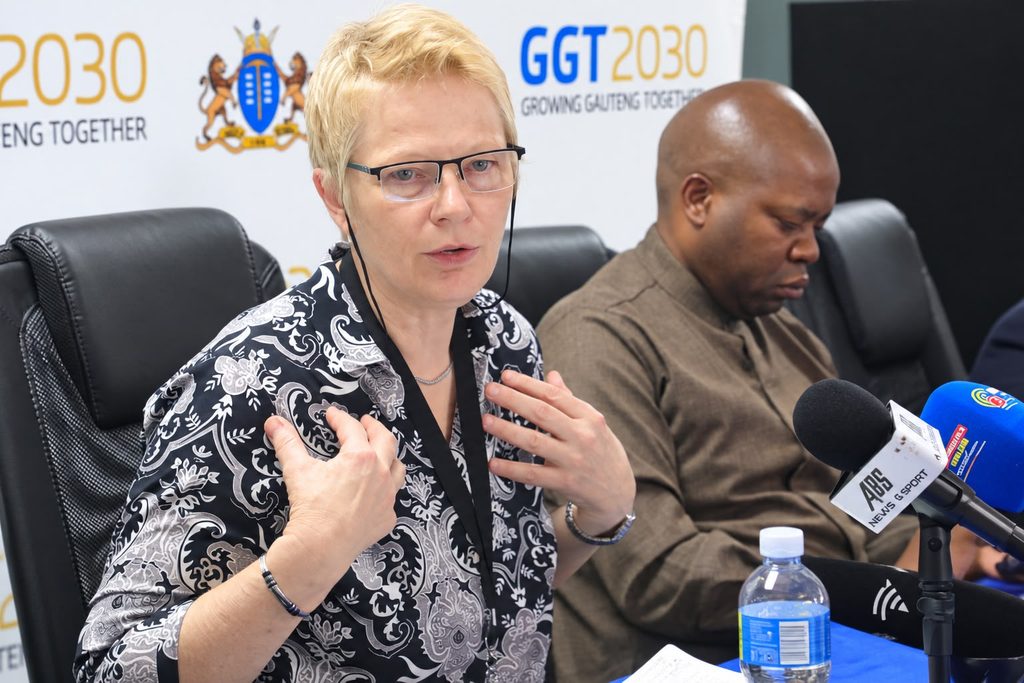
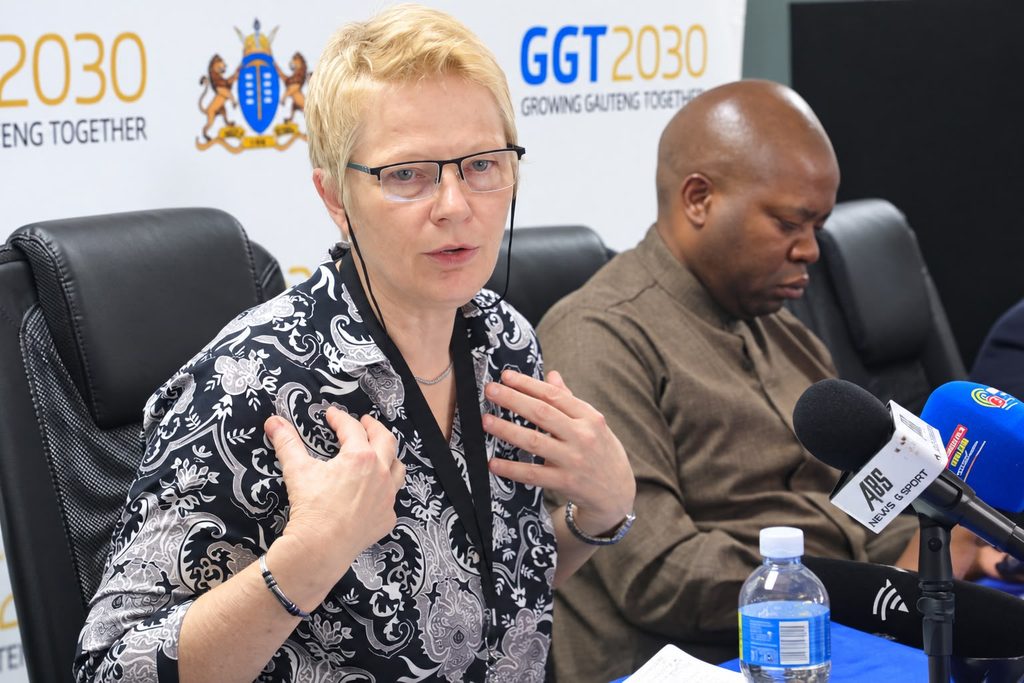
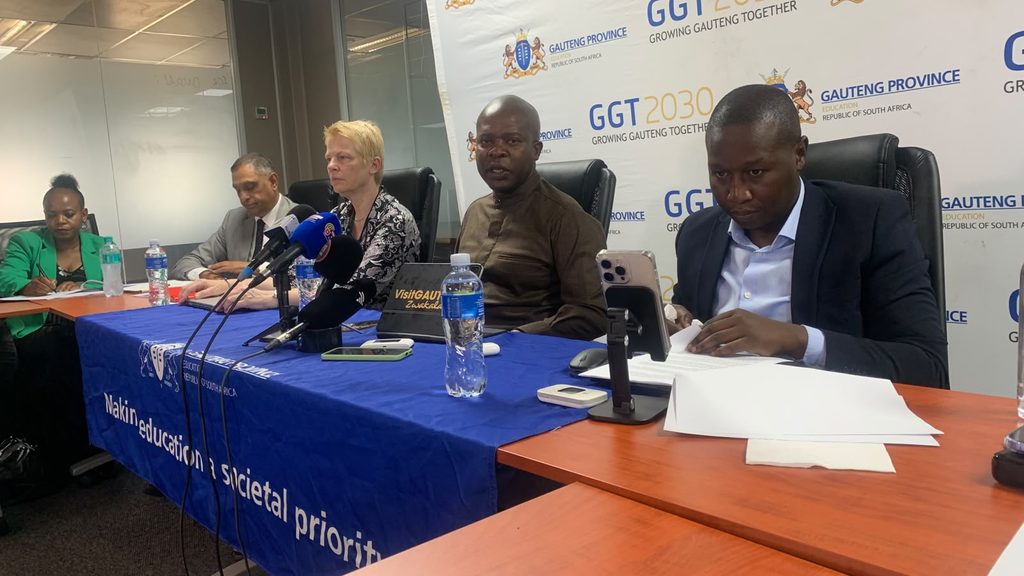
Gauteng Education MEC Lebogang Maile briefed the media on Monday on the province’s state of readiness, saying the 2026 cohort was the first in Gauteng’s history to exceed 200,000 candidates.
“This is a reflection of both the quantitative increase in the population of Gauteng, and by extension its learner population, as well as a reflection of the trust in the qualitative strength of the education system in the province,” Maile said.
A total of 192,745 candidates registered for the examinations in 2025.
Maile said all three categories of candidates — full-time, part-time and repeaters — had increased this year.
The examinations will cover 77 subjects, comprising 155 question papers. While full-time candidates are required to write seven subjects, almost 20,000 will also write an eighth subject.
Examinations will be administered across all 12 official South African languages, as well as foreign languages at the applicable levels.
English recorded the highest enrolments at Home Language and First Additional Language levels, with 54,163 and 98,350 candidates, respectively. This was followed by isiZulu at Home Language level, with 31,940 candidates, and Afrikaans at First Additional Language level, with 44,879.
Maile said 70.7% of full-time candidates had registered for Mathematical Literacy, compared with 29.3% for Mathematics.
The examinations will be written at 1,065 registered and audited centres across the province.
Enrolments range from two to 545 candidates at full-time centres and from nine to 1,513 at part-time centres.
Maile said the department had worked with all 15 education districts and schools to ensure operational readiness.
School principals will serve as chief invigilators, while additional support will be provided to high-risk centres, including those with large enrolments, newly established centres and those that experienced examination challenges in previous years.
Private chief invigilators and resident monitors have been appointed and trained to strengthen oversight at these centres.
The department will print, package and distribute an estimated 2.7 million question papers, comprising 76.5 million print images, to 16 storage points each week. The papers will then be distributed daily to examination centres through 75 dedicated distribution points.
Approximately 1,700 monitors, including provincial, district and resident monitors, will oversee the examination process.
Their responsibilities include checking examination systems and centre readiness, inspecting secure storage facilities, verifying key management and the chronological storage of question papers, and auditing electronic security measures.
The department has also audited school-based assessments, practical assessment tasks and teacher files.
“Our target remains 100% monitoring coverage, exceeding the national requirement of 70%,” Maile said.
Preparations for marking are at an advanced stage, with 27 marking centres identified and audited. The appointment of 14,800 marking personnel is under way.
Maile said systems and resources had been put in place to process examination scripts and capture marks ahead of the release of the 2026 results on January 12, 2027.
Security and examination integrity
The department has introduced measures to prevent examination irregularities, including a pledge-signing ceremony held at schools across the province on October 9.
Candidates were briefed on examination rules, the code of conduct and the sanctions for non-compliance.
Maile said penalties for disruptive or dishonest behaviour could include the nullification of results, delays in obtaining a matric qualification and exclusion from up to three future examination cycles, depending on the severity of the offence.
Security measures across the examination process include secure printing facilities, audited storage and distribution points, armed security escorts, access controls, surveillance systems and double-locking mechanisms.
“All district storage facilities and distribution points have been audited and strengthened security arrangements are in place for the duration of the examination,” he said.
The department will also use real-time reporting systems and security scanners at examination room entrances to detect concealed electronic devices.
Maile said the scanners were intended to identify sophisticated cheating devices, including smart glasses, spy pens with hidden recording technology and micro-earpieces, rather than invade learners’ privacy.
“With the rise of ‘cheat-tech’, students are increasingly using highly sophisticated gadgets to smuggle information into examination centres,” he said.
“Super security scanners help by detecting hidden wireless signals, adding a necessary layer to ensuring the integrity of the examination process.”
The department will also work with police and other law enforcement agencies where necessary to prevent disruptions during the examination period.
Maile said measures would be taken to prevent examination paper leaks, adding that question papers were kept in guarded facilities.
Academic support for candidates
Maile said the department had provided additional academic support throughout the year through programmes targeting learners who needed assistance, as well as those seeking to improve their results.
The Secondary School Improvement Programme (SSIP), managed in partnership with the Sci-Bono Discovery Centre, supports priority and underperforming high schools from Grades 8 to 12, with intensive assistance for matric candidates.
The programme focuses on gateway subjects, including Mathematics, Mathematical Literacy, Physical Sciences, Life Sciences, Accounting, English First Additional Language, Economics, Business Studies, History and Geography.
It provides free Saturday classes, holiday lessons, examination preparation camps, tutoring, learning materials, catering and transport assistance.
Maile said digital learning resources had also increased candidates’ access to subject-based learning and assessment activities.
Special monitoring teams track attendance, teaching quality and pre- and post-test results to identify and address learning gaps.
He said SSIP had helped learners affected by disruptions during the year, including service delivery protests and interruptions to municipal services.
The department also runs a High Flyer Programme for top-performing Grade 12 learners, offering specialised tuition and revision camps aimed at improving distinction rates and bachelor-level passes.
The programme focuses on subjects such as Mathematics, Physical Sciences, Accounting and Business Studies, providing specialised notes, structured learning materials and problem-solving sessions led by subject advisers and experienced teachers.
Maile said the programme was designed to meet the needs of advanced learners who might not be sufficiently challenged by the pace of conventional classroom teaching.
The department’s Just-in-Time Programme provides short-term professional development for teachers ahead of specific curriculum requirements. It combines standardised lesson plans, learning materials and classroom coaching.
Candidates will also have access to daily revision opportunities ahead of examination papers.
Gauteng targets further improvement
Gauteng recorded its highest-ever matric pass rate of 89.1% in 2025, continuing a five-year trend of annual improvement since 2021.
The province ranked third nationally, producing 67,861 bachelor passes, equivalent to 48.15% of candidates who wrote the examinations.
All 15 districts achieved pass rates above 83%.
Johannesburg West was the top-performing district, with a pass rate of 96.2%, while Gauteng East recorded the lowest rate at 83.7%. Independent schools in the province achieved a pass rate of 94.82%.
Maile said the department was confident that the Class of 2026 would continue the upward trajectory, given the support provided throughout the year and during the examination period.
He called on parents, guardians and communities to help candidates prepare by providing suitable study environments, limiting household chores and ensuring learners were well-rested.
Through its “It Takes a Village to Raise a Child” programme, the department has emphasised the role of families and communities in supporting learners.
Maile urged communities not to block access roads or school gates during the examination period, warning that candidates who missed papers because of disruptions would have to write them in the June 2027 examinations.
Such delays could affect their transition to higher education and training.
He also advised candidates to limit their use of social media during the examination period, saying it could affect their mental and emotional well-being.
“The Department cannot over-emphasise the importance of candidates maintaining personal integrity during this process,” he said.
“Cheating has no place in our examination system. We call on every candidate to uphold the values of integrity, honesty and hard work espoused in the NSC Pledge that all candidates have already signed.”
Acting Gauteng education head of department Albert Chanee said the department had established policies and guidelines to prevent political campaigning from disrupting schools during the election period.
“There is an established protocol that there is no political campaigning, and that no political officer can come into a school to address the staff unless it is on community matters,” Chanee said.
He said the protocol had been in place for a long time and had not caused problems in previous years.
Five suspects have been arrested after a fire destroyed a block of classrooms designated for matric exams at Tiragalo Secondary School in Kgakala Township, near Leeudoringstad, in the North West.
The blaze broke out in the early hours of Friday, 9 October, just four days before the National Senior Certificate (NSC) exams are scheduled to begin on Tuesday.
The fire destroyed a block housing a library, computer storeroom, textbook storeroom and three classrooms designated as an examination centre for Grade 12 learners.
This fire follows a series of similar incidents at North West schools this year.
In August, fires damaged Matlhare Mokautu Secondary School in Monakato, where a school hall sustained damage estimated at more than R5 million, and Sewagodimo Technical School in Pella Village, where five workshops were destroyed.
Days later, on 29 August, a mobile classroom was set alight at Phakisang Primary School in Ottoshoop, prompting the education department to consider reviving its Adopt-a-Cop programme to strengthen school security. Earlier, in April, a classroom was destroyed by fire at FM Ramaboa Technical School in Itsoseng, near Lichtenburg.
North West Education spokesperson Mercy Mokgatle told Inside Education that the suspects in the Tiragalofire were allegedly former pupils who had “dropped out” of the school.
“Their names and identities can’t be revealed until they’ve made their first appearance in court,” Mokgatle said.
Although the education department reported five arrests on Sunday, a South African Police Service (SAPS) statement issued on Saturday confirmed four suspects, aged between 21 and 29, had been arrested.
Police said the arrests followed an investigation into the fire and a burglary discovered in a separate school block that had not been damaged by the blaze.
“Through the activation of the Tactical Response Team (TRT), drone capability, Crime Intelligence, and the Community Policing Forum (CPF), suspects allegedly involved in the burglary were identified,” SAPS said.
“During follow-up operations, some of the stolen school property, including toiletries, was recovered in the possession of the suspects.”
Police said further arrests were expected, including those of individuals suspected of purchasing property stolen during the burglary.
The suspects confirmed were expected to appear before the Leeudoringstad Magistrate’s Court on Monday, facing charges of business burglary and arson.
North West Provincial Commissioner Lieutenant General Arthur Peter Adams commended the Tactical Response Team, Crime Intelligence and the Community Policing Forum for their swift breakthrough.
“He further thanked the community for its assistance and condemned the criminal acts in the strongest terms, stating that schools are pillars of the community, and acts of burglary and arson undermine the future of our children and will not be tolerated,” SAPS said.
According to the education department, the incident came to light when the school principal received a call from staff members informing her that the school was on fire.
Police and emergency fire services had already been called to the scene.
The department said the destroyed block contained valuable teaching and learning resources, including textbooks ordered for 2027, 24 computers, a projector, a microwave oven, a kettle, six new doors, a table tennis board, athletics equipment, toilet paper, stationery and 80 boxes of Typek paper.
“Grade 12 learners have lost three classrooms that were intended to serve as their examination centre, as well as many other valuable items,” Acting North West MEC for Education Kenetswe Mosenogi said.
“This is totally unacceptable. We cannot tolerate the theft and destruction of learners’ property.”
“I want those who are behind this incident to face the full might of the law and receive lengthy sentences,” she said.
“This will serve as a deterrent to others and send a clear message that school property must be protected and that acts of criminality against our schools will not be tolerated.”
The department said arrangements were underway to secure alternative venues for the affected Grade 12 learners ahead of the exams.
Higher Education and Training Minister Buti Manamela has wished the matric class of 2026 well ahead of their final exams, which start on Tuesday, telling pupils to give their best while reminding them that their futures should not be defined by their results.
“For twelve years, you have worked towards this moment. Many of you have studied under difficult circumstances, yet you have persevered and are now completing an important chapter of your lives,” he said on Monday.
“You should be proud of how far you have come.”
He also told matriculants to apply for university and college admission and financial assistance before their exam results are released, warning them not to miss important application deadlines.
“Do not wait until your results are released before planning your next step. Check whether your preferred university or TVET college is still accepting applications for 2027 and apply while places are available,” he said.
“If you require financial assistance, submit your free application to the National Student Financial Aid Scheme (NSFAS) at www.nsfas.org.za by 31 October 2026. Remember that applying for admission and applying for funding are separate processes.”
He said that examination results should not determine how students view their future prospects.
“As you prepare, remember that your future is bigger than a single examination. Work hard and aim for the best possible results, but do not measure your worth or potential solely by your marks.”
He said learners should consider the range of opportunities available after school, including university education, technical and vocational qualifications, apprenticeships, occupational training and entrepreneurship.
“Some of you will enter universities. Others will pursue technical and vocational qualifications, apprenticeships, occupational training or entrepreneurship. Our TVET colleges are institutions of choice, preparing young people for the occupations, industries and enterprises our country needs.”
Manamela appealed to parents, guardians, teachers and communities to avoid placing excessive pressure on learners during the examination period.
“To parents, guardians, teachers and communities: support our learners with encouragement, not unbearable pressure. Help them pursue their ambitions while allowing them to discover their own paths.”
He said the government had a responsibility to continue improving post-school education institutions, funding systems and opportunities to ensure young people could realise their ambitions.
“To the Class of 2026: South Africa needs you as graduates, workers, thinkers, creators, problem-solvers and citizens. Government must continue improving the institutions, funding systems and opportunities that will help you realise your aspirations,” he said.
“Walk into the examination rooms with confidence and determination. Give these examinations your best, but remember that your story does not end with your matric results,” he said.
Basic Education Minister Siviwe Gwarube said on Sunday that South Africa’s “obsession” with matric pass rates has encouraged schools to manipulate their results by holding back weaker learners and steering pupils away from challenging subjects.
Speaking at a media briefing in Pretoria about the state of readiness for the exams, Gwarube said provincial performance would in future be measured against a broader range of indicators, including Bachelor’s passes, distinctions, learner retention and performance in subjects such as Mathematics, Physical Sciences, Accounting and Economics.
The announcement came as the Department of Basic Education declared itself ready for the 2026 National Senior Certificate (NSC) examinations, which start on Tuesday.
A record 962,832 candidates have registered for this year’s exams, including 815,051 full-time candidates and 147,781 part-time candidates.
“Over the past years the quality of our basic education system has been reduced to this single figure, this single question; what is the pass rate?” she said.
“This obsession has had unintended consequences and has incentivised the wrong kinds of behaviour.”
These included “culling”, where academically weaker learners were prevented from progressing to Grade 12, and “gatekeeping”, where learners who qualified for progression were kept back in Grade 11.
She also criticised the practice of encouraging learners to take Mathematical Literacy instead of Mathematics to improve schools’ overall pass rates.
“This obsession with the matric pass rate and its perverse incentives has been to the detriment of this country’s ability to produce skills in STEM professions, in Accounting and Economic Sciences,” Gwarube said.
“This must change, if our country is to be economically competitive, it needs deep and meaningful skills in STEM and other gateway subjects.”
New measures for provincial performance
“Going forward, therefore, I have decided that provincial performance will be ranked through a broader basket of quality indicators,” she said.
“This basket of quality indicators will include the number of Bachelor passes, distinctions, the levels of learner retention, as well as the rate of participation and performance in gateway subjects such as Mathematics, Physical Sciences, Accounting and Economics, amongst others.”
She said the approach would allow provinces to compare their performance more meaningfully and identify areas requiring intervention.
“The question will not only be whether learners passed, but whether provinces are improving literacy, numeracy, retention and gateway subject participation,” she said.
COVID-19’s lasting impact on the Class of 2026
Gwarube also highlighted the particular challenges facing this year’s matric candidates, who experienced significant disruptions to their education during the COVID-19 pandemic.
The Class of 2026 began Grade 1 in January 2015 and reached Grade 6 in 2020, when the pandemic forced widespread school closures, rotational timetables and interruptions to classroom teaching.
Gwarube said the disruption occurred during a critical stage of learners’ educational development, when they should have been strengthening their literacy and numeracy skills before entering secondary school.
Although schools subsequently resumed full-time teaching, she said some effects of the lost learning time had persisted into later grades.
Foundational learning gaps, socioeconomic inequalities and teacher attrition in certain provinces had remained important considerations in preparing the cohort for their final examinations.
To address these challenges, the department used findings from its 2025 NSC Diagnostic Report to identify subjects and topics where learners had experienced difficulties.
Teachers, subject advisers and school management teams used the findings to strengthen curriculum coverage and target additional academic support.
More than 159,000 learners receive extra support
According to Gwarube, the department’s 2026 Learner Support Programme reached 159,180 learners through 1,262 centres across all 75 education districts.
The interventions focused particularly on learners needing additional assistance, progressed learners and schools experiencing performance challenges.
Candidates received revision guides, previous examination papers, online learning materials and opportunities to write mock examinations.
The department also continued its Second Chance Matric Programme, offering part-time candidates additional learning opportunities through after-hours and weekend classes at 41 centres.
Learning materials were distributed to 84 centres, while 15 provincial learner workshops were held.
The department said candidates could also access free online resources and educational broadcasts on radio and television.
Gwarube urged parents to give matriculants sufficient time and space to prepare for their examinations rather than burdening them with household responsibilities.
“Please give them the space and support they need to perform at their very best in these exams,” she said.
Record number of matric candidates
The department registered 48,508 more full-time candidates than in 2025, while part-time registrations increased by 10,763.
“The growth in full-time registration is an indication that learners are staying in school, that they are finishing matric in good time, and, as the results of last year show, more and more are being successful in their first attempt at the NSC Matric Exams,” she said.
The exams will be conducted at approximately 7,100 centres across the country.
The department has established 189 marking centres and recruited 51,104 educators to mark examination scripts.
Gwarube said question papers and examination materials had undergone quality assurance and had been approved by Umalusi, while additional security measures had been introduced to protect the integrity of the examinations.
These included stricter vetting of examination officials, strengthened security during the production and distribution of examination papers and risk-based monitoring of examination centres.
She also warned communities against disrupting examinations during service delivery protests or political demonstrations.
The department has contingency plans to deal with operational disruptions, including severe weather and community unrest.
“Having considered the comprehensive preparations reported by all nine Provincial Education Departments, I am proud to announce that the Department of Basic Education and the class of 2026 are Ready for the 2026 National Senior Certificate examinations,” she said.
As the Class of 2026 enters the final stretch of preparations for the National Senior Certificate examinations, Grade 12 learners are balancing exam pressure with hopes and uncertainty about life after matric.
The exams start on Tuesday and will end on 25 November.
The Department of Basic Education has urged learners to make every study session count by practising active recall rather than simply reading their notes.
It has advised learners to put their notes away after studying and test how much they remember by writing down key points or answering questions without looking at their study material.
During a recent post-Cabinet media briefing, Minister in the Presidency Khumbudzo Ntshavheni said that schools were focusing on structured revision and additional academic support.
She also urged learners who felt overwhelmed to seek professional help.
“If you or a matric learner in your care feels overwhelmed, free professional help is available 24 hours a day from the South African Depression and Anxiety Group at 0800-12-13-14,” she said.
Speaking to Inside Education, learners described different experiences as they prepared for their final exams, with some confident in their readiness while others were anxious and concerned about academic support.
Lwazi Nkosi, a Grade 12 learner at Prudens Secondary School in Soweto, said he felt well prepared, despite occasional challenges that shook his confidence.
“I do believe in myself. I do believe in my capabilities. And I’ve got this, I’ve got this,” he said.
Nkosi said identifying his weaknesses and developing strategies to address them had helped him improve. He relies mainly on past exam papers to test his understanding and identify areas requiring further attention.
He achieved 100% in Geography and 90% in History in his preparatory examinations.
However, he acknowledged that his plans for life after matric might have to change depending on circumstances.
“You see, as a person, you might have plans, but you are not certain what life will be like,” he said.
For Ayanda Magawu of Lethulwazi Secondary School in Vosloorus in Ekurhuleni, the countdown to the exams has brought considerable pressure.
Magawu, who takes science subjects, said she had been using a study timetable and attending online classes to strengthen her understanding.
Despite her preparation, she believes pupils can never feel completely ready for the finals.
“No one is ever well prepared for final exams. You’ll tell yourself you’ll be fooling yourself telling yourself, ‘I’m prepared for finals.’ No one’s ever prepared, but I would say I would try my best,” she said.
Magawu also raised concerns about the support she received at school, saying she had often been left to study by herself.
“It was on your own, it was like your own college, you had to study on your own, no teachers were coming into class,” she said.
She said there had been no extra classes, although some teachers shared links to online lessons.
Magawu hopes to study chemical engineering and has already applied to university. If she does not secure a place, she plans to attend college before looking for work related to her chosen career.
Murendeni Luvhimbi of Dinwiddie High School in Germiston, Ekurhuleni, told Inside Education she was experiencing both fear and hope at the same time.
During school holidays and on Saturdays when she does not attend school, she wakes at 4am to study, taking 30-minute breaks between sessions.
She identified Life Sciences as a subject in which she still needs additional help and has been using YouTube videos to understand difficult topics.
Luvhimbi said her teachers and family had supported her preparations.
She has applied to several universities and hopes to study logistics and supply chain management at the University of Johannesburg.
Her advice to fellow matriculants is simple: “I’d just say study hard and make yourself proud as well.”
For Lebogang Nxobile Hlongwane of Parklands High School in Alberton North in Ekurhuleni, discipline and consistency have been central to her studies.
“My preparations for the final exams are going quite well. I think it’s more about a person having discipline, self-control and continuing focusing and keeping dedication towards the end goal,” she said.
However, Hlongwane said balancing her subjects had become difficult after her Accounting marks dropped while she concentrated on science subjects.
She enrolled in a school camp in Pretoria to improve her performance and hopes to achieve at least five distinctions.
Hlongwane has applied for courses including medicine, medical science, accounting science, electrical engineering and nautical science.
She also expressed concern about life after matric, particularly the possibility of unemployment if she does not secure a place at university.
“I do not imagine the state of staying at home next year. It’s quite terrifying,” she said.
Hlongwane raised concerns that learners who were not among the top achievers sometimes received less attention from teachers.
Education support specialist Scelo Simelane, co-founder of Mathematics Solved, said personalised academic support could help learners identify their individual needs and improve their performance.
She said learners also needed better information about subject choices, university admission requirements and the qualifications necessary for different careers.
“People don’t know what to work towards because they don’t have information,” Simelane said.
She said career guidance should begin before matric, with learners understanding from Grade 9 how their subject choices could affect their Grade 10 studies and future university applications.
Simelane also encouraged pupils to consider careers in Science, technology and related fields, saying better exposure could help them identify opportunities they might otherwise overlook.
The need for career guidance was also highlighted at the Educonnect Media Future Economy and Career Expo 2026, held at the University of Johannesburg Business School.
The expo brought together Grade 11 and 12 learners, parents, educators, universities, TVET colleges and industry representatives to discuss study options, emerging careers and applications.
Ncamisile Zondi of Morris Isaacson High School, Soweto, wants to study International Relations.
She said young people had a role to play in transforming South Africa.
“We as the youth have the power to actually change and bring about change in the country,” Zondi said.
Xolela Lucas Nhlakanipho Mphati of Masithwalisane Secondary School in Vosloorus plans to study law. He is inspired by his mother, who is an attorney.
He said growing up around his mother’s work helped him develop an interest in the profession, although he remains concerned about whether his matric results will meet university requirements.
Mlondi Gwala, a Grade 11 learner at South Hills Combined School in Roodepoort, Johannesburg, hopes to study medicine and become a surgeon.
He said his family wants him to find a job and support them rather than pursue tertiary education, but he remains determined to continue studying.
“I hope to secure a bursary or scholarship,” he said.
The Young Communist League of South Africa (YCLSA) has called for a fundamental overhaul of the higher education funding system, warning that clearing student debt without addressing its root causes will leave more young people struggling to access their qualifications.
The call comes after the Banking Sector Education and Training Authority (BANKSETA) settled R13.9 million in outstanding debt owed by 253 graduates from the Central University of Technology (CUT), allowing them to access qualifications they had earned but could not obtain because of unpaid fees.
YCLSA Interim National Secretary Jan Nabane welcomed the intervention, but said it was not a lasting solution to a student debt crisis that stood at about R59 billion across the post-school education system, according to figures presented to Parliament in May 2026.
“We cannot continue to celebrate individual escapes from a system that systematically reproduces financial barriers to education,” Nabane said in a statement on Saturday.
“Why should graduates who have fulfilled their academic requirements depend on exceptional funding arrangements to access qualifications they have already earned?” Nabane asked.
Nabane attributed the crisis to the “commercialisation” of higher education, arguing that access to universities and colleges remained heavily influenced by students’ ability to pay.
“Student debt is one of the clearest manifestations of this contradiction. Rather than guaranteeing education as a social right, the system makes access to learning conditional upon financial capacity,” he said.
He said students from poor and working-class families continued to face financial barriers, including registration fees, tuition, accommodation and food costs, which could prevent them from completing their studies or accessing their qualifications.
The organisation called for an immediate and comprehensive programme to settle historical student debt, particularly for unemployed graduates and students from disadvantaged backgrounds.
It also backed proposals from the broader student movement to use university reserves to address outstanding debt, expand financial assistance, halt fee increases and end the withholding of academic results and qualifications because of unpaid fees.
Nabane said universities should explain how their available financial resources could be used to alleviate student debt without compromising their long-term financial sustainability.
The organisation also acknowledged the proposed Student Debt Relief Bill of 2025, which seeks to establish a fund to assist qualifying students with outstanding university debt.
However, Nabane warned against relying primarily on taxpayers to settle debts accumulated under the current system, saying public funding should also prevent new debt from building up.
“Public resources must be used to expand access to education, strengthen public institutions and prevent the continued accumulation of student debt, rather than simply settling liabilities produced by the existing system after the damage has already been done,” he said.
The YCLSA called for a shift away from a market-driven higher education model towards a publicly funded system that treats education as a social right.
It said universities and technical and vocational education and training (TVET) colleges should focus on developing skills needed by the country, including teachers, scientists, healthcare workers, engineers and artisans.
Nabane said the BANKSETA intervention demonstrated the immediate benefits of debt relief but argued that lasting change would require addressing the conditions that leave students indebted in the first place.
“Our objective cannot simply be to clear the debts produced by the existing system, but to change the system that produces the debt,” he said.
The debate around WhatsApp in schools is raising an important question: is the problem the platform itself, or how schools govern the way it is used?
WhatsApp has become part of everyday school life, from homework reminders and parent queries to class announcements and sports arrangements. But when a platform designed primarily for personal communication becomes part of a school’s unofficial infrastructure, the boundaries between personal and professional communication can quickly become blurred.
That is where the real governance challenge lies.
The Department of Basic Education has identified “direct and largely unregulated digital communication between individual educators and learners,” as a potential risk.
Recent events show why the issue matters. In August, a teacher at Minerva Secondary School in Alexandra was placed on precautionary suspension following allegations of inappropriate communication with a 17-year-old learner. The teacher allegedly obtained the learner’s contact details through a WhatsApp group created to support schoolwork. The allegations remain under formal investigation.
The case highlights a critical question for schools: when communication moves onto personal phones and informal groups, who controls access, where are the boundaries, and what happens to the communication record?
WhatsApp isn’t necessarily the problem. The bigger issue is whether schools have the governance, boundaries and systems to ensure that digital communication is appropriate, accountable and safe.
Schools need to know who has access to information, who is communicating with whom, what is being shared and whether there is a reliable record of those interactions. That protects learners, but it also protects educators and the school itself.
The governance challenge goes beyond privacy. Informal communication can expose sensitive learner information, blur boundaries between teachers, parents and learners, and create opportunities for inappropriate contact. In more serious cases, poorly regulated communication can contribute to environments in which grooming or other forms of abuse can occur.
The answer is not simply to ban WhatsApp or replace one platform with another. It is to put proper governance around digital communication.
Schools need clear policies and systems that establish appropriate audiences, communication boundaries and times; protect personal information; retain reliable communication histories; and ensure that important records remain with the school when staff members leave.
Technology can play an important role in making those principles practical. A modern school communication system can allow schools to manage communication across WhatsApp, email, SMS and dedicated school apps from a more structured environment. Schools can control who receives information, target specific groups, retain message histories and create greater visibility over communication.
It can also make communication two-way in order to safely facilitate queries between parents and teachers. This way, school information, questions and parent/teacher engagement happens through an appropriate school-managed channel.
Technology cannot replace good policy or professional judgement. But the right technology can help schools enforce their policies, create visibility and make accountability part of the communication process rather than something they have to reconstruct afterwards.
As schools increasingly adopt AI and other digital tools, this governance layer becomes even more important. The question is no longer simply which platform a school uses, but whether its communication infrastructure supports privacy, safeguarding, accountability and continuity.
Ultimately, the question schools should be asking is not:
“Are our teachers allowed to use WhatsApp?”
It is:
“Do our communication systems give us the governance and visibility we need to protect our learners, our educators and our school?”
Technology will continue to change. The need for clear boundaries and accountable communication will not.
Willem Kitshoff is the CEO of d6, which works with more than 2,500 schools to support communication and engagement between schools and their communities.
Basic Education Minister Siviwe Gwarube has warned nearly one million Grade 12 learners against cheating in their National Senior Certificate (NSC) examinations, saying dishonesty undermines the credibility of their qualifications.
Speaking at the nationwide NSC Examination Pledge Signing Ceremony on Friday, Gwarube urged the Class of 2026 to uphold honesty and integrity as they prepare for examinations, which begin on 13 October and end on 26 November.
“There are no shortcuts to success,” she said, warning learners against using leaked examination papers, copying others’ work or possessing unauthorised electronic devices.
“A cellphone hidden in a pocket is not preparation. A leaked question paper is not intelligence. Copying another learner’s work is not achievement. The National Senior Certificate must remain a qualification that South Africans can trust because it is earned honestly,” she said.
The pledge-signing ceremony took place at public schools across all nine provinces.
Independent schools whose learners write the state NSC examinations were also encouraged to participate.
Gwarube urged learners experiencing anxiety or difficulties with their preparations to seek support from their teachers and schools rather than resort to examination irregularities.
“Impilo ayakhiwa ngobuqhetseba. Yakhiwa ngokusebenza nzima, ngokuzimisela nangentembeko,” she said, meaning that life is not built through dishonesty, but through hard work, determination and integrity.
The Department of Basic Education reiterated that cheating, collusion, possession of unauthorised materials or electronic devices, impersonation, disruption and other examination irregularities would not be tolerated.
Learners were also urged to report suspected wrongdoing through the appropriate channels.
“Any information about an examination question paper that has not yet been written must immediately be reported to the relevant teacher or school principal,” the department said.
Deputy Basic Education Minister Reginah Mhaule joined Gauteng Education MEC Matome Chiloane Maile at Riverside High School, where they signed the pledge alongside Grade 12 learners.
Mhaule said the pledge represented more than a commitment to follow examination rules, describing it as a promise of personal accountability and academic integrity.
“Today, our learners are making a commitment not only to the examination system, but to themselves and the futures they are working to build,” she said.
“The true value of the National Senior Certificate lies in the knowledge, discipline and integrity behind every result. We want every learner to succeed, but that success must be earned honestly.”
The department said the initiative formed part of preparations to ensure learners understood examination rules and procedures before the start of the NSC examinations.
It added that protecting the credibility of the examinations was a shared responsibility involving teachers, invigilators, examination officials, parents and communities.
In KwaZulu-Natal, Education MEC Sipho Hlomuka presided over the provincial NSC Examination Pledge Signing and Prayer Ceremony at Vukuzakhe High School in uMlazi on Friday.
Hosted by the uMlazi District on behalf of the province, the ceremony saw learners commit to writing their examinations honestly and earning their results through hard work.
“The journey to secure the future of the Class of 2026 begins,” the KwaZulu-Natal Department of Education said.
Hlomuka urged matriculants to uphold honesty, discipline and integrity, while calling on parents, teachers and communities to support learners during the examination period.
The provincial ceremony also encouraged high schools across KwaZulu-Natal to hold their own pledge-signing activities to reinforce a collective commitment to fair and credible examinations.
Education departments have urged candidates to remain focused, follow examination rules and ensure their results reflect their own knowledge and effort.
“You have worked for this moment. Trust yourselves. Trust your preparation. Trust the work you have put in throughout the year. When you enter that examination room, enter with your preparation, your knowledge and your integrity. Nothing more is required,” Gwarube said.
President Cyril Ramaphosa has urged the Class of 2026 to approach their matric examinations with honesty and discipline, warning that cheating or involvement in stolen examination papers could jeopardise their futures.
Addressing 2,174 Grade 12 learners from 13 schools at the National Pledge Signing Ceremony at the Bluegumbosch Community Multipurpose Centre in Phuthaditjhaba, Free State, on Friday, Ramaphosa described the National Senior Certificate (NSC) as a passport to further education and employment.
“Your matric certificate is a record that shows that you’ve got a passport. You’ve got a free pass that takes you anywhere you want to go,” he said.
The ceremony took place four days before the examinations begin on 13 October. Ramaphosa urged learners to recognise the significance of completing 12 years of schooling and the opportunities that could follow.
“Writing your matric examination in the coming weeks is not only a milestone, it’s one of the biggest achievements that you will ever have,” he said.
He acknowledged the sacrifices made by learners, their families and teachers, urging candidates to remain focused during their final preparations.
Ramaphosa encouraged learners to aim for distinctions, saying consistent effort and discipline were essential to achieving good results.
“The more effort you put in, the more you will get better results. The more effort you put in, the more you will get distinctions,” he said.
He acknowledged that some candidates had faced difficult family circumstances and challenges in the classroom, but urged them not to allow these obstacles to determine their futures.
He also encouraged learners struggling with their studies to seek assistance from their teachers and spend more time revising.
“You must aim to know your subject the fullest. Go and revise more and more,” he said.
Ramaphosa issued a stern warning against examination misconduct, telling learners to reject offers of stolen question papers and avoid anyone attempting to involve them in cheating.
He referred to cases in the previous examination cycle in which learners had obtained and distributed stolen matric examination papers, warning that those found guilty could be barred from obtaining the qualification and potentially face arrest.
“If other people come to you with stolen exam papers, you must never even get close to them,” he said.
“You will never get your matric certificate. And you could even be arrested. And you don’t want to start your life with a bad record like that.”
He urged candidates to trust their preparation rather than take shortcuts that could undermine their achievements.
The President also signed the National Pledge alongside the learners, reinforcing the commitment to honesty and integrity during the examination period.
The Department of Basic Education designated 9 October as the national day for Grade 12 learners to sign the pledge, review examination rules and commit to writing their examinations without cheating.
Ramaphosa challenged the Free State Class of 2026 to help restore the province to the top position in the national matric results, drawing on its history of strong academic performance.
“As a Free State student, you belong in the No. 1 spot. Whether they like it or not, that’s where you belong,” he said.
The Free State Department of Education said preparations were in place for the October/November 2026 NSC examinations, with 48,141 candidates expected to write at 409 examination centres across the province.
The candidates comprise 39,352 full-time and 8,789 part-time learners.
The examinations will begin on 13 October and end on 25 November. Rewrites of Computer Applications Technology Paper 1 and Information Technology Paper 1 are scheduled for 26 November at 09:00.
The department said it had finalised arrangements for examination centres, candidate registration, invigilators, monitors, secure storage and transportation of question papers, as well as marking.
High-risk centres have been identified for additional monitoring to ensure compliance with examination policies, proper invigilation and the reporting of irregularities.
Security measures include regular inspections of provincial and district storage facilities, functional alarms, double-locking systems, safes and secure, documented transportation of question papers.
Preparations for marking include the appointment of centre managers, monitors and markers. Contingency measures have also been put in place to address possible electricity and water disruptions.
“We are fully ready to deliver a credible, secure and fair examination,” the department said.
“Our 48,141 candidates have worked hard for 12 years – our duty is to give them a safe, dignified and honest environment to write. There will be no tolerance for any irregularity or security breach.”
Free State Education MEC Dr Mamikie Maboya expressed confidence in the candidates, saying she expected them to make the country proud.
“Free State will once again make South Africa proud,” she said.
The Minister of Basic Education is scheduled to announce the national matric results on 11 January 2027, followed by Maboya’s provincial announcement on 12 January. The provincial well-done function is scheduled for 15 January 2027.