Uncategorized

South Africa needs tech classrooms

We have got to get technology into South Africa’s schools – now. This is according to head of education for the socio-economic development and responsible partnerships at Anglo American Zaheera Soomar.

Soomar said South Africa must do more to embed information and communication technology (ICT) into the country’s schools and curriculums.

She said young people who do not have digital skills and who cannot access the internet will not be equipped to participate in the digital economy. 

“The internet improves the quality of education in many ways. It opens doors to a wealth of information, knowledge and educational resources, increasing opportunities for different approaches to learning in, and beyond, the classroom.

“Learners who are comfortable using everyday technology and devices to access content and to self-learn are far better positioned to build a life outside of school,” said Soomar.

She added that this is critical for any form of economic participation post-secondary school.

READ: 2021 Basic Education Lekgotla: Ramaphosa Calls On DBE To Prioritize Technology Skills Needed For The 4IR

According to United Nations Educational, Scientific and Cultural Organization, the number of poor people in the world could be reduced by more than half if all adults completed secondary education.

In South Africa, education has long been identified as a critical lever in the fight against the country’s triple challenges of poverty, inequality, and unemployment.

A significant number of schools in South Africa have limited to no internet connectivity, which is essential for modern education and school administration.

Research shows that the country’s quintile one to three schools – the poorest schools in the country – do not have access to the devices, skills and bandwidth needed to provide any form of ICT education.

Soomar said there are several reasons for this, including the associated costs and the poor return on investment for internet service providers. However, she said this is a challenge we must be overcome.

“We should aim to provide a meaningful future for our youth that goes beyond employability. Simply getting children through matric is not enough.

“In a country where more than 8.5 million young people are unemployed, we have got to give them the skills they need to survive and thrive in the Fourth Industrial Revolution,” she said.

Soomar said Anglo American has an education programme whose focus is on partnering with teachers to empower them to advance their own technology skills.

She said during 2020, the programme provided over 600 devices and training to teachers in the host community schools.

Now we want to go further and support learners too, she said.

“Earlier this year, we launched our ICT Education Project, where we are working with a range of partners – including infrastructure providers, content creators, device providers, civil society and the Department of [Basic] Education – to build a model for effective ICT in lower-quintile schools that can be scaled across the country,” she said

She added that through the programme’s ICT project and solution, they are taking a strong partnership approach and working very closely with the DBE on a solution.

Soomar said organisations such as The Impact Catalyst, Altron and Cisco are helping to provide infrastructure and connectivity in local schools.

She said the Digital Council is also supporting with best practices and insights that are guiding the initiative while Harambee is helping think through the setup of micro enterprises and sustainable options for these communities.

She added that Accenture, Google and Microsoft have offered to provide software and content solution elements.  

“We are also exploring various other partnerships around devices, maintenance, data and incentive challenges.

“As part of this initiative, Anglo American has committed to repurposing its technology devices for the ICT Education initiative by refurbishing devices no longer required by our employees,” she said.

She said the approach they use is built on years of experience in delivering technology into South African schools.

“The big learning is that it is not enough to focus on one aspect of ICT. One cannot simply provide a room full of devices and think learning will change,” she said.

Adding that we need all the elements to come together.

“We must take teachers with us on the journey, provide the relevant content, ensure the devices and bandwidth are in place, and even give learners the entrepreneurial skills they need to start creating their own small businesses during or post-secondary school.”

The post South Africa needs tech classrooms appeared first on Inside Education is where you will find the latest education features and news, full coverage in learning, skills, educational methods including teach and leadership..
Uncategorized

Limpopo education department concerned about the number of coronavirus cases at schools

NYAKALLO TEFU| 

The education department in Limpopo says it is seeing a sharp increase of reported Covid-19 cases in the at schools particularly in the Capricorn District.

This comes as the country is in the third wave of the coronavirus pandemic, recording over 13 000 cases in the past 24 hours.

53 learners at Marobathota High School in Limpopo tested positive for Covid-19 last week which resulted in the closure the school.

“The school was closed last week for deep cleaning, with lessons initially set to resume on Monday 21 June 2021,” said spokesperson Tidimalo Chuene.

Chuene said however, the department decided that the school remain closed until Thursday 24 June 2021.

READ: Basic education minister says not to worry about the return of school children to full-time classes

In Noordeland High School in Polokwane, six learners tested positive, while at Selelo Primary in Blouberg, six educators tested positive.

Last week, the education department in Limpopo reported that 31 learners and 16 educators tested positive in the Waterberg District.

“We are concerned about the situation at all schools that are reporting positive cases and we will continue to monitor them closely,” added Chuene.

Despite the high number of Covid-19 cases, schools across the country will remain open as announced by Minister of Basic Education, Angie Motshekga.

“We are not insensitive to concerns raised about the rising infections, we need to continue to handle Covid cases according to the differentiated strategy on a school-by-school basis,” said Motshekga. 

The department of education in Limpopo has called for increased vigilance and strict adherence to sanitising, wearing of masks properly and maintain the required social distance.

READ: Malema gives Motshekga seven days to shut down schools as Covid-19 cases rise in children

The post Limpopo education department concerned about the number of coronavirus cases at schools appeared first on Inside Education is where you will find the latest education features and news, full coverage in learning, skills, educational methods including teach and leadership..

Uncategorized

North West teacher assaulted by a parent in class

NALEDI SHOTA| 

A teacher at a North West primary school was allegedly assaulted by a parent of two learners at the school on claims that she had sent the children back for late coming. 

The incident happened at Phera Primary school in Tsetse village near Mafikeng last Monday. 

MEC for education in the province Mmaphefo Matsemela condemned the incident on Monday afternoon and expressed displeasure with the parent’s behaviour.

In a statement the North West department of education said the 53-year-old female teacher was allegedly assaulted inside a grade six classroom by the mother of two children who are in grades R and four at the school. 

“It is alleged the parent complained last week Thursday on why the teacher turned back her children for coming late. Upon investigation the department found that the two learners never arrived at school as their names did not appear on the screeners register on the said day,” reads the statement. 

The statement further read that a case of assault has been opened with the police, and also that the department has sent a team of psychologists to conduct counselling to both teachers and learners at the school.

“On behalf of the department I would like to strongly condemn the alleged incident against one of our teachers. I am perturbed by the incident and the actions of this specific parent. Our teachers are beacons of hope and should be treated as such for their huge revolutionary role they play in  educating our society,” she said, adding that teachers need to protect teachers. 

The post North West teacher assaulted by a parent in class appeared first on Inside Education is where you will find the latest education features and news, full coverage in learning, skills, educational methods including teach and leadership..

Uncategorized

Union calls for educators not to go to work for two days

NYAKALLO TEFU|  

The Educators Union of South Africa (EUSA) has called on teachers across the country to withdraw their labour from Monday 21 June.

The union said this is in protest against the Department of Basic Education (DBE) ’s decision to keep schools open during the third wave of the coronavirus pandemic.

“EUSA calls on teachers to take action against the bully employer by taking by taking two-day sick leave on Monday 21 June and 22 June,” said EUSA’s spokesperson Kabelo Mahlobongwane.

DBE Minister Angie Motshekga at the weekend said schools will remain open until 9 July 2021.

READ: The basic education sector to start its vaccination programme on Wednesday

“I take my cue, with due respect, based on facts and nothing else. So, if parents said children must go to school, I am happy; if teachers said they will be at school, I am happy; if principals say we feel that we can continue, I am happy. That is where I get my mandate, that is where I get my guidance from,” said Motshekga during her briefing on Saturday. 

Concerns have been raised about learners and teachers continuing to go to school regardless of the country officially experiencing its third wave.

Last week, World Health Organization (WHO) Director General Tedros Ghebreyesus said he was worried about African countries as the number of cases seem to be on a rise.

“Cases have increased by 52% just in the past week, and deaths have increased by 32%, and we’re expecting things to only get worse,” said Ghebreyesus.

In the past 24 hours, South Africa recorded 13 155 cases of Covid-19 and 112 new deaths.

Mahlobongwane accused Motshekga of consulting with certain favourable organisations and stakeholders regarding the decision to keep schools open.

Mahlobngwane said this move clearly shows that the lives of teachers and learners are not taken seriously by the minister, her department and the stakeholders she consulted.

During her briefing at the weekend, Motshekga said all provinces agreed that any infection is one too many but that the current situation the sector finds itself in does not warrant that schools should be closed. 

“Should there be infections, there is a strategy to deal with this and that will be on a school to school and province to province basis,” she said.

EUSA has also slammed the DBE’s efforts urging teachers not to take the vaccine.

READ: Basic education minister says not to worry about the return of school children to full-time classes

According to reports, nearly half a million teachers set to be vaccinated starting this week Wednesday.

“We categorically reject any vaccine that is still under trial as teachers are not guinea pigs,” said Mahlobongwane.

Adding that the Minister announced a long time ago that her intention was to test waters with the lives of teachers.

EUSA also advised that government consider vaccines from countries that have proven to have successfully dealt with the virus.

Mahlobongwane said China and Russia are examples of countries that have proven to have dealt with Covid-19 vaccinations successfully.

He said should the department fail to take educators seriously this week when they take sick leave, they will shut down schools physically.

Mahlobongwane did not make clear on how they plan on taking this further. However, he said should the department not respond to their action accordingly by day two, the union will this week head to schools and shut them down.

READ: Unions wait in bated breath for details on the vaccination of educators

The post Union calls for educators not to go to work for two days appeared first on Inside Education is where you will find the latest education features and news, full coverage in learning, skills, educational methods including teach and leadership..

Uncategorized

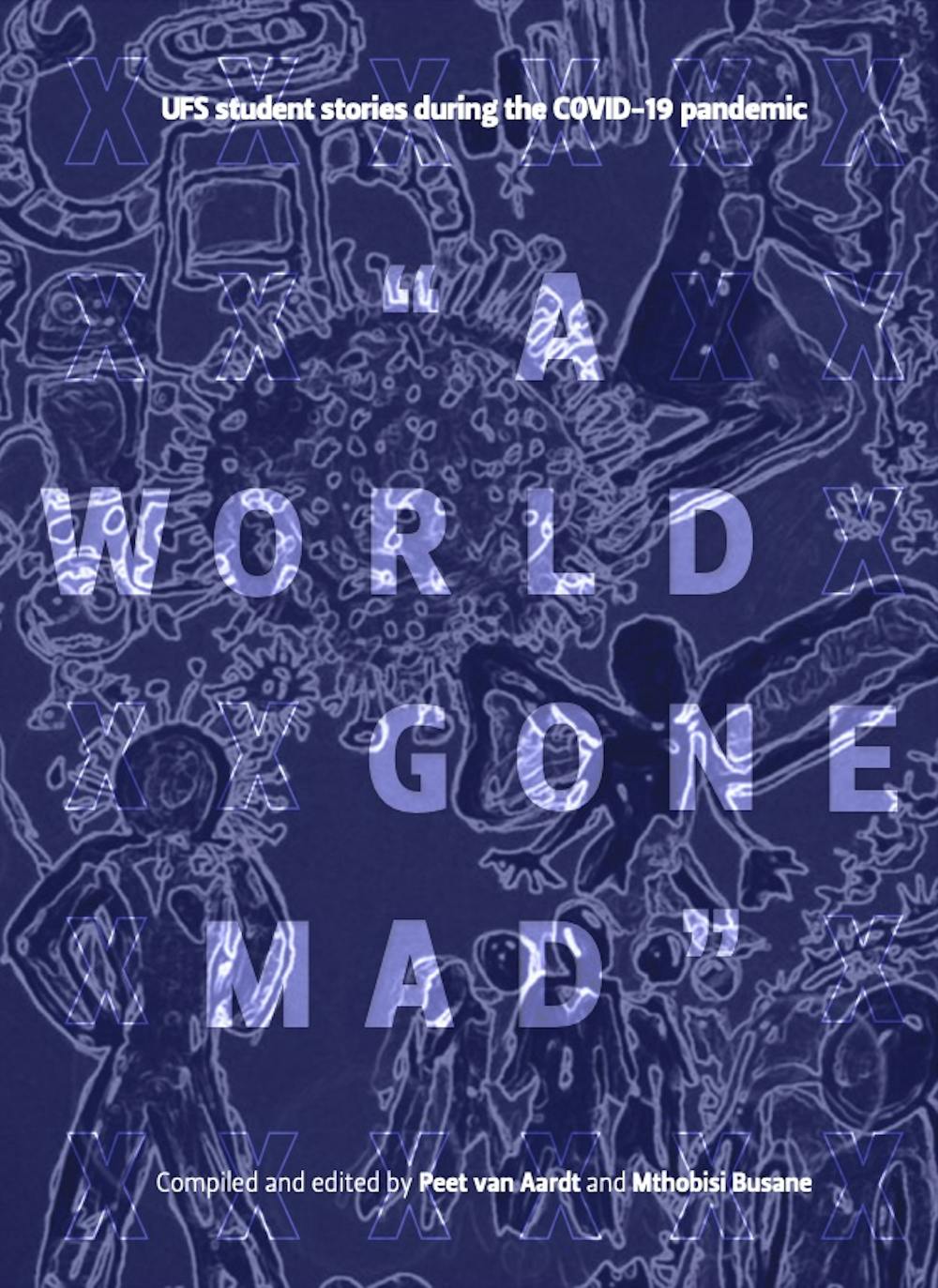
During lockdown, South African students wrote a book about ‘a world gone mad’

PEET VAN AARDT AND BRIAN SIBANDA|  

South African student voices have largely remained unheard in formal discussions around COVID-19. A pandemic that should not be put to waste, COVID-19, on some podiums, is seen as laying the groundwork for germination of seeds of change.

The students in this collection of stories by the Initiative for Creative African Narratives (iCAN, a project within the Academy for Multilingualism at the University of the Free State in South Africa) have refused to be silenced amid this pandemic.

A World Gone Mad is a collection of 15 stories written by the students. All come from rural villages or low income, highly populated settlements on the edge of metropolitan areas (also known as “townships”). Some of them wrote their stories on their cell phones.

In March 2020, when South African president Cyril Ramaphosa announced the country’s first lockdown, students had to evacuate campus and return to their homes. During this lockdown, citizens were not allowed to travel, shops had to close and people had to remain indoors.

The strict rules created fear in people from densely populated areas such as townships, and within the first week the country saw a 30% increase in gender-based violence compared to the previous year.

The students reflecting on the experiences of this life in lockdown are predominantly undergraduate students from all disciplines at the University of the Free State. The project is a decolonisation initiative by the university that motivates students to write short stories that can be published and then used in a transformed curriculum.

iCAN/University of the Free State

The iCAN, now in its fourth year, has published five anthologies. The majority of texts are based on real life experiences, but many students submit purely fictional stories. We decided to include the COVID-19 stories in a separate collection.

Writing can be used as a coping mechanism, a way to digest the world around us. We found that the stories have drawn attention to the experiences of students during the COVID moment.

The stories

In one story, My COVID-19 Nightmare, the writer illustrates the anxieties and prejudice encountered in a small village. When the main character experiences strange behaviour from her neighbours, she learns why on Facebook: One of the Maswanganyi daughters has Corona. She was seen a few days back in hospital coughing to death and she was admitted by the doctor. Now she is back and has infected her whole family. Be careful around them, guys. #staysafe #covid19 #stayathome.

The writer was shocked. She had gone to hospital due to a cough she developed the night before when she wanted to clear her room from mosquitoes with pesticide.

Internet connection and device access has highlighted the gap between the rich and the poor students in South Africa. In the story The COVID-19 Stumbling Block the protagonist is forced to return to the densely populated township of Diepsloot, Gauteng.

She thought she saw her future jumping out of the window when the university introduced an online learning system. She saw it as a waste of time; she had no electronic device other than her cell phone.

Other themes include greeting a loved one at a rushed funeral (The 60 Minute Farewell), one’s belief in God being challenged (Faith is Not Under Lockdown) and having to abandon campus life (A Story of House Akasia).

One student relied on his imagination, painting a bleak picture of a post-COVID world where virtual reality has become safer than real life (Death of the Human Race).

The students also addressed the pandemic within the pandemic: gender-based violence. In Ngenxa Kamama the story is about a mother and daughter trapped inside their house during lockdown with a violent father.

Hope

In A World Gone Mad, the students speak for themselves, presenting the world with an authentic expression of the lived experience. It’s one that negates a Western, canonised form of thinking that views the philosophies and literatures of the global North as the only intellectual authority.

It is our aim to ensure these stories make a considerable contribution to the curriculum and the ongoing efforts to reconstruct knowledge and a sense of being in an effort to decolonise higher education in South Africa.

Some of the texts will form part of the extensive reading component of the English Academic Literacy courses at the university, where students will do online quizzes on the stories. The idea is that students will learn about each other and from each other.

The stories are also a contribution to decolonising languages. In the English language written stories, students have tamed the language to their advantage; they have used it to carry the weight of their experiences. The one written in isiZulu also tells us that these indigenous languages, which are often marginalised and tokenised, are equally valid in carrying lived experiences and have space in higher education.

Lastly, the stories give hope in surviving the pandemics and gesture towards a post-COVID future that is socially and cognitively just.

The post During lockdown, South African students wrote a book about ‘a world gone mad’ appeared first on Inside Education is where you will find the latest education features and news, full coverage in learning, skills, educational methods including teach and leadership..

Uncategorized

The basic education sector to start its vaccination programme on Wednesday

NALEDI SHOTA| 

Basic education minister, Angie Motshekga, says she has not ruled out that schools might close as Covid-19 infection rises. However, she said, for now the basic education sector has taken a decision that schools will not close. 

Motshekga was speaking at a press briefing on Saturday afternoon, where she also announced that from Wednesday the sector will start its vaccination programme. 

Inside Education reported last week that the Economic Freedom Fighters (EFF) had called for the immediate closure of schools as more and more learners test positive for Covid-19. 

READ: Malema gives Motshekga seven days to shut down schools as Covid-19 cases rise in children

EFF president, Julius Malema, said at the time that they were giving Motshekga seven days to shut down schools or they would do so themselves.

On Saturday Motshekga said following a special meeting of the Council of Educators (CEM), teacher unions, school governing bodies and other stakeholders there was a consensus that schools must remain open.

The CEM is a forum where MECs of education, heads of departments, minister and director-general sit.

“At all times, we follow the advice of public health experts, who are supporting us in the management of the impact of Covid-19. We believe that schools must remain open and in saying so we are not insensitive to the concerns raised about the rising infections. 

“The position is that we continue to handle Covid cases according to the differentiated strategy, on a province by province, school-by-school basis. While there are disruptions in the sector, the majority of our schools remain fairly stable,” said Motshekga. 

Motshekga said any disruption that may arise from those who want to close schools is a matter for the police “it is not my matter”. 

“I take my cue, with due respect, based on facts and nothing else. So if parents said children must go to school, I am happy; if teachers said they will be at school, I am happy; if principals say we feel that we can continue, I am happy. That is where I get my mandate, that is where I get my guidance from,” she said. 

Motshekga said in a meeting on Saturday morning all provinces agreed that any infection is one too many but that the current situation the sector finds itself in does not warrant that schools should be closed. 

“This week in the information that we collected 100 schools were reported to have been disrupted with the majority of them being in Gauteng, and we are saying we have 25 517 schools [but] 100 schools were affected so 25 400 something schools were still open.

“And we just felt on the basis of facts there would not be any grounds for a full-scale school closure and that we should continue having a differentiated approach.

“But we are also not ruling out that if anytime during the week advised by your ministerial advisory committee from health, advised by the National Command Council, advised by Cabinet we will resist closing schools,” said Motshekga. 

READ: Unions wait in bated breath for details on the vaccination of educators

Vaccination programme

Motshekga announced that 582 000 people in the basic education sector will be vaccinated from Wednesday until 8 July. This number includes all teachers in public and private schools, all administrative and support staff in public schools. 

The number also includes staff of teacher unions, officials in district, provincial and the national department of education. 

Motshekga mentioned that people who had contracted Covid-19 in the past 30 days or those who received a flu shot in the past 14 days will not be eligible to vaccinate. However, she said that arrangements would be made that they vaccinate with the next group of people that will be vaccinated in the country. 

The minister said it was not mandatory for those who did not want to be vaccinated to do so. 

However, she said those teachers who are working from home because they have comorbidities if they chose not to vaccinate they will still  be expected back at school. 

“In the sector we have thousands of teachers that are home because of comorbidities and after this round there won’t be any opportunity for us to give exemptions. We will expect everybody to come back whether you have comorbidities or what, we will expect you to come back to work because you would have been given the opportunity to be protected in one way or the other,” said Motshekga. 

Acting director general in the department, Granville Whittle, said 300 000 doses of the Johnson & Johnson vaccination arrived on Thursday and that an additional 280 000 doses will be made available for the sector.

READ: GDE concerned about the rising number of Covid-19 cases at schools in the province

The post The basic education sector to start its vaccination programme on Wednesday appeared first on Inside Education is where you will find the latest education features and news, full coverage in learning, skills, educational methods including teach and leadership..

Uncategorized

Lesufi says school infrastructure provision remains the biggest challenge in his department

NALEDI SHOTA|

The Gauteng MEC for education, Panyaza Lesufi, has said that his department has increased compensation to school fee exemptions that are granted to parents. 

Lesufi said this while delivering his budget speech on Thursday. He said the department acknowledged that during the times of Covid-19 some parents in middle and low-income bands might find it difficult to keep up with the costs related to their children’s education. 

“We will use this budget to also compensate for the shock to education financing that comes from families’ own spending on education and fees. This will not only impact fee-charging schools but we, also, know from past crises that income shocks are likely to lead to many children dropping out of school or not returning when schools reopen.

“We welcome the emergency funding provided by the national government to schools to assist them with paying their SGB-appointed staff in the 2020/21 financial year. But this was a short-term stop-gap measure. Our schools are finding it harder and harder to make ends meet. We have increased our provision for compensating schools for fee exemptions granted,” said Lesufi. 

READ: SIU freezes accounts of decontamination companies contracted by GDE

He said his department has seen a budget cut of R135 million from R53,5 billion in 2020/21 to R53,4 billion in 2021/22. 

The department continues to spend the largest chunk of its budget on salaries which account for 75% (R39 billion) of the total budget. 

The rest of the spend is as follows:An amount of R6,1-billion is for transfers and subsidies to schools Public ordinary schools will receive R38.8-billion Public special schools will get R4.5-billion Infrastructure development has been allocated R1.61-billion Examination and education-related services will get R 1.7-billionIndependent schools will receive R980-millionEarly childhood development has been allocated R1.2-billion 

In his speech, Lesufi said the department’s “single biggest pressure” is the lack and the state of school infrastructure. 

“Over the last seven or more years we have maximised the utilisation of schools to the optimum and beyond reasonable accommodation in mainly township schools. Township schools have had to accommodate learners above their capacity, including the use of specialist rooms, due to their proximity to informal and new settlements.

“Suburban schools have also reached their capacity as a result of the growth of black middle class in existing and new middle-income housing areas. The number of schools built per year is not meeting demand and annually there is a growing backlog of new infrastructure,” he said. 

READ: Lesufi must fix burnt down classrooms at Joburg school

 He said the department is working with the Gauteng Infrastructure Financing Agency to find alternate funding to deliver additional schools to meet demand.  

Lesufi also mentioned that this year alone the province has had to close 20 schools due to Covid-19 cases, and also that 1077 teachers had tested positive for the virus as well as 1977 learners. 

He said the virus has impacted on teaching and learning and that there has been a rise to learning losses. 

“Outside the classroom, learning losses may translate into even greater long-term challenges… In the absence of any intervention, the learning losses arising from the COVID-19 pandemic are likely to have a long-term compounding negative effect on many children’s future well-being. These learning losses could translate into less access to higher education, lower labour market participation, and lower future earnings,”he said. 

The MEC said the department has also had to refocus its budget and adjust it to respond to the pandemic by, amongst others, supplying running water and sanitation facilities to schools, provide more furniture in order to adhere to social distancing in class and also provide personal protective equipment to schools. 

The post Lesufi says school infrastructure provision remains the biggest challenge in his department appeared first on Inside Education is where you will find the latest education features and news, full coverage in learning, skills, educational methods including teach and leadership..

Uncategorized

Killing of Buyani Primary School principal was a hit – Lesufi

NYAKALLO TEFU|

Gauteng Education MEC, Panyaza Lesufi, has said all information about the shooting of a school principal at Buyani Primary in Finetown, Johannesburg, will be forwarded to police for investigation.

The principal was shot dead on the school premises on Friday morning. 

Lesufi visited the school today to get information on what transpired during the shooting.

“I had an opportunity to go through the footage because the school has cameras and it is extremely disturbing to witness such barbaric behavior happening in our school environment,” said Lesufi.

Lesufi said there is a sector we all know that is familiar with killings and it is clear that within the education space there are those that bring that sector behavior into schools.

“From the video footage one can tell that this was a hit that someone was assigned to do, we strongly condemn this,” added Lesufi.

READ: Lesufi Shocked At Fatal Shooting Of Grade 6 Learner In Katlehong

The 53-year-old principal, Lazarous Baloyi, was gunned down by an unknown assailant.

Baloyi was the chairperson of a branch at the South African Democratic Teachers Union (Sadtu) in the area.

“We want to send our condolences to the family, teachers and teacher union Sadtu and to the community at large,” said Lesufi.

Police have launched a manhunt hunt for the person(s) involved in the brutal killing of the school principal.

Lesufi said in March he received communication from some of the Pinetown residents raising concerns about the school and the principal’s qualifications.

“The district was forwarded the email to intervene and they did intervene and met with the people who raised concerns, so in the last three months we thought everything was sorted out, until today,” said Lesufi.

Lesufi said they will hand over the information to the police to establish what exactly happened.

“We are in discussion with the district to provide counselling and psychosocial support to the educators, learners and the family,” said Lesufi.

READ: Gunmen Posing As Parents Shoot Teacher At Durban School As Harrowing Start To New School Year Continues

The post Killing of Buyani Primary School principal was a hit – Lesufi appeared first on Inside Education is where you will find the latest education features and news, full coverage in learning, skills, educational methods including teach and leadership..

Uncategorized

‘We need to up the game on Maths and Science’ – Eastern Cape MEC

NYAKALLO TEFU| 

The Eastern Cape Department of Education says it needs to improve its teaching and standards on Mathematics and Science for grade 12’s in the province.

The MEC for Education, Fundile Gade, held a media briefing on Thursday where he focused on the strides the department has made to ensure good governance and school functionality.

The mid-year briefing comes at a time where it was decided that matriculants will not be writing June examinations but instead will have assessments.

Gade said the province aims to get a 40% improvement on Mathematics and Science subjects in all its districts then it can achieve what it wants.

Adding that the Eastern Cape is one of the provinces with the biggest number of students registered for Mathematics and Science.

READ: North West learner flies school flag high in a Maths competition

“Out of 15 000 enrolled grade 12’s in OR Tambo Costal 8 000 are doing maths and physics. Which means if focus is on Maths and Science in all districts, we will get what we want, we need to up the game on those subjects,” said Gade.

The MEC announced that the province will be having additional learning opportunities and curriculum support material for learners across the province.

“We will be conducting learning through radio, visual platforms (television) across the province to deal with the divide,” said Gade.

“We are a rural province but equally we are investing more in ITC to close that gap,” he said.

Learners and educators have had to adjust to learning and teaching since the Covid-19 pandemic outbreak.

The MEC said the plan is to ensure that learners continue to engage in the curriculum on a continuous basis to limit the learning losses which arises due to school closures.

Gade said his department suggest that there be a centralized learning, where if a maths lesson is taking place at 10am, all learners are tuned in at the same time to keep everyone one the same track. 

“Hence I am saying, the sequencing of timetabling of all subjects can give us the milage that we want, but it can only happen if we up the game on anywhere and anytime e-learning solutions to ensure we connect all high schools through broadcasting lessons,” said the MEC.

The post ‘We need to up the game on Maths and Science’ – Eastern Cape MEC appeared first on Inside Education is where you will find the latest education features and news, full coverage in learning, skills, educational methods including teach and leadership..

Uncategorized

Educators to be vaccinated in the next 10 days

NYAKALLO TEFU| 

The Department of Health announced on Thursday that over 400 000 educators will be vaccinated by the end of June 2021.

The department said 300 000 Johnson and Johnson (J&J) vaccines will arrive in the country on Friday.

On Thursday, the health portfolio committee held a briefing where the department’s technical advisor Dr Aquina Thulare said they want to get the vaccines tested and ready for use by next week.

Thulare said the J&J vaccines are set to arrive in the country by this week, following which, the department will meet with provincial health departments to finalise plans. He said distribution to provinces across the country is expected to start on Tuesday.

“The target group includes teachers, administrative and support staff at all schools, irrespective of age,” said Thulare.

Inside Education reported that there were delays in the vaccination of teachers after the US Food and Drug Administration ordered those 60 million doses be discarded with fears of contamination at the manufacturing plant.

READ: Unions wait in bated breath for details on the vaccination of educators

As a result, two million doses of the vaccine stored in the Eastern Cape were destroyed.

Thulare said the Department of Health aims to vaccinate educators across the public and private sectors, school governing body members and administrative staff over a period of10 working days from Tuesday 22 June.

Thulare said the timelines are especially critical because the vaccines must all be used before the expiry date of 11 July.

“After the vaccination of educators, when the next vaccine batch arrives at the end of June – police, soldiers and prison warders will be next in line,” he said.

The department said it expects batches of 700,000 and 500,000 to land in the country. However, it said the dates are not yet set.

The vaccination come when the country is currently in the third wave of the coronavirus where numbers continue to rise.

In the past 24 hours 11 767 new cases were reported with 100 deaths across the country.

READ: Basic education minister says not to worry about the return of school children to full-time classes

The hardest hit province is Gauteng with the highest number of cases reported on a daily which has resulted in the Gauteng Health Department temporarily suspending visiting hours at all health facilities in the province.

Spokesperson for the MEC of health in Gauteng Kwara Kekana said hospitals are under pressure with the number of Covid-19 cases in the province.

Teacher unions across the country have demanded that educators be vaccinated before primary school learners return to schools on a full-time basis from 26 July 2021.

“We want to consult with the department that teachers should be next in the line following those aged 60 and above to get vaccinated for Covid-19,” said National Professional Teachers Organization of South Africa’s Basil Manuel.

Manuel had stated that the union was concerned about the mental health of educators as 100% capacity causes panic in people during the time of the pandemic.

The post Educators to be vaccinated in the next 10 days appeared first on Inside Education is where you will find the latest education features and news, full coverage in learning, skills, educational methods including teach and leadership..