Uncategorized

Parent-teacher organizations aren’t only for the kids

They’re known at school as the group of parents who orchestrate everything from Halloween parties to book fairs, but a parent-teacher organization isn’t just for the kids.

Parents join a PTO for all kinds of reasons. It has helped some revitalize career skills, share passions, find job opportunities, and assuage the middle-age friend desert, all while making sure the kids have fun.

“I thought it was important for my kids to see I thought they were important and that their education was important,”′ said Judy Walters, 54, of central New Jersey, recalling her stay-at-home-mom days raising two little girls. “But really, I wanted to meet people and have a life.”

The PTO was where Walters met some of the people she still considers best friends.

“I got close to a number of my room-mom people, and I met a lot of parents who I wasn’t close to but still really liked and enjoyed,” she says.

PTO is a common acronym for the group of parents and teachers who work together to fundraise, plan activities and provide extra enrichment for students. The term can be used interchangeably with the Parent Teacher Association, a national nonprofit headquartered in Alexandria, Virginia, or the PTC, or parent-teacher council.

As kids return to school this fall, you might see flyers or emails pleading for parents to get involved. PTOs play an important role as school boards face tough budget choices, particularly for “extras” non directly related to the curriculum.

Especially as schools and families emerge from pandemic lockdowns, people are looking for ways to connect. PTOs can provide that at a time in life when making new friends typically slows down because of work and family.

Sara Dean, 46, signed up for her school’s PTA, nervous about assimilating into what she saw as an established group. But by spring, she was happy to have made new friends.

Dean hosts the podcast “The Shameless Mom Academy,” which discusses women’s empowerment, and balancing parenthood and work. She devoted an episode to what she learned from working as the PTA president at her child’s school outside Seattle.

“The opportunities for bonding happen quicker,” she said of working on the PTA. “There is more comradery and ease of building relationships that I wasn’t expecting but that was a lovely experience.”

She also didn’t expect to pick up career-building skills.

Dean was used to working independently, as a writer and podcast host and producer. As PTA president, she was thrown into building teams, helping everyone get along, and finding resolutions to problems the school faced — skills that could easily translate into corporate America or the world of nonprofits.

“That’s not why I signed up but it’s a benefit that is really cool,” she said.

The same goes for Colleen Nolan, 46, of Newton, Massachusetts. The eight years she spent working various roles on an elementary school PTO led, she said, to two nonprofit board positions — at a city food bank and a neighborhood improvement group — and a paid, part-time position as a records keeper.

“I met people in the neighborhood and, over the years, they recognized me as someone who was a `doer,’” Nolan said. “People saw me as someone who could answer questions and they used me as a resource.”

Many parents bring their passion projects to the PTO, said Andy Garlick, an elementary school principal in Needham, Massachusetts. These might include personal finance, diversity, or cultural customs from another country, for example. Parents bring what they know to the table.

“There’s a lot of people who want to use the minimal free time they have to do good in their community,” he said.

There are criticisms and jokes, of course. In the 2018 comedy “Bad Moms,” Christina Applegate and Mila Kunis spar over who is the better PTA presidential candidate. And the Netflix series “Ginny & Georgia” shows a snooty mother from “Wellsbury, Massachusetts” arguing with an outsider from Texas about how to best raise money for the PTA.

In reality, wealthy neighborhoods tend to have far more parental involvement and fundraising power than areas without such affluence. This leads to more enrichment opportunities for students, and more educational necessities like books or tech gadgets. Some argue it compounds inequities in the U.S.

And PTO parents often spend their own money. Some organizations have dues and others don’t, but many parent volunteers end up paying for projects and events.

Kimberly Rae Miller, 39, of Suffolk County, New York, joined the PTA to become more involved and was surprised to find how much money it required out of her own pocket.

But, she said, “If you have the time and financial resources to participate, it’s a great way to have access to a part of your children’s life that you don’t always have access to.”

AP
Uncategorized

DBE: Unsafe Learning Environments Result In Increased Dropouts

WITHIN a three-month period, the South African Police Service (SAPS) has reported more than 65 cases of violence at schools. In an effort to reduce this, the Department of Basic Education (DBE) has implemented certain safety measures.

From 1 April 2022 to 30 June 2022, the South African Police Service (SAPS) reported 58 rape cases and 15 murders committed on school premises. These cases of violence at schools have made learning environments unsafe and reduced the quality of education.

Learners affected by these acts of violence may tend to avoid school,  participate less in class, or even drop out of school because they don’t feel safe in the environment. Statistics have shown that exposure to violence increases the levels of anxiety, depression and psychological stress in learners, educators and support staff.

The Department of Basic Education (DBE) does a quarterly district monitoring exercise on all Safety in Education, Sport and Enrichment in Education, and Social Cohesion and Equity in Education programmes.

This monitoring exercise is reported in the Annual Performance Plan (APP), Indicator 5.1.3: Number of districts monitored in the implementation of the National School Safety Framework (NSSF), Social Cohesion, Sport and Enrichment Programmes. 

According to the DBE, the NSSF continues to stay their primary response to violence at schools. The framework coordinates and consolidates all school safety interventions in the sector. 

The NSSF depends on collaboration and partnerships to ensure a coordinated approach to responding to school violence. The framework ensures the following:

All schools have active school safety committees and school safety plans.School perimeters are secured (fenced) and access controls (guard and/or surveillance) are in place and managed.School codes of conduct are aligned with the Constitution of South Africa and child-protection legislation and are communicated and adopted/ agreed to by all school stakeholders.Corporal punishment is prohibited by law and alternative forms of discipline are enforced in all schools.Schools have systems in place to report violent incidences and criminal behaviour at a local police station, to district and provincial office bearers, and the South African Council for Educators (SACE).Schools have established relationships with their intergovernmental counterparts, which include the Departments of Social Development, and Health and Justice.

With regards to safety measures at schools, infrastructure plans are informed by the Audit of the Districts’ school fencing coverage which highlights the schools which need to be prioritised. Building relationships with intergovernmental counterparts are also very important to ensure services such as counselling, medical examinations and access to justice are in place.

For the 2022/23 period, the DBE is monitoring the implementation of the NSSF in 75 districts of the country. This includes monitoring how School Safety Committees are run.

According to the DBE, all provinces and districts have been committed to providing training to all schools to ensure that all School Safety Committees are well trained. Training includes school educators and support staff.

Careersportal

Uncategorized

Death by suicide: the final symptom of mental illness

ANGELA VORSTER|

Twenty-three people will die from suicide today in South Africa. Another 460 South Africans will try to end their lives today. They are from different cultural groups, different income groups, attained different levels of education, speak different languages, range in age from childhood through to elderly, have different genders and sexual orientations. These people have very little in common except that their lives all ended due to the final symptom of an illness. People who experience thoughts of ending their lives describe this mental space as feeling grey.

Their thoughts tend to keep returning to the futility of being alive, what a burden they are to those around them, how nothing will ever get better and that nobody can help them. They tend to experience feelings of worthlessness, self-hatred, guilt, hopelessness, immense sadness and despair. Their suffering and emotional pain are excruciating. Nothing is enjoyable anymore. There is nothing to look forward to.

Everything is difficult, boring, scary or meaningless. Inwardly they are drowning. But very often they smile, do their job and pass their exams, go on dates and vacations, make plans for the weekend and check up on their loved ones. They look happy in their photos. And when someone asks them if they are okay they say yes. Because they don’t feel like they deserve to feel better. They don’t want to be a bother. They might not call a helpline or make an appointment to see a psychologist or go to their GP for anti-depressants.

Because they just don’t have the energy. It’s exhausting pretending to be fine all day. The one thought that brings relief is that they can end this pain. And one day they do. And their colleagues, friends and family are left reeling with shock and disbelief. How could this have happened? How could they have missed the signs? What should they have done differently to prevent this? 

The causes are as complex and varied

This is the purpose of World Suicide Prevention Day which takes place internationally each year on 10 September and through which the International Association for Suicide Prevention endeavours to increase awareness of suicidality, as well as to fight the stigma associated with suicide. Wanting to die can occur along with many other symptoms and disorders including, but not limited to, depression, post-traumatic stress disorder, bipolar disorder, psychotic disorders, personality disorders and substance dependence or abuse disorders. The causes are as complex and varied as the manner in which suicidality may present.

It is dangerous to regard only certain signs and symptoms as indicative of suicide risk, because we know that suicide can be extremely unpredictable. There is no way to tell if someone is a suicide risk based purely on their behaviour. However there are certain factors which may indicate an increased risk for self-harm. These include, but are not limited to, having previously tried to end their life, having a psychiatric illness, being seriously ill or having chronic pain or the misuse of substances. Experiencing legal, relationship, financial or academic stressors may increase suicide risk, as well as having access to lethal means to end their life along with being unable to access mental health care. 

So what can you do if you think someone may be at risk of self-harm? Say something. Talk to them. Tell them what you are worried about and give them the space to express how they feel without judgment or condemnation. Reach out to their support system and share your concerns with them. Encourage the suicidal person to make contact with a health care professional – this can be a psychologist, GP, psychiatrist, social worker, psychiatric nurse, counsellor or a suicide prevention help line. Other important members of our community who provide a great deal of assistance to suicidal people and their families include religious and spiritual leaders, teachers, support groups and employee assistance programmes.

There are actually so many ways and places to receive health care and support; however the most significant barrier to making use of these resources is sustained by the stigma associated with suicide and mental illness. In our culture of toxic positivity where our photos are touched up, our statuses updated and our successes plastered on various social media platforms, the authentic act of acknowledging when we feel defeated, unhappy or like a failure has become a rarity. The more real, honest and vulnerable we can be about our ‘undesirable’ emotions and experiences, the more space we create for those around us to do the same. When we normalise not being okay at all times, we give ourselves and others permission to speak up when we need help. And this is our greatest weapon against suicide – authentic connection.

What suicide is not

We’ve explored what it may feel like to be suicidal, now let’s focus on what suicide is not. Suicide is not a moral failing. It is not because the person was weak or selfish, it is not because their family was dysfunctional or their faith not strong enough. Suicide is the final symptom of mental illness – and every single person is vulnerable to experiencing suicidal thoughts. Each one of us will be affected by suicide during the duration of our lives, either directly or indirectly. This is irrespective of how successful you are, how supportive your family is or how strong your religious convictions are. Dying by suicide is not a shame. It is not a failure. It is no different to a patient dying from any other disease. And just like any other illness there are symptoms we can look out for and treatments and medications that can assist in recovery. 

Please think before you speak about someone who died due to suicide. I guarantee that at least one person in the conversation has suffered the pain of losing someone in this way. But you probably wouldn’t even know, because stigma silences. Stigma disconnects and alienates those who need support the most. Our words have the power to shame and silence, or to empower and encourage connection, which is lifesaving.

Treat each conversation as though there may be someone present who is having suicidal thoughts or is working through the loss of someone they love due to suicide. Often we want to reach out and support families affected by suicide, but don’t because we are afraid of offending, or upsetting or because we ourselves are so uncomfortable with mental illness. But all these survivors of suicide need from you is your calm, empathetic, kind presence, a safe space to express difficult and messy emotions. Without being blamed or shunned or shamed. Support suicide survivors as though a terrible illness took the life of their loved-one. Because that is exactly what happened. 

On 10 September this year I encourage you to light a candle and place it in your windowsill around 8pm wherever you are. This is in remembrance of those lost to mental illness and to show your support to those they left behind. In the words of the International Association of Suicide Prevention: “By encouraging understanding, reaching in and sharing experiences, we want to give people the confidence to take action. To prevent suicide requires us to become a beacon of light to those in pain. You can be the light.”

• If you or someone you know is at risk of self-harm please take a look at these websites and call the SADAG suicide emergency helpline.

Opinion article by Angela Vorster, Clinical Psychologist at the School for Clinical Medicine, University of the Free State.

Uncategorized

MeerKAT radio telescope impresses once more with yet another first

SOUTH Africa’s MeerKAT radio telescope array has chalked up yet another astronomical first. A team of South African and international astronomers has used MeerKAT to, for the first time, measure the neutral hydrogen gas (which is the material that forms and fuels stars) around galaxies as they were four-billion years ago. (Or, in other words, galaxies that lie four billion light years from Earth.) Neutral hydrogen gas is the most abundant material in the universe.

“For the first time, the team were able to measure the hydrogen gas for galaxies of different sizes and star formation activity to determine how the fuel content relates to other observable properties of galaxies four-billion years in the past,” highlighted University of Cape Town eResearch rirector Professor Mattia Vaccari.

“These were compared to galaxies in the present day.”

And the results of the comparison surprised the astronomers. They had expected that galaxies four-billion years ago would have more neutral hydrogen gas in and around them than younger, closer galaxies would have. This was because it was thought that a lot of the neutral hydrogen gas would be consumed by the processes of star formation. What they discovered was that these older, more remote galaxies had similar amounts of the gas to younger, closer galaxies. This, in turn, signals that galaxies can and do replenish their ‘reservoirs’ of neutral hydrogen gas.

“We were thrilled to exploit the potential of MeerKAT to improve our understanding of the cold gas in distant galaxies,” said study lead author and University of Padova (Italy) PhD candidate Francesco Sinigaglia. “We believe this study represents a strong step forward in the field, as it delivers new pieces of information on hydrogen in galaxies, never obtained before.”

his research was only possible because of the existence of MeerKAT and used radio wavelength data from the MeerKAT International GigaHertz Tiered Extragalactic Exploration (MIGHTEE) project (an international large astronomical survey), supplemented by data from optical telescopes. The data was processed by South Africa’s Inter-University Institute for Data Intensive Astronomy (IDIA).

“The data taught us a lot about the processing challenges involved and was an important testbed for coordinating science projects,” affirmed IDIA associate director for astronomy computing and MIGHTEE-Neutral Hydrogen co-chair Dr Bradley Frank. “Francesco’s science result is the perfect validation for our processing strategy and teamwork, providing an exciting glimpse of the future of MIGHTEE.”

Other members of the research team included Sinigaglia’s PhD supervisor, University of Padova Associate Professor Giulia Rodighiero, and University of Western Cape astronomer Dr Ed Elson. “This is wonderful fundamental science, made possible by South Africa building the most powerful telescope of its kind in the world, thereby attracting international collaboration with South Africans at the very top level,” emphasised South African Radio Astronomy Observatory MD Dr Rob Adam.

Engineering News

Uncategorized

Skills and training development crucial to fighting unemployment in South Africa, says Deputy President David Mabuza

WENDY MOTHATA|

SOUTH AFRICA’S ability to reverse rising levels of unemployment and poverty depends on its progress to deliver training and skills development programmes that address today’s challenges.

This is according to Deputy President David Mabuza, who was speaking in his capacity as the Chairperson of the Human Resource Development Council (HRDC) at the Sedibeng TVET College in Vereeniging, Gauteng.

“Apart from those in the schooling and training system, the reality is that we have an unsustainably high number of unemployed young people. Something drastic needs to happen,” he said.

Citing the Statistics South Africa (Stats SA) data, he said the country’s unemployment rate stood at 33.9% in the second quarter of the year, with almost 12.3 million jobless people.

“Most concerning is that 35.7% of youth between the ages of 15 and 24 are classified as not being in employment, education, or training.”

He has since urged the Council to put measures in place to ensure that those who have lost employment and learning opportunities can bounce back.

According to the Deputy President, this could be made possible through a package of skills development interventions that will create viable options in life.

“What the COVID-19 pandemic has taught us is that certain jobs may not come back as we know them.”

He said the Council needs to look at working with industry to design targeted skills programmes that will facilitate the absorption of youth into entrepreneurship and employment.

“Many a time, we keep deliberating on our challenges, and we make undertakings to change course, but very little is done to implement all the good resolutions that we take to change the situation,” the Deputy President said.

To this end, he called on the body to finalise the programme of action immediately.

He urged members to reflect on whether their work will produce skills that are appropriate for citizens to thrive in the era of the Fourth Industrial Revolution (4IR).

“Instead of trying to do everything, we should reflect on how we prioritise and select a portfolio of interrelated national high impact interventions or projects to deliver tangible results for our country.”

More critically, Mabuza said the Council needed to mobilise necessary financial resources from government and the private sector to drive these initiatives.

“How do we ensure that the HRDC strategy responds to the current job seekers and those pursuing entrepreneurship?”

He emphasised that the programme of action should lead to the realisation of a better environment for learning and training.

“With proper education and training, we can move forward as a country.”

Business skills

He told the delegates that the evolving nature of doing business has set in motion the shifting content of skills and capabilities needed to build and grow a sustained modern economy.

“It requires a quick paradigm shift and reorientation to realign the content of our curriculum offerings and skills development programmes so that we can respond to the demands of industry and the economy,” he said.

In addition, he said the 4IR, National Digital and Future Skills Strategy provides a critical framework for inclusive partnerships between industry, labour, higher education institutions and society to imagine and build a new set of skills and capabilities for the country.

“From the foundations of basic education to tertiary levels, key resources and infrastructure must be provided to accelerate the provision of relevant and appropriate skills.”

He said he was encouraged by the Sedibeng TVET College with prides itself on new cutting-edge research and technology in disciplines like mechatronics.

He thinks that the combination of mechanical engineering, electronics and computer systems will go a
long way in developing the skills required as a country and growing the economy.

“As the Council, we need to ensure that all our TVET Colleges have strategic partnerships with industry
players across all economic sectors,” he said.

Digital divide

Meanwhile, he said the country needed to bridge the digital inequality gap, especially among unskilled
and low-income citizens, especially amongst women and girls.

He raised concerns about the 750 000 learners who did not return to school due to the pandemic.

“These increasing dropout rates, compound the already high number of young people that are not in
education, employment, and training.”

He also highlighted how COVID-19 exacerbated the issue of the digital divide in society.

“While other schools in affluent areas were able to continue learning during COVID-19, those who have
no access to ICT have been disadvantaged, thus lagging, hence our call for the mobilisation of requisite
resources from the government and private sector to jointly drive these initiatives,” Mabuza said.

INSIDE EDUCATION

Uncategorized

Ubuhle Buzile E-leaning programme a major milestone for the growth and development of the schooling system

THE Mpumalanga Department of Education is positive that Ubuhle Buzile E-Learning programme, which was launched in April by Premier, Refilwe Mtshweni Tsipane, is revolutionizing the delivery of teaching and learning within the province.

The launch event coincided with the delivery of 55000 tablets for Grade 12 learners and 6700 laptops for teachers in the quintiles 1 to 3 schools.

Speaking at that occasion, an elated Mtsweni-Tsipane said: “We are taking a giant leap in the educational field today, with Ubuhlebuzile secondary school, as the base to launch the e-Learning Programme. It gives me pleasure to be a part of this history-making moment, joining hands with the community of Mkhondo Municipality, as our provincial government is making this bold move.”

“This is evidence of our commitment in equipping the Grade 12 Class with the tools that will optimise their learning. There is more to these technological tools, that we are handing over today: They are the fruits that stem from the 4th industrial revolution era that we are in; They are catalysts of change that to thrust both learners and teachers into a digital age in which their
capacity will be elevated to national standards.”

The gadgets will optimise the quality of learning across the province and through this initiative.

“We will move a step closer to attaining the ideals of the Strategic Framework for Schooling 2030, Mpumalanga Vision 2030, The African Union: Agenda 2063 and Sustainable Development Goals (SDGs) and provide quality, effective and non-colonial education to the children of our beautiful Province,” said Mtsweni-Tsipane.

“We are a first step towards the realisation of our vision to ensure a “One Tablet-One Learner” for the
benefit of our children.”

These sentiments were confirmed by Sibongile Irene Gondwe, Principal of Sitintile Secondary School, who lauded E-Learning being introduced at her school from January 2022.

“As a school, we’re under the Mathematics, Science and Technology Academy aligned schools whereby, e-Learning assists a lot,” Gondwe said.

Gondwe said that since the tablets were introduced to the learners after a two-year Covid-19 pandemic challenge, they are certain that they will make it at the end of the year because of the progressive support considering that learners are able to access all information whether they are at school, in the bus or car and at home.

“A learning environment has been created for them around the clock. We are definitely going to improve our pass rate since we’ve got these gadgets which are assisting teaching and learning at school and other social spaces. Learners are also able to download past examination question papers to acquaint themselves with how to approach their examinations at all costs,” Gondwe said.

“I must say there’s open communication between learners and educators through this system as WhatsApp messages are exchanged between learners and the educators at all times. So, we don’t have a huge problem in terms of communication. We will definitely improve our pass mark from last year’s 69% to 85% because we have put all strategies in place to ensure we succeed.”

The principal said that there are many strategies in place that have profiled the learners according to their abilities.

“We have streamlined them and have provided questionnaires to determine their abilities. The top learners will also be pushed to leverage up to Level 7 and go higher still. The learners on the border line will be provided the easy to answer questions, will be pushed from Level one to three, hence we’re confident of attaining our 85% and above, we will obtain it at the end of this academic year,” said Gondwe.

She asserted further that since the e-Learning was introduced and the gadgets distributed among the learners, learners are able to interact with their teachers and among themselves, too.

“They are able to, through WhatsApp, ask questions on things they require explanation. That is why I’ve said we’re gunning for 85% pass mark this year because there’s just a hive of activity between the teachers and learners. Above that, data is there and at school we’re controlling its usage in a good manner. We ensure that learners don’t come with their own gadgets, or cards, but stick to the ones supplied to them, hence this academic year, we’re going to receive good results, a thing that is very motivational, indeed,” she ended.

Thembeka Secondary School Principal, Mlungisi Khoza, said they are very excited about the E-Learning gadgets.

“As principals, I must confess that we were very excited because we foresaw that they would contribute a lot in enhancing learning and teaching at our schools. These tablets will go a long way in assisting learners in terms of resourcefulness. They replace the textbooks which would be lacking due to retrieval challenges, now the gadgets are closing that gap,” Khoza said.

“We did experience teething problems as this was something new for our schools. The learners got excited as some abused these gadgets by not using the available data the right way. It’s ensuring that the data provided is adequately used for learning and research purposes, including communicating with educators through WhatsApp and also communicating with their peers, discussing
and advising each other on subject matters. All subjects are covered on the system.”

A learner from Thembeka Secondary school, Njabulo Chauke, said: “When they were first introduced to us, we saw them as befitting to help us cover up for learning lost due to Covid-19. We found it to be packed up with a lot of learning material and study guides that came in handy for us to really get down to studying hard.”

“On the other hand, this system has come in handy because in the past, we used to experience lack of textbooks, but now we have all textbooks in our gadgets. I’m doing seven subjects which is Physical Science, Mathematics, Life Sciences, English, Life Orientation, among others,” Chauke said.

Nhlanhla Madonsela, a learner from Sitintile High School, said: “The tablets have come in very handy for me and I’ve been embroiled in all its activities they have really assisted me a lot. We are able to browse the internet. It has enhanced my learning abilities as it provides textbooks which are more useful study guides. I improved my pass mark for Mathematics, for instance, from 43 to 76%. I’m optimistic that our school will attain a 100% pass rate this year because of the wealth of study material available in these tablets,” she stated.

INSIDE EDUCATION

Nuna GO, GO, GO! Sasol Solar Challenge kicks off in style, with a dramatic day-one win by Brunel Solar Team
Uncategorized

Nuna GO, GO, GO! Sasol Solar Challenge kicks off in style, with a dramatic day-one win by Brunel Solar Team

CHARLES MOLELE

THE Sasol Solar Challenge, now in its 14th year, is proving critics wrong; a solar-powered car can actually make for a good road-trip vehicle, despite all their caveats.

The eight-day Sasol Solar Challenge road-trip started with much fanfare at the Carnival City Casino, east of Johannesburg, with event officials, sponsors and VIP guests, including the Belgium and Dutch embassy officials, who gathered at the venue to wish the teams good luck at the starting line.

According to Robert Walker, owner and Director of the Sasol Solar Challenge, the eight solar car teams in competition are set to race across five provinces from Johannesburg to Cape Town, demonstrating the power of the sun and showcasing their engineering skills in 18 towns – including, among others, Sasolburg, Kroonstad, Winburg, Gariep Dam and the small town of Graaff Reinet, also known as the ‘Gem of the Karoo’.

The roads on the journey are expected to include meandering mountains, backroads through quaint small towns, arrow-straight highways and big-city traffic.

Day one of the Sasol Solar Challenge started in Brakpan, through Sasolburg and finished in Kroonstad.

With 569.8 km, the Brunel Solar Team from Belgium secured the top spot after the first day of the event while Agoria took second place with an official 470.2 km.

TUT took third position with an incredible 420.4 km for the day.

Earlier in the week, the solar car teams participating in this year’s Sasol Solar Challenge successfully completed the scrutineering process conducted in partnership with the Council for Scientific and Industrial Research (CSIR), as well as with the help of 12 volunteers from across the world.

School learners from Sasolburg had the opportunity to work with a microbotics team from Bloemfontein. The microbotics team believes in #STEM education and problem solving.

Day one of the Sasol Solar Challenge also incorporated a schools programme, which took place in Sasolburg, during the first control stop of the event.

The programme was attended by roughly 800 learners from different schools in the area.

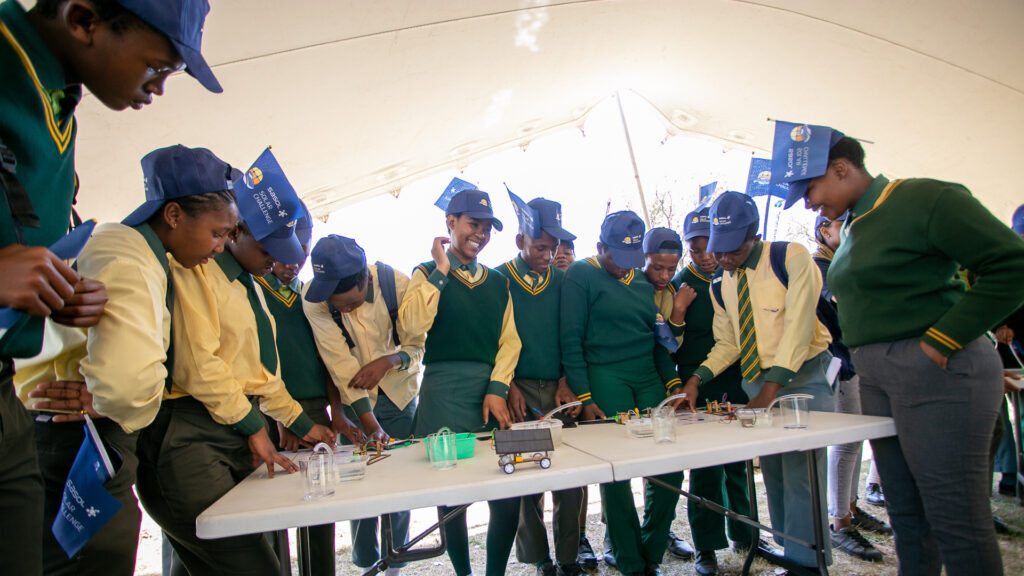
Learners took turns in three stations at the venue to learn about solar technology, e-mobility and robotics in real-life.

“Our vision is to educate and train young children and teachers in programming, electronic and robotic skills by getting them to play with technology. In doing so, the child overcomes his/her fear of technology, kindles an interest in creating something to play with and develops the foundational building blocks in coding and robotics,” said Floris Niehaus, CEO at Microbotics said.

“Microbotics aims to simplify STEM (Science, Technology, Engineering and Mathematics) educational and make it interesting to young people. Our vision is to educate and train young people and teachers in programming, electronic and robotic skills by getting them to play with technology. We are grateful to the Sasol Solar Challenge for this opportunity to come here and engage with the school learners and through our demos, show them how different STEM and energy concepts work.”

Among other schools that attended the schools programme was the Lehutso Primary School in Sasolburg.

The school principal said he was pleased to see the learners participate in initiatives that inspire them to pursue STEM education.

“We are grateful to the Sasol Solar Challenge for organising the schools programme. Our learners have started working on energy solutions to address challenges that are faced by the community and the school itself. Their participation in this programme motivates and inspires them to develop even bigger energy and STEM solutions, and hopefully a solar car, which can compete in the Sasol Solar Challenge,” said Mpho Mofokeng, a school principal at Lehutso Primary School.

#sasolsolarchallenge. Carnival City, Brakpan.

INSIDE EDUCATION

Uncategorized

DHET-USAf webinars provided fresh insights into the new draft policy on types of higher education institutions

GILLIAN ANSTEY|

AROUND 900 people attended the three online public webinars presented last week to clarify the new Draft Policy for the Recognition of South African Higher Education Institutional Types. The online engagements were led by the Department of Higher Education and Training (DHET) in collaboration with Universities South Africa (USAf).

Each webinar comprised a presentation by Mr Mahlubi Chief Mabizela, Chief Director responsible for Higher Education Policy and Research Support in the DHET, and a discussion session. The first webinar was for private higher education institutions, the second for public ones, and the third for the general public, a grouping which still attracted way over 100 participants.

These were the right platforms for questions

Mabizela asked the online participants to use the webinars — rather than their written submissions to the department — as an opportunity to ask questions. “Because when you are submitting, you are projecting your views, you are stating what you think. And if you ask questions in your submission, we are not going to be able to answer them,” he said. Otherwise, there was no specified format for submissions. Comments on the draft policy may be submitted until 8 September 2022, as the Government Gazette was published on 8 August 2022.

He said his presentation at the webinars was designed purely to explain the content of the policy and not to change or influence any ideas. He pointed out that the list of annexures at the end of the draft policy indicated various forms still being developed. The number of annexures might increase, but any such changes would not affect the policy itself. This article, therefore, supplements a previous one titled The Draft Policy for the Recognition of South African Higher Education Institutional Types is not as disruptive as some perceive it to be.

“Every input or comment is important. We, therefore, request you to make comments as clearly as possible and not leave them ambiguous.” He also invited the audience to suggest elements of interest that were not yet covered in the draft policy.

Dr Linda Meyer, USAf’s Director: Operations and Sector Support, assured the audience that the Draft Policy for the Recognition of South African Higher Education Institutional Types was a process. She said the DHET had been very open about inclusions that needed to be made, hence this rigorous engagement for information sharing and “to get particular questions that they can respond to.”

The process after 8 September 2022

First, the department would revise the draft based on the public comments. The policy had generated so much attention that they expected many submissions and could not anticipate how long this revision would take. They would then submit this public input to the Department of Planning, Monitoring and Evaluation for the SEIAS process, a Social-Economic Impact Assessment. The policy had already undergone the initial assessment during the drafting process. This final SEIAS process could involve some to-ing and fro-ing to ensure the policy had no negative impacts. Then either during this process or on its completion, the Minister, Dr Blade Nzimande, has a mandatory consultation with the Council on Higher Education (CHE), which might decide to appoint a committee of some sort to analyse the policy further or even call for submissions from the DHET or others.

“I am trying to illustrate that there may be another consultation process. Given this policy’s attention, it is possible that it may be submitted to Cabinet before it goes out for publication. That will be the Minister’s decision,” said Mabizela.

The target deadline is before April 2023

The DHET wants the policy to be finalised by April next year. One of the reasons was that “public nursing colleges have been knocking at our door wanting to be classified as one of the types of higher education institutions.” Mabizela explained that these colleges currently fall under the Department of Health, not DHET, and that some are already offering Bachelor’s degrees in collaboration with universities. However, they cannot be recognised as higher education providers without a “type” of an institution to fall under – a transition which requires specific legal compliances.

The DHET had already published in a Gazette in 2019, that nursing colleges could offer Bachelor’s degrees from January 2020. A joint technical team had been established between the two government departments to facilitate the outstanding legal, administrative and technical processes to declare them higher education colleges. According to the draft policy, this type of institution focuses on undergraduate and skills development programmes.

A similar process with the DHET’s joint technical team had been established for public agricultural colleges. The National Working Group on Institutional Mergers had already identified a need for this as far back as 2003, at the inception of the higher education mergers.

Higher education colleges and research

Mabizela said the DHET had already received questions about why higher education colleges — one of the new types of institutions in the draft policy — were not allowed to do research. He said while these institutions could do research, it was not part of their mandate. “In public institutions, research is subsidised,” he said. Higher education colleges would not be subsidised for carrying out research, given that it is not part of their requirements. “However, they are still welcome to do research.”

The aim is to create synergy between types of higher education institutions

Mabizela said one of the aims of the new draft policy was to create channels of movement of students from one type of institution to another — a process known as articulation. So, a student could start at a higher education college and finish at a university. “That way, we are also trying to expand access and make the curriculum accessible to students, to promote the development of a flexible learning system progressively encompassing the entire sector,” he said.

The policy is not about downgrading institutions

He said the media had focused on the policy as a means of downgrading institutions from one type to another. Still, there was no evidence or insinuation of this in the policy. “That is not to say it is impossible,” said Mabizela.

But the policy had not created the possibility of this. He said Section 65AB of the Higher Education Act of 1997 states that the Minister may, at the request of the Council of the institution concerned, and after consultation with the CHE, and by notice in the Government Gazette, amend or remove any restrictions on the scope and operations of a higher education institution.

“So, the Minister can close a public higher education institution now. It has always been there, since 1997,” he said.

“If you want to look at it in terms of a downgrade, yes, it allows for that, but it is also possible to change from a higher education college to a university college and from a university college to a university. So, it cuts both ways.

“This policy is not introducing anything new other than higher education colleges (which have a relatively limited range and scope) and university colleges (which are universities in the making). Nothing else,” he said.

Mr Mabizela commented on the high attendance numbers and the delegates’ active engagement. He extended his gratitude to USAf for organising these events.

USAF

Uncategorized

SA Reserve Bank, Department of Basic Education announce winners of 2022 MPC Schools Challenge

THE South African Reserve Bank, in partnership with the Department of Basic Education, has announced the finalists and winners of the 2022 Monetary Policy Committee (MPC) Schools Challenge.

Marais Viljoen High School in Alberton, Gauteng, was announced as the overall winner.

Each participating learner from the school walked away with R16,000 as well as an iPad for each learner and the educator.

The Horizon High School from Turffontein, Gauteng, took the second spot.

They were followed by Paarl Girls’ High School from the Western Cape.

The SA Reserve Bank and the DBE introduced the MPC Schools Challenge to expose learners to the processes of the MPC in determining the repo rate.

The project offers an exciting opportunity for Grade 12 Economics learners and their teachers to become “members” of the monetary policy Committee for a few weeks.

“We are pleased that 225 schools attended the briefing sessions for learners and teachers, and 102 schools submitted essays that are required to proceed to the next level of the competition. These essays are prepared in the same format as the SARB MPC statement. The statement must reflect global and domestic economic conditions and factors, and reflect the decision of the learners on its Monetary Policy stance,” said SARB Governor Lesetja Kganyago.

He said the quality of their essays and presentations were evidence that the objective of expanding the understanding of monetary policy is being achieved.

“To our learners, remember that nothing of value comes without an effort. Your presence here as finalists bears testimony to your commitment, hard work and dedication. We encourage you to pursue careers in the field of economics and central banking,” he said.

Basic Education Minister Angie Motshekga said the Monetary Policy Committee Schools Challenge demystified the role and functions of the Reserve Bank.

“In other words, the winning team inadvertently become the bank’s ambassadors, explaining the role of the bank and monetary policy to their communities,” she said.

“Thus (they are) assisting in public education about inflation, financial markets and banking, among others. It is also good for our learners as it broadens their career options while planting a seed of the importance of economics and mathematics in everyday life of our country.”

The competition was initially piloted with 70 Gauteng schools in 2012 and has grown to a national competition which includes well over 400 schools and has impacted more than 1,800 students across all nine provinces.

The MPC Schools Challenge was launched in 2012 with 70 schools in Gauteng participating.

To date, it has reached over 3, 200 learners in over 400 schools.

INSIDE EDUCATION

Uncategorized

Youth mental health is in crisis. Are schools doing enough?

For fourth-grader Leah Rainey, the school day now begins with what her teacher calls an “emotional check-in.”

“It’s great to see you. How are you feeling?” chirps a cheery voice on her laptop screen. It asks her to click an emoji matching her state of mind: Happy. Sad. Worried. Angry. Frustrated. Calm. Silly. Tired.

Depending on the answer, Leah, 9, gets advice from a cartoon avatar on managing her mood and a few more questions: Have you eaten breakfast? Are you hurt or sick? Is everything OK at home? Is someone at school being unkind? Today, Leah chooses “silly,” but says she struggled with sadness during online learning.

At Lakewood Elementary School, all 420 students will start their days the same way this year. The rural Kentucky school is one of thousands across the country using the technology to screen students’ state of mind and alert teachers to anyone struggling.

In some ways, this year’s back-to-school season will restore a degree of pre-pandemic normalcy: Most districts have lifted mask mandates, dropped COVID vaccine requirements and ended rules on social distancing and quarantines.

But many of the pandemic’s longer-lasting impacts remain a troubling reality for schools. Among them: the harmful effects of isolation and remote learning on children’s emotional well-being.

Student mental health reached crisis levels last year, and the pressure on schools to figure out solutions has never been greater. Districts across the country are using federal pandemic money to hire more mental health specialists, rolling out new coping tools and expanding curriculum that prioritizes emotional health.

Still, some parents don’t believe schools should be involved in mental health at all. So-called social-emotional learning, or SEL, has become the latest political flashpoint, with conservatives saying schools use it to promote progressive ideas about race, gender and sexuality, or that a focus on well-being takes attention from academics.

But at schools like Lakewood, educators say helping students manage emotions and stress will benefit them in the classroom and throughout life.

The school, in a farming community an hour’s drive south of Louisville, has used federal money to create “take-a-break” corners in each classroom. Students can rifle through a “self-regulation kit” with tips on deep breathing, squishy stress balls and acupuncture rings, said school counselor Shelly Kerr. The school plans to build a “Reset Room” this fall, part of an emerging national trend to create campus sanctuaries where students can go to decompress and speak with a counselor.

The online student screener Lakewood uses, called Closegap, helps teachers identify shy, quiet kids who might need to talk and would have otherwise gone unnoticed.

Closegap founder Rachel Miller launched the online platform in 2019 with a few schools and saw interest explode after the pandemic hit. This year, she said, more than 3,600 U.S schools will be using the technology, which has free and premium versions.

“We are finally beginning to recognize that school is more than just teaching the kids reading, writing and arithmetic,” said Dan Domenech, executive director of the national School Superintendents Association. Just as free lunch programs are based on the idea that a hungry child can’t learn, more and more schools are embracing the idea that a cluttered or troubled mind cannot focus on schoolwork, he said.

The pandemic magnified the fragility of mental health among American youth, who had been experiencing a rise in depression, anxiety and suicidal thoughts for years, experts say. A recent report issued by the Centers for Disease Control and Prevention found 44% of high school students said they experienced “ persistent feelings of sadness or hopelessness ” during the pandemic, with girls and LGBTQ youth reporting the highest levels of poor mental health and suicide attempts.

If a silver lining exists, the pandemic raised awareness of the crisis and helped de-stigmatize talking about mental health, while also bringing attention to schools’ shortcomings in handling it. President Joe Biden’s administration recently announced over $500 million to expand mental health services in the country’s schools, adding to federal and state money that has poured into schools to cope with pandemic-era needs.

Still, many are skeptical schools’ responses are enough.

“All of these opportunities and resources are temporary,” said junior Claire Chi, who attends State College Area High School in central Pennsylvania. Last year, her school added emergency counseling and therapy dogs, among other supports, but most of that help lasted a day or two, Chi said. And that’s “not really a mental health investment for students.” This year, the school says it has added more counselors and plans mental health training for all 10th graders.

Some critics, including many conservative parents, don’t want to see mental health support in schools in the first place. Asra Nomani, a mom from Fairfax County, Virginia, says schools are using the mental health crisis as a “Trojan horse” to introduce liberal ideas about sexual and racial identity. She also worries schools lack the expertise to deal with student mental illness.

“Social-emotional well-being has become an excuse to intervene in the lives of children in the most intimate of ways that are both dangerous and irresponsible,” Nomani said, “because they’re in the hands of people who are not trained professionals.”

Despite the unprecedented funding, schools are having trouble hiring counselors, mirroring the shortages in other American industries.

Goshen Junior High School in northwest Indiana has been struggling to fill a vacancy of a counselor who left last year, when student anxiety and other behavioral problems were “off the charts,” said Jan Desmarais-Morse, one of two counselors left at the school, with caseloads of 500 students each.

“One person trying to meet the needs of 500 students?” said Desmarais-Morse said. “It’s impossible.”

The American School Counselor Association recommends a ratio of 250 students per school counselor, which few states come close to meeting.

For the 2020-21 school year only two states — New Hampshire and Vermont — achieved that goal, according to an Associated Press analysis of data from the National Center for Education Statistics. Some states face staggeringly high ratios: Arizona averages one counselor to 716 students; in Michigan, 1 to 638; and in Minnesota, 1 to 592.

Also in Indiana, the School City of Hammond won a grant to hire clinical therapists at all 17 of its schools but has not been able to fill most of the new jobs, said Superintendent Scott Miller. “Schools are stealing from other schools. There just aren’t enough workers to go around.” And despite more funding, school salaries can’t compete with private counseling practices, which are also overwhelmed and trying to hire more staff.

Another challenge for schools: identifying struggling children before they’re in emotional crisis. At the Houston Independent School District, one of the largest in the country with 277 schools and nearly 200,000 students, students are asked each morning to hold up fingers showing how they feel. One finger means a child is hurting deeply; five means she or he feels great.

“It’s identifying your brush fires early in the day,” said Sean Ricks, the district’s senior manager of crisis intervention.

Houston teachers now give mindfulness lessons, with ocean sounds played via YouTube, and a Chihuahua named Luci and a cockapoo named Omi have joined the district’s crisis team.

Grant-funding helped Houston build relaxation rooms, known as Thinkeries, at 10 schools last year, costing about $5,000 each. District data show campuses with Thinkeries, which sport bean bag chairs and warmly colored walls, saw a 62% decrease in calls to a crisis line last year, Ricks said. The district is building more this year.

But the rooms themselves are not a panacea. For the calming rooms to work, schools must teach students to recognize they feel angry or frustrated. Then they can use the space to decompress before their emotions erupt, said Kevin Dahill-Fuchel, executive director of Counseling in Schools, a nonprofit that helps schools bolster mental health services.

In the last days of summer vacation, a “Well Space” at University High School in Irvine, California, was getting finishing touches from an artist who painted a mural of a giant moon over mountains. Potted succulents, jute rugs, Buddha-like statuettes and a hanging egg chair brought an un-school-like feel. When school starts this week, the room is to be staffed full-time with a counselor or mental health specialist.

The goal is to normalize the idea of asking for help and give students a place to reset. “If they can re-center and refocus,” said Tammy Blakely, the district’s director of student support services, “they can then, after a short break, go back into their classrooms and be prepared for deeper learning.”

AP