Uncategorized

Ramaphosa prioritises ECD, praises Class of 2022 and provides R800m boost for skills development

EDWIN NAIDU

PRESIDENT Cyril Ramaphosa praised the Class of 2022 in his State of the Nation Address (SONA) last Thursday.

“Last year, our matriculants defied the effects of the pandemic to achieve a pass rate of 80%, and we congratulate them for that great achievement,” said Ramaphosa.

“What we have achieved as a nation over the past year, despite our challenges, remind us that the
promise of South Africa is alive.”

Appealing to companies, departments and SOEs to remove the requirement for work experience for young people seeking entry-level positions, the President said skills development was integral to job creation.

Therefore, government would allocate R800m to the National Skills Fund to develop skills in the digital and technology sector through an innovative model that links payment for training to employment outcomes.

“Last year, we said we would place over 10 000 Technical and Vocational Education and Training (TVET) college graduates in employment. We have surpassed that figure and have now set a target for 2023 of 20 000 TVET to be placed in employment,” he added.

The number of students entering artisan training in TVET colleges will go up from 17 000 to 30 000 in the 2023 academic year.

One of the critical ingredients for economic growth and competitiveness is attracting skills that the economy needs.   
  
Last year, Ramaphosa spoke about the value of the Presidential Employment Stimulus in providing work and livelihood opportunities. The initiative has now created over one million opportunities, reaching every province and district in our country.   
 
Furthermore, a new cohort of 150 000 school assistants began work last week at more than 22 000 schools, offering dignity, hope and vital work experience to unemployed young people.   
 
The Social Employment Fund is recruiting 50 000 participants in its next phase to undertake work for the common good.

The revitalised National Youth Service will create a further 36 000 opportunities through non-profit and community-based organisations. 

The Department of Home Affairs has appointed the first cohort of 10 000 unemployed young people to digitise more than 340 million paper-based civic records.  
 
There are now more than three million users registered on SAYouth.mobi, a zero-rated online platform for young South Africans to access opportunities for learning and earning.  
 
This has been done in close collaboration with the National Youth Development Agency (NYDA), which continues to provide valuable assistance to young entrepreneurs and work seekers.  
 
“These are examples of the difference government can make in people’s lives through innovation, creativity and commitment. Access to quality education for all is the most powerful instrument to end poverty,” he said.
 
Ramaphosa added that laying a better foundation through Early Childhood Development for young children was critical so they could write and read to learn and develop.

Significantly, the number of children receiving the Early Childhood Development (ECD) subsidy doubled between 2019 and 2022, reaching one-and-a-half million children.

The Department of Basic Education is streamlining the requirements for ECD centres to access support and enable thousands more to receive subsidies from the government.

While at the other end of the primary education journey, Ramaphosa applauded last year’s matric pass rate of 80%, with all provinces showing improved results – up from 76% the year before.

The share of bachelor passes in no-fee schools improved from 55% in 2019 to 64% in 2022.

“These results reveal that a silent revolution is taking place in our schools. Schools must be safe and
allow for effective learning and teaching,” he added.

INSIDE EDUCATION
Uncategorized

Former President of Mauritius, Ameenah Gurib-Fakim, explains why science matters to women and girls

EDWIN NAIDU

RENOWNED scientist Ameenah Gurib-Fakim, the former first woman President of Mauritius and current first ambassador for the SIDS at the World Diplomatic Academy, delivered a powerful message supporting the International Day of Women and Girls in Science at the weekend.

“I’ll mention that 52% of any country’s population are women, and if we exclude this powerhouse, which this population represents, I think we’re all heading towards failure.”

Gurib-Fakim sent a short message to the girls studying at Mont Lubin in Rodrigues, Mauritius, on Saturday, telling them that science was close to her heart.

Her message was supporting the United Nations International Day of Women and Girls in Science to promote full and equal access and participation for women and girls in Science, Technology, Engineering and Mathematics (STEM) fields.

Annually, 11 February celebrates the essential role that women and girls play in science and technology.

And why science matters?

“I’ll give you a statistic, which I’ve read which is quite mind-boggling, 85% of the jobs that will be in
exercise in 2030. These jobs have not yet been invented. And many of these jobs will be within the
science and technology realm. So, bringing women on board, looking at their intuition, and looking at
their talent will give a new perspective.”

“Now science, as you know, is at the basis of everything science at the business of life. And if you look at sectors where science can impact, let’s start with agriculture…I can safely say that women feed Africa.”

“Women are very involved in the agricultural sector but remain underdeveloped because most women who practice in this sector are not empowered. Now, imagine the impact of empowerment of these women in this sector if they have the tools of science and the mechanism of technology in this area with her culture. She will earn more, she’ll feed her family better, and she’ll be better educated. She can become that famous entrepreneur that we are all thinking about.
Now the other sector is the other word. Instead, it is the word of empowerment. Why do we need to have women empowered?”

“Because the decisions made when women are at the table, these decisions make the family work better. They make the community perform better. They make society operate at a different level and the country fares. So that’s why I say to these women if you find that there is not a chair for you at that decision-making table, bring your chair.”

“The other thing I must say to girls is that you must live your dream. It would be best if you made whatever you do become your passion. Because when you’re passionate about something, you can rest assured that you do it well. You will enjoy it. Confucius said, “if you make your work become your passion, you will not have to work a single day in your life”.

“The other issue I would like to touch on very quickly is gender equality. Gender Equality matters a lot in the world of work. We need to ensure that women are equally paid for what they do. Unfortunately, in many countries worldwide, this is still not a reality. Women are still underpaid. So let us all think on this 11th February how we can make society work better with the proper empowerment of our girls about women so that they become the drivers of change. And we knew that if we put our heads together, we could make It.”

INSIDE EDUCATION

Uncategorized

Commission on Gender Equality to assess equitable access to education

THE Commission for Gender Equality (CGE) is to visit schools throughout the country, to monitor and
ensure equitable access to education for children of all social classes.
 

CGE commissioners and staff will visit a sample of eight schools and four Early Childhood Development Centres (ECD) in the Free State, Gauteng, Mpumalanga and Western Cape provinces to monitor learning conditions and ensure free access to education.
 
The monitoring campaign, which kicks off this month and continues in March, will put a special focus on the following issues:
 
•          School nutrition programmes. 
•          Learner populations in classrooms.
•          Availability and quality of learning/teaching resources.
•          School hygiene sanitation and female learners’ menstrual health 
•          Educator knowledge and awareness of the Policy Framework for the Prevention and Management of Learner Pregnancy Management of pregnancies and sexual abuse.
•          Promotion of dignity and provisions for learners with disabilities.
 
In line with accountability and transparency, the CGE will engage with the Department of Basic Education (DBE), Provincial Departments of Education and the Portfolio Committee on Education in Parliament about the findings and recommendations.

The Commission for Gender Equality will also hold a media launch to share its findings and recommendations with key stakeholders and interested parties in the education sector.

INSIDE EDUCATION

Uncategorized

Gauteng Education MEC expresses ‘shock and disbelief’ after a Grade 11 learner dies in car crash

PHUTI MOSOMANE

GAUTENG MEC for Education Matome Chiloane has expressed ‘shock and disbelief’ after a Grade 11 girl learner from the Protea Glen Secondary School in Soweto died during a horror car accident on Monday.

“We are dismayed by the news of a tragic incident which has taken the life of one of our learners. We wish to extend our sincerest condolences to the learner’s family for their loss. We also wish those learners who were injured by the accident a speedy recovery,” said Chiloane.

The accident occurred on Monday morning on the R599 Randfontein Road in Protea Glen, Soweto, when the driver of a private scholar transport, a Toyota Condor, which was transporting 14 learners from the Protea Glen Secondary School, lost control of the car and overturned.

“It is alleged that the scholar transport driver lost control of the vehicle after the car ahead was seen to be taking a turn but decided to continue [straight]. This caused the scholar transport to overturn,” Gauteng Department of Education spokesperson, Steve Mabona, told reporters on Monday.

“Unfortunately, this accident resulted in the death of a Grade 11 girl learner. Of the other learners who were onboard, three were in a critical condition while 10 sustained injuries. All these learners were transported to different medical facilities.”

Mabona said the GDE earlier dispatched a Psycho-Social Support Team to the scene of the accident where the team members met and offered counselling to the family of the deceased learner and other ‘traumatized’ learners. 

“They [Psycho-Social Support Team] extended their support to the family and managed to schedule counselling sessions with them before proceeding to different schools to further assist those who have been left traumatised by the incident,” Mabona added. 

INSIDE EDUCATION

Uncategorized

82% of grade 4 school kids can’t read this headline

DATA from the latest Background Report for the 2030 Reading Panel has found that most children entering grade 2 do not know the alphabet, while 82% of fourth graders cannot read for meaning – among other disturbing results.

According to GroundUp, the report found that nothing short of a sustained countrywide overhaul of the education system could lead to the ultimate goal of all children over the age of ten being able to read for meaning by 2030.

The 2030 Reading Panel is a group of leaders and researchers convened by former Deputy President Phumzile Mlambo-Ngcuka that looks to guide education in South Africa.

Extrapolating from Western Cape data, the report estimated that the share of grade 4 children that cannot read for meaning has increased to at least 82%, from 78% recorded in 2016.

The report found that about 60% of children have not learned most of the letters of the alphabet by the end of grade one, citing data from the Department of Basic Education (DBE) Early Grade Reading Study (EGRS), which has followed children from over 200 schools for more than seven years in the North West province.

By the end of Grade 2, over 30% still don’t know all the alphabet letters. The report also found that these children are “perpetually behind and in ‘catch-up’ mode, although they never actually catch up”.

Little is being done in the country to ensure that literacy is prioritised, the researchers said.

Nationally, the DBE is not giving the reading for meaning crisis-specific attention, said GroundUp.

Despite claims to the contrary from the DBE, the report found that there is no National Reading Plan and that the most recent “National Reading Strategy” was published in 2008.

In the 2022 Education Budget Vote, the budget specifically allocated for reading is R11 million to the Early Grade Reading Assessment. This targets 18 schools. The DBE only managed to reach nine schools, it reported.

Teacher shortage

Adding to the problems is the fact that South Africa faces a looming teacher crisis.

Half of all teachers are above the age of 50 and are set to retire soon, affecting teaching and learning in South Africa, the researchers noted.

According to the latest data, since 2016, universities have increased teacher supply, but provinces have not increased hiring, leading to larger class sizes.

Paul Esterhuizen, the chief executive of education NGO School Days, said that the department of education is not hiring an adequate number of teachers to replace the workforce.

He added that government needs to make it far more attractive for younger people – one way of doing so is by revising the occupation’s salary.

The report said that: “Despite younger teachers having lower salaries than older teachers, the retirement wave is unlikely to lead to large cost-savings on salaries due to a change in 2019 where teachers earn 1.5% more per year instead of the previous 1% more per year.”

“In early 2022, it was expected that replacing older (more expensive) teachers with younger (less expensive) teachers would lead to an overall cost-saving. This is no longer the case.

“Modelling at the end of 2022 shows that the average 2.9% decline in the cost of senior teachers is completely offset by the overall increase for teachers as a whole of 1.8%,” noted the report.

Business Tech

Uncategorized

I introduced social entrepreneurship to my trainee teachers – why it’ll make them better at their jobs

Zayd Waghid

THE daily headlines from South Africa are largely gloomy. The country’s government seems unable to address a years-long electricity crisis that is steadily worsening. Unemployment is high. Food prices are climbing.

But there are pockets of excellence – like stories of social entrepreneurship, an approach that uses business principles to create positive social and environmental impact. It involves identifying social problems using entrepreneurial principles to develop, fund, and implement solutions.

Though entrepreneurship of any kind is not easy, it can instil incredible tenacity in the face of adversity. There are lessons here. For the past seven years I’ve sought to help trainee teachers harness those lessons by introducing them to the concept of social entrepreneurship.

To do so, I start with “Who Cares?”, a documentary by Brazilian filmmaker Mara Mourão. It’s about social entrepreneurs from seven countries who discover new and innovative ways to solve some of society’s most pressing matters. They do so while working with few resources and catering to fundamental human needs that governments, particularly in the global south, cannot provide.

I use this film in my classes to assist future teachers in understanding how global problems influence countries and to encourage students to think critically and imaginatively about ways to help lessen inequality in their communities.

This is critical for teachers. Many of the students who graduate from our programme will go on to work in disadvantaged communities where social entrepreneurship could create real change. It could also give pupils a chance to explore how they might pursue social entrepreneurship as a career.

How it started

The major aim of existing school and university curricula is to prepare students for higher education and to acquire a degree and subsequently work for a company. The emphasis is on improving people’s own lives rather than thinking about how to assist the communities in which they reside. By teaching my students about social entrepreneurship, I offer them a practical way to enact social justice. This is the notion that everyone should have equal rights and opportunities in society’s social, economic, and political spheres.

In 2016, I set out to study whether a group of 43 future teachers could grasp and apply the concept of social entrepreneurship. I was drawn to social entrepreneurship education because it often incorporates hands-on, experiential learning, which may be more interesting and beneficial for students than traditional classroom instruction. This was appealing: it would allow me to see the effect of my teaching on real-world issues.

Mourão’s 2013 documentary delves into the lives of social entrepreneurs such as Nobel Prize winner Muhammad Yunus of Bangladesh, as well as others from Brazil, Peru, Tanzania, Canada, Germany, Switzerland and the United States, whose socially beneficial ventures have significantly and positively affected certain communities.

Prior to seeing the documentary, hardly any of the students understood what social entrepreneurship was. Some students saw a clear connection between it and corporate social responsibility. The latter, though, is more concerned with the financial and social aims of increasing a company’s competitiveness than with improving people’s lives.

Subsequent cohorts of trainee teachers have also not initially grasped the concept of social entrepreneurship. The rigid South African school curriculum appears to be the root cause of this conceptual gap. Most young people are not given the chance at school to think critically and creatively, and the curriculum doesn’t offer enough opportunities for students to learn about or implement social entrepreneurship.

Towards establishing a community

The film, both for the initial cohort whose reactions I documented in a research paper, and for those who have followed, seemed to spark the students’ curiosity. It also showed them that seemingly small projects can count as entrepreneurship. Creating a vegetable garden at school is a way to teach learners the necessary skills and knowledge to be self-sufficient and aware of economic and environmental sustainability.

But what would this look like in practice?

To find out, the 2016 cohort and I identified a historically underprivileged high school in Cape Town where we hoped to help develop various sorts of social innovation and entrepreneurship.

Then we discovered that the school was already involved in a community engagement project through an annual market day. The proceeds were used to host an annual awareness campaign aimed at recognising, appreciating, and honouring the contributions of elderly South African citizens in the community.

Rather than starting something new, the trainee teachers worked with pupils taking part in the market day to help build their social ventures. This involved applying what they learned from “Who Cares?” to develop business plans.

And they learned about another important aspect of social entrepreneurship: listening to communities rather than assuming they know how to solve existing problems. Communities can enlighten universities about what needs to happen, what is already being done, and what collaboration might look like, as seen in the example of the school above.

(Zayd Waghid, Associate professor, Cape Peninsula University of Technology)

THE CONVERSATION

Relebogile High school learners in danger after large sinkhole appears
Uncategorized

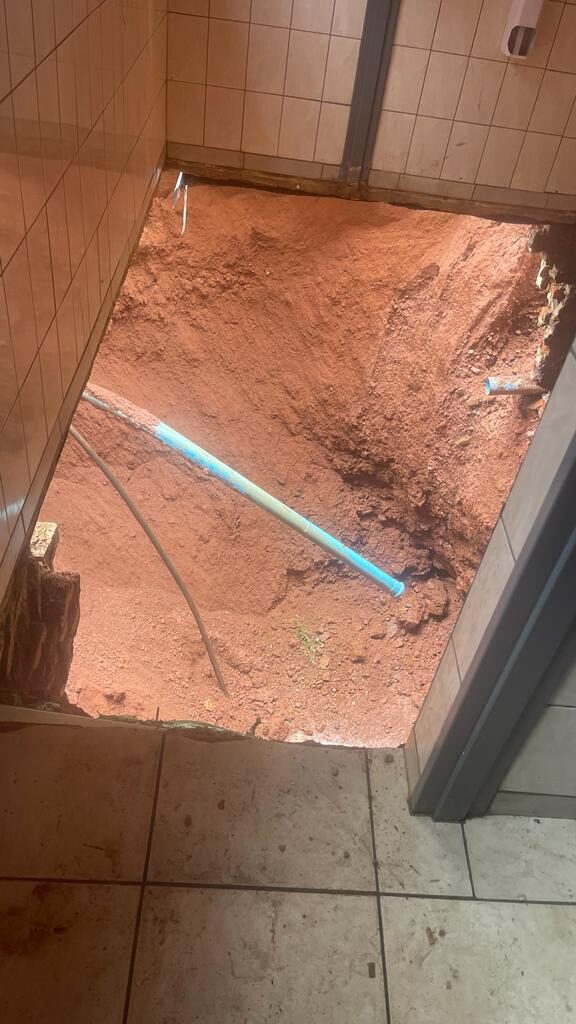
Relebogile High school learners in danger after large sinkhole appears

Gauteng Department of Education urged to urgently send engineers to Relebogile High School in Khutsong, where a large sinkhole has emerged, said DA Gauteng Shadow MEC for Education Khume Ramulifho.

The sinkhole at the Relebogile High School in the West Rand has affected the toilets and left holes in certain parts of the building.

”The DA is urging the department to send engineers to assess whether it is safe for our learners and teachers to continue using the school. This must also include the disaster management team to ensure that all necessary precautions are put in place,”  Ramulifho said.

Ramulifho said should it be found that it is unsafe to use the school or parts of the school, the department must urgently ensure that learners and teachers are relocated to a safe place where learning and teaching can take place without any further interruption.

Khutsong is known for having sinkholes, which become more prevalent after heavy rains. 

”The DA will be following up with the department on this issue. All our learners deserve to be taught in a safe environment that is conducive to learning and teaching,”  Ramulifho added. 

In 2011, a study by the department of education in Gauteng revealed that 153 schools were in high-risk dolomitic areas. A total of 500 schools in the province were built on dolomite.

In the Gauteng province in general, about 38 people have lost their lives so far as a result of sink holes. 

INSIDE EDUCATION 

Uncategorized

Veteran journalist Edwin Naidu appointed editor of Inside Education’s print edition

PHUTI MOSOMANE

SEASONED journalist Edwin Naidu has been appointed editor of Inside Education’s print edition, published four times a year and distributed free of charge to every school, university and college in the country.

Naidu is an experienced communicator in financial services and worked with some of South Africa’s best-known media publications. A former editor of the Teacher at the M&G, he has written extensively on education since 1992, writing for, among others, Sunday Independent, Mail & Guardian and University World News.

A former night news editor on the Star, Naidu has a media degree in journalism and media studies from Wits University and has been on scholarships to Oxford University in London and World Press Institute in the US.

He has written extensively on transformation, gender, climate change, and energy happenings on the continent, including contributing to two books: Nelson Mandela Opus (the world’s largest book on Mandela) and 100 The Mandela Years.

Won or received several accolades for reporting: In 2018, Naidu won the Mandy Roussow award for Great Idea in the Media Monitoring Africa lsu Elihle Awards.

He also won 3rd prize for his three-part article highlighting the issue of malnutrition and its impact on children in
South Africa and Africa.

Naidu is a finalist in the UN Women Gender Journalism Awards for a report in the Sunday Independent in 2021.

He is a past winner of the South African National Energy Award for best reporting, recipient of print story Gender education media awards, winner in the economics category: Gender Education Media Awards (2006), Second Runner in Higher Education Awards 2005, and a winner of the International Federation of Journalists’ Tolerance Prize for Peace, among other journalism accolades.

“Edwin is a respected and credible writer and voice on higher education in media. We are proud to have him on board and look forward to his steward as we strive to make Inside Education an authoritative education voice,” said Matuma Letsoalo, the executive chairman and founder of K&K Media Group, which owns two digital publications- Inside Education and Inside Politics.

INSIDE EDUCATION

Deputy Minister of Transport Sindisiwe Chikunga hands over 257 bicycles to Limpopo learners
Uncategorized

Deputy Minister of Transport Sindisiwe Chikunga hands over 257 bicycles to Limpopo learners

PHUTI MOSOMANE

DEPUTY Minister of Transport Sindisiwe Chikunga has handed over 257 bicycles to deserving learners at the Shirelele and Hlalukweni Secondary Schools in Limpopo.

The event was part of a back-to-school campaign with the Limpopo Department of Education held at the Collins Chabane Local Municipality in Vhembe District on Monday.

The national Department of Transport has been providing low-cost mobility solutions to learners, through the Shova Kalula Bicycle programme since 2001.

The goal to provide one million bicycles to learners countrywide, who walk a distance of 3 kilometers or more to school.

Chikunga said in the current financial year, Limpopo province has a total of 69 005 learners that need transport.

”There are 257 learners in two schools that have been verified to receive bicycles in Shirelele Secondary School (107) and Hlalukweni Secondary School (150) today,” Chikunga told parents and learners. 

The number of schools that have been identified in the Vhembe District is six (6), in four (4) municipalities.

The names of the schools included Shirelele Secondary School in Collins Chabane Local Municipality, Hlalukweni Secondary School in Collins Chabane Local Municipality, Maruluwe Secondary School in Musina Local Municipality, Mulenga Secondary Schools in Makhado Local Municipality and Rambuda Secondary School in Thulamela Local Municipality.

Chikunga implored all the beneficiaries to practice all that they have been taught during the safety induction and training as it is intended to empower them to stay safe on roads. 

”We urge you to also put to good use the road safety kits that you have received such as your helmet and reflector vests,” Chikunga added.
 
She said encouraged learners and their families who are living in poverty to never give up despite challenges experienced everyday including the absence of transport money, the full school uniform and shoes. 

”Please continue learning without barriers and we are here to give you your dignity back. So that you can walk tall towards your dreams,” Chikunga said. 
 
She urged teachers to not only open the doors of learning for children, but to provide the conditions in which they can learn: ‘An enabling and safe environment between a teacher and a learner, you are the parents to these children.  Teach them and protect them as you would to your own child. I wish you all the recipients a happy ride and to you all I wish you happy returns, may this be a good year for us all.”

Under non-motorized transport, the Department of transport has a bicycle distribution programme called Shova Kalula. The Shova Kalula Programme compliments the learner transport programme by focusing on learners who walk less than 5 km and walk more than 3 km to schools. 

”I hope that they have imparted to you some important life-saving education on the rules of riding a bicycle on the road and that you will practice what you have learned from them. As part of being responsible road users, it is important that as we handover the bicycles to you, you are able to understand basic road safety education; and have the capability to ride a bicycle,” Chikunga told learner. 

The Shova Kalula bicycle programme is an initiative of the Department of Transport.

The Department has so far distributed over 100 000 bicycles to learners in all provinces since the inception of the project.

The objective of the programme is to promote cycling and provide for a low-cost mobility solution, which shall enhance rural accessibility and urban mobility to enable the poor communities to participate in socio- economic opportunities,
including schooling.

Travel times of learners to schools are significantly reduced which has positive effect in the academic performance and school attendance.

The Shova Kalula National Bicycle project was introduced as a pilot project in 2001 in order to improve mobility and access to basic needs.
 
The programme aims to alleviate transport pressure on poor households and ensure access to public transport.

The National Department of Transport and provincial departments are implementing the project and the National Department is responsible for the overall performance and coordination of the project, procurement and delivery of
bicycles at the national level.
 

On the other hand, provinces are also required to procure and distribute bicycles to support the project, identify beneficiaries in consultation with the Department of Basic Education and assist with cycling safety education awareness at selected schools.

The project aims to support the Department’s National Learner Transport Policy, Rural Transport Strategy and the promotion of Non-Motorised Transport to access basic services and opportunities.
 
Provincial Departments of Transport and Education undertake the identification and selection of beneficiaries for bicycles in accordance with the following approved criteria in which learners must:

 Walk more than three (3) kilometres as a single trip to the school;
 Be between Grade 3 and Grade 12;
 Be able to understand basic road safety education; and
 Have the capability to ride a bicycle.

In the province of Limpopo, the programme is managed and implemented by the Department of Education in collaboration with the provincial Department of Transport.
 
The policy provides for the provision of learner transport through motorized (buses/taxis) and non-motorized transport (bicycles and walking).

This is meant to ensure that the department complements the existing learner transport programme in provinces, as there are learners who still walk more than 5km to schools.

She said while the department understands the importance of easing mobility through this programme, ”we are aware that much must still be done to ensure the safety of riders to and from schools.” 

Road Safety Education, Awareness and Training will be provided to the beneficiaries of the bicycles to ensure that learners have a full understanding of the road safety issues when riding the bicycles.

The Provincial Department of Transport in collaboration with the National Department of Transport has and will continue conducting the training. Dignitaries included executive mayor of Vhembe District Municipality Nengunda
Dowelani, executive mayor of Collins Chabane Local Municipality Shadrack Maluleke, and some traditional leaders present.

Transport deputy minister Sindiswa Chikunga. PHOTO: SUPPLIED

INSIDE EDUCATION

Uncategorized

South Africa: New digital learning platform launched across ADvTECH schools

IN a first for the country, South Africa’s leading private education provider, ADvTECH, will this month start rolling out a unique, locally developed personalised learning digital platform across its schools.

ADvLEARN is a customised platform for ADvTECH Schools that provides personalised learning paths using adaptive technology to deliver data-driven insights and learning analytics. Students will therefore have a unique learning experience while constantly improving their understanding in core areas.

“We are very excited to have partnered with MathU to bring this groundbreaking digital learning platform to our Grade 7 to 12 students, a move which will further cement our reputation as a leader in education in the country, in line with our vision to stay at the forefront of global technological innovation and emerging best practices,” says Desiree Hugo, Academic Head at ADvTECH’s Schools Division.

ADvTECH Schools Division will initially use ADvLEARN to enhance learning in Mathematics (Grade 7 to 12), Physical Sciences (Grade 10 to 12) and Mathematical Literacy (Grade 10 to 12).

The pedagogy applied in ADvLEARN seeks to find the gaps in students’ learning, and then fill these gaps to ensure they improve their understanding in core areas. Through adaptive learning technology, the system supports both students who want to progress faster as well as students requiring reinforcement of key concepts.

MathU is a software as a service (SaaS) company based in Pretoria, specialising in artificial intelligence and software engineering. The team at MathU has developed an innovative software solution that uses state-of-the-art engineering principles to map, monitor, and assess student progress. The platform has been adapted to cater to the specific needs of schools and universities, and the company was founded by engineers and scientists who are passionate about improving mathematics and science education. MathU provides solutions to schools and universities looking to enhance their educational offerings and better support their students.

“In addition to enhancing student learning, ADvLEARN will also give teachers the ability to instantly allocate relevant student work and homework to student devices, immediately access student performance and achievement data, as well as easily view and identify concepts needing reteaching and review,” says Hugo.

“We are truly excited about taking education another step into the future in 2023, and look forward to seeing how this strategic partnership cements and accelerates STEM learning for our students.”

ITNEWS