Uncategorized

Cough syrup can harm children: experts warn of contamination risks

The recent deaths of over 300 children in Africa and Asia have prompted the World Health Organization (WHO) to warn about the use of “substandard and falsified” medical products. The organisation called for more efforts to protect children from contaminated medicine. Toxicologists Winston Morgan and Shazma Bashir unpack the story.

What caused the WHO to issue these warnings?

Over the last five months the WHO has issued three alerts warning people not to use specific over-the-counter medicine for children. The warnings came after the deaths of at least 300 children in various countries including The Gambia, Indonesia and Uzbekistan.

Medical product alerts were released in October 2022 for Africa, November 2022 for south-east Asia and for the European region in January 2023.

The WHO issues these warnings only when independent laboratory analysis has confirmed that the product is substandard or falsified and that it poses a significant threat to public health. The threat must also extend beyond one country.

The children died after consuming cough syrup contaminated with ethylene glycol and diethylene glycol, leading to the WHO medical product alerts. Some of the children were as young as five. Cases were reported in at least seven countries.

What are ethylene glycol and diethylene glycol?

Ethylene glycol and diethylene glycol are toxic alcohols with a slightly sweet taste. They are widely used in windscreen wiper fluids and engine coolants.

These compounds are sometimes also found at very low levels as contaminants in many food ingredients and medical solvents (including propylene glycol, polyethylene glycol, sorbitol and glycerin/glycerol). This happens when there are poor standards of manufacturing and testing.

Medical solvents are widely used to dissolve the ingredients of a medicine. Ethylene glycol and diethylene glycol contamination poisonings over the years have mainly been associated with solutions containing paracetamol.

Paracetamol in cough syrups is good and safe for children with infections. It is a pain killer which is good at reducing fever, without causing gastric irritation like aspirin or ibruprofen may do.

Are they dangerous?

Both ethylene glycol and diethylene glycol are seen as toxic. A fatal oral dose is about 1,000-1,500 milligrams per kilogram. For a small child weighing 20kg a fatal single dose would be about 28 millilitres or about 6 teaspoons of pure ethylene glycol. However it is also possible to cause toxicity by consuming much lower doses over several days and weeks. That is why the WHO safe level for these chemicals is only 0.5 milligrams per kilogram per day. That’s the equivalent of 1/15th of a teaspoon per day.

What makes these glycols potentially so dangerous is that toxicity comes from the consumption of relatively large amounts before symptoms of contamination appear.

The additional danger from cough syrups is that symptoms of ethylene glycol and diethylene glycol contamination, such as drowsiness, are sometimes observed in children who have not taken contaminated medicine, and can be misinterpreted as normal in a child with a cough or fever. Guardians and medical professionals may not notice what’s wrong until it’s too late.

What’s the role of paracetamol?

To understand the potential role of paracetamol in these poisonings, we need to understand what happens to ethylene glycol and diethylene glycol in the body.

To be toxic, these glycols must be converted to a compound called glycoaldehyde, and then to glyoxylic acid. Glyoxylic acid can concentrate in and damage the kidneys – leading to death from renal failure.

The conversion is triggered by a certain concentration of a coenzyme called nicotinamide adenine dinucleotide (NAD+). NAD+ is regulated by mitochondria – small structures in human cells which regulate many chemical reactions in the body.

In a recent study, we demonstrated that at the normal dose required to treat fever, paracetamol inhibits mitochondria. Thus it affects the level of NAD+ and, in turn, the conversion of glycols to toxins. Children taking paracetamol preparations contaminated with the glycols could potentially be in danger.

We believe that the combination of medicines containing paracetamol and glycols, even when the contamination is relatively low but above the WHO acceptable limit of 0.5 mg/kg of body weight per day, could be lethal.

Unlike other medications or food products which do not disrupt mitochondrial function, preparations containing standard levels of paracetamol are more likely to lead to adverse outcomes for children, because of the increased metabolism of ethylene glycol and diethylene glycol.

Other medicines and foods contaminated with low levels of ethylene glycol and diethylene glycol probably go unnoticed because they don’t contain paracetamol.

What must be done to prevent future deaths?

If spotted early enough, ethylene glycol and diethylene glycol poisoning can be treated. The two most widely used antidotes for overdose are fomepizole and ethanol. Both reduce the amount of toxic ethylene glycol and diethylene glycol metabolite produced in the body.

Incidents of mass poisonings highlight the need for greater vigilance in monitoring preparations containing paracetamol.

Medications containing paracetamol are normally very safe for children. But to avoid deaths related to cough syrup in future, both parents and medical professionals should consider glycol poisoning as a possibility if children start to display symptoms of intoxication and drowsiness after taking the medicine.

These incidents generally happen in countries categorised as the global south. Manufacturers and regulatory authorities in these countries also have a responsibility to protect children.

THE CONVERSATION
Uncategorized

Low voter turnout: Education is how we fix it

EDWIN NAIDU

SOUTH Africa has an endemic, growing and unique disease that is not only affecting the health of our country’s democratic structures but is also an ill-conceived form of retribution for the lack of service delivery.

Voter turnout continues to decline, but abstention is not the cure for consternation. It is a matter the North-West University (NWU) hopes to address through its unique blend of teaching- learning initiatives.

The last number of election cycles –nationally and locally – have seen a decline in voter turnout.

Viewed through the prism of voter participation, the picture painted is obscure.

Shouldn’t more voters turn out to voice their disdain if they feel empty promises continue to be made?

According to Naledi Modise, an expert at the NWU on voter behaviour, elections, electoral systems and political participation, this is a perplexing phenomenon. One, she says, that can be attributed to democratic dividends. Or rather, the lack thereof.

“We have seen fewer and fewer voters turn out with every election since about 2009. Firstly, it is a response to the socio-economic circumstances of the majority of the voters. This is due to a lack of democratic dividends. The majority feels that they are not receiving the benefits of the democracy they were promised. Their socioeconomic status and circumstances have not improved. Secondly, there is a decreased faith in or even a distrust of the democratic institutions that were established during the transition to democracy.”

Now, South Africa’s largest voting bloc is non-voters, and accountability for the dilemma and solutions are needed.

“The lack of delivery in improving the social circumstances of the people who vote for them is the responsibility of those in government and of the governing party, which is the ANC. What you also see with the decline in voter turnout is a protest against the ANC concerning services the voters have not received. So, instead of voting, they choose not to.”

However, the buck does not stop here!

INSIDE EDUCATION

Uncategorized

VUT’s Isak Steyl Stadium; a facility keeping the sports fraternity active in the Vaal region

NONTOBEKO MOIMANE

THE Vaal University of Technology’s (VUT) Isak Steyl Stadium is surely becoming a facility to be reckoned with, and one of the resources in the Vaal region that is keeping the sports fraternity alive.

The Isak Steyl Stadium is the marketing point of the university and preferred by many professional clubs and organisations because of its well-maintained facilities and safe environment on offer. In 2010, the stadium hosted Switzerland as its training facility during the FIFA 2010 World Cup hosted in South Africa.

In recent times, amongst many other games, the facility now hosts professional football clubs such as Sekhuhune United FC, Jomo Cosmos, TS Galaxy   FC, La Masia FC, JDR FC, Super Sport United FC. Also, in 2012, the stadium hosted the international friendly match between Banyana Banyana and Botswana Women’s National Team, and in 2020 hosted the Motsepe Football Provincial playoffs.

In 2019 hosted the Rugby Craven week for learners with special needs, and the year before that, hosted the Gauteng Softball Association provincial finals. On an annual basis, the stadium hosts the Rugby Rhino week (Rugby School Development Programme).

The strategic focus of the Sports & Recreation department at VUT is to broaden access and participation in sport by consolidating current efforts and accelerating progress toward their realization through professionally managed sport and recreation.

The VUT Sport students regularly participate in sporting programmes that range from club-based competitive sport to active social participation events and these codes are presented, in most cases, at our VUT Stadium facility.

As part of its commitment to implementing the Strategic framework for Sport, the institution investments through the waiver of rental fees for facilities used for formal student sport and recreation programmes.

With such facility in the VUT vicinity, the Sports and Recreation Department has produced great sports men and women who have played in national and international games.

SUPPLIED: VUT NEWS

Uncategorized

Classroom corner: Understanding three classroom management strategies

Classroom management strategies are the different techniques that educators use to manage their classrooms and ensure that students are engaged, motivated and on task. Good classroom management supports student learning and helps create a positive learning environment. In this article, we will discuss three classroom management strategies that every teacher should understand.

1. Positive Reinforcement

Positive reinforcement is a technique used by educators to reinforce positive behavior in students. This technique involves rewarding good behavior and ignoring negative behavior. Positive reinforcement can be as simple as verbal praise or a sticker. This type of reinforcement is an effective way to improve the behavior of students.

For example, if a student is constantly participating in class, a teacher might praise that student’s behavior by saying, “I’m really impressed with your participation. Keep up the great work!” This will encourage the student to continue participating in class.

In addition to this, positive reinforcement can also be used to build relationships with students. It helps create a positive and supportive classroom environment that encourages students to thrive.

2. Redirection

Another classroom management strategy is redirection. This technique involves redirecting a student’s attention to something else when they are exhibiting negative behavior. This can be done by changing the subject, asking a question or providing a task or activity that will keep the student engaged.

For example, if a student is talking loudly during class, a teacher may redirect their attention by saying, “Can you help me pass these worksheets out to the class?” This will keep the student engaged in a task and help them refocus their energy.

Redirection is an effective technique for teachers because it allows them to address negative behavior without disrupting the learning environment. It also helps students build a sense of responsibility and self-control.

3. Consistency

Consistency is another important classroom management strategy that teachers must practice in order to create an organized and effective learning environment. Consistency involves setting clear expectations and consequences for behavior and ensuring that they are consistently enforced.

For example, if a teacher has a rule that students should not use their phones during class, they need to consistently enforce that rule. This means that every time a student is caught using their phone, there should be a consequence. This will send a clear message to students that the rules are important and will be consistently enforced.

Consistency helps create a sense of order and structure in the classroom, which can lead to improved behavior and academic performance. It also helps students understand what is expected of them and how they are expected to behave.

In conclusion, understanding and implementing classroom management strategies is essential for any teacher. Positive reinforcement, redirection, and consistency are just a few of the many techniques that can help create a positive learning environment and improve student behavior. By using these strategies, teachers can create a classroom that is organized, supportive, and conducive to learning.  

Uncategorized

Tribute to the late Free State Education MEC, Dr Tate Makgoe

EDWIN NAIDU|

CONDOLENCES for the late Free State Education MEC, Dr Tate Makgoe, who was laid to rest last weekend, continued across the education sector. These include condolences from the Minister of Basic Education, Mrs Angie Motshekga, Basic Education Deputy Minister, Dr Reginah Mhaule, various MECs, Umalusi, the South African Council for Educators (SACE) and teacher unions. 

The sector was shocked and saddened after the untimely death of Dr Makgoe on Sunday, 5 March 2023 when the MEC and his protector, Warrant Officer Vuyo Mdi, were killed in a car accident caused by stray cows whilst driving to Winburg.

Dr Makgoe, who has been the MEC for Education since 2009, has been lauded for the success of the province in education, which is attributed to his leadership and dedication to the sector, leading the province to retain the number one position for the National Senior Certificate (NSC) examination for four years in a row.

His passing is a huge loss to the sector as a whole; it is a tragedy for his family, the province and the country.

A memorial service for the MEC took place at the Education District Offices in the Free State Province on 8 March 2023, at various venues throughout the province, and for the Free State Provincial Government on 9 March 2023, at the University of the Free State, South Campus.

Dr Makgoe’s funeral service took place on 12 March 2023 at the University of the Free State, South Campus. Warrant Officer Mdi was laid to rest on Saturday, 11 March 2023.

Basic Education Minister Angie Motshekga described MEC Makgoe as a trailblazer of note.

“I have no words to express my deepest shock at the news of the untimely passing of comrade Tate. When I was appointed Minister of Basic Education, he was also appointed MEC of education in the Free State and has been in the position ever since. The success of the province in education can be attributed mainly to his leadership, dedication, understanding of the sector and the innovation which has yielded great results. I am saddened by his passing.”

He obtained a Bachelor of Commerce honours degree from the University of the Free State, a Master’s degree in business leadership from the University of South Africa. Then he registered for a PhD in Leadership in Education with the University of the Free State.

Between 1998 and 2001, Makgoe served as provincial treasurer and member of the executive committee of the ANC in the Free State. He later took on the role of chair of chairs in the Free State legislature, between 2001 and 2004.

In subsequent years, he filled the role of the MEC for public safety, security and liaison and the MEC for finance before taking over the education portfolio in 2009.

Makgoe made headlines this year after Free State clinched the number-one spot in the matric results for the fourth year in a row. The province obtained an 88.5% pass rate, an increase of 2.8% from 2021.

During a portfolio committee meeting on basic education recently, committee members also paid tribute to the late MEC. Chairperson Bongiwe Pricilla Mbinqo-Gigaba called for a minute’s silence and shared fond memories of the late MEC, commending him on his contribution expressing her condolences to Mr Makgoe’s family, the Free State Government, its learners and educators.

Motshekga said she was honoured that a moment was given to recognise Mr Makgoe, who was a key proponent in dealing with concerns around maths. He introduced innovative interventions such as maths labs, walls painted with mathematical shapes and mathematical games in primary schools in the Free State.

He introduced ways to inspire children to interact with maths.

The Minister said the death of the MEC was “a big loss”.

Democratic Alliance MP Baxolile Nodada expressed his condolences for the loss of Mr Tate Makgoe and his protector.

He said the loss was a massive blow to education as he would have made great contributions.

INSIDE EDUCATION

Uncategorized

NSFAS student allowances to be back-dated after intervention by Nzimande

INSIDE EDUCATION REPORTER

WITH the country gripped by anxiety over a national shutdown, the higher education sector has been buoyed by the confirmation that the National Student Financial Aid Scheme (NSFAS) will increase students living allowances by 10% and back-date it to the beginning of the 2023 academic year.

This follows the Minister of Higher Education, Science, and Innovation, Dr Blade Nzimande’s agreement to the proposal that was put before him a few weeks ago.

This further follows consultations and input from the South African Union of Students(SAUS), hosted by Nzimande.

“This is a significant development given the reality that in the past three years, no increment was made on student allowances. This is an effort not only to acknowledge the impact of inflation on students’ livelihoods but a contribution to ease the economic disadvantages suffered by students.”

The final implementation dates of the new amendments will be communicated with institutions this week.

Of the total number of first-time entering students provisionally funded, 532,602 are SASSA beneficiaries – this accounts for 80% of first-time entering students who applied and are funded by NSFAS.

In 2023, 443 617 students have opted to study at universities, while 211,235 students have chosen TVET college as their preferred place to study.

Confirmed funding for universities and TVET College continuing students is 350,014 and 81,281, respectively. NSFAS has improved its systems to enable it to make real-time funding decisions.

INSIDE EDUCATION

Uncategorized

Ex-Fort Hare employee arrested in a sting operation

EDWIN NAIDU

A University of Fort Hare employee was allegedly arrested in a sting operation in Alice at the weekend. Police allegedly found him in possession of unlicensed firearms and live ammunition.

The employee, whose name is known to Inside Education, is in custody and due to appear in court.

Currently employed in a senior security management role at Calata House, the ANC provincial head office in Qonce, Eastern Cape, the man in custody joined UFH as a handyman in June 1989.

In October 2005, he was appointed as a security operations official at the university.

He left the university in March 2018. The man also worked as a bodyguard and chauffeur of a current UFH member of the Council.

In January, Professor Sakhela Buhlungu, the vice-chancellor, survived an apparent assassination.

Buhlungu was not in the car at the time of the attack on 6 January when his protection officer, Mboneli Vesele, who had worked with him since 2018, was shot and killed.

In May 2022, Petrus Roets, the university’s fleet and transport manager, was also shot dead in a suspected hit related to an investigation into corruption.

Buhlungu asked the President for action on corruption at Fort Hare. The Special Investigating Unit is still conducting investigations.

Fort Hare is one of the country’s oldest universities. Its alumni include the likes of liberation heroes Oliver Tambo, Nelson Mandela, Govan Mbeki, Robert Sobukwe, and Inkatha Freedom Party leader Mangosuthu Buthelezi in South Africa, Zimbabwean leaders Robert Mugabe and Herbert Chitepo, and Kenya’s Elius Mathu and Charles Njonjo.

INSIDE EDUCATION

Uncategorized

Students divided over national shutdown

WHILE the President of the Economic Freedom Fighters Student Command (EFFSC), Sihle Lonzi, has been vocal in the call for higher education stakeholders to stay home, rival student body, the Democratic Alliance Students Organisation (DASO) urged institutions to take preventative action ahead of the EFF’s “national shutdown”.

Liam Jacobs, DA Students Organisation Federal Leader, said in a statement that a strike would have serious implications for the tertiary sector.

He said denying students the right to education as per the Constitution of South Africa would negatively impact the mental health of many students through intimidation and violence.

“The EFFSC’s threats of denying individuals their rights are undeniably illegal. Our cherished constitution protects peaceful protests, and DASO will always support and defend this right regardless of the protesting party,” he said.

However, the EFF student command (EFFSC) said campuses nationwide would be shut down on
Monday.

The South African Democratic Teacher’s Union (SADTU) called on the police to protect learners who went to school during the shutdown.

INSIDE EDUCATION

Telkom has teamed up with Wits University to establish industry solutions-based R&D lab
Uncategorized

Telkom has teamed up with Wits University to establish industry solutions-based R&D lab

PHUTI MOSOMANE

TELKOM and Wits University on Thursday signed a partnership agreement to establish a research and development (R&D) lab to bring key industry solutions. 

The Telkom Industry Solutions Laboratory was described by the partners as a commercial research and development facility dedicated to accelerating synergistic collaboration between industry and academia.

Bringing together multi-disciplinary teams from Wits and Telkom Group, it is expected to pave the way for state-of-the-art innovations in telecommunications and the development of transformative digital solutions for various industries.

BCX CEO Jonas Bogoshi, on behalf of the Telkom Group, and the vice-chancellor and principal of Wits University, Professor Zeblon Vilakazi, signed the agreement at the launch of the venture on Thursday.

“We are excited to sign the strategic agreement that puts this partnership with Wits into effect. We see the Lab as a platform to translate academic research into commercially viable and socially impactful solutions,” said Bogoshi on behalf of Telkom Group.

The Lab is the first industry solutions lab to join the newly established Wits Innovation Centre (WIC) where brilliant minds from various disciplines converge to ideate, research, collaborate, and support innovation, from the initial stages to entrepreneurship and commercialisation.

“The WIC is the epicentre of our innovation ecosystem at Wits where we harness a wellspring of diverse expertise and talent to solve complex, real-world problems. Collaboration in innovation is key and we are excited to see the cutting-edge solutions that will emerge from the Telkom Industry Solutions Lab,” said Vilakazi.

The Lab is a key strategic initiative aimed at supporting innovation within the Telkom Group.

It is also the latest in Telkom’s longstanding tradition of forging partnerships with South African universities, said Telkom Group Executive for Innovation and Transformation, Dr Mmaki Jantjies.

 “Globally, many of the most transformative inventions have been developed through innovation partnerships between industry leaders in technology and research-intensive universities,” she explains. “Similarly, this partnership with Wits aims to foster an ecosystem where creativity and collaboration will flourish – leveraging the combined expertise and resources of the Telkom Group and the University,” said Jantjies.

Projects will span industry products and solutions, applied research for specific industries, disruptive innovation driven by local challenges, advanced technology solutions, and industry-led fundamental science and engineering.

The Telkom Industry Solutions Lab will be led by a team of Telkom and Wits research and innovation leaders: Dr Maletsabisa Molapo, Executive for Research and Innovation at Telkom, and Letlotlo Phohole, Senior Programme Manager of the Wits Innovation Centre.

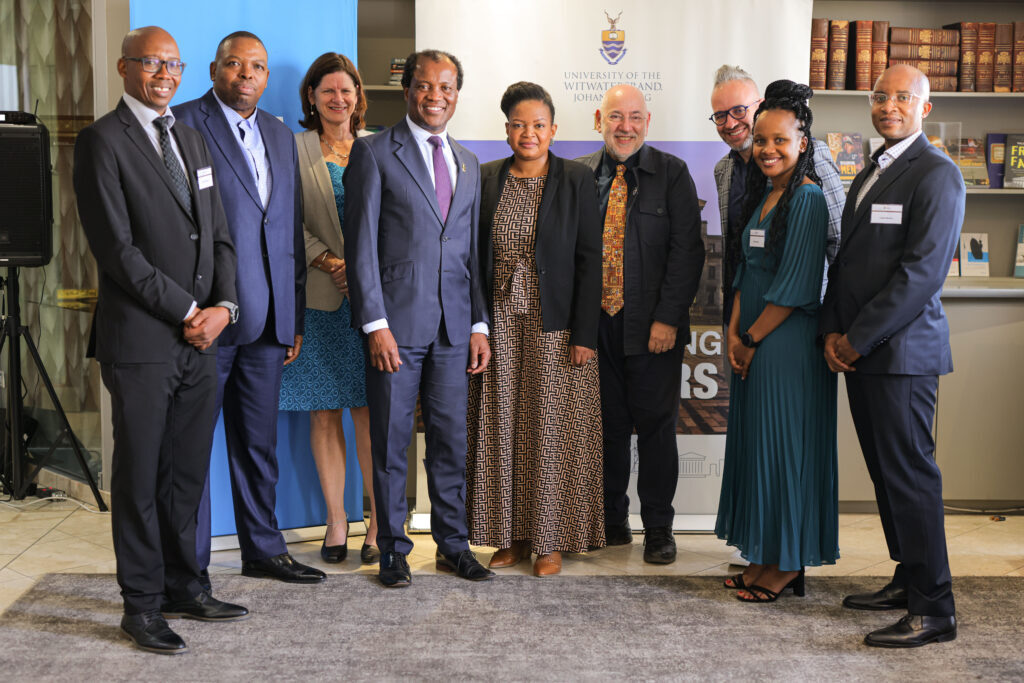
(Group photo from left to right)
o Letlotlo Phohole, Senior Programme Manager: Wits Innovation Centre (WIC)
o Jonas Bogoshi, BCX CEO (on behalf of the Telkom Group)
o Professor Lynn Morris, Deputy Vice-Chancellor: Research and Innovation, Wits University
o Professor Zeblon Vilakazi, Vice-Chancellor and Principal,Wits University
o Dr Mmaki Jantjies, Group Executive: Innovation and Transformation: Telkom
o Professor Barry Dwolatzky, Director for Innovation Strategy, Wits University
o Dr Adam Pantanowitz, Director of the Wits Innovation Centre (WIC)
o Dr Maletsabisa Molapo, Executive for Research and Innovation, Telkom
o Lesiba Maloba, Gyro Group CEO

INSIDE EDUCATION 

Chiloane launches multi-certification Skills Programme
Uncategorized

Chiloane launches multi-certification Skills Programme

Gauteng Education MEC Matome Chiloane officially launched the Multi-Certification Skills Programme on Wednesday, at Katlehong Engineering School of Specialisation, for it to be rolled out at primary and secondary schools across the province.

Pictures: GDE Media.

The GDE Multi-Certification Skills Programme is a learner-focused skills programme that will equip all learners with critical and practical skills, apart from them only receiving a National Senior Certificate upon completing their basic education. The programme will ensure that every learner in the province acquires a minimum of one accredited skill per academic year from Grade R to Grade 12, thereby accumulating thirteen skills certifications upon their exit of the schooling system.

The Multi-Certification Skills Programme will guarantee learners in primary and secondary schools (from Grade R – 12) accreditation in the following skills: Coding Robotics; Swimming; Entrepreneurship; Sign Language; Peer Mediation; Microsoft Digital; Rocketry; Artificial Intelligence; K53; First Aid; Drone Technology; Values & Diversity; Music Enhancement.

At our technical schools, the Multi-Certificate Skills Programme will provide learners (from Grade 10 – 12) accreditation in the following skills: Plumbing; Woodwork; Bricklaying and Plastering; Electricians Part-Qualification; Electronics & Digital Security Installation; Electronic Appliance Repair; Automotive Repairs & Maintenance; Welding; Fitting & Machining; Basic CAD Competency; Elevator Installation, Maintenance & Repair; Forklift Operation, Maintenance & Repair.

The skills provided to technical schools from Grade 10 – 12 through the Multi-Certification Skills programme will be Katlehong Engineering School of Specialisation was earmarked for the launch as it already offers learners some of these skills. 

To ensure the efficacy of this programme, we have partnered with numerous experienced companies who provide invaluable expertise in each skill. During the launch, learners demonstrated their diligence in each of these skills alongside our partners.

“We are excited to have introduced such an innovative programme that will give learners practical skills which are credible enough to use in our vast economy. We want to assure the public that this programme will be rolled out at all our schools, and we are working with various SETAs to ensure the credibility of the certificate obtained for each skill.

We are grateful to all our partners for their immeasurable support and contribution towards this initiative, and for helping us grow Gauteng together,” said MEC Chiloane.

INSIDE EDUCATION