Uncategorized

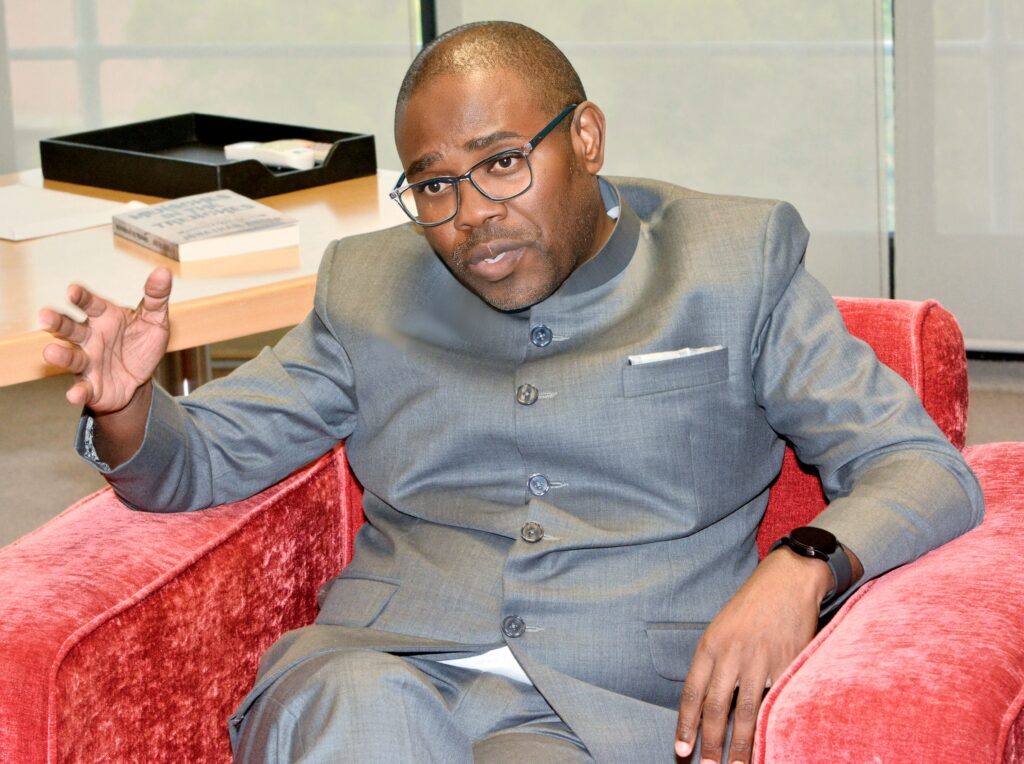
UNISA vice-chancellor Professor Puleng Lenkabula stands firm amid growing calls for her to go

EDWIN NAIDU

UNIVERSITY of South Africa Vice-Chancellor Professor Puleng LenkaBula is standing firm amid growing calls for her and the councils sacking over claims in a damning report about the state of governance at the institution.

A 309-page report by Independent Assessor, Professor Themba Mosia, was critical of Professor LenkaBula, the performance of both management and the council, financial management, upgrades to the vice-chancellor’s home, claims of intimidation and bullying, relations with the labour movement, and the leaking of confidential reports.

On Sunday, Prof LenkaBula had not bowed to pressure and told Inside Education: The Independent Assessor process is not yet complete. Council needs to respond to the Minister. I will only address the media afterwards.”

The vice-chancellor said she did not want to be at odds with statutory processes as legislated by speaking about goings-on.

On 22 September 2022, the Minister of Higher Education Dr Blade Nzimande appointed University of Pretoria Principal and former Council on Higher Education Chairperson Professor Themba Mosia as Independent Assessor to probe UNISA.

The investigation was concluded within the period stipulated; however, at the request of Prof Mosia, the Minister agreed that the report be submitted by 31 March 2023.

Within 90 days of receiving the report, Nzimande must provide a copy of the report to the council concerned, table the report before the National Assembly and publish it in the Government Gazette.

Amid reports that two members of the council have quit over the saga, it has emerged that a copy has been distributed to council members last week. They have reportedly asked for an extension before responding to Nzimande.

The Sunday Times, reported that Belinda Mapongwana- chair of council’s social and ethics committee, and Sedzani Mudau, both resigned at the weekend.

Nzimande is preparing to publish the report it in the Government Gazette. He will then submit the report to the Speaker, Hon Nosiviwe Mapisa-Nqakula for tabling before the National Assembly.

“I am currently studying the report and will contemplate the way forward regarding the implementation of the recommendations, after due process as guided by the prescripts of the Act,” Nzimande said, thanking Professor Mosia for the hard work in conducting the assessment.

Among the proposals on the table for Nzimande in the report is the dismissal of the vice-chancellor and the entire council – which would result in an administrator being put in place.

In March, Mosia recommended that Nzimande should consider placing Unisa under full administration, in line with section 49F(1) of the Higher Education Act.

Another recommendation was that Nzimande should consider changing legislation for institutions of higher learning to be subject to the provisions of the Public Finance Management Act.

This, Mosia said, was because of financial irregularities and supply chain management problems which include fruitless and wasteful expenditure.

Asked to comment on Sunday, Prof Mosia said he was not permitted by law to engage on UNISA matters.

“My job ended when I submitted the report to the Minister’s office,” he said.

INSIDE EDUCATION

Uncategorized

UCT Chairperson quits as governance crisis deepens

Edwin Naidu

University of Cape Town Council Chairperson Babalwa Ngonyama has resigned immediately after finding herself in conflict with the very panel which forced out former vice-chancellor Professor Mamokgethi Phakeng.

“After thoughtful consideration and deep and thorough reflection, I have decided to step down as Chair and member of Council of the University of Cape Town (UCT),” said the chartered accountant and business woman in a communication to staff.

“This decision, which was not a light one, will come into effect immediately,” Ngonyama added in the statement which has not yet been distributed to the university community.

Currently in Paris on business, Ngonyama said that her decision was taken considering her unreserved commitment expressed when taking up this role and during her tenure – to put the interests of the institution first at all times.

With experience spanning more than two decades, Sinayo Securities founder and CEO Babalwa Ngonyama has enjoyed an illustrious career in the financial services sector.

Under Sinayo Securities Ngonyama leads several passion projects – notably the company graduate training programme dubbed ‘Project Funda’, which assists young graduates by equipping them with the necessary knowledge and skills required for future employment. To date, more than 60 graduates have secure direct industry exposure, either with Sinayo Securities and its clients.

“I have also taken this decision having considered the impact of the current circumstances on my wellness and health,” she added.

Phakeng reached an exit settlement with UCT in February 2023.

This intensified since Council announced an independent investigation panel late last year to look into governance-related issues at the university.

“I wish to also state, as I always have, that I remain committed to the work of the panel and I have always been unwavering in my willingness to appear before and cooperate fully with the panel.”

As part of the panel’s ongoing work, Ngonyama was invited and also informed that there were allegations made against her by some individuals who had appeared before the panel.

“It is one thing to focus on improving governance at UCT, it is a completely different matter to use the process in an attempt to lay blame.”

“As part of the process and in the interest of procedural fairness but also to ensure efficiency in how the claims made against me are addressed, I requested that I be furnished with the statements of the individuals beforehand.”

“The request was made so that I could thoroughly respond to them and be afforded an adequate opportunity to address them. I also requested that I be allowed to cross examine the witnesses as part of testing the allegations against me. I was not afforded that courtesy.”

She said that it was important for any person appearing before the panel who needs to respond to claims against them to be given access to any statements or evidence presented by those making the claims against them.

“Unfortunately, the panel has been unwilling to grant me this opportunity, which conflicts with a basic tenet of procedural fairness.”

Ngonyama asked the Western Cape High Court to decide on the fairness of the process and the nature and extent of the panel’s powers under the revised terms of reference, the Institutional Statute and the Higher Education Act.

But this prompted the panel to release a pre-emptive interim report to Council, recommending that steps be taken to remove her.

“It would be a disservice to see a situation where the university returns to the days of instability or sections within the university once again becoming polarised by this matter. It is for this reason that I have concluded that it was best for me to resign and deal with this matter outside Council through the available legal mechanisms,” she said.

Pending the resolution of the contested issues, Ngonyama said she is willing to cooperate with the work of the panel as it presents UCT with an opportunity to address the challenges that beset the university.

“What is important is that fairness, transparency, justice and due process prevails,” she said.

INSIDE EDUCATION

Uncategorized

Select Committee on Education and Technology, Sport, Arts and Culture listens to annual performance plans

STAFF REPORTER

THE Select Committee on Education and Technology, Sport, Arts and Culture has been engaging with the nine Provincial Education Departments (PEDs) on their 2023/24 Annual Performance Plans (APPs) and Budgets in the National Council of Provinces (NCOP) over the past three weeks, commencing on 19 April 2023.

The final virtual briefing session wrapped up on 10 May 2023 with a report delivered by Mr Albert Chanee, DDG for Strategic Planning Management, from the Gauteng Province.

The Gauteng Department of Education (GDE) made special reference to matters relating to underperforming schools; dropout rates; infrastructure and sanitation; school safety; psychosocial support; school sport and culture; and youth development.

Acting Director-General, Dr Granville Whittle, led the Departmental delegation during the presentation on the DBE’s Annual Performance Plan (APP) 2023/24 and the 2023 Budget Allocation.

Ms Nosipho Mbonambi from the DBE’s Strategic Planning Directorate, discussed the DBE’s five 5-year Sector Outcomes in the 2019 – 2024 Medium Term Strategic Framework (MTSF) and the sector priorities for the 6th Administration.

“Oversight findings on the draft APP from the Department of Planning, Monitoring and Evaluation (DPME) and the Auditor-General South Africa (AGSA) were implemented to provide more reflection on Budget Prioritisation Frameworks; strengthen information provided over the planning period and strengthen Technical Indicator Descriptions (TIDs),” she said.

MTSF areas to be strengthened in provincial and national APPs include, amongst others, a better accountability system for principals; a comprehensive package for teacher development; strengthened Numeracy and Reading; ECD indicators linked to classroom outcomes; and sector monitoring with Standardised Output Indicators (SOI) across PEDs to ensure uniformity and to align with Government priorities.

The Heads of Education Committee (HEDCOM) Sub-committee provides a forum for strategic interaction on information sharing, capacity building and best practices in relation to improve sector performance.

The APP is divided into four parts: the Mandate; Strategic Focus; Measuring of Performance; and Technical Indicator Descriptions (TIDs).

Mr Pat Khunou, DBE CFO, presented the Departmental Budget, indicating that the 2023 MTEF allocation totals R31,782,713 billion, a 7% increase from the 2022 budget of R29, 693,160 billion, including conditional grants.

Continued coordination, support and monitoring will ensure that national and provincial strategies and programmes are closely aligned to the overall vision of the Basic Education Sector to improve learning and teaching challenges and outcomes.

The various Budget Vote Debates of national government departments will commence on 9 May, with Minister
Motshekga delivered the annual Budget Vote Speech for the Department of Basic Education, Budget Vote 16, to the National Assembly in Parliament, Cape Town, on 18 May 2023.

INSIDE EDUCATION

Uncategorized

Academically inclined taxi boss obtains his PhD at Fort Hare University

ARETHA LINDEN

GROWING up in Mount Coke near Qonce in the Eastern Cape, Dr Sakhumzi Stamper showed signs of being business-minded when he started lending money to his peers in primary school to earn interest. Coupled with this, he was also academically gifted, obtaining good results in Maths and Science.

This week during the UFH 2023 May Graduation, the 32-year-old, who owns taxis and lectures at Walter Sisulu University, formed part of the first cohort that graduated from the University of Fort Hare’s new qualification – a Doctoral Degree in Business Management offered by Faculty of Management and Commerce.

Dr Stamper holds an undergrad, honours in Human Resources and a masters degree in Business Management, all obtained at WSU.

Under the supervision of Prof Willie Chinyamurindi, Stamper titled his thesis: “An intellectual capital structural model in ICT-based small businesses: the role of organisational capabilities on business performance.” The study focuses at testing an intellectual capital-structural model and ascertaining the role of human and organisational capabilities on business performance in ICT-based small businesses in South Africa. The study used a quantitative approach, and it was conducted using the views of 261 owners/ managers of ICT-small businesses operating in South Africa.

It revealed that there is significant positive relationship between knowledge management capability and human capital. Additionally, he uncovered that innovation capability and business performance had a significant positive relationship and that intellectual capital mediates the relationship between learning capability and business performance.

As he shared his PhD journey, it became evident that his study somehow resonates with his life story – an intellectual who fused his business capabilities to excel.

Dr Stamper is the youngest of seven children raised by two grandmothers, one who was a cleaner and the other was a social grant recipient. To alleviate the financial burden, for pocket money he started his own informal money-lending business in primary school. By the time he got to high school, he had raised enough capital to stock up on sweets to sell.

“I used to lend my peers R1 and charged interest of 20%. I saved up the money and stocked up on sweets to sell to my mates when I got to high school.”

All this while, he brought home good school reports and passed his matric with flying colours.

With the assistance of a family friend, he was able to enrol at Walter Sisulu University to pursue his first degree, a Diploma in Human Resources. Although this was not his first choice, he excelled in the programme.

“I applied late and had to settle for the available course. Commerce was foreign to me, coming from Maths and Science, nonetheless, I gave it my all. He excelled to the extent that he graduated cum laude and went on to complete his B-Tech, Honours Degree and Masters Degree in the field of commerce.

To survive financially, throughout all his level of studies, Stamper ventured into several businesses and even took up part-time and full-time jobs.  “At some stage I sold airtime, I held down a part-time job at a local pharmaceutical, tutored junior students and worked as an Expanded Public Works Programme (EPWP) supervisor.”

He was dealt with two major blows, when his two grandmothers, who were his greatest supporters passed away in 2013 and 2017.

“These are the women who were there for me in every step of my academic journey and my endeavors to make ends meet. I was shattered by their deaths but became adamant to continue making them proud.”

While doing his Masters Degree, Stamper was offered a job as a part-time lecturer at Walter Sisulu University to lecture Advanced Strategic Management and Business Management 2.  

Using his tax returns and his part-time lecturer salary he bought his first taxi in 2018 and over the years extended his fleet to three taxis and runs the business with his wife, Aphiwe who he says has been his anchor in his PhD journey. “When Prof Willie returned my papers with red all over it, it was tough. My wife motivated me by reminding me why I started this journey – to make a name for a child raised by a cleaner and a social grant recipient.”

He was appointed permanent lecturer a few years ago.

Commenting on his PhD journey, he said: “I have never read so much in my life, and Prof Willie made me do it, simply because he wanted me to produce research that is impactful.  He wants the best even if it means submitting a thousand times and he is very strict with deadlines. Above all, in our journey as candidate and supervisor, he showed me ubuntu.”

Dr Stamper says he wants to dispel the misconception that people in the taxi industry are uneducated.

“I hope my story sends a message that taxi owners are also ambitious people with quests for educational advancement. In this industry, we have people with degrees and I am proud to say, I am a Taxi Boss who is an Academic Doctor.”

SUPPLIED| UFH

Uncategorized

Ohio Senate passes massive higher education overhaul bill, House version hears opponent testimon

MEGAN HENRY

THE Ohio Senate passed a massive higher education bill that would significantly alter college campuses. Wednesday’s 21-10 vote comes a week after changes and clarification were made to Senate Bill 83, which was introduced by state Sen. Jerry Cirino, R-Kirtland in March. SB 83 now moves to the House for committee consideration.

Republican state Sen. Louis W. Blessing, III, Sen. Nathan Manning and Sen. Michele Reynolds joined the seven Senate democrats in voting against the bill, also known as the Ohio Higher Education Enhancement Act. Reynolds flipped her vote after voting in support of SB 83 Wednesday morning during the Senate Workforce and Higher Education Committee meeting.

“This legislation is an urgently needed course correction,” Cirino said. “If you desire an education that involves learning analytic skills, evaluating many ideas and many sides of issues and how to think better, not what to think, this bill is for you.”

If SB 83 is passed by the GOP-supermajority House, university staff and employees would be banned from striking, college students would be required to take certain American history courses, professor tenure would be based around “bias,” and Board of Trustees terms would be reduced from nine years down to four. 

The Senate Workforce and Higher Education Committee passed SB 83 Wednesday morning by a 4-1 party vote, with the lone dissenting vote coming from state Sen. Catherine D. Ingram, D-Cincinnati. Opponents clad in red, some with black masking tape over their mouths, packed the committee meeting. More than 100 people submitted written opponent testimony.

What is in SB 83? 

The original version of SB 83 would have mainly impacted public schools and, among other things, ban programs with Chinese schools, ban mandatory diversity training, prohibit university staff and employees from striking, require American history courses, and mandate tenure evaluations based on if the educator showed bias or taught with bias. 

Some of the bill’s revisions, among others, include clarifying the segregation of faculty and staff based on someone’s race, ethnicity, religion, sex, sexual orientation, gender identity, or gender expression is only prohibited in classroom settings, orientations and graduations; allowing mandatory diversity, equity, and inclusion training for certain exemptions; and existing college programs with Chinese institutions can remain as long as there are specific requirements in place.

Other changes would require Boards of Trustees to create policies on tenure and update those policies every five years, and shorten a trustee’s tenure — something Ohio Senate President Matt Huffman likes. 

“When someone is appointed to a 9 year-term there is almost no accountability,” he said. “A governor could get elected two times and never replace that appointment.” 

Florida’s governor Ron DeSantis signed a law earlier this week that defunded diversity, equity and inclusion programs at publicly-funded colleges and limits how race can be discussed in many courses. 

More than 30 anti-DEI bills have been introduced across numerous states, according to the Chronicle of Higher Education. 

What senators said about SB 83

Several senators shared their thoughts on SB 83 for a little over an hour before taking a vote. Those in favor of the bill said it would encourage diversity of thought, but those opposed to the bill said it would cause students and professors to leave Ohio. 

But Cirino said he isn’t concerned about potential brain drain. 

“When all is said and done here, our universities are going to be better,” he said. “We are going to attract more people who have been turned away because of the liberal bias that is incontrovertible in our institutions in Ohio.”

Ohio’s 14 public universities generated $68.9 billion to the state’s economy in the last fiscal year — representing 8.8% of Ohio’s total gross state product, according to a study that was released last week by Lightcast, an independent consulting firm, on behalf of the Inter-University Council of Ohio.

State Sen. Niraj Antani, R-Miamisburg, said conservative students deserve to speak freely.

“For some reason when they want to speak, they are silenced,” he said. “They are made to feel not welcome.”

State Sen. Kent Smith, D-Euclid, said there’s no evidence Ohio’s universities are ineffectively educating students and doesn’t see how this bill would improve higher education. 

“This would be the worst assault on academic freedom that Ohio has ever seen,” he said. 

Senate Minority Leader Nickie J. Antonio, D-Lakewood, said pay might have something to do with not having enough conservative faculty at Ohio’s universities. 

“If you raise the pay, you probably raise how many faculty would be there,” she said. “To take away the bargaining rights seems counterintuitive if you are really trying to get more conservative folks at universities.” 

SB 83 backlash 

More than 100 people testified against SB 83 for more than seven hours about a month ago during a marathon Senate Workforce and Higher Education committee meeting. 

Ohio State University Board of Trustees oppose SB 83, saying it diminishes “Ohio State’s ability to fulfill its educational and research missions and negatively impact the state’s economic future.”

“We acknowledge the issues raised by this proposal but believe there are alternative solutions that will not undermine the shared governance model of universities, risk weakened academic rigor, or impose extensive and expensive new reporting mandates,” the trustees said in a statement Tuesday. 

Companion Bill 

House Bill 151 was introduced as a companion bill in April by state Rep. Steve Demetriou, R-Bainbridge Twp., and Rep. Josh Williams, R-Oregon. Opponents testified against HB 151 for two and a half hours during the House Higher Education committee meeting Wednesday morning. 

Ohio Federation of Teacher President Melissa Cropper said the bill is unneeded, unproductive, threatens academic freedom and puts Ohio colleges at a competitive disadvantage.

“We are at a real crisis point and we are addressing the wrong problems in education and this bill is an example of that,” she said. 

Just the introduction of these bills is scaring faculty and students away, said Stephen Mockabee, an political science professor at the University of Cincinnati and a member of UC’s American Association of University Professors.

“This is a very important concern that we will have a brain drain in Ohio,” he said.

Higher Education Committee ranking member Rep. Joe Miller echoed these sentiments in a statement. 

“HB 151/SB 83 will make it extremely difficult to attract students and faculty to Ohio, which will be extraordinarily damaging to our economy, financially impacting cities from Akron, to Athens, Kent and Columbus,” Miller said. 

OhioCapitalJournal

Uncategorized

Chiloane to announce 2024 online admissions process on Sunday

GAUTENG Education MEC, Matome Chiloane, will on Sunday announce the commencement and process of the 2024 Online Admissions for Grade 1 and Grade 8.

During the announcement, Chiloane will provide detailed information on the application and placement process that will be followed for the Online Admissions.

It is worth noting that the online admissions platform faced numerous challenges last year, particularly in relation to the automatic placement status of learners. However, the Department has taken these issues seriously and has made efforts to address them.

In addition to the online admissions announcement, Chiloane will also discuss the Department’s plans to enhance school safety in Gauteng.

These measures are aimed at ensuring a safe and secure learning environment for students across the province.

Gauteng Education MEC Matome Chiloane will on Sunday, 21 May 2023, announce the commencement and process of the 2024 Online Admissions for Grade 1 and Grade 8.

INSIDE EDUCATION

Uncategorized

Eastern Cape Premier Oscar Mabuyane asked to step down over fraudulent degree scandal

EDWIN NAIDU

THE leader of the fledgling political party Rise Mzansi has called for the resignation of Eastern Cape Premier Mabuyane in light of a fraudulent degree scandal. Rise Mzansi’s national leader, Songezo Zibi, expressed his dismay at the premier’s actions, stating that such behavior is unacceptable for a senior public representative.

Zibi said that a premier should lead by example, particularly in a province with a history of persistent public sector corruption. He argued that Mabuyane’s involvement in a shameful act of corruption makes him unfit to lead the fight against corruption.

According to News24, Mabuyane has been accused of fraudulently obtaining a Master’s degree at the University of Fort Hare, which was later upgraded to a PhD candidacy without meeting the minimum requirements.

Zibi, a former journalist and communications professional, highlighted the ongoing trauma and destabilization at the University of Fort Hare due to acts of violence and assassination targeting Vice-Chancellor Professor Sakhela Buhlungu and university staff committed to cleaning up the institution.

Zibi further criticized the silence of the ANC at the national and provincial level, considering it an abdication of their responsibility as a governing party.

He urged the people of the Eastern Cape not to forget this moment, where the actions of powerful individuals like Mabuyane undermine the hard work and adherence to rules shown by their diligent children in pursuing qualifications.

In response to the mounting pressure on Mabuyane, ActionSA, led by former Johannesburg mayor Herman Mashaba, also called for his resignation.

The party argued that the allegations of degree fraud reinforced their belief that Mabuyane is unfit to serve as Premier.

They highlighted Mabuyane’s self-serving actions instead of prioritizing service delivery and addressing the challenges faced by the poorest in the province, such as high unemployment and inadequate service delivery.

ActionSA had previously marched to the Eastern Cape Office of the Premier in April to draw attention to the state of the province under Mabuyane’s leadership. They asserted that the degree fraud scandal was another failure added to the list since his appointment.

The University of Fort Hare, renowned for its iconic struggle heroes and acclaimed African leaders among its alumni, has also been plagued by corruption, maladministration, and violent incidents, including assassination attempts on its vice chancellor and deputy.

ActionSA reiterated their belief that honourable leadership is based on ethical conduct, integrity, and accountability. Therefore, they called on Premier Mabuyane to do the right thing and resign from his position.

INSIDE EDUCATION

Mpedi is ‘walking in his own shoes’ at UJ
Uncategorized

Mpedi is ‘walking in his own shoes’ at UJ

CHARLES MOLELE

“I am not here to fill anyone’s shoes. I am bringing my own shoes,” says newly appointed Vice Chancellor of the University of Johannesburg, Professor Letlhokwa Mpedi, in response to a question about walking into the big shoes left by his predecessor Professor Tshilidzi Marwala.

Speaking exclusively to Inside Education from his West Wing office in Kingsway, Auckland Park, Mpedi makes it clear he will bring a different leadership style from that of his predecessor, who elevated the university into one of the most respected on the African continent.

“There is only one Professor Tshilidzi Marwala…and the factory is closed. There’s only one Professor Mpedi, and I can only excel at being myself more than somebody else. Prof Marwala is a scientist. I am a lawyer,” says the soft-spoken Mpedi.

He sat down with Inside Education shortly after his inauguration as the Vice-Chancellor and Principal of the University of Johannesburg at a ceremony held on Friday, 10 March 2023.

Mpedi replaced Marwala, who stepped down last year to take on a new appointment as rector of the United Nations University in Tokyo, Japan, and becomes the third vice-chancellor since the institution’s opening 18 years ago.

Dressed in a grey Nehru suit, Mpedi outlined his key priorities, including establishing the first ever medical school at UJ.

“What we want to do at the university is to combine medicine and technology. We are waiting for the green light [from the Department of Higher Education] and are hoping that we will have the first cohort of students in 2025,” says Mpedi.

“As UJ, we are ready to launch a medical school. If the national departments of health and higher education can support and trust us, we would bring a medical school like no other in South Africa; we would combine medicine and technology and be leaders in that regard. If we get the go-ahead today, we are prepared even to put in our own limited resources,” says the Hammanskraal-born academic.

He expressed delight and profound honour in accepting the position of vice-chancellor, succeeding Marwala and his predecessor, Professor Ihron Rensburg, who have both played significant roles in building a solid university.

Mpedi had nothing but praises for his predecessors, saying they left a strong University behind, with UJ now ranked second in South Africa and on the African continent. UJ was previously ranked in third place by the QS World University Rankings.

“I’m delighted and deeply honoured to be taking up the role of vice-chancellor of this great university. Prof Marwala and Prof Rensburg have built a strong university, and I see many opportunities to take the institution’s ambitious strategy forward. I am particularly looking forward to working with staff and students to build a truly inspirational and
transformative institution where all are included and supported to thrive,” said Mpedi.

Mpedi says that under his leadership, UJ will remain committed to innovation, Pan-Africanism and the Fourth industrial revolution (4IR), which have become part of the university’s DNA.

“The commitment to innovation, Pan-Africanism and the emergence as a fourth industrial revolution (4IR) university has become part of our DNA. This will continue to remain our focus and ethos in the future. However, we cannot ignore the context of the world around us. Steep rises in inequality, growing divisions, pandemics, climate change and leadership crises are but a few descriptors of our current era.”

“I’m delighted and deeply honoured to be taking up the role of vice-chancellor of this great university,’ says Mpedi.

Another key priority for Mpedi will be to focus on social security laws in dealing with challenges such as unemployment and other social ills in South Africa using 4IR technologies.

“We will also intensify our 3D printing project in collaboration with the Department of Science and Innovation to continue to leverage the technology of the 4IR and find sustainable solutions that benefit local communities,
including the provision of housing,” says Mpedi. He cites the university’s project in Gwakwani, Limpopo, as an example. Gwakwani, a small village in northern Limpopo, had no running water, electricity, cell phone reception or internet access. But since the university started introducing innovative Internet of Things (IoT) systems there, much has changed in the remote village.

“We are also proud of our colleagues in the School of Electronic and Engineering Department for setting up the first smart village in South Africa using solar technology; today the village has among others, mobile connectivity and this has impacted on the lives of ordinary people in Gwakwani,” says Mpedi.

The new vice chancellor will also be working towards bringing down the dropout rate at UJ and raising the completion rate in record time.

“That’s one of my biggest priorities; to achieve a lower dropout rate from 32% and, most importantly, to a single digit. It would be amazing if I achieved that at the end of my term,” said Mpedi.

One of Mpedi’s goals in his first 100 days was to oversee the development of the UJ Island at the Vaal River.

“We will turn it into an academic project, training courses, conference centre and food garden project.”

Mpedi says he also wants the university to offer more online courses by the end of the year, some of them free of charge.

“We have about four online courses at the moment. But by the end of the year, we should have at least ten of these online courses.”

His focus will also involve turning UJ into a research-intensive university. In the past few years, UJ has seen a surge in its accredited academic research output. The University, which has set a goal to increase its certified research output, has achieved this and is ranked among South Africa’s top 2 universities.

“We want to build a research-intensive institution. Research is important to teaching and learning. The research contributes to a new body of knowledge and is a pillar to community engagement,” said Mpedi, who is a National Research Foundation (NRF) rated scholar and is placed in the B category at level B3 (a researcher who enjoys considerable international recognition by peers).

Turning to student issues, Mpedi says he wants to raise more money to cover student fees and registration costs, particularly the missing middle group.

“We have the SRC Trust Fund to help students to register and raise funds for the missing middle. I have also contributed R50 000 to the fund. We also appreciate the role played by the Motsepe Foundation in contributing R30 million. Are we where we need to be? No,” says the Syferkuil- born academic.

Amongst his academic achievements, Mpedi holds an Advanced Management and Leadership qualification from the Saïd Business School, University of Oxford (2022), as well as in ‘Leading in Artificial Intelligence: Exploring Technology and Policy Programme, from the John F. Kennedy School of Government at Harvard University, Executive Education (July 2022).

Mpedi completed his B Juris degree in 1996 and LLB degree in 1998 at Vista University. He holds an LLM in Labour Law from the Rand Afrikaans University (now UJ) and an LLD in Mercantile Law from UJ.

He publishes labour law and social security. Mpedi holds a B3 rating (Internationally Acclaimed Researcher) issued by the National Research Foundation.

He is a recipient of several awards, including the Continental Award for Education and Training: Academic and the South African and Southern African Development Community Regional Awards for Education & Training: Academic.

“We want to build a research-intensive institution. Research is important to teaching and learning,” says Mpedi.

INSIDE EDUCATION

Uncategorized

Rationalisation of schools worries KwaZulu-Natal residents

PHUTI MOSOMANE

GREATER uMgungundlovu District Municipality residents in KwaZulu-Natal (KZN) expressed their concerns about the ongoing process of school rationalization in the province.

A significant number of residents were particularly opposed to clause 13 of the Basic Education Laws Amendment Bill, which outlines the procedure for merging small and non-viable public schools.

These concerns were shared with the Portfolio Committee on Basic Education during the second of three public hearings on the Bill held at the Grange Community Hall in Pietermaritzburg over the weekend.

The residents overwhelmingly rejected the Bill, emphasizing that the merger of schools would compromise the right of learners to receive a quality education from schools in close proximity to their homes.

Participants highlighted the potential risks associated with transporting young children to schools located far away as a result of the mergers. They pointed out previous tragic accidents involving learner transport, underscoring the dangers involved.

Parents argued that instead of closing schools with low student enrolment, the Department of Basic Education should provide adequate support to help these schools thrive.

Furthermore, the participants also expressed their belief that the closure of non-viable schools and the excessive regulation of home-schooling would have little positive impact on improving the public education system. They cautioned that these measures could potentially discourage skilled educators from remaining in the basic education sector.

Tiny Lebelo, an Equal Education Researcher, shared the perspective that school mergers can be advantageous if the Department of Basic Education has comprehensive plans in place to ensure transportation and adequate resources for the merged schools.

“Merging is good provided the government makes available reliable and safe scholar transport especially in rural provinces such as KZN. So, the government must ensure that these things are met before moving learners, ensuring that they will still benefit from school nutrition programmes as well. However if the department is merging schools for the sake of merging them, it would indeed deprive learners of their right to education,” said Lebelo.

Additionally, some parents expressed their rejection of clause 37, with home-schooling parents arguing that the proposed provisions aimed to undermine the natural authority of parents in making decisions about their children’s education.

Furthermore, certain parents raised security concerns regarding the implementation of clause 37 (2) (b) (iii) and (3), which propose assessments by competent assessors and site visits. They believed that these measures would expose families to criminal elements and potentially promote crime.

These parents called for alternative measures to ensure accountability within the home-schooling system.

They believed that the current regulations in the Children’s Act adequately regulated the home-schooling environment and requested the complete removal of clause 37.

On the other hand, participants who supported the Bill argued that the regulation of home-schooling, as proposed in the Bill, would ensure equity within the public schooling system and prevent the emergence of a two-tiered education system.

While the majority of participants rejected the sale of alcohol in schools, citing concerns about promoting substance abuse in a country already grappling with that issue, there were some who expressed partial support for the Bill.

They raised concerns about specific clauses, such as clause 14, which they believed should be reconsidered to ensure that the Bill effectively achieves its objectives. They believed that the current wording of the clause, which requires the submission of financial interests, could deter potential School Governing Body members from volunteering.

The public hearing experienced a change in venue due to a double-booking of the initially secured hall.

The committee apologized for the inconvenience and assured participants that efforts were made to transport everyone to the new venue to ensure their participation in the hearings.

Bongiwe Mbinqo-Gigaba, the Chairperson of the committee, expressed gratitude to the municipality for providing an alternative hall nearby the Pietermaritzburg Town Hall, which was filled to capacity during the hearings.

The committee concluded the hearings in KwaZulu-Natal with a session at the eThekwini Metropolitan Municipality on Sunday.

INSIDE EDUCATION

Uncategorized

History classes help students develop curious minds – but Ghana’s teachers aren’t equipped to nurture this

GIDEON BOADOU

THERE are two camps when it comes to teaching children: one says teachers should focus on guiding students to find things out for themselves. This approach makes learning meaningful and prepares students to connect learning to the real world. It’s known as inquiry-based learning.

The other camp is critical of inquiry-based learning. It argues that teaching should be more structured and led by a teacher who provides information and explains concepts. Research shows that this approach supports student skill development. In practice, teachers often combine methods that focus on inquiry and teacher-led teaching methods to support student learning.

The approaches matter in all subjects. But my area of interest is history. There are many ways in which history teachers can support students in developing curious minds. That includes teaching them to ask questions about the past, comparing past and present developments, and taking them to historical sites to have a first-hand learning experience of past events and people.

I had already studied the methods of secondary school history teachers in Ghana and found that they preferred to narrate historical events to students. So I set out to understand why Ghanaian history teachers don’t use inquiry-based teaching methods.

My key findings were that secondary teachers felt unsupported in their work as the resources that could support inquiry-based teaching were not available. Teachers also complained about heavy workload. These findings matter as many teachers are reported to be leaving the teaching profession globally. Raising the status of the profession, keeping existing teachers by giving them what they need to teach in engaging, compelling ways and attracting new teachers is extremely important.

Teachers’ insights

For my research I interviewed 24 secondary school history teachers from the Central region of Ghana to understand their teaching approaches as well as what informed their choice of teaching method. These teachers were also observed at work in their own classrooms.

The teachers said they lacked the necessary resources and support to carry out inquiry-based history teaching. They didn’t have access to textbooks, maps, charts and educational technologies like school-owned computers or overhead projectors; some said they used their personal computers to support students’ learning.

Further, they did not have the support of school authorities to take students out to historical sites to see where events happened and investigate them for themselves.

In addition, most teachers explained that large class sizes did not favour the use of inquiry methods. Some of the classes I observed had more than 80 students trying to fit into small rooms. This led to behavioural problems, so teachers spent more time trying to discipline students than they did on class work.

The only teacher I observed who carried out some inquiry-based teaching had just 25 students in his class. He told me that having relatively few students enabled him to do more inquiry-based teaching that got students involved in examining and thinking about the past.

Too much pressure

Teachers also reported that the history curriculum was overloaded with topics. For them, the pressure to cover the entire curriculum within a short period meant that there was no time to carry out inquiry-based teaching. The high importance placed on students’ performance in examinations added to the pressure.

One teacher told me:

The findings are especially disheartening when one considers how many important historical sites there are in Ghana that could provide a backdrop for inquiry-based learning.

The Cape Coast and Elmina slave castles, for instance, hold important historical information and materials that can support inquiry-based teaching. By spending time there students could begin to engage with ideas rather than just being given information about the past.

What needs to be done

My results underscore how important it is to match the demands of teachers’ jobs with the resources and support they need by involving all relevant individuals and groups, including teachers, in discussions about the teaching profession, curriculum design and teacher support.

The Ministry of Education and the Ghana Education Service need to provide the necessary resources and support to teachers to support the preparation of students. It is important to identify schools’ resource needs to enable fair distribution of teaching and learning materials.

Basic resources such as textbooks, maps and other materials for illustrating the past should be made available to support meaningful learning of history. This is even more important given that history was introduced as a new subject at the primary school level in 2019.

Changes to the history curriculum could also create more time for the planning and practise of inquiry-based teaching. It is also crucial to reconsider the country’s priorities and values about education.

Covering the curriculum and ensuring students get good test results cannot be the only way to measure the quality of teachers and students. This will reduce teacher stress and improve their well-being. It will also encourage inquiry-based teaching and support student learning beyond the limits of the classroom.

(Gideon Boadu, Sessional Academic and Research Assistant, University of Newcastle)

THE CONVERSATION