Importance of mother tongue reading emphasised during 2023 AVBOB Road to Literacy Awards
Uncategorized

Importance of mother tongue reading emphasised during 2023 AVBOB Road to Literacy Awards

STAFF REPORTER

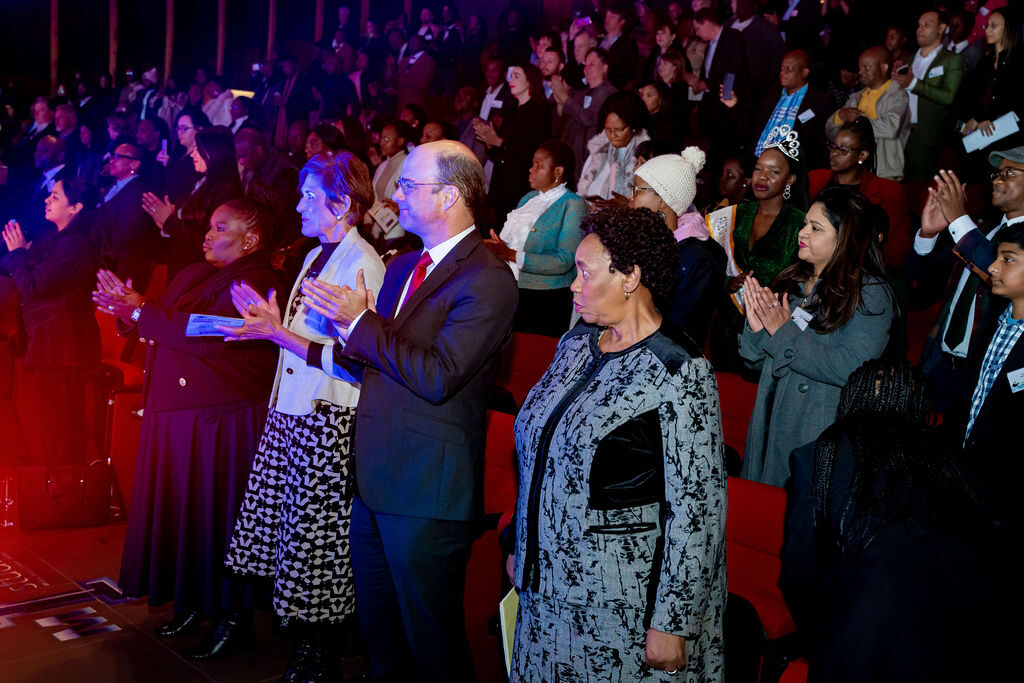
Basic Education Minister, Angie Motshekga, delivered a keynote address during the announcement of the 2023 AVBOB Road to Literacy Awards beneficiaries under the theme: “The Importance of Reading in your Mother Tongue”.

“I am particularly delighted that this year’s campaign specialises reading resources in the mother tongue languages. Extensive research has shown that teaching in a child’s mother tongue language reduces dropout rates and makes education more accessible and engaging. Moreover, we recognise the critical importance of developing numeracy skills during a child’s formative years. Through this campaign, we reaffirm our commitment to nurturing a love of reading among primary school learners throughout our nation,” the Minister said.

“Children must learn to read in their mother tongue, as this facilitates a seamless connection between the words they read, hear and speak.”

She welcomed the announcement that Oxford University Press Southern Africa, the nation’s leading literacy publisher, has generously donated 130,000 books in all 11 official languages for this campaign.

Their commitment to fostering literacy and supporting our children’s education is commendable. In 2022, partners led by AVBOB distributed 180 trolley libraries to deserving recipients; this year, the number has increased to 260.

“The trolley libraries, manufactured by AVBOB Industries in Bloemfontein, are sturdy structures fitted with wheels to store the books securely. Each trolley library contains 500 books, an increase from the previous year’s 430 books. The value of each AVBOB Road to Literacy trolley library amounts to R50,000, totalling an investment of R13 million for the 2023 campaign, an increase from R10 million in 2022,” she added.

“Together, let us ignite a love for reading, strengthen numeracy skills, and empower our children to reach new heights of knowledge and achievement. Let us rally behind literacy and numeracy, knowing that investing in education is investing in our nation’s future,” said Motshekga.

In collaboration with Oxford University Press (OUP) Southern Africa, AVBOB announced the deserving recipients of the 260 trolley libraries equipped with books representing all 11 official South African languages, numeracy resources, and other learning materials on the evening.

Carl van der Riet, AVBOB CEO and Ms Hanri Pieterse, Managing Director of Oxford University Press SA, explained that the AVBOB Road to Literacy Trolley Library campaign is a tripartite partnership with Oxford University Press and Government.

The campaign is a crucial step in the journey to instil a culture of reading and enhance the numeracy skills of primary school children across South Africa.

In addition, the initiative aims to support deserving primary schools and non-profit organisations to improve reading for meaning initiatives.

INSIDE EDUCATION
Youth Empowerment gets a shot in the arm from DBE
Uncategorized

Youth Empowerment gets a shot in the arm from DBE

STAFF REPORTER

South Africa’s Cabinet thanked citizens for joining in the country’s Youth Day celebrations on 16 June 2023 under the theme: “Accelerating youth economic emancipation for a sustainable future”.

Cabinet welcomed the launch of the state-of-the-art Public Employment Mobile Bus by the Departments of Basic Education, Higher Education, Science and Innovation, and Employment and Labour in collaboration with the European Union’s Education for Employability programme.

These opportunity buses travel to far-flung areas to help learners and work-seekers on their employment path by matching individuals’ strengths and capabilities to potential careers and job opportunities.

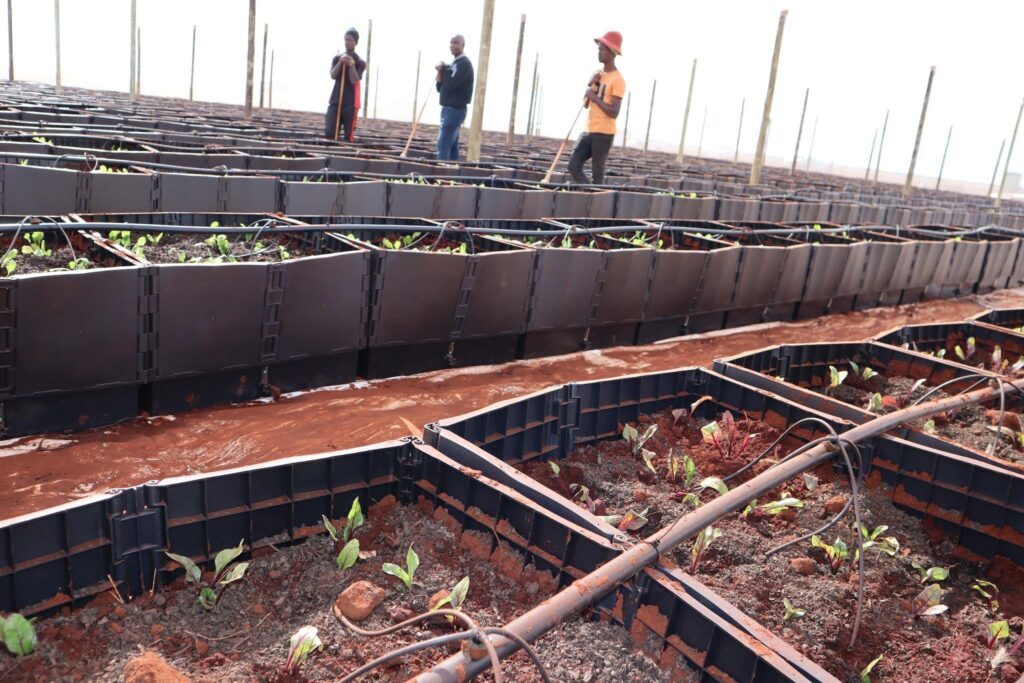
In addition, Cabinet further welcomed the initiatives by the Department of Agriculture, Land Reform and Rural Development to support youth to participate in the agricultural sector in their revitalisation of communal areas such as the Marapyane-Bakgatla primary cooperative.

This cooperative has created more than 100 jobs in their villages; these youth are primarily grain and sunflower farmers.

INSIDE EDUCATION

Uncategorized

UWC Rugby gain automatic promotion to the top Varsity Shield tournament

STAFF REPORTER

Sport at the University of Western Cape forms an integral part of how the university attracts top students, said Clement Trout, the University of Western Cape rugby manager, after his team regained Varsity Cup status through automatic promotion after winning all their matches to finish at the top of the Varsity Shield tournament.

UWC Rugby had been relegated to Varsity Shield after the 2022 Varsity Cup season, but UWC Director of Rugby, Paul Treu, said that his charges and the support team had been rewarded for their hard work in the past year.

“Our backroom staff has done amazing work this season with 18 new players selected over seven matches. We put a big emphasis on leadership development and mentorship, and we are grateful to our captain Tasriq Mynhardt and his leadership group for buying into our vision and values.”
Fourth-year Bachelor of Education student, Mynhardt said he enjoyed every minute of the 2023 season after the disappointment of relegation.

“I was part of the Varsity Cup group that was relegated. I felt my responsibility was to get the team back into the Varsity Cup. Coach Paul said he was very proud of us, and I could see as we were celebrating afterwards that his body language and facial expression were that of a proud mentor.

“This promotion is essential for the university. Given the background of UWC, I think we create hope in the community. We have implemented a value system that everyone has bought into, and as a captain, it was and is essential that we stick to these core team values.

“It was an amazing feeling when that final whistle sounded. It is an experience we have not felt in a very long time,” Mynhardt said. “This promotion was special, like most, I am sure, but for me, it was special because it felt different, seeing that we have so many new players – I think there are about 18 new players in the team this year. This means we had to rebuild.”

Club manager Clement Trout said that while thrilled with the team’s return to the Varsity Cup competition, he believes that the club’s success contributed to a much larger mission of sports and community development.

“Not only is this important for us as a team and our progression but also for the progress of the university. UWC is a beacon of hope within some very challenging communities for our rugby club to be viewed as an equal competitor with the likes of UJ, Maties and UCT,” Trout said.

Underscoring the importance of sport to the university, he said it formed a critical part of ensuring top students join the university. “We have grown tremendously since our first entry into Varsity Shield in 2008. Female empowerment and giving women in sports the proper and healthy platform is a key focus area for the sports administration department.”

“Congratulations to Coach Paul and his entire coaching and management team. These guys have made huge strides in providing an excellent atmosphere for a high-performing environment,” added Trout.

Treu, however, kept their feet on the ground, praising them and finishing the job when it mattered. “However, gaining promotion is one thing, but staying in the main competition is an entirely different challenge.

INSIDE EDUCATION

Uncategorized

Success from the South African Maths Foundation Initiative helping schools

STAFF REPORTER

Zanele Ngwane, a former teacher at Sedibeng Full-Service School, which accepts learners with learning barriers, says teaching took on a new dimension after discovering My Maths Buddy, her book of wonders.

Starting at the school during the pandemic in 2020, she says the schools struggled due to a shortage of resources for teaching and learning resources.

“During the pandemic, learners took turns to come to school, all grades did not manage to finish the syllabus, and they had to be promoted to the next grade.”

Her despondent nature turned after she learned about South Africa’s Trusted Maths Upliftment Program, The My Maths Buddy “One Book One Learner Program” initiative of the South African Maths Foundation.

Starting at the school during the pandemic in 2020, she says the schools struggled due to a shortage of resources for teaching and learning resources.

“During the pandemic, learners took turns to come to school, all grades did not manage to finish the syllabus, and they had to be promoted to the next grade.”

That’s when I faced a new challenge, teaching children the previous grade’s work. “It was not easy at all, but I was introduced to the book of wonders, My Maths Buddy. Since I didn’t know how to use it, I was taken through various training. I mastered the skills from grade 3 to grade 7 level as I was teaching at a Primary school,” she said.

Ngwane, now Head of Department at Cullinan Primary School, said she took the initiative to introduce the dictionary to learners in grade 5 after discovering that learners were doing well because they needed to learn maths. Still, it was because they needed to have the correct vocabulary. They need help with terminology, meaning they did have knowledge and understanding of maths words.

After two months of using the book, she managed to take learners from a 60% to a 90% pass rate in mathematics, make learners able to search for words immediately after mentioning the new term and give them the words to search for from the book.

“Learners were able to use words in sentences and say them in their own words. I managed to get them to love this book so much that they carry it everywhere,” said Ngwane.

South African Maths Foundation, in partnership with the government, has been uplifting Maths education for over 20 years.

Now through this program which has been successfully running for more than eight years, it has positively impacted the lives of more than 40,000 learners and over 5,000 Maths teachers.

Program
“Before the My Maths Buddy program started, a teacher said at her school that the pass rate was 12%. “We had to go and account to the Department of Education for underperforming. We then asked for help from “My Maths Buddy”. Since the My Maths Buddy program started, the results have improved to 65%.”

The following year the school recorded 88% for the first term (up from 65% from the previous year), and the results for the second term reached 95%.

The latest results showed a 99% pass rate with average marks of 67%, up from the 19% average mark recorded at the beginning of the program.”

As part of Mandela Month, the Foundation has urged corporates to support the donation of books to schools that need them most, thus ensuring a Brighter Future For All.

“We Are Looking Forward To Working Together In Improving Maths Education in South Africa,” said the foundation.

Donate R6,700 or more to the Mandela Day Education Drive. This will be used to cover the training and development of 1 dedicated mathematics teacher and provide 5 Maths dictionaries to deserving learners.

To donate, contact neren@1book1learner.org or call 010-880-3979.

INSIDE EDUCATION

Uncategorized

VC slams poor governance and lack of accountability at varsities

STAFF REPORTER

According to Prof Francis Petersen, the Vice-Chancellor and Principal of the University of the Free State, many South African universities are making the headlines for all the wrong reasons.

Instead of profiling their intellectual breakthroughs and recent innovations, Prof Petersen said stories of intimidation, nepotism, financial maladministration, fractious governance, and even worse – assassination attempts and actual murders – dominate the media.

Not surprisingly, he argues, that there is a prevailing perception of universities ‘becoming a law unto themselves’, which is beginning to take hold in the public imagination.

“And that often, the reason for universities not being held to the same standards of public scrutiny is that universities hide behind academic freedom and institutional autonomy.”

But not so, says Prof Petersen, insisting that academic freedom and institutional autonomy are there to promote the well-being of society as a whole and are not to be used as a shield to cover up unethical behaviour.

He said that around the world, universities are regarded as important institutions for the development of individuals, societies, and economies.

Academic freedom is one of the key characteristics that set them apart, constituting a vital prerequisite for fulfilling their society-focused role.

This refers to the space provided to academics and researchers to explore new ideas, engage in rigorous research, share their findings, and express fact- and evidence-based opinions without fear of censorship or reprisal.

Another cornerstone of a university’s role and function – one that goes together with academic freedom – is institutional autonomy which grants universities the authority to govern themselves. This occurs through their leadership structures, usually in the form of councils and senates made up of democratically elected members of staff, alums, members of the student representative council, and other stakeholders.

The concept of institutional autonomy also allows universities to define their own academic programmes, curricula, and admission criteria.

Although universities can heed the advice of the government, the private sector, and industry when making their educational decisions, this advice should never be seen as taking instruction. Its autonomy allows individual universities to develop their own unique institutional culture based on the values it subscribes to, underpinned by excellence, inclusivity, fairness, and integrity.

“If we do not uphold the strictest standards of ethical conduct, specifically in university leaderships, we erode the very fabric of our being and cast doubt on our right of existence. Universities should be microcosms of an ideal society, embracing values such as diversity, equity, fairness, and social justice,” Petersen said.

“Academic freedom and institutional autonomy remain important cornerstones of universities’ identity and are vital for their effective operation. But it is important to note that they are counter-balanced by an equally rigorous emphasis on accountability – enabling universities to fulfil their important role of impactfully supporting societal development. They must be the antithesis of corruption, exposing unethical behaviour and strengthening democracy, the pursuit of social justice, and commitment to academic excellence for the public good of all of society.”

INSIDE EDUCATION

Uncategorized

Nzimande is deeply troubled by higher education turmoil

STAFF REPORTER

Dr Blade Nzimande, the Minister of Higher Education, Science and Innovation, said he was deeply troubled by the wide range of problems facing several institutions beset recently by governance, administration, leadership and business continuity challenges.

“The only feasible way to resolve difficult challenges is by an inclusive stakeholder model of governance which allows for voices of dissent, disagreement and dialogue in a peaceful manner inviolable of the rights of all stakeholders,” he said.

Several institutions, including the University of South Africa, the University of Cape Town, Mangosuthu University of Technology, the Vaal University of Technology, the University of KwaZulu Natal and Fort Hare, have been dogged by ongoing challenges.

Nzimande said he had robust discussions with the Council of the University of Fort Hare last Friday as a follow-up meeting on issues raised with him by stakeholders, including Council members.

However, Nzimande noted that universities were given powers of self-governance through the Higher Education Act (1997), which offers capabilities to Councils accountable for the daily administration of universities.

To ensure that Government exercises its proper role, Nzimande said he had tasked the Department to put all these institutions under a watching brief, using all the available instruments provided for in the Higher Education Act.

“This entails close and regular monitoring and all interventions required,” said Nzimande.

INSIDE EDUCATION

Uncategorized

Ridge School pledges to reduce pollution during World Environment Day

STAFF REPORTER

The Ridge School, renowned for its commitment to holistic education and instilling values of responsibility and leadership in its learners, took part in World Environment Day earlier this month.

The school’s young boys have taken a resolute pledge for the environment, vowing to reduce pollution and positively impact Earth’s conservation through tangible actions in their everyday lives.

Under the guidance of their dedicated teachers, the boys have enthusiastically embraced the ideals of sustainability, recognising the urgent need to protect and preserve our planet for future generations. Their pledge demonstrates a remarkable level of awareness and commitment to creating a greener and healthier world.

Headmaster, Frank Rumboll, expressed his admiration for the boys’ dedication and sense of responsibility, stating, “I am immensely proud of our boys for taking this important step in safeguarding our environment. By committing themselves to make a positive impact, they are setting an inspiring example for their peers and future generations.”

Felipe Robert, a Grade 1 learner at the school, said in his pledge: “I’m going to switch off the lights when I leave the room.”

Zaeem Thokan, Grade 2, committed to recycling paper, plastic, and glass and picking up litter when walking around.

Grade 5 learner James Olivier said: “I pledge to use reusable shopping bags instead of plastic bags, to use lunch boxes instead of plastic packaging, to turn off the water while I brush my teeth, and to take shorter showers.”

World Environment Day on 5 June is a global platform to raise awareness and encourage action for environmental protection.

INSIDE EDUCATION

Uncategorized

A grand occasion as troubled Unisa celebrates its 150th anniversary with a call by Nzimande for it to return to greatness

Edwin Naidu

Celebrating the 150th anniversary of the University of South Africa yesterday, Minister of Higher Education, Science and Innovation, Dr Blade Nzimande, on Monday urged the world’s oldest distance learning institution to draw on its inspiring former student heroes to reclaim its greatness.

Founded in 1873, Nzimande said UNISA occupies a unique place in the annals of higher education history as the oldest university in the country, birthing the university system in South Africa.

Stalwarts of the struggle against oppression and Apartheid, ZK Matthews and John Langalibalele Dube were amongst the first Africans to receive degrees from Unisa since Simon-Peter Mihlali, the first black student to matriculate in 1879.

The Minister reminded guests, including former president Thabo Mbeki, Deputy President Paul Mashatile; Ambassadors and High Commissioners representing various Countries in South Africa; several ministers, and academics, that UNISA boasts among its million and more alum community, the likes Youth League President Anton Lembede, Former President Nelson Mandela, Archbishop Emeritus Demond Tutu, Anti-apartheid activists and Rivonia Trialists Ahmed Kathrada and Denis Goldberg, former Chief Justices of South Africa, among others.

“UNISA is also the alma mater of our very own President Cyril Ramaphosa,” he added.

In the 1940s, he said notable figures such as Oliver Tambo, Getrude Nhlabati, Sir Seretse Khama and Robert Mugabe, amongst others, received their degrees from the University of Fort Hare, registered as external Unisa students.

“Those who study with Unisa today should thus be proud that they share an alma mater with such distinguished personalities,” he added.

Nzimande urged Unisa to take advantage of its added leverage of having Mbeki as Chancellor, whom he described as an inspirational leader who has distinguished himself as a philosopher and leading thinker known for his ground-breaking revitalisation of the African Renaissance, the repositioning of Africa and South Africa as prominent international economic and political role players,” he added.

With enrolment projected at 370 000 plus students across 130 countries in the world, Unisa is one the mega-universities in the world today.

Despite the august nature of the occasion, Nzimande expressed concern about the current developments at the institution regarding its strategic direction, quality of administration and academic outcomes, governance and leadership problems which had been facing several administrations and Councils over the past decade.

A report has been tabled to his Ministry, and I shared this with the UNISA Council. This was followed in 2022 by the appointment of an Assessor, Professor Temba Mosiua, to probe specific matters for further investigation. This report has also now been handed to the Ministry, and the next steps will be announced shortly.

Nzimande said he wants UNISA to be restored to its foundational mandate. It must accelerate the modernisation of its technology platforms to fully manage and apply for promising use innovations such as Generative AI (for example, ChatGPT) as tools to assist it in carrying out its operations efficiently across vast geographical distances and, of course regulating its applications in teaching and learning, and research settings.

Celebrating the 150th anniversary of the University of South Africa, Minister of Higher Education, Science, and Innovation, Dr Blade Nzimande, urged the oldest distance-learning institution in the world to fix its problems by drawing on the inspiration from the likes of elder statesmen as Thabo Mbeki in “service of humanity”.

“The revolution in massive online technology providers – many offering free online courses – pose serious challenges to our universities, and UNISA has to compete in this unpredictable, innovation-intensive space successfully,” he said.

“I urge Unisa to take advantage of its added leverage of having as your Chancellor, Former President Thabo Mbeki, an inspirational leader who has distinguished himself as a philosopher and leading thinker, known for his ground-breaking revitalisation of the African Renaissance, the repositioning of Africa and South Africa as prominent international economic and political role players,” he added.

INSIDE EDUCATION

Uncategorized

Mashatile addresses The 150th Anniversary Celebration Of Unisa

PHUTI MOSOMANE

Deputy President Paul Mashatile will deliver a keynote address at the 150th anniversary of the University of South Africa on Monday.

The event, which will mark a century and a half of the celebrated University’s existence, will take place at the ZK Mathews Hall in Pretoria.

Mashatile is expected to use the occasion to reflect on how the university has shaped Africa’s intellectual futures over the past 150 years.

As the Chairperson of the Human Resources Development Council, his office said he would congratulate Unisa and its leadership on its continued commitment to providing quality education to students across the African continent and providing much-needed skills for the development of Africa.

The Minister of Higher Education, Science and Innovation, Dr Blade Nzimande, will also be addressing the University of South Africa (Unisa) 150th Anniversary Celebration on Monday under the theme “Reclaiming Africa’s Intellectual Futures”.

Since its establishment on 26 June 1873, Unisa has been at the forefront of the growth and development of South Africa’s higher education system.

Consequently, Unisa has shaped the futures of many people from diverse backgrounds in South Africa, on the African continent and globally.

Not only did Unisa spawn the university system in South Africa, but it was also the first university in the world to adopt open distance education, a modality that has become even more resourceful in the aftermath of the Covid-19 pandemic and the developments in digitisation and the 4IR.

Nzimande said it is thus Unisa’s considered view that as an integral part of the university system, locally and globally, the University will use the occasion of Unisa’s birthday to celebrate this important milestone, to reflect on the past and its challenges, and to carve a strategic path towards an envisaged future Unisa, which will continue to play a central role in knowledge generation and the production of quality graduates.

Former President Thabo Mbeki, Unisa Chancellor, MJ Maboa, Chairperson of the Council and Professor Puleng LenkaBula, Vice-Chancellor and Principal, will be part of the celebrations.

Governance issues

The Unisa council has asked Higher Education Minister Blade Nzimande not to disband them but to appoint an additional three members to assist them in performing their duties.

The council pleaded with Nzimande, following an explosive 309-page report by the University of Pretoria academic Themba Mosia, after investigating allegations that the council was ineffective and maladministration claims against principal and vice-chancellor Professor Puleng LenkaBula.

Mosia recommended to Nzimande that the council be disbanded, LenkaBula sacked, and an administrator appointed to run Unisa.

Nzimande is studying the report.

INSIDE EDUCATION

Uncategorized

Gauteng’s Grades 1 and 8, 2024 Application Closing Date Extended To 21 July 2023

STAFF REPORTER

Gauteng Education MEC Matome Chiloane has extended the closing date for the 2024 Online Admissions application period for Grade 1 and Grade 8 to 21 July 2023 because the department has noticed that some parents still prefer submitting their applications physically.

The extended deadline will give parents and guardians an opportunity to submit documents after the school recess, which is due to commence from 23 June 2023 until 17 July 2023, said Chiloane. 

The department has also announced that the Online Admissions System has successfully processed over 400 000 applications since the start of the application period a week ago on Thursday, 15 June 2023. 

“As of Thursday, a total of 408 714 applications were processed by the System. This amounts to 176 975 Grade 1 applications and 231 739 Grade 8 applications,” the Department said in a statement. 

Despite this extension, parents and guardians are still encouraged to apply by visiting www.gdeadmissions.gov.za and register to proceed with the application process.

“We have seen it fit to give parents and guardians more time to apply and upload or submit documents at schools. We are also proud of having processed over 400 000 applications within a week, this is a testament to our system’s improvement and the demand of the quality education which Gauteng offers,” said Chiloane.

 INSIDE EDUCATION