Eastern Cape Premier Oscar Mabuyane successfully interdicts the SIU
Uncategorized

Eastern Cape Premier Oscar Mabuyane successfully interdicts the SIU

PHUTI MOSOMANE

Eastern Cape Premier Oscar Mabuyane has successfully interdicted the Special Investigating Unit from enforcing President Cyril Ramaphosa’s proclamation to investigate allegations of academic fraud emanating from qualifications he received at Fort Hare University.

Mabuyane’s application in court is in two parts. In the first part, he wanted the court to interdict the SIU pending a full review, which was granted on Tuesday.

In the second part of the application (review application), Mabuyane wants the overall SIU proclamation to be set aside and considered invalid and unlawful.

In terms of the order, the SIU is interdicted from enforcing Proclamation R 84 of 2022 authorising the Unit to investigate allegations of maladministration in the affairs of Fort Hare University on matters relating to Mabuyane.

The investigation relating to Premier Mabuyane is interdicted pending the determination of Part B, which deals with the merits of the case in as far as the admission into and awarding of Masters degree.

On Tuesday, the court found that the President Cyril Ramaphosa’s proclamation doesn’t include the master’s programme and therefore, the SIU cannot extend its scope.

However, the Fort Hare University can still continue with its own investigation on Mabuyane’s controversial Master’s qualification.

“The interim interdict is not permanent as it will only endure up to the time when the review application is determined. Nothing stops the university from conducting its own investigation,” the court ruled.

Mabuyane briefly appeared at the Bisho High Court on Tuesday where he sought for the court to stop the SIU’s probe into his acceptance at Fort Hare’s master’s degree programme and whether he had the right qualifications, to be declared unlawful and stopped.

He went as far as calling the investigations “abuse and embarrassment”.

But the SIU has accused Mabuyane of not co-operate in their probe into his alleged illegitimate Master’s thesis.

SIU principal forensic auditor Bongani Tshuku told the court that the entity has found prima facie evidence showing that a team of university officials and researchers produced a thesis on behalf of Mabuyane.

The SIU fingered former university’s public administration faculty dean Prof Edwin Ijeoma and accused him of assisting Mabuyane to be “irregularly admitted into a Master’s programme.”

Both SIU and President Cyril Ramaphosa are opposing Mabuyane’s application.

In granting the interdict, Judge Thandi Norman also ruled that each party should bear their own costs.

The ruling is only a temporary relief for Mabuyane pending a full review application to be heard soon.

The SIU said it has noted a Bisho High Court order handed down by Judge T. V Norman on a matter brought by Mabuyane.

The SIU spokesperson Kaizer Kganyago said the anti-corruption agency has studied the judgment and is happy that it does not interdict or suspends the Fort Hare University investigation in its entirety.”We are also optimistic that we will present our case when Part B of this matter is heard,” he said.

He added that the SIU is further encouraged by Paragraph 66 of the judgment which states that: “Where there is evidence that implicates unlawful conduct in so far as the Masters degree is concerned, there is nothing stopping the SIU from preparing a motivation as it did with the earlier Proclamation and request the President to proclaim that the registration for Masters degree, too, should be investigated.”

The judge also found that “although the applicant contends that the SIU was malicious, there is no evidence of such malice.”

Kganyago said the SIU will explore all legal options available to it.

INSIDE EDUCATION

Celebrating Youth Day
Uncategorized

Celebrating Youth Day

STAFF REPORTER

St Martin’s School celebrated Youth Day 2023 and former educator Oliver Tambo’s legacy at the school with a sports festival that comprised twenty-four teams from schools across the city across two days (15/16 June 2023)

The event’s theme was to illustrate the unifying power of sport, particularly amongst young South Africans.

St Martin’s Acting School Principal Warren Venter said: “This festival is important in teaching our kids how to be citizens of the country, learning things like conflict management, dealing with other people, important qualities. Sport has the potential to unify a nation and bring people together.”

Venter added: “You learn how to deal with other people. And being a human is dealing with other people. Sport is the breeding ground of learning about this and learning to be who you are.”

St Martin’s School also celebrated the legacy of one of its most prominent former educators, Oliver Tambo, who noted: “The children of any nation are its future. A country, a movement, a person that does not value its youth and children does not deserve it.” The school continues to take its lead and embrace Tambo’s legacy and wisdom.

INSIDE EDUCATION

Uncategorized

Universities SA’s Education Deans’ Forum is leading the formation of a continent-wide collaboration platform

STAFF REPORTER

Inadequate funding, inadequate teacher training and limited access to educational resources are among the numerous challenges that Africa needs to grapple with concerning education systems.
It was for these reasons that Professor Chika Sehoole, Chairperson of the Education Deans Forum (EDF), received a resounding YES from his fellow deans when he proposed a platform for deans of schools and faculties of education across the continent to meet and address these obstacles.

This, after sounding the idea of some counterparts from a few African states.

The EDF is one of 11 active communities of practice within Universities in South Africa (USAf). This group fosters research in education towards continuous improvement of teacher education; it promotes South Africa’s education interests by providing an outlet for deans to discuss matters of common concern in the delivery of teacher education, and, finally, the EDF brings to the attention of policymakers, emerging issues on Education as a discipline.

Professor Sehoole, Dean of the Faculty of Education at the University of Pretoria, describes the upcoming platform as one where African education deans will share experiences and best practices, discuss common challenges and collaborate on initiatives towards resolving those issues while supporting one another.

Having agreed on this pan-African forum, the EDF took the lead on the spadework towards establishing the Pan-African Deans of Education Forum(PADEF), whose focus will be in sub-Saharan Africa.

This Forum is founded on the common understanding that education is critical in the development of any society, Africans included. The deans hope to use PADEF to transform teacher education in their respective countries, by, among other activities, sharing best practices and case studies in educational leadership, management, pedagogy and research.

Through PADEF, education deans also hope to advance the United Nations’ Sustainable Development Goal 4 objective of ensuring inclusive and equitable quality education and promoting lifelong learning opportunities for all.

PADEF will be launched on 24 July 2023 at Makerere University in Uganda.

The launch has been planned to coincide with Day One of the 2023 Distance Education and Teachers’ Training in Africa (DETA) Conference, scheduled to take place from 24 to 27 July.

An initiative of the University of Pretoria, this conference is aimed, among numerous objectives, at building the capacity of teacher training programmes in Africa. Professor Sehoole, central to the DETA conference planning, says aligning the PADEF launch to the event was a deliberate and strategic move optimising the gathering in one place of all the critical stakeholders.

At the recent EDF meeting on 26 May, the terms of reference of PADEF were endorsed and agreed on for adoption at the launch event, where the collective of African deans will elect a steering committee.

Professor Sehoole explained that although they wish to attract all the education deans in the sub-Saharan Africa region, membership of PADEF is voluntary.

INSIDE EDUCATION

Uncategorized

Minister denies the claim that most learners cannot read and write

STAFF REPORTER

Over the past month, there has been a raging debate about reading in schools amid claims that most learners can.

The ongoing public discourse on reading literacy intensified when the results of the latest report on Progress in International Reading and Literacy Study (PIRLS) were released on 16 May.

The report confirmed that South Africa, like virtually all countries, saw lower primary reading competencies declines due to pandemic-related school disruptions. The results show that 81% of South African pupils in Grade 4 cannot read for meaning in any language.

That means that while a child may be able to read the literal text, she cannot interpret the text into context for meaning.

The magnitude of the decline relating to the pandemic does not come as a surprise, said Basic Education Minister Angie Motshekga at the weekend in Pretoria.

South Africa was among the countries most actively gauging impacts on learning outcomes during the pandemic.

She said the results shown in PIRLS are in line with earlier findings. All of this is concerning and informs the Government’s emphasis on addressing reading at the foundation phase.

“But it is not true that most learners cannot read and write, as some have put it. In fact, since the release of the report, we have embarked on a series of briefing sessions with various stakeholders to share the findings and provide insight on the mechanics of participating in these international studies,” she said.

The Minister said one of the points sought to make is that South Africa was not competing but merely participating to benchmark against the best in the world.

“It is also important to reiterate that we are one of only three countries in Africa brave enough to participate in PIRLS. We were also the only country to put forward all our official languages in the study.”

Motshekga said early learning is a fundamental stage in a child’s educational journey and that learning did not start in Grade R or Grade 1 but at zero.

“So there are steps the Department can take, but also parents and caregivers have a critical role to play as they are a child’s first and most important teacher during their early years.”

While the Department of Basic Education plays a significant role in supporting early literacy skills and teaching children how to read, the entire ecosystem must be involved.

INSIDE POLITICS

Uganda targets TVETs to deliver digital skills, UJ Prof calls for Monitoring
Uncategorized

Uganda targets TVETs to deliver digital skills, UJ Prof calls for Monitoring

EDWIN NAIDU

Monitoring, Evaluation and Learning (MEL) is critical to understanding the challenges facing science councils in Africa, and inspiring them on how to make better decisions because of it, said Rebecca Hanlin, the University of Johannesburg Professor of Innovation and Sustainable Development.

Highlighting the importance of the Science Granting Councils Initiative (SGCI), which has been in place since 2015, she said Africa makes up 15% of the world’s population and 5% of the world’s GDP

But the continent accounts for just 1.3% of the globe’s investment in Research and Development and holds only 0.1% of the world’s patents. Africa has 198 researchers per million people compared to 428 in Chile, 4,260 in Canada, 4,269 in the United Kingdom and 4,663 in the United States.

“Innovation is endemic in Africa, and it has the chance to leapfrog other continents, but we do not have the systems and knowledge in place to achieve this yet,” she said.

Referring to the launch of the Uganda research outlook report, Hanlin said MEL helps understand what isn’t going as well and helps plan on how to solve those challenges and improve.

“The best-performing organisations are those that can look at challenges and see them as great opportunities for growth. MEL is the tool to enable that growth,” she said.

According to the Uganda research outlook report produced by the Uganda National Council for Science and Technology (UNCST), digital skills must be adapted to rapidly changing needs via Technical Vocational Education and Training.

The 2022 National Research Outlook Report, due for release in Kampala tomorrow by Dr Monica Munenero, the Minister for Science, Technology, and Innovation, emphasised that Information, Communications Technology specialist training was a growing area within the TVET sector, offering new degrees and programs.

The skills acquired through such programs can advance a career at least as much as receiving a university degree. Providing theoretical education and on-the-job training can be particularly rewarding, said the report entitled Unlocking Uganda’s Research Potential for Long-Term Development and Prosperity.

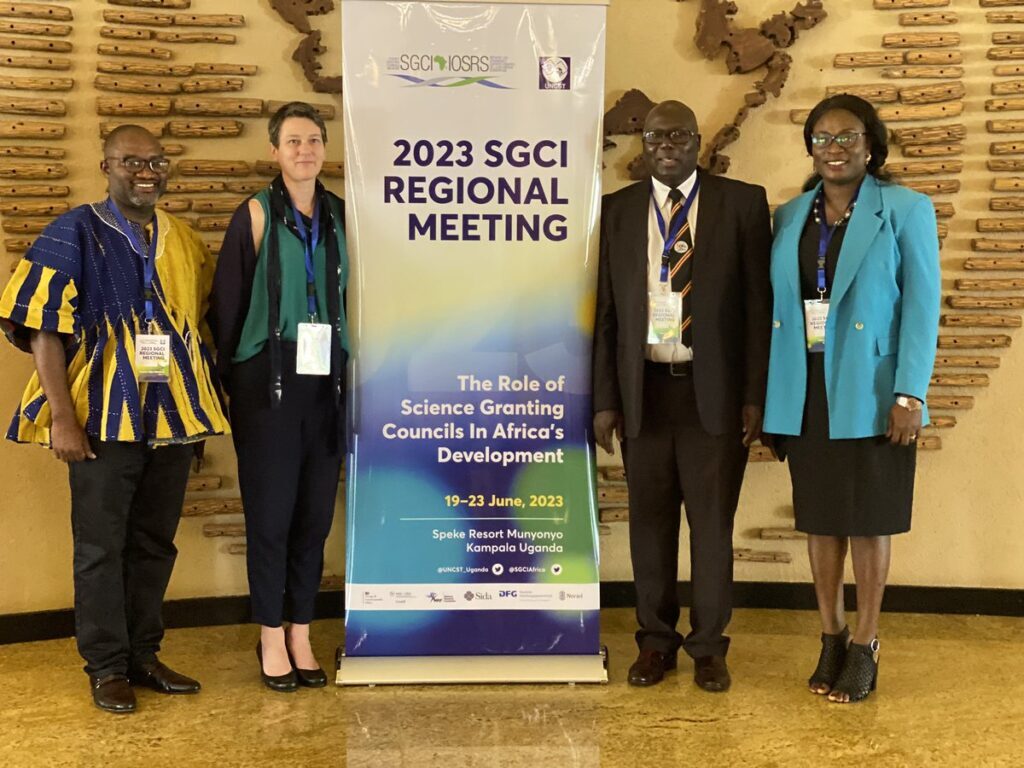
The research outlook report was unveiled at the week-long Science Granting Councils Initiative Regional Meeting in Kampala, Uganda, which began on Monday to strengthen the capacity of science granting councils.

Present at the SGCI Regional Meeting were representatives of science councils from Namibia, Ghana, Sierra Leone, Uganda, Tanzania, Senegal, Côte d’Ivoire, Burkina Faso, Mozambique, Zimbabwe, Ethiopia, Zambia, Malawi, Kenya and Botswana.

TVET in Uganda is headed by a Commissioner and four assistant commissioners in charge of Technical & Vocational Education and Training, overseeing operations and management of 146 Government TVET Institutions and over 800 privately owned institutions.

The report said dual apprenticeship systems, centred on the idea of acquiring relevant skills and experience, can be beneficial.

More generally, because of the digital skills that become obsolete too quickly, TVET institutions should strive to teach broader specialisations and adaptable skills for fast-changing jobs, provide tools on how to manage one’s career and compose one’s qualification, and prepare for the market and for life rather than for a lifetime job.

Aligning curriculum to industry and employer needs and mapping curricula to learning outcomes relevant to labour market needs are keys to the successful delivery of skills that are in great demand and also to improving worker employability. The TVET system should take advantage of existing digital learning tools and resources and explore options for innovative, digital pedagogical approaches such as simulators and augmented or virtual reality.

The development and regular review and update of qualification frameworks can provide relevant support to validation and recognition of prior learning, including informal digital learning. For example, recognising competencies acquired through online coding courses may contribute to resolving coding skills shortages in Uganda.

In the report, the Council said that although it has not been a significant policy priority in the drive towards knowledge-led growth, vocational training must be seen as a reservoir for research.
Whereas there have been stellar examples from around the world on the role and contribution of vocational education as a driver of innovation and growth, this has yet to be the case in Uganda.

But, there is an emerging interest in vocational education due to the new opportunities that this type of education can provide. Between 2016-2019, for instance, 4,479 male students registered for physical and biological science diplomas more than the females, who were 1,825 students.

The UNCST has also embarked on a skilling program aimed at amplifying the contribution of targeted skilling of youths in new value chains for employment and sustainable development. Quality human capital or talent is needed to promote Uganda’s growth and position its excellence in the global marketplace.

Talent is also unconditional in pursuing STI targets and sustaining STI development towards building an efficiency-driven economy. Science, Technology, Engineering and Mathematics (STEM) talent in the country has been enhanced by intensifying postgraduate programs at Higher Education Institutions (HEIs), which help promote R&D initiatives and provide a skilled workforce.

Besides the mainstream education system, the private sector has also positively contributed to the STEM education ecosystem of the country by increasing the number of STEM programs being provided.

INSIDE EDUCATION

Uncategorized

Committee hears that SA universities have become ‘sites of corruption’ in a briefing on the state of governance.

STAFF REPORTER

Corruption at tertiary institutions in South Africa came under the spotlight in Parliament last week when the Portfolio Committee on Higher Education, Science and Innovation asked to be briefed on the current going-on in higher education.

In particular, the committee asked for a briefing on the University of Cape Town Council (UCT) investigation report into governance and management challenges, problems at the University of South Africa (UNISA) on governance-related matters, an update on the state of affairs of the University of Fort Hare (UFH) and University of KwaZulu-Natal (UKZN).

Higher Education, Science and Innovation Minister Blade Nzimande blamed corruption for the ongoing challenges at higher education institutions, saying that universities have become huge sites for personal and private accumulation considering the massive budgets, supply chain and procurement etc.

As corruption increasingly becomes a problem in our society, our institutions of higher learning have not been left untouched,” he said.

The department said it remains concerned about developments in the investigation and continues to monitor the situation.

Out of the country’s 26 public universities, the Minister said 16 independent assessors were appointed since 2000 to probe governance instability.

INSIDE EDUCATION

Uncategorized

Motshekga says DBE wants to address youth unemployment in a briefing on critical issues in education

EDWIN NAIDU

THE Department of Basic Education is implementing the Presidential Youth Employment Initiative to tackle unemployment among youth in South Africa.

Now in its fourth phase, the Basic Education Employment Initiative (BEEI) seeks to give effect to the objectives of the PYEI, which is South Africa’s most comprehensive response to addressing rampant youth unemployment.

Phase IV will see 255 000 young people appointed in ordinary public schools and schools for learners with special education needs across the country, said Based Education Minister Angie Motshekga in Pretoria at the weekend.

“We also have a responsibility to create employment opportunities, particularly for the youth who are neither in employment, education, nor training,” said Motshekga.

Providing an assessment of Early Childhood Development since the DBE assumed responsibility for its function from Social Development a year ago, Motshekga said much work had been taken forward over the last 12 months, and not all of it is visible outside government.

She said the government was committed to elevating the early years as the foundation of all education and learning and injecting momentum into the government’s commitment to delivering access and quality for every child.

Motshekga said that during the function shift process, the DBE listened carefully to the ECD sector to learn about the challenges faced on the ground and to make sure that its priorities became the government’s focus.

A key priority has been to ensure that government takes standardised approaches to help ECD programmes become registered and access the ECD subsidy. “We have also prioritised training on the National Curriculum Framework and developing a plan for workforce development – which are key planks in our strategy to build quality.”

Referring to government efforts to give youth a hand up, Motshekga said the Second Chance Matric examinations are written mainly to give those young people who seek a second opportunity to improve their marks or rewrite.

These young people recognise that a matric certificate is essential in their lives. More than 279,000 candidates enrolled for the May/June examinations.
The examinations started on 3 May 2023 and concluded this week on June 14. Marking starts this coming week on June 21, and the results will be released on August 7 2023.

The public hearings on the Basic Education Laws Amendment Bill have been concluded. The Portfolio Committee on Basic Education led the public hearings, which began in March this year.

On the Basic Education Laws Amendment Bill (BELA) Bill which seeks to amend certain sections of the South African Schools Act of 1986 to respond to administrative challenges facing schools and continues transforming the education system, Motshekga said it was not a wholesale Bill that covers all aspects of the sector, focusing mainly on the administrative processes of the department and schools.

“It is a Bill that responds to the current needs in terms of the changing demographics of our communities, findings by the courts and our observations as we monitor schools,” she said.

The Bill has 56 clauses ranging from the introduction of Grade R to learner attendance, Code of Conduct for learners, Home Schooling, rationalisation of schools, abolishment of corporal punishment and initiations, language policy, admission policy, and the criminalisation of school disruptions.

“It is concerning to note that some members of the public are debating the content of the Bill along racial and political lines. We urge members of the public to engage more meaningfully and constructively on this matter,” she added.

INSIDE EDUCATION

Mashatile says collaboration in skills development, key to youth empowerment
Uncategorized

Mashatile says collaboration in skills development, key to youth empowerment

STAFF REPORTER

Deputy President Paul Mashatile told hundreds gathered to commemorate Youth Day in Mangaung on Friday that collaboration across sectors is key to securing the country’s prosperity.

Named the National Youth Day Commemoration, this year’s theme is aimed at effecting positive youth development efforts from local, provincial and national levels in South Africa.

Mashatile said given that the majority of the country’s population is youth, it is incumbent upon all sectors of society to collaborate in equipping the youth with the skills necessary for development and our collective prosperity.

“If we fail to do so, we would have failed South Africa’s future, as young people represent the future, and it is our responsibility to secure it.

“As we work with the private sector, toward an inclusive economy that employs young people, we recognize that the path to an inclusive economy has not been simple, but like the youth of 1976, we are motivated by their undying spirit,” he said.

Mashatile said the government remains focused and determined to ensure that the youth have access to socioeconomic opportunities.

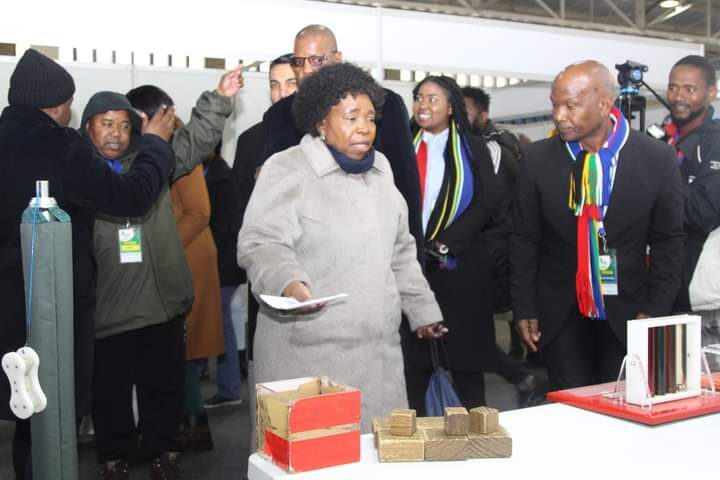
“Minister Dlamini-Zuma briefed me about the work we are doing to invest in youth that is being exhibited at the Opportunities Expo. She informed me that we are investing in real-time education, funding and mentorship opportunities that young people are now accessing.

“What was impressive was that the initiatives at the expo were led by the youth,” he said.

Mashatile said the government has placed the education and training of young people at the top of the national agenda.

Education is one of the most crucial enabling factors for attaining economic emancipation, he said.

“Over the years, the government has invested hugely toward a transformed education system.

“The government will continue to invest in the development of an inclusive education system in which children from low-income and working-class families also have access to quality education from the foundation phase and at higher education levels”.

Mashatile said the country has been investing in the modernisation of the delivery of education. This includes ensuring that curriculum content is responsive to the rising demand of skilled labour, high-speed internet access, and that educational delivery methods are now innovative.

The country has seen educational outcomes, particularly the improvement in output demonstrated by the province of Free State, which has held the top position for the longest time in terms of matric results.

As part of exciting new disciplines in schools, the Department of Basic Education system has introduced robotics and coding subjects at the foundation phase of learning.

This will improve reading for meaning and understanding of concepts at an early phase and thereby give young children a strong foundation for the future.

The Department of Basic Education is also introducing the Three-Stream Education system to ensure that not only academically oriented students benefit from education, but that learners can also choose the vocational or occupational stream that suits their needs.

In addition to Technical Mathematics, Technical Science, and Marine Sciences, the sector is introducing 13 new vocational disciplines. This is part of the Government’s aim to guarantee that schools not only encourage academic accomplishment but also vocational and occupational skills for young people.

To expedite the delivery of pertinent and acceptable skills, the government remains committed to providing essential resources and infrastructure from the earliest levels of basic education to the tertiary level, Mashatile said.

To guarantee that learners have access to the latest equipment, he said the government has recapitalized 540 of the potential 1,050 technical schools.

The programme focuses on youth entrepreneurs who are at intentional, promising and new stages of enterprise development.

Mashatile highlighted some of the achievements in the recent past, including;

2320 youth and youth-owned enterprises funded through financial interventions.
34209 youth-owned enterprises supported with non-financial development interventions.
6796 jobs created and sustained through supporting entrepreneurs and enterprises.
Furthermore, under the Presidential Youth Employment Intervention, the Government has launched several youth development and empowerment initiatives to assist young people in entering the workforce.

Mashatile said the Presidential Employment Stimulus remains a crucial Government intervention to generate employment and livelihood opportunities, particularly at a time when the economy as a whole is not producing jobs at the required rate.

The Presidential Employment Stimulus builds on the many years of success of public employment programmes such as the Community Works Programme and the Expanded Public Works Programme.

During the last fiscal year, the stimulus enabled the creation of nearly 650,000 new jobs and thereby creating sources of income for the youth.

These opportunities were made available in numerous industries, including agriculture and across several other fields.

Of the people involved in the programme, 83 percent are youth. This brings the total number of participants in the Presidential Employment Stimulus since its launch in 2020 to over 1.2 million people.

More than 3.9 million young people have enrolled on the National Pathway Management Network, also known as SAYouth.mobi. This network provides a platform for young people to access learning and earning opportunities that are both all-inclusive and free of charge for data usage.

Close to 350, 000 young people have secured earning opportunities through the platform, with 68% of these being young women.

14 000 Technical and Vocational learners have secured workplace experience opportunities through the support of the Sector Education and Training Authorities in the Department of Higher Education and Training.

35 000 young people have secured non-financial support from the Department of Small Business Development and the National Youth Development Agency and close to 5 000 have received financial support to start and scale up their enterprises.

He said the government has successfully revitalised the National Youth Service programme and now runs one of the world’s largest National Youth Service programmes with 47 000 participants working across sectors such as Early Childhood Development, Sport, Arts and Culture, Nutrition and Digital Mapping.

INSIDE EDUCATION

Uncategorized

So far, over 161 000 Grade 1 and 8 Online Applications were processed – MEC Chiloane

STAFF REPORTER

Gauteng Education MEC Matome Chiloane officially marked the start of the 2024 Online Admissions application period for Grade 1 and Grade 8 on Thursday, at Winterveldt Multipurpose Hall in Tshwane.

Education spokesperson Steve Mabona said as of Thursday noon, 161 407 Grade 1 and 8 applications were successfully processed by the Online Admissions System, reflecting a slight decrease compared to the 2023 application period where over 165 000 applications were made.

“We believe this decrease may be due to this year’s application period occurring at the start of the long weekend. Within the first hour of opening the system, a whopping 60 000 applications were received,” Mabona said.

He said the department has acknowledged the challenge faced by some applicants when entering their ID numbers onto the system.

“The Department of Home Affairs (DHA) verification mechanism used on the Online Admissions was unable to process certain ID numbers, However, this was effectively resolved within a few minutes as we discovered applicants only had to refresh their browsers and proceed to apply successfully,” he said.

A number of applicants who were applying for Grade 8 reported that they could not enter their previous schools on the system.

The department said this issue did not affect all Grade 1 and 8 applicants, but Mabona has assured parents and guardians that the problem has since been resolved and all previous schools are now appearing in the system for Grade 8 applicants.

The 2024 Online Admissions application period will continue until 14 July 2023.

Parents and guardians are urged to either upload the certified copies of the required documents onto the system, or submit them at the schools they applied to within 7 school days.

Parents can also visit District Offices and 80 decentralised walk-in centres to be assisted with the application.

Gauteng Education MEC Matome Chiloane said he was happy with the online admissions on the first day and was proud of the smooth start and at the turnout of parents who succeeded in their applications.

“Many parents reached out to share their smooth experience when utilising the system. Other parents also said the system is faster than the previous years,” said Chiloane.

INSIDE EDUCATION

Uncategorized

UP VC Prof Tawana Kupe resigns suddenly before his term ends

Edwin Naidu

University of Pretoria Vice-Chancellor and Principal Professor Tawana Kupe has resigned suddenly.

He leaves the university on 31 July, six months before his term was scheduled to conclude in January 2024, said UP Council Chair Kuseni Dlamini in a communication to staff.

“While the process to find his successor will begin immediately, appropriate interim arrangements that will help facilitate the smooth functioning of the institution will be put in place,” he said.

Dlamini said he was confident that these interim arrangements, coupled with the expertise and dedication of the UP staff, would enable the university to operate at the highest level.

“We all remain committed to upholding the university’s mission, values, and long-term objectives and will work tirelessly to maintain our momentum,” he said.

On behalf of the Council, Dlamini thanked Kupe for his contributions to UP during his tenure.

Kupe officially stepped into his role on 14 January 2019, declaring: “It is an honour and privilege to take over the reins at this proud institution at such a key moment in South African and global history” following the resignation of former Vice-Chancellor and Principal Prof. Cheryl de la Rey, who took over as head of the University of Canterbury in New Zealand.

Prof. Kupe holds BA Honours and Master’s degrees in English from the University of Zimbabwe, as well as a DPhil in Media Studies from the University of Oslo in Norway. He served as Executive Dean of the University of the Witwatersrand’s Faculty of Humanities for six years after serving as the Head of the then Wits School of Literature and Language Studies. He was also the founding Head of the Media Studies Department.

On 1 June, UP announced that it had improved its position in the 2023 Times Higher Education (THE) Impact Rankings, rising to position 69 (up from the 101-200 band in 2022) out of 1 705 universities in 115 countries.

UP is also ranked in the Top 20 universities in the world for two SDGs, with a notable 4th place in the world (out of 960 ranked universities) for SDG 8, “Decent work and economic growth” (maintaining its top 50 global placement for SDG 8 from 2022) and 14th place for SDG 5, “Gender equality” (first appearance).

“Once again, UP has proved to be one of the leading universities not only in Africa but also in the world for impact towards the SDGs,” said Kupe at the time, acknowledging that it was a collective achievement from academic and professional staff, students, and partners at all levels.

Prof Kupe could not be reached for comment.

INSIDE EDUCATION