Uncategorized

Outrage over regulations that could remove learners from school

Johnathan Paoli

Equal Education and the Equal Education Law Centre expressed outrage, last week Thursday, in a statement, at the Western Cape High Court’s ruling on the regulation of collaboration schools, donor-funded schools, and intervention facilities introduced in the Western Cape Provincial School Education Amendment Act 4 of 2018  

This follows the steady systematic introduction of collaboration and donor-funded schools, which would be granted significant freedom by the new legislation in addition to the establishment of intervention facilities for “serious misconduct: offending learners. 

This would culminate in the removal of a learner from the formal education system for up to a year. 

“EE has consistently advocated for regulatory frameworks that protect the best interests of learners. This formed the basis of our court challenge, which was specifically about the provisions in the Amendment Act around collaboration schools, donor-funded schools, and intervention facilities that were vague, inconsistent with the Constitution and in conflict with the South African Schools Act,” the NGO said in a statement.

The Western Cape Education Department’s Collaboration Schools project reflects the commitment of the Western Cape Government to innovation, as it explores all options for improving opportunities for all citizens, especially in poor communities.

 The project is one of a range of pro-poor initiatives by the WCED designed to improve the quality of education in our poorest schools, the department said. 

The NGO said it would study the judgement and set out a subsequent media statement at a later time, still to be determined.

INSIDE EDUCATION

Uncategorized

Wits hosts Performance Studies for the first time in Africa

Staff Reporter

THE Theatre and Performance (TAP) and Drama for Life (DfL) departments in the Wits School of Arts (WSOA) host the multi-site conference in partnership with the internationally acclaimed arts and research association, Performance Studies International (PSi).

The event takes place in Johannesburg from 2-5 August 2023.

Themed Uhambo Luyazilawula (“embodied wandering practices”), the conference highlights practices of artists and scholars with indigenous and/or migrant roots in South Africa, and it places these practices and forms of research in dialogue and exchange with the work of artists and scholars in Africa and globally.

A first for Wits University and Africa, the conference will create opportunities for network development, collaborative research and artistic co-production between African countries, African universities, and African cultural sites/hubs. This will result in the action of new studies, performances, artworks, projects and networks that will endure beyond the conference, thereby continuing the theme of journeying and mapping different spaces and cultures.

Supported by the fourth edition of the National Arts Council’s Presidential Employment Stimulus Programme, the conference takes place across six cultural sites in Johannesburg, including The Wits Theatre Complex, the Centre for the Less Good Idea, Market Theatre, Soweto Theatre, Constitution Hill, and the University of Johannesburg.

Keynote speakers and performances include Dr Mwenya Kabwe, Nondumiso Msimanga, James Ngcobo, and a keynote performance titled HOW: Showing the Making; Sibusiso Shozi. The programme also includes talks, workshops, installations, presentations, exhibitions, and performances of Isidlamlulo by the Empatheatre, Khongolose Khommanding Khommissars by Standard Bank’s Young Artist Award Winners, by the Theatre Duo, as well Mbuso Ndlovu’s Echoes of Heritage.

Associate Professor René Smith, Head of the School of Arts, says: “The conference theme is a relevant and necessary provocation within global and local contexts where freedom of movement and other human rights, as well as democracy per se, are increasingly under threat.”

“Mobility and journeying are universal and core to the human experience. ‘Embodied wandering practices’ invite us to imagine a world of inclusion and interconnectedness. We are especially pleased that the organising committee for this interdisciplinary conference includes creatives and emerging scholars from different disciplines in the Wits School of Arts.”

INSIDE EDUCATION

Uncategorized

Deadline nears for the Kader Asmal Fellowship Programme

Staff Reporter

Students or academics are invited to apply now for a fully-funded scholarship to study a Master’s level course in Ireland. 

The scholarship is named after the late ANC stalwart and human rights Professor Kader Asmal, a former government leader in education and water who spent time in Ireland during exile. 

The Embassy of Ireland administers a full scholarship to study at a Master’s level at an institution in Ireland. The KAFP is a fully-funded scholarship opportunity offered to South African students to look at the Master’s level in Ireland’s world-renowned Higher Education Institutions.

This flagship programme of the Embassy of Ireland in South Africa is part of the broader Ireland-Africa Fellows Programme offered by Ireland’s Department of Foreign Affairs. The Kader Asmal Fellowship Programme is targeted at early career professionals in South Africa with leadership potential.

The scholarship broadly supports leadership for the Sustainable Development Goals, and supporting the development of women’s leadership capacity and women’s participation in STEM are vital priorities.

The deadline for applications is 31 July 2023. 

Ireland’s Ambassador, Fionnuala Gilsenan, said South Africa enjoys a successful partnership with universities of technologies in Ireland; in addition, there is a National Qualifications Framework shared between South Africa and Ireland, with plans to expand on regional technical colleges, which are now part of the universities of technology initiative.

The ambassador said there was enormous potential in the partnership. 

To apply click here.

INSIDE EDUCATION 

Uncategorized

Universities South Africa extends condolences on the passing of Dr Anshu Padayachee

Staff Reporter

Universities South Africa (USAf) has expressed sadness at the passing of Anshu Padayachee, Chief Executive Officer at Technological Higher Education Network South Africa (THENSA), an associate organisation in higher education. 

Dr Padayachee passed away last Thursday. 

“On behalf of the Board of Directors of USAf, we express our most profound condolences to family, friends and colleagues of this true compatriot,” said Dr Phethiwe Matutu, Chief Executive Officer of USAf. 

She described Dr Padayachee’s passing as a tragic loss for THENSA, the organisation she previously served and South Africa’s higher education sector at large.”

Dr Matutu said that having been at the helm of THENSA from 2016 to date, Dr Padayachee made a significant contribution to the universities of technology and other comprehensive institutions affiliated with it. 

She was central and instrumental to the name change from the South African Technological Network (SATN) to the now THENSA, facilitating the most impactful partnerships and development programmes within that consortium. 

Her contribution to higher education dates back to when she was Deputy Vice-Chancellor: Academic and Research at the Durban University of Technology (DUT) from 1998 to 2003. 

After her time at DUT, she served as CEO of the South Africa–Netherlands Research Programme on Alternatives in Development (SANPAD), a doctoral research preparation programme for candidates in Africa, which evolved from an aid initiative into a model of innovation called SANTRUST. She served in this capacity for 13 years before going on to do consultancy work for another eight years after joining the SATN. 

Dr Padayachee was a selfless human being who saw nothing but good in other people. “She was an astute leader with a clear vision of what she wished to achieve with THENSA,” she said. 

“She was also uniquely generous, going out of her way to create opportunities for people in the sector to thrive. I only met her recently, but I formed a deeply positive impression of her.” 

Dr Matutu said South Africa’s higher education sector had lost a true compatriot, a champion for transformation and redress, and a genuine capacity developer. 

INSIDE EDUCATION 

Uncategorized

Deputy Minister Mhaule promotes the importance of healthy eating at Kamagugu Primary School

Staff Reporter

Learners of Kamagugu Primary School in the Mpumalanga Province commemorated Nelson Mandela International Day by taking part in a fun walk. They received prizes for their creative artwork submitted during the 2022/2023 World School Milk Day Recycling Art Challenge. 

The Challenge was introduced to the Basic Education Sector in the previous financial year as part of the World School Milk Day (WSMD) annual celebration. 

The Challenge has assisted the sector in raising awareness of the importance of dairy in children’s development. The 2022/23 Challenge included build-up classroom activities such as the recycling art challenge competition linked to nutrition education in Life Orientation. 

As part of the project, learners were required to produce art using dairy containers. Winning nominees were nominated through the assistance of Provincial Education Departments (PEDs).

Director for the National School Nutrition Programme (NSNP), Neo Sediti, said that the Challenge targeted all primary schools (Quintile 1-5), as well as special schools to ensure inclusivity. 

“Educators selected participating learners and grouped them according to grades to create artistic pieces from recycled dairy packaging materials after lessons about the importance of milk and dairy were presented to them. Entrants competed in three categories: Grades R to 2 for dairy animals (cows, sheep, goats); Grades 3 to 4 for self or landscape portraits (collage and/or mosaic); and Grades 5 to 7 for fashion (outfit and accessories). Approximately 37 nominations were submitted on 14 October 2022, and the DBE subsequently identified Kamagugu Primary School as the overall winner.”

The initiative was a collaboration between the DBE and the Consumer Education Project (CEP) of Milk South Africa, as one of the NSNP partners. 

“The challenge was a response to the global Climate Change and Environmental Health Rights agenda by involving learners in the General Education and Training (GET) band. The 2023 WSMD was celebrated under the theme, “Dairy gives you Go for a healthy me and environment,” Ms Sediti added.

Deputy Minister Mhaule said that the main objective of the NSNP was to promote healthy eating among learners. 

“The meals provided at schools are intended to provide nutrition and energy for mental and physical activities for the body and brain to function optimally, making learners alert and receptive during lessons. This also helps in improving the quality of learning. Whilst learners are provided with nutritious meals, they are also taught to establish and maintain healthy eating and lifestyle habits through Nutrition Education. 

“The frequent promotion of healthy eating is critical in curbing obesity in children. The provision of milk to schools will also assist in promoting balanced diets to learners. Milk is vital in growth and development, immunity, healthy bones, skin and nerves. There are several other benefits from milk than just building strong bones; milk products such as cheese, butter, cottage cheese and flavoured milk are both delicious and healthy. Milk consumption is essential to maintaining good health and is a great source of calcium for all ages. We salute our partners for their continued support in strengthening the NSNP in the sector.”

INSIDE EDUCATION

Uncategorized

Excitement as Varsity Football tournament returns

Staff Reporter

Several universities are set to do battle at an inter-varsity football tournament. 

UJ, TUT, NWU, VUT, UFS, CUT, UFH and UWC will take on each other over seven rounds between July 27 and September 7.

The hottest university football tournament is back, as the 2023 Varsity Football tournament kicks off on July 27. 

Varsity sports fans can look forward to an action-packed competition that entertains and is a stepping stone to greatness for participants.

Since the first tournament in 2013, Varsity Football has grown. 

Lisa Roux, head of Varsity Sports, said the possibilities of playing in the tournament and its impact on the players’ lives have been great.

Varsity Football is described as a place where future football stars are born and where they showcase their skills

“It’s where the field of dreams becomes a reality and where lives are transformed. This season, Varsity Football will again be more than just another tournament. It will be a cultural phenomenon that you can’t afford to miss out on. We’re talking about the vibe, the people, and the endless opportunities that define Varsity Football.”

This year, UJ, TUT, NWU, VUT, UFS, CUT, UFH and UWC will take on each other over seven rounds between July 27 and September 7. 

The semi-finals against the top four teams are scheduled for September 14, while the final will be contested on September 28. 

All matches take place on Thursday evenings, with featured games broadcast on SuperSport.

The 2023 Varsity Football Women’s tournament will occur between August 11 and 19. UFH, UKZN, UP, Wits, UJ, UWC, DUT and TUT are vying for top honours.

TUT beat UJ 2-1 in last year’s men’s final and will undoubtedly be out to claim an unprecedented fourth Varsity Football title. 

The Pretoria-based team were the champions in 2016 and 2018 and also made it to the final in 2015, 2017 and 2019. 

The opening round of the 2023 Varsity Football tournament begins on July 27.

INSIDE EDUCATION 

Uncategorized

Honour Tata Madiba on his birthday month and nominate an ambassador, who goes the extra mile to make a difference in your community.

STAFF REPORTER

Inside Education Foundation, a leading non-profit organization dedicated to youth development and empowerment, is proud to announce the launch of the 2023 100 South African Shining Stars, to coincide with late struggle icon Tata Nelson Mandela.

The Foundation is calling for nominations of exceptional young individuals who epitomises the values of Madiba by making a significant impact in their respective communities.

The annual 100 SA Shining Stars initiative aims to recognize game changers, disruptors, innovators, and high-potential professionals under the age of 35 who are shaping the future of South Africa. By highlighting their achievements and contributions, Inside Education Foundation aims to inspire and empower other young people across the country.

“We believe the youth are the driving force behind positive change in our society,” said Matuma Letsoalo, chairman of the Inside Education Foundation.

Letsoalo added: “Through the South African Shining Stars initiative, we want to celebrate and honour the extraordinary achievements of the young ambassadors, who are making a real difference in their communities. We encourage all South Africans to nominate deserving individuals who exemplify excellence and dedication.”

Nominations are open to achievers from all provinces in South Africa who are actively contributing to community development in various fields, including:

Education

Health

Sport & Recreation

Justice & Law

Arts, Culture, Media and Entertainment

Science & Technology

Business & Entrepreneurship

Environment

Civil Society and Youth Activism

Philanthropy

Politics & Governance

Transport & Tourism

To nominate a deserving candidate or self-nominate, participants are invited to click here and complete the easy and quick nomination process. Nominees must be South African ID holders between the ages of 18 and 35, and their work and vision should have had a tangible impact on their communities and South Africa as a whole.

The nomination period opens on 18 July 2023 and will close on 30 September 2023. A distinguished panel of adjudicators will select the 2023 100 SA Shining Stars finalists.

INSIDE EDUCATION

Uncategorized

Nelson Mandela University launches Global Giving Campaign

Staff Reporter

Nelson Mandela University has launched a multi-year global Giving Campaign, to raise R30 million to support four projects, based on empowerment and social redress.

University Vice-Chancellor Professor Sibongile Muthwa is leading the campaign with the endorsement of the Nelson Mandela Foundation, whose Mandela Month theme for 2023 is “Climate change and food security”.

Prof Muthwa explained that funds raised would go towards projects that address student hunger, bursaries, support a greenhouse project and empower sustainable community food kitchens.

“We are launching this fundraising drive in the build-up to international Mandela Day on 18 July. It is an opportunity to pay tribute to Nelson Mandela, South Africa’s most beloved statesman and global icon, someone who became the world’s moral compass.”

Prof Muthwa said the story of how Mandela, a young man born in a remote rural village, became one of the greatest statesmen of the 20th century was one of overcoming hardship and never losing sight of hope.

“It is a story that inspires generations of young people the world over.

“We are seeking your help to provide opportunities for thousands of young people who, because of their social circumstances, are faced with hardship and adversity.

“Who knows? With your assistance we could be nurturing the next generation of Nelson Mandelas.”

The new campaign is over and above the University’s day-to-day fundraising initiatives, which range from raising funds for postgraduate bursaries, to capital projects such as new buildings and laboratory equipment.

Globally, student numbers at universities have significantly increased. This has also been the case in South Africa.

However, government subsidies to universities in South Africa have been declining in real terms, made worse by, among other factors, rising inflation and the effects of COVID-19.

“This is why all universities need to raise third stream income. It helps to maintain high quality education, as well as broaden the net to accommodate academically deserving students who cannot fund their studies,” said Prof Muthwa.

She appealed to all stakeholders to donate any amount to the campaign, “as every cent counts”.

The campaign will benefit four projects aimed at helping students and the broader community: deal with financial exclusion challenges, student hunger, provision of community kitchens and a greenhouse project tackling unemployment by supporting a group of technical and vocational education and training college graduates with a greenhouse and community food systems project, using environmentally sustainable technologies.

INSIDE EDUCATION

Uncategorized

67 minutes is not enough to empower youth

LaMia Ruby

On Mandela Day, 18 July, South Africans are encouraged to give up 67 minutes of their time to help others.

But due to the many problems South Africans face and the ever-increasing unemployment rate, more than 67 minutes is needed to address these issues.

Mandela’s vision was for a just and fair society where every citizen had equal rights and opportunities. When addressing these issues, we should focus on meaningful and sustainable efforts.

Unemployment represents a significant challenge that South Africa faces today. It occurs when individuals actively seeking employment need more opportunities to secure jobs.

Unfortunately, a significant portion of our country’s unemployed population comprises young people aged 15 to 24. As Mandela Day approaches, we must come together to address this pressing issue and empower our youth.

Statistics reveal that a staggering 10 million young South Africans are currently unemployed. This number emphasises the urgent need for action. Unemployment, if addressed, can lead to a host of negative consequences.

One of the key factors contributing to unemployment is the legacy of apartheid, which has resulted in the uneven distribution of job opportunities across the country. To combat this, we must focus on creating new avenues for employment.

Embracing renewable energy sources could help address the adverse effects of load shedding and create employment opportunities for the youth.

Equipping young people with the knowledge, skills, and resources necessary for farming allows them to generate income while fostering self-sufficiency.

Skills shortages are another critical aspect that needs to be addressed.

The government should allocate a substantial portion of funds towards providing unemployed youth with the necessary materials, tools, knowledge, and skills required in sectors experiencing skill gaps.

By bridging these gaps, we create a more inclusive workforce that can meet the demands of various industries.

On Mandela Day, we must unite to empower our youth and create sustainable job opportunities.

Let us honour Nelson Mandela’s legacy by working towards a South Africa where unemployment is a thing of the past and every citizen has the opportunity to thrive and contribute to our nation’s success.

INSIDE EDUCATION

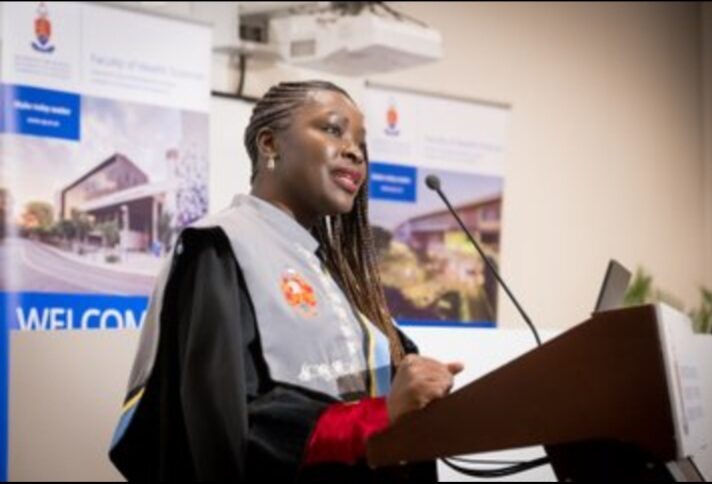
INAUGURAL LECTURE: Democratising healthcare across Sub-Saharan Africa, the focus of the Faculty of Health Sciences Prof’s Inaugural Lecture as she pays tribute to grand-dad
Uncategorized

INAUGURAL LECTURE: Democratising healthcare across Sub-Saharan Africa, the focus of the Faculty of Health Sciences Prof’s Inaugural Lecture as she pays tribute to grand-dad

Edwin Naidu

“It really takes a village to produce a UP Professor,” said University of Pretoria Deputy Dean of Research and Postgraduate Studies, Faculty of Health Sciences, Prof Tivani Mashamba-Thompson, in her inaugural address last Wednesday.

In her address, the respected awarding-winning Prof paid tribute to her grandfather, who dared to dream that his grandchildren would one day be leaders in their fields.

She said that despite having no formal educational qualifications, working as a security officer in Johannesburg, leaving his family in rural Limpopo where access to quality education was limited, he made sacrifices and supplemented his salary through side hustles to send her mother to boarding school and teachers training college.

“Following that, he ensured that she had a better start in life by building her a comfortable starter home for her and her children. I dedicate this inaugural lecture to my late grandfather Father Frank Maluleke and to all the people who ensured that his dream came true.”

She was grateful too for the influence of her role model mom, Mihloti Mashamba, inspirational late grandmother Florah Maluleke, husband Rowan Thompson and children, Gabrielle Thompson, M’hloti Thompson and Frank Thompson.

She also thanked the university leadership and praised mentor Prof Thabane, colleagues, and FHS executives, with a special mention to Dean Prof de Jager, “who puts up with having his lunch break disturbed every time I want to share something that cannot wait for him to finish his lunch and a constant request for selfies”.

Democratising healthcare access in Sub-Saharan Africa through research conducted by teams in Ghana, Rwanda, South Africa and globally since 2015 was the focus of her lecture.

“The ultimate goal of our research is to democratise healthcare access through REASSURED diagnostics,” said Prof Mashamba-Thompson in her address on 11 July at the Tswelopele Building, Lecture Hall 1, attended by the university’s top brass.

REASSURED is an acronym that stands for Real-time connectivity, Ease of specimen collection, Affordable, Sensitive, Specific, User-friendly, Robust and Equipment accessible and Delivered to end users. The REASSURED criteria guide the research focus on POC diagnostics.

Prof Mashamba-Thompson, on 10 March, received a Bronze Scientific Achievement Award in recognition of her excellence in research from the South African Medical Research Council.

Dignitaries present at the inaugural lecture included Deputy Vice-Chancellor: Academics Prof Loretta Feris, FHS Dean, Prof Tiaan de Jager, FHS Deputy Dean Teaching & Learning Prof Vanessa Steenkamp, FHS Deputy Dean Research and Postgraduate Education Prof Flavia Senkubuge, as well as FHS School Chairs. Interim Vice-Chancellor and Principal, Professor Mosia and Deputy Vice-Chancellor: Research and Postgraduate Education, Prof Sunil Maharaj, attended virtually.

She said access to high-quality and timely diagnostic services is essential for strengthening health systems.

However, Prof Mashamba-Thompson, cautioned that diagnostics services have traditionally received limited attention in global health compared to drug discovery and vaccine development.

Inadequate diagnostic systems and inequitable access to reliable tests often contribute to poor health outcomes, especially in settings with limited access to laboratory infrastructure.

However, she noted that Point-of-care (POC) diagnostics have emerged as a promising healthcare innovation to address these challenges. POC diagnostics are near-patient diagnostic devices that provide rapid results to guide clinical decisions.

Prof Mashamba-Thompson said the World Health Organization had defined criteria which should be met by POC diagnostics used in resource-limited settings.

“We have identified that there is limited focus on sustainability of POC diagnostic tests that are deployed in resource-limited settings and limited focus on local infrastructure capability for sustainable delivering REASSURED POC diagnostic tests to end users.”

As part of the research, Prof Mashamba-Thompson recommended an increase in research resources investment on research focused on advancing local development and sustainable implementation of POC diagnostics that meet the WHO’s REASSURED criteria to ensure sustainable quality service delivery to improve health outcomes of underserved populations.

The research focus employs an implementation science approach to assess whether POC diagnostics, used in various SSA settings, meet the REASSURED criteria.

The Prof noted that tests must be connected to health data platforms in real-time to enable the reading of test results to provide required data to clinical decision-makers and for disease surveillance. Combining high-quality point-of-care (POC) diagnostics devices with mobile health technologies offers novel ways to diagnose, track and control infectious diseases and improve the health system’s efficiency.

“Our Nature Review examined the promise of these technologies and discusses the challenges in realizing their potential to increase patient’s access to testing, guide clinical decisions and improve the capability of public health authorities to monitor outbreaks, implement response strategies and assess the impact of interventions worldwide,” she added.

One of the key outcomes of the research relates to affordability. She added that tests should be affordable to end-users and the health system.

“The affordability of POC tests to end users and health systems is paramount. Globally, vulnerable populations face healthcare challenges such as limited access to diagnostics and poorer health outcomes,” she said.

Prof Mashamba-Thompson added that these challenges are more pronounced among vulnerable populations from low-and middle-income countries (LMICs), where the health system is fraught with inadequacies and lack of resources.

During the early stages of the COVID-19 pandemic, researchers observed the financial challenges faced by the public health sector under pressure to meet the increasing need for tests. Fortunately, the private health sector played a crucial role in expanding COVID-19 testing capacity.

Prof Mashamba-Thompson acknowledged that the presented research emanated from the work that was done by the team that she led in UKZN and UP in partnership with the University of Washington, University College London, McMaster, McGill University and Imperial College London.

“Our POC diagnostics research will also incorporate non-invasive sampling technologies, and we are collaborating with Prof Ashleigh Theberge’s lab at Washington University. We also plan to work on diagnostics for precision medicine, which will be enabled by our collaboration with the NuMeRi under Prof Sathekge’s leadership.

She said the team was also partnering with Edinburgh University to create a WHO collaborating platform for POC Diagnostics in SSA.

A partnership has also been reached with American multinational medical devices and health care company Abbott for a multi-country HCV POC diagnostics performance evaluation study, which started in West Africa, represented by Ghana.

INSIDE EDUCATION