Uncategorized

NSFAS confirms TVET student beneficiaries have been paid 

Lerato Mbhiza 

The Financial Aid Scheme (NSFAS) confirmed on Tuesday that payments have been made to beneficiaries studying at Technical and Vocational Education and Training (TVET) colleges countrywide for the month of September.

It said payments through its direct payment solution were affected for all students whose valid registration data has been received from institutions. 

NSFAS direct payment solution was introduced to TVETs in November 2022. The fund disbursed a total of R3,1 billion to 206,539 TVET college beneficiaries since the commencement of the 2023 academic year. 

“These payments were affected for all students whose valid registration data has been received from institutions. 

“This is worth celebrating as it is evident that NSFAS efforts to perfect the new payment system and adequately pay allowances on time are paying off, ” NSFAS said in a statement. 

Beneficiaries at TVET colleges were paid on 25 August 2023 whilst those at universities were paid on 2 September 2023, said the statement and added that there were students who have been paid but cannot retrieve their money because they have not yet fully authenticated themselves.. 

NSFAS  said  it remains committed to ensuring that all NSFAS beneficiaries are on boarded onto the new system and get to enjoy all the value-added services associated with the NSFAS Bank Account well into the 2024 academic year. 

“We encourage students with applications that still require relevant supporting documents to urgently upload supporting documents as failure to do so will result in the applications being canceled. The applicants were sent messages via email and SMS requesting them to upload supporting documents within a specified period,” it added. 

Last month, NSFAS appointed Werksmans Incorporated to investigate allegations against the NSFAS CEO Andile Nongogo and review the entity’s procurement systems and processes. 

Advocate Tembeka Ngcukaitobi SC and Mr Sandile July have been assigned to lead the investigation. 

The appointment follows the recent Board decision on the matter. 

“Once again, the Board of Directors wishes to reiterate its commitment to clean governance,” said Board Chairperson Mr Ernest Khosa. The investigation will commence in the new week, beginning Monday, August 21, 2023.

But a few days after that decision, Nongogo resigned.

INSIDE EDUCATION 
Uncategorized

Minister Launches National Plan for Post-School Education and Training

Staff Reporter

THE National Plan for Post-School Education and Training (NPPSET) is a roadmap for implementing the vision of the White Paper for Post-School Education and Training (WP-PSET).

Speaking during the launch last Thursday, Minster of Higher Education, Science and Innovation, Dr Blade Nzimande, said it was framed within the broader goals and priorities of the National Development Plan (NDP), which foregrounds the national efforts to address the triple challenges of unemployment, inequality, and poverty.

“It is an overarching instrument and a blueprint for guiding planning in our PSET sector. It aligns and integrates the work that is already underway and provides a policy framework for major transformative changes the Government wants to bring about across the PSET system and its nexus with society and the economy,” Nzimande said.

The National Plan for Post School Education and Training has six goals which are the drivers for the system.

The drivers seek to achieve the following:
• An integrated, coordinated and articulated PSET system;
• • Expanded access to PSET opportunities;
• • A responsive PSET system, with appropriate size and shape;
• • Improved relations between education and training institutions and
the world of work;
• • Improved quality of PSET provision; and
• • Improved efficiency and success of the PSET system
While the plan is already in implementation, it was formally introduced to the entire sector and the public on 7 September.

“Our launch of the Plan showcases the government’s continuous effort towards achieving an improved, transformed, expanded, responsive and articulated Post-School Education and Training (PSET),” Nzimande said.

The Department of Higher Education and Training has the single largest number of entities of all the national government departments, with over 110 departments making South Africa’s PSET sector one of the biggest in Africa.

When the Sixth Administration took over in 2019, Nzimande said spending on education as a proportion of overall government expenditure was 22.7% in 2019/20 and 7.2% of Gross Domestic Product (GDP), far exceeding the benchmarks set by UNESCO, which recommends allocating 15-20% of public spending to education and 4-6% of GDP to education.

“As we draw closer to the end of the Administration, this trajectory is continuing,” he said.

In 2021/22 he added that spending on education as a proportion of overall government expenditure was 22.6% and Gross Domestic Product (GDP) at 6.4% which continues to exceed the UNESCO benchmarks.

“This shows that the South African government continues to spend a large share of its national budget on education (both schooling and post-schooling). Our main challenge is to maximise the impact of this progressive educational investment,” Nzimande added.

In the quest to expand access to PSET opportunities various funding streams which include the National Skills Fund (NSF), the National Financial Aid Scheme (NSFAS), the National Research Foundation (NRF), the National Institute for Human and Social Sciences (NIHSS), Sector Education and Training Authorities (SETAs) and the International Scholarships Programme have been introduced.

On student funding the Minister said he will be submitting a clear proposal on a Comprehensive Student Funding Policy to Cabinet before the end of the year. This follows extensive consultations with financial institutions, student organizations, university and TVET College leaders, and international benchmarking.

“Through this we aim to introduce measures to specifically support categories of students in the so-called ‘missing middle’ income groups who are unable to access NSFAS funding.”

When NSFAS began in 1991, it had a budget of R21.4 million for the first cohort of about 7000 students. “We are proud to say that NSFAS is currently funding 1.1 million students with a budget allocation of R47,6 billion in the 2023 academic year,” Nzimande said.
Of this amount, universities have been allocated R38.6 billion and TVET Colleges R8.9 billion for the first time passing the one million mark. In 2023, SASSA beneficiaries account for 49% of the funded students in 2023.

“As we release the Plan today, I am confident that it will take the confidence of the people of South Africa in the country’s post-schooling system to the next level,” he said.

INSIDE EDUCATION

Uncategorized

Minister wishes Boks all the best, focusses on grassroots sport

Staff Reporter

Ahead of this week’s School Sport Indaba, the Minister of Sport Zizi Kodwa wished the Springboks all the best before their match against Scotland. The defending champions thumped the Scots 18 – 3 on Sunday.

On Thursday and Friday next week, 14 and 15 September, the Department of Sport, Arts and Culture will host a School Sports Indaba.

Kodwa said the Springboks represent the best of South Africa. “They inspire national unity, and Foster social cohesion and national identity. This was captured by President Nelson Mandela during the 1995 Rugby World Cup, where the Springboks were a key ingredient to his message of national unity.”

He added that the current Springboks represent this country’s diversity, and represent South African excellence with their performances.

“On behalf of all South Africans, I would like to wish the Bokke all the best in the World Cup. Do your best and make us proud. Bring it back Bokke!”

Kodwa said the Indaba aims to establish a national sports programme for South Africa, that is benchmarked against the world’s most effective school sports programmes.

One of the Department of Sport, Arts and Culture priorities is grassroots sports development. The School Sports Indaba will go a long way towards strengthening our focus on grassroots sports development through early identification and nurturing of sporting talent.

The Sports Indaba will see over 30 organisations, as well as teacher unions, sports federations, international bodies and governments, gather to exchange and come up with a blueprint for South African schools’ sports.

“I look forward to welcoming you to this important endeavour.”

INSIDE EDUCATION

Uncategorized

Gauteng MEC determined to provide solutions aimed at preventing suicides at schools

Staff Reporter

Gauteng Education MEC Matome Chiloane is determined to address the bullying and violence which may have been behind the reasons for children taking their own lives at schools.

Alarmed by the statistic that about 40 pupils from Gauteng schools took their own lives in the past year, Chiloane announced plans to work with the South African Depression and Anxiety Group to reduce suicide among pupils.

“As the department, we are devastated by these deaths and believe those numbers constitute far too many young lives that have been taken away from their families, friends and our schools before reaching their full potential. We pledge our solidarity and support to the families and friends that were befallen by these tragic, premature deaths,” said the MEC.

Acknowledging that children at schools may be subject to various challenges such as depression, bullying, violence and online abuse, the MEC said providing solutions to help them was imperative.

Therefore, the department has engaged 500 learner support agents to help establish early warning mechanisms and give peer counselling to support 1 200 schools. An additional 120 social workers will assist with the risk assessment of learners; 500 Ke Moja coaches will assist with substance abuse awareness; and popularise the Childline toll-free number [116] to provide counselling services free of charge for learners and educators.

He said they would also implement additional measures through a partnership with the Matthew Goniwe School of Leadership and Governance; the SA Depression and Anxiety Group (Sadag); Childline; the Teddy Bear Foundation; and the National Association of Child and Youth Care Workers to help pupils and teachers deal with challenges that may lead to suicide or suicidal ideation.

“Our talks with learners and their parents will also focus on debunking common suicide myths, raising awareness about the kind of language to use when referring to suicide, and general advice on dealing with people displaying suicidal signs.”

“There are more actions that will be implemented to improve school safety and learner wellbeing. These will be priority actions around which crucial resources and communities will be mobilised,” he said.

INSIDE EDUCATION

Uncategorized

Teachers must play a greater role in addressing bullying – Unesco

Staff Reporter

THE Education Sector Committee of the National Commission for UNESCO in South Africa, in collaboration with the Faculty of Education at the University of Johannesburg (UJ) and JET Education Services, hosted their 5th Teacher Conversation Webinar recently.

The conversation took place with three award winning South African teachers who were finalists of the Global Teacher Prize, a US $1 million award presented annually by the Varkey Foundation to an exceptional teacher who has made an outstanding contribution to their profession. These teachers shared their journeys, including their joys and struggles, and how they dealt with obstacles.

Palesa Tyobeka, Chairperson of the Education Sector Committee of the SA National Commission for UNESCO, spoke of the importance of teachers in society. She said knowledge and education are the basis for all things that can be accomplished in life; and teachers provide the power of education to youth thereby giving them the possibility for a better future, Teachers simplify the complex, and make abstract concepts accessible to students. She further said the centrality of teachers is showing through more in themes for Global UNESCO initiatives. The theme for World Teachers’ Day 2023 for instance is “The Transformation of Education Begins with Teachers” and for the focus on dealing with violence and bullying it is: “Not on my watch: the role of teachers in preventing and addressing school violence.”

Again, demonstrates the centrality of teachers not only in the education endeavour but in the broader development of communities. The Teacher Conversations assist in creating a platform for teachers to share and learn from each other as they grow in their profession. Tyobeka congratulated the organisers of the Conversation Series for paying attention to matters of inclusion by ensuring that there are sign language interpreters in the Conversations, particularly in light of the declaration of Sign Language as the 12th South African Language.

Prof Sarah Gravett, Professor of Education and former Dean of the Faculty of Education at UJ, facilitated the conversation by introducing the three South African teachers who were among the top 50 finalists in the Varkey Foundation’s Global Teacher Prize and were asked to share their journeys with fellow teachers and educationists.

Phuti Ragophala, a retired school principal, who grew up in rural Limpopo, wanted to become a nurse, but became a qualified teacher instead – journeying from a learner under a tree to a Cloud teacher. Ragophala is a Microsoft Innovative Expert Educator, pioneering the integration of technology in the classroom, and has received many awards in recognition of her achievements.

“Teachers can redefine teaching and learning through technology and should embrace the importance of continued and lifelong learning; they should be willing to take risks and use stumbling blocks as stepping stones,” Ragophala said.

Wendy Horn, District Director for Education in the Western Cape Province, feels that her current position assists her to give back to education by uplifting schools and assisting teachers and principals in unblocking bottlenecks.

Horn, a beneficiary of Government’s Funza Lushaka bursary which seeks to attract quality matriculants to train as teachers in scarce skills areas, went on to win in two National Teaching Awards (NTAs) categories. She is passionate about Science, Technology, Coding and Robotics, and about empowering girls to become global leaders in these fields through participating in international championships.

Horn sees the need to develop critical and analytical thinkers with good critical thinking skills, for them to collaborate across different cultural groupings in a world that is shrinking with the use of social media platforms and the Internet.

Marjorie Brown finished in the Top 10 of the Global Teacher Prize. She is a former human rights activist, teaching History to girls in South Africa and encouraging social justice, critical thinking, and global citizenship. Her students have gone on to represent South Africa at youth forums, the Paris Climate Talks, and various Ivy League universities.

She also started and still leads the Kids Lit in SA programme, devoted to improving children’s literacy. This international competition was founded 26 years ago. South Africa has won three times over the past 13 years, despite it being the poorest country to participate. “Teachers must understand the context of learners to understand their challenges. There is a lack of literacy, reading skills and social entrepreneurial programmes. Education is about humans engaging with each other, more than with just textbooks.”

In conclusion, Dr James Keevy, JET CEO, reminded delegates about the South African Council for Educators’ (SACE’s) professional teaching standards for South African teachers, consisting of ten standards that are necessary and interlinking components of professional practice.

Teachers who are well-trained, supported and valued are essential to ensuring quality education for all and achieving UNESCO’s Sustainable Development Goals (SDG) 4, towards quality education.

For this reason, the 2023 World Teacher’s Day theme, “The transformation of Education starts with teachers”, is applicable to all teachers and not only those attending the Teacher Conversation Webinar.

INSIDE EDUCATION

Bilateral agreement with Cuba to train teachers in SA
Uncategorized

Bilateral agreement with Cuba to train teachers in SA

Staff Reporter

A Cuban delegation spent time in South Africa earlier this month to monitor the training of local teachers in Mathematics and Science.

Following the bilateral agreement between the Department of Basic Education and the Ministry of Education of Cuba in 2016, a monitoring visit by a delegation from Cuba took place from 28 August to 1 September 2023.

As part of the agreement Cuba provided skilled Mathematics and Science specialists to assist in developing training programmes and materials that will benefit subject advisors and teachers to effectively use the Mathematics and Science teaching methods from Cuba.

“What we are tracking is the extent to which more learners can better understand the areas of Mathematics that have been covered and more importantly, how we can increase the number of learners who take up Mathematics, along with the number of teachers who are able to, after the training, improve on the outputs of teaching Mathematics to improve the learners’ performance in this subject,” said Deputy Director-General, Simoné Geyer.

Geyer added that further deliberations were underway to ascertain how Cuba and South Africa can work together to improve teaching in areas such as Early Childhood Development (ECD) and technical subjects that are taught in focus schools.

As a way forward, the Cuban delegation will look at the type of support required for the Cuban specialists who are already assisting in South Africa and how best they can be supported in ensuring that the outcomes of the bilateral agreement are met, and that they are adding value to the South African context of how Mathematics and Science can be taught.

The delegation also visited KwaZulu-Natal and the Free State Provinces, where they received first-hand experience on how the Cuban team is assisting in running teacher training workshops, Professional Learning Communities (PLCs) and providing direct support to learners.

The monitoring visit concluded with a debriefing session to ascertain the progress that has been made by the Cuban specialists in these subject areas.

INSIDE EDUCATION

Basic Education Minister hails NECT, celebrating a decade of educational excellence
Uncategorized

Basic Education Minister hails NECT, celebrating a decade of educational excellence

Edwin Naidu

THE National Education Collaboration Trust (NECT) stands as the gold standard in public-private partnerships. It is our lodestar.

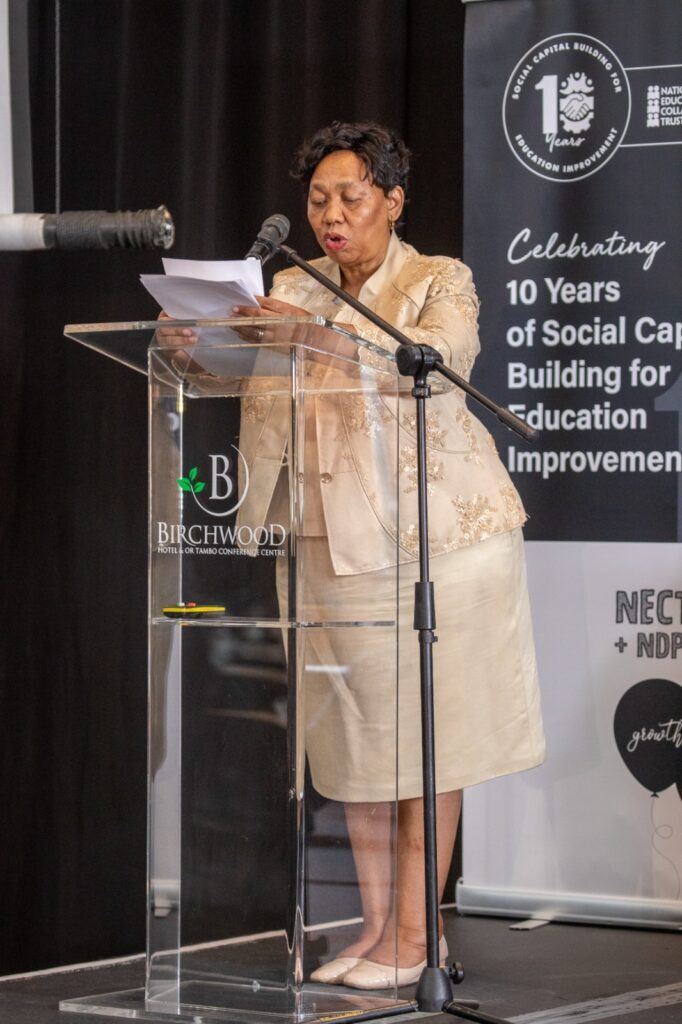
This was the message from Minister of Basic Education, Angie Motshekga, MP, at the NECT 10th Anniversary National Convention held at Birchwood Hotel, Boksburg earlier on Monday. 

Motshekga delivered the opening address at the event celebrating a decade of collaboration between the Basic Education sector and big business spearheaded by the Trust. 

“Today stands as a testament to our collective resolve as we reflect on a decade of tangible progress, steered by this year’s theme: “Reflections on Collaboration to Enhance Education Reform Efforts in South Africa.

“As we reflect upon a decade of relentless effort and collaboration, it becomes evident that our journey has been marked by remarkable partnerships between the Basic Education Department and the private sector,” Motshekga said. 

Sizwe Nxasana, the Chairman of the NECT Board and Trustees, Godwin Khosa: NECT CEO and Senior Management, organised labour and business partners, and guests, listened as the Minister reminded them how NECT has been a crucible of innovation, a platform where ideas transform into reality and visions materialised into tangible outcomes. 

“It has fostered environments where educational frameworks are not just conceived but are implemented with a rare synergy. The celebration today is not just a testament to our past achievements but a firm step into a future that holds unlimited potential.”

According to Motshekga, such collaborations have led to an influx of resources and expertise and fostered environments replete with innovation and efficiency, marking a confluence of the government’s foresight and the private sector’s agility a lived reality. 

She said the journey began with a vision to foster a society where collaboration forms the cornerstone of educational reform, and education foregrounds all societal endeavours, whether they are strategies to achieve faster economic growth, combat poverty, or address inequality.

This, she added, was a vision of a society where every stakeholder, from provincial departments or national to civil society, united to nurture the infinite potential residing in our young people. 

“Over these ten remarkable years, we have stood shoulder to shoulder, fostering basic education partnerships and showcasing the transformative power of collective effort,” Motshekga said. 

Motshekga credited these collaborative efforts for helping to enhance the curriculum, focusing on marrying tradition with innovation, and grounding learning in the rich cultural tapestry while integrating global perspectives to foster a holistic educational experience.

“Moreover, the inception of meticulous national reading plans is a testimony to our determined stride toward literacy excellence. 

Implemented across various educational districts, these plans are tailored to nurture the innate curiosity of our learners, guiding them progressively towards literacy proficiency,” she added. 

Furthermore, Motshekga said that the collaboration between the government and the private sector in education reforms has translated into a harmonised endeavour, improving the physical facilities in educational institutions, enhancing curriculum delivery, and fostering environments conducive to teaching and learning, among other initiatives. 

“As we move forward, we must acknowledge the diverse target market of practitioners ranging from mid-to-senior management and executives across the government, unions, private sectors, civil societies, and academia who have been the pillars supporting this monumental national endeavour. 

Your efforts have empowered us to reach this pinnacle: 10 years of systems improvements, 10 years of scientific interventions, and 10 years of remarkable progress. Truly a decade of educational excellence,” she said.

INSIDE EDUCATION

3000 Solar Installation Technicians to resume training
Uncategorized

3000 Solar Installation Technicians to resume training

Lerato Mbhiza

Gauteng Premier Panyaza Lesufi said close to 3 000 additional technicians will resume training sessions in a few weeks time. 

Lesufi joined MEC Matome Chiloane on Wednesday for an oversight visit at Denel Kempton Park Campus where more Solar Technician trainees from the 1st cohort are undergoing theoretical and practical training.

Lesufi said he had the honour to visit the Solar Installation Technicians in training and said there are still close to 3 000 additional technicians that must resume their training sessions in a few weeks’ time.

Chiloane addressed the Solar Technician trainees at Denel Kempton Park Campus and said the programme aims to go beyond addressing load shedding by nurturing specialists in renewable energy, thereby making a positive contribution to the economy. 

The department said the Solar Technician trainees will undergo both theory and practical training. Their training programme will provide them with additional skills beyond solar installation, enabling them to become operators, solar electricians or even open their own businesses.

“We are excited to have welcomed the first cohort of Solar Technicians trainees in Gauteng. These are young men and women who will usher in a new era of green energy and renewable energy in the province,” said Chiloane. 

One of the trainees Gordon Mogale (24) from Hammanskraal said he applied for the job because he’s interested in solar panel installation. 

He is part of the 1st cohort of Solar Technician Programme candidates training at Ekurhuleni Artisans & Skills Training Centre at Kempton Park.

INSIDE EDUCATION

Uncategorized

Gauteng Education MEC says Grade 1 and 8 online admissions process is a success

Gauteng Department of Education (GDE) has announced that the 2024 online admissions application period has been a success with 757 075 Grade 1 and Grade 8 applications processed.

 “This translates into a total of 324 756 Grade 1 applications and 432 219 Grade 8 applications. This success can be attributed to system improvements over the years, which is necessitated by continuous stakeholder engagements and technological advancements,” said MEC Matome Chiloane.

The application period ran from 15 June to 21 July 2023.

“We wish to announce that the 2024 Online Admissions Placement Period for Grade 1 and 8 will begin on 4 September 2023 and will continue throughout the remainder of the year until all learners are placed,” the MEC added.

From Monday, 4 September 2023, parents and guardians with complete applications will receive SMSes with placement offers to the contact numbers they used when applying. 

INSIDE EDUCATION

Gauteng Premier and Sports Minister handover Multipurpose Sports Court to Lofentse Girls High School in Orlando
Uncategorized

Gauteng Premier and Sports Minister handover Multipurpose Sports Court to Lofentse Girls High School in Orlando

Phuti Mosomane

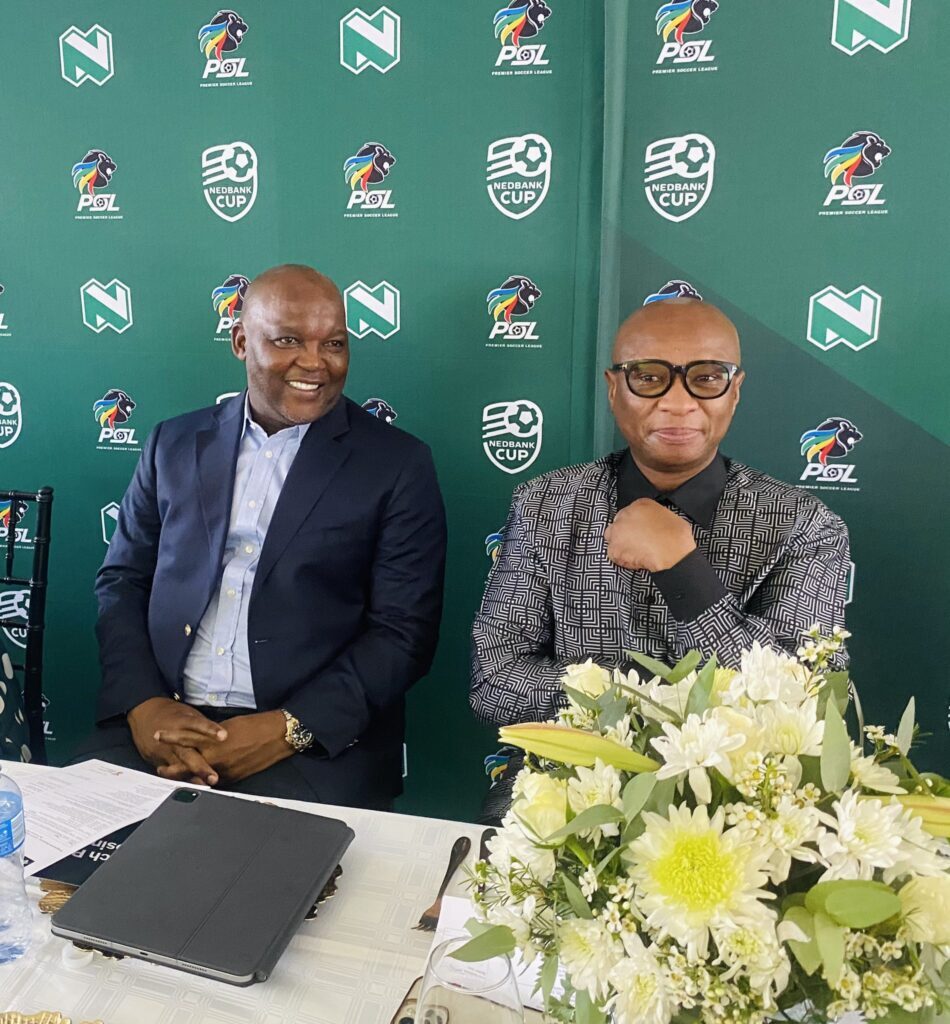
Gauteng Premier Panyaza Lesufi and the Department of Sport, Arts and Culture Minister Zizi Kodwa handed over the Pitso Mosimane Multipurpose Sports Court at Lofentse Girls’ High School in Orlando East on Tuesday.

This handover was conducted on behalf of Orlando Pirates Football Club, the winners of the 2022/2023 Nedbank Cup.

The multipurpose sports court was made possible through a partnership between Nedbank and The Sports Trust.

“It is significant that this handover takes place as the government mobilises stakeholders to deepen investment in women and grassroots sports development,” Kodwa said.

The department of Basic Education said the Multipurpose Sports Court handover ceremony serves as a platform to introduce and celebrate the profound impact of sports within schools and communities.

Kodwa said the former Bafana Bafana coach, Mosimane has raised the bar for football coaches in and outside of South Africa. 

“The multipurpose sports court unveiled in his name today at Lofentse Girls’ High School promises not only to benefit the school, but the wider Orlando community.

“The Pitso Mosimane Multipurpose Sports Court is an example of what is needed to help identify and nurture sporting talent. We need to see more of these facilities being built in rural and township communities. Well done Nedbank,” he said.

Lesufi thanked ⁦Nedbank⁩, Pitso Mosimane Soccer School and ⁦Orlando Pirates⁩ “for this amazing sports field investment in our township school.

“Our communities must protect this valuable resource.”

The school kit was distributed to the following schools: Lofentse Girls High School, Bona Secondary School, Zifuneleni Junior Secondary School, Orlando High School, Selelekela High School and Job Rathebe Secondary School.

Lesufi was also joined by Gauteng Education MEC Matome Chiloane in the ceremony. 

Chiloane said that the launch aligns with Gauteng Province’s commitment to promote active schools and create future sport stars.

“Today, we were privileged to participate in the handover of the Pitso Mosimane Soccer School Sports Court at Lofentse Girls High School. We strongly advocate for active learners at schools and take immense pride in sports legends like Coach Mosimane aligning with our vision,” Chiloane added.

INSIDE EDUCATION