Uncategorized

MEC Chiloane appoints law firm to probe learner death

Inside Education Correspondent

Gauteng Education MEC Matome Chiloane has introduced Rangata Attorneys to Khehlekile Primary School in Tokoza and the family of Sibusiso Mbatha, after the Grade 6 learner at the school, tragically took his own life on Monday, 23 October 2023.

Rangata Attorneys will be investigating the circumstances surrounding the death of Mbatha and will provide recommendations on how to conclude the matter. 

The law firm has been given five days to conclude their investigations, and their findings will be shared upon conclusion.

INSIDE EDUCATION

Uncategorized

AI training for 300,000 South African youth, an enabler for future career advancement 

Staff Reporter

The delivery of innovative Artificial Intelligence (AI) training through a partnership between Microsoft South Africa and Youth Employment Service (YES) will see 300 000 young South Africans empowered with digital skills, fostering a future of innovation driving employability and economic growth.

The AI Youth Training Platform is an extension of a long-term relationship between Microsoft and YES and was lauded at Monday’s Microsoft South Africa’s A New Era with AI event, which took place in Sandton, as a critical game changer amongst more than 1 000 IT professionals and developers who are leading the charge on AI transformation within the country.

YES and Microsoft curated and developed bespoke training material, creating a training path that addresses the different levels of AI and computer science exposure. The platform is designed to enable all young people to get access to, and awareness of AI – and build skills from Novice through to Expert level.

For many, the world of AI is foreign. Recognising this gap, the introductory AI learning module was designed to provide an entry-level view of AI to the youth, focusing on highlighting the purpose and value of AI to students in a practical yet accessible manner.

“This collaborative effort with Microsoft is a testament to our ongoing commitment to equipping the youth with the digital skills for future-facing sectors and careers.  The significant number of beneficiaries underscores the scale of impact we want to achieve through this partnership,” says Ravi Naidoo, CEO of YES.

From a practical level, this partnership is geared towards creating a surge in job creation and enhanced employability to make significant strides for the country to create a more digitally inclusive economy.

“Together with YES, we are not only addressing the pressing issue of youth unemployment but also helping create a culture of innovation and employability through digital capability building. Microsoft’s approach to AI is based on meaningful innovation, empowering people, and responsibility. 

“This partnership delivers on these three pillars as the means to grow a new talent pool for digital businesses to tap into not only in South Africa, but the rest of the world,” says Lillian Barnard, President for Microsoft Africa.

As young people exit the formal training programme at YES, they will have not only an awareness of how AI can improve how they work and how this could become a career or profession moving forward.  

Participants who complete the AI Expert Module and who meet key criteria, will be eligible for certification.

INSIDE EDUCATION

Uncategorized

Terminally ill patients need more than prayer, according to study in Soweto

Inside Education Reporter

A study conducted among advanced cancer patients in Soweto has found that most patients who received palliative care and are at the end of life have spiritual needs beyond regular prayers from spiritual leaders. 

Furthermore, patients who received religious or spiritual care had less physical pain, used less morphine and had higher odds of dying where they wished than those who did not. 

The study involving 233 participants was conducted by a team of local and international experts led by Wits researchers. 

Lead researcher Dr Mpho Ratshikana-Moloko from the Centre for Palliative Care in the Faculty of Health Sciences at Wits University says that previous research has shown that religion and spirituality are important to most patients facing life-threatening illnesses. However, this study probed further. 

Using the African Palliative Care Association Palliative Outcome Scale, the research confirmed previous international findings that nearly 98% of the participants had a religious or spiritual need.

The most common spiritual need expressed by patients in Soweto was “seeking a closer connection with their God” and “forgiveness for sins”, says Ratshikana-Moloko. 

This finding is significant because it calls on faith leaders to provide relevant support that responds to the needs of patients. This research-led intervention empowers leaders to move beyond prayer, explains Ratshikana-Moloko.

“This is the first study to assess the spiritual and religious needs, and religious and spirituality care provided to advanced cancer patients who received palliative care in Soweto,” says Ratshikana-Moloko.

Since the study was concluded in 2018, Wits University has developed a course in Spiritual and Chaplaincy in Palliative Care. The first cohort of faith leaders from all religious backgrounds was completed in September 2023. 

Palliative Care to increase

Palliative care is one of the key pillars in illness management among terminally ill patients who are judged by a specialist physician as unlikely to benefit from curative-intent therapy. Often, patients are unlikely to survive beyond six months. 

The South African National Policy Framework and Strategy for Palliative Care (2017–2022) incorporates spirituality into health care. However, palliative care services in South and Southern Africa and elsewhere rarely address these needs, despite available policies, guidelines and evidence.

“We must implement what we know. Integrating spiritual care within the clinical care setting is recommended,” Ratshikana-Moloko. 

South Africa faces a heavy burden of communicable and non-communicable diseases. One in six deaths globally is due to cancer, and cancer diagnoses are expected to increase by 70% in the next two decades, especially in low- and middle-income countries.

“Failure to identify and address the religious and spiritual needs of terminally ill patients may increase distress and suffering,” Ratshikana-Moloko.

INSIDE EDUCATION

Uncategorized

Let’s get behind the national Hockey team

Inside Education Reporter

Motoring manufacturer ISUZU Motors South Africa has thrown its weight behind the South African Women’s Hockey Team. 

Marketing Executive Ziphindiwe Ngcobo, says: “We are thrilled to support the South African Women’s Hockey Team on their journey to the 2024 Paris Olympics. Their dedication and core values of passion, pride, unity, and resilience align closely with ISUZU’s own ethos, and we believe this partnership will not only boost the team’s performance but also inspire aspiring female athletes across the country.”

The  SA Women’s Hockey Team is a symbol of excellence and determination. The team is well-prepared to be #BoldBeyondtheField to secure their qualification. Their journey promises to be filled with passion for the sport, pride in their nation, unity within the team, and resilience in the face of fierce competition.

The South African Women’s Hockey Team have consistently demonstrated their passion for the game, pride in representing the nation and unwavering resilience in the face of challenges.

Co-captain of the South African Women’s Hockey Team, Erin Christie, expressed her gratitude for ISUZU’s support: “We are honoured to have ISUZU Motors South Africa as our partner as we embark on this journey to qualify for the 2024 Paris Olympics. 

“I believe that ISUZU will play a massive role in our Olympic journey. As a team, we did not want to go to the games and just participate – we wanted to go there and compete. We want to inspire young female sportswomen and the generations who will wear our shirts after us.”

ISUZU’s commitment to sports in South Africa goes beyond this partnership. It is a proud sponsor of several sporting properties including IRONMAN South Africa, ATC Multisport, the Vodacom Bulls, Bulls Daisies, Move The Nation Race and the Algoa FM Big Walk for Cancer.

“We invite South Africa to rally behind the SA Women’s Hockey team as they embark on this journey to fulfil their Olympic dream. The support of the nation will be an additional source of inspiration for the players as they face formidable opponents from across the continent,” says Ngcobo.

INSIDE EDUCATION

Uncategorized

Teacher’s Corner: Kolisi shares memories of his favourite teacher

SIYA KOLISI

Which school did you attend?
I attended Emsengeni Primary School briefly in 2003.

Who was your favourite teacher?
My favourite teacher (Mr Eric Songwiqi) stood by me during my schooling years. He was more than just a teacher; he was a mentor, a support system. He moved me from one township school to another and was always there for me whenever I needed him. He even played the role of a father figure in my life. He took me to every sports trial and always encouraged me.

What subject did he teach?
He didn’t really teach me a specific subject per se. He supported my rugby development. He was there as a guiding figure, mentoring me through my life and my schooling years.

Did you look forward to your sessions with him?

Absolutely, I looked forward to every training session with him. He always had words of encouragement for us, it was about something other than a subject in a classroom. He gave lots of practical life advice.

What was he like?
He was always kind, loving, and supportive, and he went out of his way to make sure I had what I needed. But he also knew when to be firm and when discipline was needed. He was everything that I needed.

What was your favourite subject at school?
My favourite subject at school was maths. I was actually one of the top students in the class for that subject until I moved to Grey High School

Did your love for the game influence your career choice?
My passion for rugby influenced my choice of career. That being said, I struggled later with maths in school. I do wish I had focused a little bit more in school and persevered with my academics because I believe that would add more value to what I do after rugby as well.

What phrase from your teacher stuck with you?
The phrase that stuck with me was, “Believe in your dreams, work as hard as you can, and protect them with everything you have.” This was told to me by Mr Songwiqi and has stayed with me throughout my life.

Have you remained in contact with your teacher?
Yes, I have kept in touch with him. We even spoke recently about him, and I am working together to help more kids from the community I grew up in the same way he helped me.

Have you met since your school days?
The first meeting with him, outside of a classroom setting, always gets me emotional. We’ve done a lot together and seeing him still brings up many emotions. He’s a special person in my life.

Describe the influence of teachers on society.
Teachers are incredibly important to society. They spend the most time with kids and have a significant influence on them. They can provide positive encouragement and energy that a child might not be getting at home. I know teachers often don’t get the credit they deserve, but they play a massive role in giving kids hope and support.

What advice would you give youngsters wanting to be a success?
My advice to anyone wanting to reach for and achieve their dreams would be not to let your environment dictate your dreams.
It’s hard sometimes to see past your current situation, but you can find hope in people from the same environment as you. Work as hard as you can with what you have around you before looking for what you don’t have. Surround yourself with positive people, and don’t let the struggles of others bring you down. Keep working, no matter how big or small your goals may be.

Kolisi shares memories of his favourite teacher
Through his foundation, the first Black Springbok captain to hold the Rugby World Cup, Siya Kolisi, plays a vital role behind the scenes in tackling inequality in South Africa. The Kolisi Foundation was established in April 2020, a month after the COVID-19 pandemic left the country and the globe in lockdown.

With a vision by Springbok World Cup winning captain Siya Kolisi and his wife, Kolisi Foundation CEO Rachel, to impact vulnerable and under-resourced communities in South Africa, the foundation has made a difference, particularly in several areas of need, namely, food security, gender-based violence and education and sports development.

“After the Springboks won the Rugby World Cup in 2019, we knew we wanted to do something great for South Africa and use that responsibility for something good,” said the Kolisis.

The Foundation unites organisations to mobilise resources and strengthen infrastructure and learning. To help communities thrive, they aim to bring about systemic change by creating safe spaces through sport and education, addressing gender-based violence, and contributing to food sustainability.

Their mission is underpinned around three integrated strategic focus areas based on Siya’s lived experience: Food Security, Gender-Based Violence, and Education and Sports Development.

In particular, the work has been strengthened around food security: Adopt a Community Kitchen, Gender-Based Violence:
Kolisi Connect, and Power2You packs, with an empowerment component being developed. Critically, the impact has been significant in Education and Sports Development via the flagship Siyaphakama Zwide Schools Project.

As part of this initiative, six Zwide schools, identified as key to materialising the vision laid out by Rachel and Siya, have been supported on an ongoing basis as part of the Kolisi Foundation Education and Sports flagship project. The six schools are Emsengeni Primary School (Siya’s primary school), Isaac Booi Primary School, Daniels Lower Primary, Sithembile Junior School, Garret Primary School and Ubuntu Pathways Primary School.

Notably, the foundation has also tackled the food security issue head-on through its nutrition programme at the six schools, with the engagement of food preparers in training workshops around basic knowledge of nutrition, health, and hygiene.

This includes completing baseline nutritional status assessments of learners at all six schools.

Community kitchens are becoming critical spaces where communities can connect and exchange. They are also places where norms are queried, transformation is spearheaded, dialogues around food are happening, and advocates’ voices for changing existing food systems are heard.

The Foundation is committed to a more holistic approach to fighting hunger.

Finally, regarding the pressing gender-based violence pandemic, the Foundation partnered with The Saartjie Baartman Centre for Women and Children to conceptualise and create a facility to serve therapeutic needs through counselling, therapy reflection, reading, and journaling. Most importantly, it is also a supportive and healing space for mothers and children to spend quality time together.

“It has been a year of impact and making a difference in communities that need it most. However, our work is by no means complete, and we encourage society and corporates to work with us to help create the better society we want,” said the Kolisis.

For more information, please visit kolisi-foundation.org

Exams off without a hitch as Minister announced enhanced security measures to prevent paper leaks in all nine provinces
Uncategorized

Exams off without a hitch as Minister announced enhanced security measures to prevent paper leaks in all nine provinces

Phuti Mosomane

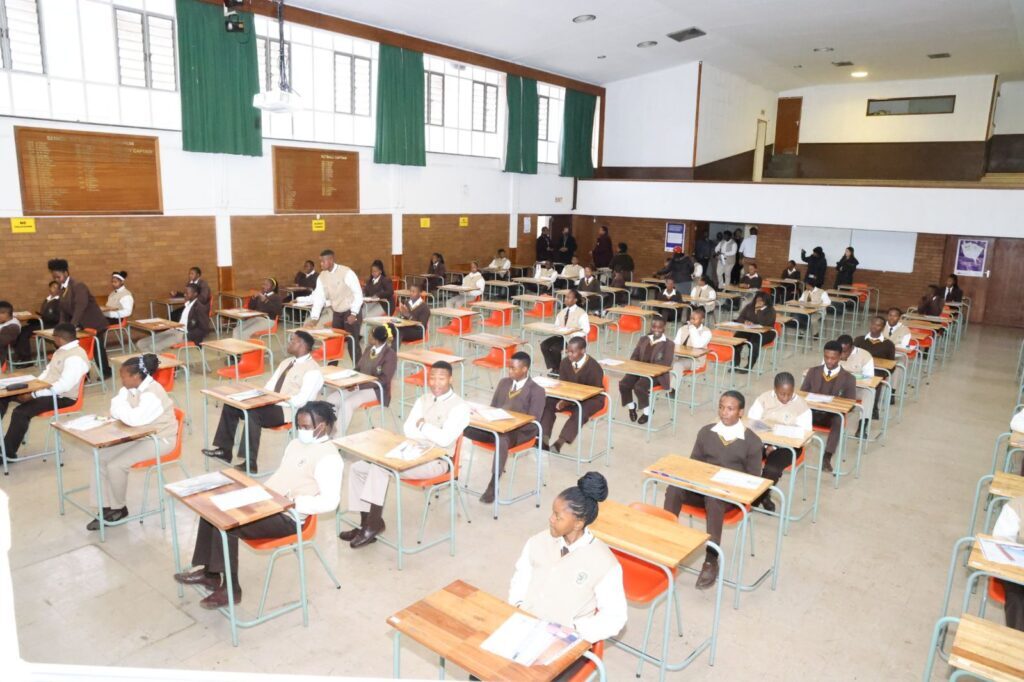
On Monday Grade 12 exams went off to a smooth and a great start as the pupils sat for their first English paper in all provinces after Basic Education Minister Angie Motshekga had said the department had enhanced security measures to prevent paper leaks in all nine provinces.

Briefing media in Tshwane ahead of the 2023 matric exams, Motshekga said the State Security Agency has also audited all security enhancement processes.

“Provincial Education Departments (PEDs) must follow standard operating procedures training storage point managers in security protocols. Moreover, specific collection times for question papers by chief invigilators have been established to deter early access. Each PED has its own irregularity committee to anticipate and mitigate the crisis,” she said.

South Africa also returns to Stage 2 load shedding after weeks of uninterrupted power supply and to mitigate the challenge of the energy crisis, Motshekga said all PEDs and schools have devised contingency plans, including backup generators.

Motshekga said that the Computer Applications Technology (CAT) and Information Technology (IT) Paper 1 examinations were conducted last week without power issues, with isolated incidents, adding that the affected candidates were isolated and managed.

The department will offer a backup paper if needed due to power interruptions, she said.

In South African Sign Language Home Language (SASL HL), candidates’ laptops will be fully charged before each examination commences, and backup power supply measures have been implemented.

Over 717 377 candidates registered for the final examinations across 6,898 centres nationwide.

Motshekga said the figures are not mere statistics; they embody the aspirations, dreams, and relentless efforts of our Grade 12 learners.

“They stand as a testament to the resilience of our students and the continuous dedication of the Department of Basic Education in providing them with a platform to succeed.”

“When we compare this year’s figures to 2022, we observe a gradual decrease in the number of candidates, 34,626 candidates, and this could be attributed to the fact that more candidates complete their qualifications on time,” she said.

There has been an increase in part-time learners from 168 631 in 2022 to 181 143 in 2023 (an increase of 12 512).

A total of 207 question papers, 72 500 invigilators and 52 500 markers will drive the examination process.

The quality assurance body Umalusi has approved all question papers to be administered in the 2023 Examinations and given the nod to the exams.

Motshekga monitored the first day of the matric examinations in Ekurhuleni, Gauteng, on Monday.

Gauteng Education MEC Matome Chiloane joined her.

INSIDE EDUCATION

Uncategorized

NWU honours virtuoso Prof Herman Hubert van der Spuy

Inside Education Correspondent

The North-West University (NWU) has bestowed an honorary doctorate on Prof Herman Hubert van der Spuy for his exceptional contributions that have helped shape the South African musical landscape.

Prof Van der Spuy’s influence and contributions as an adjudicator, examiner and adviser at music institutions throughout South Africa earned him this recognition on 26 October.

“This honorary doctorate came very unexpectedly, and I consider it the biggest recognition in my career. I have always wanted to complete another doctorate, and when this came, I felt fulfilled. I have worked with students from various universities throughout my career, including with many talented master’s degree and doctoral students from the NWU, and this makes it even more special,” says Prof Van der Spuy.

Throughout his career, Prof Van der Spuy has made outstanding contributions in the field of music, and he has had an enormous influence through his expertise and involvement. His experience in examining different instruments and voices has made him a particularly versatile examiner with profound knowledge and insight.

He has contributed significantly to developing talented young South African musicians, as exemplified by his work as a former director of Unisa’s Directorate Music. 

His leadership is credited with helping to build Unisa’s graded music exam system to the point where it was able to hold approximately 10,000 certificate examinations and 800 licentiate examinations.

Through initiatives such as the Hubert van der Spuy National Music Competition, which carries his name, South African children of all backgrounds have had opportunities to showcase their musical abilities.

His involvement in music extends to having been the former editor of Musicus, the journal of Unisa’s Directorate Music, an adjudicator of music competitions and an external examiner and adviser to several university music departments in the country. This includes the NWU’s School of Music.

Prof Van der Spuy has been an honorary member of the South African Society of Music Teachers since 2003, after serving as president for four terms.

INSIDE EDUCATION

Uncategorized

AfriForum to challenge the BELA Bill in court

Lerato Mbhiza

The NGO that looks mainly after white interests – AfriForum – has threatened a legal challenge against the Basic Education Laws Amendment Bill because it perceives the Bill as a ‘direct attack against Afrikaans education’.

On Thursday AfriForum joined various other organisations and political parties in front of Parliament to protest against the Bill. 

In a statement AfriForum said since 2017, it has been objecting to aspects of the Bill that will take away parents’ decision-making powers on language and admission policies of their children.

“The organisation views the Bill as a direct attack against Afrikaans education, which will have extremely negative consequences for quality education in Afrikaans single-medium schools in particular, but ultimately also for all South African schools.

“The Bill will centralise more power in the incompetent hands of the State and render communities’ involvement in their schools by way of democratically elected governing bodies meaningless. 

“Currently, the governing bodies have the right to make the final decision on schools’ language and admissions policies, but the bill proposes that this power should henceforth rest with the provincial heads of education, in other words with political appointments. 

“It is being argued that this amendment is necessary to prevent discrimination against learners, but this is a blatant fabrication, as existing legislation provides for the necessary steps to put an end to discrimination, should it occur,” AfriForum said.

In terms of language policy, the bill provides that a school governing body will now be required to submit the language policy of a public school and any amendment thereof to the head of the Education Department for approval.  

“It is unacceptable that political games are being played at the expense of the South African youth, and therefore, AfriForum will follow all possible national and international steps to oppose Bela.” AfriForum added.

The controversial Bill was passed at the National Assembly (NA) on Thursday and will now be sent to the National Council of Provinces for concurrence.

The BELA Bill proposes several changes to the South African Schools Act, including transferring control to the Education Department to determine a school’s language policies and curriculums.

The Bill dictates among others, that Grade R will now be the new compulsory school-starting age, and parents who fail to enrol their children for grade R will be formally penalised.

Some of the amendments include penalties for those found guilty of corporal punishment which is no longer allowed at schools.

The Bill further provides that Sign Language has the status of an official language for purposes of learning at a public school. And that the language policy must also consider the language needs of the broader community.

The BELA Bill also bans the consumption or possession of alcohol on public school premises or during any public school activity unless permission has been sought from the Head of Department, and then only under strict conditions.”

It has been heavily criticised by opposition parties, including the DA, ACDP, and Freedom Front Plus.

INSIDE EDUCATION 

Uncategorized

Unisa to challenge Nzimande’s decision to place it under administration

Lerato Mbhiza

Unisa has approached the courts on an urgent basis to challenge Higher Education, Science and Innovation Minister Blade Nzimande’s appointment of Professor Ihron Rensburg as the administrator of the institution after Nzimande dissolved the Unisa council.

In a statement, Unisa said the university remains firm on the view that Nzimande’s announcement in a Government Gazette dated 27 October wherein he published the appointment of the administrator, was in contempt of a court order issued on 6 October 2023.

Nzimande said his appointment of the administrator was in line with Section 49B of the Higher Education Act (Act 101 of 19917, as amended. 

However, Unisa has contended that the Minister’s actions were premature; the matter had not been finalised and was still before the court.

“The university remains firm on the view that the Minister’s announcement is premature and in contempt of the court order of 6 October 2023 by [Judge Harshila] Kooverjie that interdicted him from placing the university under administration.

“The same order reaffirms the earlier order of [Judge Leicester] Adams of 24 August 2023, which ordered the Minister not to take any decision pending the finalisation of the interdict application by Unisa, and the Minister’s undertaking not to take any decision until the application to review and set aside the independent assessor’s report would have been heard.

“The university is also of the strong view that the announcement of the minister’s decision at the time when our students are in the middle of examinations is ill-timed and insensitive.

Nzimande’s appointment of Rensburg as the administrator comes after  the recommendations of independent assessor Professor Themba Mosia and the report of a ministerial task team headed by Vincent Maphai.

Mosia’s report found financial and other maladministration of a serious nature that undermined the university’s effective functioning.

Nzimande’s spokesperson Ishmael Mnisi said the Minister had carefully considered Mosia’s findings and recommendations as well as responses from the council and other stakeholders.

“The assessor’s report followed the report of the ministerial task team of August 2021 into the review of Unisa, which also raised serious concerns about the state of administration and governance as well as the quality and sustainability of Unisa as one of South Africa’s most important universities.

“There are strong overlaps and areas of strategic convergence in the findings and recommendations of the reports of the independent assessor and the ministerial task team,” Mnisi said.

Mnisi added that the ministerial task team concluded that, based on the evidence presented to it, Unisa suffers chronic management failures in many of its key support systems and the council was identified as the root cause of the university’s problems.

Nzimande also dissolved the council of the university.

Rensburg has previously served as the Vice-chancellor and Principal of the University of Johannesburg and as the administrator of the Vaal University of Technology in 2021.

“As Unisa administrator, Prof. Rensburg’s appointment is for a 24-month period,” said Mnisi.

“Rensburg will report to the Minister or any delegated officials in the Department of Higher Education and Training in writing on a biannual basis.

“At the completion of his appointment period, he is expected to submit a written report to the Minister within 30 days”.

INSIDE EDUCATION

Uncategorized

Children with disabilities need parental support and encouragement

Lerato Mbhiza

The second Intellectual Disability Awareness and Career Expo kicked off at Isipho Sethu LSEN School in Vosloorus on Wednesday where parents were urged to support their children living with disabilities.

The event focused on celebrating people with disabilities but also creating awareness on their challenges. And its aim was to contribute to the progressive fulfillment of the inclusion of persons with intellectual disabilities into the employment sector to increase their participation in the socio-economic environment.

The school representative, Diggan Mtshali, said parents need to support children with disabilities and he encouraged parents not to be ashamed of their children who have disabilities.

Mtshali said learners with disabilities faced a lot of challenges and some of the challenges include not having matric as some of the special schools don’t offer matric to the pupil. But he encouraged the learners to work hard and be patient with what they do.

The event was also a platform to motivate learners with disabilities, since they are at a higher risk of not getting exposure to the real world.

One of the former students of Isipho Sethu LSEN School, Phumzile Nguni, shared her emotional experience with the challenges that she encountered when exiting the school as a student with special needs.

“Coming from a special school, you need to know that the world is tougher out there, and people with disabilities will be judged from the outer cover. You need to be patient and strong when it comes to work”. 

Five schools were invited to discuss corporate career opportunities and what companies look for when attracting people with disabilities into their employment. Schools such as Dukathole LSEN School, Zimeleni LSEN School, Ezibeleni LSEN School, and Samson LSEN School attended the expo. 

More than 8 % of South African females and 6,5% of males are disabled, yet sourcing and accessing relevant skills within this marginalised sector remains a challenge.

One of the speakers, Sibusiso, from Hius Van Cofifi, said they work with the youth to help people with disabilities. 

“We help the youth develop skills, not just in making coffee but in basic skills, which will help them in their skills.”

“’HVC aims to promote and build opportunities for youth generations that will effectively together forge South Africa ahead through its youth revolution in coffee programs designed for secondary schools.

INSIDE EDUCATION