Uncategorized

Low voter turnout: Education is how we fix it

EDWIN NAIDU

SOUTH Africa has an endemic, growing and unique disease that is not only affecting the health of our country’s democratic structures but is also an ill-conceived form of retribution for the lack of service delivery.

Voter turnout continues to decline, but abstention is not the cure for consternation. It is a matter the North-West University (NWU) hopes to address through its unique blend of teaching- learning initiatives.

The last number of election cycles –nationally and locally – have seen a decline in voter turnout.

Viewed through the prism of voter participation, the picture painted is obscure.

Shouldn’t more voters turn out to voice their disdain if they feel empty promises continue to be made?

According to Naledi Modise, an expert at the NWU on voter behaviour, elections, electoral systems and political participation, this is a perplexing phenomenon. One, she says, that can be attributed to democratic dividends. Or rather, the lack thereof.

“We have seen fewer and fewer voters turn out with every election since about 2009. Firstly, it is a response to the socio-economic circumstances of the majority of the voters. This is due to a lack of democratic dividends. The majority feels that they are not receiving the benefits of the democracy they were promised. Their socioeconomic status and circumstances have not improved. Secondly, there is a decreased faith in or even a distrust of the democratic institutions that were established during the transition to democracy.”

Now, South Africa’s largest voting bloc is non-voters, and accountability for the dilemma and solutions are needed.

“The lack of delivery in improving the social circumstances of the people who vote for them is the responsibility of those in government and of the governing party, which is the ANC. What you also see with the decline in voter turnout is a protest against the ANC concerning services the voters have not received. So, instead of voting, they choose not to.”

However, the buck does not stop here!

INSIDE EDUCATION
Uncategorized

Tribute to the late Free State Education MEC, Dr Tate Makgoe

EDWIN NAIDU|

CONDOLENCES for the late Free State Education MEC, Dr Tate Makgoe, who was laid to rest last weekend, continued across the education sector. These include condolences from the Minister of Basic Education, Mrs Angie Motshekga, Basic Education Deputy Minister, Dr Reginah Mhaule, various MECs, Umalusi, the South African Council for Educators (SACE) and teacher unions. 

The sector was shocked and saddened after the untimely death of Dr Makgoe on Sunday, 5 March 2023 when the MEC and his protector, Warrant Officer Vuyo Mdi, were killed in a car accident caused by stray cows whilst driving to Winburg.

Dr Makgoe, who has been the MEC for Education since 2009, has been lauded for the success of the province in education, which is attributed to his leadership and dedication to the sector, leading the province to retain the number one position for the National Senior Certificate (NSC) examination for four years in a row.

His passing is a huge loss to the sector as a whole; it is a tragedy for his family, the province and the country.

A memorial service for the MEC took place at the Education District Offices in the Free State Province on 8 March 2023, at various venues throughout the province, and for the Free State Provincial Government on 9 March 2023, at the University of the Free State, South Campus.

Dr Makgoe’s funeral service took place on 12 March 2023 at the University of the Free State, South Campus. Warrant Officer Mdi was laid to rest on Saturday, 11 March 2023.

Basic Education Minister Angie Motshekga described MEC Makgoe as a trailblazer of note.

“I have no words to express my deepest shock at the news of the untimely passing of comrade Tate. When I was appointed Minister of Basic Education, he was also appointed MEC of education in the Free State and has been in the position ever since. The success of the province in education can be attributed mainly to his leadership, dedication, understanding of the sector and the innovation which has yielded great results. I am saddened by his passing.”

He obtained a Bachelor of Commerce honours degree from the University of the Free State, a Master’s degree in business leadership from the University of South Africa. Then he registered for a PhD in Leadership in Education with the University of the Free State.

Between 1998 and 2001, Makgoe served as provincial treasurer and member of the executive committee of the ANC in the Free State. He later took on the role of chair of chairs in the Free State legislature, between 2001 and 2004.

In subsequent years, he filled the role of the MEC for public safety, security and liaison and the MEC for finance before taking over the education portfolio in 2009.

Makgoe made headlines this year after Free State clinched the number-one spot in the matric results for the fourth year in a row. The province obtained an 88.5% pass rate, an increase of 2.8% from 2021.

During a portfolio committee meeting on basic education recently, committee members also paid tribute to the late MEC. Chairperson Bongiwe Pricilla Mbinqo-Gigaba called for a minute’s silence and shared fond memories of the late MEC, commending him on his contribution expressing her condolences to Mr Makgoe’s family, the Free State Government, its learners and educators.

Motshekga said she was honoured that a moment was given to recognise Mr Makgoe, who was a key proponent in dealing with concerns around maths. He introduced innovative interventions such as maths labs, walls painted with mathematical shapes and mathematical games in primary schools in the Free State.

He introduced ways to inspire children to interact with maths.

The Minister said the death of the MEC was “a big loss”.

Democratic Alliance MP Baxolile Nodada expressed his condolences for the loss of Mr Tate Makgoe and his protector.

He said the loss was a massive blow to education as he would have made great contributions.

INSIDE EDUCATION

Uncategorized

Ex-Fort Hare employee arrested in a sting operation

EDWIN NAIDU

A University of Fort Hare employee was allegedly arrested in a sting operation in Alice at the weekend. Police allegedly found him in possession of unlicensed firearms and live ammunition.

The employee, whose name is known to Inside Education, is in custody and due to appear in court.

Currently employed in a senior security management role at Calata House, the ANC provincial head office in Qonce, Eastern Cape, the man in custody joined UFH as a handyman in June 1989.

In October 2005, he was appointed as a security operations official at the university.

He left the university in March 2018. The man also worked as a bodyguard and chauffeur of a current UFH member of the Council.

In January, Professor Sakhela Buhlungu, the vice-chancellor, survived an apparent assassination.

Buhlungu was not in the car at the time of the attack on 6 January when his protection officer, Mboneli Vesele, who had worked with him since 2018, was shot and killed.

In May 2022, Petrus Roets, the university’s fleet and transport manager, was also shot dead in a suspected hit related to an investigation into corruption.

Buhlungu asked the President for action on corruption at Fort Hare. The Special Investigating Unit is still conducting investigations.

Fort Hare is one of the country’s oldest universities. Its alumni include the likes of liberation heroes Oliver Tambo, Nelson Mandela, Govan Mbeki, Robert Sobukwe, and Inkatha Freedom Party leader Mangosuthu Buthelezi in South Africa, Zimbabwean leaders Robert Mugabe and Herbert Chitepo, and Kenya’s Elius Mathu and Charles Njonjo.

INSIDE EDUCATION

Uncategorized

NSFAS student allowances to be back-dated after intervention by Nzimande

INSIDE EDUCATION REPORTER

WITH the country gripped by anxiety over a national shutdown, the higher education sector has been buoyed by the confirmation that the National Student Financial Aid Scheme (NSFAS) will increase students living allowances by 10% and back-date it to the beginning of the 2023 academic year.

This follows the Minister of Higher Education, Science, and Innovation, Dr Blade Nzimande’s agreement to the proposal that was put before him a few weeks ago.

This further follows consultations and input from the South African Union of Students(SAUS), hosted by Nzimande.

“This is a significant development given the reality that in the past three years, no increment was made on student allowances. This is an effort not only to acknowledge the impact of inflation on students’ livelihoods but a contribution to ease the economic disadvantages suffered by students.”

The final implementation dates of the new amendments will be communicated with institutions this week.

Of the total number of first-time entering students provisionally funded, 532,602 are SASSA beneficiaries – this accounts for 80% of first-time entering students who applied and are funded by NSFAS.

In 2023, 443 617 students have opted to study at universities, while 211,235 students have chosen TVET college as their preferred place to study.

Confirmed funding for universities and TVET College continuing students is 350,014 and 81,281, respectively. NSFAS has improved its systems to enable it to make real-time funding decisions.

INSIDE EDUCATION

Uncategorized

Students divided over national shutdown

WHILE the President of the Economic Freedom Fighters Student Command (EFFSC), Sihle Lonzi, has been vocal in the call for higher education stakeholders to stay home, rival student body, the Democratic Alliance Students Organisation (DASO) urged institutions to take preventative action ahead of the EFF’s “national shutdown”.

Liam Jacobs, DA Students Organisation Federal Leader, said in a statement that a strike would have serious implications for the tertiary sector.

He said denying students the right to education as per the Constitution of South Africa would negatively impact the mental health of many students through intimidation and violence.

“The EFFSC’s threats of denying individuals their rights are undeniably illegal. Our cherished constitution protects peaceful protests, and DASO will always support and defend this right regardless of the protesting party,” he said.

However, the EFF student command (EFFSC) said campuses nationwide would be shut down on
Monday.

The South African Democratic Teacher’s Union (SADTU) called on the police to protect learners who went to school during the shutdown.

INSIDE EDUCATION

Telkom has teamed up with Wits University to establish industry solutions-based R&D lab
Uncategorized

Telkom has teamed up with Wits University to establish industry solutions-based R&D lab

PHUTI MOSOMANE

TELKOM and Wits University on Thursday signed a partnership agreement to establish a research and development (R&D) lab to bring key industry solutions. 

The Telkom Industry Solutions Laboratory was described by the partners as a commercial research and development facility dedicated to accelerating synergistic collaboration between industry and academia.

Bringing together multi-disciplinary teams from Wits and Telkom Group, it is expected to pave the way for state-of-the-art innovations in telecommunications and the development of transformative digital solutions for various industries.

BCX CEO Jonas Bogoshi, on behalf of the Telkom Group, and the vice-chancellor and principal of Wits University, Professor Zeblon Vilakazi, signed the agreement at the launch of the venture on Thursday.

“We are excited to sign the strategic agreement that puts this partnership with Wits into effect. We see the Lab as a platform to translate academic research into commercially viable and socially impactful solutions,” said Bogoshi on behalf of Telkom Group.

The Lab is the first industry solutions lab to join the newly established Wits Innovation Centre (WIC) where brilliant minds from various disciplines converge to ideate, research, collaborate, and support innovation, from the initial stages to entrepreneurship and commercialisation.

“The WIC is the epicentre of our innovation ecosystem at Wits where we harness a wellspring of diverse expertise and talent to solve complex, real-world problems. Collaboration in innovation is key and we are excited to see the cutting-edge solutions that will emerge from the Telkom Industry Solutions Lab,” said Vilakazi.

The Lab is a key strategic initiative aimed at supporting innovation within the Telkom Group.

It is also the latest in Telkom’s longstanding tradition of forging partnerships with South African universities, said Telkom Group Executive for Innovation and Transformation, Dr Mmaki Jantjies.

 “Globally, many of the most transformative inventions have been developed through innovation partnerships between industry leaders in technology and research-intensive universities,” she explains. “Similarly, this partnership with Wits aims to foster an ecosystem where creativity and collaboration will flourish – leveraging the combined expertise and resources of the Telkom Group and the University,” said Jantjies.

Projects will span industry products and solutions, applied research for specific industries, disruptive innovation driven by local challenges, advanced technology solutions, and industry-led fundamental science and engineering.

The Telkom Industry Solutions Lab will be led by a team of Telkom and Wits research and innovation leaders: Dr Maletsabisa Molapo, Executive for Research and Innovation at Telkom, and Letlotlo Phohole, Senior Programme Manager of the Wits Innovation Centre.

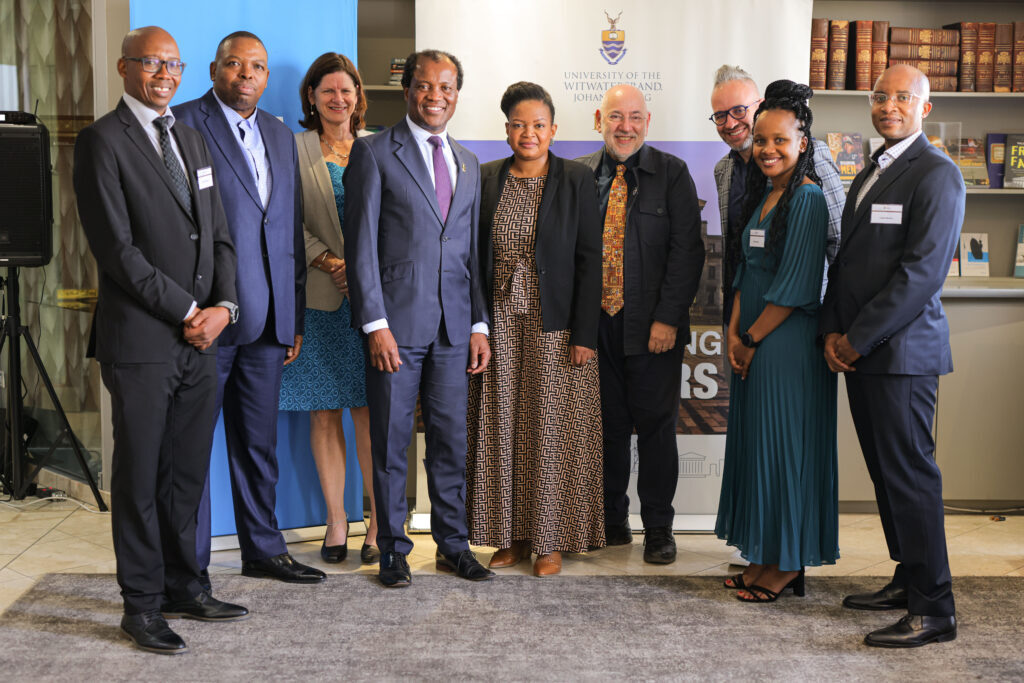
(Group photo from left to right)
o Letlotlo Phohole, Senior Programme Manager: Wits Innovation Centre (WIC)
o Jonas Bogoshi, BCX CEO (on behalf of the Telkom Group)
o Professor Lynn Morris, Deputy Vice-Chancellor: Research and Innovation, Wits University
o Professor Zeblon Vilakazi, Vice-Chancellor and Principal,Wits University
o Dr Mmaki Jantjies, Group Executive: Innovation and Transformation: Telkom
o Professor Barry Dwolatzky, Director for Innovation Strategy, Wits University
o Dr Adam Pantanowitz, Director of the Wits Innovation Centre (WIC)
o Dr Maletsabisa Molapo, Executive for Research and Innovation, Telkom
o Lesiba Maloba, Gyro Group CEO

INSIDE EDUCATION 

Chiloane launches multi-certification Skills Programme
Uncategorized

Chiloane launches multi-certification Skills Programme

Gauteng Education MEC Matome Chiloane officially launched the Multi-Certification Skills Programme on Wednesday, at Katlehong Engineering School of Specialisation, for it to be rolled out at primary and secondary schools across the province.

Pictures: GDE Media.

The GDE Multi-Certification Skills Programme is a learner-focused skills programme that will equip all learners with critical and practical skills, apart from them only receiving a National Senior Certificate upon completing their basic education. The programme will ensure that every learner in the province acquires a minimum of one accredited skill per academic year from Grade R to Grade 12, thereby accumulating thirteen skills certifications upon their exit of the schooling system.

The Multi-Certification Skills Programme will guarantee learners in primary and secondary schools (from Grade R – 12) accreditation in the following skills: Coding Robotics; Swimming; Entrepreneurship; Sign Language; Peer Mediation; Microsoft Digital; Rocketry; Artificial Intelligence; K53; First Aid; Drone Technology; Values & Diversity; Music Enhancement.

At our technical schools, the Multi-Certificate Skills Programme will provide learners (from Grade 10 – 12) accreditation in the following skills: Plumbing; Woodwork; Bricklaying and Plastering; Electricians Part-Qualification; Electronics & Digital Security Installation; Electronic Appliance Repair; Automotive Repairs & Maintenance; Welding; Fitting & Machining; Basic CAD Competency; Elevator Installation, Maintenance & Repair; Forklift Operation, Maintenance & Repair.

The skills provided to technical schools from Grade 10 – 12 through the Multi-Certification Skills programme will be Katlehong Engineering School of Specialisation was earmarked for the launch as it already offers learners some of these skills. 

To ensure the efficacy of this programme, we have partnered with numerous experienced companies who provide invaluable expertise in each skill. During the launch, learners demonstrated their diligence in each of these skills alongside our partners.

“We are excited to have introduced such an innovative programme that will give learners practical skills which are credible enough to use in our vast economy. We want to assure the public that this programme will be rolled out at all our schools, and we are working with various SETAs to ensure the credibility of the certificate obtained for each skill.

We are grateful to all our partners for their immeasurable support and contribution towards this initiative, and for helping us grow Gauteng together,” said MEC Chiloane.

INSIDE EDUCATION 

Uncategorized

Eastern Cape veteran teacher Dr Ambrose Cato George: On His Own Terms

ABIGAIL GEORGE

EASTERN CAPE’S veteran educator Ambrose Cato George became a teacher in 1965. In a teaching career, which spread over a period of more than 30 years, he gradually climbed the promotion ladder and eventually became a principal of a large comprehensive school in a sub-economic township, namely the Gelvandale Senior Secondary School in Gqeberha, Eastern Cape.

This post he carried out with success for 10 years. In 1994, a South Africa and a new dispensation found him in the position of Inspector of Education.

He acted as supervisor for more than 50 high, primary and special schools. He played a significant role in the transformation and transition to one educational system and was instrumental in amalgamating schools from the previous educational departments.

He was forced to retire from his post because of clinical depression.

Although Ambrose was occupied fulltime as an educationalist, he still found time to get involved in community activities. Some of these activities included the following: he served on the executive of the Port Elizabeth Mental Health Society for many years: he was involved with the Happydale School for Severely Mentally Handicapped children for more than 30 years.

The Port Elizabeth Mental Health Society honoured him in 1999 by being made an Honorary Life Member of Society. For the last 16 years, he was chairman of the Management Committee of Happydale.

He was instrumental in starting a Depression Support Group in the Northern Areas in Port Elizabeth. He served as a member of the Management Committee at Happydale when his health allowed it.

He serves as a part-time lecturer at the Charlotte Searle Nursing College for a period of 15 years. He lectured Biochemistry, Biophysics, Education and Administration. He also lectured Physics and Chemistry to radiology students. He served on the Council of Charlotte Searle nursing College for many years.

Throughout his career he was under regular medication and underwent mood swings particularly depression at frequent intervals. He was very fortunate that for a period that stretched for almost 30 years he was supported by the Port Elizabeth Mental Health Society.

They organized his visitation to see the state psychiatrist and to get a monthly supply of medication.

He found it important to monitor the early warning signs of mania and depression.

Throughout my suffering from mood swings, he found that various stressors, which was accompanied by severe stress, exacerbated my condition.

Much stigma, ignorance and denial exist concerning manic depression and stress hence the necessity for the following account and his autobiography which states his case on his own terms.

In 1962 due to the great oppression under the Nationalist Party he was forced to enter the armed struggle as a member of the Yu Chi Chan Club (which was a subversive organisation led by Dr Neville Alexander).

He met such political luminaries such Advocate Albie Sachs, Advocate Fikile Bam, Cadre Ruth First, the poet Arthur Nortje, the stalwart George Botha and Comrade Dulcie September.

Now in the autumn of his years he is taken up with writing about his life experience under apartheid, mental health matters and his autobiography.

It could be stated that in the life of Dr Ambrose Cato George Ph.D, he was recruited into a subversive organization as a student at UWC formerly known as Bush University, he was a scholar who studied at London University, Rhodes, UNISA, UWC, teacher, writer, family man but there was disorder in his life when it came to his mood.

A wise and brilliant man, it still occupies his life.

George was born in South End, Gqeberha in 1944. He holds the following academic qualifications: B.Sc. In Zoology and Botany (Unisa), Secondary Teacher’s Diploma-postgraduate (UWC), B.Ed. – distinction in Philosophy of Education (Unisa), Associate of the University of London Institute of Education (London) for the study: “The Educational Provision of the Mentally and Physically Handicapped in England and Wales and its possible application in South Africa”. The M.Ed. Degree (Rhodes) with the thesis: “the London Missionary Society and Education: A Study of the Eastern Cape 1799 to 1852” as well as the Doctor of Philosophy degree (Rhodes) with the thesis: “A Mission and Five
Commissions: A Study of Some Aspects of the Educational work of the American Zulu Mission 1835-1910”.

INSIDE EDUCATION

Uncategorized

South Africa’s university students denounce increasing cost of education

EVERY year, the cost of studying at a South African university is becoming unbearable for students. According to data from financial services group, Old Mutual, university students in South Africa will fork out an average of 3000 US dollars in 2023.

In the past week, students from the University of Witwatersrand shut down the campus in protest over the exclusion of students who cannot afford to register for the new academic year and payoff debt. 

One of the student leaders says their demanding that the university does not leave academically deserving students stranded.

Lungile Magagula, Wits University Student Forum Interim Chairperson said financial exclusion is not a valid reason to bar students from starting the new academic year.

“The problem here is that students are not able to register due to financial reasons. Most students who are unable to register are academically deserving to register but they are unable to because of financial reasons. And that is one of our major demands,” said Magagula.

Last week, students at Wits University were seen sleeping in public places due to delays in securing financial aid for accommodation. 

Onkokame Seepamore, a final year BA Law student expresses concern that financial aid for accommodation continues to be a struggle every year.

“At the current moment, I don’t have funding and I am appealing for financial  aid. For the past years, it was okay but this year it became a struggle because I didn’t have funding at all. I had problems getting accommodation and  registering.” said Seepamore.

Jabulile Mbanjwa, Bachelor of Laws (LLB) student recalls repeatedly applying for bursaries but with no luck.

“I studied a BA Law and I am doing the two postgraduate LLB and because financial aid has defunded the two year and three year stream of LLB I am stuck without funding. I was fortunate to register but I don’t know how I am going to cover my fees and I was not able to get accommodation because I don’t have financial aid. “ recalls Mbanjwa.

Seven years ago, Fees Must Fall protests erupted on campuses throughout South Africa. Students were calling for free and quality tertiary education. Lungile says this is the perfect time to put pressure on the government to provide free education.

“It is time for us to consider free education. These are issues that emanate from us not having free education. It is time for the government and universities to work together in order to consider free education“, demands  Magagula.

At this point, students and management of Wits University are still locked in negotiations. 

On the ground, students are hoping that a mutual solution will come sooner rather than later.

AFRICANEWS

Uncategorized

School to pay $1M after boy who ate teacher’s snack died

A Nebraska school district has agreed to pay $1 million to the family of an eighth grader who died after eating a granola bar given to him by a teacher.

The Papillion La Vista school board will vote on the wrongful death settlement with the parents of Jagger Shaw, 14, at its meeting Monday night.

Few details about what happened last May are included in court documents because the settlement was reached through a probate court process and not a civil lawsuit.

Jagger’s parents declined to comment to the Omaha World-Herald about the settlement. But his father, Thomas Shaw, said in a Facebook post Jagger’s teacher at Liberty Middle School offered him a granola bar after he asked to go to the office for a snack.

“The teacher said you can have one of my granola bars, so Jagger took it and got halfway through eating it and felt like he was starting to have an allergic reaction,” Tom Shaw wrote.

He did not describe Jagger’s allergy in the post nor say if the school was aware of that allergy.

Shaw said Jagger went to the school nurse’s office where he was first given the allergy medication, Benadryl. That didn’t help, so the nurse gave Jagger an epinephrine shot with an EpiPen. He was taken by ambulance to a hospital where he died May 7.

The Shaw family’s attorney did not respond Monday to a phone message requesting details of the settlement.

The school district’s liability insurer will pay the settlement.

AP