Uncategorized

UNESCO and Olympic Education Hosts Intercultural Competence Seminar with NASA GLOBE

Staff Reporter

THE shared vision of NASA Globe and the University of the Western Cape (UWC) Chair in Sport, Development, Peace, and Olympic Education (SDP) came to fruition, empowering educators globally for enhanced environmental awareness and intercultural competence to promote the Sustainable Development Goals.

Larisa K. Schelkin and Professor Michael Jabot – both teaching faculty at the UN Institute for Training and Research (UNITAR) in New York – initiated the collaboration with UWC UNESCO Chair Professor Marion Keim.

It culminated in Prof Keim’s facilitation of the first online Seminar on Intercultural Competence, Story Circles, and Olympic Values Education for NASA Globe on 26 February. Schelkin, CEO, President, and Founder of the Global STEM (Science, Technology, Engineering, and Math) Education Center, along with Prof Jabot – a State University of New York (SUNY) Distinguished Professor in Science Education – spearheaded this innovative teacher education initiative.

Their invitation to Prof Keim, who is a distinguished sports science, development, and peace studies teacher, garnered immediate interest, further strengthening the collaboration with NASA GLOBE.

NASA GLOBE is an international initiative fostering environmental science and learning. It aligns with UWC’s UNESCO Chair SDP focus and the UN Agenda 2030. This alignment promotes capacity building, research exchange, and joint learning, emphasising policy dialogue and collaboration in the SDG, SDP, and Olympic Education fields.

Based on research led by fellow UNESCO Chair, Dr Darla K. Deardorff, the Story Circle methodology was identified and adapted to foster a human rights-based approach to intercultural competencies. Piloted successfully by UNESCO in five regions worldwide, this methodology formed the cornerstone of the vibrant online seminar.

Educators from South Africa, Nigeria, the UK, and the US engaged in values-based approaches, exploring intercultural competence and story circles as transformative tools. Through storytelling, participants embraced shared humanity, recognising commonalities amidst diversity, echoing the spirit of ubuntu.

Prof Jabot remarked: “One of the greatest challenges we have in shaping the world for the students that we work with is developing the disposition that our students have toward the appreciation and consideration of views of the world that are different from ours.

“Story Circles allow for a unique way of helping students to develop these dispositions. As teachers, I often think that we are often driven to define student success based on the external measures that shape our educational systems.

“The reality of the situation is that when students leave our schools the world they enter won’t judge them based on these measures but rather on the qualities they exhibit as a person and the quality of the work they contribute to make the world better.

“With a strategy like Story Circles, I think we as teachers can shape our work to help students understand that they can lead a purposeful life where their achievements are based on the impact their actions have, and that their successes are based on serving others based on the principles that matter most to them.”

Schelkin summarised the first NASA Globe – UWC collaboration: “In our journey to nurture a global community that is both environmentally conscious and culturally competent, the collaboration between NASA GLOBE and the UNESCO Chair SDP exemplifies the strength of international educational initiatives.

INSIDE EDUCATION

Uncategorized

Dissolution of NSFAS Board part of a turnaround strategy,  Nzimande

Johnathan Paoli

Minister of Higher Education and Training Blade Nzimande has said that the dissolution of the National Student Financial Aid Scheme (NSFAS) Board was an important step in turning the entity around, and was not a decision taken lightly, but considered all critical factors, including the impact on students.

Minister Nzimande briefed the media on recent developments related to the financing scheme on Sunday afternoon in Pretoria, following the dissolution of the NSFAS board last week, and its subsequent placement under administration.

The department said the decision was made as part of interventions meant to improve the efficiency of NSFAS, and comes on the heels of the resignation of the board’s former chairperson, Ernest Khosa, amid allegations of corruption, which also fingered the minister.

Nzimande said he had no choice but to dissolve the board, but confirmed that the dissolution will not affect the normal functioning of NSFAS, including the disbursement of funds.

“People must not panic, we are changing things. We are not going to change our commitments just because the scheme has been placed under administration,” the Minister said.

He confirmed that the administrator will have the authority to appoint expert opinion and assistance in his administration, and was expected to submit a written report every three months, detailing the progress in addressing the critical issues.

Nzimande appointed the former head of the South African Institute of Chartered Accountants, Freeman Nominal, as the administrator for the scheme. The appointment was published in the Government Gazette and signed by Nzimande on Thursday.

However, EFF deputy President Floyd Shivambu has called on Nzimande  to wait until after the elections before appointing a new board.

Shivambu said that the outgoing Minister must not rush to appoint a new board, but allow the incoming government to appoint the new board to sort out the crises he created in NSFAS.

“We as EFF Members of Parliament conducted an oversight visit to DHET in January and cautioned the Ministry, Department and NSFAS board about an impending crisis and they did nothing. The ANC must be voted out of power for the damage and crisis they are causing to Higher Education,” Shivambu said.

The Democratic Alliance (DA) condemned what it referred to as the “shocking mess” in NSFAS, with Shadow Minister of Higher Education Chantel King saying the allegations implicating both Nzimande and Khosa had weakened the foundation of trust in the administration of student financial aid once again.

“Khosa had previously asked to be placed on leave in the wake of allegations against him by the Organisation Undoing Tax Abuse (Outa). The organisation accused him and Minister Nzimande of corruption, ” King said.

Opposition party ActionSA welcomed both the dissolution of the NSFAS board and the resignation of Khoza and reiterated its demand for the immediate resignation of Nzimande.

However, when asked about the calls for his resignation, Nzimande reiterated his claim of innocence and said that in terms of the detractors, he would not resign simply because opposition parties such as the DA and EFF have called for it.

Nzimande said that neither the DA nor the EFF appointed him, so he was not beholden to them, and furthermore, questioned why he should resign when he has contributed so much to the growth and expansion of the financing scheme.

Student organisation South African Students Congress (SASCO), along with other organisations, have renewed calls for NSFAS to terminate its contracts with four service providers who run the funding scheme’s direct payment system.

While the board adopted a report that proved there were some irregularities in the appointment of the service providers, SASCO said there has not been any urgency from the funding scheme in resolving the matter.

Secretary Alungile Kamtshe says this should be done with immediate effect.

“We are largely interested that in the interim the money must be distributed by institutions of higher learning up until the method for direct payment is fine-tuned so there is no middle person, it becomes direct, not indirect,” Kamtshe said.

Over the last year, NSFAS has been riddled with challenges, including allegations of corruption from OUTA bringing about more issues for the embattled funding scheme.

Thousands of students were left stranded without allowances, after the implementation of the direct payment system in June last year, which led to backlash from students, and protest action.

In October 2023, CEO Andile Nongogo was fired for interfering with processes to appoint service providers, and in December, OUTA released a report and audio implicating Khosa in corruption, with the chairperson taking a leave of absence in January, pursuant to his recent resignation.

The Minister said that further meetings and media updates would be scheduled for the coming weeks in which the administrator is expected to meet with all the relevant stakeholders as well as further updates by both him as well as NSFAS in order to give further details on the process of engaging the issues stalking the scheme and students.

INSIDE EDUCATION

Uncategorized

NSFAS Chairperson Ernest Khosa resigns amid bribery allegations

Johnathan Paoli

THE Minister of Higher Education Blade Nzimande has announced the resignation of National Student Financial Aid Scheme (NSFAS) board chairperson Ernest Khosa in the wake of bribery allegations.

Nzimande, who was also implicated in the allegations, issued a statement on Thursday in which he wished the former chair well on his endeavors in the future.

Khosa went on voluntary leave of absence in January after the release of a report from (OUTA), supported by voice recordings alleging Nzimande and Khosa received millions of rands in kickbacks from service providers contracted by the financing scheme.

However, Khosa said that he had never received any financial gratification for his personal use or facilitated any for the Minister nor the South African Communist Party.

Khosa raised concerns over alleged threats that have been made against both him and his family.

On Thursday, Nzimande outlined proposals for dealing with the ongoing crisis around NSFAS’s non-payment of student allowances as well as announced Khosa’s resignation.

Nzimande said that he had instructed the student funding scheme to immediately establish a task team that would visit all TVET colleges and universities in order to address the serious challenges.

“Given the magnitude of this problem and its negative impact on the well-being of students and the continued functioning of our post-school education and training system, in the next few days, the minister will be taking a series of additional and decisive steps, all of which are intended to have the problem of non-payment of allowances resolved as a matter of priority,” Nzimande said.

Nzimande said NSFAS had paid TVET college students allowances and tuition to the value of R511 106 120, and R2 306 583 222 to university students; and that these payments were made against valid registration records received on 15 March, in respect of the 2024 academic cycle.

“Regrettably, not all TVET colleges and universities have complied with the NSFAS deadline of 15 March for the submission of student registration data to facilitate the payment of allowances. The failures to comply by some TVET colleges and universities has contributed to the latest sporadic student protest,” he said in a statement.

NSFAS had sent its servicing administrators to work with the non-compliant colleges and universities to finalise the student registration data submission, Nzimande added.

“Further to all this, the Minister intends to engage all key stakeholders in the sectors, such as student leadership, with the view to ensure that the issues of non-payment of Nsfas student allowances and related challenges are resolved as a matter of priority”.

INSIDE EDUCATION

Uncategorized

Mbilwi Secondary is in the running again for the Samsung and SITA Solve for Tomorrow contest

Edwin Naidu

Reigning champions Mbilwi Secondary School in Limpopo, which produced some of the country’s most eminent academics, is among the 20 finalists for the Samsung and the State Information Technology Agency (SITA) 2024 Solve For Tomorrow Competition.

Aiming to bring out the best in public schools and learners, the competition has attracted many entries from schools across the country. The top 20 schools are now confirmed.

No surprises that Mbilwi, renowned for producing learners excelling in maths, has made the cut once more. The school’s past students include Professor Tshilidzi Marwala, the former University of Johannesburg vice-chancellor now working with the United Nations University in Japan. 

Engineer and inventor Professor Mulalo Doyoyo, the former head boy, was another person who put the school on the map. He passed away suddenly on 14 March 2024.

Mbili is recognised as one of the country’s top-performing public schools.

According to Hlubi Shivanda, Samsung’s Director for Business Operations, Innovation, and Corporate Affairs, this critical stage of the contest is a good indicator of the country’s future. The finalists are learning how to solve problems in their communities.

This is an opportunity for these schools to showcase their innovation and creativity in solving real-world problems.

Samsung, which inspires the world and shapes the future with transformative technologies, such as the latest S24 models boasting Artificial Intelligence, decided to heed a presidential call to launch this contest for schools and learners.

In this year’s State of the Nation Address, President Cyril Ramaphosa noted that the power of collaboration in overcoming challenges can lead to significant achievements.

South Africa has made progress in the last three decades thanks to the spirit of partnership. The Solve For Tomorrow competition is a testament to the impact of public-private partnerships, and when these sectors come together, remarkable results can be attained. 

Launched in Africa in 2023, this unique competition provides an opportunity for Grade 10 and 11 learners from public schools in underserved communities to apply Science, Technology, Engineering, and Maths (STEM) education to address the challenges faced by their respective communities while fostering creative thinking, problem-solving skills, and teamwork among learners. Its goal is to nurture socially innovative ideas, specifically focusing on environmental challenges.

Lenhle Khoza, B-BBEE and Transformation Manager at Samsung, said: “As a global electronics giant that has, in the past 30 years, consistently supported the country’s transformation agenda, we are aware of the great importance of education through technology. This global Solve For Tomorrow initiative, which uses STEM as the critical component of empowerment, is helping us, together with our valued partners, to continue our quest of equipping young people from local public schools with critical skills and knowledge that they will need to build not only a better local economy but also the world at large.”

Since its inception last year, the competition has helped learners grow and develop invaluable skills for success in the present and future. In conjunction with the State Information Technology Agency, 51 pre-selected schools were piloted nationally. This competition is an excellent way for learners to understand STEM better and display their scientific talents.

According to Tlali Tlali, the Head of Corporate Affairs at SITA: “We understand the importance of collaborations and are very excited about the prospects of our continued partnership with Samsung. As SITA, we remain committed to leveraging IT to support the delivery of e-Government services to all citizens, and we are always keen to be part of impactful programmes such as the Solve For Tomorrow competition that allow us to effect positive change in both our youth and communities at large.”

The programme is designed to proceed through a phased approach. In the entry phase, schools nationwide are encouraged to participate in the competition. In phase one, the preliminary stage of the competition, the Top 20 schools with the best entries for 2024 are announced, and they will proceed to the next phase. These schools will have the opportunity to address an environmental challenge and develop concrete innovations to assist in the betterment of society. They will be supported by assigned Samsung employee mentors throughout the process.

In the programme’s second phase, Samsung will provide resources to the learners while mentors guide them. During this phase, the learners must research, develop, and submit their paper prototypes for the challenges identified in the preliminary phase.

To support the teams from the Top 20 schools for 2024, they will attend Design Thinking workshops in their respective regions. Additionally, the selected schools’ teams will be sponsored with a Samsung tablet and data to assist them in research and communication with their mentors. This is a critical stage of the programme, and with Samsung’s support, the learners will have the resources they need to succeed.

The Design Thinking workshops aim to teach learners valuable skills for approaching their work, thinking critically, and acting like designers. They will provide a cognitive and structured process for human-centred, creative problem-solving and encourage learners to build strong teams. Additionally, learners will learn how to research and develop workable solutions to address environmental issues in their communities.

The Top 20 Finalists will be required to submit paper prototypes of their solutions, which judges will evaluate to determine the Top 10 schools that will proceed to the next phase. The Top 10 teams will receive funding to develop physical prototypes of their solutions and present them to a panel of judges in the final stage of the competition.

The Top Three schools with the winning prototypes will win prizes of up to R100,000 each, which will go towards STEM equipment based on the unique needs of each school. Additionally, Samsung has decided to reward each learner in the Top three teams from schools with a Samsung device.

The ultimate goal is to emulate Mbilwi Secondary School, the 2023 winner – but whoever wins, communities and South Africa stand to benefit from innovative solutions.

INSIDE EDUCATION

Uncategorized

Blacks, females make strides in attaining education 

THEBE MABANGA 

A new report by Stats SA shows that Black Africans, females and even children between the ages of 0  and 4 years have made huge strides in attaining education in the thirty years since South Africa became a democracy.   

The report, titled  Census 2022: A profile of education enrolment, attainment and progression in South Africa, showed that previously marginalised communities have embraced the opportunity to improve their education and skills level in large numbers. It compares education attainment levels and progression between the 1996 and 2022 Census, a period of 26 years.  “One of the most notable achievements is the significant increase in enrolment rates across all levels of education,” the report notes.  “Enrolment rates have seen unprecedented growth, reflecting improved access to education for previously marginalised communities, resulting in higher educational achievements.” 

A key factor in the improvement to education access, especially to Early Childhood Development (ECD) has been the Schools Act of 1996, which made Grade R compulsory. As a result, 87 % of four-year-old children attend an ECD facility while 73,5% of three-year-olds attend. 60% of children attending ECD are in urban areas while the rest are in rural or peri-urban areas. 

The report highlights the fact that substantial strides have been made in education reforms, including the establishment of no-fee schools, school nutrition programmes, improved access to scholar transport, implementation of the child support grant, and introduction of the National Student Financial Aid Scheme (NSFAS), all of which have had a significantly positive impact on enrolment, particularly among previously disadvantaged groups.

According to the report, educational progress, particularly among the black African population in South Africa, is evident. The percentage of individuals aged 25 years and older with only primary education or less has declined substantially,  from about  57,9% in 1996 to 22,2% in 2022. “This decline underscores a considerable shift towards higher educational attainment levels among this group over the past three decades” the report says. 

The report also shows a substantial increase in the attainment of secondary education among black Africans. The percentage of individuals with secondary education more than tripled from 9,4% in 1996 to 34,7% in 2022. 

The Census data also shows  a large increase in tertiary education attainment with the gaps between coloureds and black Africans having closed.  “This surge in secondary and tertiary education attainment signifies a positive trend towards greater access to and completion of higher levels of education within the black African population group,” the report says. 

In 2022, the gender gap in tertiary education attainment was nearly closed, with the percentage of females surpassing that of males. About 13,1% of females attained tertiary qualifications, compared to 12,3% of males. In 1996, only 6,7% of females and 8,6% of males had obtained tertiary education. “The narrowing of the gender gap is particularly noteworthy as it signifies progress towards gender equality in educational opportunities and outcomes,” says Stats SA, which also notes that the gender gap is still evident at higher levels of Masters and Doctoral level.

INSIDE EDUCATION

Long walk to a better education system for South Africa’s learners
Uncategorized

Long walk to a better education system for South Africa’s learners

Edwin Naidu

When the democratic government took power in South Africa in 1994, it faced an incredible challenge to undo the systematic underdevelopment of most children who studied in South African schools under apartheid.    

Education policies such as the Outcomes-Based Education (OBE), Curriculum 2005, and subsequent initiatives have significantly shaped the lives of ordinary South Africans over the past three decades of democracy in the country. 

These policies addressed historical inequalities by improving black South Africans’ teaching and learning conditions and achievements while promoting inclusive education. 

A milestone achievement was the introduction of free primary education, which facilitated greater access to education for marginalised and vulnerable communities by reducing financial barriers and increasing enrolment rates among disadvantaged learners.

In 1982, the apartheid government reportedly spent an average of R1,211 on education for each white child and only R146 for each Black child. National Party MP Piet Marais was the last apartheid Minister of Education between 1992 and 1994. His replacement under the country’s first democratically elected President, Nelson Mandela, was Professor Sibusiso Bengu from 1994 to 1999. Underpinned by the provisions of the South African Schools Act, Bengu drove the amalgamation of 17 apartheid education departments. 

In an interview with the writer during his tenure, Bengu stated that his task was akin to piloting a plane that had to turn without crashing. He was proud of his achievements.  

Under Bengu, parents were exempt from paying school fees from 1998. Still, he will be remembered as the Minister responsible for introducing the new Curriculum 2005 (C2005), a proposal for transforming the approach of school education in South Africa, and OBE. 

Teachers and opposition parties roundly criticised it, which led to its review under his successor, Kader Asmal, who called it flawed. In essence, OBE lost its way into the heart of education in the classrooms. Most teachers needed to learn what to teach (content, reading, writing) or how to teach. 

Prof Bengu’s proposals transformed the tertiary system, dismantling the fragmented, inefficient, and inequitable higher education system of the apartheid era. Today, South Africa has a single, national, and coordinated Post-School Education and Training sector (PSET) open to all. 

Enrolments have increased significantly, and through the establishment and expansion of the National Student Financial Aid Scheme (NSFAS), poor students now have much-expanded opportunities to access and participate in the post-school education and training sector. University research outputs have increased significantly, and several universities are internationally recognised as citadels of excellence. 

Professor Asmal, appointed by President Thabo Mbeki to serve between 1999 and 2004, introduced far-reaching reforms, including university mergers and the amalgamation of Technical Vocational Education and Training colleges. Prof Asmal also made surprise visits to schools to ensure learning and teaching were taking place as required. He also set his sights on varsities, warning that he would impose quotas if tertiary institutions did not implement affirmative action for staff and students. Asmal died on 22 June 2011. 

Between 2004 and 2009, Dr Naledi Pandor presided over a complete overhaul of the education system, initiating reforms to the country’s failed implementation of the OBE system. Mbeki resigned in 2008 and left Kgalema Motlanthe in charge. Motlanthe retained Pandor in her position in his interim cabinet. 

Minister Naledi Pandor.

After the 2009 general election, Jacob Zuma became the new President of South Africa. He unbundled the Education Ministry into two new portfolios, appointing Pandor to the newly established  Minister of Science and Technology post in May 2009. Under her tenure, with Pandor as an inspiring champion, South Africa won the bid to host the Square Kilometre Array (SKA) in the Karoo region.  

Following the splitting of the education portfolio, long-serving Angie Motshekga first took a bow in 2009 as Minister of Basic Education, while Dr Blade Nzimande began his stint as Minister of Higher Education and Training in the same year. 

Basic Education Minister Angie Motshekga. Picture: Eddie Mtsweni

Motshekga believes she has brought stability to the curriculum. The matric results have also provided a barometer of success, with Early Childhood Development a critical pillar laying the foundation for a solid future. 

But the jury remains out on Nzimande. In 2017, he was axed from the education portfolio amid student unhappiness over his leadership. He famously said, “Students must fall,” colluding with varsity management to stop protests. 

Since returning under President Cyril Ramaphosa in 2019 with science and technology added to his responsibilities, Nzimande has had to fend off one controversy after another. However, establishing a single system of universities and TVET colleges is one of his legacies. Funding irregularities under the National Student Financial Aid Scheme have seen Nzimande embroiled in controversy, claims he has denied but failed to follow his threat to sue, suggesting that it was all bluster. However, several claims of corruption involving his appointments at several learning institutions under his watch have not helped his case. 

Higher education minister Blade Nzimande. File photo.
Image: GCIS

One of the key architects behind the post-apartheid tertiary system, Professor Jairam Reddy, says it is time to review the state of higher education and make recommendations for any contemplated changes.

Unlike the National Commission on Higher Education (NCHE), which he chaired, this should be a shorter exercise – perhaps six months in duration and involving about five experts on higher education, including one international expert. The remit could be as follows: What are the strengths and weaknesses of the current state of higher education? Secondly, he asked whether the mergers had worked. A third aspect would focus on the quality of our higher education system, while race and its implications in the higher education system must be explored. Funding of the higher education system – is it adequate and equitable? and examine the efficacy of NSFAS. Finally, the professor proposes an assessment of corruption and mismanagement in higher education. 

One of the country’s top academics, Professor Tshilidzi Marwala, the former vice-chancellor of the University of Johannesburg and now Rector of the United Nations University in Japan, says one of the often ignored facts about post-apartheid research in higher education is that South African universities do more research today than ever before. Furthermore, the proportion of people with doctoral degrees in South African universities is also historically high. 

“What is missing is taking this research into innovation and products,” Marwala told Inside Education. 

However, post-democracy, great emphasis was placed on the schooling sector. The launch of Curriculum 2005 (C2005) in March 1997 signaled a move from content-based to outcomes-based education and from the fundamental pedagogics under apartheid to progressive pedagogy, with the student having a central role in learning. 

University of Cape Town’s Prof Joanne Hardman says that while OBE owed some of its substance to international education developments, it is incorrect to assume it was imported wholesale from any country. 

She believes OBE owes some of its elements to the National Training Board (NTB) and Congress of South African Trade Unions (COSATU, at the time South Africa’s largest labour union). Together, they produced the National Training Strategy Initiative policy document, which provided the foundation for the national training strategy that was later developed. 

“If one appreciates OBE’s genesis in the labour movement, one can begin to understand one of the key critiques facing OBE today: that teaching in South African schools using OBE serves a skills acquisition, rather than a development, function. The need to move away from a curriculum that separated mental and manual work or academic and vocational training was recognised in the curriculum’s focus on integrating education and training,” she says. 

Thus, the ideological thrust behind C2005 was outlined in the White Paper on Education and Training (1995) and the South African Schools Act (1996), emphasising the social justice imperative to provide quality education for all through developing democratic citizens capable of participating in the knowledge economy of the 21st century. 

Prof Hardman says OBE sought to address past inequities and level the playing field for students across South Africa. However, the problem facing those who were tasked with implementing OBE was that South Africa’s hugely unequal schooling base could not ensure the material or human resources required for a curriculum that focused on using a variety of resources to teach outcomes. 

“Moreover, teachers’ training was unbelievably unequal, with those taught in former ‘black’ teacher training colleges not having been prepared to meet the rather opaque ‘critical’ outcomes required from the curriculum. Lack of training in how to implement an outcomes-based model of pedagogy, coupled with teachers’ underdeveloped conceptual skills due to unequal training, meant that OBE was doomed from the start,” she says.  

Respected educationist Professor Jonathan Jansen warned in 1999 of C2005’s potential failure because he understood and had worked in South Africa’s unequal schooling terrain.

“Unfortunately,” adds Prof Hardman, “Jansen was right; C2005, although admirable in its quest for social justice, resulted in a radical form of learner-centredness that soon appeared to disadvantage the very students it was meant to promote, namely, poor second-language students in under-resourced schools with poorly prepared teachers.”

“In a country with the highest Gini coefficient in the world, the one-size-fits-all, underspecified curriculum presented as C2005 had little chance of succeeding without serious teacher training. 

She says that for many, OBE had failed to achieve its emancipatory goal of educating all South African schoolchildren. 

Two years after implementation, the C2005 was reviewed, given the challenges. The Review Committee into Curriculum 2005 Report found that C2005 was over-designed and under-stipulated. 

In its attempt to pursue a policy of integrating subjects and real-world material, C2005 rendered the sequence, pacing and progression requirements, especially of the gateway subjects of language, mathematics, and science, invisible to teachers and students alike. The result could have been much better learner progression. One main lesson of the Review was thus that the explicitness of the learning and evaluation requirements could not, under present South African conditions of learning, be sacrificed in the name of learner-centredness without impairing learning. This lesson was embedded in the National Curriculum Statement (NCS) for grades 1 to 9, which was rolled out in phases from 2002 to 2009. 

By 2009, this curriculum was again under scrutiny for its focus on OBE and painfully low attainment in students’ outcomes. The NCS Review Report focused on what is to be learnt rather than vague outcomes, suggesting that “clear content, concept and skill standards and clear and concise assessment requirements” should replace the notion of outcomes. 

Prof Hardman adds that revisions to the NCS did not specify a constructivist pedagogy, although the understanding that children are active in constructing knowledge was accepted. Following the NCS review report, a new Curriculum Assessment Policy Statement (CAPS) was introduced in 2014, focusing more on specifying knowledge and assessment standards. 

However, CAPS is very administration, content, and assessment-heavy, leaving little time for teachers to develop deep knowledge and understanding. 

Moreover, teachers have once again received very little training in how to deliver CAPS and how to effectively teach in a constructivist manner that aims to develop children cognitively. 

The impact of CAPS on children was found to have led to an increase in anxiety amongst ever younger children due to the content-heavy curriculum, over-assessment, rigidity of the curriculum and the excessively fast pacing needed to cover such a content-dense curriculum. 

“With CAPS, it seems, we have thrown the baby out with the bathwater. Viewing curriculum change in South Africa through a dialectical lens, we must appreciate that CAPS has produced a contradiction in the object of the activity of schooling: curriculum coverage versus understanding. We have children who are over-assessed, and, in some instances at least, this has led to teachers teaching to the test rather than developing students’ understanding of concepts,” says Prof Hardman. 

“Moreover, the actual content that students learn has changed very little over time, and there is little difference in the content of what is taught in the 21st century to what was taught in the 20th century. This is surely problematic as the world our children face today is not the world of the previous century,” she adds. 

Professor Kobus Maree of the Department of Educational Psychology at the University of Pretoria says that implementing policies like Outcome-Based Education, which emphasises holistic development and learner-centred approaches, has been widely criticised and has faced significant challenges. 

This includes resistance from educators, inadequate training, and assessment-related issues that have hindered its effectiveness. 

“Many scholars argued from the outset that OBE was not designed with impoverished contexts in mind and has adversely impacted the education of many black learners from disadvantaged environments. Initiatives like the language and 40% policies were also introduced to enhance educational equity and quality. The language policy aimed to promote multilingualism, preserve indigenous languages, and foster cultural identity and inclusivity within the education system,” Prof Maree says.. 

“The controversial 40% policy intended under Angie Motshekga to provide a safety net for vulnerable learners, allowing them to pass a grade with a minimum of 40% in certain subjects. This policy aimed to prevent mass dropout rates and stimulate progression through the education system. However, it’s important to note that many scholars have fiercely criticised it.

“Despite these efforts, major challenges persist in the education system even after 30 years of democracy. Infrastructure remains critical, especially in inner-city, township, rural, and other underprivileged areas. Many of these schools lack basic facilities such as connectivity, electricity, sanitation, and adequate classrooms, perpetuating existing inequalities and negatively affecting the quality of teaching and learning,” says Prof Maree. 

While there have been notable successes in enhancing access to education and promoting inclusivity, he says significant challenges related to infrastructure deficits and the implementation of theoretical policies persist. “It is crucial to involve all major stakeholders in apolitical discussions about the future of education in South Africa and to draw on existing pockets of excellence to assist disadvantaged schools, rather than implementing policies unilaterally that may negatively impact well-functioning schools.”

Jacques Farmer, the managing director of Prisma Training Solutions, says that with elections imminent, South Africa is gripped by an air of expectation as unemployment stands at 33.9%, and there is a need for a skills revolution. 

Gone are the days of generic qualifications; the modern, digital-first economy demands precision skills. However, more than education is needed; experience is necessary.  

However, the government alone cannot orchestrate this revolution, and the private sector, particularly industries like mining, must be a potent catalyst for change. Companies should consider expanding employment opportunities through targeted training and development initiatives.  

The union of education and employment must be seen not merely as a transactional exchange but as a powerful force for progress.  

“Imagine a young woman from a rural village, equipped with the skills to operate a drone, mapping mineral deposits precisely. Imagine a young man, once struggling to make ends meet, transformed into a sought-after artisan due to his welding capabilities. These are not stories; they are the building blocks of a brighter future when the right skills meet the right opportunities,” Farmer adds. 

Arguably, there has been change, but the jury is still out on the work done in education during 30 years of democracy.

INSIDE EDUCATION

As a child Khensani dreamed of being an astronaut but now she is flying high in the banking space
Uncategorized

As a child Khensani dreamed of being an astronaut but now she is flying high in the banking space

Edwin Naidu

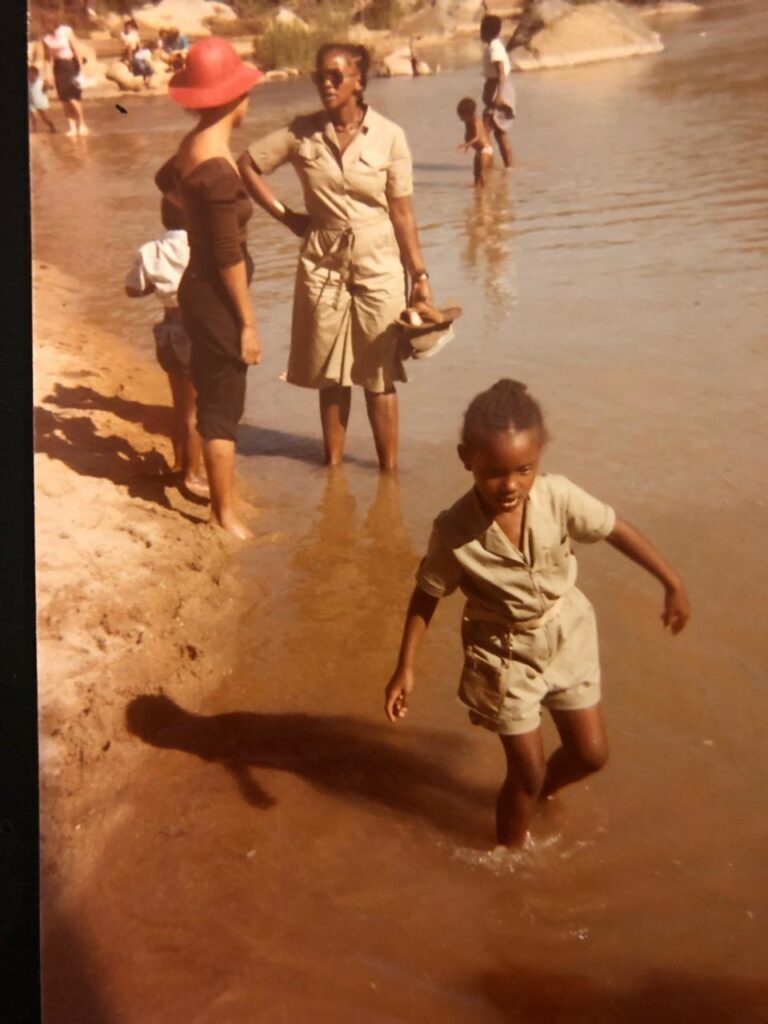
As a young girl from a rural village in Eswatini, she wanted to boldly go “where no man has gone before”. But Captain Kirk and his merry men ensured that women must wait their turn in space – in reality and on the television screens. Khensani loves reading. Her favourite teacher gave free rein to her vivid imagination. She wanted to become an astronaut. While her desire did not materialise, she has excelled in her chosen space in the marketing world. 

Today, Khensani, the 2023 Scopen Top Most Admired Marketer in South Africa, still has an expansive imagination. But she is focused on doing good as the charismatic and much-loved leader as Nedbank Group Executive for Marketing and Corporate Affairs. 

It’s been an incredible journey for the young girl born in the rural area of Fonteyn in the country formerly known as Swaziland. She never dreamed that all that she had achieved would be possible. 

But she told delegates at the International Advertising Association conference in Malaysia from 6 to 8 March, where she spoke on the future being female, that her grandmother and mum believed in her. “And that’s why the past, the present, and the future are female. Believe it.”

Previously, Khensani marketed and promoted skin care products, a famous liquor brand, and a mobile operator. The financial world, however, has taken her career into orbit, with countless industry awards, making her one of the country’s most powerful women in marketing. 

As the marketing executive and a Nedbank Group executive leadership member, she ensures the cohesive and consistent alignment between marketing messaging, brand positioning, and business objectives across the group while providing strategic input into various Nedbank structures, committees, and partnerships.  

Khensani joined Nedbank in September 2017 as Executive Head of Group Marketing before being promoted to her current role and the Nedbank Group Exco in May 2018. Her 20-year marketing career has afforded her invaluable experience in several leading South African and multinational organisations. 

After starting as an assistant brand manager at Unilever, she rose to eventually head up the Skin Category for Unilever in Africa, the Middle East, and Turkey. Before joining Nedbank, various leadership and executive roles followed this in Diageo, South African Breweries and Vodacom. 

Khensani has a BCom from the University of the Witwatersrand, an MBA from GIBS and an Advanced Management Program from Harvard Business School, where she was nominated as representative for that cohort. She is a member of Effie Awards South Africa and the Loeries boards, a Jury President for the Bookmarks Awards, and a sought-after public speaker.

She has amassed several accolades in recognition of her contribution to the industry, including top honours as winner of the Loeries 2021 “Marketing Leadership & Innovation” award and the “Marketing Industry Leader of the Year” award by AdFocus, as well as the 2022 “Most Admired Marketer in South Africa” award by Marklives.com. She was among the three most admired marketing professionals rated by marketers and agency professionals in the Agency Scope 2023/2024. 

Khensani Nobanda thanks her inspirational teacher for setting her on the path to her dreams.
 

Khensani recently shared memories of her favourite teacher in conversation. 

What was their name? Mrs Brenton-Smith

Please share the name of the school attended and year/s. Malkerns Valley Primary in eSwatini 1984 to 1990

How did your favourite teacher endear themself to you? She encouraged my love for reading. She would allow me to spend more time in the library than I was allowed to and even skip some extra murals because I was engrossed in a book and couldn’t put it down.

What subject/s did he/she teach you? She was my grade 1 teacher, so she taught me everything except the second language I was studying, French.

Did you look forward to their subject? I looked forward to class. It was a place where my imagination was allowed to wander and flourish.

What did you like about your teacher? She allowed us as kids to lean into what we wanted whilst ensuring we achieved what was required to pass the grade.

What was your favourite subject at school? Overall, across primary and high school, English and history were taught. I loved English because, in literature, we had to read books…that seemed like an easy pass for me. History is essential because, to move forward, we must learn from the many stories of our past. They give us context and allow us to see the present in that context. Also, learning history builds up a repository of knowledge that allows one to engage in many topics.

Has this influenced your choice of career? Maybe a little bit. Indeed, brands have roots and histories that we must respect. So, as much as we can reposition brands, we must never forget where that brand comes from and build from that past to ensure that whilst we look forward…we look forward rooted in the past.

What was the one phrase from any teacher that stuck with you or inspired you? Don’t give up on what you enjoy, she would say – even if other people want you to do different things, I’m happy you know what you love doing and always keep at it.

Have you kept in touch with your favourite teacher? Unfortunately, she passed on. I returned to primary school as part of my #40before40 journey. I planned 4o things to do before I turned 40, and one of them was to return to St Michael’s. It was surreal standing in front of that grade 1 class and reflecting on the fact that it underlined a big part of who I was.

Why are teachers so important to society? Phew… a big question. In summary, they give kids the opportunities and possibilities for “A Better Life.” I know that without the education I received, I wouldn’t be where I am.

Finally, what advice do you have for learners today? For a seed to grow, it has to land on fertile ground. Your attitude is the most important thing, no matter how good the teacher is. I realised that education was MY road to success, so really, during my schooling, even as I sometimes didn’t agree with my teachers, I used that as an opportunity to have a good debate where I could come up more knowledgeable. I loved school because I was clear that school was going to be the road to my success.

One final question: did you imagine ending up where you are today while at school, and why is it important to believe in one’s dreams? I thought I’d be an astronaut. At no point did Mrs. Brenton Smith say that’s not possible for a young black girl from the Southern tip of Africa. So, whilst I never became an astronaut, she encouraged me to lean into my dreams.

INSIDE EDUCATION

Uncategorized

Government Launches the National Freedom Month in Celebrating 30 Years Of Democracy

Staff Reporter

THE Government through the National Department of Sport, Arts and Culture (DSAC) will today, Tuesday, 09 April 2024 officially launch the National Freedom Month in celebrating 30 Years of Democracy at the Freedom Park & Museum Amphitheatre.

The year’s celebrations are themed “30 Years of Democracy, Partnership and Growth.”

Proceedings will begin with a 3.8km carnival and colourful parade showcasing the country’s unique and cultural diversity through dance, large 3D costumes, acrobats, and an eclectic mix of melodies from the Church Square to the Freedom Park this morning.

Hosted in collaboration with Government Communications and Information System (GCIS) and the Gauteng Department of Sport, Arts, Culture and Recreation (GPSACR), the government will, as part of the national launch, unveil the 30 Years of Democracy official logo and outline the overall programmes for the month of April and throughout the year.

Led by the Department of Sport, Arts and Culture, the government will also host a national dialogue on 30 years of Democracy at the Auditorium later in the afternoon. During the dialogue, academia, and representatives from business, labour, civil society, and media will deliberate on both successes and challenges of the past 3 decades of the country’s democracy and freedom.

INSIDE EDUCATION

Uncategorized

Deputy Minister Mhaule addresses Digital Learning Conference at Anton Lembede MST Academy

Staff Reporter

Basic Education Deputy Minister, Dr Reginah Mhaule, addressed delegates during the opening of the SchoolNet South Africa Digital Learning Conference at the Anton Lembede Mathematics, Science and Technology (MST) Academy in eThekwini in the KwaZulu-Natal Province recently.

The Conference, which took place under the theme: “Digital Education for the Future”, reflected the need for education to embrace the 21st Century opportunities and challenges posed by digital technologies such as Coding and Robotics and Artificial Intelligence to foster the skills and competencies essential for creativity, innovation, collaboration and sustainability.

Approximately 400 educators, education officials and sector organisations attended the Conference from 25 – 27 March 2024, focusing on professional development aligned with the following conference topics: Coding, Robotics, and Artificial Intelligence in the Classroom; Learning through play; Assessment Strategies for Digital Learning; Designing Creative and innovative Learning; and a Future-focused culture of sustainable learning. The Conference therefore aimed at equipping teachers with practical experience in integrating digital tools in the classroom to improve learning outcomes through best practice and sustaining professional development networks after the Conference.

Deputy Minister Mhaule said that, “we must lay strong foundations through basic education, preparing learners from Grade R up to Grade 12 and to respond to 21st Century needs and skill sets required for a changing world. This Conference takes place during the 30 Years of Freedom and Democracy celebrations and Human Rights Month celebrations; technology must be inclusive and assistive devices should be accessible to learners with special needs.

“KZN has proved, beyond a doubt, that digital education is possible in remote rural areas. The commitment of the province towards enhanced performance is reflected in the recent National Senior Certificate (NSC) examination results. The Basic Education Sector is continuing its upward trajectory to ensure a resilient and responsive education system for an inclusive lifelong and relevant learning for the future.

“SchoolNet has been working in training, development and the support of teachers through ICTs for 27 years to prepare them to use these solutions to increase access and to better classroom practice and planning, fully aligned to the curriculum, goals and objectives of the DBE.”

Mhaule was accompanied by KZN Education MEC, Mbali Frazer. During the Conference, Frazer made reference to the value of ICT in education, as well as the importance of collaboration in making education accessible to all educators and to capacitate them with the necessary skills for the Fourth and Fifth Industrial Revolution: “Our teachers need to be empowered to impart the necessary knowledge and skills to learners.” She thanked SchoolNet and Telkom for their sustained commitment and partnership.

INSIDE EDUCATION

Uncategorized

UWC Appoints Professor Robert Balfour as new Vice-Chancellor

Johnathan Paoli

THE University of the Western Cape (UWC) has announced the appointment of its new vice-chancellor (VC) Robert Balfour who will officially assume the role in January 2025.

UWC’s spokesperson, Gasant Abarder said on Thursday that Balfour is currently the Deputy VC for Teaching and Learning at the North West University, and is expected to be the university’s 8th VC, replacing the outgoing Professor Tyrone Pretorius, whose term is ending in December 2024.

“With nearly 20 years of academic leadership, Professor Balfour is a driving force in the South African higher education landscape,” Abarder said.

Abarder said the council has no doubt that Balfour will further enhance the university’s trajectory as a leading higher education institution.

Balfour made his name as a language and education expert, who is frequently invited as a keynote speaker at higher education institutions across the country.

UWC Council Chairperson Xoliswa Daku said Balfour completed his schooling at Christian Brothers College in Pretoria and attended Rhodes University, where he completed his BA, BA Honours in English (1993), and a Higher Diploma in Education, a Master’s degree in English and Education at UKZN, which he completed with distinction.

Daku said Balfour was the recipient of a Commonwealth Trust Scholarship in 1997 and completed his doctoral in English at Corpus Christi College in Cambridge in 2000.

“His extensive expertise encompasses various domains, including applied linguistics, post-colonial literary criticism, and education. Professor Balfour’s contributions extend beyond academia, as he is also an accomplished painter and published author of poetry and short fiction in literary journals internationally,” Daku said.

The incoming Rector and VC is expected to take up his role in January next year.

INSIDE POLITICS