Uncategorized

‘Tell students they can do it’: how Aboriginal people can inspire each other to become teachers

Tracy Woodroffe and Khushi Chauhan

Australia has a nationwide teacher shortage. But there is a particular shortage of Aboriginal teachers. This is very worrying because we know Aboriginal teachers are desperately needed to boost learning and school outcomes for Aboriginal students.

Not only do they bring vital cultural knowledge to schools, it also means Aboriginal students are represented by those who educate them. Aboriginal teachers can use Indigenous knowledge in the classroom and build effective student-teacher relationships which are vital for learning.

To boost the overall teaching workforce in late 2023, the federal government launched a campaign to “Be That Teacher”. But we need more specific measures, designed to resonate with Aboriginal students and communities.

In a new, ongoing project, we are talking to Aboriginal high school students and teachers to understand how we can encourage more Aboriginal people to become teachers in the Northern Territory.

What are the current figures?
As of 2023, 39.3% of school students in the NT were Aboriginal and Torres Strait Islander, this is the highest proportion of any state or territory. Nationally, Aboriginal students account for 6.5% of all school students.

As of 2020, there were 260 registered Aboriginal and Torres Strait Islander teachers in the NT. This includes the public, private and Catholic system and represents only 4.6% of the teaching workforce.

As of June 2024, there were just 163 Aboriginal teachers, senior teachers and principals in the public system, according to the NT Department of Education.

While there are existing initiatives to encourage Aboriginal people to become teachers, such as the Remote Aboriginal Teacher Education program, clearly more can be done to increase teacher numbers.

Our project
In an ongoing project, in collaboration with the NT Department of Education, we are talking to students and teachers to ask:

how can Aboriginal people encourage and inspire each other to become teachers?

So far, we have surveyed 23 Aboriginal students and ten Aboriginal teachers across government, independent and Catholic schools. Students are in the final years of schooling and at least 16-years-old.

Do you want to be a teacher?
When asked if students would like to be a teacher when they left school, most students we surveyed responded negatively.

As one student said, “school environments are mentally damaging”. They added the best way to encourage young people to teach would be to “put them in a school that actually accepts them”.

Some of the main reasons students gave for not being interested in teaching were having other career plans, not being interested in school and their teachers’ attitudes to the profession.

Some said their teachers “don’t look enthusiastic about their job” and “always complain about it”. While it was not specified if their teachers are Aboriginal or non-Aboriginal, we know statistically, the vast majority of teachers in the NT are non-Aboriginal.

More information
Students are also telling us they want more information about what it is like to be teacher and the practicalities of the profession. As one student said, they want to be shown “how to be a teacher”.

Another respondent told us:

Sit and talk to them and ask if they are interested in becoming a teacher by explaining the benefits of helping young people.

Role models can help
A strong theme to emerge so far is the importance of role models. Students said their teachers could help them consider becoming a teacher by the way they do their jobs. This was particularly so if they portrayed the profession as one focussed on student success and passion.

One student told us students could be attracted to the profession if they were told about how teachers helped “the next generation [to] follow in elders’ footsteps”.

Students also said they needed encouragement. As one respondent told us, they are worried about being treated badly by students.

Teachers’ own experiences matter
Aboriginal teachers also emphasised the importance of role models and personal experience. They told us their experience at school, whether as a student or later working in supporting roles, was a key reason behind deciding to teach. As one teacher said:

I loved school. I was really lucky enough that I had a school and teachers that were engaging and really lovely people.

But another was also inspired by negative experiences growing up:

I wanted to be a better teacher than the ones I’d had.

They stressed how passion was integral to their work and helping students to learn. They also talked of the importance of culture – something that could be emphasised with potential new recruits. As one teacher told us:

[I am] putting my own perspective on things. Embedding Indigenous content and a different pedagogical [teaching] approach.

Another teacher told us their work also had a simple purpose: “to combat racism”.

What now?
Our research is showing the need for more accessible information for Aboriginal students on how they get into a teaching career. According to students and teachers alike there is also a need for role models to encourage Aboriginal students to take up teaching.

We will keep surveying students and teachers this year and translate our findings into materials and information for universities and schools by the end of 2024.

Tracy Woodroffe
2024 ACSES First Nations Fellow, Senior Lecturer in Indigenous Knowledges, Charles Darwin University

Khushi Chauhan
Research Associate, PhD Candidate, Charles Darwin University

This article talks primarily about Aboriginal people. Some of the data sources we accessed describe “Aboriginal and Torres Strait Islander” statistics, which is why different terms have been used.

The story was first published in The Conversation.
Uncategorized

A bold vision for higher education

Edwin Naidu

Dr Nobuhle Pamela Nkabane, the new Minister of Higher Education in the Government of National Unity, is not under any illusion of the enormous task facing her.

“My vision for the higher education and training sector empowers graduates to contribute to the body of knowledge, enabling the government to make informed decisions to tackle our country’s socioeconomic challenges,” she told Inside Education.

Nkabane takes over from Dr Blade Nzimande, who was appointed Minister of Science, Technology and Innovation, with a list of priorities to fix the funding problem and tackle gender inequality, among other issues.

The lifelong learner from Mfundweni Village, a small rural town in Umzimkhulu in the Harry Gwala Region of KwaZulu-Natal, said she wants to see more women with PhDs and with extensive experience in the sector challenge the heavily male-dominated status quo by becoming vice-chancellors at institutions of higher learning.

Nkabane brings to her role a wealth of academic qualifications from various institutions of higher learning, including a PhD in Administration from the University of KwaZulu-Natal.

Her vision for the higher education sector is one of inclusivity.

She aims to make it accessible to all qualifying students, produce quality education, and effectively manage student funding and disbursements through the National Student Financial Aid Scheme (NSFAS).

As we embark on the 7th Administration, Nkabane’s immediate priorities for the Ministry of Higher Education are clear. They will be guided by ANC Manifesto priority 4, “improving education and skills”, and the Constitution’s affirmation that “Everyone has the right to further education”.

Elaborating, she added that the state, through reasonable measures, must make education “progressively available and accessible” through:

Remodelling student funding and the management of disbursement of funds (NSFAS);

Infrastructure development;

Ensuring quality education;

Transformation of the sector;

Positioning Technical Vocational Education and Training (TVET) colleges as the centre for technical skills acquisition; and

Ensuring that SETAs are practical and efficient.

“As the government, we are noting a mismatch between skills and labour market demands in the country, which requires an aggressive approach for urgent and strategic action. With effective and efficient TVET Colleges and CET Colleges that respond to the country’s skills needs and high levels of unemployment, I see the sector reshaping shortly to ensure alignment between curricula and industry needs.

“The current curriculum limits graduates’ employability and entrepreneurial potential, which then translates to a high unemployment rate and hinders the sector’s contribution to economic development in South Africa.

“Upskilling and reskilling should be another area of focus through SETA’s,” the Minister said.

Nkabane firmly believes that the tertiary sector has the research capacity to address the current challenges. She is committed to supporting and enhancing this capacity, instilling a sense of confidence and security.

The Minister said that the sector is in the first phase of implementing a comprehensive student funding model to address some of the challenges in the current funding system and that this will help reshape South Africa regarding skills output and job creation.

If all systems were adequate and efficient in the higher education and training sector, government investment in education could increase productivity and creativity and stimulate entrepreneurship.

She believes this would address the country’s triple challenges of inequality, poverty, and unemployment, resulting in economic growth and development.

“We reaffirm our commitment to access to quality education as per the Freedom Charter, which states that ‘the doors of learning and culture shall be open to all.’ We are saying the doors of learning are indeed open,” she added.

Nkabane’s commitment to learning is an inspiration.

“I attended Ibisi Primary School in a small village in Umzimkhulu; attended Ibisi High but completed in Task Force High School. My post-matric qualifications were at different institutions: Durban University of Technology, UNISA, University of Kwazulu Natal, University of Stellenbosch, and short programmes at the University of Cape Town and the University of Western Cape. I am studying towards an MSc and Masters with SOAS University of London and Wits Business School.”

The Minister cut her political teeth at a young age by joining the ANC and serving in various leadership positions within the organisation and leagues at branch, regional, and provincial levels.

Nkabane was among the leaders of the ANCYL in the then Sisonke Region, which motivated the renaming of Sisonke District Municipality to Harry Gwala District Municipality in honour of struggle stalwart Harry Gwala.

She served on the Provincial Executive Committee of the ANC, ANCWL, and ANCYL in Kwa Zulu-Natal. She also served as a Shop Steward of the South African Municipal Workers Union and was elected to the National Executive Committee at its 55th National Conference.

Asked what went through her mind when the president called to inform her about her appointment, Nkabane said: “To be honest … I had mixed feelings: both excitement and anxiety due to the magnitude of the responsibility that I have been entrusted with to execute ‘improving education and skills’.”

She says the inspirational words of President Nelson Mandela, who said, “Education is the only weapon we can use to change the world”, along with her positive thinking attitude, helped her.

“My realistic optimism helped me think and feel differently …I believe I am equal to the task.

The movement has sharpened my skills and competencies to execute the responsibility with distinction.

Obviously, by working together with both internal and external stakeholders, I believe I will lead this country to a brighter future,” she said.

INSIDE EDUCATION

Uncategorized

DBE poised to equip South African learners with 21st Century skills, says Deputy Minister Mhaule

Phuti Mosomane

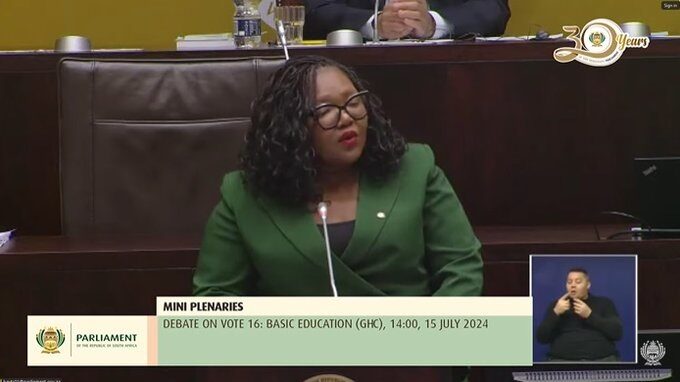
Basic Education Deputy Minister Dr Reginah Mhaule said the department remains set on equipping South African learners with the skills and competencies required for the modern ever-changing workplace.

Mhaule was speaking during the Basic Education Budget Vote Debate in Parliament.

“To this end, the DBE has enhanced its curriculum with introducing Coding and Robotics; 11 new technical subjects; and intends to introduce Aviation and Aerospace, Mining Studies and Aquaponics into the curriculum,” she said.

Mhaule said the Entrepreneurship Framework is also being implemented in many schools to prepare the youth for employability to curb unemployment.

“One of the main achievements of the 6th Administration was the transfer of ECD to the DBE, as early childhood development and foundational learning is central to building basic human capabilities to ensure opportunities for all children,” Mhaule said.

The percentage of 5-year-olds attending educational institutions has increased from 40% in 2002 to almost 90%, and she added that the DBE is intending to increase participation through its mass registration drive.

According to the department, not only have more learners completed Grade 12 to obtain the National Senior Certificate (NSC), but the pass rate has also steadily increased over this period.

In addition, the number of Bachelor level passes have tripled since 2008, whilst the share from no fee schools has increased to two thirds of all Bachelor passes.

The number of NSC candidates scoring more than 60% in Mathematics and Science was achieved in 2023. The gender gap in high level Mathematics and Science achievement has been closed, with more female learners achieving, she said.

The Deputy Minister invited members to join the DBE at the Rhema Bible Church in Randburg, Gauteng Province, for the 2024 ABC Motsepe South Africa School Choir Eisteddfod (ABC Motsepe SASCE) National Championships taking place from 7 to 10 August 2024.

“The ABC Motsepe SASCE is one of the most prestigious events in the annual school calendar. It is part of our broader strategy for building social cohesion and promoting unity in diversity as envisaged in the Constitution of democratic South Africa.

“The Eisteddfod is a lever for delivering key messages to young people on current challenges and threats facing the country, Africa and the world, like the scourge of drug and alcohol abuse, teen pregnancy, bullying and other social ills,” she said.

The ABC Motsepe SASCE offers a new addition to the Folklore Category in 2024; all primary schools are required to perform Sepedi as a prescribed compulsory culture for 3 minutes and any African folklore from the diverse cultures of the province (maximum 3 minutes).

Secondary schools are required to perform isiNdebele as a prescribed compulsory culture for 3 minutes and any African folklore from the diverse cultures of the province (maximum 3 minutes).

For the first time in the history of SASCE, the Secondary School Western piece will, this year, be accompanied by an orchestra.

INSIDE EDUCATION

Uncategorized

Higher education faces many challenges in South Africa: 3 priorities for the new minister

By Thandi Lewin

When South African president Cyril Ramaphosa named Nobuhle Nkabane as the minister of higher education on 3 July 2024, many people I know in the sector had to Google her name. Dr Nkabane had been deputy minister of mineral resources and energy since August 2021.

Nkabane enters an arena that’s ready for new political leadership and has senior figures who are ready, willing and able to work with her. Universities South Africa, which represents the country’s 26 public universities and has a clear-eyed view of the sector’s priorities, has welcomed Nkabane’s appointment.

She will need this kind of support: in her new position, Nkabane inherits a portfolio rife with challenges. Despite positive changes over the past 30 years, higher education and labour market outcomes are still skewed by race. Demographic changes have been slow in academic careers. The history of institutional inequity persists.

The minister and her team oversee a sector that, according to government statistics, includes about 1.3 million students in public and private higher education institutions (more than 80% in public universities); close to 600,000 students in public Technical Vocational Education and Training (TVET) colleges and 86,000 in private colleges; and about 143,000 students in community colleges.

I saw some of the issues within the sector first-hand during several years as a government education official, with roles related to governance and management support in university education. I left the department of higher education and training in 2023 to join academia as a higher education policy scholar.

I suggest there are three big priority areas the minister must urgently address. One, she must rebuild trust in and across the higher education system. Second, she needs to push for sustainable and stable funding of the higher education and training system. And, third, she must oversee the development of meaningful capacity across the post-school education and training system.

She and her team won’t have to reinvent the wheel. The policies that can shape the kind of higher education and training system South Africa needs already exist; they were developed by experts both within and outside the government.

What’s required now is some tough decision-making. Rather than establishing new planning task teams, the minister should give existing policy goals time and meaningful support to mature.

Creating new wish lists without providing the funding and capacity necessary to make them work will further weaken the sector.

Rebuilding trust
Globally, trust in universities has fallen. The same is true in South Africa and is perhaps inevitable in a society with high levels of unemployment and inequality – especially when the higher education system itself remains inequitable.

A 2022 scholarly review of 25 years of policy changes described the period since 2016 as being about “calling the system to account”. They argued that equity was a key dimension of quality in higher education, and one in which the country was under-performing.

Other events that have harmed trust in the system include the student-led #feesmustfall and related protests; the COVID pandemic, which laid bare the continued inequities in higher education; and the rocky introduction of a new student funding policy in 2018.The serious administrative failures of the National Student Financial Aid Scheme (NSFAS) have also been a key breach of trust in the system.

The minister must ensure that the scheme is meeting its principal commitments and collaborating with institutions. It must work together with and within the higher education and training ecosystem where shared accountability is possible. An effective, efficient and trusted financial aid scheme would be a powerful glue for systemic trust in higher education.

Sustainable, stable funding
Post-school institutions, like so much else in South Africa, are under severe financial pressure. Even though the Department of Higher Education and Training’s budget grew at a rate faster than most government departments’ between 2019 and 2023, the core funding to institutions grew at a rate well below inflation because the bulk of the budget went to supporting NSFAS’s budget.

Only about 50% of the scheme’s funding comes back to universities in the form of tuition fees. It does not resolve the overall problems of student debt. Instead, universities are forced to write off the majority of student debt, which is attributed primarily to students who are not able to pay fees and do not qualify for financial aid or other bursaries.

South Africa lacks a comprehensive student financial aid model which could improve access to different levels of higher education and include support for different levels of financial need. In January 2024, former minister Blade Nzimande announced a new loan scheme to support the so-called “missing middle” students who don’t qualify for aid but can’t afford to pay. But allocations have not yet been made and the sustainability of the new scheme is uncertain.

Student financial aid is not the only issue straining the system. There’s also been a massive reduction in infrastructure and earmarked funding which supports systemic transformation goals (such as student success initiatives, staff transformation and new infrastructure development). Difficult political choices must be made about where funding should be directed.

More than just universities
One of the minister’s most important mandates is to oversee what the National Plan for Post-School Education and Training describes as “an integrated, coordinated and articulated post-school system”.

This is a reminder that not all further education happens at universities. There must be a range of good quality opportunities for those who complete school (and those who leave school before completion).

Following the plan means funding capacity development in the country’s 50 TVET and nine community colleges.

There have been near-constant changes in the TVET space over the last few decades. No real time and funding is provided to allow these developments to mature, which is damaging for the colleges.

The minister will face tough decisions during her term. But if she can build collaboration and improve policy implementation based on mutual trust between herself, the Department of Higher Education and Training and post-school institutions, there is hope.

Lewin is Associate Professor: Ali Mazrui Centre for Higher Education Studies, University of Johannesburg.

The story was first published in The Conversation.
Uncategorized

Gondwe welcomes recovery of R112M from NSFAS irregular payments

Johnathan Paoli

Higher Education and Training deputy minister Mimmy Gondwe has praised the latest recovery of irregular payments to the value of R112 million from the National Student Financial Aid Scheme (NSFAS) by the Special Investigation Unit (SIU). 

Gondwe said on Friday that the recovery of the money followed a commitment made by the Department of Higher Education and Training (DHET) last week that it would take a firm stance in addressing the systemic governance issues plaguing the scheme. 

“We commend the SIU for taking active steps to claw back irregular payments and send a clear message that abuse of the student funding system will not be tolerated,” she said. 

A total of 421 students from across five universities and four Technical Vocational Education and Training (TVET) colleges, who did not qualify for funding, have signed acknowledgment of debt agreements to pay back the irregularly awarded money. 

SIU spokesperson Kaizer Kganyago said the total value of the debt acknowledged amounted to R112 174 825. 

“In addition to the AoDs, the SIU has made progress in recovering unallocated funds with the University of Fort Hare being the latest university to pay back unallocated funds of R277 666 450,” Kganyago said. 

Kganyago said the SIU was grateful for the cooperative attitude of parents and unqualified NSFAS beneficiaries who agreed to repay the money over time, and urged other unqualified NSFAS beneficiaries who have not been in contact with the unit to come forward and arrange repayment. 

An investigation by the unit revealed that the student funding scheme had failed to design and implement controls to ensure that there is an annual reconciliation between the funds disbursed to institutions of higher learning and the allocation of those funds to the students. 

NSFAS has appointed a service provider to assist in performing the reconciliation via a “close-out reporting” process which is currently ongoing. 

“The SIU is empowered to institute a civil action in the High Court or a Special Tribunal in its name, to correct any wrongdoing uncovered during both investigations caused by acts of corruption, fraud or maladministration,” Kganyago said. 

Minister Gondwe said the R112 million paid out, potentially robbed 1 700 deserving students who could have been funded for at least one academic year. 

“In a sense, there are many victims who may have dropped out or deferred their studies because they could not afford to pay the requisite academic fees. Every rand that is spent on an undeserving beneficiary robs a deserving one,” she said. 

Gondwe said the department will accelerate its efforts to fix NSFAS and take the institutions out of administration and ensure that only deserving students are provided with the financial support that they require.

INSIDE EDUCATION

Uncategorized

Lesufi urges Ramaphosa to sign Bela Bill, while Gwarube has reservations

Johnathan Paoli

Gauteng Premier Panyaza Lesufi has called upon President Cyril Ramaphosa to sign into law, the contentious Basic Education Laws Amendment bill.

Lesufi spoke during the parliamentary debate on President Ramaphosa’s Opening of Parliament Address (OPA) at the Cape Town City Hall on Friday and reminded the President of the urgent need to finalise the passing of the legislation.

However, Lesufi’s view of the bill is in stark contrast to newly-elected Basic Education Minister Siviwe Gwarube who said on Tuesday that she intends requesting Ramaphosa to halt the signing of the bill and send it part to Parliament for re-evaluation.

Gwarube said some of the beneficial aspects of the bill should be retained, while simultaneously addressing concerns about local authority empowerment.

“I do not think it is wise to throw the entire bill out with the bath water. I think there are commendable aspects within the bill which we can keep but there are certain aspects which do disempower local authorities on certain aspects,” Gwarube said.

The bill proposes changes to the South African Schools Act and seeks to vest authority in the Education Department instead of school governing bodies (SGBs) when it comes to determining a school’s language policy and curriculum, compulsory schooling from Grade R, and the prohibition of corporal punishment, initiation practices and the expulsion of pregnant learners.

The bill was passed in the National Assembly in May this year, before the end of the 6th administration.

Lesufi called upon both the president as well as the 7th administration to adhere to the drive towards transformation, and not exacerbate the challenging situation schools across the province have been experiencing since the dawn of the democratic dispensation.

“All our children must be in the same classroom and taught by the same teacher. What is wrong with that particular proposal? And that the language of teaching must incorporate all twelve languages, there must be no language that is excluded. What’s wrong with that particular proposal?” he said.

However, Gwarube is not alone in her reservations about the passing of the bill. ActionSA also welcomed her intention to stop the finalisation of the bill saying it was necessary to reconsider it as it was fundamentally flawed on certain considerations.

ActionSA Chief Whip Lerato Ngobeni said her party would fight to ensure that the bill, if referred back to parliament, reflected the substantive contribution and necessary amendments to address the real deficiencies that led to the decline of the country’s educational system.

“The Minister’s communicated intention comes as a relief following the stubborn posture taken by the ANC in the 6th administration, who were hell-bent on pushing through the legislation which undoubtedly would only serve to compound the challenges by introducing a series of proposals that lack coherence and fail to align with the actual needs and realities of our educational landscape,” Ngobeni said.

Some of her concerns could be found in the “ill-thought-out” introduction of compulsory Grade R, and the outdated use of the Socio-Economic Impact Assessment which did not adequately estimate fiscal and economic impact of the bill, she said.

INSIDE EDUCATION

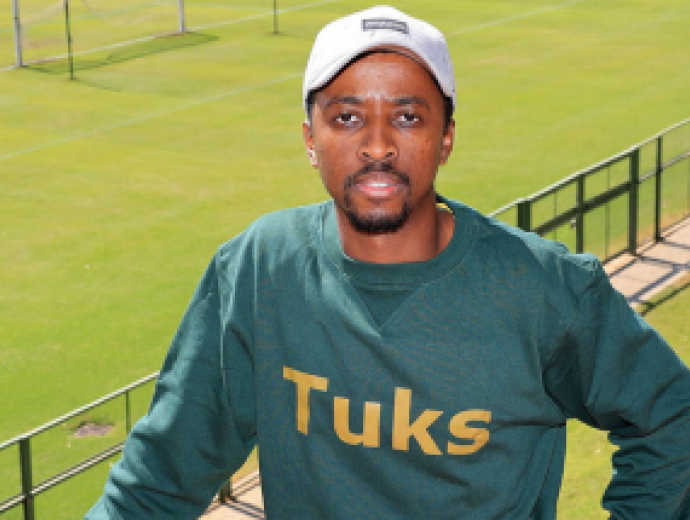
Sihle Ntuli ascribed the winning of the 2023 Men’s USSA Hockey title to Tuks University’s hard work.
Uncategorized

Sihle Ntuli ascribed the winning of the 2023 Men’s USSA Hockey title to Tuks University’s hard work.

Staff Reporter

THE Tuks men’s hockey team proved their mettle by winning the USSA Tournament that long and hard hours of training do pay off.

Tuks clinched the title in Durban by beating Maties 4-1 in the final. In five games, the champions scored 22 goals and only conceded six.

Coach Sigz Ntuli can be forgiven for thinking, “I love it when a plan comes together”.

“Winning USSAs is a just reward. The players have genuinely worked hard and made sacrifices. We are often accused of overdoing things. But our performance now justifies what we have been doing.

“I am obviously proud of the ‘boys’. But to be honest, I am not surprised by the outcome.”

Photo credit: Reg Caldecott

Last year, after Tuks won the Varsity Tournament, Ntuli expressed concern about the fact that his team was not playing enough crunch games.

“Our players hardly ever get challenged in any local league game. They are cruising. Winning one game after another. It is different in the Johannesburg and Western Cape leagues. That is why the Maties, Wits, and UJ players are used to handling pressure situations on the field.”

For this reason, Ntuli decided to withdraw Tuks from playing in the Northern League this season.

“We did so to ensure the ‘boys’ get to play against more formidable opposition. Over the last six months, we travelled quite a bit.

We have been to Durban twice and regularly play against Johannesburg’s best teams. We played 20 games in the buildup to USSA’s. So we were well prepared.

One of the critical aspects of the Tuks game is getting their opposition to concede penalty corners. There is a good reason for doing so. Guy Morgan is possibly one of the best drag flickers in South African hockey. On a good day, he hardly misses. During the USSA, he scored seven goals in five games.

“What excited me is that we did not only score from penalty corners. There were some brilliant field goals. Most impressive for me was how each player contributed to our victory. Our team has several debutants who have only played for Tuks for six months. But you would not have said them if you had seen them play during USSA’s. They stepped up, especially at crucial moments.”

The one disappointment for Ntuli is that it has been decided to cancel the Varsity Hockey tournament.

“It basically means Tuks’s season is done and dusted for the year. We can only hope that there will be a Varsity Tournament next year. As it is a definite highlight in student hockey.”

Source: #TuksHockey: Sihle Ntuli ascribed Tuks winning the 2023 Men’s USSA Hockey title to hard work | University of Pretoria (up.ac.za)

Inside Education

Uncategorized

Phenomenal’ response to the 2025 online admissions applications, a vote of confidence in GDE – MEC Chiloane

Johnathan Paoli

Gauteng Member of the Executive (MEC) for Education, Sport, Arts, Culture and Recreation Matome Chiloane has praised the response to the 2025 online application system for the 2025 academic year calling it a vote of confidence in the education administration.

MEC Chiloane said this week, that in just 6 days since the system’s launch on 11 July, the department has received over half a million applications for Grade 1 and Grade 8 positions.

“The phenomenal number of applications we’ve received demonstrates the trust parents place in our education system. The department remains committed to providing quality education for all and ensuring a fair and transparent admissions process,” Chiloane said.

The system recorded a total of 512 237 applications, translating to 214 843 grade 1 applications, and 297 394 grade 8 applications.

The MEC said the application window for admissions would remain open until 12 August, and strongly encouraged all parents to complete the full 5 step application process.

Chiloane said incomplete applications would not be processed for placement and that currently over 12 000 parents who have not completed the full process have been identified.

He said to ensure a smooth application process, parents should either upload certified copies of required documents online or submit them to all selected schools within 7 days of the application.

The MEC urged all parents to ensure their contact details are accurate, as ongoing communication regarding their application will be sent via sms notifications.

Applicants who have submitted complete applications can expect to receive offers of placement from 16 September.

He said the department remained committed to assisting parents who may not have the means to apply online, and that all schools in the province, as well as the 80 decentralised walk-in centres, are available to provide support throughout the application process.

Chiloane said the department looked forward to accommodating everyone in their schools.

“We extend our heartfelt thanks to all parents for their cooperation and understanding during this important period,” he said.

Chiloane led the official launch of the 2025 Online Admissions system at the Diepsloot Youth Centre, assisting parents and guardians with the application process for their children entering Grade 1 and Grade 8 in Gauteng public schools for the 2025 academic year.

INSIDE EDUCATION

Uncategorized

Higher Education Minister seeks to push skills for growth in her maiden Budget

Edwin Naidu

THE New Minister of Higher Education and Training, Dr Nobuhle Pamela Nkabane, in her maiden R137.5 billion budget for the 2024/25 financial year in the National Assembly, pledged to develop a skilled and capable workforce while broadening the country’s skills base to support an inclusive growth path.

In this regard, Nkabane said it was important to share the Ministry’s vision of the future and set priorities to guide the direction of the national higher education and training portfolio, guided by evidence-based research.

Flanked by the Chairperson of the Portfolio Committee, Tebogo Letsie, Deputy Ministers Buti Manamela, and Dr. Mimmy Gondwe, the Minister said the 2024/25 financial year budget of R137.5 billion increased on average by 4.8% from R130.5 billion in 2023/24 and will rise to R150.2 billion in 2026/27.

For this financial year, the budget breakdown is as follows:

Administration – R565 million

Planning, Policy and strategy – R4.2 billion

University Education – R91.7 billion

Technical and Vocational Education and Training – R13.2 billion

Skills Development – R333 million

Community Education and Training – R2.9 billion

Skills Levy – R24.5 billion.

Nkabane said her mandate is to ensure that the Department’s vision of leading post-school education and training is more integrated, coordinated, and articulated for improved economic participation and social development of youth and adults.

She added that it was their mission to provide national strategic leadership in support of the post-school education and training system for improved quality of life of South Africans.

“As part of implementing this mandate, we oversee universities, TVET colleges, CET colleges, SETAs, quality councils and private education providers. Our goal remains to expand access to higher education and training opportunities and improve the quality of the provisioning, responsiveness and efficiency of the post-school education and training system. Improved skills development will maintain our national competitiveness in addressing societal challenges,” she said.

Delivering the budget vote, she dedicated it with a “heavy heart” to the memory of fallen heroes, particularly Mamotena Selena Mula, a lecturer at Modile Tlale Satellite Learning Centre in Parys under the Free State CET College, who was allegedly a victim of Gender-Based Violence (GBV).

She said GBV is a pandemic that the government has committed to fight relentlessly.

“We have managed to reprioritise within our budget at least R10.8 million to support the implementation of Gender-Based Violence Programmes, health and wellness services in the Community Education and Training Colleges,” she said.

The primary objective for the 7th Administration is to develop a skilled and capable workforce while broadening the country’s skills base to support an inclusive growth path.

This growth path will not be possible until the National Student Financial Aid Scheme is implemented.

“We have listened attentively to the voices agitating for transformation – regarding challenges of inefficiencies emanating from the National Student Financial Aid Scheme. We have also listened to the silent prayers of parents for the Department of Higher Education and Training to resolve current student funding and payment challenges. We have also listened to the voices of landlords providing accommodation to students and those providing transportation to students,” she said.

The Minister said her team was inspired by these voices to acknowledge the common ground regarding students’ and learners’ hopes and aspirations.

“We are taking proactive steps to alleviate these problems. Our moral responsibility is to resolve these and other matters in the shortest period possible. All these problems will be fixed in the shortest period possible, or those harmed by the continued fractures will turn on the very system itself,” she warned.

“Institutional inefficiencies directly impact our solemn commitment inscribed in the Freedom Charter – that “The Doors of Learning and Culture Shall be Opened,” she added.

Nkabane reminded her colleagues in Parliament that the National Student Financial Aid Scheme (NSFAS) has grown from disbursing R21.4 million in 1991 to almost R54 billion in the current financial year, supporting 800,000 students.

The fund is for children of the working class and the poorest of the poor seeking to further their studies in public universities and TVET colleges.

She reminded colleagues that NSFAS represents the government’s deliberate intervention to broaden access to post-school education and training for those in communities without access to it.

She said NSFAS discharging its statutory responsibilities remains the department’s constant concern.

“We acknowledge our strengths and weaknesses in equal measure. NSFAS shouldn’t be undergoing a second administrative intervention five years after the conclusion of the previous intervention. However, despite all these systemic challenges, we are turning the tide. Our commitment is to root out corruption and maladministration in the NSFAS grant payment system.

“We have committed funds to improve NSFAS Information Communication Technologies, including loan system management. We acknowledge that some challenges have delayed finalising and tabling NSFAS annual reports in parliament,” Nkabane added.

Earlier this year, she said the Ministry developed the Comprehensive Student Funding Model, committing R3.8 billion in initial capitalisation funds to support “missing middle” students effective this financial year.

This is the category of students from families with total incomes of more than R350 000 but not more than R600 000 per annum. The fund covers prospective students for both Technical Vocational Education and Training (TVET) and public university students.

This initial commitment comprises R1.5 billion from the National Skills Fund (NSF) and R2.3 billion from Sector Education Training Authorities.

At least 31 884 prospective learners stand to benefit from this investment.

The National Skills Fund has also contributed R1 billion to establish a Presidential seed fund to support R&D and innovation in high-end skills involving doctoral and post-doctoral research.

Since its inception, she said NSFAS has supported more than five million beneficiaries, producing hundreds of thousands of skilled professionals and the middle class, especially from within the poor and working-class sections of society.

“Certainly, this is one of the most important achievements of this government over the past 30 years of our democracy,” she added.

In April this year, her predecessor, Dr Blade Nzimande, appointed Sithembiso Freeman Nomvalo as NSFAS Administrator and simultaneously dissolved the Board.

Nomvalo has taken over the governance, management, and administration of NSFAS for 12 months ending March 2025; his task also involves resolving the misalignment of data between NSFAS and institutions, which results in the unreliability of data provided to finalise funding decisions and overseeing the opening of the 2025 online applications process.

“We are working overtime to ensure that NSFAS systems are ready for the commencement of the 2025 application season, which will start in September this year. This is critically important because NSFAS received approximately two million applications for bursaries in this financial year,” the Minister said.

Of this volume, 419 447 were returning students, while 297 809 were First-Time Entry students. Given these volumes, everything possible is being done to ensure NSFAS systems are ready.

She said the country was advancing in the skills revolution, and Artisans’ development remains a priority towards the 2030 target of producing 30,000 artisans per annum.

In 2021/22, the system produced 15,107 artisans, and in 2022/23 – 19, 461 artisans. Of these, 13,796 (or 70%) were young people under 35. The target for 2024/25 is to produce 26,500 artisans.

For the workplace-based learning programs, in 2020/21, the system placed 78 137 learners – a decrease from 158 651 in 2020 due to the COVID-19 pandemic, and by 2022/23 – 99 778 learners were placed. The target for 2024/25 is to produce 190,000 work-based learning programmes.

A further R300 million has been earmarked to support 4 200 beneficiaries in the Presidential Youth Employment Initiative.

Nkabane said she was committed to providing strategic solutions to create an equitable, effective, and sustainable Post-School Education and Training System.

INSIDE EDUCATION

Basic Education Minister Gwarube aims for bolder, ambitious, evidence-based targets to improve education
Uncategorized

Basic Education Minister Gwarube aims for bolder, ambitious, evidence-based targets to improve education

Inside Education Reporter

Basic Education Minister Siviwe Gwarube said she will not implement policies or programmes without evidence of their value in an effort to improve the quality outcomes of the education system.

Minister Gwarube delivered the Basic Education Budget Vote Speech for the 2024/25 Financial Year on Monday in the National Assembly.

She outlined the overall Midterm Economic Framework (MTEF) budget allocation for the Department of Basic Education (DBE) at R32.3 billion, an increase of 7.4% from the previous 2023/24 overall allocation.

Setting a tone for the 7th administration, she emphasized how learners deserve nothing less, and anyone who looks with a critical eye at the work of the Department would not find much fault with its policies and plans.

However, she insisted that the department should go far beyond its previous mandate in order to objectively assess the outcomes of improving the lives of learners.

“If this Department does well, it creates a path to success for many who have been excluded from the economic advantages of having a good education. Therefore, we must be bolder, ambitious and set high evidence-based targets for ourselves,” she said, adding that she has begun the work of critically assessing targets and milestones as a department,” she said.

The minister said the Department projects that the desired outcome, includes improving the performance of School Governing Bodies (SGB)’s effectiveness for financial year, to achieve a 50% coverage of schools, in light of 3 decades after the South African Schools’ Act was enacted.

“Given the critical role of school governing bodies in relation to much of what our public schools do, this is simply not good enough. We must do better. In my short time in this office, I have already been approached by parents of learners reaching the end of Grade 4 who cannot read for meaning or manipulate simple numbers,” she said.

Gwarube said parents want to know how the department reconciles that reality with setting targets to increase the National Senior Certificate pass rate or improve the percentage of Bachelor Passes.

“I therefore applaud those components of our national system who take seriously how important it is to increase the reading and calculating ability of our youngest learners, making sure that every learner has a fair chance of staying the course to Grade 12,” she added.

The minister said that the challenges, as articulated by the learners’ parents, are reflected in current achievement levels which aim to meet international benchmarks and that there have been improvements, in terms of previously low literacy and numeracy rates.

She told Parliament that the department would concentrate on getting learners at all levels in the system to be able to read for meaning.

Furthermore, the minister called for the improvement of Grade 9 Mathematics performance in the Trends in International Mathematics and Science Study (TIMSS) which was set to rise from 372 in 2015 to 420 in 2023.

She prescribed the establishment of an advisory council representing the basic education system as soon as possible, in order to include all key stakeholders across the sector, as well as experts in key disciplines.

“This council, once up and running, will be an invaluable resource in ensuring that our efforts to strengthen our education system are targeted, evidence-based and informed by best practice,” Gwarube said.

She said DBE is committed to building a solid foundation for a quality and efficient basic education system, from ECD,

through the Foundation, Intermediate and Senior Phases, to the Further Education and Training (FET) Band.

In line with this commitment, the Minister identified five key priorities for the 7th Administration that will inform their decision-making in this portfolio:

1. Firstly, to intensify efforts to improve access to and quality of early childhood development, recognising that the formative years are critical to laying a strong foundation for our children’s education journey.

2. Secondly, the department is steadfast on improving literacy and numeracy skills across all phases of schooling.

3. Thirdly, to increase efforts to improve access to and the quality of inclusive education for learners in the most vulnerable communities and learners with special education needs. To ensure that the education system is accommodating and supportive of all learners.

4. Fourthly, to intensify efforts to improve access to and the quality of training and professional development opportunities available to school management teams and teachers. She said teachers are the backbone of the schooling system. Given the many and varied challenges

that teachers and principals are required to respond to in their daily work, the department needs to ensure that they are supported to achieve the quality learning outcomes we so desperately need.

5. And finally, but certainly not least, working tirelessly to improve the safety and quality of schooling environments for our learners and teachers.

Part of her urgent task includes reducing overcrowding in classrooms, improving access to electricity, water, and adequate sanitation facilities, and removing inappropriate structures, such as pit latrine toilets.

Minister Siviwe Gwarube with Deputy Minister Dr. Reginah Mhaule.

The breakdown of the budget by the Education Programme, is as follows:

 The allocation for Administration increased by 3.0% from last year’s allocation to R607.5 million.

 The allocation for Curriculum Policy Support and Monitoring increased by 16.0% from 2023/24 to R4.089 billion.

 The allocation for Teacher Education, Human Resource and Institutional Development is R1.439 billion.

 Planning Information and Assessment is allocated R15.995 billion, an increase of 8.0% from the 2023/24 allocation.

 The allocation for Educational Enrichment Services increased by 5.8% from last year’s allocation to R10.129 billion.

The overall allocation for Conditional Grants is R26.041 billion – an increase of 10.4% from that of 2023/24. The specific allocations for Conditional Grants are as follows:

 The Mathematics, Science and Technology (MST) Grant, is allocated R443.8 million, a 15.8% increase from last year’s allocation.

 Infrastructure delivery – which continues to be funded through the Education Infrastructure Grant (EIG) – is allocated R13.7 billion, an increase of 11.4% from 2023/24 financial year.

 Accelerated School Infrastructure Development Initiative – also known as the School Infrastructure Backlog Grant – is allocated R1.641 billion, which is also inclusive of the allocation for Sanitation Appropriate for Education (SAFE) Initiative.

 HIV and AIDS, whose purpose is to support South Africa’s HIV and TB prevention strategy, has been allocated R249.7 million, an increase of 16.8% from last year’s allocation.

 The National School Nutrition Programme (NSNP) has been allocated R9.798 billion, an increase of 5.6% from the 2023/24 allocation.

 The Learners with Severe to Profound Intellectual Disabilities Grant receives R278.9 million, an increase of 7.1% from the 2023/24 allocation.

The overall allocation for Earmarked allocations and transfer payments is R3.178 billion.

The specific allocations for these funds include the following:

 The allocation for the Funza Lushaka Bursary Programme is R1.266 billion.

 The 2024/25 subsidy to Umalusi has increased by 2.4% from 2023/24 to R166.9 million.

 The National Senior Certificate Learner Retention Programme, also known as the Second Chance Programme, is allocated R38.6 million.

 Workbooks, including Braille workbooks for visually impaired learners, have been allocated R1.214 billion.

 The South African Council of Educators (SACE) is allocated a subsidy of R16.4 million, an increase of 5.4% from last year’s allocation.

 Early Childhood Development has been allocated R150 million for the Resource package for 2024/25 financial year.

 Early Childhood Development Nutrition pilot has been allocated R197 million for Resource packages for the 2024/25 financial year.

“Chair, we wish to remind this House that our Action Plan to 2024: Towards the Realisation of Schooling 2030, which gives expression to the Constitution, the National Development Plan, as well as the continental and international conventions, continues to provide the moral imperative and a mandate to the Government to make the social justice principles of access, redress, equity, efficiency, inclusivity and quality education opportunities widely available to all citizens,” Gwarube said.

INSIDE EDUCATION