Uncategorized

Basic education reiterates it’s got the matric exams covered

By Simon Nare

Basic Education Minister Siviwe Gwarube has assured Parliament’s portfolio committee on education that every contingency plan has been put in place to ensure the National Senior Certificate exams proceeded without any glitches.

The minister told the committee that the first day of the exams went smoothly save for minor hiccups that emerged after the tests and had not affected the actual writing by the learners.

She said from the department’s side, they had done everything possible to counter any disruptions, but local municipalities would need to step up their part to ensure there were no load reductions.

“From our side we have made sure that we have contingent plans in place, but of course it will be really helpful if this is a government effort,” she told the committee.

Gwarube said no learner has been left behind during the preparations for the exams.

She added that learners who were visually impaired had also been catered for, with exams papers supplied in braille and technology in place for those who would supplement the answers verbally.

The minister said the department was in constant contact with law enforcement agencies for any eventualities in all the provinces.

“We also have the assistance of the SANDF where necessary. So, on our side we have activated all of the channels,” she said.

Gwarube said there were a number of factors leading to fewer learners writing the exams.

“It doesn’t mean that we had 1.2 million learners then and now we have over 800,000 candidates writing exams. One, there are unfortunate incidents of death and there are also incidents where a learner leaves school to pursue other avenues even colleges.

“There are various other exits points in the system that allow learners to actually go to TVET to go and acquire skills and not continue to learn. I think it is important for us to allow children to be able to explore various ways of getting an education,” she said.

The minister added that not all learners wanted to finish high school and go to university, but others wanted to acquire skills and enter the job market.

The committee heard from the departmental team that appeared alongside the minister that while preparing for the exams, provinces maintained constant monitoring of learner submission and progress to identify a high-risk learner early in the year.

They were provided with extended opportunities for success through the provision of extra days for submitting practical assessment work and catch up plans were specifically drawn up to suit their environmental challenges.

Every week, virtual content trainings were conducted to cover gaps left by teacher education and these included the Bloom’s Taxonomy, practical examination programme, essay writing and marking trainings.

“To manage the big classes, the school management teams were assisted with enough time to get all the practical work done. This included the necessary equipment to do the recordings of the practical work and data to store it,” the department’s presentation revealed.

The committee heard that the examination would span over 28 days with 162 question papers set by the department in 33 non-official languages and five specialised non-languages subjects.

INSIDE EDUCATION

Uncategorized

Gwarube remains confident about NSC exams, despite some hurdles

By Johnathan Paoli

Basic Education Minister Siviwe Gwarube has welcomed the start of the National Senior Certificate (NSC) exams on a high note, despite challenges.

Gwarube was outlining the first day of the exams during a National Assembly plenary on Tuesday.

She said a storm in Gqeberha had disrupted the Computer Studies exams for approximately 400 students.

The severe weather conditions caused significant damage to power lines and infrastructure, including collapsing bridges, and directly affected the ability of students to write their exams.

In response, Gwarube said the SA National Defence Force and local disaster management teams were on standby to assist.

The minister assured that alternative papers had been prepared and approved by Umalusi for such unforeseen circumstances, indicating that efforts were underway to ensure that affected learners were not disadvantaged.

Another issue raised by Gwarube was a significant increase in fake videos purporting to be leaks of the 2024 questions papers and memos.

The minister said the documents featured were in fact old documents that were digitally altered to look like official 2024 papers, and that it had caused needless caution and panic.

“I urge all South Africans, including the media, to rely only on verified communications from the Department of Basic Education, Umalusi and provincial education departments to ensure that only credible and reliable information is relied on,” she said.

The minister said that as the exams continued, her department was closely monitoring the situation in Gqeberha.

INSIDE EDUCATION

Uncategorized

First day of matric exams get off to a smooth start, with a few hiccups reported

By Jonathan Paoli

The Basic Education Department has reported a successful start to the National Senior Certificate examinations, with all exam centres opening on time and no disruptions noted during the first day. 

“We are happy with the first day of the exams,” department spokesperson Lukhanyo Vangqa told Inside Education.

Monday saw smooth operations across various provinces, including KwaZulu-Natal and the Eastern Cape, where authorities were on standby due to heavy rain and flooding.

Vangqa emphasised the importance of a seamless examination process, highlighting the department’s ongoing efforts to monitor the situation closely. 

“There were no disruptions to any of the exams,” he said. 

He added that the department would remain vigilant during the exam period.

While no major issues were reported by Monday night, the country’s biggest teacher union, Sadtu, said there were some isolated incidents impacting learners.

Sadtu spokesperson Nomusa Cembi said the union was waiting for feedback from its members across the country.

She said that in the Frances Baard region of the Northern Cape, a service delivery protest led to taxis blocking some roads. 

Local officials acted swiftly to mitigate the impact on students, ensuring that exam papers were fetched and delivered to schools. 

Cembi confirmed that despite the protest, the exams were not disrupted in the area.

With the exams ending on 28 November, both the department and the union are keen to ensure that learners complete their exams without further interruption. 

Vangqa said the Basic Education Department would continue to prioritise effective communication and problem-solving strategies to address any potential challenges that may arise in the coming weeks.

Meanwhile, KwaZulu-Natal education spokesperson Muzi Mahlambi confirmed that the province did not experience any serious disruptions despite the adverse weather conditions, and said the exams had kicked off with a promising start.

“It was difficult in other areas, but it did not impact the writing of the examinations. No late start was reported,” Mahlambi said told Inside Education.

Overall, the first day of matric exams has laid a solid foundation for a smooth examination period, thanks to a collaborative effort from various stakeholders to support learners.

INSIDE EDUCATION

Uncategorized

New minister must ensure NSFAS contributes to the greater good

By Edwin Naidu

Former Minister of Higher Education and Training, Dr Blade Nzimande, always insisted the glass was half full when reflecting on the National Student Financial Aid Scheme story.

He may be right. It is a fantastic story. But that is only half the narrative.

The scheme, which began and distributed R21.4 million in 1991, has mushroomed into a mega multi-billion fund, spending almost R50 billion on more than 1.1 million students this year. South Africa is investing in education.

But the fund has been plagued by one problem too many. For reasons we may never know, Nzimande consistently failed to address the issues, his actions akin to putting a plaster over a boil.

Neither has Nzimande, despite legal threats, taken the anti-corruption advocacy body Organisation Undoing Tax Abuse (Outa) to court over allegations that the corruption at NSFAS went higher up. He made empty threats to sue. They have not heard from the Minister as yet.

Outa released details of tender irregularities and dubious service provider appointments involving NSFAS showing that the former board chair, Ernest Khosa, whose resignation Nzimande meekly accepted, and his colleagues made up a toothless board.

Indeed, the corruption claims and alleged links “high up” must be probed. If anyone needs to be reminded of the importance of voters, accountability should become the buzzword of the Government of National Unity.

The latest instance of NSFAS’s failure to show its books to Parliament is a fresh test for the new Minister Nobuhle Nkabane.

She has already taken them to task over their R2.5 million a month office in Cape Town, which is inaccessible to students. Their plush offices are on the waterways of Table Bay, next to the Victoria & Alfred Waterfront, with the city centre behind it. The Minister has ordered them to look for cheaper alternatives.

NSFAS should move to Gauteng, where most of its students reside, but plans to open offices in other parts of the country would help.

While serving millions, NSFAS has also performed a disservice to the nation through maladministration and a lack of seriousness about service delivery. Students have not been paid on time for their accommodation or meals.

Many argue that students were better served when universities managed fee disbursements prior to the formation of NSFAS.

In fact, a solution proposed in a 1996 report commissioned by the country’s first Minister of Education in democratic South Africa, Prof. Sibusiso Bengu, shows that the government spends money on studies but disregards its findings, allowing politicians to play with the future of its citizens.

The National Commission on Higher Education, led by Prof. Jairam Reddy, recommended a well-thought-out funding model for tertiary education students.

Under the model, students who could afford university fees were not to be funded; a second category, which comprised most incoming black students previously denied university education and mostly from poor backgrounds, was to be given bursaries.

A third category in the middle, who could afford partial fees, was to be given loans to be repaid on graduation and entering the world of work.

Reddy said the model worked well for a few years, although the loan repayment rate was meagre. But the model was turned on its head during the Zuma presidency and the #FeesMustFall protest campaign.

Most students expected to be fully funded, and despite a considerable increase in NSFAS funding, that was simply unaffordable.

Initially, the funds were transferred to universities and dispersed according to their student requirements. Then, at some point, the dispersing of NSFAS funds was centralised. This has led to ongoing problems, including the current ones.

“If the funding is outsourced to individual universities, they are in a better position to disperse the funds; in some cases, universities would need assistance, which can be easily provided. The whole model of NSFAS funding as currently administered needs to be revisited,” says Reddy.

The fact that NSFAS still cannot answer Parliament over its finances should set alarm bells ringing.

Minister Nkabane has pledged to ensure NSFAS is effective and does its bit for the country.

Only 50 out of 76 institutions submitted the necessary information for the 2023 academic year, delaying NSFAS’s annual report. The onus is on the fund to get its books in order.

The Minister has warned institutions of penalties if this failure continues.

Nzimande, the new Minister is right to emphasise that a stable fund will produce a labour force with critical skills to assist our economic growth and help us become a capable developmental state.

Thirty years after democracy, it’s not enough to celebrate that millions have benefited from Africa’s biggest student funding scheme when many cannot get jobs with their qualifications.

Let’s consider its economic benefits and ask why graduates supported by NSFAS are often unemployed.

A key question to consider is whether recipients of NSFAS should pay back the money so that the government can continue giving for the greater good.

I’m hopeful Minister Nkabane will do more to hold NSFAS accountable – the country needs it.  

Edwin Naidu is the Editor of Inside Education.

INSIDE EDUCATION

Uncategorized

Universities must adjust curricula to ensure students have the right skills

By Simon Nare

Tourism Minister Patricia de Lille has appealed to learning institutions to restructure their curriculums in line with what skills will be in demand in the future as the world is changing fast due to technology.

Delivering a special lecture at the University of Johannesburg’s School of Tourism and Hospitality on Monday, De Lille said learning institutions needed to identify the in-demand skills in terms of what would be needed in the next five, 10 to 20 years and teach students accordingly.

This would help produce graduates with skills needed for the future growth of tourism.

“The tourism sector is changing all the time and it is changing fast especially with digital innovation and technologies such as AI. Universities and tourism higher education institutions must be alive to the constant changes and movements in the sector and adjust the curriculum and content accordingly,” she said.

The minister said avoiding a mismatch of skills where young people graduate and their degrees becomes obsolete, was important.

Driving the point home, she said there were already many graduates sitting at home unable to find work after years of studying.

She added that the country could no longer afford to have a static curriculum.

“We must avoid the outcome where what our young people have studied is no longer relevant. We also need to look at the entry requirements into university as there are many unskilled and semi-skilled unemployed people who can be absorbed into the tourism sector.

“We need universities to be futuristic because everything in the world moves and happens because of technology and young people thrive with technology,” she said.

De Lille warned that if the matter was not addressed, there would be a skills shortage in the sector.

She said institutions should look at their counterparts in countries such as Kenya, the Seychelles and Tanzania where they were using a greater level of technology and then adapting and packaging the curriculum and skills programmes accordingly.

De Lille said she was impressed that the UJ School of Tourism and Hospitality, which has moved from 34 to 6th in global rankings and second on the continent, had now included practical training as part of its curriculum.

But she asked when was the last time the faculty reviewed and updated its curriculum? And, was the school tracking students to see if what they were being taught was useful or still relevant?

“It is critical that we define the meaning of sustainability and impactful in the context of the tourism industry. Sustainability refers to practices that support the environment, communities and the economy in an effective and balanced manner.

“While impactful tourism emphasises creating meaningful positive change that improves visitor experiences and tourism businesses. These two elements aim to create a tourism industry that is responsible, inclusive, equitable and capable of thriving over the long term,” she said.

The minister said higher learning institutions could play a major role in building sustainable and impactful tourism in the country by incorporating innovation and digital technology in their programme offering.

Also, these institutions must reskill and upskill the current workforce in the tourism and hospitality sector.

INSIDE EDUCATION

Uncategorized

UJ’s VC Mpedi confident in representing Africa in his upcoming role as SG of global university leaders

By Johnathan Paoli

University of Johannesburg Vice-Chancellor Letlhokwa Mpedi has called for the urgent need to rethink talent development in the country as well as the unique challenges faced by the continent as a whole.

Speaking at the International Association of University Presidents (IAUP) recent conference in Beijing, Mpedisaid a rethink of youth talent development was important considering the high unemployment rate amongst the country’s young people.

He stressed the importance of updating university curricula to equip students with the skills needed for an AI-driven job market.

UJ has been at the forefront of this initiative, employing AI tools to personalise student support and expand digital learning, thereby increasing access to education.

“The transformative power of education cannot be overstated. At UJ, we are leveraging innovative technologies to ensure that our students are not only prepared for the workforce but also empowered to thrive in a rapidly changing world,” he said.

The conference also highlighted a collective call from university leaders to bridge the AI divide in education.

UN Secretary-General Antonio Guterres previously emphasised the necessity for AI technologies to benefit everyone, urging university leaders to ensure equitable access to resources.

“This means bridging the AI access gap, creating common standards, and providing tools and training to underserved regions,” he said.

Following the election of the University of Johannesburg (UJ) Vice-Chancellor Letlhokwa Mpedi as the Secretary-General (SG) Elect of the International Association of University Presidents (IAUP), he has called for the urgent need to rethink talent development in the country as well as the unique challenges faced by the continent as a whole.

During the 20th Triennial Conference held in Beijing last week, Mpedi’s role as SG was confirmed to start in 2027 and run until 2030, marking a significant milestone in UJ’s influence on the global educational stage.

The IAUP, established in 1965, is a prestigious network of university leaders dedicated to fostering collaboration and sharing best practices among higher education institutions worldwide.

With consultative status at both the United Nations and education science body UNESCO, the IAUP plays a pivotal role in shaping education policies that promote sustainable development, global competence, and peace through learning.

The theme of this year’s conference, “Generative AI and the Future of Higher Education,” attracted over 60 international speakers, who convened to discuss the transformative impact of artificial intelligence (AI) on universities, particularly in teaching, learning, and governance.

The dialogue emphasised how AI can enhance education practices and address critical issues such as equity and access.

His election as SG is expected to amplify African voices in global education discourse, ensuring that the continent’s perspectives are integral to shaping the future of higher education.

During the conference, Mpedi addressed the urgent need to rethink talent development in the country, where youth unemployment hovers above 45%.

He stressed the importance of updating university curricula to equip students with the skills needed for an AI-driven job market.

UJ has been at the forefront of this initiative, employing AI tools to personalise student support and expand digital learning, thereby increasing access to education.

“The transformative power of education cannot be overstated. At UJ, we are leveraging innovative technologies to ensure that our students are not only prepared for the workforce but also empowered to thrive in a rapidly changing world,” he said.

The conference also highlighted a collective call from university leaders to bridge the AI divide in education.

UN Secretary-General Antonio Guterres previously emphasised the necessity for AI technologies to benefit everyone, urging university leaders to ensure equitable access to resources.

“This means bridging the AI access gap, creating common standards, and providing tools and training to underserved regions,” he said.

Speakers pointed out that while AI has the potential to democratise access to education, it also risks exacerbating existing inequalities.

Stefania Giannini, UNESCO’s Assistant Director General for Education, highlighted the need for careful application of AI to avoid deepening disparities in access to education.

Keynote sessions also underscored the importance of personalised learning, showcasing how AI can facilitate tailored experiences.

INSIDE EDUCATION

Basic education minister happy so far with NSC exams
Uncategorized

Basic education minister happy so far with NSC exams

By Akani Nkuna

Basic Education Minister Siviwe Gwaruble says she is satisfied with the start of the National Senior Certificate exams, which kicked off on Monday.

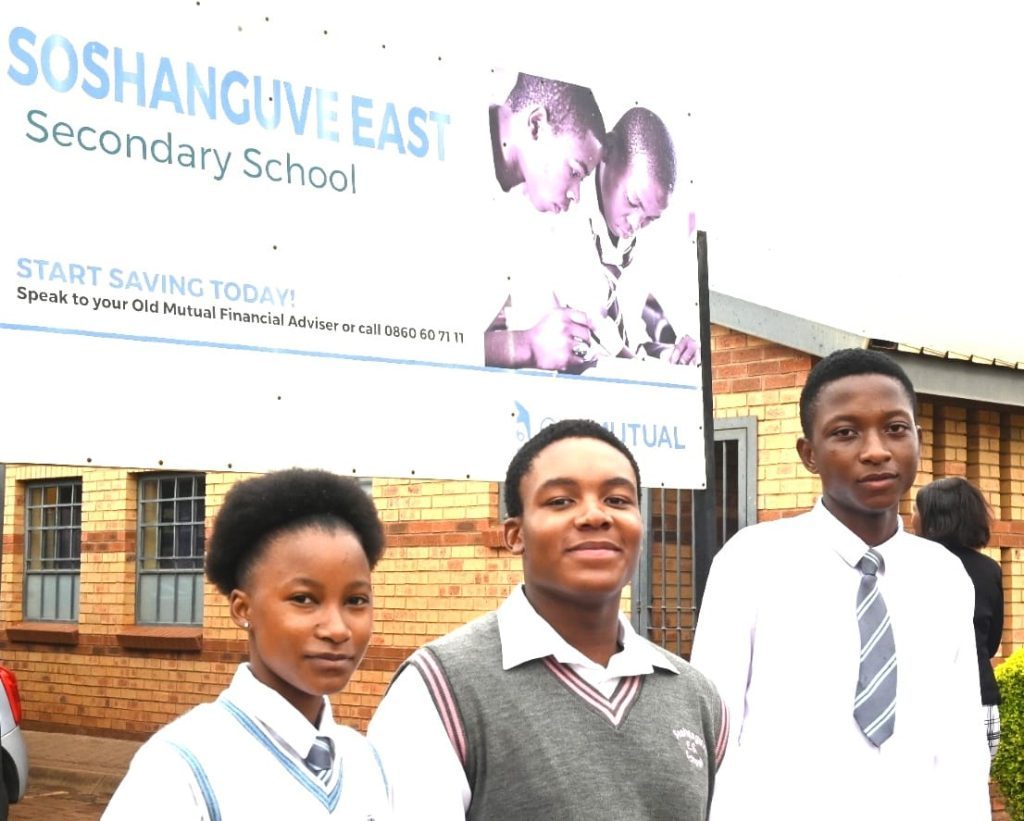
Gwarube and Gauteng education MEC Matome Chiloane were both upbeat about the exams during an oversight inspection at Soshanguve East Secondary School in Tshwane where over 200 learners wrote their English exam.

However, she did reiterate her pleas for communities to refrain from disrupting the exams, and assured the public that her department was keeping an eye on the adverse weather conditions in KwaZulu-Natal. Heavy rains and flooding are expected.

“Contingency plans have been made… if things escalate, we may have to look at moving certain centres, but we would be loathed to do that. We would only make that decision only really under extreme circumstances,” she said.

“There is no cause for panic. We are in touch with the South African Weather Service and we will be receiving regular updates,” she added.

On protests, Gwarube said: “We are pleading with our communities to please allow our matriculants to [write] their exams with minimal disruptions. We are asking our local leaders to please give schools time and space to allow these learners to do what they can do.”

She further said that the department’s job was to “make sure that things are running smoothly, that papers are delivered on time and that the exam venues are ready”.

Many township schools are dysfunctional, and this adversely impacts on a learner’s educational experiences and outcomes.

Soshanguve East Secondary School principal Mmabatho Riba alluded to the challenges that the school faced, saying that the high unemployment rate had had a huge impact on parents and children.

Photo by: Eddie Mtsweni – Surprise Mathebula Mpho Rammalao and Thabo Ndlhovu Soshanguve East Secondary School.

“[Lack of parental support] is a challenge to the school, [although their not being supportive can be justified] because they are struggling as most of them are not employed. We are able to deal with those problems with the support of the community leaders,” she said.

Meanwhile, Grade 12 learner Mpho Rammala described preparing for the final exams as difficult and challenging mostly due to living in a township.

He said that finding the perfect time to study was a challenge.

“The environment that I was studying in was not conducive, but I tried to manage through that.”

Another learner from the school, Surprise Mathebula,told reporters that her preparations were marked by mental breakdowns because of exam-related stress. 

However, she was feeling better now.

“I am feeling very good and ready. I think this exam will be much easier than the previous ones,” she said.

Matric learner, Thabo Ndlovu, said: “I feel confident, because I have always been putting effort to study and cross-nighting (working throughout the night). I am happy about the extra lessons the school prepared us with. They were very helpful.”

Chiloane also expressed confidence in his department’s preparations to ensure a well-run NSC exam period. There were high expectations to produce good results as a province.

“As a province we are ready. We are confident. We have never really experienced disruptions for many years in our province with these exams. We are also as province confident of the improvement of the results,” he said.

INSIDE EDUCATION

Uncategorized

Private sector must employ more young people: Ramaphosa

By Johnathan Paoli

President Cyril Ramaphosa has called on businesses to do more to ensure that youngsters are hired.

“Just as preparing our nation’s young people to achieve success in this exam is a collaborative effort, there is much more that partners like the private sector can do to hire young people,” he said in his weekly Monday letter to the nation.

Ramaphosa, who used the letter to reflect on the importance of the final matric exams, said it was important to think about the scale of the efforts to absorb these learners into the economy once they have attained the results they have worked so hard for.

The unemployment rate among young people aged 15-24 stands at 60.8%, according to the latest Quarterly Labour Force Survey. 

“We once again call on employers to relax the requirement of prior work experience, particularly for entry-level positions, and for entry into vocational occupations where young employees can be trained on the job,” the president said.

“Employers should take advantage of incentives to encourage them to hire more young people. These include various sectoral learnership agreements, discretionary grants for skills training, and the Employee Tax Incentive.”

He also said that recent business premises inspections by the home affairs and labour departments had highlighted the contentious issue of some employers preferring to employ foreign nationals and illegal immigrants. 

The president called on employers to instead open up more opportunities for young South Africans entering the job market. 

“They need to remember that by law they have to ensure that no suitable South African citizen or permanent resident is available to fill a position before employing a foreign national. This is established practice around the world,” Ramaphosa said.

He said everyone had a responsibility to ensure that the morale of the Class of 2024 was boosted by knowing their hard work and sacrifices will be rewarded. 

“Let us continue to work together to ensure that the latest cohort of matriculants find the opportunities for employment or further education and training that they deserve.”

Meanwhile, Higher Education and Training Minister Nobuhle Nkabane has highlighted the urgent need for students to apply for funding through the National Student Financial Aid Scheme.

The application window closes on 15 December.

“Eligible students must act swiftly to secure financial support for their further education,” she said.

The minister said the Post-School Education and Training system offered a diverse range of opportunities through different colleges and universities.

She said that these pathways aligned with the National Skills Development Strategy 2030, which was aimed at addressing the nation’s skills development priorities and driving a skills revolution.

INSIDE EDUCATION

Uncategorized

The future of universities at a turning point, says USAf CEO

By Edwin Naidu

South Africa’s tertiary education sector is urgently grappling with sustainability challenges amidst sluggish economic growth and the disruptive influence of digitalisation and artificial intelligence on the globajob market, as highlighted by Universities South Africa (USAfCEO Dr Phethiwe Matutu.

“In the light of global and local crises and unprecedented technological advancements, South African universities may be at a turning point in history,” Matutu added. 

Reflecting on “The Future of the University” at a three-day conference at the CSIR in Pretoria, Matutu made it clear that the higher education sector was facing enormous sustainability challenges due to slow economic growth. 

This was further exacerbated by the profound and transformative impact of digitalisation and AI on the world of work in general. 

The conference explored current and developing trends in higher education and how they impacted universities’ core functions of teaching and learning, research and engagement, leadership and management, transformation, and how institutions positioned graduates for the future world of work and economic participation. 

“A sluggish economy has resulted in high levels of unemployment and declining state subsidies. How universities respond to these and global changes (including climate variability, adaptability and environmental sustainability) will determine not only the future of the university, but that of society and humanity,” she said. 

USAf chairperson Prof. Francis Petersen, the new Vice-Chancellor of the University of Pretoria, highlighted the conference’s collaborative nature.

It brought together local and international university leaders, researchers, policymakers, educators and industry experts, tapping into their collective wisdom and engaging in impactful conversations about sustaining the future of universities in South Africa and globally.

Petersen acknowledged the challenges but also highlighted the potential for positive change. 

He said that while global crises have impacted SouthAfrican universities and they were still confronting historical and structural inequalities, positive change was possible.

The ever-evolving challenges related to rapid technological advancements in developing countries, inadequate governance and deepening financial and sustainability crises can be opportunities for growth and improvement.

“As knowledge-producing and critical citizenship development institutions, universities have a special and vital role. They are beacons of hope and are institutions for human progress and development,” he said. 

Key topics deliberated on, included:

• Technology and human interface in the future university;

• Higher education funding and financial sustainability;

• Academic freedom;

• Research and innovation strategies in relation to declining resources;

• Climate change, environmental issues and the future of the university;

• Artificial intelligence and teaching and learning in the future university.

Petersen said global themes and topics surrounding the university’s future ignited thinking around critical higher education focus areas interlinked with the future of humanity. 

“We can only gain deeper insights into what the sector’s future may look like through interactive engagement with the multiple stakeholders within the industry.”

He said universities significantly impact society’s advancement. 

They shape the education system, produce and hone skills and competencies needed for the economy, contribute to scientific discoveries, advancements, and innovations, and shape society’s overall progress.

Petersen noted that the conference took place after a significant disruption to the higher education system and social life caused by global catastrophes such as the Covid-19 pandemic, contributing to a vastly different reality on local campuses.

“Covid-19 led to a rapid online pivot in universities while ongoing, quick-paced technology developments in AI were underway. During all this, universities must remain at the forefront of the digital revolution and map their future paths while doing so. 

“Slow adaptation to rapid digitalisation can only be to the sector’s detriment,” he warned.

“As universities navigate this complex terrain, it is imperative to critically reflect on past practices while charting pathways toward a more inclusive, equitable and responsive system.” 

That is why USAf, recognising the need for strong and effective universities, was working through its six strategy groups (funding, leadership and management, research and innovation, teaching and learning, transformation, and the world of work) to promote cohesive, but diverse public universities that served society.

Identifying sustainable funding was vital for the future of universities. This included examining the state subsidy model, the National Student Financial Aid Scheme modeland its sustainability, and university fee regulations.

Former University of the Witwatersrand vice-chancellor Prof. Adam Habib, who is now the Vice-Chancellor of SOAS, University of London, told delegates that while there was positivity over transforming South Africa’s tertiary system from apartheid to democracy, its success hid significant structural fault lines in the country’s higher education sector.  

He said that the university system had not achieved the programmatic differentiation envisaged at the turn of the century, instead degenerating into homogenisation and vertical stratification based on reputation. 

As a result, he said the incentive structure for research subsidies and the ranking systems had pushed all universities to try to be like each other, undermining the programmatic and functional differentiation that would allow institutions to produce the diverse human capital base required for South Africa’s economic and social development. 

In his address, ‘Reflections on Post-Apartheid Higher Education: Looking Back, Going Forwar’, Habib said his reflections touched on higher education policy and highlighted successes, failures and blind spots, especially as they speak to the future. 

Habib’s keynote address contained five lessons from the past that could shape the future: 

• Leadership matters. This leadership needs to speak to our context. In South African universities, this means enabling access, ensuring a quality education, and building a financially sound institution. 

• Institutional and national citizenship cannot simply emerge from education and acculturation; consequences must be applied to malevolent behaviour. There is no better case study for this than the issue of violence.

• Capabilities matter. If there is a central lesson to be learned from Covid-19, it is that ordinary citizens are the primary victims of a lack of capabilities within the state. 

• How we spend is as important as how much we spend. This basic principle, common to most households in our country, is lost on most public institutions and funding regimes.

• Finally, stewardship and governance of public institutions matter. 

He said these five lessons were intertwined and that it was impossible to address collective challenges without a comprehensive response that included, among other things, the five lessons identified. 

“We have in effect become what we most hate: a segregated society, defined perhaps not by the formal legally enforced rules of race, but definitely by the informal rule of money. This future will consolidate unless we demonstrate the courage and the political will to act now to stop the rot,” Habib said. 

INSIDE EDUCATION

Uncategorized

Social media as a teaching tool: South African teachers talk about the new reality

By Zane Davids, Lisa Seymour and Rafeeq Jaffer

The COVID-19 pandemic resulted in a shift towards the use of social media platforms in teaching. The South African Department of Basic Education, for one, instructed all schools to adopt online teaching and learning to save the 2020 school year, disrupted by the pandemic and the forced closure of schools.

It is getting clearer that this shift towards technology use will continue. Some researchers have noted that it has also put the focus of the learning process more on students than on teachers.

Young people aged between 15 and 24 usually attend secondary school or higher education institutions and use social media. Incorporating social media into school activities could make learning more interesting to this age group. Their participation and performance in their studies might then improve.

We are information systems researchers with the University of Cape Town. Our research focus is on the use of information systems in education, specifically in underdeveloped communities. We seek to identify and offer solutions to some of the challenges of using technology in the classroom.

Our recent study describes the challenges secondary school teachers face when using social media applications like WhatsApp as a teaching tool. They include access to devices, internet connectivity, security, skills, school policies and useful application features.

The education department, school management, teachers, students and application developers should work together on these issues to make technology more effective in teaching.

Social media platforms and teaching

The integration of WhatsApp into the school curriculum became one of the focus areas of the South African Department of Basic Education during the COVID-19 lockdown in 2020. Teachers, besides being competent in their subjects, now needed to be comfortable using social media platforms for teaching.

But teachers, especially those from schools in poorer communities with limited technology resources, don’t all have the skills needed to effectively use online applications like WhatsApp for teaching. Practical solutions are needed to help them.

Four public, fee-paying secondary schools from the Western Cape Provincial Department of Education were included in this study. The schools all use social media as an online tool to support their teaching. They record and share learning materials like teaching videos and video notes, send homework and reminders about homework tasks, and conduct virtual classroom lessons. They also use the technology as a translation tool.

These schools started using social media to teach during the pandemic and continued afterwards. Teachers at each school with social media teaching experience were interviewed. A total of six teachers were interviewed over a period of a year.

School documents like the cellphone and social media policies and the school’s code of conduct were also reviewed.

The challenges associated with using social media are classified into different categories: student, teacher, application and institutional challenges.

Student challenges: Students from poorer communities often don’t have access to a cellphone, or their devices have basic functionality. This does not allow them to access WhatsApp. Students who live in dangerous neighbourhoods are also at risk of having their phones stolen. Students’ privacy and safety linked to cyberbullying is also a concern since they would need to share their mobile numbers to be included in a WhatsApp classroom group.

While some students have access to a device, they don’t have data on the device to use WhatsApp. Some also lack the skills to access resources sent on social media.

Teacher challenges: Teachers themselves experience challenges when using social media for teaching. Their privacy is a concern since students have access to their personal cellphone numbers. This makes it difficult to separate their work and personal lives. This is unfair on the teachers. Not having adequate training to use social media is also an issue for the teachers.

The older teachers feel less confident in using social media within the classroom and rely on their younger colleagues to help them. Managing WhatsApp classroom groups is difficult since the teachers need to constantly add or replace cellphone numbers. The teachers are then left with the task of managing multiple contacts.

Application challenges: Limitations associated with the WhatsApp application itself affect teaching. Sending large files like videos and documents over WhatsApp is blocked. It is especially frustrating when teaching videos are blocked. The teacher needs to split the video into smaller parts which are then sent piecemeal over WhatsApp to the students.

WhatsApp does not provide a professional presentation mode for teaching. This is frustrating for a teacher who wants to make a PowerPoint presentation to the students.

Institutional challenges: The school plays a role in the success rates achieved when using social media as an online teaching tool. Teachers say Wi-Fi connectivity may be intermittent or inaccessible. Weak signals, having no electricity, and vandalism are mentioned as reasons.

When the Wi-Fi does not work, teachers and students must then rely on their own data, which can be costly. School policies that do not fully support the use of social media applications for teaching prevent WhatsApp from being fully utilised. Some schools do not allow students to use cellphones, unless prior permission is given. Without permission, phones are confiscated and students are fined.

Why our findings matter

The biggest challenge is the unequal access to the internet and cellphones which schools in poorer communities have. Students not using social media eventually fall behind because they don’t receive learning materials from their teachers.

Additionally, teachers struggle with increased work when using social media and work frustrations brought about by WhatsApp’s lack of teaching features.

The South African Department of Basic Education wants to see the successful integration of technology use like WhatsApp into all South African classrooms. That can’t happen unless all the challenges are adequately addressed.

Davids is a Lecturer and Researcher in Information Systems, University of Cape Town, Seymour is a Professor, the University of Cape Town and Jaffer is a Researcher, University of Cape Town

This article was originally published in The Conversation. 

INSIDE EDUCATION