Uncategorized

Basic Education Minister calls for closer scrutiny in the development of schooling

Johnathan Paoli

Basic Education Minister Siviwe Gwarube has announced her vision of transforming foundational education and concentrating on quality and proficiency when it comes to early, mid and secondary learners.

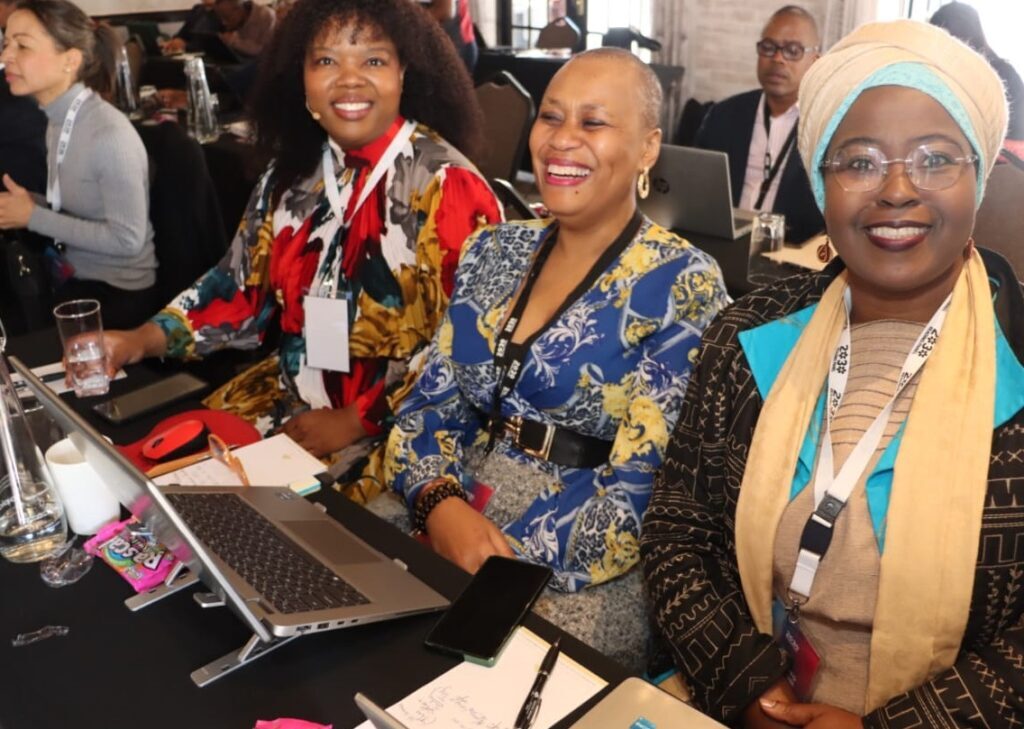
Gwarube delivered an address at the 40th Association for Educational Assessment in Africa (AEAA) conference at the Century City Conference Centre and Hotel in Cape Town, which aimed to bring together examination councils, assessment bodies, researchers, policymakers, educators, research institutions and government officials, among others, to engage, exchange and share their experiences, research Endings; and discuss topical issues germane to access to, and success in, postgraduate studies.

She said the South African schooling system is extremely diverse and complex; with 13.4 million learners, 460 000 teachers, over 24 000 schools and 12 official languages.

“With so many learners in our system, making sure and looking at the standards is very important,” Gwarube said, pointing out that the greater concern is ensuring the quality of outcomes throughout the schooling system.

Gwarube confirmed the implementation of an evaluation of learners in Grade 3, 6 and 9; coupled with a similar appraisal of school functionality and provincial support.

She said there was a fundamental need to obsess over outcomes and the impact of that educational product on the success of learners completing 13 years of schooling

“Make sure learners can take pride not only in what they have attained, but also in order to facilitate the opening of global opportunities,” she said.

Gwarube said the ‘educational’ product is indicative of Basic Education requiring a shift of thought, from being a social department to being considered part of the economic cluster.

“That shift in thinking is important, because we need to start thinking about how we maximise the product in order for learners to unlock economic opportunities, particularly for countries like SA with its legacies of inequality with 7 out of ten young people being unemployed,” she said.

The South African educational system was being evaluated in terms of 6 social justice indicators: access, equity, quality, proficiency, redress and ‘improsivity”.

Gwarube called for more to be done, particularly in terms of quality and proficiency, and not just access, in light of the achievements since the dawn of the democratic dispensation.

“How do we re-imagine educational assessment? Curriculum strengthening processes involve the content of what gets taught, the teaching and learning, and the assessment and professional support schools receive,” she said.

She said that very little focus was placed on skills, competencies, attitudes, values and character development of learners, and that this needed to change.

The minister called for the strengthening of the curriculum and said it was needed in order to shift the priority to focusing on a holistic development of the learner, to better equip the youth with the skills to face tomorrow.

INSIDE EDUCATION

Uncategorized

A high-level insider’s view on the performance or lack of it among South African leaders since the dawn of a newera in 1994

Malegapuru Makgoba

I have known and worked with Dr Sibongiseni Maxwell Dhlomo, the former Deputy Minister of Health, since 1985, when he was a final-year medical student at the Nelson Rolihlahla School of Medicine, UKZN.

We became friends because he often drove me to my residence after school. He was part of a group of young students
including Drs Steve Komati, now a physician and Victor Ramathesela, a sports medicine specialist who is also a DJ and a
television commentator.

Also deserving of mention are Aquina Thulare, a senior official responsible for the management of the NHI, Prof Maphoshane Nchabeleng who is head and professor of Microbiology at Sefako Makgatho Health Sciences University and the late Tshimbiluni Mathivha who was a professor of Cardiology at the University of Pretoria.

Bongani Mawethu Mayosi was a Professor of Medicine at UCT and I often tutored them and gave them extra clinical tuition over weekends at the King Edward VIII Hospital. My goal was to encourage these medical graduates to take postgraduate research studies after qualifying rather than taking the option of private practice, which was very popular at the time.

Bongani was much younger and was behind the Sibongiseni Group at medical school. Happily, they all took my advice and are playing important roles within the health system.

Dr Dhlomo was arrested and detained over Christmas in 1985 and his father often visited my office to share his pain and to search for his whereabouts.

During these visits he was often accompanied by Nozizwe Charlotte Madlala-Routledge, the chairperson of the Natal
Organisation of Women (NOW).

He was sentenced to imprisonment on Robben Island but we maintained contact. He continued studying psychology and
sociology while on the island, completing a BA degree through UNISA and I provided him support.

I then received a large case document from Gay Johnson MacDougall, a well-known Human Rights lawyer at the US
Congress, and was requested to provide a character reference for him, which I gladly did.

After his release, Sibongiseni Dhlomo served as special advisor to the vice-chancellor and as a member of the Interim
Executive Committee at the establishment of UKZN in 2004, and we continued our working relationship when he joined the KZN Department of Health, later becoming an MEC for Health and chaired the Health Portfolio Committee in Parliament.

I worked with him as Health Ombud when he was Deputy Minister of Health. Dr Dhlomo is a coordinator, he is gentle, caring and passionate about South Africa’s success but in particular is dedicated to South Africa’s national health system and its quality.

He is an ardent advocate for the National Health Insurance Bill. Dr Dhlomo understood the political dynamics and culture of KZN better than I ever could.

I also served with Minister Pravin Jamnadas Gordhan, a shaper in Belbin’s team role categorisation. Gordhan is a Minister with a penchant for interference and at times undermines the people he appoints, so much so that at times he is referred to as minister of ‘Command and Control’ (notably by Ghaleb Cachalia of the Democratic Alliance (DA).

Gordhan was the Minister of Public Enterprises. I initially chaired the Social, Ethics and Sustainability Committee of the
Eskom Board chaired by Dr Jabu Mabuza. I was subsequently appointed as interim chairperson of the Eskom Board when Jabu Mabuza resigned, and he later passed away.

Our mandate was to stop the widespread looting of state capture and set up principles of good corporate governance at
Eskom. I served a full term on the Board and the Minister requested me to continue serving while he reviewed – rather than replaced – the Board.

For 18 months this review continued, but it was never finalised despite several reminders, requests and empty promises that he would address the matter urgently.

However, the Minister kept ducking and diving; he was as slippery as an eel. However, much later he did confirm that he had ‘done what he could’ in complementing the board.

He then claimed that the matter was now ‘out of his hands’. Was it stuck at the ANC Cadre Deployment Committee, asked Radio 702’s Clement Manyathela.

But Gordhan would not be drawn in and would not say. We respected each other but for some unexplained reason, there
seemed to be a trust deficit between us.

I served in the Eskom Board that prepared Eskom’s presentation to the Zondo Commission on state capture; a board selection committee that interviewed and recommended Andre de Ruyter’s appointment as GCE; and a Board that initiated the implementation of the unbundling (‘divisionalisation’) of Eskom into three divisions, namely Transmission, Distribution and Generation as required by government.

But the process was delayed by the Department of Public Enterprises and the Minister, who dragged their heels in appointing the independent board of the Transmission Company.

As Anton Eberhard explains in his article headed ‘Ministers have let Ramaphosa down on the unbundling of Eskom’ in
BusinessDay of 16 January 2023, the Board that under Ms Mandy Rambaros led the Eskom Transition Programme, which is now entrenched.

And when the ambassadors of the UK, USA and the EU, visited South Africa to consider and finalise the USD8.5 billion
financing for approval at COP26, they needed to know and confirm that the Eskom Board supported this venture.
The Board did indeed support this programme fully. The same Board had reported several high-level state capture-related cases of corruption and looting to the SAPS and courts without much progress.

The same Board had recovered some looted monies from a few companies such as ASEA Brown Boveri (ABB). This was the same Board that worked jointly with the NPA and SIU; a Board that initiated the Eskom Skills Audit and Organisational Culture Change with Ms. Elsie Pule, executive HR; a Board that together with Phillip Dukashe, executive generation; Jan Oberholzer, chief operating officer; and Calib Cassim, chief financial officer, identified the three troublesome power stations, namely Duvha, Majuba and Thuthuka, for focused external supervision and support.

The same Board also reversed a major decision on the Econ oil tender, saving Eskom approximately R10b. I served on a Board that provided the Minister and the President with a comprehensive response to the Zondo Commission’s report.
The Board I served refused to approve the Karpowership tender for its 20-year term and lack of indemnity; I served on a Board that jointly, with the executive, prepared the basis for the so-called Presidential Energy Crisis Action Plan to ‘fix Eskom’.

The plan was prepared in conjunction with a small team of experts in the electricity field. The team of experts was chaired by Dr Bonang Mohale, President of BUSA, and Prof Anton Eberhard and Chris Yellen were members of the team.
This plan had been in the making since Andre de Ruyter was appointed GCE of Eskom on 6 January 2020 and was now well defined. The plan was initially shelved and disregarded by the Minister of Public Enterprises over time, only to be resuscitated when the disquiet, pressure and crisis of load shedding was mounting.

The plan had been modified and refined over this period but essentially it retained the basic elements of ‘additional megawatt capacity and fixing the Eskom plant’.

The load shedding crisis has gone on for too long. It not only impacts on the wellbeing and lives of South Africans but also on the economy and development of the country. It is a crippling crisis.

It is common cause that the Eskom coal fleet was poorly maintained for a long time. Equally, we know that there was a period when Eskom Executives were instructed to keep the lights on at all costs i.e., running the units hard beyond their capacities.

The units are completely run down, becoming unpredictable and unreliable with multiple repeated breakdowns. That is the reality staring at Eskom’s executive management.

No amount of political shouting, screaming or intimidation can correct this. These machines are simply following the laws of physics, mechanics and not politics.

Politics and ideology will never resolve the electricity crisis. The ANC-led government has over 15 years failed abysmally to resolve the Eskom crisis using politics and ideology.

How many times or how long must/should you fail before you recognise that the method or approach does not work. Some of the ANC politicians have very little understanding of the complexity of the electricity problem and its solution.
The level of understanding is underscored by timeframes for stopping load shedding. Some government ministers claim to be able to stop load shedding in six months; others at the end of the year; yet others in two years and others have no clue.

For a long time, the Board of Eskom advised the Minister that it was impossible to expect the current Eskom fleet to attain a 75% energy availability factor (EAF). However, the Minister would not budge, and despite this advice, he insisted that the 75% EAF must be achieved.

We were later promised an EAF of 60% by 31 March 2023, however the measured EAF on that date was recorded as 52%. A real mismatch between politics and science and technology.

Electricity generation is a complex scientific and technological process. The generation of electrons does not understand,
listen to, or read Das Kapital.

To resolve this ongoing crisis, the following should happen:

Read and internalise the recommendations on Eskom contained in the NDP, dated August 2012.

Resolve and re-align policy and governance uncertainty at Eskom.

Politics, ideology, politicians and politically-aligned senior staff, cadre deployed or not, should be recused or removed from Eskom.

Experts in the field of electricity should be brought in to resolve the crisis.

The experts must be given a specific mandate and be left to resolve the crisis without political meddling or interference.

The experts must be given autonomy to practise their trade.

The approach used for COVID-19, of appointing an independent ministerial advisory committee of health scientists with
modifications should be adopted i.e., appoint top-class experts in electricity.

Politicians cannot suddenly become electricity scientists or experts through briefings or surfing the internet. It’s admirable that they
are briefed, but this does not convert them to experts, so they should remain humble.

The re-purposing programme of the current Eskom coal fleet must be accelerated to avoid a total grid collapse.

Koeberg needs an extension for another 20 years. After 20 years Koeberg will be shut down.

So, to plan for the future, and for the development of South Africa, a needed mix of energy is required. We should therefore
start building a new Koeberg now and possibly double the capacity of the current grid. These actions must commence now.

Importantly, we must suspend ad nauseum dead-end debates … and implement.
President Ramaphosa has been let down by his own ministers. DA leader John Steenhuisen pointed this out to the president’s Security cluster ministers during the 2021 July riots.
The probe on the Digital Vibes scandal and the then Health Minister is ‘ongoing’ two years later; and Prof Anton Eberhard called a spade a spade when he pointed out how Minister Gordhan has let down the President on the Eskom electricity crisis.
However, the President retained these Ministers who failed him and the country, but critically he gave them the authority to resolve the crisis. Surely this was ill-advised, if not foolish.
As Albert Einstein once said, ‘We cannot solve our problems with the same thinking we used when we created them’. The definition of a fool is someone who does the same thing repeatedly, expecting different results.
This is what the ANC government has done for the past 15 years. The president’s cabinet by all assessments was the
weakest to lead the country, deliver services and understand planning and strategy.
This was a cabinet very allergic to implementation. However, it was his cabinet. If birds of a feather do flock together, then the President and Minister Gordhan were amongst these ‘flocking birds’.
Finally, a private security company was hired to investigate the threat of sabotage and corruption. During this period the
budget deficit was gradually reduced and corporate governance was improved.
I am a firm believer that the face of an organisation is its Chief Executive Officer rather than its board chairman; that the role of the board is oversight and strategic and not operational, meddlesome or ‘activist’ as former Minister Gordhan seemed to believe.
There is no clause for activism in the Company Act or the King Code of Corporate Governance; I also believe it is not the
business nor the competence of the board chairperson to conduct annual assessments of the board members.
Members of the board are senior and experienced individuals who do not need this type of ‘kindergarten control’ or
assessment. I also believe that the role of the board is not only to hold the executive accountable but also to ‘support’ and ‘guide’ them to succeed in their operational task.
That Eskom is in a mess and continues to be messy is a tendency that began in the late 1990s because of ANC policy
‘missteps and a failure to take advice from experts’.
This current mess has been two decades in the making. This is common cause, as both President Mbeki and President
Ramaphosa have acknowledged.
The ruling party must take full responsibility as the two Presidents have done. However, the relevant Ministers did not accept the blame. They continued to speak with forked tongues and at times they contradicted one another to create policy uncertainty.
It is indeed ironic that the very ministers who were part of the chain of command that led to the mess at Eskom were given the authority to get rid of people who were trying their best to solve the Eskom problem.
They should have been removed and would have been removed in a normal democracy, but ours is not normal; it’s a ‘miracle’ democracy.
When Ms Busi Mavuso, a member of the Eskom Board, had the so-called ‘robust’ exchanges with Scopa and its chairperson, Honourable Hlengwa, the Department of Public Enterprises criticised her conduct publicly.
All Busi had said was that the ANC government must take accountability and responsibility for the mess Eskom is in,
something which is common cause.
She was not given credit but was instead criticised harshly. I then received a strange phone call from the Department of Public Enterprises instructing me ‘to do something about this board member’. The tone and subtext I understood to mean that I should reprimand or ask her to step down from the board. Instead, I called a board meeting to discuss the matter and her stance was unanimously supported.
Judging by the degree of load shedding, Busi must be having the last laugh. In a Mail & Guardian article dated 20 to 26 January 2023 and titled ‘The Eskom Killers’, of the 24 ‘killers’ listed 13 (54.2%) were politicians and seven were politically-Gupta related

appointees, the three Gupta brothers and Tshediso Matona, who was unceremoniously removed as GCE, allegedly on the

instructions of former president Zuma and the Gupta-appointed Board of Mr Tsotsi and Dr Ben Ngubane.

Importantly, Minister Gordhan features amongst this illustrious group. Politicians, politics and ANC ideology ‘killed’ Eskom in a

period of just over 25 years through cadre deployment, looting and confusing good corporate governance with stealing.

Minister Pravin Gordhan is a struggle veteran, the former Commissioner of SARS who set the foundations of the revenue service on

its way of excellence, world-class performance and success, the Minister of Finance and a qualified pharmacist.

He is a graduate of UDW and a role model for many students and political activists of the time. A man of principle and integrity

who understands business and finance.

He is committed to excellence and the success of our young democracy. He eschews corruption and worse with the grand-scale

looting that took place within the SOEs.

However, leading a revenue collecting service such as SARS does not equate or come anywhere near/close to leading a

complex science, engineering and technology organisation that Eskom is.

Collecting revenue is totally different from generating electricity, a very complex scientific and technological project that should

be devoid of politics but understood scientifically and technologically.

I repeat: Electrons do not read nor understand Das Kapital: Kritik der politischen Oekonomie, Karl Marx’s philosophy. An

industrial action at SARS has virtually no impact on the wellbeing of South Africans, unlike an industrial action often

accompanied by sabotage and property destruction at Eskom.

The Minister appreciated very little of the pervasive toxic, racially charged environment of Eskom between workers and the

management.

This toxic environment affected the strategies and pace at which one could undertake transformation. There was little

understanding of this critical factor.

His greatest weakness as is popularly experienced and reported widely is a passion for interference, intervention,

micromanagement, meddlesome behaviour and undermining the board and executive.

He has a misguided belief that his way is the only way to solve complex problems. Contrary to reports of alleged racism by

Themba Godi and Adv Dali Mpofu SC, I never observed or experienced racism from Pravin Gordhan. He is not a racist.

Some journalists often inquired how I ‘got on’ with Minister Gordhan because of the way he treated them with disrespect and

at times arrogance. He remains in total denial of the many cumulative failures of the government and his department in the

electricity crisis and the policy contradictions that continue to confuse the operations and governance of Eskom under his former

political leadership.

On this aspect he simply refused to take accountability and responsibility. He appeared to be a very square peg in a round

hole.

Prof Anton Eberhard, a world-renowned energy expert, former NPC Commissioner and a member of President Ramaphosa’s

‘war room on Eskom’ puts it this way: ‘I’ll be surprised if CEO de Ruyter does not depart @ Eskom_SA soon. An impossible job,

misaligned board, and a suspicious minister who contacts his management directly, spied on by the state, inadequate police

action vs corruption. He’s helped deliver the JETP@COP27. Good time to leave?’ As we now know, De Ruyter has left.

In his hard-hitting article ‘The problem(s) with South Africa’ in City Press of 2 October 2022, Peter Vundla describes Minister

Gordhan thus: ‘Much can also be said of Pravin Gordhan, whose effortless superiority, interference in all things and rule by

sleight of hand earned him the much-deserved sobriquet of prime minister’.

Even before Peter Vundla’s characterisation of Pravin Gordhan, the prescient Bathabile Dlamini of the ‘smallanyana skeletons’

had said this of Pravin Gordhan in an article in the Mail & Guardian of 16 April 2017 titled ‘Gordhan only deals with people who

say ‘Yes Baas’ to him. “He enjoys harassing other people; he enjoys chastising other people; he enjoys bullying other people;.

It’s his hobby. He wants to be followed by everyone. He has feelings of grandeur. He thinks he is bigger than everyone in the

world’. He tends to butt heads with independent, thinking people.

Nothing comes this close to describing a Messiah!

I do relate to these descriptions. His legacy is in setting up a world-class South African Revenue Service (SARS) and fighting

state capture corruption, but, he is the Minister who failed to defend Eskom and Mr Andre de Ruyter while Andre was under

attack from his cabinet colleagues, and failed the country at Eskom and other SOEs such as SAA, despite his long illustrious

struggle career.

Perhaps South Africa is not only a ‘miracle democracy’ but also a country blessed with emerging Messiahs. With so much discord

within Eskom, so much policy and governance confusion, so much racial tensions, low trust deficit and poor political leadership,

transformation at Eskom was impossible to undertake.

In total I served with seven cabinet ministers and one deputy minister in the 5th and 6th Administrations.

It is now apparent that ministers Sibusiso Bhengu, Nkosazana Dlamini Zuma, Ben Ngubane, Kader Asmal, Naledi Pandor, Trevor

Manuel, and Aaron Motsoaledi distinguished themselves in advancing transformation in their respective portfolios.

They all had deep knowledge and understanding of their portfolios. Their legacies are a testimony to their works. In contrast,
Ministers Manto Msimang-Tshabalala, Essop Pahad, and Pravin Gordhan have let the transformation project down.
President Mandela was royalty and unquestionably belonged to a different generation and type of leadership (being traditional,
sophisticated and championing a modern democracy); President Mbeki was like a business company CEO.

This is an edited excerpt from Malegapuru Makgoba’s Leadership for Transformation since the Dawn of South Africa’s Democracy, which is available at local bookstores for R360.

Uncategorized

Matric preliminary exams to start on Monday

By Levy Sara Masiteng

The class of 2024 started their preliminary examinations on Monday, and are expected to finish writing on 18 September.

The prelims are regarded as just as essential as the end of the year exams, which are written under similar conditions. They are designed to assist Grade 12 learners to assess their strengths and weaknesses before writing the finals.

The aim of these exams are to make the students aware of and know which subjects and areas to improve, including seeing which methods are effective to them, the Department of Basic Education said in its website.

The learners not only gauge the extent of their subject knowledge but they also get to experience the conditions including time constraints under which they write the final year examination.

They gain skills such as following instructions, using time properly and answering all questions adequately.

The exams form part of the School Based Assessments (SBA), which carries 25% of the final promotion mark, with the November examination fulfilling the remaining 75%, in addition to the marks achieved in the preliminary exams for each subject included in the SBA mark for that subject.

Former Minister of Basic Education Angie Motshekga at the beginning of the year mentioned the importance of using relevant coursework to fully achieve the objective of getting great marks during the statement address of the NSC examination results being released.

Motshekga said it was important to rely not only on international assessments, but to also reflect on equally valid results from national assessments that are more closely aligned to the curriculum.

The DBE provides Tips on preparing for an exam:

Use past question papers, that way you know which section you struggle with.

Reverse as a group to correct each other and someone might explain it more.

Look at YouTube for videos of certain topics if you are more of a visual person.

Consider studying in a place where you feel most comfortable and motivated.

INSIDE EDUCATION

Uncategorized

Students with mental health struggles linked to absenteeism and lower grades, showing clear need for more in-school support

By Amie Rapaport and Morgan Polikoff

Parents are reporting worse mental health for their children than they did a decade ago, but different groups of children are struggling with mental health in markedly different ways.

That’s what our team at the University of Southern California’s Center for Applied Research in Education found using a widely used mental health screening measure. More specifically, we found that preteen boys – the subgroup with the worst scores – struggle more in areas that include externalizing behaviors like hyperactivity, inattentiveness and conduct problems. For teen girls – the subgroup with the second-worst scores – struggles were especially pronounced in more internal problems like anxiety and depression.

These results confirm an upward trend in student mental health concerns that began before the pandemic but was likely exacerbated by school shutdowns, social isolation and other child and family stressors brought on by COVID-19.

Additionally, we found these mental health screener scores – which we refer to as “difficulties scores” here – are linked in important ways to grades and attendance. That is to say, those who had lower grades and lower attendance were much more likely to have difficulties scores in the highest, most concerning range.

Among students with good attendance at the halfway point in the school year, only about 1 in 14 had a high difficulties score. But among students who were chronically absent at the halfway point, nearly 1 in 4 had a high difficulties score.

Similarly, students who earn some Cs in schools are three to four times more likely to have a high difficulties score compared with students earning all As and Bs – 19% vs. 6%, respectively.

As high scores on the mental health screener are predictive of specific types of mental health diagnoses – like anxiety, mood or conduct disorders – these results provide new insights into the complex relationships between mental health and school outcomes.

Why it matters
Children are struggling with mental health in the aftermath of the COVID-19 pandemic. Various data sources have highlighted the increased rates of teen suicides, emergency room visits and anxiety and depression in school-age children. They are also struggling academically, while rates of chronic absenteeism continue to be higher than ever.

There are opportunities for schools to address these trends by providing school-based mental health services. These services include one-on-one counseling or therapy, case managers who can coordinate various services for students in need, and referrals to outside resources. And in fact, our research shows almost three-quarters of parents whose students use school-provided services are satisfied and find them helpful.

But many schools are not offering these supports – or at least, parents are unaware of them. Our study found that 59% of high-income respondents reported that mental health resources were available in their children’s schools, compared with 37% of low-income respondents. Yet low-income students are more likely to take up those supports when they are available. Over half of respondents from the lowest income group reported that their child made use of mental health services when available, compared with 11% of respondents from the highest income group.

There is considerable unmet student need for mental health supports, as 20% of parents whose children are in schools without such supports say they would use them if offered. These results suggest there is an opportunity for schools to invest in not only supplying mental health services, but ensuring they reach the students most in need.

What still isn’t known
While our research confirms important links between children’s mental health and their school outcomes, we do not yet know which is causing the other. For instance, some students may be staying home from school more because of anxiety and depression, while other students who miss school for illness or other reasons may develop anxiety over time as a result.

What’s next
For schools and families to address worsening child mental health and academic outcomes, researchers must seek to better understand the underlying causes of increasing mental health concerns and absenteeism in children. Research is also needed to explore differences in the relationship between mental health and school outcomes for different subgroups of students – by income level or by racial subgroups. This can potentially inform how schools to respond to problems that threaten student well-being.

The story was first published in The Conversation.

Uncategorized

Ramaphosa saddened by death of Professor Muxe Nkondo, 83

Nkhensani Chauke

President Cyril Ramaphosa said he was saddened at the loss of eminent scholar, academic and heritage expert Muxe Nkondo, who died during the early hours of Sunday at the age of 83.

The news of Nkondo’s passing was confirmed by his family in a statement on Sunday confirming the passing away of one of the country’s most famous cultural academics.

“The Nkondo family is sad to announce the death of Prof Muxe Nkondo, academic, public-policy practitioner and cultural leader, who made a profound difference to many areas of South African life. He was committed to helping communities, the environment, education and above all, the arts,” the statement read.

President Ramaphosa said Nkondo left a life distinguished by his relentless pursuit and generation of knowledge that has made his country, continent and world richer and in the betterment of humanity.

“His ideas and their applications have impacted on lives and institutions across the globe. They are also a diaspora of academics, leaders and administrators who have benefited from Prof Nkondo’s inexhaustible intellect and interest in the betterment of humanity,” Ramaphosa said.

The president offered his deep condolences to the family, friends, national and international associates of the late professor.

Former Gauteng premier David Makhura extended his condolences to the family, and bemoaned the loss of Nkondo and his contributions to the political and intellectual landscape.

“The news about the passing of Prof Gessler Muxe Nkondo is a profound loss to our nation. What a brilliant mind… a Marxist intellectual and activist to the end. My generation owes a great debt of gratitude to you Prof! Condolences to the family,” Makhura said.

University of Venda (UNIVEN) Vice-Chancellor and Principal, Bernard Nthambeleni extended his deepest condolences to the Nkondo family, friends, and colleagues of the professor.

“Prof Nkondo’s vision and leadership have inspired generations of students and staff, and his legacy will continue to guide us in our pursuit of excellence and service to the community,” Nthambeleni said.

University of Venda spokesperson Takalani Dzaga said Nkondo served the university with dedication and passion, and left a lasting impact on the institution and the lives of many within our community.

“During his tenure, Prof Nkondo championed academic excellence, innovation, and inclusivity, shaping our university into what it is today. Through his unwavering commitment, during the higher education transformation which led to mergers of institutions of higher education in South Africa, UNIVEN was retained as an independent, comprehensive university,” Dzaga said.

Dzaga said details regarding the memorial service and funeral of the professor will be announced soon.

Nkondo was a former vice-chancellor of the University of Venda, deputy vice-chancellor of the University of the North and Harvard Andrew Mellon Fellow in English.

He lectured extensively at universities in the US and served as a curriculum development and governance adviser to the University of SA, the University of KwaZulu-Natal, Tshwane University of Technology, Central University of Technology and Walter Sisulu University.

He is survived by his wife Prof Olga Nkondo, his children, Ntsako, Muxe, Mikateko, Zava, Mbonya and Nkenyezi, grandchildren and great-grandchild.

INSIDE EDUCATION

Reading Panel 2030 in line with Minister Gwarube’s goals to get children to read
Uncategorized

Reading Panel 2030 in line with Minister Gwarube’s goals to get children to read

Edwin Naidu

In six years, South Africa hopes to have all its children reading. Driven by a new politician with renewed energy, the country has a new heavyweight leadership supporting the drive to have all our children reading by 2030.

If the government gets its ducks in a row, with help from civil society, one is optimistic that the 2030 Reading Panel could have a meaningful impact.

One felt positive after the weekend Reading Panel Education Conference in Pretoria.

The dialogue was hosted by the Umlambo Foundation, founded by the former Deputy President of South Africa, Dr Phumzile Mlambo-Ngcuka. The 2030 Reading Panel brings together prominent and respected South African leaders on a mission. This gathering holds the potential to bring about the necessary changes to ensure that all children learn to read in six years.

The dialogue happens in the light of the dismal findings of a Progress in International Reading Literacy Study (PIRLS), which last year revealed that 81% of grade 4 students in South Africa could not read for meaning.

This was up from 78% in 2016, a stark increase underscoring the urgent need for meaningful interventions. South Africa’s last place in a study of 57 countries further emphasises the gravity of the situation.

The solution to this crisis seems simple: empower our children with the necessary reading tools. This approach can significantly improve the literacy rates in South Africa.

In one of her first interviews after her appointment, the Minister of Basic Education, Siviwe Gwarube, pledged that getting children to read would be among her top priorities.

This strong commitment is a reassuring departure from her predecessor’s denial and blasé attitude. Failure to read hinders a child’s prospects of a better future as envisaged in the Bill of Rights. For almost a decade, children have been failed in this regard.

In 2000, the late former Minister of Education, Professor Kader Asmal, launched the Masifunde Sonke, a year-long campaign to help illiterate adults read. Unfortunately, the lack of continuity with such initiatives raises questions about the sincerity and whether they were more about public relations than genuine change.

Asmal’s legacy on human rights and the provision of water to the poorest citizens is well-documented. However, he was also credited with closing down 105 teaching colleges, which resulted in declining teacher numbers. To his credit, he put the spotlight on reading for a short period, albeit for our parents.

Gwarube says literacy is a fundamental human right and a gateway to economic emancipation. The DBE has acknowledged the need to improve the quality of early-grade reading.

The Minister says the DBE must ensure that all children can access engaging reading materials in schools, homes and communities, particularly in their home languages.

“At the heart of our efforts must be the goal of ensuring that all young learners have access to stimulating environments to support their literacy and numeracy endeavours,” Minister Gwarube, who spoke the day before at a DBE and PrimeStars event to promote Science, Technology, Engineering and Mathematics in lower quintile public schools.

More action, less talk. Gwarube is on the right track. In its quest to promote Science, Technology, Engineering and Mathematics (STEM) subjects in rural communities, PrimeStars, in partnership with the DBE, has launched the eduCate Programme designed to facilitate comprehensive revision sessions for 300,000 learners in 1,000 lower quintile public schools across all nine provinces.

Gwarube said math and science were a bedrock upon which we build future professionals, innovators, and leaders. “There is no doubt in our minds that our country has indeed ushered in a new period characterised by working together irrespective of our political views and beliefs,” she said.

Reading, however, is at the heart of success. Kudos to the Minister for keeping her promise to improve our children’s lives in many ways, including reading. The challenge is delivery.

Gwarube will have help in this regard.

Mlambo-Ngcuka, the former Executive Director of UN Women, is the Chair of the 2030 Reading Panel, whose members include Prof Sizwe Mabizela, the vice-chancellor of Rhodes University, the affable former academic Prof Njabulo Ndebele, the Chairman of the Nelson Mandela Foundation, Prof Vuyokazi Nomlomo, deputy vice-chancellor for teaching and learning at the University of Zululand, retired businessman Bobby Godsell, and the revered Archbishop Thabo Makgoba, the South African Anglican Archbishop of Cape Town.

Suppose the Minister thinks there is an easy ride. In that case, the 2030 Reading Pane line-up also includes probably one of our most outstanding educators: the internationally respected Prof Jonathan Jansen, a former vice-chancellor and Professor at Stellenbosch; Prof Catherine Snow, an educational psychologist and applied linguist at Harvard University; and Commissioner Andre Gaum of the South African Human Rights Commission.

It does not get any easier. Banker and academic Colin Coleman, seasoned broadcaster and reading advocate Hulisani Ravele, and the founding General Secretary of COSATU, Jay Naidoo, a South African politician and businessman, who has just written D’Amour et de Revolution, a book with his wife Lucie Paige about their wonderful 34-year union across borders and boundaries.

Former civil servant Prof Michael Sachs, currently an Adjunct Professor at the University of the Witwatersrand, the General Secretary of Equal Education Noncedo Madubedube, the CEO of The Mandela Rhodes Foundation Judy Sikuza, and probably one of the best-known reading champions in our land, Elinor Sisulu, the founder and executive director of Puku Children’s Literature Foundation, complete the panel.

Halala 2030 Read Panel! Halala!

Edwin Naidu is the editor of Inside Education

Uncategorized

Gwarule halts R10 billion tender to centralise school feeding schemes

By Alicia Mmashakana

Basic Education Minister, Siviwe Gwarube has reportedly suspended a R10 billion tender for a single supplier to feed millions of pupils across South African schools through the National School Nutrition Programme (NSNP).

A Sunday newspaper reported that the tender was issued before Gwarube was appointed by the GNU in June. A whistleblower reportedly brought the matter to her attention, raising concerns about potential corruption.

This prompted the Minister to halt the tender and seek legal advice.

The NSNP was established by the ANC government to ensure that pupils from disadvantaged communities receive at least one nutritious meal a day. The scheme serves at least 9 million pupils nationwide and each province appoints its own suppliers.

During her budget vote earlier this month, Gwarube said the school nutrition programme had been allocated R9.798 billion for the financial year 2024/25, a 5.6% increase from the previous year.

However, feeding programs in schools have frequently been hampered by distribution and financing issues, she said.

“I have raised some concerns about this, particularly focusing on the integrity of the procurement process for such a large expenditure and the capacity of any single service provider to reach more than 9 million learners across the country every day.

“Additionally, I need to guarantee access to school nutrition to millions of learners; high centralisation of this kind does introduce a high risk of this not being realised,” Gwarube said.

The DA said it welcomes Gwarube’s decision to stop the issuing of a R9.8 billion tender which would have centralised procurement for the NSNP under a single provider.

This week, however, KZN Education MEC Sipho Hlomuka said the current budget for feeding schemes in schools was not enough.

“As a team, we have already agreed that the provincial ministers of Health, Education and Social Development will work together to identify where there are gaps in our extensive feeding schemes and how we ensure that we fight hunger with healthy, affordable meals,” Hlomuka said.

Last year both the Eastern Cape and KwaZulu-Natal left thousands of learners without meals for months after service providers failed to deliver meals to schools.

The DA National Spokesperson, Karabo Khakhau US while it is clear that various provinces have been struggling to manage their NSNP programmes and provide learners with nutritious meals, centralisation is hardly the answer.

“Instead, the struggling provinces should learn from those provinces that successfully manage to provide nutritious meals,” Khakhau said.

Principal investigator of the National Food and Nutrition Survey at the Human Sciences Research Council, Thokozani Simelane cautioned that when there are delays from the government or service providers, alternative sources of food must be provided through short term contracts.

“Children should not be made to suffer due to poor planning.”

INSIDE EDUCATION

Uncategorized

Online teaching can boost TVET student numbers, says Deputy Minister Manamela at Huawei summit

Edwin Naidu

Buti Manamela, Deputy Minister of Higher Education and Training, said South Africa will likely fall behind on its goal of 2.6 million students in Technical Vocational Education and Training (TVET) colleges by 2030. 

In his address at the Huawei ICT Academy Annual Instructor Summit in Woodmead on Friday, Manamela said the TVET sector sought to attract 600,000 students in 2024 but only managed to attract 500,000, highlighting the importance of swift interventions to urgently boost student numbers. 

“We need alternative, cheaper, impactful forms of delivering TVET-related programmes. The same applies to our community colleges. Education delivered using ICT tools and solutions will make a dent for the nearly four million young people not in an education institution and getting the necessary skills,” said the Deputy Minister. 

Looking towards addressing the challenge, Manamela said partnerships with Information and Communications Technology companies could create the potential for learning platforms since content and online instructors are already available. 

“We need to collaborate to ensure we deliver education to the gadget,” said Manamela, adding that far too many students attending TVET colleges go to classrooms when the teaching medium could be delivered online. 

Manamela said this was based on the need to impact unemployment and boost the SMME sector. In August, Statistics South Africa, reported that the country’s official unemployment rate increased from 32.9% in the first quarter of this year to 33.5% in the second quarter, the highest since 2022. 

The concern is the fact that 3.6 million (35.2%) out of 10.3 million young people aged 15 to 24 years were not in employment, education or training.

Manamela praised the Huawei ICT Academy programme which collaborates with universities and TVET colleges to train, develop, and certify some of the best ICT talents across South Africa.

This summit is part of an ongoing commitment to building ICT skills among youth. Deputy Vice-Chancellors, Heads of Departments, and instructors from various universities in South Africa will attend it. Notably, Deputy Vice-Chancellors from the University of Johannesburg and the University of Cape Town took part in the summit.

Huawei Chief Executive Will Meng said the ICT sector has been among the fastest growing in the country, and it will continue to be so for years to come. 

“The 4IR conversation has been occurring for years in South Africa, from years as early as 2018 whereby the DHET Minister of that time, Minister Pandor, recognised that we’re in the age of the pervasive influence of emerging technologies and artificial intelligence and need responsive skills and development research focus and investment to benefit fully.  

“All these changes will require more qualified personnel to meet the growing demands of the ICT industry. In this regard, we must be ready for this growth by creating the workforce necessary to meet future needs as well as current needs. 

“By bridging the gap between demand of enterprises and the supply from higher education institutes, Huawei hopes to provide more technical and skillful talent, more advanced technologies, and more support to innovation and entrepreneurship to facilitate a virtuous cycle and support the sustainable development of the ICT industry,” he said. 

Meng said when talking about the role of tertiary education in the 4th Industrial Revolution, Huawei believes that investing in education is most important to support the future trends. 

To bridge the gap in ICT talent, the firm established the Huawei ICT academy program aiming to bring the solution of industry-academy collaboration for talent development.

In the collaboration model under Huawei ICT Academy Program, Huawei provides Courses Authorization, Instructor Enablement and Learning Resources. Universities prepare for the Teaching Plans, Lab Environments and Certified Instructors, all these resources are then channeled to students allowing them to gain ICT competency, practical experience, career certifications, and job opportunities. 

Globally, up to now, over 2600+ Huawei ICT Academies have been developed, over 11000+ instructors have been certified and over 200,000+ students have been cultivated yearly. The Huawei ICT Academy endeavor takes place in over 110+ Countries worldwide. 

The Huawei ICT Academy program has partnered with 76 institutes in the higher education sector, whereby we identify them as academies in this program, within South Africa until now. 

By 2024 July, more than 300 instructors had participated in the Instructor Training program – they were trained, and prepared for student class opening. In 2024, over 270+ students have participated in online and offline Huawei training programs. 

The 2024 Huawei ICT Academy objective has been focusing on improving the quality of student and instructor training in South Africa. 

Huawei will hold a Job fair in 2024, with the aim to connect Huawei ICT graduates with Huawei partners for job placement opportunities.

“In South Africa, Huawei has positive relationships with various institutions. We aim to maintain positive relationships with the various institutions we have partnered with and have an even higher-quality skills transfer process for lecturers and students; our learning environments will become more and more immersive in every institute.”

Finally, to finish, the revolution of improving education curriculum is, in our presence, a big challenge to tackle; thus, how can we each play our part in keeping the South Africa Education Curriculum ahead of the 4IR curve.”

Charles Cheng, Deputy CEO of Huawei South Africa, also reflected on the critical impact of the Huawei ICT Academy, saying, “More important than the public praise are the jobs we have helped create and the entrepreneurial growth we have been able to support through our programmes, which span from primary school goers to SMME owners.”

INSIDE EDUCATION

Uncategorized

DHET collaborates with Huawei ICT Academy to transform curriculum through digital education

By Johannah Malogadihlare

Huawei hosted its 2025 ICT Academy Annual Instructor Summit in Woodmead, Joburg to strengthen relationships with the Department of Higher Education and Training (DHET) as well as with the Shenzhen Institute of Information Technology to help equip “the next generation of tech-savvy individuals”.

DHET Deputy Minister Buti Manamela and Deputy director For Technical Vocational Education and Training (TVET) San Zungu signed a contract with Huawei CEO Will Meng on Friday and they both said they support the aim of the partnership which is to maintain relationships with stakeholders in and around ICT sectors.

Zungu said TVET colleges and ICT sector partnerships were necessary for the generation of technological excellence.

While Manamela said technologies need to be identified in order to see how they will impact people in the next 5 years.

“It is important that we focus on the bilateral partnerships and yield practical accomplishments which are skilling the nation”, said Manamela adding that the partnership between the department and Huawei ICT Academy, have trained talent in the IT sector at 17 universities, 47 TVET colleges and more than 2 400 students.

Meng assured the stakeholders that their aim is to keep the relationship and that DHET and Huawei ICT Academy is based on practiced programmes.

Despite the impact of reaching ICT education to a wider student population, Huawei wants to inspire students through innovation, and students will develop their entrepreneurial skills to become drivers of technological advancement, Meng said.

The summit has facilitated meaningful partnerships between academia and industry, leading to the development of industry-relevant curriculum and internships.

INSIDE EDUCATION

Olympic Silver Medalist Bayanda Walaza gets a hero’s welcome at school
Uncategorized

Olympic Silver Medalist Bayanda Walaza gets a hero’s welcome at school

Thapelo Molefe

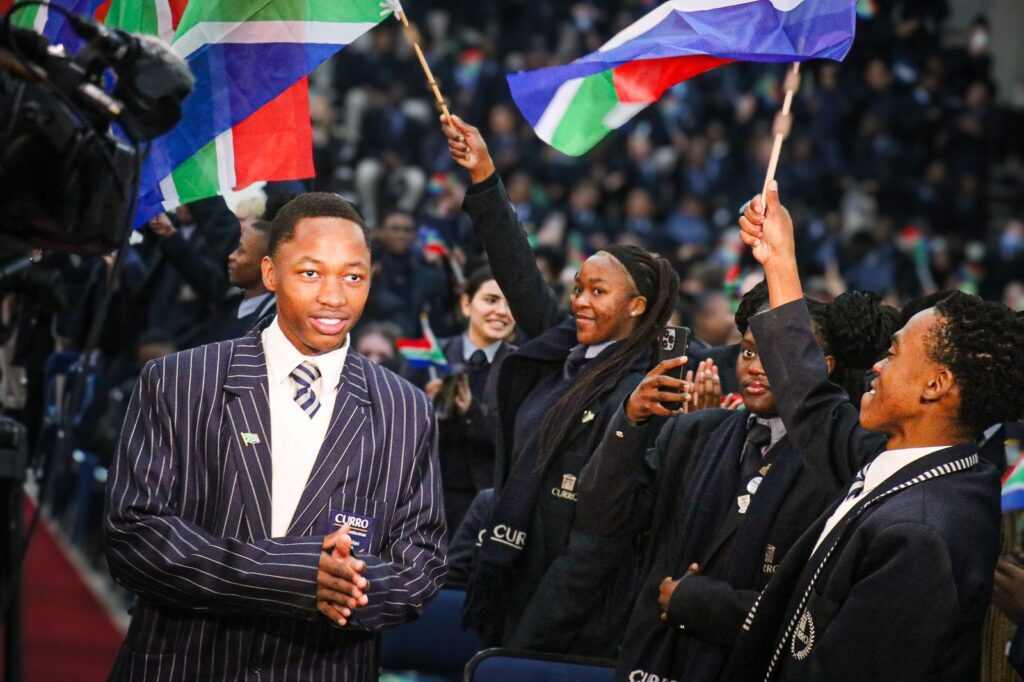
Olympic silver medalist Bayanda Walaza received a hero’s welcome at Curro Hazeldean High School on Thursday, following his impressive performance at the Paris Olympics. 

The 18-year-old was welcomed with a guard of honour, and drapings of the South African flags, as he entered the school hall during assembly.

Minister of Education Siviwe Gwarube and Walaza’s mother, Tholiwe Walaza, attended the emotional ceremony, where Walaza was presented with his silver medal. The school sang the national anthem to cap off the celebration.

Gwarube said it was a privilege to hand over the medal to Walaza’s mother, “the wind beneath Walaza’s wings”.

Walaza’s mother said that her son had to overcome the tragic death of his father, who was shot when he was just 10-years-old. 

“He experienced all that. After that, it was tough, but God, counselling, and our family’s strong support system helped him recover,” she said.

Walaza was part of the men’s 4x100m relay team that finished second behind Canada at the Paris Olympics. 

His mother described watching the final as an “emotional moment” and expressed pride in her son’s achievement.

Walaza’s return to South Africa on Tuesday was met with an incredible reception at OR Tambo Airport, where he was greeted by Minister of Sport Gayton McKenzie and a cheering crowd. 

His mother described the moment as “unbelievable” and expressed pride in her son’s success.

“The moment the Minister of Sport McKenzie stood there – when I saw him chanting ‘Walaza! Walaza!’, I didn’t believe it. This is my son; I raised such a wonderful young star. I was so happy. Somebody called me and said, ‘Wake up!’. I was numb,” she said.

Bayanda Walaza’s story is an inspiration to many, that with determination and support, anything is possible, even in the face of adversity.

INSIDE EDUCATION