Uncategorized

Youth must reclaim their voice in our democracy – CHIETA CEO

Staff Reporter

THIS year marks the 48th anniversary of the 16 June 1976 student uprising in Soweto, when young people protested against the Bantu Education Act, which enforced Afrikaans as a medium of instruction in schools, and apartheid laws that oppressed black South Africans.

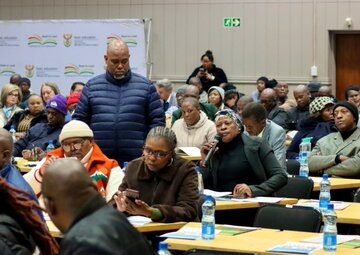
Yershen Pillay, the Chief Executive Officer of the Chemicals Industries Seta (CHIETA), says the time is ripe for critical reflection 30 years after democracy on what has happened since. “Why have youth who have been so committed to a just cause given way to those with a different outlook on life?”

Therefore, 30 years after democracy, he asks why youth apathy was evident in the 2024 elections, according to the Independent Electoral Commission. Election 2024 was characterised by poor voter turnout, especially among youth. Although 11 million registered, fewer took part in the polls.

Overall, only 58% of registered voters took part in the poll. Why, in the digitally driven 21st century, are youth not exercising their democratic rights as championed and won by the youth of 76?

“Today, one should not ignore the sacrifices of the 1976 youth. But how did their example manifest itself 30 years after the birth of democracy? Instead of action, we have seen youth disengaged from democracy, as shown by the low voter turnout. For instance, according to the IEC, despite the high registration of youth, between five percent and nine percent of registered youth actually voted in many areas,” Pillay said.

He said such inertia must be stopped if we truly wish to honour the memory of the Class of 76.

Admittedly, the youth have raised pressing issues such as unemployment and lack of opportunities, but their voice has been muted. Simply put, we are not making an impact. According to Stats SA, the number of youths not in education, employment, or training (NEET) is approximately 3.4 million, which has remained roughly the same for the last decade.

Pillay said the absence of youth voices in this election raises the question of what can be done to spark a youth renaissance in democratic South Africa.

It is necessary to celebrate the Class of 76 but learn from and emulate them to create the future type of South Africa we want – and deserve.

June 16 taught us that young people have the power and potential to create lasting change. However, the election results remind us of the need to do more to harness the tools of the 21st century for the better.

The iconic image of Hector Petersen looms large over the 16 June celebrations. However, heroes of 76 beyond Petersen, for example, Kagiso Moloi at Krugersdorp, are among many unheralded activists who will have a plaque in his honour at schools as part of an initiative to acknowledge those who stood up to the state for better education.

Why this matters 30 years later is critical to changing how we look back on the past to help shape a better future. June 16 this year must be a time of renewal to leverage and articulate the need for more robust, newer youth voices.

“We cannot be hostage to the alarming unemployment statistics; the time is now for action. What must be done to empower youth? Investment in skills and training is taking place across many levels. Artificial intelligence is used throughout the country to open the learning gates.

“Every youth must have a skill—our commitment to youth development as a training authority on skills development and training. What youth do with the skills they receive is up to them. Ultimately, the youth should lead, and we will support them,” he said.

To date, 9501 youth have benefited from CHIETA’s four SMART Skills Centres in the last six months, with many more SMART Skills Centres still to come. The unemployment crisis makes it imperative to provide access to data resources, tailored training courses, support for Job Seekers, assistance for business start-ups, and growth opportunities for SMMEs.

“Our challenge is for South African institutions to do more to ensure we tackle the growing unemployment headache through tangible solutions in communities where it is most needed. We need to collaborate with urgency and creative solutions,” Pillay said.

INSIDE EDUCATION
Uncategorized

UP Law student (23) wins Raising Legends award for launching NGO to fight education inequality

Staff Reporter

University of Pretoria (UP) student Dimakatso Lekola was recently awarded one of 10 prestigious Raising Legends Awards by the Hope Givers Foundation, in recognition of the work he’s already done – at age 23 – to improve his community.

Lekola won in the category ‘Community Builder and Education and Academia’ and was applauded for establishing his DK Lekola Global Education Institute, which helps high school learners from underprivileged backgrounds get access to tutoring and other educational support. 

Lekola, a student in UP’s Faculty of Law, says he wants to create education equity by bridging the gaps in South Africa’s education system. “I am deeply passionate about revolutionising education and fostering inclusivity,” he says.

While growing up in Phetwane Village, Limpopo, he lived the challenges faced by students who have limited access to quality education. This ignited a fire within him, leading him to pursue a law degree.

 “I witnessed first-hand the disparities and inequalities present in our education system. This instilled in me a deep sense of resilience and determination,” he says. “I decided to study law because I saw it as a powerful tool with which to advocate for underserved communities.”

This drive saw him establish the DK Lekola Global Education Institute in 2022. The institute provides crucial access for underserved high school learners to academic support, mental health services, talent development, legal compliance, and mentorship programmes. “Our purpose is to enhance academic excellence and promote inclusivity in education,” Lekola says.

The Hope Givers Foundation, founded in 2014, is a South African NGO dedicated to helping young people and their communities by providing education and social development programmes focused on areas such as early childhood development and educational support, and by advocating for social issues that impact young people.

Lekola says balancing his demanding law studies with his work for his NGO requires exceptional time management and prioritisation skills. He makes it all work by dedicating focused time to his studies while actively engaging in institute projects. 

Technology and collaboration with like-minded individuals further enhance his efficiency and impact.

He hopes his story of resilience, determination and a burning desire to make a difference will inspire not only aspiring law students but anyone who’s passionate about creating a more equitable future.

For people interested in studying law at the University of Pretoria, Lekola advises, “Stay committed to your studies, but don’t just memorise – wrestle with the concepts. Seek out experience through internships, competitions, volunteer work – to turn theory into action. 

“Build a network of mentors and peers to support you on the path. And remember, the law is a living thing – stay informed, engage in debate, and broaden your understanding with every step.”

INSIDE EDUCATION

Uncategorized

Government and private sector on the adoption of MTbBE in South African schools

Staff Reporter

During the second day of the recent Department of Basic Education Language and Literacy Workshop, key education stakeholders consisting of researchers, literacy and numeracy experts, national and provincial education officials and government entities applauded the DBE for considering MTbBE as a platform to strengthen social cohesion in the schooling system. 

The participants engaged in a robust discussion during five workstreams as part of the Workshop. According to the participants, the Basic Education Sector is on the right track to strengthen learning and teaching in General Education and Training and Further Education and Training. Some participants urged the sector to ensure proper teacher development and learning materials were in place for the full-scale implementation of the MTbBE. 

The workstreams recorded the following inputs shared by participants during the workshop:

Workstream 1: 

The best way to teach literacy in African Languages is to focus on African logic, which includes African knowledge systems such as stories, rhymes, games, songs and riddles. 

The sector should consider a multi-stakeholder transformation task team to drive activities intended to strengthen MTbBE.  There must be a special allocation of funds and other resources to enable the teaching of African languages, especially African story books instead of translated stories. 

The methodology of teaching reading should be debated to identify the right methodology. The sector should ensure that the implementation of MTbBE is aligned with the existing School Based Assessment.

Workstream 2: 

MTbBE and Mother Tongue Education should be interpreted differently. MTbBE uses more than one language for teaching, learning, and assessment. It is the intentional and deliberate use of multiple languages for teaching, learning, writing and assessment. 

This allows learners to trans-language for meaning. Mother Tongue Education is associated with using the child’s mother tongue as a Language of Learning, Teaching and Assessment. 

The implementation of bi/multilingualism is informed by legislation, including the demographics and to meet the needs of the diverse society. (Sign and braille languages). The Sector must allow natural progression from ECD to grade R-7 whilst creating opportunities for learners to access education in their mother tongue starting from ECD onwards. 

As a sector, we must strengthen teacher development programmes to enhance the teaching of African Languages. We must enforce teacher collaboration to implement appropriate concepts throughout the phases. It is also critical to consider engaging various stakeholders, especially parents, to support the implementation of MTbBE. Another critical aspect that should be taken into consideration is the strengthening of collaboration with HEI through the establishment of work streams. HEIs must take responsibility for producing competent teachers.

Workstream 3: 

One of the principles of bilingual assessment is to weigh the two languages, commencing with a greater weighting of the mother tongue and gradually phasing in the second language so that a 50:50 split is reached in Grade 7. 

Translanguaging should be considered as the pedagogical approach to learning. Assessments should be linked to teaching, and learners should be allowed to respond to assessment questions in any of the two languages. 

There should be a policy amendment to accommodate translanguaged responses in assessment. The sector will have to profile learners and teachers to be able to apply for MTbBE. 

The distinction between mother tongue, LOLT and language of assessment is critical. A task team might be required to look at policy implications and policy review.

Workstream 4: 

The sector should consider a Framework for national teacher development on implementing MTbBE, which can be contextualised provincially. The workstream looks forward to auditing current practices in schools regarding Translanguaging. 

An audit of language offerings in HEIs (fully developed language units with lecturers or communicative language) will be critical in this undertaking. 

The DBE should develop MTbBE resources collaboratively through the involvement of Higher Education and PANSALB. A survey should also be conducted to obtain teachers’ perspectives on MTbBE.

Workstream 5: 

The critical overarching principle for private funding is that the Government must take the lead regarding planning and funding. The extent to which funds can be raised depends on the extent to which a clear and robust plan exists. This is particularly true for civil society. 

There is a need to go out and look for materials and reach out to these parties. Model 2 is a public/private partnership in which materials are developed together with a state development process in which the Government is responsible for the end-to-end development of materials. 

A collaborative approach between the Government and the Private Sector will be essential in making Mother Bilingual Education successful.

A complete, consolidated report will be available in the next few weeks. The inputs shared by various participants during the Workshop are envisaged to play a crucial role in transforming South Africa’s education landscape.

INSIDE EDUCATION

Celebrating youth excellence in science, technology and innovation
Uncategorized

Celebrating youth excellence in science, technology and innovation

Staff Reporter

THIS Youth Month, under the theme “Actively embracing the socio-economic gains of our democracy”, the Department of Science Innovation marks 48 years since the student uprising against the Bantu Education Act.  

During June, the Department of Science and Innovation will showcase some of the increasing number of talented young scientists and researchers that have emerged in the science system in the 30 years since our first democratic election.

Ms Jillene Visser

Meet Jillene Visser, a Senior Laboratory Animal Technologist at the Nuclear Medicine Research Infrastructure (NuMeRI).

Visser’s lifelong passion for animals has driven her to become an animal scientist.

“During school breaks, I eagerly volunteered at local veterinary practices and farms, immersing myself in animal care and handling, from large livestock to tiny rodents.  I was fortunate that my parents supported my love for animals, allowing me to care for numerous rescued animals,” she says.

Visser completed an Animal Science BTech degree in 2015 but faced financial obstacles in pursuing her studies. To finance her studies, she worked at an animal reproduction centre in the North-West, eventually obtaining her MTech degree.  

Upon entering the agricultural sector as a female researcher, she experienced significant challenges in this predominantly male-dominated environment.  Undeterred by the circumstances, Visser found mentors to support her.

“I collaborated closely with esteemed veterinarians like Dr Morné De la Rey and Dr Robert Treadwell, specialising in Artificial Reproduction Technology for wildlife and cattle.  I conducted artificial insemination and embryo flushing across a range of species.”

Other career highlights include working as a Laboratory Animal Technologist on infectious diseases with the late Prof. Anton Stoltz, the Head of Infectious Diseases at the Steve Biko Academic Hospital.  “I worked on multidrug-resistant tuberculosis research on guinea pigs and obtained experience working with infectious diseases.”

Visser aims to ensure optimal animal care and conduct procedures as humanely as possible, facilitating the translation of research into meaningful advancements in human clinical studies.

She encourages all young people to follow their dreams and embrace the challenges along the way.

INSIDE EDUCATION

Uncategorized

Repositioning of Mathematics in the Macro-Development Agenda

Inside Education Reporter

A Math Summit on the Repositioning of Mathematics in the Macro-Development Agenda occurred at the Birchwood Hotel, Boksburg, on 7 June 2024. The Summit, hosted in partnership with the National Education Collaboration Trust (NECT), was chaired by NECT Chairperson Sizwe Nxasana.

In pursuit of the National Development Plan (NDP) Goals, the Department of Basic Education (DBE) has developed a ten-year strategy for improving Mathematics, the National Mathematics Improvement Plan (NMIP), which will be implemented in 2025. 

The overarching strategic intent of the NMIP is to comprehensively and systematically address the persistently poor performance and low participation rates amongst learners across all levels of schooling. To expedite the implementation of the NMIP, a collaboration of the NECT, the DBE, and several actor groups proposes a macro-level support initiative to enhance Mathematics teaching and learning.

The NECT, playing a crucial role in supporting the Ministry of Education and partners, is driving the Summit as a platform to bolster Mathematics education. The focus is on key aspects such as Mathematics participation, performance, and quality passes. The Summit is a collective endeavour to reposition Mathematics in the Macro-development agenda and gather inputs for a national Mathematics support initiative.

Basic Education Minister Angie Motshekga, in a powerful statement, reiterated the Government’s unwavering commitment to enhancing Mathematics education. She underscored the significance of instilling a love for Math from an early age, making it accessible and enjoyable for all children regardless of their background, and dismantling the barriers that hinder many from pursuing STEM careers.

The main objectives of the Summit were, therefore, to bring key stakeholders up to speed on the developments and the state of Mathematics in South Africa; to identify multi-level and multi-dimensional strategic opportunities for improving Mathematics participation and outcomes; to strengthen the NMIP conceptions, including exploring a framework for its comprehensive implementation; and to agree on a joint approach to leverage emerging opportunities for enhancing Mathematics participation and outcomes.

INSIDE EDUCATION

DBE and GDE implement School Safety District Support Intervention in Sedibeng East and West Districts
Uncategorized

DBE and GDE implement School Safety District Support Intervention in Sedibeng East and West Districts

Staff Reporter

THE DBE collaborated with the Gauteng Education Department (GED) and rolled out a School Safety District Support Intervention after identifying challenges in the Sedibeng East and West Districts under the theme: “Capacitate schools in Sedibeng Region to be able to prevent and manage violence in schools”. On the first day, a Local Stakeholder Engagement Meeting was held at the Sedibeng West District Office in the Gauteng Province. 

This meeting included partner departments, local municipalities and relevant civil society organisations to support school violence prevention programmes. The second day featured a school-based workshop at Quest Conference Estate in Vanderbijlpark. The purpose of the meeting, which took place from 3 – 5 June 2024, was to ensure a safe school environment for learners and teachers.

Sammy Maraba, Assistant Director from the School Safety Directorate, delivered a presentation on the National School Safety Framework (NSSF) approved by the Minister of Basic Education in 2015. He stated that the NSSF should be used as a tool to curb violence in schools. 

“The goal of the Framework is to create a safe, threat-free, supportive learning environment for learners, parents, educators, principals, School Governing Bodies (SGBs) and administration, and in so doing, retain learners in schools.” 

He also highlighted some of the NSSF’s objectives, which assist schools in understanding and identifying all security issues and threats, creating reporting systems, managing reported incidents appropriately, and helping schools monitor their progress over time.

Sifiso Ngobese, Director of School Safety at the DBE, said, “there are various challenges facing South African schools, including bullying, learner-teacher encounters, corporal punishment, drug and substance abuse, and dangerous weapons. These challenges have been linked to absenteeism, dropout and expulsions, thus negatively impacting the attainment of quality basic education”.

Speaking on the Protocol for the Management and Reporting of Sexual Abuse and Harassment in Schools, Deputy Director for Social Cohesion, Dululu Hlatshaneni, explained, “This Protocol provides schools, districts and provinces with standard operating procedures and guidelines for addressing allegations of sexual abuse and harassment. 

“It details how schools must respond to reports of sexual abuse and harassment perpetrated against learners and school staff; and outlines an approach that enables educators and DBE employees to identify, intervene, report, and provide support to all learners who are sexually abused or harassed in school; and provides an appropriate response to perpetrators of all forms of sexual abuse and harassment. It is important to note that the legal age of consent to sexual activities in South Africa is 16 years”.

Presenting on learner misconduct and disciplinary procedures, a representative from GDE stated that all schools must have a Code of Conduct that complies with both provincial and national legislation, including public schools with hostels: “When conducting disciplinary proceedings, it is important to ensure compliance with substantive and procedural requirements of fairness in both the suspension and expulsion of a learner. It is crucial to follow guidance on conducting disciplinary hearings and due process to safeguard the interests of the learner and any other party involved in the disciplinary process”.

Over 200 attendees from 50 schools and stakeholders attended the event, which was supported by Social Cohesion, Psychosocial Support, Education Management and Governance Development (EMGD), Health Promotion, and the Quality Learning and Teaching Campaign (QLTC). 

Participants shared their knowledge and experiences about the challenges in school safety and discussed implementing the strategies covered during the workshop. Additionally, some expressed concerns about young people’s rising internet usage rate, highlighting the need to educate learners on online safety to encourage responsible digital behaviour.

INSIDE EDUCATION

Uncategorized

UWC alumnus wins the 29th edition of the Fast and Flat athletics race

Staff Reporter

Timoteus, who graduated with a Bachelor of Education in 2022, finished the 10km race – known as the fastest and flattest athletic race in the Western Cape – in 29:27 minutes, ahead of fellow UWC alumni Rowhaldo Ratz and Bruce-Lynn Damons, who crossed the finishing line second and third, respectively.

But the biggest winner on the chilly Saturday morning was always the Cape Town community, particularly the athletics community, with whom UWC used to race to strengthen its ties.

For instance, the Eerste River Athletics Club, of which Ratz, also a BEd graduate in 2022, was a member before securing a Sports Merit Bursary to run and complete his BEd degree in 2020 at UWC, sent a group of volunteers to assist in the organisation of the event.

“The Eerste River Athletics Club is one of the top athletics feeders to UWC, and our partnership with them and other athletic clubs in communities is getting stronger by the day,” commented event director Glen Bentley. “Fast and Flat remains one of the main events that speak to the neighbouring communities regarding bringing the sport to communities.”

The race starts and finishes on the UWC Campus, but a large part runs through the streets of Belhar.

Among other organisations that made the race a resounding success, according to Bentley, were the scouts from Belhar who assisted a water point, Pro-Events who patrolled the routes to ensure the safety of participants, no less than 120 volunteers consisting of UWC Students, parents of athletes as well as student-athletes, and coaches who availed themselves to ensure that the race was a resounding success. The Local Organising Committee comprises various role-players from the UWC Campus Community.

Meanwhile, first-year student Charlton Titus won the junior race category; Caitlyn Mahony took home the women’s category, while legendary Zola Budd (3rd) was one of the top finishers in the 50-59 women’s category. Zola Budd is also Anthony’s current coach.

INSIDE EDUCATION

Uncategorized

STEMulator – a gift to the youth of the nation

Staff Reporter

STEMulator is a groundbreaking virtual platform designed to ignite the spark of curiosity in young minds and stimulate their interest in Science, Technology, Engineering, and Mathematics (STEM) subjects.

An initiative of the National Science and Technology Forum (NSTF), a leading advocate for science and technology education in South Africa, is proud to announce the gifting of the STEMulator to the youth of the nation with the launch of its free virtual school on National Youth Day June 16th, 2024.

The addition of the maths and science classrooms in the virtual school, set to go live on the 16th of June 2024 in celebration of Youth Day, is a thoughtful gift to the youth of our nation by the NSTF. This initiative aims to address the pressing issue of STEM literacy in our country by providing a comprehensive and engaging educational experience.

The STEMulator platform was officially launched in early July 2020 with the aim of getting more school-going learners interested and engaged in STEM subjects and careers and to persevere with maths and science at school.

Featuring a wide range of interactive and educational content, the STEMulator was developed by the NSTF and its proSET (Professionals in Science, Engineering and Technology) Committee.

STEMulator is a proudly South African initiative that is unique in the world, providing a platform for young people to explore, discover, and learn about the important role that STEM professionals play in various fields.

“STEMulator is not your typical educational platform,” explains Richard Gundersen, Chief Instigator at STEMulator. “It’s an immersive, interactive landscape filled with animated objects and clickable areas. Imagine a child clicking on a car and being transported inside to explore its engine or clicking on a farm and learning about the machinery used for harvesting. This engaging format allows learners to explore various aspects of STEM in a fun and accessible way.”

By clicking on objects, they can delve deeper, uncovering the inner workings of machines and the fascinating processes behind everyday phenomena, all of which link directly into exciting career paths available in STEM fields, along with information relating to where to study and how to qualify.

Learners can also discover the origins and processing procedures behind everyday foodstuffs such as a loaf of bread – the loaf of bread in the pantry will take you from the combine harvester in the wheat fields, through the mill, to the bakery; guiding kids to explore the origins of ingredients, the mechanics of a mill, the chemistry of baking, and gain an appreciation for the complexities and diverse skills and careers involved in creating a simple loaf of bread.

The NSTF’s have created a virtual school that is fully aligned to the existing educational curricula and programmes, ensuring a cohesive and effective learning environment that supports the development of our future leaders in STEM fields.

By doing so, we hope to inspire a passion for learning, foster critical thinking, and equip our youth with the skills necessary to thrive in an increasingly complex and technology-driven world.”

The creation of the STEMulator is driven by a critical need to address the declining interest in STEM subjects among South African youth. This lack of interest translates to a shortage of skilled professionals in vital fields, hindering the country’s development.

The NSTF is committed to reversing this trend. “STEMulator is our gift to the nation’s youth, a free and accessible platform that makes learning about STEM fun and engaging,” Gundersen continues. “This is particularly important for students from underprivileged backgrounds who may not have access to traditional resources.”

The NSTF envisions a future where every learner under the age of 15 has the opportunity to explore STEMulator. This exposure will empower them to make informed choices about their education and career paths. “Whether they choose STEM or another field, STEMulator will equip them with valuable critical thinking and problem-solving skills,” Gundersen concludes.

Visit STEMulator today at https://stemulator.org/ and embark on a journey of discovery!

INSIDE EDUCATION

Uncategorized

Future Africa celebrates five years as ‘neutral space for big ideas’

Staff Reporter

THE gold-and-silver-coloured world globes at the five-year celebrations of the University of Pretoria’s (UP’s) Future Africa Campus were not just pretty table decorations.

Featuring a golden Africa against silver seas, they symbolised what Future Africa stands for: a collaborative Pan-African research platform with the African continent at its centre and connections that stretch across the globe.

“Future Africa is successful because of your contribution and that of people from different parts of the world,” said Professor Themba Mosia, Interim Vice-Chancellor and Principal of UP, at a celebratory event held on 24 May 2024.

The occasion marked Future Africa’s first five years, looked ahead to its next five years, and paid tribute to a higher education leader described as a “continental patriot and global citizen” – Professor Ernest Aryeetey, who is retiring as Secretary-General of the African Research Universities Alliance (ARUA).

ARUA is a network of 23 research-intensive universities from across the continent, committed to enhancing and expanding African researchers’ research quality in Africa.

The alliance has a close connection with Future Africa and UP. Prof Aryeetey recalled his first visit five years ago, coinciding with the opening of Future Africa. At the time, he had been struck by the campus’s eco-friendly character – the first time he had seen this at a higher education institution.

“Thank you to the University of Pretoria for making it possible for ARUA to be part of [Future Africa’s] story,” he said.

Since its story began in 2019, Future Africa has hosted close to 3,000 events and welcomed an estimated 66 000 delegates and speakers from all over the world, among them international figures such as Angela Merkel, former Chancellor of Germany, and Antony Blinken, current Secretary of State of the United States.

But, as Future Africa Director Heide Hackmann reiterated, Future Africa is much, much more than a conference centre.

This was clear from the fact that the university executive had decided “to call us a collaborative platform – not an institute, not a centre, but a platform,” Dr Hackmann emphasised, explaining that Future Africa had both campus and research functions.

As a platform for collaboration, Future Africa provides a “neutral space to convene, catalyse and coordinate big ideas, big initiatives – ideas that are too big for one department or faculty”, she said during a Reflection and Engagement session with UP Deans and Directors, held before the main celebration.

“The notion of neutrality means we do not seek to compete with faculties, but collaborate based on common purpose and shared ideas,” said Dr Hackmann.

Another concept deeply embedded in Future Africa is that of transformation. “The notion of transformation begins to define a unique identity for Future Africa,” Dr Hackmann said. “It’s beyond transdisciplinarity. We are experimenting with a research approach that would unleash and inform processes of deep systems change.”

Future Africa’s research is focused on “challenge domains,” which are very big ideas explored through its five research chairs: African Science and Technology Futures, Global Equity in Africa, One Health (People, Health, Places), Sustainable Food Systems, and Sustainability Transformations.

“This is not just a UP effort,” Dr Hackmann said, noting that the University of Cape Town had seen the value of a Future Africa chair and had come on board to co-host Sustainability Transformations.

“Our next chair could be elsewhere in Africa,” she added, indicating that a priority for 2024 is to launch a new domain on youth education, employment and empowerment.

Overall, Future Africa currently has a portfolio of 30 distinct projects and programmes and external research funding of R60 million, up from R7,9 million at its inception.

“I think we have made the last five years matter,” Dr Hackmann said. “We have laid the foundation; we know how to work, we know what we want to do, we have started engaging with experts across the university and other parts of the world, and we have built a solid team of people who are committed to fulfilling the vision of Future Africa.”

She added that this solid foundation had given her “the courage to accept another position” at Stellenbosch University and that she would be leaving UP in June this year.

“I am so confident that Future Africa is in safe hands, and I look forward to finding opportunities for productive collaboration with each other.

INSIDE EDUCATION

Uncategorized

Building skills to deal with SA’s youth mental health crisis

Staff Reporter

According to UNICEF’s 2023 U-Report poll, around 60% of South Africa’s children and youth felt in need of mental health support last year.

The findings per age group showed this figure increased to 70% among those between 15 and 24 years. Mental health conditions affecting South African youth include anxiety and depression as well as substance abuse, suicide and self-harm.

The stigma around mental health conditions in their families, school environments and communities causes fear of the reactions of parents, educators and peers, possibly inhibiting teens from revealing their mental health struggles.

SADAG (South African Depression and Anxiety Group) reports that researchers estimate that only one in eight adolescents engaging in self-harming behaviours comes to the attention of clinical services. Behaviours around substance abuse, suicide and self-harming often engender shame and secrecy, fostering isolation, which enables conditions to worsen.

Inge Nieuwoudt, Educational Psychologist and mental health practitioner, says, there is significant evidence that adult mental health issues, including depression and anxiety, can be traced to symptoms that appeared in adolescence or even childhood.

“As we deal with an escalating youth mental health crisis, we need better ways to recognise and address challenges early in life to prevent these becoming lifelong struggles and to improve overall well-being.

“The concept of Youth Mental Health First Aid has emerged to help build the skills of parents, teachers, community mental health and youth workers to become more adept at identifying early signs, providing stabilising comfort and helping young people access the professional support they need.”

Inge will be presenting the SACAP Global Youth Mental Health First Aid CPD Workshop taking place on Tuesday, 25 June 2024, from 18:00 to 19:30. The certified online training is primarily aimed at psychologists, registered counsellors and other mental health practitioners; however, it will also be widely of interest to educators and youth care workers.

Mental Health First Aid gives you skills and an action plan, known as ALGEE, so that you can support a person in emotional distress, just as you would if you were administering first aid in the event of a physical injury.

Worldwide, millions of people have been trained to use the ALGEE action plan, which includes five steps that can be used in any order:

A – Approach, assess for risk of suicide or harm – this involves starting a private and confidential conversation. If the person is reluctant to confide in you, you can encourage them to talk to someone they trust.

L—Listen nonjudgmentally—This is important for everyone, but particularly teens who may distrust being vulnerable with adults. It involves listening without interrupting, authentically feeling empathy for their situation, and being accepting of their reality even if you don’t agree with what they are saying.

G – Give reassurance and information – Once a person has shared their experiences and emotions with you, you must be equipped to share useful facts to inspire hope.

E – Encourage appropriate professional help – Like traditional first aiders, you provide frontline support to assess the situation and provide stabilisation.

Afterwards, you must hand over and encouragingly point them toward mental healthcare providers trained to provide acute and long-term interventions. The earlier someone gets help, the better their chances of recovery; therefore, you must help them learn more about the options available.

E – Encourage self-help and other support strategies -. This includes helping the person develop a personalised emotional and physical self-care plan and identifying their supporters in life.

At the SACAP Global Youth Mental Health First Aid CPD Workshop, attendees will gain an overview of the ALGEE Model, specifically emphasising the first step of A, approaching a conversation and assessing risk. To deepen their assessment capabilities, they will be exposed to specific knowledge about what suicide and self-harm entail, including the myths and realities associated with these behaviours and insights into Crisis First Aid for suicide and self-harm.

South Africa has a significant shortage of mental health skills. Through the Youth Mental Health First Aid CPD Workshop, SACAP Global aims to build the urgently needed capacity in schools and communities.

Karolyne Williams, Head of Strategic Innovation at SACAP Global, concludes, “We have well over half of the South African children and youth reporting that they need mental health care, and this highlights how critical it is for a deeper and wider understanding of the challenges they are facing. It’s also essential to build skills in those interacting with the youth.

“With Mental Health First Aid training, they will know how to effectively and confidently provide immediate care and how to guide teens to further support without delay. Adding this CPD workshop to our SACAP Global offering aims to help add a layer of robustness at the frontlines of the South African mental healthcare system.”

INSIDE EDUCATION