Uncategorized

China to prioritise physical education in schools as obesity rates rise

By Reuters

China is aiming to beef up physical education in schools, making it core to the curriculum rather than a secondary subject, authorities said as they push for a more “holistic education” amid growing concerns about the rise in childhood obesity.

Primary and secondary schools must ensure physical education teachers are treated “the same as their colleagues in subjects such as Chinese, math and English, and intensify efforts to develop key sports such as soccer, basketball and volleyball,” the official Xinhua news agency said, citing the country’s Ministry of Education.

“These measures are part of a broader push for a more holistic approach to education, integrating physical fitness with academic development to cultivate well rounded students who are prepared for the future,” the Ministry said.

The measures come after China issued its first national plan in January to build a “strong education nation” by 2035. The policies included mandating primary and secondary school students to have at least two hours of physical activity daily, to effectively control myopia, or nearsightedness and obesity rates.

In mid-2022 there was a nationwide shortage of around 120,000 physical education teachers, with rural areas the most affected, Xinhua said, adding that the new measures would encourage the recruitment of retired athletes and military veterans to help close the gap.

Physical education teachers will receive equal compensation to their peers in other subjects, with performance based salary adjustments for after-school sports duties and team coaching, it said.

Youth obesity has accelerated since 2019 due to decreased physical activity during COVID lockdowns and more online ordering of junk food.

Doctors expect obesity to rise over the next 10-12 years as the economy slows and suffers structural changes that lead to poor eating habits and less physical activity.

The proportion of obese boys in China jumped to 15.2% in 2022 from 1.3% in 1990, trailing the United States 22%, but higher than Japan’s 6%, Britain’s and Canada’s 12% and India’s 4%. Obesity in girls rose to 7.7% in 2022 from 0.6% in 1990.

“Obesity has become a major public health issue in China, ranking as the sixth leading risk factor for death and disability in the country,” the country’s National Health Commission said in October.

Reuters

Uncategorized

Hundreds of private college private collegesaffected as exam results blocked

By Johnathan Paoli

In an ongoing issue impacting students across South Africa, Umalusi has withheld the results of students from 128 private colleges due to accreditation concerns.

Higher Education and Training Department spokesperson Lucky Masuku said private colleges that were allowed to register students for N1-N3 Engineering Studies exams despite not being accredited by Umalusi.

When the department conducted the exams from 18 November to 4 December, some colleges, accredited only by the Quality Council for Trades and Occupations (QCTO) for N4-N6 programmes, erroneously enrolled candidates for N1-N3 exams.

However, according to regulations, accreditation by QCTO for N4-N6 does not automatically grant institutions the right to offer N1-N3 courses.

Masuku said upon discovering this discrepancy, the executive committee of the Umalusi council convened to discuss the approval of exam results.

Given the concerns over the institutions’ accreditation status, the committee resolved to block the release of results until an investigation was conducted.

Masuku said a preliminary inquiry has since been completed, and its findings have been submitted to Umalusi for review.

To address the issue and ensure that students are not unfairly disadvantaged, he said Umalusi and the department were working together to facilitate the release of results for students who sat for the N2 and N3 Engineering Studies exams.

The resolution process aims to protect students who were unaware that their institutions were not accredited for these programmes, however there is no confirmation yet on when the results will be released.

Beyond addressing the immediate problem, the department has also committed to strengthening regulatory oversight of private colleges.

The department plans to work closely with these institutions to ensure strict compliance with accreditation and examination registration requirements in the future and aim to prevent similar incidents.

Deputy Minister Mimmy Gondwe previously urged learners and parents to visit official websites to verify accredited institutions and encouraged the public to report fraudulent colleges.

Launching awareness campaigns in November, Gondwe said the aim was to raise awareness and safeguard the overall integrity of the education system.

Gondwe said that while education was a fundamental right and tool for personal and national development, unscrupulous institutions exploited students’ aspirations, wasting their time and resources while providing unrecognised qualifications that hindered employment opportunities.

INSIDE EDUCATION

Youth celebrated as a catalyst for change in 100 Shining Stars awards
Uncategorized

Youth celebrated as a catalyst for change in 100 Shining Stars awards

By Johnathan Paoli

In the sixth edition of the 100 South African Shining Stars, 100 award winners were celebrated as a beacon of hope for the youth of South Africa who are driving change.

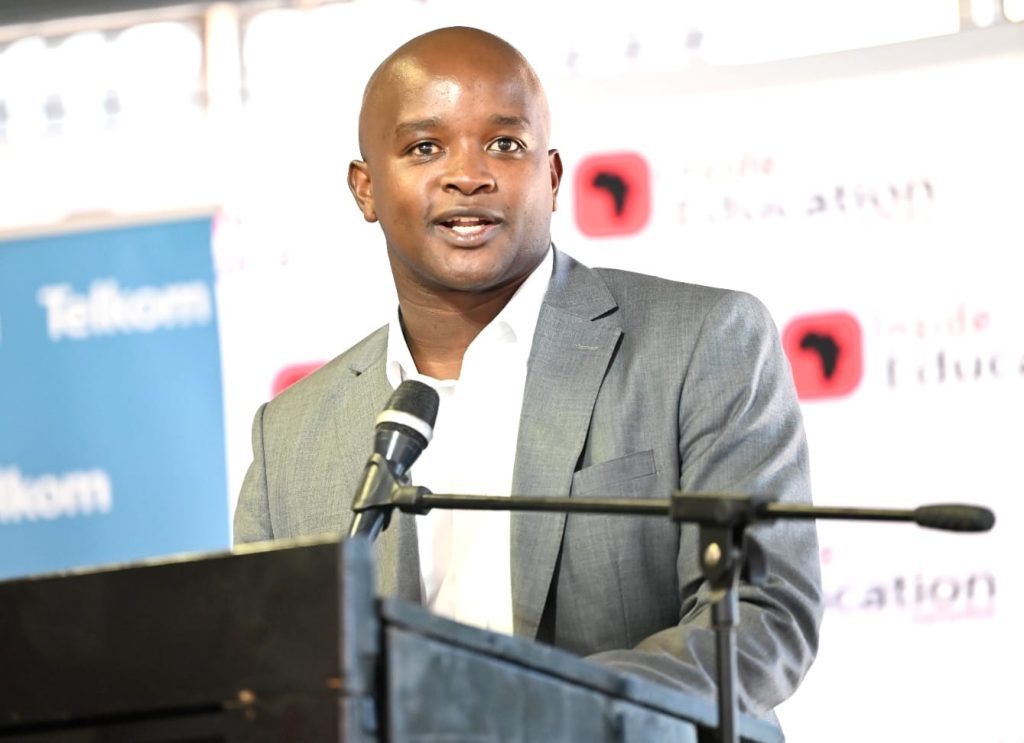
Inside Education Foundation Chairman Matuma Letsoalo welcomed the award winners and praised them for exemplifying the potential and impact of young individuals, who have taken their skills and sought to improve their communities.

“We celebrate you because you represent the best of the future of this country and  our continent in all areas of society. The work that you do will unlock solutions to many challenges we face as a society,” Letsoalo told the event at the Sci-Bono Discovery Centre in Johannesburg on Thursday.

Letsoalo said the winners were selected from approximately 950 nominations from across the country.

He acknowledged that the location of the celebration was auspicious, since it was hosted in an area of Johannesburg that celebrated the arts, sciences and history of the country.

One of the biggest challenges remained unemployment, with Letsoalo praising the winners for attempting to uplift the youth and ensure job opportunities.

“You are a generation that has an opportunity to truly shape South African society. You are the planners, dreamers, thinkers, but most importantly the doers,” he said.

He said in compiling the special digital and print editions for the 100 South African Shining Stars 2024, many were asked about their future plans. Their answers gave a glimpse of what they believe must be done to grow the country.

Radio personality Thembekile Mrototo hosted the event and provided a personal account of his own experiences, thanking his single mother for insisting on a quality education, despite the challenges his family faced.

Mrototo stressed the importance of taking charge of one’s future, outlining his journey in establishing his media career.

“In the last eleven years, as it came together, had I not taken charge of my situation and reached out to people, I would not have been here. And that story is testament to the work you have all done,” he said.

Mrototo encouraged the Shining Stars to persist, even if the results were not immediately observable.

Delivering the keynote address, Tshwane University of Technology Associate Professor John Molepo described the event as a celebration of the collective youth attempting to transform South Africa.

Prof. Molepo urged the youth to be active participants in SA’s growth and their communities. Picture: Eddie Mtsweni

“Tomorrow’s success is the result of the steps we take today. As young people, we are often told that we are the leaders of tomorrow. We are not the leaders of tomorrow; we are the leaders of today,” Molepo emphasised.

He praised the recipients as being proof of the power of the youth in addressing current challenges, saying decisions made today would echo for generations to come.

In the face of the ongoing obstacles, Molepo stressed the urgency of current times demanding young people rise to the occasion as active participants.

No action was insignificant, and it was up to collective action and a sense of community to see substantial transformation, Molepo told the event.

He said the youth possessed the tools to engage the complex issues the country was facing and urged the recipients to step forward with a sense of courage and duty.

“Every step we take will ensure the tomorrow we want. As we stand on the precipice of our future, let us build tomorrow today,” Molepo said.

“No matter how impossible your future might seem, determination and drive could ensure they become a reality.”

He advised them not to lose faith, stay hopeful and keep

Even in the face of adversity, Molepo urged the winners not to lose faith, stay hopeful and keep the spirit of perseverance alive.

“I encourage the Shining Stars to keep shining and to make this country a shining country,” Molepo said.

The 100 recipients were awarded under 12 categories, including education, philanthropy, health, civil society, science and technology, sports, politics and governance, business, arts and culture, environment, transport and tourism, and justice and law.

INSIDE EDUCATION

Uncategorized

Home language literacy important for SA’s socio-economic challenges

By Akani Nkuna

Home language is a key driver of knowledge acquisition and personal empowerment, unlocking opportunities that may have otherwise been out of reach, according to the Council for Scientific and Industrial Research (CSIR).

CSIR senior researcher Dr Laurette Marais was speaking during a technological innovations webinar to tackle South Africa’s literacy issues.

“Home language has been one the best vehicles for imparting knowledge and enabling people to make something of their lives that would otherwise perhaps not have been possible.

“Research has shown that home language literacy empowers and liberates, it reduces poverty, it enables inclusion and it promotes equity because it is an equaliser,” she said.

This follows after the release of the Progress in International Reading Literacy Study that showed that South African children struggled to read for meaning. The CSIR amplified that despite that report being released in 2023, its relevancy in the present day could not understated.

“81% of South African Grade 4 (10-year-olds) cannot read in their home language for basic meaning, which means that they cannot retrieve basic meaning according to simplistic meaning,” said Marais.

She suggested considering South Africa’s linguistic diversity and its impact on reading comprehension, emphasising the need to examine how the country’s multi-lingual nature influences these outcomes.

The report recorded that English and Afrikaans languages were outperforming African languages in literacy, largely due the effective teaching methods and techniques that have been developed for English literacy instruction.

The CSIR has developed an innovative application designed to enhance classroom learning by assisting pupils in developing their ability to read for meaning. This mobile interface is specifically tailored to work with texts and speech in pupils’ language, ensuring that learners are able to engage with educational material.

By integrating cutting-edge technology, the application aims to bridge language barriers, improve illiteracy rates and foster deeper understanding of learning materials.

“Every solution should in principle be able to be rolled out in all the 11 official languages and the number of users more or less one million grade 1s,” Marais added.

The app has also implemented pronunciation scoring which is essentially about reading aloud where a child records themselves reading a text and the AI tells them whether or not they have done a good job pronouncing the word.

Furthermore, Marais added that it was essential to develop tools and approaches that addressed the specific needs and contexts of local communities to ensure relevancy and effectiveness of the technological solutions.

“The need is for focused homegrown technology. It is not good enough to try and adapt without any critical thought, things that have worked in other countries, although obviously we can learn from them. We need something that works for our context.”

INSIDE EDUCATION

Uncategorized

GDE reminds parents of deadline for grades 1 and 8 late applications

By Johannah Malogadihlare

The Gauteng department of education has urged parents to take the last opportunity to submit 2025 online late applications for Grade 1 and 8 admissions by Thursday.

Since December, there have been 32,587 late applications.

The department said parents who have not yet secured a space for their children in public schools could visit their website before the end of tomorrow.

The 2025 online admissions application for grades 1 and 8 opened from July to August last year, allowing parents to apply for the school of their choice.

“…the GDE placed a resounding total of 325,858 learners (Grade 1 – 157,406 and Grade 8 – 168,452) with complete applications before the commencement of late application period on 11 December,” department spokesperson Steve Mabona said on Wednesday.

According to the department, around 1500 out of 2079 Gauteng schools were available on the online admissions system for late applications, and applicants received immediate placement upon completing their application.

However, the GDE introduced an additional number of satellite schools that provided over 4417 spaces in high pressure areas where late applications were concentrated.

“These satellite schools have provided critical relief for parents, having successfully accommodated more learners who might otherwise have been left without space,” he said.

The department said the satellite schools highlight its strategic effort to address capacity challenges and ensure every learner has access to quality education.

Additionally, parents were reminded that inner-grade applications could be done directly through schools and districts.

Gauteng education MEC, Matome Chiloane said the department would assist and respond to any queries regarding the applications.

“Our efforts to address all queries and placements at our offices are progressing efficiently, with noticeable reductions in the length as we continue to assist all parents and guardians to secure space for their children,” Chiloane said.

Chiloane encouraged parents to embrace satellite schools as they assist the department to alleviate pressure in some areas.

INSIDE EDUCATION

Uncategorized

Locked Out: Education inequalities block learners from STEM opportunities

By Lisakhanya Mohlomi and Stacey Jacobs

Just last week the global community observed the United Nations’ International Day of Education under the theme “AI and Education: Human Agency in an Automated World”.

This theme highlighted the significant role education plays in preparing individuals and communities for a rapidly evolving world. It also served as a stark reminder that a strong foundation in science, technology, engineering and mathematics (STEM) is essential to compete and succeed in a world increasingly defined by technological advancement. 

Yet in South Africa, the national Department of Basic Education (DBE) appears to be falling short of its responsibility to prepare learners for this reality. This moment requires the department to urgently re-evaluate its role in equipping learners with the tools needed to thrive in a fast-changing world. In doing so, the government must confront the damage that its regressive policies and short-sighted economic decisions are set to cause. From reversing gains in the sector to compromising the potential of all learners, and threatening South Africa’s socio-economic development: is the DBE adequately preparing learners for life after basic education, or setting them up for failure?

Gateway to where? Harsh realities behind the 2024 matric results

The class of 2024’s outstanding 87% matric pass rate was met with a much-deserved celebration earlier this month. However, beneath the surface of this success, the fault lines in the education system wreaked havoc on performance in gateway subjects such as Mathematics and Physical Sciences. 

At first glance, this cohort’s Mathematics results reveal signs of improvement. The proportion of learners achieving at least 30% increased by 5.6% compared to 2023, continuing the gradual upward trajectory over the past five years. However, this improvement is off a low base. And even though 69% of learners met the 30% benchmark, the converse is that nearly one-third of all learners who wrote this exam did not reach this basic achievement level. 

Equally concerning is the fact that while 75.6% of learners who wrote the Physical Sciences exam in 2024 passed with at least 30%, this marks a decline when compared to the class of 2023’s performance.  

While passing with at least 30% in these subjects contributes to achieving a National Senior Certificate (NSC), oftentimes it is not sufficient for admission into tertiary studies in STEM fields. In South Africa, many tertiary institutions require between a 60% and 75% achievement level in Mathematics and Physical Sciences to be considered for admission into these specialised fields.

So, without a meaningful increase in the quality of passes, these learners remain locked out of opportunities that not only have the potential to change their lives but ultimately contribute to South Africa’s economic growth.

The situation is even bleaker when looking at performance at higher achievement levels in these gateway subjects. At a national level, less than one-third (30.2%) of learners who wrote Mathematics in 2024 achieved 50% or more. In rural provinces such as the Eastern Cape, this figure is even lower, with less than a quarter (23.9%) of learners who wrote the exam achieving a 50% pass mark.

The 2024 matric class’ performance in Physical Sciences is equally concerning. Not only did the proportion of learners achieving 30% or more decline from 2023, but eight of nine provinces saw a decrease in the proportion of learners achieving at least 50% in this subject when compared to 2023 performance. 

These results require the DBE to pay urgent attention to the systemic inequalities that disadvantage learners from the moment they start their basic education journey. The disparities in school conditions between districts, provinces and quintiles risk leaving the majority of learners trapped in a cycle of poverty while simultaneously arresting South Africa’s socio-economic development. 

Back to basics: The link between literacy and numeracy and success in gateway subjects

It is undeniable that a strong foundation in numeracy and literacy are the building blocks of education, and essential for success in subjects like Maths and Physical Sciences. Although 81% of Grade 4 learners across the country are unable to read for meaning, the DBE has failed to ensure that schools have the enabling infrastructure to facilitate reading, such as libraries. The department’s own statistics show that 74% of public schools do not have libraries, and of those that do, over 40% of them are not stocked.

A 2023 international benchmarking assessment of Mathematics and Science knowledge of South African learners at Grade 5 and Grade 9 levels found that the majority of Grade 5 learners performed at or below the low benchmark level for Mathematics and Science.

When disaggregating the results by school quintile, a clear trend emerged: as the quintile level rose, representing schools with higher socio-economic status, the average Mathematics and Science results increased. 

“My schooling journey has been quite a roller-coaster. Subjected to go to quantile 1-3 schools I had to make the best out of the situation. We regularly had problems with infrastructure which grows with each grade. In Grade 8 we were 60+ in a class and in my matric there was 24 of us in a class, but we would have to move infrastructure from the classrooms to the halls. It could have been better, but the system continues to fail the black child.” – Yolanda Sewela, Matric Equaliser, Gauteng

Overcrowded classrooms and poor school infrastructure continue to undermine effective teaching and learning of foundational skills, and later on of gateway subjects such as Mathematics and Physical Sciences. In overcrowded classrooms, teachers struggle to provide individual attention to learners, making it nearly impossible to address diverse learner needs and/or effectively teach complex concepts. 

Hamstrung: the infrastructure conditions crippling teaching and learning

It is unacceptable that 82.4% of all schools lack laboratories, depriving learners of hands-on learning experiences that are essential for STEM subjects like Physical Sciences. Schools in rural areas are worse off: 93% of all public schools in the Eastern Cape and 94% of public schools in Limpopo do not have laboratories.

Schools in rural provinces also have some of the worst historical infrastructure backlogs, with many learners forced to learn in undignified conditions with poor sanitation and dilapidated infrastructure. Despite this, the DBE has removed binding timelines for infrastructure delivery from the Minimum Uniform Norms and Standards for Public School Infrastructure regulations.

A call to action

In addressing the deep cracks plaguing our education system, the DBE must get back to basics by improving literacy and numeracy as these are key to learners’ performance in gateway subjects. These skills are not only essential for individual achievement, but ultimately drive economic development. In this context, the DBE and provincial education departments must focus on ensuring equitable access to resources, improve schooling conditions and ensure that teacher posts are protected. 

Equal Education reiterates its call on the DBE and provincial education departments to:

Urgently fix the school infrastructure law, by providing clear and reasonable deadlines for infrastructure delivery; 

Invest in strengthening foundation phase learning; and

Introduce binding school capacity norms that protect the right to education and afford learners dignified school environments that are safe, well-equipped, free from overcrowding and conducive to a positive learning environment.

We further reiterate our call for national and provincial treasuries to:

Ringfence the ‘children’s budget’ to ensure that the constitutional right to education is protected and ensure that education spending is especially protected against austerity, or ‘fiscal consolidation’ pressures; and

Increase the budget for the wage bill so that more teachers and teaching assistants can be employed in our public schools.

Jabobs is a researcher at Equal Education and Mohlomi is an Equaliser and member of the National Council of Equal Education.

INSIDE EDUCATION

Uncategorized

Bottlenecks around funding must be urgently addressed

By Edwin Naidu

Higher education is a critical driver of growth, development and transformation.

It is tipped to tackle South Africa’s challenges of poverty, unemployment and inequality under the National Development Plan’s vision of an equal society.

But ahead of the 2025 academic year, stories of financial pressures affecting universities are not uncommon. While the usual narrative revolves around the National Student Financial Aid Scheme, others add to the maelstrom.

Universities South Africa (USAf) CEO Dr Phethiwe Matutu, who recently unpacked the challenges ahead, is one of the most reasonable voices on the challenges surrounding the sustainability of tertiary institutions.

According to Matutu, delays in funding disbursements from Sector Education and Training Authorities (SETAs) have further compounded financial difficulties for universities, saying how the lengthy verification process required before SETAs can release funds often leads to prolonged delays.

Students and varsities are left in the lurch by the very organisations meant to assist them. Unfortunately, no one wields the big stick in dealing with errant organisations or their inefficient leaders.

This has been the biggest hurdle [between one SETA and USAf] because, according to Matutu, the SETA cannot verify this data on time, resulting in funds promised from 2020 remaining unpaid. A government that speaks about good governance should ensure better stewardship of taxpayers’ monies, mainly when intended to benefit the country’s learners and learning institutions.

The CEO says these delays disrupt universities’ financial planning and damage their reputation among students who are promised bursaries that fail to materialise.

USAf partners with SETAs to provide student debt relief, bursaries and other programmes.

While Dr Matutu calls for innovative approaches to mitigate the sector’s financial pressures, the Minister of Higher Education and Training, Dr Nobuhle Nkabane, must reign in the SETAs. Under her predecessor, Dr Blade Nzimande, bad governance was given a wrap on the knuckles with a ruler. One hopes the Minister will scrutinise the institutions under her watch.

Dr Matutu has wisely urged universities to consider shared services to reduce costs and improve efficiency. She has called on the government to ensure that any funding policies implemented must be evidence-based, particularly in light of the significant gaps in data surrounding student accommodation and fee-capping decisions.

Regarding the SETA delays, procurement regulations introduced to curb fruitless expenditure have become prohibitive, leading to many of the system’s bottlenecks. 

The challenges are laid bare. It’s time for action.

Edwin Naidu is the Editor of Inside Education.

INSIDE EDUCATION

Uncategorized

Education officials ensure higher education institutions ready for 2025

By Thapelo Molefe

Now that schools have opened, the government has turned its attention to Post-School Education and Training (PSET) institutions this week to establish their readiness for the 2025 academic year. 

Oversight visits and committee engagements are underway. The Parliamentary Portfolio Committee on Higher Education and Training is conducting week-long oversight visits to PSET institutions in the North West and Gauteng.

They form part of the committee’s mandate to assess the state of readiness for the academic year. 

On Monday, committee members visited the North-West University’s Potchefstroom Campus and Tshwane South TVET College in Centurion.

At the North-West University, committee members were taken on a detailed tour of the campus, including the library, the medical school that is currently under construction, the Pharmacy Simulation and Skills Laboratory and the administration block. 

Discussions touched on governance, administration, teaching and learning challenges.

Higher Education and Training Deputy Minister Buti Manamela joined committee members at the Tshwane South TVET College. The college, which can only accept 2000 students, received 48,000 applications this year

“The demand for TVET college education is very exciting… In the past we battled to get students really excited and interested in TVET colleges…,” Manamela said.

He said there were around 320,000 applications for universities and TVET colleges this year.

While TVET colleges were under pressure regarding applications, Manamela said this was not bad news.

“Why this excites us is because TVET colleges for this decade we believe are going to be the solution for our skills problems, for our unemployment problems, and I think data shows that the list of occupations in high demand… can only be provided by TVET colleges,” he said.

Manamela’s visit underscores the government’s commitment to strengthen PSET institutions as critical contributors to South Africa’s education and skills development agenda.

Engagements also included robust discussions with representatives from university council, management, student bodies, labour organisations and the Department of Higher Education and Training. 

Topics ranged from governance and infrastructure to academic preparation for the upcoming year.

Meanwhile, Deputy Minister of Higher Education and Training, Mimmy Gondwe, has appealed to students to be aware of bogus colleges.

The proliferation of fraudulent institutions, which often surface at the start of each academic year, remains a major concern.

The minister said there were around 100 dodgy colleges.

A team from the department will be on the ground in February to investigate unlawful colleges.

INSIDE EDUCATION

Uncategorized

Life after matric – navigating your next chapter with confidence

By Johnathan Paoli

Completing matric is an extremely exciting yet uncertain time for many South African learners as they transition into adulthood.

In a webinar over the weekend on “Life After Matric”; the deputy ministers of Basic Education and Higher Education, and members of the education sector provided crucial insights and advice on forging a successful path after high school.

Basic Education Deputy Minister Reginah Mhaule emphasised that while life after matric was daunting, it could be fulfilling with a clear plan.

She praised the introduction of the Three Streams Model which diversified South Africa’s curriculum, allowing students to pursue academic, vocational and technical pathways tailored to their skills and interests.

For many matriculants, Technical and Vocational Education and Training (TVET) colleges offere practical training that prepares them for immediate employment or apprenticeships in industries like plumbing, welding and tiling.

Higher Education and Training Deputy Minister Buti Manamela reassured students that there was adequate space for matriculants in universities, TVET colleges and other institutions, encouraging them to explore fields in high demand, such as medicine, teaching and engineering.

Those awaiting university placements can register with the Central Application Clearing House, where available spots are matched with applicants.

For students who do not meet the requirements for their chosen career paths, the Basic Education Department’s Second Chance Programme provides an opportunity to improve results.

Applications are open until 7 February.

Additionally, Community Education and Training centres across the country offer literacy programmes, skills training and National Senior Certificate options for adults and second-chance learners.

Students are also encouraged to explore bridging courses and occupational programmes that prepare them for higher education or skilled trades.

Social support systems like career guidance from Life Orientation teachers and initiatives such as the Masobete Foundation’s career orientation programmes are vital in helping students make informed decisions.

Ayanda Kunheka of the Masobete Foundation stressed the importance of introducing career guidance early in schools, helping learners prepare for life beyond matric.

Manamela stressed that the transition to university or college life could be overwhelming, but preparation and focus were key.

Orientation week is essential for familiarising yourself with the campus, its services and the surrounding environment.

Establishing a support network of peers and seeking help when needed can make the journey smoother.

It’s also important to explore entrepreneurial opportunities while studying, which can open additional career avenues post-graduation.

For students unsure about their chosen fields, engaging with student support services early can help them pivot to programmes better aligned with their interests and goals.

TVET colleges offer a balanced approach, with 50% of time spent in the classroom and 50% in real-world environments, preparing students for jobs in high-demand industries.

These institutions are not just an alternative to universities; they are critical to South Africa’s industrialisation goals, feeding into the skills needed for economic growth.

The National Student Financial Aid Scheme (NSFAS) supports more than 700,000 students, covering tuition and living expenses for qualifying individuals.

For those whose applications were rejected by universities but approved by NSFAS, Manamela emphasised that opportunities existed to accept loans or bursaries with favourable repayment terms.

Mhaule stressed the importance of persistence and breaking generational setbacks.

She highlighted her department’s pro-poor policies and dedicated teachers, who have enabled students from quintile 1–3 schools to achieve remarkable results, proving that success was possible regardless of background.

Kagiso Tele, a top achiever with seven distinctions, shared her story of resilience, reminding students that anxiety after exams was normal, but effort and preparation paid off.

With two new universities under construction and the expansion of several universities, including Walter Sisulu University, South Africa continues to increase opportunities for higher education.

And the Decade of the Artisan initiative encourages learners to consider artisanal trades, which are critical to industrialisation.

Whether pursuing university studies, vocational training or entrepreneurial ventures, matriculants are encouraged to embrace the journey ahead.

By planning, staying focused and utilising available resources, the matric Class of 2024 can build a future that contributes to South Africa’s economy and their personal success.

INSIDE EDUCATION

Uncategorized

Algeria to host inaugural African School Games 

By Levy Masiteng 

The stage is set for the maiden African School Games, scheduled to take place in Annaba in Algeria in August 2025. 

It follows a Memorandum of Understanding signed between the Association of National Olympic Committees of Africa (ANOCA), which South Africa is a member of, and the International School Sport Federation (ISF).

A recent virtual conference chaired by ANOCA president Mustapha Berraf brought together stakeholders to discuss the technical and organisational specifics of the event.

The games are expected to bring together between 2500 to 3000 high school athletes from across Africa, competing in a range of sports disciplines such as athletics, basketball, boxing and football. 

“These Games reflect our shared ambition to promote school sports and offer young Africans a platform to flourish in a spirit of excellence and fraternity,” said Berraf.

He emphasised the importance of the event, stating that “sport is a powerful tool for identifying future champions”. 

Following preparations for the event, ANOCA with the support of the Algerian Ministry of Youth and Sports, Education and the International Olympic Committee have committed to providing financial assistance to the 54 African National Olympic Committees to facilitate their participation.

Berraf expressed his gratitude to the participants for their dedication, emphasising that their collective effort was a crucial step towards achieving a successful outcome of the competition.

The African School Games is part of a broader initiative to support growing talent in the run-up to major competitions. They include the African Youth Games in Luanda, Angola, in December and the Youth Olympic Games in Dakar in Senegal next year. 

Meanwhile, Algerian President Abdelmadjid Tebboune has expressed his happiness at hosting the Games.

“Algeria is honoured to host such a prestigious event, which places African youth at the heart of our priorities and contributes to peace and sustainable development on the continent,” he said.

INSIDE EDUCATION