INSETA advocates for partnership-driven skills development in SA
Uncategorized

INSETA advocates for partnership-driven skills development in SA

By Akani Nkuna

Amidst South Africa’s evolving economic landscape, the Insurance Sector Education and Training Authority (INSETA) has issued a clarion call for a collaborative skills development approach.

By joining forces, stakeholders can address pressing skills gap, drive workforce transformation and ultimately fuel sustainable economic growth.

“We pride ourselves in collaborations, and also with working with multiple stakeholders. You will see the 40 exhibiters that are in the exhibition area are not just stakeholders that we have picked in the streets and decided to be part of the programme,” INSETA CEO Gugu Mkhize told the inaugural Insurance Skills Indaba conference.

“These are stakeholders that we work with almost on a daily basis because we believe in the in the power of collaboration.”

The conference at the Gallagher Convention Centre in Midrand brought together industry leaders, policymakers, government officials and professionals. Its purpose was to provide a platform for collaboration, networking and sharing best practices, centred on the theme “A Responsive Disruption Through Skills Innovation”.

Mkhize emphasised that the primary goal of uniting all stakeholders was to facilitate discussions on sales skills because upskilling did not occur in isolation. Instead, it required partnerships and engagement among all parties to ensure meaningful and relevant conversations on advancing skills development.

Over the past five years, INSETA, in partnership with the Higher Education and Skills Development Department, has taken pride in successfully meeting its set targets, particularly around skills development.

“Five years on, we have been able to invest about R1.8 billion in skills development. We have also trained or facilitated the training of more than 72,000 people in our industry, both unemployed youth as well as the workers in the sector and small businesses,” said Mkhize.

She emphasised that while INSETA’s main role was to facilitate skills development, it also ensured that those who were given opportunities were well prepared to make a meaningful impact in the workplace.

“Our key role is to facilitate skills development, but also to ensure that the people who are being trained are ready for the world of work. And we cannot do this on our own. We do it with the collaboration of the industry… training providers… universities who help us with the research and look at what are the relevant and critical skills,” Mkhize said.

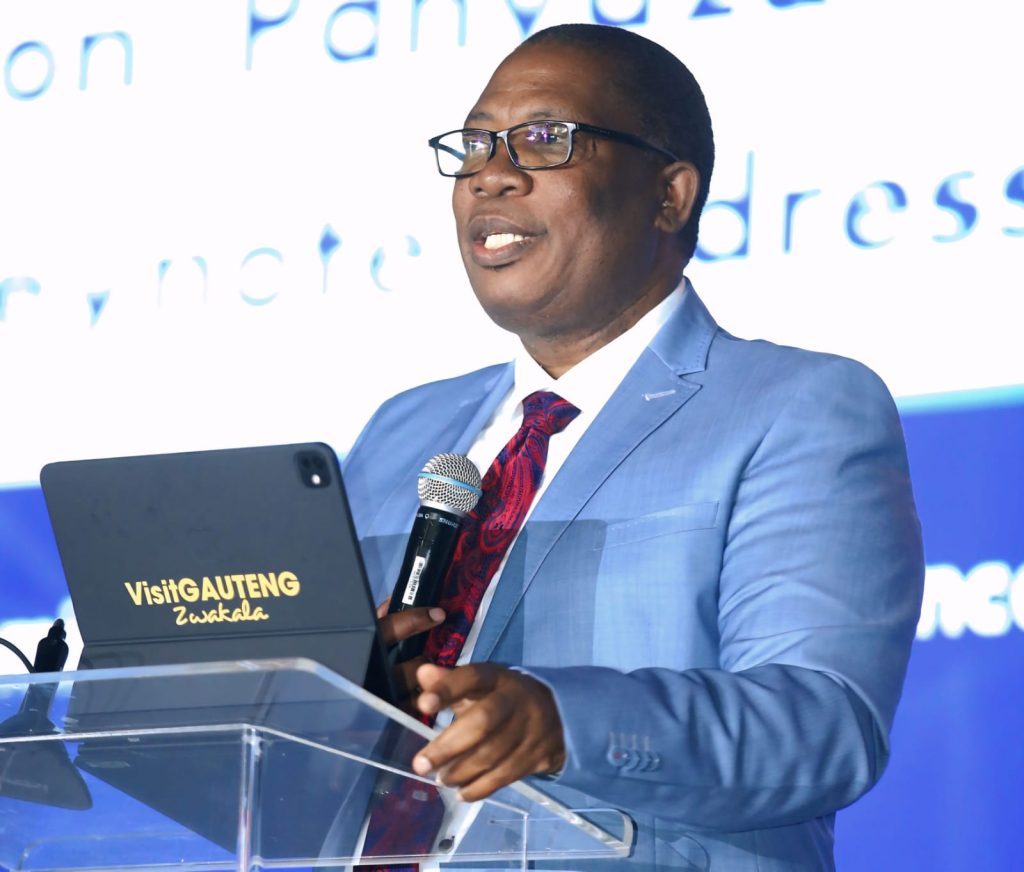
Gauteng premier Panyaza Lesufi told the indaba that government intended to collaborate with INSETA to develop skills that would boost the economy while ensuring that all young people have opportunities to grow.

Gauteng premier Panyaza Lesufi. Picture: Eddie Mtsweni.

“We register 650,000 [unemployed youth] that needed to be re-skilled last year, and we are proud with the partners that we have now that we are ready to take those to be re-skilled so that they can be relevant to the economy,” said Lesufi.

“So all the SETAs that are here, come and choose the skills that we can train these young people for, so that we do not have a Monday to Friday in our townships that looks like a weekend because there are so many people that are roaming free.”

Lesufi acknowledged the evolving economy and emphasised the need for INSETA, as part of the industry, to remain relevant and profitable while playing a role in safeguarding the province’s economy from decline.

Meanwhile, one of the panellists at the conference and CEO of QP Drone Tech, Queen Ndlovu, told Inside Education that the company provided training for unemployed youth in communities vulnerable to disasters, equipping them with skills in drone operation and artificial intelligence technology to enhance disaster risk management and response efforts.

“We train the unemployed youth within those communities on how to use drones and AI for disaster risk management, either as drone pilots and advocacy teaching their community that let us avoid being careless, [for example the] floods are here with us,” she said.

Furthermore, Ndlovu acknowledged that while both private and public sectors have shown scepticism toward this ground-breaking technology, significant efforts have been made to develop these skills, recognising that technology was the future.

QP Drone Tech CEO Queen Ndlovu. Picture: Eddie Mtsweni.

“We run master classes with municipalities where we share the benefits and value of using drones in disaster risk management. So those stakeholders could [be] politicians, government executives or community members… those master classes have to educate,” Ndlovu said.

The two-day indaba ends on Thursday.

INSIDE EDUCATION

Uncategorized

Dept seeks solutions for challenges in higher education enrolment

By Johnathan Paoli

The Higher Education and Training Department has acknowledged ongoing challenges in enrolments for the 2025 academic year, saying that urgent interventions are needed.

There have been issues at universities, Technical and Vocational Education and Training (TVET) colleges and Community Education and Training (CET) colleges.

In a detailed report to the Select Committee on Education, Science and Creative Industries, the department outlined issues such as institutional capacity constraints, delays in admissions and the impact of financial aid distribution on student placements.

“We are committed to expanding access to higher education, but financial and infrastructure constraints remain a challenge. While we work to improve enrolment capacity, address lecturer shortages and modernise curricula, collaboration with industry and increased investment are crucial,” deputy director-general for TVETs, Sam Zungu, said.

For the 2025 academic year, 615,429 students obtained the National Senior Certificate, with 337,158 qualifying for a Bachelor’s pass.

The demand for higher education continues to grow, with most successful applicants coming from disadvantaged backgrounds and relying on National Student Financial Aid Scheme funding.

However, many students face significant challenges securing placements in universities due to limited spaces and high entrance requirements.

Late applications remain a pressing issue, as several universities, including Cape Peninsula University of Technology (CPUT), Durban University of Technology and the University of Johannesburg, had to reopen applications to accommodate the high demand.

Some universities, such as CPUT and the University of Zululand, also accepted walk-in applications, further complicating the registration process.

As of March, university enrolments reached 91.7% of the government’s target, with undergraduate programmes nearly at full capacity.

However, postgraduate enrolments lag at 77%, reflecting systemic barriers for students who wish to further their studies.

The TVET sector, with a planned capacity of over 500,000 students for 2025, continues to grapple with challenges that limit enrolment expansion including infrastructure limitations, accommodation shortages, staff shortages and late applications

The department acknowledged the need for more investment to expand the capacity of TVET colleges.

Zungu highlighted that the government’s budget allocations for TVETs have averaged R15.2 billion annually, which is sufficient for only 480,000 enrolments. This figure falls far short of the 2.5 million enrolments targeted for 2030.

The CET sector, comprising nine colleges and over 1,500 learning centres, remains underfunded and under-supported.

The department outlined critical problems, including a lack of digital registration systems and insufficient teaching materials.

The department’s deputy director-general for CET colleges, Thembisa Futshane, confirmed that the sector also suffered from a shortage of lecturers, particularly in Science and Mathematics, as professionals opted for better-paying opportunities in schools, TVET colleges and universities.

To address these gaps, the department was working with institutions such as the CPUT to develop digital learning platforms for critical subjects, making education more accessible to students in remote areas.

The department called for expanding university capacity by working with institutions to increase spaces in high-demand programmes, particularly Science, Technology, Engineering, and Mathematics (STEM) fields, and strengthening TVET infrastructure by allocating more funds to improve learning facilities and provide student accommodation.

It said the implementation of the Central Application Services was aimed at streamlining student applications and reducing delays, while initiatives were underway to train more educators, particularly in Mathematics and Science, to address shortages.

Deputy director-general for university education, Marcia Socikwa raised concerns over strict university admission criteria, stating that public institutions should serve a broader student base rather than only top performers.

She said a more flexible system was needed that accommodated middle-performing students.

The department is also tackling a growing skills mismatch with efforts underway to align university programmes with labour market demands.

A major concern is the declining number of students taking pure Mathematics, which has impacted STEM enrolment.

“Everywhere in the world Mathematics is the foundation for learning to solve problems and if we do not pay attention, we will not be able to solve our own problems,” she warned.

To address this, the department is collaborating with the Basic Education Department and universities to promote Mathematics through initiatives like the upcoming Maths Festival with the University of the Western Cape.

Additionally, the government has invested R720 million in language development, ensuring institutions embrace multilingualism, with plans in place to enhance the training of maths and physics lecturers amid a growing shortage.

Lastly, the department is putting plans in place to introduce structural reforms to ensure timely disbursement of funds and prevent corruption.

The department said it was actively working on increasing institutional capacity, improving financial aid processes and strengthening partnerships between the public and private sectors, considering the year presenting significant challenges for higher education admissions.

INSIDE EDUCATION

Uncategorized

Western Cape celebrates SA Library Week

By Alicia Mmashakana

Western Cape education MEC David Maynier visited West End Primary School in Lentegeur in Cape Town to hand over Reading Corner resources to the school in celebration of South African Library Week.

It forms part of the Love2Read initiative developed by the Education Library and Information Service (EDULIS) to provide schools with an alternative to a centralised library.

It aims to develop reading skills in grades 3, 4, and 5, and to encourage learners to read for enjoyment. So far, Reading Corner resources have been handed over to 147 schools in the Western Cape.

Through the initiative, EDULIS provides a school with:

50 – 70 library resources per classroom;

Fiction and non-fiction materials in the language(s) of choice;

Resources packed according to grade/level;

Resources on block loan for a two-year period; and

Training and support for teachers.

“Developing a generation of lifelong readers is a key priority of the Western Cape Government, and the Love2Read initiative builds on our wider reading strategy to improve reading as a fundamental skill for a child’s education and future career,” Maynier’s spokesperson Kerry Mauchline said on Wednesday.

“Our #BackOnTrack programme includes extensive support for reading in the Foundation Phase, with every learner in grades 1 to 3 having access to new decodable readers and anthologies at a cost of R115 million.”

Over the last two years, the provincial government has trained 9683 Foundation Phase teachers in three languages, ensuring they are better equipped to teach reading in the critical early grades, with additional resources supplied by Funda Wande classrooms, which is also providing training support to teachers.

Mauchline said the department was seeing a positive impact of reading support in their systemic test results, particularly in the early grades where language scores now exceeded those achieved in 2019.

“Parents have a vital role to play in developing their children’s reading skills and nurturing a love of reading, so I encourage them to read with their children during Library Week and every day,” she said.

INSIDE EDUCATION

Uncategorized

INSETA changes lives and contributes to dreams being realised

By Xolisa Phllip

The publication of INSETA’s 2023-24 annual report, which marks four years into the organisation’s five-year strategic term, reflects a time of continuous transformation, says the education and training authority’s CEO Gugu Mkhize.  

In pure numbers, INSETA has moved from a 72% performance, a decline experienced during the height of the Covid-19 crisis, to the present 97%, which is a testament to the organisational resilience built up post-pandemic. 

In human terms, through the delivery of its mandate to provide quality assurance, learning programmes, skills planning, research and administration, INSETA’s work has changed lives and been the catalyst of dreams being realised, Mkhize told INSETA’s AGM.

“Thousands of South Africans now have the skills to participate meaningfully in the economy,” said the CEO, reflecting on the milestones in the annual report.

Mkhize explained that “each percentage point improvement in our performance, translates to families being supported, communities being uplifted and a stronger insurance sector”.

INSETA has embarked on a journey of excellence, underscored by a collective commitment and effort internally and externally to embed excellence in skills development.

The 97% performance is an outcome of collective dedication to INSETA’s excellence journey at all levels – from the board and SETA staff to stakeholders and the insurance sector.

Mkhize said the 97% attainment of targets reflected the power of collaboration among government, industry, delivery partners and communities – all working together to build a skilled and inclusive economy.

“This is what real transformation looks like,” said Mkhize, adding, “We have built strong partnerships with industry players, who share our vision of a transformed sector that reflects South Africa’s diversity.”

“We have worked closely with other skills delivery providers, some SETAs and educational institutions, as we share the same values when it comes to building a workforce that is ready for tomorrow’s demands,” Mkhize said.

The nods from industry, represented by 12 awards to INSETA, “are validation that our approach to inclusive skills development is making a real difference in addressing South Africa’s challenges of unemployment, inequality and poverty.”

Innovation and impact

Adapting to an ever-changing operating environment and a challenging socioeconomic context has meant transcending a traditional approach to skills development.

INSETA’s business-unusual thinking and approach are apparent in the Skills for Rural Impact Programme, designed to bring skills development opportunities where such opportunities and resources are in limited supply or non-existent. 

Mkhize is emphatic that talent should not be restricted by geography because of a scarcity of opportunities.

“Therefore, we have taken our services directly to communities that have historically been excluded from the financial services sector,” she said.

“When we state that we have reached nearly 62,000 beneficiaries, with a target of 80,000 by financial year-end, we are referring to individuals in deep rural KwaZulu-Natal and the Eastern Cape, who now see the insurance sector as a viable career path,” Mkhize explained.

Supporting small businesses

In line with the National Development Plan 2030, INSETA views small businesses as the backbone of the economy, possessing the potential to make a sizeable dent in South Africa’s high unemployment rate by generating jobs.

By supporting 1911 small businesses through development programmes, INSETA aims to create sustainable economic ecosystems in communities where the need is most pronounced.

For every small business supported by INSETA, five to 10 jobs are created in the insurance sector, which is sustainable and skills-based, Mkhize noted.

Our future vision

“As we march on to 2025-30, we are acutely aware that the insurance sector is undergoing rapid transformation,” Mkhize said.

The proliferation of Insurtech, a term used to describe online-based insurance start-ups and digital platforms whose operations are disruptive in nature, means the workforce in the sector must be adequately prepared for present challenges and future opportunities.

It is for those reasons that INSETA’s new strategic plan emphasises digital skills development while maintaining core insurance competencies.

“Importantly, the new strategic plan 2025-30 recognises that transformation must be inclusive. We are particularly focused on ensuring that historically marginalised groups, such as women, youth, people with disabilities and rural communities, are not left behind in this digital revolution,” Mkhize said.

INSETA has disbursed substantial resources in digital technology through the establishment of DigiHub, a state-of-the-art facility developed in partnership with the Coastal TVET College.

The collaboration is a milestone that will help bridge the digital skills gap and empower students with the tools necessary to thrive in an increasingly technology-driven world, Mkhize said.

“Every programme we design is aimed at responding to one fundamental question, which is about how to contribute to a more equitable and skilled insurance sector,” Mkhize said.

INSETA is hosting the Skills Insurance Indaba on Wednesday and Thursday.

INSIDE EDUCATION

Uncategorized

NSFAS faces ongoing challenges amid efforts to stabilise student funding

By Johnathan Paoli

The National Student Financial Aid Scheme (NSFAS) has provided an update on the student funding process for the 2025 academic year, acknowledging ongoing instability within the system and the difficulties students continue to face.

The briefing to the Select Committee on Education, Science, and Creative Industries highlighted critical issues such as delays in disbursements, defunded students and challenges in student accommodation, while also outlining the new board’s attempts to restore governance and efficiency.

For the 2025 academic year, NSFAS received a total of 1.1 million applications, with 607,564 students provisionally funded and 243,690 fully funded after completing registration.

However, over 97,000 applications were rejected, and 75,294 students submitted appeals, creating a backlog that must be processed before the 31 March deadline.

Despite efforts to streamline the process, students have continued to experience delays in receiving funding and allowances, particularly at universities and TVET colleges.

While R3.7 billion was allocated to universities upfront and R641 million to TVET colleges, some institutions have been slow in distributing funds to students.

NSFAS board chairperson Karen Stander noted that while direct payments were made to TVET students, some institutions received funds before disbursing them, leading to delays.

NSFAS acting CEO Waseem Carrim defended the scheme against criticism, arguing that late payments were often due to university inefficiencies.

“We have made two upfront payments, but the money has not been passed on to students due to institutional challenges,” he said.

He described it as “irresponsible journalism” to blame NSFAS for failures outside its control.

The student accommodation crisis remains one of the biggest challenges facing NSFAS and students.

Many students, especially in rural and non-metro areas, struggle to find affordable, accredited housing.

Stander said that some private accommodation providers outside NSFAS’s portal were the biggest sources of complaints.

Carrim described student housing as a “structural problem” beyond NSFAS’s direct control, requiring collaboration across government, universities and private stakeholders.

He suggested that resolving the issue could be an opportunity for economic growth.

“If we can map out what future demand looks like, we can stimulate the construction sector to provide sufficient student accommodation,” Carrim said.

Adding to student frustrations, service providers have been accused of overcharging for accommodation, prompting NSFAS to conduct an accommodation audit.

However, Stander admitted that resolving this issue was complex and beyond NSFAS’s authority alone.

On the defunding of students due to eligibility changes or administrative errors, the scheme did not provide a full breakdown of affected students but assured the committee that funding gaps and eligibility issues were under review.

Additionally, students from Unisa and other distance-learning institutions have raised concerns about disparities in allowances.

Carrim acknowledged this, stating that NSFAS was considering a revised allowance structure to account for students living at home versus those needing full-time accommodation.

NSFAS has also been plagued by allegations of mismanagement and corruption.

The Special Investigating Unit has recovered R2.8 billion in fraudulent payments, with R2 billion already returned and R800 million still in the process of recovery.

Court cases regarding missing funds are ongoing.

The NSFAS board is also reviewing administrative inefficiencies, with a particular focus on decentralisation and regionalisation to improve service delivery.

Carrim acknowledged a “large degree of instability” at NSFAS due to frequent leadership changes, with the scheme having been placed under administration twice in recent years.

Higher Education and Training deputy director-general Marcia Socikwa acknowledged past mistakes in the administration of NSFAS.

“We accept it was unwise to make that move, and in the new modelling, we encourage the board to consider a cost-effective way of disbursement so that the middleman is not a beneficiary to the detriment of our students,” she said.

Despite these setbacks, the NSFAS leadership insists that progress is being made to stabilise the scheme and ensure students receive their funding efficiently.

Key priorities over the next 12 months include fixing governance structures, upgrading systems to streamline funding and disbursement, and clarifying responsibilities between NSFAS and higher education institutions to avoid unnecessary delays.

“If we can sort out broader government frameworks, we can position the fund in the 2026 academic year to be more student-cantered and responsive to their needs,” the acting CEO said.

NSFAS has also encouraged students to report collusion and corruption in the funding process, vowing to act against any wrongdoing.

While the briefing highlighted the deep-rooted challenges in student funding, including administrative failures, accommodation shortages and governance instability, both Carrim and Stander said NSFAS remained committed to resolving outstanding appeals and disbursements as quickly as possible in light of the daily struggles of students.

INSIDE POLITICS

Uncategorized

Bana Pele summit pledges majority of ECD funds to children

By Thapelo Molefe

In a groundbreaking move to reshape the future of Early Childhood Development (ECD) in South Africa, stakeholders at the Bana Pele 2030 Roadmap Leadership Summit have set an ambitious funding benchmark—80% of every rand raised for ECD must go directly to children. 

This bold commitment, spearheaded by leaders in government, civil society and business, aims to ensure that financial resources are not swallowed by administrative overheads but instead serve the nation’s youngest citizens where it matters most.

The summit, which brought together experts and policymakers from across sectors, reinforced a child-first approach to ECD funding, emphasising the urgent need to simplify bureaucracy and enhance investment in early learning initiatives. 

“The money must go to the child,” was the rallying cry echoed throughout the discussions at the summit, as stakeholders stressed the importance of ensuring direct impact rather than diluting funds into operational costs.

Beyond the financial pledge, the roadmap lays the foundation for lasting change by prioritising multi-sectoral collaboration. Stakeholders agreed to align their efforts with national development plans to drive efficiency, sustainability, and measurable impact.

“There will be no quick wins here,” the summit participants acknowledged. “This is about staying the course, making strategic investments, and seeing them through to 2030.”

Basic Education Minister Siviwe Gwarube addressed critical questions about funding and the path forward for ECD expansion. Speaking to Inside Education, the minister addressed questions on the R10 billion allocated in last week’s budget to ECD.

“The finance minister has allocated R10 billion that will go towards early childhood development, which is some of the work that we are doing here today with the Bana Pele ECD summit, because we want to make sure that we expand and extend early childhood development to every single child in South Africa. Currently, 1.3 million children in the country don’t have access to quality ECD, and we want to make sure that there is universal access,” Gwarube stated.

Video by: Katlego Tshekoesele

The minister also explained how funding will be structured, with provinces expected to follow the 80-20 budgeting principle—80% allocated to employee costs and 20% to goods and services. 

She also addressed the quality of ECD practitioners and their training.

A major obstacle to ECD accessibility remains the complex regulatory framework that hinders registration of centres and programmes. 

The Bana Pele mass registration drive emerged as a crucial solution, with commitments to simplify compliance, reduce red tape and equip local governments with the tools to support practitioners in meeting requirements without compromising quality.

A pressing concern raised during the summit was the financial insecurity faced by ECD practitioners, with 90% of them earning below minimum wage. Stakeholders acknowledged that a sector built on the backs of underpaid workers was unsustainable. 

The roadmap includes efforts to elevate and professionalise the sector, ensuring fair wages and creating opportunities for young, innovative minds to enter the field.

“We are building an ECD sector that is not just about care but is also a legitimate, economically productive industry,” the stakeholders said. “We need to recognise the incredible human beings who are shaping the foundation of our future generations.”

While access remains a key focus, participants were quick to highlight that access without quality was meaningless. The roadmap calls for rigorous tracking of both short-term and long-term outcomes, ensuring that investments translate into tangible improvements in childhood education and development.

Business Leadership South Africa chairperson Nkululeko Nyembezi emphasised that investing in ECD was critical to building South Africa’s future. 

“The quality of early learning determines the kind of country we leave behind,” she noted.

Highlighting research showing up to 17 times return on investment in ECD, Nyembezi urged a shift from fragmented efforts to a coordinated national strategy.

She stressed that corporate support should not rely on legislation but on a partnership model, with business already investing R11 billion annually in education. 

“The private sector is stepping up, but greater alignment with national plans is needed,” she said.

Nyembezi commended the department for bringing structure and coherence to the sector and called for a united effort in executing the roadmap. 

“Sustainability depends on collective action—investment in ECD is an investment in resilience, leadership and a stronger society,” she concluded.

With the 2030 goal set, the real work begins now.

INSIDE EDUCATION

Uncategorized

Urgent funding reforms needed to bridge ECD gaps

By Thapelo Molefe

South Africa’s ambitious goal of achieving universal access to quality early childhood development (ECD) by 2030 is facing a major hurdle – a critical funding shortfall. 

While the government has pledged R10 billion over the next three years, experts warn that without immediate private sector involvement and innovative financial mechanisms, millions of children will remain without proper early learning support.

Discussions at the Bana Pele 2030 Roadmap Leadership Summit on Monday made it clear that traditional subsidy models are insufficient to meet the growing demand. To truly transform the ECD sector, the conversation has shifted towards strategic financial partnerships, leveraging private capital and ensuring outcome-based accountability.

The R10 billion allocation announced during last week’s Budget is largely focused on operational costs such as subsidies, nutrition and practitioner stipends. However, Basic Education Department acting director for ECD, Janeli Kotze, highlighted a crucial gap.

“We’re covering operational costs, but what’s missing is the capital investment required to create new ECD centres and improve training. That’s where partnerships with the private sector and new financial instruments come into play,” she said during a panel discussion.

Many ECD practitioners remain undertrained and underpaid, leading to inconsistencies in the quality of services offered to children in vulnerable communities.

Education budget and policy analyst at the National Treasury, Spencer Janari, echoed this sentiment, stressing that strategic spending must be prioritised. 

“It’s not just about throwing money at the sector. We need to ensure that each investment builds on the next, so we’re not left with fragmented, short-term funding that doesn’t yield sustained progress.”

Despite the planned subsidy increases, 800,000 children remain outside the ECD support system. The government’s goal is to reach 1.5 million children by 2027, but that still falls short of the department’s 2030 target of 2.3 million children.

“The funding must do two things simultaneously,” Kotze emphasised. “It must increase access for the remaining children and improve quality across the board. This is not sequential—we must work on both at the same time.”

The government has outlined a structured plan for the R10 billion allocation to ensure sustainable growth in the sector. 

A substantial portion of the funds will go towards increasing subsidies for existing ECD centres, ensuring they can cover operational costs such as salaries for practitioners, food and nutrition for children and education materials. 

Another priority is expanding access to underserved areas by funding new ECD centres in rural and underprivileged communities, providing the necessary infrastructure, learning materials and ensuring compliance with health and safety regulations.

Beyond infrastructure, a key focus will be on practitioner training and support, with significant investment allocated to upskilling educators through certification programmes, mentorship and ongoing professional development to enhance the quality of teaching. 

Recognising the inefficiencies in subsidy distribution, the government will also develop a digital tracking system to streamline registration and funding allocation, allowing real-time monitoring of enrolment and expenditure. 

Additionally, part of the funding will serve as an incentive to attract private sector contributions through co-funding mechanisms, such as social impact bonds and blended finance models. 

Finally, the allocation includes provisions for nutrition and health programmes, supporting school feeding initiatives, health check-ups and sanitation improvements to create a safe and nurturing environment for young learners.

One of the strongest calls during the discussions was for private investment to catalyse the expansion of ECD programmes. 

Ilifa Labantwana chief economist Laura Droomer championed the idea of an ECD Outcomes Fund, a blended financing model that would incentivise private investors by linking returns to measurable improvements in early learning outcomes.

“We need private funding to catalyse new practitioners into the workforce,” Droomer explained. “Match funding models, social impact bonds and public-private partnerships are all tools we must leverage to reach our 2030 goals.”

A proposed outcome-based financing model will allow investors to fund ECD programmes upfront and be repaid by the government and donors if specific educational and developmental benchmarks are met. This approach ensures accountability and impact-driven spending.

Additionally, match funding has been presented as a key tool to unlock larger investments. Under this model, private sector contributions will be matched by government funds, ensuring that every rand invested delivers a greater impact.

Experts also pointed to international models where social impact bonds have been used successfully to drive innovation and accountability in education funding.

Another key concern raised is the bureaucratic challenges preventing ECD centres from accessing subsidies. With a largely paper-based registration system, tracking and allocating subsidies efficiently has been difficult. 

Many new practitioners struggle to register their programmes due to cumbersome processes, resulting in thousands of children missing out on much-needed early education opportunities.

Panellists agreed that a streamlined digital system that simplified registration was urgently needed to ensure funding reached new centres faster.

Without such reforms, even the additional financial injections will struggle to make an immediate impact. 

They said developing a national ECD tracking system would provide real-time data on enrolment, funding allocation and programme effectiveness.

“There is no point in increasing subsidies if the system cannot efficiently distribute them,” Kotze noted. “We need a transparent, digitised system that allows for real-time monitoring and ensures every cent is being used effectively.”

Ilifa Labantwana CEO Zaheera Mohamed also stressed the need for a collaborative funding approach to maximise impact. 

“We need to move beyond isolated investments. A unified, transparent funding platform will allow us to pool resources effectively, scale innovative solutions and ensure long-term sustainability,” she said.

Mohamed stressed the importance of a multi-sector approach, where private companies, philanthropic organisations and government entities worked together to create a long-term financial model for ECD.

The summit acknowledged that quality ECD for all is critical to help break the cycle of poverty in the country and promote long-term education, health and economic development.

INSIDE EDUCATION

Govt should have focused on ECD: Ramaphosa
Uncategorized

Govt should have focused on ECD: Ramaphosa

By Thapelo Molefe

President Cyril Ramaphosa has admitted that the South African government should have prioritised early childhood development when the country became a democracy.

Speaking at the Bana Pele 2030 Roadmap Leadership Summit in Johannesburg on Monday, the president acknowledged the delay, but emphasised that it was “better late than never” as the new administration had committed to significantly expanding access to early learning programmes.

“This is something we should have done 30 years ago,” Ramaphosa said. 

“We have made mistakes, but it’s never too late to do the right thing. We are here today because of our shared belief in the profound importance of Bana Pele – putting children first.”

Ramaphosa’s admission set the tone for a landmark event focused on ensuring universal access to quality ECD by 2030.

He underscored the profound impact of early education, noting that investing in ECD was not just about schooling, it was about shaping the nation’s future workforce, breaking cycles of poverty and fostering economic growth.

“We are all aware that 80% of children in South Africa cannot read for meaning by the age of 10. That is unacceptable,” Ramaphosa said. “If we are serious about changing this, then ECD must be treated as an urgent priority.”

Last week, Finance Minister Enoch Godongwana announced an additional R10 billion investment ECD over the next three years during his Budget speech.

Ramaphosa has described it as a necessary step to “secure the future of our children and of South Africa itself”.

He stressed that this funding would be used to ensure that children under five received quality education, proper nutrition, healthcare and a safe learning environment.

Before introducing the president, Basic Education Minister Siviwe Gwarube addressed the summit, recalling her own childhood and emphasising the transformative power of early learning.

“The future of this country begins in early childhood development,” Gwarube declared.

“Research shows that the best return on investment is in the first five years of a child’s life. If we fail them then, we fail them forever.”

She pointed out the stark inequalities in access to ECD, with wealthier children far more likely to be developmentally on track than their peers in underprivileged communities. 

“Currently, 1.3 million children between the ages of three and five are not attending any ECD programme. Most of these children come from poorer communities, which means we are entrenching inequality from the very start,” she said

“We cannot allow this disparity to continue… We must shift away from a mindset of scarcity to one of collaboration and abundance.”

Basic Education Minister Siviwe Gwarube at the ECD summit in Johannesburg. Picture: Eddie Mtsweni

Both Ramaphosa and Gwarube emphasised that achieving the ambitious goal of universal access to ECD by 2030 would require unprecedented cooperation between the government, private sector partners and civil society.

“We don’t have all the answers,” Gwarube admitted. “We need to work together, to be willing to learn, adapt and innovate. There is no playbook for getting 1.3 million more children into quality early learning. We are writing that playbook now.”

Ramaphosa echoed her call for leadership, acknowledging the challenges ahead but insisting that the country had no choice but to push forward. 

“We have a clear goal: 1.3 million more children in early learning by 2030,” he stated. “If we work together, we can do it.”

“Investing in early childhood education yields significant economic returns,” Ramaphosa noted.

“Studies show that every rand spent on ECD saves up to seven rands in future costs related to remedial education, social services and criminal justice.”

The message was clear that the time to act is now, and the future of South Africa depends on it.

Video by Katlego Tshekoesele

INSIDE EDUCATION

Uncategorized

Time to measure the return on investment in education

By Edwin Naidu

South Africa’s pro-poor policies have had a positive effect on post-apartheid society, particularly in the realm of education. These policies have opened doors and provided opportunities that were previously inaccessible. However, the one thing missing is the impact, particularly on government spending on education.

As a nation led by a businessman, the need for efficiency in government spending is paramount to successful outcomes. However, in cases like Cyril Ramaphosa’s, where it is handed on a silver platter as a post-apartheid empowerment beneficiary, the true value for money is often lost.

Many of his ilk, like Tokyo Sexwale, Saki Macozoma and others, have benefitted from the post-apartheid redress push, but at what cost to the efficiency of our education system?

As business leaders who were propped up because of their Robben Island or political and trade union connections, one must ask whether the return on investment was paramount in their outlook when running the corporations they did.

Why is this not important when running the affairs of a country mired in debt?

Finance Minister Enoch Godongwana pays lip service to improving the effectiveness and efficiency of spending. But when traffic authorities still hide in the bush on highways to install cameras to trap people speeding while unemployed civilians control robots, it speaks volumes about a government that cares for its people.

In his Budget speech, the minister mentioned undertaking an audit of ghost workers, starting with national and provincial departments. This is doomed to fail. Whatever happened to setting targets for government ministers and measuring performance—or non-performance? It did not seem to amount to much, but it was hot air.

The review aims to reduce duplication and improve operational efficiencies across over 100 active labour market programmes in over 20 public institutions.

Thirty years after democracy, the bloated bureaucracy created by itself decides to embark on a review without considering whether the fat at the top should first be cut.

Instead of dispensing with experience in its ranks, the Cabinet has earmarked R11 billion for a retirement initiative aimed at attracting younger people to public service.

Godongwana should have known that salaries make up 76 percent of provincial education spending in the annual government budget. This means that only R24 out of every R100 of the budget is left for funding school infrastructure, meals for learners from poor backgrounds, and stationery and textbooks, amongst other things.

Acknowledging that learner-teacher ratios remain higher than preferred, more teachers are needed in classrooms. Godongwana has earmarked R19.1 billion over the medium term to keep approximately 11,000 teachers in classrooms.

He said early childhood development is the foundation for building the next generation of citizens who contribute economically and socially to this great nation. Despite this, the subsidy for ECD has not increased from the 2019 level of R17 per day per child.

To remedy this, an additional R10 billion over the medium term is allocated to increase the subsidy to R24 per day per child. The extra funding will also support increased access to ECD for approximately 700,000 more children up to four. What does it seek to achieve? And what should happen to those who don’t ensure it succeeds?

The government must be applauded for expanding access to historically disadvantaged population groups, thus contributing to redress for past injustices. For instance, 10% of Black South Africans born in the 1950s and 1960s completed 12 years of education. By contrast, those born in the 1980s who completed their schooling in the late 1990s saw this figure rise to approximately 30%.

According to 2021 household survey data, nearly 60% now attain this milestone. Some improvements in the system have been attributable to highly intentional pro-poor education policies:About 10 million learners receive daily meals at school and do not pay school fees (~80%).

These policies help alleviate the financial burden on vulnerable households and create meaningful opportunities to attend and progress through school. Policies to screen and identify children for special educational needs have also helped ensure that more than 90% of 7 to 15-year-old children with disabilities now attend school.

But it is time for the minister to consider whether the investment in education equates to credible learning for school-going children and opportunities for varsity graduates?

Although school dropout rates remain a concern, completion rates have steadily improved. It is time to assess whether education is serving South Africa or whether the government is merely throwing money down an open drain in the name of redress?

We need better investment strategies that assess the return on investment in our greatest asset—its people.

Edwin Naidu is the Editor of Inside Education.

INSIDE POLITICS

Uncategorized

Nkabane applauds Pandor on new university position

By Lungile Ntimba

Higher Education and Training Minister Nobuhle Nkabane has congratulated former Caniest minister and educator Naledi Pandor on her recent appointment as an honorary professor in education at the University of Pretoria.

Nkabane said this was a remarkable achievement and a fitting recognition of Pandor’s significant impact on the country’s higher education sector. 

Pandor served in various Cabinet positions, including minister of education, science and technology, and most recently international relations and cooperation.

The minister noted that Pandor’s visionary leadership has been instrumental in reshaping the higher education system, promoting social justice and equality through progressive policies.

“South Africa has positioned itself at the forefront of science, technology and innovation, thanks to the solid foundation laid by Dr Pandor,” she said in a statement on Monday.

“Her unwavering commitment to building an inclusive and coordinated higher education sector is commendable.”

Nkabane praised the university’s decision, saying Pandor’s knowledge and passion for transformation would enrich it and the broader higher education community.

“Her academic achievements, including her doctoral research on transformation in the South African higher education context, reflect her deep commitment to shaping a progressive and inclusive sector,” she said.

Nkabane also expressed her personal admiration for Pandor.

“It is an honour to stand on the shoulders of giants like Dr Pandor, whose mentorship and guidance continue to inspire me. 

“I consider her a mentor, mother and a constant source of wisdom as we navigate the challenges facing our higher education system. Her contribution to the sector is invaluable, and I wish her every success in this exciting new chapter,” the minister said in a statement.

INSIDE EDUCATION