Uncategorized

Science, technology, innovation strengthened between SA and Cuba

By Amy Musgrave

South Africa and Cuba have agreed that the science, technology and innovation (STI) agreement between the two countries must be formally renewed by the end of the year.

Science, Technology and Innovation Minister Blade Nzimande led a senior delegation to the island in the Caribbean this month, mainly to renew and explore opportunities to strengthen the existing STI deal that was first signed in 2001.

The delegates were from the Council for Scientific and Industrial Research, the National Research Foundation and the Technology Innovation Agency.

Speaking at the signing of the Statement of Intent to renew the agreement and expand areas of cooperation, Nzimande expressed the importance of the visit.

“Our visit to Cuba and the engagements we held further solidifies the long-standing collaboration based on mutual respect, solidarity and a shared goal of inclusive and transformative growth through scientific advancement,” he said.

As the minister responsible for science, technology, and innovation, I am championing the mantra of positioning science, technology, and innovation at the centre of government, education, industry and society in South Africa.

“It is only through investments in science, technology, and innovation that any nation in the world can succeed and realise its full potential of socio-economic development and competitiveness.”

Nzimande and his Cuban counterpart, Cuban Armando Rodríguez Batista, have committed to strengthening friendship, and exchange and cooperation in the field of science and technology.

They further acknowledged that science and technology were essential tools in a knowledge-based society and recognised that cooperation in various science and technology disciplines would increase the economic and social development of both countries.

Nzimande also held discussions with the Cuban Ministers of Education, Energy, Foreign Affairs and Public Health to explore cooperation in areas prioritised by South Africa such as the joint training programmes at master’s and PhD level, renewable energy technologies such as hydrogen economy, joint research in nuclear medicine, cancer treatment and joint training programmes in specialised fields in medical sciences.

He emphasised the importance of continuing institution-to-institution engagement such as the discussions between South Africa’s Technology Innovation Agency and Cuba’s Centre for Genetic Engineering and Biotechnology. This was intended to, amongst others, forge meaningful biopharmaceutical sector alliances.

Nzimande and Batista agreed to establish a regular science and technology policy dialogue where the two countries could exchange ideas and cross benchmark their respective national systems of innovation.

Batista indicated that Cuba was in the process of developing legislation for its science system. Through the Ministry of Science, Technology and Innovation, South Africa intends to undertake a similar process soon.

Batista emphasised the importance of jointly funded research projects in such key areas as pharmaceuticals, biotechnology and ICT, which formed part of the research priorities of both countries.

On the way forward, Nzimande said: “As we work towards renewing our existing agreement to be signed before the end of 2025, as an immediate response to this visit, the senior officials and experts should immediately develop a joint Programme of Action outlining our goals, timelines, and expected outcomes on the various areas of cooperation which we discussed.”

He said that the partnership with Cuba embodied the essence of global scientific and technological collaboration driven by the needs of the citizens of the countries.

INSIDE EDUCATION
Uncategorized

South Africa and Lesotho forge stronger ties in education 

By Levy Masiteng

In a step towards strengthening bilateral relations in education, Higher Education and Training Minister Nobuhle Nkabane and her Lesotho counterpart, Ntoi Rapapa, have signed a memorandum of understanding.

It outlines key areas of cooperation, including strengthening teacher development, expanding technical and vocational education, and promoting joint academic programmes between the two nations. 

President Cyril Ramaphosa and Cabinet members were in Lesotho for the second session of the South Africa-Lesotho Bi-National Commission (BNC).

The commission, co-chaired by Ramaphosa and Prime Minister Sam Matekane, aimed to enhance cooperation in various sectors, including education, economic development and cross-border security.

“This historic agreement cements bilateral cooperation in higher education and training, with commitments to student and academic exchanges, mutual recognition of qualifications, collaborative research and innovation, and the advancement of Sustainable Development Goal 4 on quality education,” Nkabane said. 

Department spokesperson Ishmael Mnisi said that Nkabane’s presence underscored South Africa’s commitment to advancing higher education collaboration and skills development in support of regional integration.

He said the agreement would have a positive impact on the education sector in both countries, fostering a new era of collaboration and knowledge sharing.

In addition to the higher education MoU, another agreement was signed on basic education between ministers Siviwe Gwarube and Ntoi Rapapa.

The BNC provides a platform for both countries to discuss and address key issues, fostering a stronger partnership and promoting regional integration.

At least six MoUs were signed by the two governments.

INSIDE EDUCATION

Uncategorized

School of government must improve upskilling and education for public servants

By Staff Reporter

There has been very little visible improvement in the performance of public servants despite training and upskilling programmes, according to the Portfolio Committee on Public Service and Administration.

During a briefing from the Public Service and Administration Department and its entities, committee members expressed concern about ethics and the prolonged disciplinary processes in the public service. They questioned whether lifestyle audits and disciplinary investigations translated into accountability.

Members believe finalising disciplinary cases still takes too long, eroding public trust.

“The department acknowledged the delays in finalising disciplinary cases. It informed members that a new national database system for disciplinary cases is underway, which will help identify and reduce bottlenecks and financial losses due to prolonged suspensions,” the committee said in a statement.

The entities attending the briefing included the Public Service Commission (PSC), the National School of Government (NSG), the Government Employee Medical Scheme (and the Centre for Public Service Innovation.

They discussed their performance plans for the 2025/26 financial year and strategic plans for 2025 – 2030. Government departments submit these plans to parliamentary committees to ensure accountability, transparency and effective resource management.

This enables committees to scrutinise departments’ performance and spending and hold them accountable to the public.

Committee chairperson Jan de Villiers reminded the meeting that during the State of the Nation Address, President Cyril Ramaphosa reaffirmed the government’s commitment to the seventh administration’s priorities, including building a capable, ethical and developmental state and strengthening the role of the PSC.

The department said that its top policy priorities were improving government credibility through effective discipline management and the speedy resolution of suspensions, enforcing lifestyle audits and modernising service delivery systems using e-government.

The department was interrogated about the implementation of the professionalisation framework and if compliance monitoring was happening across the board.

Several members questioned the effectiveness of public sector training, especially training provided by the NSG and ongoing professionalisation efforts.

“The committee questioned the return on investment in training and upskilling, given the limited visible impact on service delivery or employee accountability, particularly in light of the high number of disciplinary cases across the public sector,” the statement read.

“Members emphasised the need for more effective mechanisms to measure the impact and improvement in performance following these training programmes.”

The PSC reports are meant to inform training interventions, especially in building an ethical and professional public service.

Some committee members highlighted career progression issues in the public sector, noting the frustrations of public servants with extensive workplace experience, but no formal qualifications, who were often overlooked for promotion.

The committee wanted to know how the NSG could support recognition of prior learning, especially for older employees with substantial experience. It called on the NSG to centrally coordinate tracking education levels, upskilling and productivity in the public service.

The department undertook to provide written responses to all questions.

INSIDE EDUCATION

Further protests threatened if teacher demands not met
Uncategorized

Further protests threatened if teacher demands not met

By Akani Nkuna

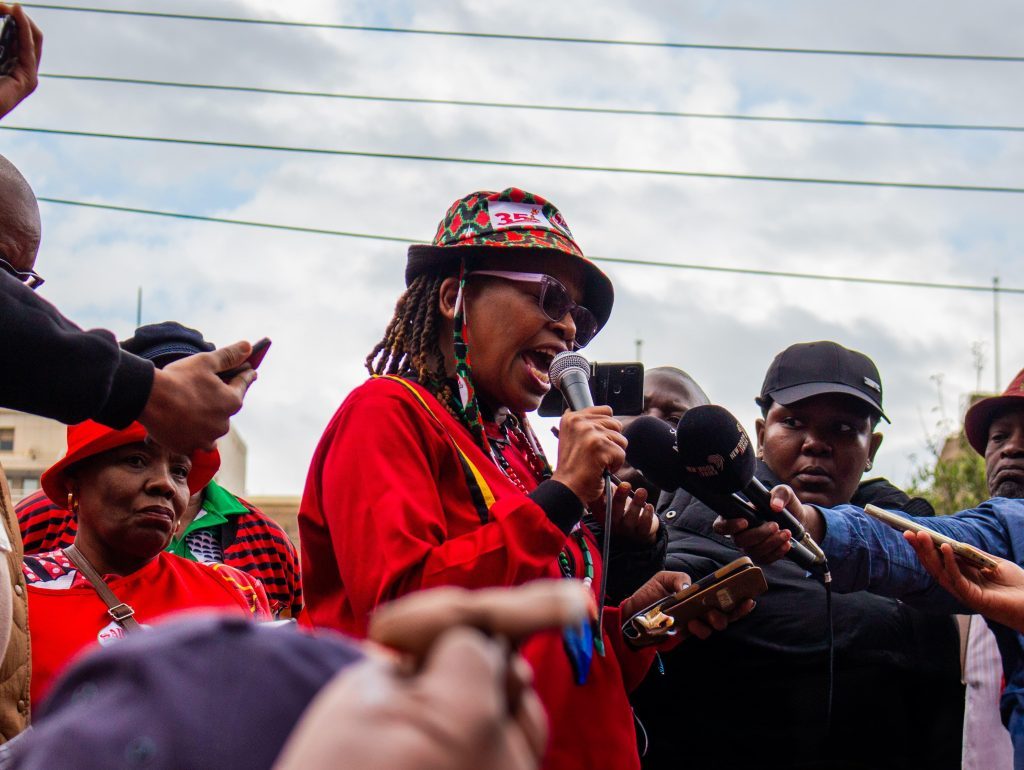
A wave of frustration swept across the education sector as thousands of teachers took to the streets in a mass protest against the chronic underfunding of public schools.

Organised by the SA Democratic Teachers’ Union, the march highlighted growing concerns over deteriorating infrastructure, overcrowded classrooms and a lack of basic resources.

The union is calling for the immediate abolishment of austerity measures. It wants the government to urgently intervene in resolving the deepening funding crisis that continues to cripple the country’s education system.

“We are here to bury neo-liberalism, because neo-liberalism has caused crime in this country. Neo-liberalism has caused our children to take nyaope, because our children do not get the [education] support they are supposed to get because of austerity measures,” Sadtu general secretary Mugwena Maluleke told the protesters outside the National Treasury’s offices in Pretoria on Wednesday.

The union further argues that budget cuts have severely impacted school operations and safety, making it increasingly difficult to deliver quality education. Its grievances come amid growing frustration within the teaching community over the government’s handling of public education.

“Our teachers are treated like maids. They get peanuts when they are supposed to be the anchors of education. We say to Treasury that you have to make sure that there is money for our early-childhood development, and that all our schools are well equipped,” said Maluleke.

Sadtu marched to the Treasury and the Basic Education Department with a list of demands. The protest formed part of a broader campaign under the global slogan of an Education International initiative, “Go Public! Fund Education”.

The demonstration was supported by the Congress of SA Trade Unions, reinforcing the call to defend and sustain South Africa’s public education system.

Cosatu president Zingiswa Losi condemned the budget cuts, describing them as a direct attack on children, educators, vulnerable communities and the working class.

She said that the austerity measures not only threatened the wellbeing of individuals, but the nation as a whole.

Furthermore, Losi issued a stern warning, stating that if the government failed to respond to the demands and continued to cut the education budget, labour was prepared to escalate its actions.

“We are tired of empty promises. We are tired of overcrowded classrooms. We are tired of pros and cons. We are tired of teachers being treated like disposable beings. This is a war against the working class, and we are fighting back. If you touch our education, you touch our future and we will shut this country down,” Losi said.

Cosatu president Zingiswa Losi. Picture: Rivoningo Ndhlovu.

Sadtu spokesperson Nomusa Cembi told Inside Education that the financial constraints were taking a visible toll on school infrastructure, which was falling into disrepair while incidents of violence were on the rise.

According to Cembi, many schools could no longer afford to hire security staff, putting the safety of both learners and teachers at risk.

“We are having vacant posts not being filled. We are having substitute teachers not being employed when a teacher goes on sick or maternity leave which then increases the load of work on teachers who are already overloaded,” she said.

In its memorandum, Sadtu called for the construction of new schools and additional classrooms as a solution to overcrowding.

Another key demand is the upgrading of infrastructure in rural schools to match the standards of those in more developed and industrial areas.

The union has given the government 21 days to respond to its demands.

INSIDE EDUCATION

Uncategorized

Chiloane condemns corporal punishment

By Lungile Ntimba

Gauteng education MEC Matome Chiloane has reminded schools that corporal punishment has been outlawed following a principal from Hammanskraal being investigated by authorities.

He said on Wednesday that the principal would report to the district office as a precaution while an internal investigation was conducted.

According to the department, one learner from Madisong High School claimed to have been physically assaulted earlier this year, while another reported being hurt on the hand after allegedly being punished for missing a holiday catch-up programme.

“We are extremely disheartened by these reports and remain steadfast in our commitment to ensuring schools are safe spaces for all learners,” Chiloane said in a statement.

“We remind all staff that corporal punishment is strictly prohibited by law, and any violation will be met with swift and decisive action.”

The parents of the learners have been encouraged to open a case with the police.

The MEC emphasised the department’s ongoing efforts to conduct advocacy campaigns to reinforce that corporal punishment was prohibited in all schools.

He said any educator accused of assault would be subjected to a formal disciplinary process.

Education support teams have been dispatched to offer psychosocial and emotional support to affected learners and their families.

“Learners and community members are encouraged to report any cases of abuse through various communication channels to their nearest district office,” said Chilloane.

“The department assures all learners that reported cases, anonymous or otherwise, are investigated thoroughly.”

INSIDE EDUCATION

Uncategorized

Too many South African women are dying from preventable cancers

By Lungile Ntimba

Most deaths from cervical cancer and breast cancer among women can be preventable with earlier detection, according to Prof. Greta Dreyer, an expert in obstetrics and gynaecology from University of Pretoria (UP).

Dreyer delivered an inaugural address, titled: “Preventing Premature Cancer Death”, emphasising that despite available medical advancements such as vaccines and screenings, many women were still diagnosed late.

“Losing a South African woman means we lose part of the backbone of society,” she said in a statement.

“They are the educators and mentors, they are the entrepreneurs, the core of rural and agricultural development and the pillar of homes.”

Dreyer highlighted that millions of children relied on mothers as sole breadwinners and many families were collapsing, yet cervical cancer deaths were largely avoidable.

She said while breast cancer has more public awareness and attention, cervical cancer was nearly as common and more deadly. 

According to Dreyer, this was largely due to stigma because this was an intimate disease and there were systemic barriers to screening. 

“Women do not speak about their diagnosis and generally do not survive long, leading to reduced consciousness of the problem,” she said.

Dreyer’s research has revealed that globally, human papillomavirus (HPV) types 16 and 18 lead to about 70% cervical cancer cases. 

When she studied South African women, she discovered that this percent was smaller and that HPV35 was another very common type, particularly in women living with HIV.

Dreyer, in collaboration with international researchers and local universities, has developed PreTect SA screening test, designed to detect the eight most oncogenic HPV types in South Africa—an innovation that could prevent up to 90% of cervical cancers if widely implemented.

Dreyer also started a programme that links HPV vaccination for schoolgirls with cancer screening for mothers. She believes more public education and better access to screening can save many lives.

She said cytology-based screening methods, such as the traditional Pap smear, were difficult to sustain in under-resourced settings. 

“Cytology-based screening is highly dependent on health infrastructure, repeated testing, call and recall, and thus cannot be expected to work in South Africa,” she said.

Dreyer said her team found that using simple self-tests, like tampon samples, worked just as well and was easier for women to do.

She was part of the university’s team that identified BRCA1 and BRCA2 founder mutations among Afrikaner women.

These research findings enabled targeted risk-reduction strategies such as genetic testing, preventive surgery and hormone therapy.

Dreyer’s current collaboration with the Council for Scientific and Industrial Research explores personalised treatment options for aggressive forms of endometrial cancer.

“Among African women, endometrial cancer often involves the highly aggressive types, for which we lack therapeutic options,” she explained.

“This urgent need for new therapy for high grade cancer motivated us to collaborate with the CSIR drug-repurposing group.”

She said this new research was aimed at personalising therapeutic decisions by growing fresh tumour material to be tested on an individualised, personalised medicine platform. 

It also seeks to identify and test unusual chemotherapeutic drugs and combinations that could lead to new drugs and new drug combinations.

“Cancer control relies on implementing the most applicable technologies in an affordable, sustainable way,” Dreyer said.

INSIDE EDUCATION

Uncategorized

WSU students demand no bail in murder case

By Thapelo Molefe

Walter Sisulu University (WSU) students have made it clear they do not want bail granted to the 54-year-old residence manager accused of fatally shooting student Sisonke Mbolekwa. 

The suspect, identified as Manelisi Mampane, appeared briefly in the Mthatha Magistrate’s Court on Tuesday, where it was confirmed that his bail application would be heard on 2 May.

He remains in custody and is facing charges of murder and attempted murder after allegedly opening fire on a group of students during a protest at WSU’s Mthatha campus.

During the court proceedings, it was revealed that the firearm used in the shooting was not licensed.

According to the evidence, the weapon was illegally obtained by the residence manager and used to shoot three students, killing one and injuring two others.

One of the students remains in a critical condition in hospital with a bullet in his waist.

Speaking on Tuesday, WSU Students Representative Council (SRC) leader Themba Zikhali reiterated the students’ stance against bail for the accused.

“As Walter Sisulu students, we are very clear with the mandate that saying we don’t need [him] in our society anymore. We want him to rot in jail and justice must prevail, we are calling for no bail,” Zikhali said.

“It’s a very emotional day for everyone because Sisonke was a comrade. We were living with him on a daily basis, so to see that really he’s gone, it’s very emotional to us, but we have to show strength and resilience towards the situation.”

Institutional Student Representative Council president Abalungile Madikizela also stressed that the accused should remain behind bars

“Firstly, I am relieved with the turnout that we are seeing today of people who are here to support the family of Sisonke in seeking justice. It goes to show that what has happened in the university is not being taken lightly by the student community as well as community members who have decided to show up,” she said.

“From our view as students we believe that with everything that has happened, he has not shown any indication that he regrets what has happened or that it was a mistake because if that was the case, he would have handed himself over to the police. But what happened is that the police had to chase him up and down the country begging him to hand himself over for his actions.”

The shooting occurred during a protest by students who had reportedly stormed the manager’s on-campus home to raise concerns about poor living conditions in university residences accredited by the National Student Financial Aid Scheme. 

Students cited cracked walls, broken ceilings and shattered tiles as some of the issues.

During the confrontation, the residence manager allegedly fired into the crowd. His vehicle was also reportedly set alight during the incident.

The magistrate said that the shooting was being treated as a domestic violence matter, and barred the media from attending the proceedings. 

However, several students gathered outside the court building, chanting slogans and holding placards demanding justice.

An independent investigation, led by retired Justice Chris Jafta and a team of legal experts, is currently underway to examine the events that led to the student’s death and to determine whether there were any failures in how the university handled the situation.

Mampane remains in custody.

INSIDE EDUCATION

Uncategorized

Probe into Mpumalanga laptops to be finalised next week

By Johannah Malogadihlare

Mpumalanga premier Mandla Ndlovu has assured the public that an investigation into the alleged mismanagement of funds in the acquisition of laptops by the provincial education department is at an advanced stage.

It recently came to light that the department spent over R2 million on office laptops meant for 22 individuals with each costing over R90,000.

“Because of the seriousness of this issue, once the investigation is finalised next week, we will inform the public,” Ndlovu said in a statement on Tuesday.

The premier said his administration would be guided by the principles of good governance to ensure that the acquisition of services by the state followed sound financial grounds.

“The investigation seeks to gather facts, supporting evidence and verify any information or documentation at their disposal, in light of applicable legislation,” said Ndlovu.

The department confirmed over the weekend that it spent the money on new laptops in December last year.

It said that the devices came at a high cost and were meant for its Education Management Information Systems (EMIS) and Information and Communication Technology (ICT) teams.

Other officials whose operational responsibilities required high-performance computing equipment also benefitted.

Ndlovu has urged that no one interrupts the investigation process.

INSIDE EDUCATION

Uncategorized

KZN education denies teachers won’t get salaries

By Johannah Malogadihlare

The KwaZulu-Natal education department has moved to allay fears that teachers will not be paid due to insufficient funds.

This follows media reports that the department would struggle to cover more than 2000 teachers’ salaries in the budget.

“The funds for the payment of teachers’ salaries will continue to be ringfenced from the allocated budget, which makes the payment of salaries guaranteed,” said provincial education spokesperson Mlu Mtshali.

“We wish to state for the record that the teachers are and will continue to be the most valuable assets of the education sector. They are an important part of the reason why the department of education in KwaZulu-Natal continues to perform despite the successive cuts to its budget.”

Mtshali said in a statement on Tuesday that the department had no intention of disrupting teachers’ livelihoods by withholding salaries.

He said education MEC Sipho Hlomuka would provide details on the budget during the department’s budget vote speech next week.

INSIDE EDUCATION

Uncategorized

University called out for lying and negligence

By Thapelo Molefe

The family of Lizwa Sinoyolo Ndzumo, a Walter Sisulu University (WSU) student who survived a fatal shooting on campus last week, has accused the university of providing false information and failing to support them in the aftermath of the incident.

Ndzumo, a second-year BSc Environmental Studies student, was shot allegedly by a residence manager last Tuesday, during a student protest over poor living conditions at the university residences. His fellow student, Sisonke Mbolekwa, was also shot and later died from his injuries. 

The 54-year-old man accused of shooting students was arrested and faces charges of murder and attempted murder. He is expected to appear in court on Tuesday.

Speaking to Inside Politics, Ndzumo’s aunt, Ayabonga Ndzumo, who is also his guardian, expressed frustration with the university’s handling of the situation.

“WSU has not contacted us since the day Lizwa was shot—not until Thursday morning,” she said. “And when they finally did, they lied.”

She stated that university officials informed the family that Ndzumo had been injured but was already discharged from the hospital.

“I had to correct them—Lizwa was shot. What they said about minor injuries was completely false. As we speak, he’s still in hospital, in a critical condition, with a bullet in his waist.”

Due to concerns over Ndzumo’s safety, the family transferred him to a different hospital outside Mthatha, the name of which they have chosen not to disclose. 

They also reported that the university has not offered any financial assistance for his medical expenses.

Ndzumo was reportedly the first person shot during the confrontation. Despite his injuries, he assisted in transporting Mbolekwa to the hospital with the help of another student who had a car.

“Lizwa told us that if the hospital staff hadn’t taken so long to assist them when they arrived, Sisonke might still be alive. He died in Lizwa’s arms.”

The family has refrained from commenting on the arrest of the residence manager but questioned the impartiality of the police response.

“We have no feelings about the arrest. The police have already shown us whose side they’re on.”

The family remains focused on Ndzumo’s recovery as doctors work to remove the bullet from his waist.

“Our only priority is Lizwa’s health. WSU will have to answer for their role in this, one way or another,” Dzumo said.

In the wake of the shooting, WSU management ordered students to vacate campus residences by Friday, citing safety concerns. 

Tensions escalated into violent confrontations between students and private security personnel. The clashes came after the university issued an eviction notice to students, which the Student Representative Council has strongly opposed, citing unresolved grievances related to campus living conditions.

The SRC filed an urgent application to the Mthatha High Court to halt the evictions. 

The court ruled in favor of the SRC, interdicting the university from evicting students and also prohibiting students from damaging university property.

INSIDE EDUCATION