Uncategorized

Minister defends SETA appointments

By Thapelo Molefe

Higher Education and Training Minister Nobuhle Nkabane has insisted that the appointment process of chairpersons of the Sector Education and Training Authorities (SETAs) was “beyond reproach”.

Addressing the Portfolio Committee on Higher Education on Friday, Nkabane firmly defended the integrity of the process. 

“There is nothing illegal about it. There are no flaws. There is no breach of any legislative imperative. Everything was followed, and the process was beyond reproach,” she said.

The minister said the appointments that were withdrawn earlier in May had been made based on merit, guided by legislation and informed by the Skills Development Act, the Bill of Rights and recommendations from the National Skills Authority (NSA).

She reiterated that said the decision to reverse the appointments of politically connected individuals was not due to any wrongdoing in the process, but rather in response to a public outcry.

“I understand I’m here, voted in this Parliament by the people of this country. I have a responsibility to listen to them,” Nkabane said.

“After seeing those trends on social media, I took it upon myself as a responsible citizen to say, let me listen.”

However, committee members challenged this position. They questioned how the minister could describe the process as flawless while simultaneously withdrawing the appointments. 

“The meaning of ‘beyond reproach’, my interpretation is quite different, because you never, in your withdrawal, defended the process itself,” one member said.

“What you are saying to us [now] is that the process was followed… why are you making that comment now?”

In response, Nkabane said: “If you read the statement, there was no way I said that the process was flawed. I even indicated how many people had PhDs, how many had masters. But it was based on human grounds, responding to the outcry of our citizens.”

Throughout the exchange, several MPs expressed unease with the contradiction between the minister’s assertions and her actions. 

They pushed for clarity on why a process that she claimed was legally and procedurally sound could nonetheless result in such a sweeping reversal. Despite the criticism, Nkabane maintained her stance. 

“The panel recommended highly qualified candidates, and I was happy to see and to share with the portfolio committee their profiles. There is nothing wrong with those appointments,” she said. 

“They were withdrawn only in response to public concern, not because of any procedural flaw.”

INSIDE EDUCATION

Uncategorized

Road to Literacy Campaign empowers schools with mobile libraries

By Johnathan Paoli

The Basic Education Department in conjunction with corporate partners AVBOB and Oxford University Press South Africa (OUPSA) officially launched the 2025 Road to Literacy campaign, which is one of the country’s most ambitious mobile library initiatives.

The aim is to improve early-grade literacy and equitable access to reading resources.

Basic Education Minister Siviwe Gwarube emphasised said it was critical to be able to read for meaning.

“Eight out of ten children in South Africa cannot read for meaning by the age of ten. This is our Achilles’ heel. If our children cannot read, they cannot learn. If they cannot learn, they cannot rise,” she said.

The event marked the announcement of 1000 school and NGO beneficiaries set to receive fully stocked mobile trolley libraries, each valued at R57,000 and filled with 500 curriculum-aligned books in all the official languages.

Now in its fourth year, the campaign has rapidly expanded its impact, with the rollout expected to distribute over 500,000 books nationally, doubling last year’s reach and bringing the total investment for this cycle alone to R57 million.

Opening the event, Tokyo Sexwale Primary School learner Jamila Mbedzi captured hearts with a reading performance that highlighted the transformative power of books.

Her confidence on stage served as a living testament to what access to literature can achieve.

This was followed by a stirring choir performance by learners from the Oprah Winfrey Leadership Academy for Girls and a panel discussion, moderated by Bongani Bingwa on the socio-economic barriers confronting learners in under-resourced communities.

The urgency behind the campaign stems from grim statistics.

During the panel discussion, Gwarube reiterated the importance of foundational learning, noting that the department’s focus has shifted to the earliest years, from birth to Grade 3, where long-term academic trajectories are forged.

“This challenge is not just about reading. It’s about confidence, self-worth and access to opportunity,” she said.

A strong theme running through the evening was the value of mother tongue instruction.

The minister maintained that research consistently illustrated that literacy in a home language during the early years enhanced cognitive development and sets the stage for multilingual proficiency.

OUPSA managing director Karen Simpson acknowledged the production challenges involved but stressed their importance.

“Publishing in all official languages is not just a technical task, it’s a moral imperative. Children need to see themselves in the stories they read. It’s about delivering the right book at the right time, in the right language,” she said.

AVBOB CEO Carl van der Riet underlined the mutual society’s commitment to education.

“As a 100-year-old institution, we understand that literacy is the bedrock of a thriving nation. This campaign is about more than books, it’s about equipping communities with the tools to grow, learn and lead,” he said.

Van der Riet noted the campaign’s evolution since 2022, highlighting the overwhelming demand from schools and community organisations. With more than 8000 applications received in a single year, he said “the hunger for reading is real, and our work is only just beginning”.

Oprah Winfrey Leadership Academy for Girls executive director Gugulethu Ndebele brought an educator’s perspective to the dialogue.

“Too many of our children come to school already in survival mode. When a child is given a book that reflects their language and their world, it tells them they matter,” Ndebele said.

She called for intensified investment in early childhood development and teacher training, stressing that these interventions were essential to correcting systemic imbalances.

“You cannot fix Grade 12 results by starting in Grade 10. You have to start in Grade R or better yet, before that,” she said.

The event underscored the importance of collaboration among government, civil society and the private sector in tackling South Africa’s literacy crisis.

Gwarube praised AVBOB and Oxford for going beyond corporate social responsibility.

“This is a model of what effective public-private partnerships look like. We will work with anyone, so long as the outcome is real change for our learners,” she said.

“Campaigns like AVBOB’s, put more than just books in the hands of our children; they place transformation in the hearts of our communities.”

INSIDE EDUCATION

Uncategorized

Nkabane grilled in Parliament over issues troubling higher education

By Thapelo Molefe

Higher Education and Training Minister Nobuhle Nkabane faced fierce scrutiny in Parliament this week over the controversial appointments to Sector Education and Training Authorities (SETAs) and other critical issues plaguing the higher education sector.

At the heart of the heated exchanges was the recent withdrawal of a list of SETA board chairpersons after public backlash over the appointments of politically connected individuals, including the son of ANC national chairperson and Mineral Resources Minister Gwede Mantashe.

While defending the integrity of the initial process, Nkabane insisted that it was lawful and merit based. 

“The Constitution… guarantees several fundamental freedoms,” she said, referencing Chapter Two of the Bill of Rights. “The Skills Development Act contains no provisions excluding or favouring candidates based on political beliefs.”

She reiterated that the process had yielded highly qualified candidates including three PhDs and 15 individuals with master’s degrees and that it was managed by an independent panel. 

The minister explained that the decision to restart the appointment process was not due to any legal fault. The appointments were withdrawn in response to the public outcry.

“We are a responsible government. The public felt the list was politically bloated. That’s why we said we need to recalibrate the process and reopen it,” Nkabane said. “It was not because there was any flaw in the process or legislation that we contravened.”

Opposition MPs accused the minister of misleading the public. 

“You withdrew the names because you saw that the people of South Africa don’t want ANC comrades there,” said EFF MP Sihle Lonzi, who also questioned the reappointment of Finance and Accounting Services Sector Education and Training Authority CEO Ayanda Mafuleka, who was placed under precautionary suspension in December. 

“Why would you appoint someone who was suspended as an accounting authority?”

Nkabane defended the move, citing the Public Finance Management Act. 

“There was no consultation [regarding the suspension], which then nullifies the dismissal,” she said. “We followed due legislative process.”

Turning to the technical and vocational education sector, Nkabane acknowledged that 12 principal positions at TVET colleges remained vacant, blaming regulatory delays. 

“For us to be in a position to advertise any vacancies, we need to comply with regulations. We need to get concurrence firstly from DPSA (Department of Public Service and Administration),” she told Parliament.

In the interim, acting principals have been appointed to stabilise institutions, supported by campus and regional managers. 

“There is no stability in some of our TVET colleges… so we have decided to appoint acting principals just to try and close that gap,” the minister said.

She said TVET colleges were important because they were a driver of inclusive economic development.

However, the issue of alleged misconduct in key appointments also surfaced.

MPs demanded to know whether any action had been taken against the department’s director-general, Nkosinathi Sishi, for allegedly appointing a friend to a senior regional role in KwaZulu-Natal.

“The regional manager has since resigned,” Nkabane said. “I have asked the DG for a detailed representation. But I cannot suspend someone without following due process.”

She also outlined long-term efforts to develop leadership capacity within the sector, including partnerships with the Education, Training and Development SETA, the University of Pretoria and international institutions like GIZ in Germany and counterparts in China. 

“We are learning from the best… building capacity within our lecturers, senior management and all our employees,” she said.

Nkabane also faced sharp criticism over National Student Financial Aid Scheme (NSFAS) mismanagement. 

MPs raised alarm over faulty Information and Communication Technology (ICT) systems, students misclassified as ineligible and ongoing delays in disbursements. The minister conceded that the system was flawed.

“We acknowledge the gaps… Our ICT infrastructure is not effective and efficient. There is misalignment of data between institutions and our NDT (National Data Terminal),” she said.

She revealed that over 130 students at Westcol TVET College in Carletonville had not received funding and said appeals were ongoing.

“All appeals for the 2025 academic year are being assessed and funding statuses are being updated.”

A comprehensive digital overhaul is underway. 

“We are implementing a digital transformation strategy… to ensure that our systems are interlinked and integrated with institutions of higher learning, with Home Affairs, with SARS (SA Revenue Service) and with SASSA (SA Social Security Agency)… to avoid delays in determining NSFAS eligibility,” she stated.

The minister also confirmed that the Special Investigating Unit was pursuing the recovery of R5.1 billion that was wrongly allocated to over 40,000 students at 76 institutions. 

“It is in the hands of law enforcement. We don’t have a direct role in that recovery,” she said.

MPs raised the plight of students living in NSFAS-accredited accommodation in Polokwane. 

“They now have to make students cook on dry stands since they can no longer afford electricity due to a non-payment by NSFAS for six months.”

They further alleged that accommodation providers were being forced to pay a portion of their fees to “middlemen”. Nkabane acknowledged the failures in the accreditation process.

“We have centralised student accommodation in the office of the CEO and are building capacity to properly assess providers,” she said. “We must provide accommodation that is conducive to both living and learning.”

Parliament descended into repeated disorder as members argued over the minister’s responses. MPs shouted that questions were not being properly answered. However, Nkabane remained resolute.

“We are going to stick to the legislation that empowers the minister. But we are also going to address the public’s concerns. I do not envisage any further public outcry,” she said referring to the re-opened SETA appointment process.

The deadline for nominations of the new board chairs is 12 June.

INSIDE EDUCATION

Uncategorized

Mpumalanga education HOD suspended over laptop scandal 

By Lungile Ntimba

Mpumalanga premier Mandla Ndlovu has confirmed the suspension of provincial education HOD Lucy Moyane following a forensic investigation, which uncovered serious procurement irregularities linked to a R2 million laptop deal.

This decision was discussed during a provincial executive council meeting on Wednesday in Mbombela.

It was also revealed that Godfrey Ntombela, the HOD for the culture, sport and recreation department, was suspended following a separate investigation by the Special Investigating Unit concerning irregular Covid-19 procurement processes.

The premier’s spokesperson, George Mthethwa, said on Thursday that both suspensions were based on the recommendations of their respective investigation reports and would remain in effect until the cases were finalised.

Acting heads have been appointed in the interim to ensure there is no disruption in service delivery.

Pushed for more details, he told Inside Education that a comprehensive report detailing the implementation of the recommendations on the laptop probe would be released by the end of June.

According to the investigation, eight officials from the education department allegedly misrepresented procurement processes, manipulated specifications and approved the delivery of laptops that did not meet the agreed requirements.

In December last year, the department spent R2 million on a printer and 22 office laptops, with each costing R91,482.50.

Market comparison revealed that the laptops had a market value as low as R59,200, indicating gross overpayment and possible fraud.

Earlier this month, Ndlovu told reporters at a media briefing that all implicated officials would face charges under the Public Service Act, Public Service Regulations, the Public Finance Management Act and other applicable statutes.

He said the supplier would be blacklisted on the national and provincial Treasury registers for tender defaulters, and the matter would be reported to State Information Technology Agency for further action. 

INSIDE EDUCATION

Uncategorized

Gauteng launches 2026 online admissions campaign

By Johnathan Paoli

Gauteng education MEC Matome Chiloane has urged parents and guardians to prepare early and apply on time for the province’s online admissions for Grades 1 and 8 for the 2026 academic year.

This would avoid disappointment and ensure their children’s placement in public schools, he told a media briefing at Greenside High School in Johannesburg to announce the date for online admissions.

“We are calling on all parents to start preparing now. Make sure your documents are in order and be ready to apply the moment the system opens,” said Chiloane.

The application period will run from 24 July to 29 August, and will apply strictly to first-time admissions into Grade 1 and Grade 8.

The department’s online admissions portal will be activated at 8am on 24 July and will automatically close at midnight on the final day.

Chiloane emphasised that late applications would not be entertained under the standard process, limiting placement options for those who missed the deadline.

While Grade R has recently been declared compulsory under new national policy, the MEC clarified that Grade R would not be included in the 2026 online admissions process.

“The reason is simple, we don’t yet have universal access to Grade R across all our public schools,” he explained.

Parents of children currently in Grade R must still apply for Grade 1 through the system, even if the child was already attending the same school.

All users will be required to register new profiles when the system opens, with previous login credentials no longer valid.

The application process involves five steps, namely registration of parent and learner details; entering applicant’s home address; selecting between three and five schools; uploading or delivering required documents; and receiving SMS confirmation of a completed application.

Parents are strongly advised to select multiple schools to increase the chances of placement.

The department confirmed that all selected schools were treated equally, regardless of the order in which they appeared.

Chiloane said the department used several factors to determine placement, including whether the applicant’s home address fell within the school’s feeder zone and if there were siblings currently attending the school.

It also looked at if the parent’s work address fell within the feeder zone and the distance from home (within 30 km or beyond).

The MEC acknowledged continued confusion among parents regarding feeder zones, especially where families lived close to a school but fell outside technical boundaries.

To address this, the department was considering moving from a direction-based model to a radius-based system.

The admissions system will display schools linked to a user’s home address, helping guide choices within the appropriate feeder zones.

Applicants must upload or submit certified copies of the following documents within seven days of applying: the parent or guardian’s ID or passport; the learner’s birth certificate or passport; proof of home address (e.g., municipal account, lease agreement); proof of work address (if applicable); the Grade 7 report card for Grade 8 applications; and immunisation cards for Grade 1 applications.

Incomplete applications, whether missing documents, contact information, or school selections, will not be processed.

“You will get an SMS confirmation for each step. If you don’t, go back and check. Don’t assume it’s complete,” Chiloane warned.

To safeguard the integrity of the process, schools are authorised to verify home addresses and confirm that documents are legitimate.

Chiloane reiterated that no part of the process required payment.

“This is a free public service. If anyone asks you for money to secure placement, report them. That is corruption,” he said.

To support families without digital access, the department will operate 18 decentralised admission centres and more than 2500 walk-in sites, including schools and community halls.

These sites will offer free help with online applications and document submissions.

A working cellphone number is mandatory, as all communication, including SMS confirmations and placement offers, will be sent to that number.

“Your phone number is your lifeline in this process,” Chiloane stressed.

Parents applying to schools of specialisation (arts, STEM, sports) must note that placements are based on talent assessments rather than feeder zones.

For Grade 1 applicants, parents will choose a preferred language of learning from the 11 official languages.

Placement offers will begin rolling out from 16 October 2025, and the process will continue until all learners are placed.

“This is about your child’s future. The earlier you apply and the more complete your application, the better your child’s chances,” the MEC said.

INSIDE EDUCATION

Uncategorized

Nkabane applauds 17-year-old UP Actuarial Science graduate making history

By Johnathan Paoli

In a moment that has inspired the nation, Higher Education and Training Minister Nobuhle Nkabane has congratulated Mongiwa Hazel Ntuli, who has made history by becoming one of the youngest graduates in the University of Pretoria’s history.

Nkabane commended Ntuli for her resilience and brilliance, praising the young graduate’s achievement as critical for inspiring those wanting to study STEM (Science, Technology, Engineering and Mathematics) subjects.

“Hazel’s success is not only a personal triumph but a national beacon of hope. It comes at a time when South Africa is facing a critical decline in the number of learners enrolling in STEM subjects,” the minister said on Thursday.

At just 17, Ntuli completed her Bachelor of Science in Actuarial Science, a rare and rigorous achievement made even more extraordinary by her age.

Hailing from Rosettenville in Johannesburg, her story is one of exceptional academic talent, discipline and ambition, with her journey through education beginning with an extraordinary moment in Grade 3, when she mistakenly wrote a Grade 4 test and outperformed every learner in that grade.

Recognising her giftedness, teachers encouraged her to fast-track her learning, ultimately propelling her into university by the age of 14.

Actuarial science, which combines mathematics, statistics and financial theory to assess risk, is known for its academic intensity and professional rigour.

Nkabane described Ntuli’s decision to pursue such a demanding path and succeed in it as a powerful testament to her determination and intellect. She said it signalled the promise of a future generation that could contribute significantly to South Africa’s economic and developmental goals.

Her success has not come without challenges; entering university at 14 meant navigating academic pressure, social differences and high expectations from herself and others.

Yet she thrived, thanks to her internal drive and the supportive environment at UP.

In interviews, Ntuli credits her lecturers, mentors, residence house mother and faith for carrying her through.

“I always remind myself of why I started,” she shared.

Now 18, Ntuli is currently pursuing her Honours degree and is already setting her sights on a Master’s and an MBA.

She reflects on her time at UP as transformative.

“UP gave me mentorship, financial support and access to events that connected me with thinkers and leaders in STEM. It opened my eyes to what’s possible,” she said.

The minister highlighted Ntuli’s journey as a compelling argument for expanding access to quality education and providing targeted support for high-potential learners, regardless of their background.

“Her story affirms why early identification of talent and inclusive academic spaces matter. Hazel is not only breaking boundaries in the academic space; she is breaking intergenerational barriers, becoming the first graduate in her family, and lighting the way for countless others,” she said.

The young graduate’s journey has sparked conversation on social media and beyond, with a YouTube video by UP documenting her story drawing admiration and encouragement from viewers across the country.

In the video, she speaks with quiet confidence about her academic path, her dreams for the future and her advice for others.

“If an opportunity is presented to you, just do it. Take it with both hands and reach for those stars,” Ntuli encouraged.

In her final words, the minister urged young people, particularly girls, to take inspiration from Ntuli’s achievements.

INSIDE EDUCATION

Uncategorized

DA slams Gauteng education over municipal debt decision

By Levy Masiteng

The Democratic Alliance (DA) in Gauteng is demanding that the Gauteng education department immediately suspends its decision to make no-fee-paying schools responsible for paying their utility bills and historical debt. 

This comes after the department formally transferred the responsibility of paying municipal accounts back to schools in Eldorado Park on Tuesday.

According to the department, the transfer is in line with the South African Schools Act.

DA provincial education spokesperson Sergio Isa Dos Santos said the decision was “reckless and absurd” because the GDE department has failed to pay these bills, leading to disconnection notices for some schools.

He said the party was concerned that these schools, which served underprivileged communities, could not afford to pay these utility bills and would be severely impacted.

“Learners will be taught in dark classrooms and not have water due to the failure of these schools to pay municipal accounts and historical debt.” 

During an oversight inspection at Eldorado Park schools, the DA discovered that 34 non-fee-paying schools were compelled to pay municipal debts without proper consultation, assessment and training.

Dos Santos said letters issued to schools on 18 March 2025 stated that, from 1 April 2025, schools would be responsible for the timely payment of municipal services and supplementing allocated funds through fundraising.

This included Willow Crescent Secondary School, which received a monthly allocation of R53,000, but has a municipal debt exceeding R638,000. 

Another school, Ernest W. Hobbs Primary, has outstanding debt of over R4.7 million. 

Dos Santos said the decision was not financial management, but “financial dumping”.

In response, the department said that the six fee-paying schools in Eldorado Park were formally informed in 2023 that the responsibility would be returned to them, and the nine no-fee schools received similar notification this year. 

The department took over these responsibilities in April 2024 due to concerns over “poor financial management” by some school governing bodies (SGBs), but has since transferred the responsibility back to the schools. 

Dos Santos said he had submitted urgent questions to education MEC Matome Chiloane in the Gauteng legislature to determine why schools were not consulted.

However, the department said that legally the HOD may withdraw or reinstate such functions without consultation.

“Section 21 of the Schools Act allows for schools to apply for additional functions; it does not require consultation before such functions are reinstated or withdrawn,” the department said in a statement.

Meanwhile, the department has encouraged schools to strengthen their financial management strategies and raise additional funds under Section 36 of the Act to ensure they can meet operational obligations. 

Dos Santos said the DA would work closely with municipalities to ensure schools were not disconnected or penalised over municipal debt.

INSIDE EDUCATION

Uncategorized

TVET fundamental for labour force with international credentials: Higher Education

By Johnathan Paoli

South Africa’s Technical and Vocational Education and Training (TVET) system is crucial for inclusive development and its qualifications must be recognised globally, says Higher Education and Training Minister Nobuhle Nkabane.

“The TVET system is the backbone of inclusive development and we must align it to global standards and market needs. Recognition is no longer a choice, but a global necessity,” Nkabane told a G20 Education Working Group seminar on the mutual recognition of qualifications in a global context.

Earlier in the day, she visited the Orbit TVET College’s Mankwe Campus in the North West, where she spoke about the sector’s role in equipping young people with skills aligned to a rapidly evolving economy.

A key announcement came with a R13 million donation of advanced training equipment from China’s Yalong Intelligent Equipment Group.

This investment, which was secured during President Cyril Ramaphosa’s recent working visit to China, marks a milestone in public-private collaboration.

“This is not just a donation, but a legacy investment into the future of technical education in South Africa,” Nkabane said.

The equipment will be used to enhance practical instruction for artisans and lecturers, preparing students for global platforms like WorldSkills.

The minister also acknowledged Huawei’s continued support for digital skills development through its ICT Academies, calling on more international and local partners to invest in post-school education.

“Private sector innovation must walk hand-in-hand with education reform,” she urged, encouraging Sector Education and Training Authorities (SETAs) to expand industry collaboration.

Delegates toured the Mankwe campus to assess infrastructure needs and opportunities for development.

A student cultural showcase added a vibrant local flavour to the visit, reflecting the community-centred ethos of South Africa’s TVET institutions.

Later in the day, the G20 seminar on mutual recognition of qualifications brought together policymakers, researchers and education leaders from G20 nations, guest countries and global organisations at Sun City.

Nkabane positioned mutual recognition of qualifications as essential to academic mobility, labour migration and sustainable development.

Under the G20 Presidency’s theme of Solidarity, Equality and Sustainability, the seminar highlighted the importance of harmonising education systems across borders.

Nkabane outlined four key benefits of mutual recognition: improved academic and labour mobility, greater policy coherence, enhanced resilience and increased economic opportunity.

South Africa’s commitment to qualification mobility is reflected in its National Qualifications Framework, which supports formal, workplace-based, and prior learning.

The country is also an active participant in the Southern African Development Community Qualifications Framework and the African Continental Qualifications Framework. It has ratified both the Addis and Unesco global conventions on qualification recognition.

However, Nkabane acknowledged challenges such as misaligned qualification structures and regulatory systems.

She proposed innovation, particularly through micro-credentials, as a solution.

Commending the Potential of Micro-credentials in Southern Africa initiative, she argued for flexible, skills-based learning recognition to complement traditional pathways.

“Ultimately, recognising a qualification is about recognising a person. It’s about dignity, opportunity, and unlocking potential,” she said.

Higher Education and Training Deputy Minister Mimmy Gondwe further reinforced South Africa’s educational leadership during two key addresses at the seminar and a welcome reception.

Marking Africa Day, Gondwe emphasised the continent’s aspirations for unity and empowerment. She called on G20 stakeholders to ensure that education systems reflected the diversity and potential of African learners, particularly women and youth.

“Women must not only benefit from education—they must shape its future,” she said.

Gondwe also presented the G20 Education Working Group’s three thematic priorities: foundational learning, mutual qualification recognition and professional development for a changing world.

“These themes are not abstract. They are tools for rethinking education systems from the ground up,” she said.

Jako Olivier of the Commonwealth of Learning, who participated virtually, emphasised micro-credentials’ growing impact on youth employment and international skills portability.

He called for global interoperability and quality assurance, aligning with Unesco and Commonwealth initiatives.

At the evening reception, delegates enjoyed South African cuisine and live cultural performances.

Gondwe encouraged guests to explore the North West province and deepen their connection to the country’s education and cultural landscapes.

Throughout the day’s proceedings, the role of private sector and international cooperation was consistently praised.

By linking TVET revitalisation with international recognition frameworks, the country is positioning itself as a leader in skills development and cross-border mobility.

The ministry emphasised that with Africa’s voice amplified and global partnerships deepening, the G20 Education Working Group has taken a bold step toward a future where every learner’s journey is recognised and every skill counts.

INSIDE EDUCATION

Uncategorized

Childhood education and development a collective responsibility: G20 seminar

By Johnathan Paoli

Early Childhood Care and Education (ECCE) is crucial not only in shaping individual futures but also in securing a nation’s long-term prosperity, according to Basic Education Minister Siviwe Gwarube.

“If we are to re-imagine education in SA, then we need to improve the outcomes across the board, and we need to start at the beginning. Investing in the early years of a child’s life is not just an optional extra, it is the most strategic and cost-effective investment a society can make,” Gwarube said on Tuesday.

She was speaking at a seminar under the theme “New Solutions for Population-Level Access to Quality ECCE” hosted by her department and the G20 Education Working Group.

Gwarube stressed the collective responsibility of all stakeholders to reflect, learn and lead together.

Opening the seminar in the North West, Basic Education director-general Mathanzima Mweli underscored the importance of investing in the first five years of a child’s life, noting that these formative years were crucial for brain development, school readiness and long-term national prosperity.

He urged delegates to move beyond diagnosing challenges to co-designing scalable and sustainable ECCE systems.

“Early childhood is not a soft issue—it is a hard prerequisite for equity, productivity and national development,” Mweli asserted.

Deputy Minister Reginah Mhaule, representing the North West provincial government, emphasised the need to uphold dignity and respect in how societies treated young children.

She encouraged participants to adopt actionable commitments that would build solid educational foundations, especially in under-resourced communities.

In her keynote address, Gwarube framed ECCE as both a social justice issue and the most cost-effective economic investment a country could make.

She highlighted stark access gaps. Only 44% of children aged 0–5 were enrolled in ECD programmes, with rural and non-English-speaking populations most affected.

Gwarube emphasised the transformative impact of the 2022 migration of ECD responsibilities to the department and called for authentic partnerships with grassroots providers.

She also outlined key department interventions, including a forthcoming Quality Assurance Framework, an ECD workforce development strategy, enhanced data systems and engagement with National Treasury to secure long-term financing.

Notably, Treasury has increased the per-child daily subsidy from R17 to R24 and allocated R10 billion in additional ECCE funding, which is expected to expand access to over 700,000 more children.

Gwarube also stressed the importance of mother tongue instruction in early learning.

“Language is not only an academic tool, but a vessel of identity, belonging and power,” she said.

The seminar featured high-level panels and research-led sessions on global and regional ECCE innovations.

Dr Catherine Draper from the University of the Witwatersrand spotlighted the crucial “next 1000 days” between ages 2 and 5.

While the first 1000 days were widely recognised, Draper argued that the following phase was equally vital for reinforcing or redirecting developmental trajectories.

Her session called for a life-course approach and multisectoral collaboration to address cognitive, social and emotional needs in early childhood.

Elizabeth Lule, the executive director of Early Childhood Development Action Network (ECDAN), introduced a systems thinking approach, highlighting how ECCE must integrate health, education, nutrition and social protection to respond to global shocks like pandemics, conflict and climate change.

She said that siloed interventions could not meet the needs of the 43% of children under five in low middle income countries (LMICs) at risk of developmental failure.

Systems thinking, she argued, built resilience, enhanced equity and enabled scale.

Rebecca Hickman of SmartStart presented Canada’s path to universal ECCE, focusing on leveraging community strengths and grassroots networks.

She urged governments to move from being sole providers to enabling inclusive ecosystems through partnerships and integrated planning.

Ben Hewitt of Theirworld emphasised the urgent need for bold investments in ECCE, proposing innovative funding mechanisms like social impact bonds and excise taxes.

He noted that a 2.1% GDP investment in childcare could enable over 10 million South African women to enter the workforce within three years.

Sibongile Khumalo of DataDrive2030 shared insights from the Thrive by Five Index, which showed that just 46% of children enrolled in early learning programmes were school-ready.

Data revealed stark inequalities along socio-economic lines, reinforcing the need for targeted, evidence-based interventions to narrow development gaps.

Unicef’s Hana Yoshimoto presented a four-part strategy to mobilise parental and community involvement in foundational learning.

She said that by promoting home learning environments, supporting positive parenting and advocating for family-friendly policies, communities could drive equity and child development from the ground up.

The seminar concluded with a robust dialogue exploring how to achieve equitable ECCE access.

Delegates emphasised local government support, the value of public-private partnerships and the importance of closing the policy-implementation gap.

They reaffirmed that ECCE was a shared responsibility and that its success depended on collective action, bold leadership and unwavering commitment to the rights and potential of every child.

INSIDE EDUCATION

Skills for a future workforce
Uncategorized

Skills for a future workforce

By Thebe Mabanga

Skills are more than just an ability to perform a task well. Rather, they shape livelihoods and responsible citizens, enhance a country’s competitiveness and are a crucial ingredient for achieving inclusive growth and tackling unemployment, poverty and inequality.

As South Africa looks at ways to tackle the skills deficit, it is exploring the possibility of sending its young unskilled and unemployed people to China to acquire artisan skills.

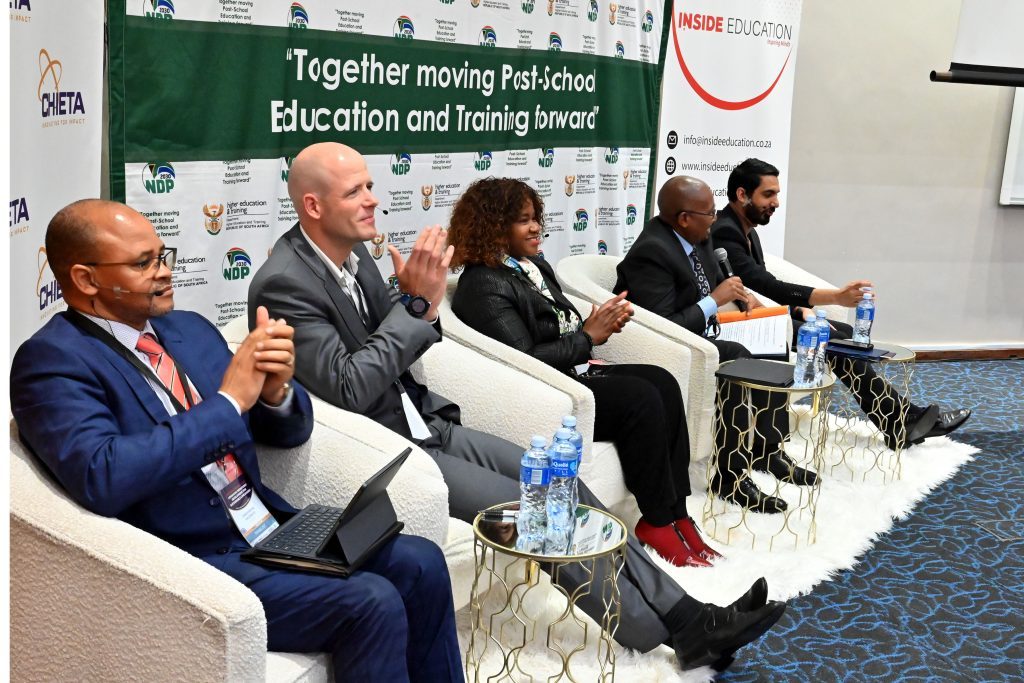
This emerged at the National Skills Dialogue hosted by the Chemical Industries Education and Training Authority (Chieta) and Inside Education. The dialogue focused on bridging the skills gap to build sustainable livelihoods taking skills, and the job they give access to, beyond mere survival.

The dialogue’s keynote address was delivered by Higher Education and Training Minister Nobuhle Nkabane.

Chieta CEO Yershen Pillay called on attendees to look at skills broadly.

“Skills do not meet a market demand; they satisfy a human need.”  said Pillay, who added that stakeholders must look “at the needs of society, not just demand”.

He said this allowed society to view skills as a means to a job.

“A job can change a day; livelihoods can change a lifetime,” he said.

Promoting partnerships

Nkosinathi Sishi, the director-general of the Department of Higher Education and Training, said the dialogue must promote partnerships among different Sector Education and Training Authorities and between SETAs and other role players.

Nkabane argued that skills were enablers of inclusive growth and critical for the implementation of the Medium-Term Development Programme for the period to 2029.

She called on SETAs to embrace digital education into their training to prepare workers for the future.

The minister also reiterated her call, first made at the beginning of the month at the board induction for the National Skills Authority (NSA), for the country to focus on the 3,8 million young people who were not in employment, education or training.

She noted that her department had a fruitful preliminary discussion with her counterparts in China about the possibility of sending young people to China to acquire some skills

Panel discussion

The dialogue included a panel discussion following the minister’s address.

Department director-general Nkosinathi Sishi said: “Workforce development is no longer just a policy imperative; it’s a national survival strategy. We must change how we measure success if we are to become globally competitive.”

Sishi argued that livelihoods take many forms including those of digital nomads and the self-employed and South Africa must update its Master Skills Plan to reflect this.

Sithembile Mbuyisa, the General Executive for Human Capital at the South African Nuclear Energy Corporation (NECSA), said it offered training in portable artisanal skills that could be used in different environments, not just in nuclear, where South Africa was building a multi-Purpose reactor.

NECSA has capacity to train about 450 artisans at a time. South Africa has a target of producing 30,000 artisans per year and in the 2023/24 financial year, it produced 26,500 artisans.

The development skills should start sooner than later, said Myuyisa and National Student Financial Aid Scheme (NSFAS) interim CEO Waseem Carrim.

Carrim told the dialogue that skills development must be viewed holistically, starting at Early Childhood Development (ECD), or even the first four years of a child’s life which the United Nation’s referred to as the first 1000 days, to allow them to progress through the schooling system.

He noted that 70% of NSFAS beneficiaries were social grants recipients, which suggested that the scheme funding gave social mobility to an important group that may not have access to it.

Mbuyisa said that NECSA had found gaps in foundation education and cognitive skills.

NSA executive officer Zamokwakhe Khuzwayo estimated that SETAs have assisted three million people to access the job market.

However, to increase these numbers, they needed to understand provincial economic drivers to design programmes that suited provincial needs.

Afrox Africa managing director Sebastian Satchleben said during the panel discussion that South Africa’s private sector offered a good skills training programme that allowed learners to “apply their knowledge”.

However, the success of the programme was dependent on the learning culture in a workplace.

Like Mbuyisa, he said the one of the most important skills students should be taught is critical thinking.

Pannelists participate in the National Skills Dialogue. Photo: Eddie Mtsweni

Issues from the floor

One of the issues raised by the delegates was entrepreneurship and how current skills development curricula did not place emphasis on driving candidates towards starting their own businesses.

Sishi responded by saying that his department has a R1 billion entrepreneurship training programme that it ran in conjunction with the Department of Small Business Development.

Another conference participant, who holds a master’s in mathematics, said a shortcoming for South Africa’s skills development programme was that there was no clear agenda why the country was developing. For example was it to develop skills to industrialise the economy or was the country plugging gaps to meet an immediate need?  The delegate said that without a clear guide, skills programmes would respond to varying needs without focus. 

According to Nkabane, the Medium-Term Development Programme was supposed to guide the skills development agenda.

Another delegate asked whether there was funding in the system for post graduate studies?

Carrim admitted that if he and the Higher Education and Training Department motivated for post graduate funding, they would likely be turned down by the National Treasury.

“It is simply not a priority,” he said.

This was because post graduate studies could be funded in several other ways, starting with working and saving up to fund studies. Employers and the private sector as well as institutions also offered higher level funding through grants and scholarships.

A principal for a Soweto-based Technical and Vocational Education and Training college pointed out that funding by SETAs for TVET colleges was simply inadequate.

He said that in his institution, there was a programme where a SETA funded a handful of students, which was a drop in the ocean compared to his overall need, even just for that programme.

Pillay conceded that resources were limited, and funding must be spread across cooperatives, community colleges and other training institutions, not just TVET colleges.

He noted that a bigger problem with TVET funding was that the colleges offered 30% of the training, which was theory. A total of 70% came from practical or workplace training, and these placement opportunities were limited due to poor economic growth.

The NSA’s Khuzwayo said it was challenging to find host employers to match trainees.  In some instances, there were declining positions, especially in factories as many of them had closed.

In another instance, “employers are willing to host learners, but there are no willing participants”, he said.

JET Skills Desk

Sishi told participants that one of the ways the department was responding to changing skills needs was by establishing a Just Energy Transition (JET) Skills Desk to understand the skills needed in areas such as renewable energy.

He called on South Africa to assume a global leadership role in skills development just as it had in areas such as climate change and sustainability for example.

“Everywhere we go, the world is looking for answers for existence from us,” Sishi said. 

Skills was one area where South Africa could take the lead, he said.

A report on the dialogue will be compiled for the Higher Education and Training Department with the aim of helping chart forward the country’s workplace development agenda.

Video By: Kgalalelo Setlhare Mogapi

INSIDE EDUCATION