Uncategorized

Unisa VC Puleng LenkaBula champions entrepreneurship for sustainable growth at Studentpreneur Indaba

By Johnathan Paoli

The University of South Africa (Unisa) has become the focal point of entrepreneurial discourse this week as it hosts the two-day Studentpreneurs Indaba, convened under the banner of the Entrepreneurship Development in Higher Education (EDHE) initiative.

Opening the Indaba at Unisa’s Pretoria campus, Vice-Chancellor Puleng LenkaBula welcomed participants and underscored the importance of the occasion; describing the Indaba as a platform that moves beyond conventional academic engagement by fostering practical innovation and entrepreneurship.

“This Indaba provides a platform for young innovators to build systems that drive development in our country, strengthen our continent and showcase the very best that Africa has to offer through their ideas and creativity,” LenkaBula said.

Themed “Entrepreneurship for Sustainability”, the gathering has brought together students, policymakers, global leaders and innovators to explore how knowledge and research can be transformed into viable enterprises that strengthen communities, create jobs, and advance Africa’s development agenda.

LenkaBula noted that South African universities were increasingly called upon not only to equip students with academic knowledge but also to prepare them to respond to complex societal challenges such as unemployment, poverty and inequality.

Entrepreneurship, she argued, was one of the most effective tools available to transform academic learning into real-world solutions.

She commended the students and young entrepreneurs present for their determination to use research, skills and passion to create opportunities rather than wait for them.

“What is remarkable about this gathering is that it is filled with young people who are determined not to be job seekers, but job creators. You are innovators, builders, and visionaries who can turn challenges into opportunities,” the VC said.

She emphasised that sustainability must underpin the entrepreneurial journey.

“As studentpreneurs, you are tasked with more than launching businesses. You are entrusted with the responsibility of ensuring that your innovations contribute to environmental sustainability, social cohesion, and economic justice,” she said.

The indaba forms part of a broader national and continental effort to position higher education institutions as catalysts for inclusive development.

EDHE, supported by the Higher Education and Training department and Universities South Africa (USAf), aims to create entrepreneurial universities that nurture a culture of innovation while equipping students with the tools to thrive in uncertain economic climates.

Delegates at the Indaba are drawn from across South Africa and beyond, including participants from other African countries, signalling the importance of cross-border collaboration.

Global partners, business leaders and policymakers have also joined the conversation to ensure that student entrepreneurs have access to mentorship, networks and investment opportunities.

LenkaBula highlighted the strategic role Unisa is playing in this movement.

“As the largest university on the continent, Unisa carries both a responsibility and an opportunity. We are determined to be at the forefront of shaping futures in the service of humanity by integrating entrepreneurship into our teaching, research, and community engagement,” she said.

LenkaBula’s opening at the Indaba also comes at a time when she has been steering Unisa towards a more holistic model of higher education that embraces cultural heritage alongside academic and entrepreneurial development.

Delegates at the Indaba expressed optimism about the opportunities it would unlock.

LenkaBula closed her remarks by urging students to embrace both courage and creativity; and that entrepreneurship is not an optional extra, but a necessity for sustainability and resilience.

“The future belongs to those who are bold enough to imagine it and diligent enough to build it. May this Indaba light the spark of entrepreneurship that will sustain not only your lives but also the lives of generations to come,” she said.

INSIDE EDUCATION
Uncategorized

SADTU urges collaboration, investment and respect on World Teachers’ Day

By Johnathan Paoli

The South African Democratic Teachers’ Union (SADTU) has marked World Teachers’ Day with a powerful tribute to the nation’s educators, past and present, while sounding a warning about the growing pressures that threaten the profession.

Celebrated annually on 5 October under the auspices of UNESCO and Education International since 1994, SADTU General Secretary Dr Mugwena Maluleke welcomed this year’s theme: “Recasting teaching as a collaborative profession”.

“From the fireside to the classroom, teaching is a collective endeavour. Today’s educators must be supported by systems that value teamwork, shared wisdom, and sustained public investment. Let us recast teaching as a profession of unity, dignity, and transformation. Because when teachers stand together, societies rise together,” Maluleke said.

The union emphasised that teaching, from ancestral storytellers around the fire to freedom fighters holding clandestine lessons under apartheid, has always been rooted in shared struggle, solidarity and collective wisdom.

While celebrating the contribution of teachers, Maluleke raised concerns about the harsh realities facing South Africa’s educators.

The union pointed to a recent Stellenbosch University study which revealed that nearly half of the country’s teachers are considering leaving the profession.

The findings cite overwhelming administrative workloads, overcrowded classrooms, lack of mental health support, escalating learner indiscipline, and even threats of violence as factors driving disillusionment.

“These conditions are unbearable, yet our teachers continue to show resilience and dedication,” Maluleke said.

He urged educators not to give up, pledging to continue fighting for improved working conditions and greater professional recognition.

The union used the occasion to call on multiple stakeholders to step up their role in supporting teachers, urging the government to increase funding for school infrastructure and to hire more educators to reduce class sizes.

Employers, the union argued, should provide psychosocial support to safeguard teacher mental wellbeing.

Parents, learners and communities were also called upon to help create safe, respectful and conducive environments for teaching.

“There is a need for thorough engagement with institutions of higher learning on the development of teachers and the kind of educator the future demands,” Maluleke stressed.

The union insisted that systemic reform, sustained investment, and cross-sector collaboration are essential if teaching and learning are to flourish.

Maluleke also reminded educators to uphold the dignity of their profession through discipline and respect for learners.

Basic Education Minister Siviwe Gwarube joined the chorus of appreciation for South Africa’s educators.

“Across the world, we are celebrating the vital role that teachers play in shaping communities, government and building economies. Teaching is more than just a profession, it is a calling that requires resilience, patience and a real love for teaching,” Gwarube said.

She highlighted the global recognition of the profession calling for not only celebration, but support in building the future of tomorrow.

World Teachers’ Day, first established in 1994, is not only about celebrating educators but also about advocating for their rights and highlighting the United Nations’ Recommendations Concerning the Status of Teachers.

INSIDE EDUCATION

Uncategorized

Mpumalanga Education Department Launches Spring Classes to Boost Matric Results

By Thapelo Molefe

The Mpumalanga Department of Education has rolled out its annual spring classes programme to support the Class of 2025, targeting schools that performed below 80% in last year’s National Senior Certificate (NSC) examinations.

The intensive week-long programme, running from Monday to Friday, is being implemented across 159 schools through 99 Day Centres and six Residential Centres, reaching a total of 19 688 Grade 12 learners across the province.

According to the department, the spring classes aim to strengthen learner performance in the build-up to the final NSC examinations, which are set to commence on 23 October.

To ensure the initiative delivers tangible results, the department said it had appointed some of the province’s top-performing teachers to assist learners with challenging curriculum content and to equip them with effective examination techniques. Learners will also sit for pre- and post-tests to measure the impact of the intervention.

The programme focuses on 11 high-enrolment subjects, ensuring that learners receive targeted support in critical academic areas. In addition to academic assistance, school nutrition will be provided at all centres, and scholar transport will be arranged where necessary to ensure accessibility for all participants.

Monitoring and quality assurance of the programme will be undertaken by district and head office officials, who will track progress and evaluate the effectiveness of the intervention.

The department said the spring classes form a key component of its learner support improvement plan, designed to uplift academic performance across the province. In 2024, Mpumalanga recorded an 84.99% pass rate.

The department said it is determined to surpass that achievement in 2025.

The province’s education MEC, Lindi Masina, has encouraged learners to take full advantage of the programme and called on parents and communities to provide strong support systems at home.

“We call on everyone in the province to play their part in supporting the Class of 2025. Let us create conditions that place Mpumalanga firmly on a path of success,” Masina said.

“To our learners: every hour of preparation counts. Stay focused, remain disciplined, and do not allow anything to distract you from your goals. You carry our hopes, and we believe in your ability to excel.”

INSIDE EDUCATION

Uncategorized

UKZN’s new mobile eye clinic brings vision and hope to rural KZN

By Lebone Rodah Mosima

In the hills and villages of KwaZulu-Natal, where access to specialised healthcare is scarce, a new sight-saving project is about to roll into action.

The University of KwaZulu-Natal (UKZN) has taken delivery of a state-of-the-art mobile eye clinic worth more than R2.1 million, an initiative that promises to transform eye-care for some of the province’s most vulnerable communities.

The vehicle was donated by the South African Muslim Charitable Trust (SAMCT) to the UKZN Foundation. Equipped with cutting-edge technology, the clinic will allow UKZN’s Discipline of Optometry to carry out eye screenings, comprehensive examinations and issue corrective eyewear on-site.

Inside, the clinic resembles a compact but sophisticated eye-care centre that can be used for adults and paediatric patients. It houses an autorefractor to estimate glasses prescriptions, a handheld slit lamp to inspect the front of the eye, and an ocular fundus camera to capture images of the back of the eye, helping to detect hidden conditions. The unit also contains instruments to assess contrast sensitivity, depth perception and intraocular pressure.

For the SAMCT, the donation is about equity and opportunity. Gaff Osman, chairman and trustee of the organisation, said: “By supporting this initiative, we aim to help bridge the gap in access to quality eye-care services in rural communities across the province. At the same time, this project will offer invaluable hands-on training for UKZN’s optometry students, allowing them to integrate academic learning with practical service, while making a real difference in disadvantaged areas.”

That training component is particularly important to Dr Naimah Ebrahim Khan, head of UKZN’s discipline of optometry, who received the keys to the mobile unit during World Sight Month. “During World Sight month, it is so important to raise awareness of the high rate of preventable blindness which is barrier to a huge portion of our population from living a good quality of life,” she said.

“We are deeply thankful for this generous donation. The mobile eye clinic represents more than just equipment. It is a lifeline for communities with little or no access to eye-care and an invaluable training ground for our students ensuring that they graduate as competent, compassionate practitioners ready to serve society.”

For Shabir Chohan, Chief Executive Officer of Al Baraka Bank and trustee of the SAMCT, the project resonates personally. “We are delighted to play a role in something that is so beneficial to the community. As an alumnus of UKZN, having trained some 40 years ago, all education projects such as this wonderful initiative, is very important. Alumni of UKZN have a meaningful role to play in advancing education. Congratulations to Naimah for initiating this project,” he said.

Osman said that SAMCT was formed in 2008 and since then has been supporting sizeable projects throughout South Africa, aimed at improving public healthcare access and supporting educational advancement.

Professor Khathutshelo Percy Mashige, dean of the School of Health Sciences, said the project dovetails with the university’s mission to uplift disadvantaged communities. “In the CHS, we target students from vulnerable communities in KZN, especially those from Quintile 1-3 schools. This mobile clinic will go a long way in our pursuit to support our disadvantaged communities in the province. We believe that this is the beginning of a long-lasting friendship based on mutual objectives on the side of UKZN and the SAMCT,” he said.

INSIDE EDUCATION

UJ students pocket over R300k in prizes at G20 Tourism Hackathon
Uncategorized

UJ students pocket over R300k in prizes at G20 Tourism Hackathon

By Levy Masiteng

The University of Johannesburg (UJ) has made a significant mark in the world of innovation, with its students clinching top spots at the G20 Tourism Hackathon.

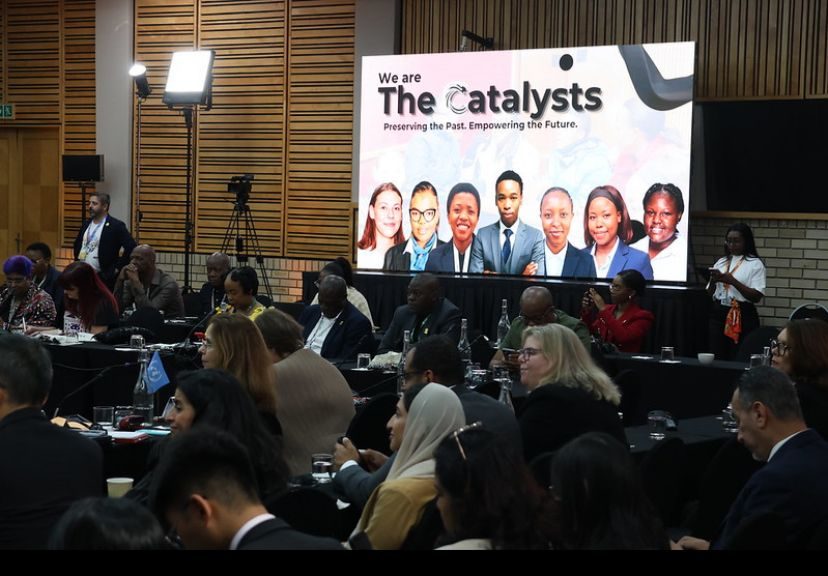
The Catalysts, Map My Biz, and Ubuntu Unlimited at the G20 Tourism Hackathon Challenge. Photo: Supplied.

The competition was held late last month and brought together 46 youth from 21 institutions of higher learning.

UJ said the participants were challenged to develop AI solutions that drive job creation and sustainable growth in the tourism sector.

Two UJ teams took the top prizes, with the Catalysts team securing first place and a prize of R175,000.

In a statement, UJ said the team presented an innovative solution called Hologram Hub, which offers a digital platform that empowers rural communities to profile and preserve their unique cultural heritage, attracting tourists directly to their locations.

“The platform enables these communities to tell their own stories, promoting cultural preservation and economic growth,” the institution said.

Map My Biz took the second spot and pocketed R140,000.

Their innovation addressed the challenge of visibility for local entrepreneurs by combining offline accredited learning with AI-driven support and a global smart map.

Map My Biz’s Inganathi Zimela said the project ensured that rural entrepreneurs become visible, trusted, and adequately supported by international and domestic tourists. “Being part of the first ever G20 Tourism Hackathon South Africa was an inspiring and eye-opening experience for me. It challenged me to think with an innovative mindset about global tourism issues that need to be solved urgently,” added Zimela.

Catalysts team member Teagon Spykerman said being part of the hackathon was an “incredible experience”.

“This opportunity has taught me how to work better in teams, but more importantly, it has opened my eyes and made me believe in myself more,” Spykerman said.

Tracy Daniels, UJ academic head for hospitality, said she was proud of the outcome. “What an incredible job. The University of Johannesburg is the only university with students in the top two teams. An amazing, amazing achievement.”

The G20 Tourism Hackathon forms part of the South African Department of Tourism’s aim to promote sustainability and enhance the tourism experience through AI-driven solutions.

UJ said both teams will present their solutions at the G20 Ministerial Summit, showcasing their innovations directly to Tourism Ministers, which is expected to take place in November as part of the G20 Summit.

INSIDE EDUCATION

Uncategorized

Basic Education, Labour delay assistant teachers’ stipends

By Johnathan Paoli

The Basic Education and Employment and Labour departments have confirmed a further delay in the payment of September stipends for some education assistants (EAs) and general school assistants (GSAs) employed under Phase V of the Basic Education Employment Initiative (BEEI).

Both departments urged affected assistants to remain in contact with district offices for assistance, reiterating that stipends for Treasury-funded schools are on track, and stressing that the September delay is isolated to those funded through the Unemployment Insurance Fund (UIF)’s Labour Activation Programme.

“The Departments reaffirm their commitment to ensuring that all young people in the programme are paid without further delay. We extend our sincere appreciation to the Assistants for their patience and understanding during this period,” the departments said in a joint statement.

The setback affects only those assistants working at schools funded outside of the National Treasury’s allocations.

Those employed in schools directly funded by the Treasury will receive their stipends on time.

The delay stems from challenges in the submission and verification of required documentation from schools to the programme’s second funder, the Unemployment Insurance Fund (UIF) Labour Activation Programme.

According to the departments, the issue is primarily administrative but has disrupted payments that thousands of young assistants rely on for basic living expenses.

Both departments stressed that urgent steps are being taken to fast-track the processing of outstanding documents and to ensure compliance with the UIF’s processes.

“Affected Assistants can therefore expect their stipends to be disbursed in due course,” the statement read.

The BEEI, currently in its fifth phase, was first launched in 2020 as part of the Presidential Employment Stimulus aimed at reducing youth unemployment while supporting the education sector.

Through the initiative, thousands of young people have been placed in schools as EAs and GSAs, assisting teachers in classrooms, providing administrative support, and helping to improve the overall learning environment.

The programme has been widely welcomed but has also faced recurring concerns over delayed stipend payments since its inception.

The departments extended appreciation to assistants for their patience and understanding, stating that district and provincial teams have been tasked with handling queries from affected assistants and to offer real-time updates on the status of payments.

The departments emphasised that no assistant will be left unpaid, underscoring their commitment to resolving the delays with minimal disruption.

The UIF Labour Activation Programme, which co-funds part of the BEEI, requires stringent verification of documents submitted by schools before funds are released.

This process, according to officials, ensures compliance and accountability but has been identified as a recurring source of delay.

Efforts are now under way to improve coordination between schools, provincial education departments and funders to avoid similar challenges in the future.

The departments’ joint statement also sought to reassure stakeholders that the initiative remains a vital component of South Africa’s education and employment landscape.

The BEEI has created work opportunities for more than 700,000 young people since its launch and remains one of the largest youth employment programmes in the country; with many in the sector acknowledging its broader impact on both youth livelihoods and the functioning of schools.

INSIDE EDUCATION

Uncategorized

Manamela to announce SETA boards this week

By Thebe Mabanga

Minister of Higher Education and Training Buti Manamela is set to appoint the boards of the Sector Education and Training Authorities (SETAs) this week, with board chairpersons set to be installed during October.

Manamela confirmed this with Inside Education on the sidelines of the Mandela Sobukwe Leadership Camp, held at the University of Johannesburg Island at the Vaal last week.

“We are finalising the appointment of the Accounting Authorities, those are going through vetting, upon conclusion of the vetting they will be informed and those for whom vetting has been concluded can begin their work,” Manamela said, adding that the process will begin as early as this week.

The process of appointing SETA board chairs was derailed and ultimately accounted for Manamela’s predecessor, Nobuhle Nkabane, being removed from her post due to a public outcry over the process followed and the identity of some of the board chairs.

Manamela said that the process is now back on track.

“We can confirm that the Minister is appointing Accounting Authorities that have been vetted this week. The [Board] chairpersons will take longer, and the Ministry will communicate in due time,” said Matshepo Seedat, Manamela’s spokesperson.  

Manamela acknowledged that there is a need to change the way SETAs are run. “I think there is national consensus that SETAS, the way in which they are structured, the way in which they are governed, and the way in which they provide services, requires some level of reform.”

He said that the conversation about that will have to be held within various parts of government as well as with stakeholders such as labour, industry and training institutions.

The five-year term of the previous boards expired in March this year. In May, the National Treasury gave Nkabane permission to allow CEOs to act as Accounting Authorities for a period of three months or until new boards are appointed. That three-month period expired at the end of August.

The incoming boards have a litany of challenges to address across the various SETAs. Three of the SETAS are under administration. Asked if more are likely to be taken this route, Manamela said “I don’t know”.

The first order of business for the boards is to appoint new CEOs or renew the contracts of incumbent CEOs as their five-year terms ended in September. Thereafter, the boards must instil a culture of excellence to improve performance.

SETAS such as the Chemical Industries Education and Training Authority (CHIETA) and The Mining Qualifications Authority (MQA) have obtained clean audits and achieved 100% of their goals.

INSIDE EDUCATION

R28 million digital hub launched in Soweto to empower 4IR careers
Uncategorized

R28 million digital hub launched in Soweto to empower 4IR careers

By Akani Nkuna

The Finance and Accounting Services Sector Education and Training Authority (FASSET) has, in collaboration with the Department of Higher Education and Training (DHET), launched a digital hub at the South West Gauteng College in Dobsonville, Soweto (SWGC), in order to introduce digital careers that are adaptive to the fast-growing technological industry.

According to FASSET CEO Ayanda Mafuleka, the hub is poised to bridge the digital divide between township areas and affluent suburban areas by ushering in digital transformation in the SWGC campus, where students will learn digital courses enabling them to contribute to the 4th Industrial Revolution economy.

“The world is not waiting for us to catch up. The 4th Industrial Revolution, the Just Energy Transition, they are all here already reshaping industries, demanding new skills and rewriting the future of work,” she said on Tuesday during the launch at the SWGC campus.

“As FASSET, this is a bold step for us because we believe that through this initiative, we will empower students and lecturers with the tools not just to service in the future, but to lead.”

The digital transformation initiative has been described as empowering not only the students, but the entire community of Soweto at large with digital literacy while also responding to the pressing needs affecting the community, especially unemployment.

Eight hundred learners are going to enrol for digital courses over the next two years in cybersecurity, coding, data analytics, cloud practioners, software development, software testing, digital marketing and artificial intelligence, amongst other skills that are critical to the digital economy.

With a financial investment totalling R28,000, 500 to aid in the steadfast implementation of the digital hub initiative, the college has also identified 60 lecturers to be upskilled with digital skills, enabling them to impart that knowledge to learners who will be learning in person and those participating in distance learning. The courses span a minimum of three months.

Mafuleka reaffirmed the entity’s endeavours to roll out the initiative across the country, especially in rural colleges. She said that Soweto was chosen as the first destination owing to its vibrant economy and strategic location as a major contributor to the township economy.

“Soweto is an ecosystem on its own, embodying the intense cultural, political and economic hub key points. Soweto has a rich history which can be preserved by ensuring that the community thrives. This hub is going to be an impactful initiative that will see Soweto having access to a digital world,” Mafuleka told Inside Education following the launch at the campus.

DHET Deputy Director General (DDG) for TVET Colleges, Zamokuhle Zungu, speaking to Inside Education, reiterated government’s efforts to incentivise community colleges as an attractive and prioritised destination for students. He said that the launch was aiding government plans to increase TVET college enrolments to 2.5 million students by 2030.

Zungu appealed to students not to be concerned about the physical location of TVET colleges, often in township areas — a contrast of environment when compared to universities — saying location does nothing to alter the quality of education.

“If you go to any operation, plant or manufacturer, the people that are supervisors across the globe, it is people coming from universities in those positions. But our education system is the opposite, [TVET colleges] are pumping more supervisors,” he added.

He highlighted the action to diversify teaching and learning beyond the traditional classroom to have a far reaching and greater impact through the implementation of virtual classrooms enabled by digital platforms.

Zungu said that for government to reach its threshold of 2.5 enrolments by 2030, the infusion of technology would play a critical role.

SWGC Principal Malose Monyamane told Inside Education that they have implemented measures to enable the upskilling of lecturers at the campus without destabilising or delaying the start of the digital hub.

“We have e-libraries, meaning that students will be able to access e-books – any material that they want read. Lecturers do post their lessons on our portal, making it easy for students to access those from wherever,” Monyamane added.

INSIDE EDUCATION