Uncategorized

School violence doesn’t happen in isolation: what research from southern Africa is telling us

By Gift Khumalo, Bokang Lipholo and Nosipho Faith Makhakhe

School violence is a global public health phenomenon. This is when learners and teachers are the victims of physical and psychological abuse, cyber threats and bullying, fights, gangsterism, and the use of weapons at school.

The consequences of school violence are dire. There are implications for learners, teachers, the school and the community. Violence undermines the learners’ and teachers’ safety. It causes stress, academic decline and behavioural problems. It can contribute to a broader cycle of violence in communities.

School violence is a problem across southern Africa. This includes South Africa, Zimbabwe, Mozambique and Namibia.

In 2008 the regional body, the Southern African Development Community adopted Care and Support for Teaching and Learning framework. It was to prevent violence, create safer schools and foster a positive school ethos.

But there has been limited research unpacking factors that contribute to school violence. We recently undertook a review project to identify and understand those contextual factors.

Our research stems from our shared scholarly interest in issues of violence in educational settings. Our professional backgrounds include school social work, health promotion, social services with children and adolescents, and teaching general education modules at a South African university.

The review of studies of violence suggests that a range of factors contribute to school violence. These include: exposure to domestic violence, socio-economic status, poor family communication, lack of appropriate disciplinary processes at school, intolerance of individual and social differences, and exposure to alcohol and substance use in the community.

What’s needed are clear school policies, teacher training and deployment of school social workers.

The scope

Our project reviewed 24 studies of violence in Southern African Development Community schools. Most of the studies were done in South Africa but some were in Eswatini, Zambia, Malawi and Angola.

We focused on this region for the following reasons.

The region comprises low- and low-middle-income countries. Learners experience various socio-economic challenges and structural disparities within their communities and schools.

Previous research suggests that communities in the region face crime and violence, gangsterism, high unemployment rates and poverty.

Our findings from the papers we reviewed indicate that factors contributing to school violence are present in learners’ home environments, communities and schools.

Family environment

Disrespect towards teachers and physical fights are linked to witnessing domestic violence. The family unit’s socio-economic standing is significant.

Compared to better-off learners, those from less privileged environments are more likely to violate school rules, steal other learners’ belongings, and bully others for their lunch meals. Learners from food-insecure families enter into transactional relationships with teachers for financial support and “free” groceries.

Research shows that the inability of parents to support and talk to their children results in children succumbing to peer pressure and becoming involved in gangs and fights. Parents sometimes incite school violence by defending their children’s misconduct and blaming teachers for their children’s behaviour.

We also observed that in schools with children who have disabilities, some parents arrange intimate relationships for their children with other learners, to shield them from exploitation by community members. However, this exposes them to unintended sexual violence in those relationships, as sexual boundaries and consent are not adequately explained to the young couples.

Community environment

The studies we reviewed indicate that the surrounding community has a role in school violence. Learners’ exposure to alcohol and substance use can lead to violence.

Specifically, community members sell substances to learners, who then return to school intoxicated, disrupting teaching and learning. In some instances, fights among the boys that start outside school continue in the school premises.

School environment

Different types of bullying occur among learners. Research shows that most of the perpetrators are boys, ridiculing girls for their achievements and using violence to “prove masculinity” and gain popularity.

Boys are ridiculed for not having romantic partners, which often leads to aggression.

Peer pressure also causes boys to verbally abuse girls who refuse their advances, and resort to behaviours such as taking pictures of their underwear in class or through toilet windows. Gangs are common and contribute to violence, serving as venues for violent interactions among boys.

Another factor fuelling school violence is lack of understanding and intolerance of demographic and individual diverse identities – like nationality, gender and sexual orientation, physical appearance, culture and religion.

Migrant learners are subjected to xenophobic attitudes where they are body shamed and insulted. Learners are the target of homophobic statements because of their gender and sexual identities. Dark-skinned and slender learners are often targeted, with teasing guised as humour.

Way forward

The purpose of this review project was to map the literature on factors contributing to school violence in the Southern African Development Community region. It could be useful in other similar regions too.

We suggest education ministries and schools countries could consider:

implementing clear school policies on how to report and respond to incidents of school violence

training teachers and school administrators on national and school policies for addressing school violence and promoting professionalism

documenting incidents of school violence and developing strategies to create safe environments

collaboration among schools, parents and psychosocial support personnel, such as school social workers, to reduce violence in schools.

We argue that different intervention programmes and services need to be adopted to address the root causes of violence. Deploying more school social workers would be part of this effort.

By Gift Khumalo, Lecturer at Durban University of Technology; Bokang Lipholo, Senior HTS Coordinator; and Nosipho Faith Makhakhe, Senior Lecturer at Durban University of Technology

THE CONVERSATION
Uncategorized

How AI can transform African education and close the digital divide

OPINION

By Dr Gillian Mooney

AI has emerged as a beacon of hope for education on the continent, promising to personalise lessons for a child in a remote village or automate grading for overworked teachers in urban townships.

An initiative like the Invigilator App, which keeps online exams rolling even during loadshedding, is a homegrown solution that demonstrates that AI isn’t some distant Silicon Valley import.

However, without urgent and bold action, AI threatens to widen divides, rather than bridge them.

On a continent where billions lack reliable electricity or affordable smartphones, rolling out AI without addressing these basics, risks leaving the most marginalised behind.

The media spotlight often fixates on flashy AI breakthroughs, but the real story is the urgent need for public-private partnerships to make this tech work for Africa.

While companies like ADvTECH are leading with platforms that track student progress in maths and science overnight, spotting struggles before class even starts, scaling this kind of technology requires governments, universities, and businesses to collaborate urgently, to ensure equitable access.

AI’s magic in education starts with personalisation — tailoring lessons to a student’s pace, style, and needs. This isn’t sci-fi; it’s happening in South Africa’s top schools today, where AI acts as a 24/7 assistant, freeing educators for what they do best – inspiring young minds.

By analysing job market trends, AI can even steer curricula toward skills like coding or sustainable farming, linking classrooms directly to tomorrow’s opportunities across Africa and beyond.

The promise versus the problems

For under-served communities, the impact could be revolutionary. Students with disabilities get adaptive tools that read aloud or simplify complex texts; AI tutors immerse students in Xhosa while building global tech savvy. Vocational training gets a boost too, with simulations for welding or entrepreneurship that feel as real as hands-on practice. The result? A generation equipped not just to survive, but to thrive in a world demanding adaptability.

Yet, starry-eyed visions must confront harsh truths.

The digital divide looms large. Without widespread internet, solar-powered devices, or off-grid solutions, AI remains a luxury for city elites. In South Africa alone, loadshedding or unplanned outages disrupt learning daily, so how do we build AI that laughs in the face of blackouts?

Bias is another beast. If training data echoes pre-democracy prejudices, AI could reinforce racial or gender stereotypes in grading or recommendations. We’ve seen it before with facial recognition tech failing darker skin tones — education can’t afford such blind spots.

Teachers, the heart of our systems, aren’t immune either. Fears of job loss or “de-skilling” are valid, but AI should empower, not replace. Training programmes must reframe educators as guides in AI-augmented classrooms, handling the human elements machines can’t touch — empathy, ethical debates, cultural nuance.

This transformation demands African leadership. No more importing off-the-shelf solutions. We need local developers crafting tools infused with our stories, from Ubuntu-inspired collaboration apps to climate-resilient learning platforms. Leapfrogging outdated models, we can pioneer paths that blend tech with tradition.

The pillars to support AI in Africa

To make this real, the following is required:

Robust Policy Frameworks: Governments crafting rules for ethical AI, from data rules to accessibility mandates.

Infrastructure Investment: Pouring funds into broadband, cheap devices, and renewable energy to connect every corner.

Teacher Empowerment: Hands-on training to weave AI into daily teaching, boosting confidence and innovation.

Research and Development: Homegrown AI hubs fostering African talent and interdisciplinary breakthroughs.

Public-Private Partnerships: Teaming government with leading public and private educational institutions for scalable, context-specific solutions.

The future of African education, empowered by AI, is not a distant dream; it is an unfolding reality. It is a future where every child, regardless of their location or background, can have access to quality, personalised, and relevant learning experiences.

But what must happen — with urgency — is for Africa to seize this moment with courage, wisdom, and a shared commitment to building an educational future that is truly transformative, truly African, and truly human.

Dr Gillian Mooney is Executive: Teaching & Learning at The IIE’s Academic Centre of Excellence. This article is based on Dr Mooney’s keynote address delivered at the Global AI in Education Conference.

INSIDE EDUCATION

Uncategorized

SACE colloquium highlights call to elevate teachers’ voices in shaping education policy

By Charmaine Ndlela

Teachers are “the connective tissue between constitutional aspirations and learners’ lived experiences,” and their voices must shape education policy rather than being reduced to tick-box exercises.

This is according to South African Council for Educators (SACE) Manager for Planning and Research and Acting Head of Ethics and Professional Development, Tuzana Sophethe, who addressed Day 1 of SACE’s two-day Hybrid Teachers’, Practitioners’ and Researchers’ Colloquium at the President Hotel in Bloemfontein, Free State.

Reaffirming the central role of teachers in shaping the future of education, Sophethe said the sessions were held under the UNESCO-declared theme: “Valuing teachers’ voices: towards a new social contract for education.”

“The theme emphasises the need to recognise teachers as co-creators of educational futures, not just implementers of policy,” she said.

Sophethe added that professional development should empower teachers to reflect, innovate and build solidarities.

“Education is a battleground of ideas, and teachers’ voices are crucial in consolidating democracy. We must work together towards a new social contract that prioritises teacher agency, reflective practice and education as a public good,” she said.

Thiboloha Special School teacher–practitioner researcher T. Chaka presented on the importance of effective learning and the qualities required for strong educational leadership.

Leadership, he argued, is not a title but a responsibility rooted in character, vision and a commitment to excellence.

Preparation for teaching, he added, demands meticulous planning and thoughtful adaptation.

Reflecting on the recent G20 Summit, Chaka said continuous learning and engagement remain essential to achieving the goals of the NDP 2030. Creativity, adaptability and collaboration, he noted, are key to high-quality education—along with accountability and sustained professionalism.

His aspiration is to help mould future generations of teachers and leaders who will strengthen the sector.

Researcher Lerato Mohale presented on inclusion, diversity and equity, warning that the sector still lacks adequate support for inclusive education. “At times we have non-functional SBSTs because we do not have outside stakeholders,” she said.

Another presenter, Kenneth Khantsi, shared research on how collaborative leadership improves school governance in township secondary schools.

Award-winning educator Luyanda Buthi, national runner-up for Excellence in Secondary School Teaching, called for stronger mental-health support for teachers and departmental heads.

“As teachers, physiologically and mentally, we are not well. We recently lost a colleague to suicide. On the same day, learners were writing Physical Science Paper 3. As I mourned, it was business as usual—I had to invigilate,” she said.

Buthi stressed that teachers are expected to perform despite insufficient wellbeing support.

SACE encouraged student teachers, teacher educators, instructional designers and those who missed the orientation to follow the sessions online and continue engaging with the discussions.

INSIDE EDUCATION

Uncategorized

School readiness at risk as Gauteng building delays mount

By Palesa Nguqu

Gauteng’s failure to complete key school construction projects is putting readiness for the 2026 academic year at risk, the Democratic Alliance (DA) has warned, citing the provincial government’s own performance figures.

In a statement issued by Nico De Jager, the DA’s spokesperson for Infrastructure Development, the party said that, with only two months before schools reopen, the Gauteng Department of Infrastructure Development (GDID) “cannot show a single project that has been completed and handed over to the Department of Education for this year”.

Several major school construction projects remain incomplete, despite repeated promises that they would be ready in time.

📍 DID A-Team at Thubelihle Intermediate School, Jabavu, Soweto.
Purpose: Monitor progress, quality, and compliance for Admin Block extension & classroom/toilet renovations.
⏳ Revised completion: 04 Feb 2026

⚠️ Challenges:

Block B moisture barrier approval pending

Power… pic.twitter.com/055VFrDrSW

— GPInfrastructure (@GPDID) November 26, 2025

According to the DA, GDID’s second-quarter performance report shows “troubling delays across several school projects that are essential for easing overcrowding in classrooms across the province”.

Thubelihle Intermediate School in Soweto is only 35% complete, while Hoërskool Elsburg in Ekurhuleni stands at less than 50%. Schools intended for learners with special educational needs, such as Bafeti LSEN School in Mabopane, remain far behind schedule, even though they are meant to replace “outdated and inadequate buildings that no longer meet learners’ needs”.

The department’s overall performance “has regressed by 6% to 67% against the performance from the previous financial year because of poor project management, bad planning, contractors abandoning sites or contractors just not being qualified to do the work,” De Jager said.

“The department continues to rely on recovery plans yet experiences the same problems each quarter without us seeing any improvement.”

The Gauteng Infrastructure Financing Agency’s (GIFA) Schools Programme is “facing similar challenges,” the statement continues.

Several schools expected to open in the new year are still awaiting critical approvals, including site development and building plans, which has slowed construction. GIFA’s own documentation notes that six priority schools are earmarked for completion by the end of the financial year, but administrative delays make this “increasingly unlikely”.

De Jager said that “the consequences of these failures are predictable and preventable”.

Learners may again be placed in overcrowded classrooms or temporary structures, he said.

The DA called for urgent intervention from the Premier and Provincial Treasury “to unblock the delays and to ensure that every rand allocated to school infrastructure delivers real value”.

INSIDE EDUCATION

Uncategorized

KZN NSC exams completed, marking starts next week

By Levy Masiteng 

Marking of the 2025 National Senior Certificate (NSC) examination scripts will start on Tuesday 2 December and conclude on 12 December, according to KwaZulu-Natal MEC of Education, Sipho Hlomuka.

All Grade 12 learners had completed their exams, Hlomuka said at a media briefing on Thursday.

“We thank our principals, educators, examination officials, and district directors for the professionalism they have shown,” he said.

A total of 195,592 candidates were registered for the exams, with 180,454 being full-time candidates, according to the department.  

Hlomuka said that the average absentee rate for the exams was 2%, consisting mostly of part-time candidates. 

The absenteeism rate was so low, he said, because the department deployed monitoring teams across districts to assess preparedness, and to confirm that examination centres were fully operational.

Challenges during the exams included a car accident involving a candidate, an assault incident, and arson attacks on examination centres. 

“We have extended psychosocial support to the affected candidates, and they will be given a second opportunity in the June 2026 examination period,” Hlomuka said.

A total of 7,889 markers, 202 examination assistants, 1,578 senior markers, 835 chief markers and deputies, and 87 internal moderators have been vetted and trained to ensure accuracy and consistency in the marking process.

Hlomuka thanked the educators, invigilators, and stakeholders for their dedication and professionalism. 

“We extend our heartfelt appreciation to all educators who have worked tirelessly throughout the year, and who continue to serve as invigilators and support staff during this period,” he said.

Speaking to the class of 2025, he said: “I wish to congratulate you on getting this far, because reaching this stage is a milestone on its own, but it is not the end. Now, more than ever, you need to maintain momentum and focus.

“Stay focused, use your time to reflect carefully, and believe that you have applied the knowledge and skills you have acquired to your exam.”

The final results are scheduled for release in January 2026, with Umalusi overseeing moderation and quality assurance processes.

INSIDE EDUCATION

Uncategorized

Northlink College launches SA’s new Boilermaker powerhouse

By Lebone Rodah Mosima 

Minister of Higher Education and Training (DHET) Buti Manamela highlighted the importance of skills development and industry partnerships at the launch of the Boilermaker Centre of Specialisation at the Northlink College Bellville Campus.

In his keynote address, Manamela said the department must move quickly “to ensure that training is linked to employment” so that every TVET student can secure either a work opportunity or an entrepreneurial opportunity after their studies.

He acknowledged the collaboration between the college, the Sector Education and Training Authority (merSETA), and 30 primary industries across the country, while welcoming students and apprentices from Gauteng, Durban, the Northern Cape, and beyond.

“This shows what can happen when public institutions, sector education and training authorities, and the private sector come together in order to make sure that we have a skills programme that is impactful,” Manamela said. 

“With SETAs, it’s not just bringing in the resources, but the expertise, and ensuring that we sustain this set of specialisations in boiler making,” he said.

“With the college providing that platform and industry linking the students with workplaces, work opportunities, we see the importance of building an ecosystem, and I think we need to encourage that.”

Manamela congratulated the college council and principal for turning the vision of a Boilermaker Centre of Specialisation into a reality.

He called on institutional leaders to cultivate strong leadership at every level, reminding them that their core mission is to build futures, restore hope for young people, and place skills development at the heart of the department’s education agenda.

Representing the student body, SRC Chairperson of the Bellville Campus, Balulwa Jantjies, said: “We are proud to be a college that doesn’t just talk about excellence, we consistently demonstrate it. This Centre of Specialisation is living proof of that commitment.”

Jantjies expressed gratitude to all partners, saying they were “founders of futures, shapers of careers, and true partners in producing the next generation of highly skilled artisans” for South Africa.

“Today’s job fair is not only an opportunity to hand out CVs, it is your chance to step into the world you’ve been preparing for,” she said.

“Engage with the companies, ask questions, be curious, be courageous. Whether you are starting to become a boilermaker, welder, electrician, or pursuing any other trade, remember that you are needed in South Africa, and the industry needs you”. 

INSIDE EDUCATION

‘All men should die’ poster sparks backlash at University of Free State
Uncategorized

‘All men should die’ poster sparks backlash at University of Free State

By Charmaine Ndlela

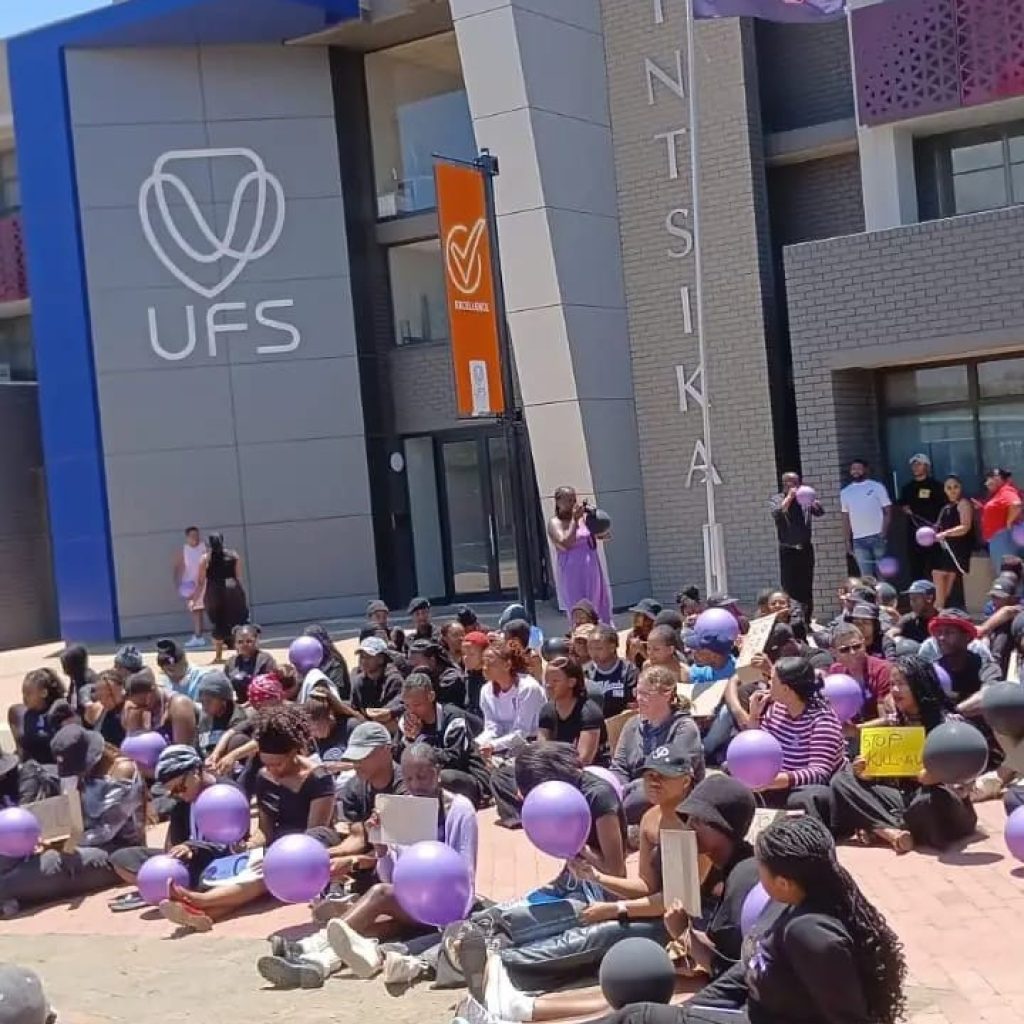
A University of the Free State (UFS) student who brandished a poster saying “All men should die” during a gender-based violence (GBVF) protest has ignited a backlash on campus and online.

The 15-minute demonstration took place on Friday in front of the university’s main building, during nationwide anti-GBVF protests prior to the G20 Leaders’ Summit.

The female student stood alone holding the handwritten sign, drawing attention from passers-by, before images and videos of the scene were posted on social media.

Her message quickly went viral, fuelled by reposts from prominent online figures. The post drew thousands of reactions and spurred heated debate about safety, GBVF, double standards and freedom of expression.

The university, one day later, issued an official statement distancing itself from the message.

The university said it was responding to “a widely circulated social media post depicting an individual holding protest placards with offensive and provocative language directed at men”.

 The message in the image did not reflect the institution’s values, ethos or institutional position, UFS said.

UFS said it remained committed to “fostering a safe, inclusive, and respectful environment” for all students and staff.  

It urged “responsible engagement” on social media and respect for the diverse voices that make up the university community.

Some social media users questioned the intent behind the statement, others said the university would have responded differently if a male student had targeted women in similar terms.

One student wrote: “I’m cool with no action being taken against her. I don’t understand why she was reported in the first place. But I can’t shake off the feeling that the university would have immediately suspended her if she were a man [with a placard saying ‘All Women Must Die’] and hauled him before a feminist kangaroo court and ultimately expelled him.”

On campus, some students described the incident as “deeply unsettling”.

Several called for an apology from the protester.

Some male students said the message made them feel unsafe, adding it was “alarming” that someone “hates men to an extent of wishing them death”.

Student Lehlohonolo Edward, wrote: “UFS must take action against this girl, either she leaves the university or we as men will leave the university or kanjani gents?”

Other students accused the protester of being under the influence of “substances” during the demonstration, saying she should be disciplined.

Not all respondents called for disciplinary action. Some urged restraint, with a faction of students rallying behind the protester under the slogan “hands off Michelle and her education”.

The student, known online as Michelle InPink, has publicly acknowledged the backlash and said many students had signed a petition calling for her suspension or deregistration.

She wrote: “At this point, since they’re so hell bent on even signing petitions to get me deregistered at the university, I’m at peace and well prepared for whatever ‘consequence’ that university might decide to take towards me. I need my degree, yes of course I do, but I’m still young and it won’t be the end of me.”

She added that one institution should not have the power to define her entire future, and accused the university of inconsistency in how it responded to harm.

“If anything, this situation will have exposed them exactly for who they are, an institution that turns a blind eye to rapists and abusers but draws the line at a harmless board. I’ll continue fighting for what is right. I will not be intimidated into silence because men are destroying lives every single day, and if my voice unsettles people who enable or excuse it, then so be it.”

INSIDE EDUCATION

Elangeni TVET College raise more than R1 million for infrastructure projects
Uncategorized

Elangeni TVET College raise more than R1 million for infrastructure projects

By Palesa Nguqu

Elangeni TVET College raised over R1 million for infrastructure development at its third Annual Fundraising Gala Dinner at the Premier Hotel in Umhlanga.  

The event, held this month and attended by around 150 representatives from local businesses, industries, entrepreneurs, academic institutions and community stakeholders, aimed to support infrastructure upgrades and skills training initiatives at the college.

In total, the fundraising drive brought in R1,075,400 through sponsorships, table purchases, pledges and auction proceeds.

Deputy Minister of Higher Education and Training, Dr Mimmy Gondwe, who delivered the keynote address, emphasised the importance of collaboration between communities and industry in strengthening the TVET sector.

She said that the success of the sector depends on a collective effort from government, colleges, industries and communities working together.

She reiterated the department’s commitment to building a “future-fit” TVET system that prioritises employability, digital learning and industry-responsive training.

Speaking about the theme of the event, Building a Culture of Giving: Strengthening Partnerships with Communities and Industry to Advance TVET Excellence, Gondwe said that a culture of giving does not emerge on its own.

It must be deliberately cultivated through deliberate investments and partnerships, she said.

“Investing in TVET education yields significant returns, including economic resilience, social stability, innovation, competitiveness, and youth empowerment. These benefits extend beyond individual colleges, uplifting entire communities, industries, and the nation.”

Gondwe called on industry leaders at the event to see themselves not only as consumers of skills but as co-creators of skills that can develop communities and drive economic growth.

She urged businesses to increase apprenticeship, internship and learnership opportunities, saying that each placement helps build confidence and employability among young people.

She also commended Elangeni TVET College’s efforts under Principal Zodwa Kula’s leadership, highlighting the college’s outreach programmes, partnerships with local municipalities and initiatives supporting vulnerable students.

INSIDE EDUCATION

Uncategorized

OPINION | How to decide between pure maths and maths literacy

By Dr Alucia Mabunda  

In the wake of the year-end exams, countless high school students and their parents are faced with the reality that they may need to make a call on whether to continue with Pure Maths or change to Maths Literacy.

It’s a double-edged sword, as Pure Maths opens more doors when considering study options; however, Maths Lit might translate to better performance, and therefore improve chances of receiving a Bachelor’s pass.

There are a number of considerations that should inform this important decision and will assist parents and students in making an informed choice.

Is pure maths only for gifted students?

The first myth that needs to be dispelled is the idea that Pure Maths is just for gifted students.

With appropriate development, structured support, and encouragement, all learners are capable of engaging successfully with the subject. Mathematics is not inherently difficult; rather, the challenges often arise from the manner in which it is taught and the way in which learners perceive it.

Establishing a solid foundation in the early years of education is essential. Unfortunately, some adults recall being discouraged from pursuing Mathematics, having been told that it was too difficult. Such stereotypes have fostered a culture of fear that continues to influence students negatively. Overcoming these misconceptions through effective pedagogy and positive reinforcement enables all learners to realise their potential in Mathematics.

Degree access and early parental support

It is true that Pure Maths opens more study and career pathways, but that is not a reason alone to opt for the subject.

The starting point should be a discussion about the child’s aspirations and career interests, ideally beginning in primary school rather than being left until secondary education. Early conversations enable parents to identify suitable subject pathways aligned with the child’s intended field of study.

While Mathematics indeed opens access to a wide range of degree programmes and fosters valuable analytical and critical thinking skills, it should be pursued in a supportive manner. If a chosen career requires Mathematics, parents ought to provide early and consistent academic support, while also fostering a positive attitude towards the subject so that the child’s motivation is aligned with their long-term goals.

When to choose Maths Lit

Students who intend to pursue qualifications that do not require Mathematics as an admission prerequisite may benefit from opting for Mathematical Literacy. This option may also be appropriate for learners who find little interest in Mathematics or who lack access to well-qualified teachers with expertise in the subject.

Choosing Mathematical Literacy reduces the academic pressure often associated with Pure Mathematics, thereby allowing students to dedicate more time and effort to other subjects that are directly aligned with their future studies. In this way, Mathematical Literacy remains a practical alternative that still fosters problem-solving skills while supporting broader academic success.

The range of degrees and tertiary courses available to students who have taken Mathematical Literacy depends largely on the admission policies of individual institutions.

In many cases, higher achievement levels are required for Mathematical Literacy than for Mathematics. For example, a qualification that requires 50% in Mathematics may require a minimum of 70% in Mathematical Literacy for admission.

Despite these higher thresholds, there has been a notable shift in recent years, with many degrees now accommodating applicants with Mathematical Literacy. These include programmes in Education, Law, selected Accounting and Commerce fields, the Human and Social Sciences, Tourism, Humanities, and Business Studies. However, fields such as Engineering, Medicine, and Actuarial Science continue to require Pure Mathematics as a compulsory prerequisite.

Overall, learners who have taken Mathematical Literacy still have access to a wide pool of qualifications, provided that their subject choices and performance levels are aligned with the entry requirements of their institution and chosen field of study.

If Pure Maths is a must, but the struggle is real

Students who struggle with Mathematics but wish to pursue a degree that requires it should begin by investing significantly more time in mastering the subject.

This may involve engaging a tutor, attending additional classes, and making full use of available learning resources. Ultimately, success depends on the student’s determination and commitment to achieving the required marks for entry into their chosen field.

But equally important is cultivating a positive attitude and perhaps a mindset adjustment towards Mathematics.

A negative outlook can hinder progress, while a constructive mindset can enhance confidence and performance. For instance, in my own experience, I initially struggled with Mathematics due to a negative attitude. However, with renewed motivation in Matric and the guidance of a highly committed teacher, I achieved strong results. This demonstrates how persistence, support, and a change in mindset can transform performance.

By Dr Alucia Mabunda is Campus Head at IIE Rosebank College.

INSIDE EDUCATION

Uncategorized

Wits launches new cybersecurity Honours and Master’s degrees

By Lebone Rodah Mosima

The University of the Witwatersrand (Wits) plans to introduce two new postgraduate qualifications in 2026 in order to bolster Africa’s cybersecurity capability.

“The two new fully accredited programmes – the Bachelor of Science Honours (BScHons) and the Master of Science (MSc) in Cybersecurity – are available on the Wits online application system, with applications for the 2026 intake open until 31 December 2025,” Wits said.

“Both programmes are designed to prepare graduates for advanced careers in cybersecurity, data protection and trustworthy artificial intelligence (AI), combining rigorous academic foundations with real-world applications.”

Professor Richard Klein, Deputy Head of Wits School of Computer Science and Applied Mathematics, said that the postgraduate qualifications in cybersecurity “will focus on advanced cybersecurity principles and technologies; artificial intelligence and machine learning for digital security; ethical and legal aspects of information security; and applied research addressing local and global cybersecurity challenges”.

Wits said that the degrees will strengthen the university’s position as a “continental leader in cybersecurity education”, and will bring together academic training, cutting-edge research, and industry engagements.

The degrees will be delivered in collaboration with two globally recognised organisations: the CISPA Helmholtz Center for Information Security in Germany, and South Africa’s own MWR CyberSec.

Tinus Green, Head of Consultancy at MWR CyberSec, welcomed the initiative.

“Developing local expertise is vital to strengthening South Africa’s resilience against evolving cyber threats, and we believe this initiative will play a key role in building the next generation of cybersecurity experts,” Green said.

Dr Lea Schönherr, Tenure-track faculty, CISPA Helmholtz Center for Information Security, said: “Strengthening global cybersecurity requires strong international collaborations, and we see immense potential in supporting the development of highly skilled cybersecurity professionals in South Africa. These programmes will help cultivate new research talent, expand global knowledge exchange, and contribute to a more resilient digital future.”

Wits Vice-Chancellor and Principal, Professor Zeblon Vilakazi, said that “cybersecurity is one of the defining challenges of our time”.

“These new programmes position Wits at the forefront of digital innovation and resilience in Africa. Through our collaboration with CISPA and MWR CyberSec, we are creating pathways for students to engage with global expertise while addressing the urgent cybersecurity needs of our society,” he said.

Dean of the Faculty of Science, Professor Nithaya Chetty, added that the qualifications will directly support South Africa’s capacity, such as data and information systems, to protect critical infrastructure and fuel the country’s digital economy.

The partnership between Wits and CISPA is formalised through a Memorandum of Understanding, to initiate joint research, academic exchanges, and co-supervision of postgraduate students in cybersecurity, AI, machine learning, and cryptography.

According to Faith Blakemore, Head of International Affairs and Science Relations at CISPA, the collaborations will open new international research pathways and strengthen scientific engagement across Africa and other continents.

“These Memoranda of Understanding will now serve as the foundation for further exciting and equally beneficial activities, including research opportunities for members of all our institutions,” Blakemore said.

INSIDE EDUCATION