Uncategorized

Biovac opens new product lab in Cape Town with DSTI, Gates to bolster Africa’s vaccine capacity

By Lebone Rodah Mosima

Cape Town-based Biovac has launched a new Product Development Laboratory in collaboration with South Africa’s Department of Science, Technology and Innovation (DSTI) and the Bill & Melinda Gates Foundation, marking what the company called a milestone for Africa’s vaccine self-sufficiency and health security.

Biovac CEO Morena Makhoana and company representatives told Inside Education the facility advances the country’s vision to become a continental leader in vaccine research, development and manufacturing.

Founded in 2003 as a public-private partnership with the South African government, Biovac develops, manufactures and “fill-and-finishes” vaccines for South Africa and other African markets.

The laboratory was designed to ensure Africa possesses the tools, expertise and capacity to develop high-quality vaccines and respond rapidly to future outbreaks and pandemics, Makhoana said.

The facility has developed three technology platforms – mRNA, bacterial and cell culture — enabling Biovac to pursue vaccine projects across multiple fronts.

“Biovac is evaluating project opportunities on all three platforms to ensure sustainable vaccine development for Africa, prioritising the development of vaccines for diseases with significant public health impact in Africa, such as the Oral Cholera Vaccine (OCV),” the company said.

“The end-to-end capability (including R&D) being built will enable future expansion to other high-burden diseases.”

Biovac plans to build on the momentum of mRNA gained during the COVID-19 pandemic by applying the technology to Africa’s major viral threats, including TB, RSV and HIV. While it called mRNA a key tool against the continent’s disease burden, the company added that vaccine development is multifaceted and no single approach is sufficient, so it is broadening its technology stack to deliver durable, locally suited solutions.

The company has developed strong collaborations with South African universities, research institutions, and global health partners.

The new lab will strengthen these partnerships, said Biovac, providing a “collaborative engagement with key institutes and enable growth of the bio-economy”.

“Furthermore, the facility can also be used to work closely with these institutes to foster local talent and providing opportunities for training and development of an African workforce that can meaningfully contribute to critical skills in South Africa and even beyond our borders.”

Through partnerships with UvuBio, SAMRC, and DSTI’s National Research Foundation (NRF), Biovac offers internships and graduate placements for young researchers, providing exposure to multiple vaccine platforms, including mRNA. It said that many these trainees have transitioned into permanent roles within Biovac or the broader biotech industry.

Biovac said that the Gates Foundation’s confidence in its work – and its 10 year collaboration – were pivotal in its ability to deliver on large-scale initiatives.

“DSTI’s commitment to science and innovation has demonstrated to our partners that the South African government stands firmly behind initiatives like this.”

The company plans to significantly expand its manufacturing footprint, aiming to manufacture at least five products for export within the next five years and to double its manufacturing capacity and workforce by 2030.

“We will do our best to retain our current skills as well as attracting new local skills into employment, through the meaningful work and world-renowned skills development exposure on offer through the scientific and manufacturing projects that we currently have in our stable, as well as new projects we are planning”, the company said.

The laboratory has been positioned within Africa’s growing pandemic-preparedness network, meaning it will act as a regional backbone for rapid vaccine response.

Biovac will be able to design, test, and produce outbreak vaccines quickly, to strengthen supply-chain resilience and regional readiness, through its mRNA and other vaccine platforms. “Unlike during the COVID-19 pandemic, Africa is now building the capabilities needed to take care of its own health needs.”

Environmental sustainability is also a priority, the facility said, citing energy-efficient designs, water recycling and secure bio-waste management systems. Biovac said that local vaccine production will reduce emissions associated with long-distance logistics, contributing to a lower-carbon, more resilient African health supply chain.

Biovac plans to create over 400 new jobs in the next five years, growing its workforce from 320 to more than 740 employees.

“Our Science & Innovation department typically employee up to five graduates per year, for a period of 6 to 12 months, and these graduates will participate in the current, as well as the new product development lab activities, so to grow their experience across multiple technology platforms, including mRNA.”

DSTI Deputy Minister Nomalungelo Gina called the lab a “milestone” for South Africa.

“This high-tech facility, equipped with advanced mRNA technology and state-of-the-art research capacity, will empower scientists to tackle the most prevalent diseases in Africa, ensuring that home grown innovation addresses the health needs of the citizens.”

INSIDE EDUCATION
Uncategorized

Operation Dudula to continue campaign at schools despite court ruling

By Charmaine Ndlela and Lebone Rodah Mosima 

Anti-illegal immigration group Operation Dudula has said it will be visiting public schools this week to check that undocumented foreign learners are not accessing South Africa’s public education system, despite a court interdict barring it from intimidating or harassing suspected non-citizens.

The group, which in August registered as a political party ahead of next year’s local government elections, is continuing its campaign despite the Johannesburg High Court ruling last week by Judge Leicester Adams that prohibits Operation Dudula and its leaders from “taking the law into their own hands”.

According to Adams’s judgment, this includes demanding identity documents from members of the public to check their nationality, and from making public statements on social media that constitute hate speech.

The Consortium for Refugees and Migrants in South Africa (CoRMSA) has said it condemns Dudula’s plans, which are in direct contravention of Adams’s ruling.

“CoRMSA strongly condemns any form of intimidation, harassment, or discrimination directed at children, parents, or educators based on nationality or migration status,” the group said in a statement.

“These threats directly contravene the recent Gauteng High Court interdict of 04 November 2025, which declared Operation Dudula’s activities unlawful and unconstitutional.”

CoRMSA said the judgment makes it clear that no private group has the “authority to enforce immigration laws or interfere with public institutions such as schools,” adding that education is a basic constitutional right which guarantees immediately realisable access to basic education for everyone.

Attempts to deny or disrupt schooling undermined the country’s commitment to human rights and equality, it said.

CoRMSA Executive Director Thifulufheli Sinthumule urged law enforcement and education authorities to act decisively to “prevent any unlawful occupation or disruption of schools”.

The group said it was closely monitoring Operation Dudula’s actions and “their adherence to the court judgment, and will continue to advocate for accountability and the protection of all learners”.  

CoRMSA said South Africans should reject hate, vigilantism, and division and “build a society rooted in dignity, inclusion, and respect for human rights”.

Operation Dudula leader Zandile Dabula has said that the group would continue its campaign.

“We are free to protect South African resources,” she said. “The court does not stop our intended operations at schools — now this means on Monday…we will be at schools.”

In a statement, Operation Dudula said it had written over 100 memorandums in the last four years to the Presidency, Department of Home Affairs, Department of Labour and Employment, South African Police Service, municipalities, and other state institutions calling for the enforcement of applicable legislation.

“We call on the state to do its job to arrest and deport all illegal foreigners to defend the interests of South African citizens, which are under serious threat,” it said.

The group also said it was dedicated to upholding the rule of law and operating within South Africa’s constitutional duties to protect national sovereignty, uphold social justice, and guarantee fair distribution of limited resources to citizens.  

Operation Dudula previously told Inside Education it planned to enforce the Basic Education Laws Amendment (Bela) Act admission requirements in 2026 by continuing to deliver “letters of demand” to schools upon reopening after the summer break. However, it also said it would not be disrupting matric exams.

The letters – which the group started delivering to some schools last month already — outlined the Act’s new foreign nationals admission requirements.

In the letters, Operation Dudula said of the Act that where both parents are foreign nationals holding either permanent residence permits or temporary residence visas, required documents include the learner’s foreign issued birth certificate, the learner’s passport, a study visa or permanent residence permit issued to the learner, the parents’ passports, and the parents’ temporary residence visas or permanent residence permits.

Operation Dudula said in the letters that no undocumented foreign learner should be admitted to schools, adding that such a learner was an illegal immigrant and “should be arrested, put into protective custody, and deported with their parents in terms of section 49 of the Immigration Act 13 of 2002”.

“We also bring to your attention the Prevention and Combating of Trafficking in Persons Act, Act 7 of 2013, a law that criminalises the harbouring of trafficked children,” the letter read, warning that admitting such children would make school principals complicit in human trafficking.

It said in the letter that school principals violating the Act and regulations “will have criminal charges opened against them, be arrested, and be handed to the South African Police Services”.

“We therefore demand that you immediately deregister and remove any child who is an undocumented illegal foreigner from school,” the letter read. Undocumented South African learners must be “assisted by the school principal in obtaining documentation before school resumes,” it said.

Operation Dudula has been active in townships and urban centres since the July riots of 2021, organising marches and public campaigns about the alleged effects of undocumented migration on jobs, public services, and community safety. It shifted focus to the education sector starting with schools in Soweto on September 22.

The Department of Education has warned the group not to interfere with the education calendar by removing undocumented learners, saying: “The responsibility for law and order in the country rests with the South African Police Services.”

South African Democratic Teachers Union (SADTU) spokesperson Nomusa Cembi told Inside Education the union respects the country’s laws and constitution. “We therefore do not support actions that undermine or disregard the laws and the constitution of South Africa.”

“Some of the actions of Dudula disregard our laws and the constitution and we do not support such conduct,” said Cembe.

Speaking to Inside Education about the possible implications of Operation Dudula’s actions, Soweto-based Kwa-Mahlobo Secondary School Vice Principal Takane Mnisi said the planned interruptions are thus far “hearsay” on social media.

“We are waiting for the Minister of Education to say something on this matter, then we will start taking action; for now everything is normal. We request documents from parents; if they don’t have them, we don’t chase learners away. It is against the constitution of the country,” she said.

INSIDE EDUCATION

Uncategorized

Manamela to appoint new NSFAS board chairperson, following Stander’s resignation

Marcus Moloko

To restore stability at the National Student Financial Aid Scheme (NSFAS), Minister of Higher Education Buti Manamela is expected to appoint a new chairperson to the NSFAS board on Monday.

This follows the recent resignation of Dr Karen Stander, who previously held the position.

The minister has initiated a self-review application in the High Court to regulate certain procedural shortcomings in the appointment process, which stemmed from legal advice received from the Department of Higher Education and Training.

The review aims to ensure that all governance and legal requirements were met during the NSFAS board’s formation.

According to their statement: “The Minister is committed to transparency and accountability in public appointments,” emphasizing that the review was not an act of opposition to any legal challenge but rather a proactive step to uphold good governance.

“Importantly. The board remains in place and will continue to fulfil its duties until the court sets the decision aside. The functioning and structure of NSFAS will not be affected by this application, and student servicing will continue without disruption.”

The Minister has also indicated that he will not oppose any legal action brought by affected individuals and will abide by the court’s decision.

Stander’s resignation has created a leadership vacuum at a time when NSFAS is under intense scrutiny over its operational and financial management. The appointment of a new chairperson is expected to signal a fresh chapter for the board, with renewed focus on compliance, oversight, and student-centered service delivery.

INSIDE EDUCATION

Uncategorized

Gwarube calls for swift action on school bullying, violence

By Lebone Rodah Mosima

Minister of Basic Education Siviwe Gwarube on Thursday urged school leaders to act swiftly on allegations of bullying and violence.

She tied the appeal to the International Day against Violence and Bullying at school, including cyberbullying.

In a post on X, she said the commemoration was a reminder of the responsibility to protect the “rights and dignity of every learner and every teacher in South Africa”.

Gwarube said that learners need to be guided, supported and taught to make the right choices.

She said that with violence occurring, and when learners harm others or bring dangerous drugs and weapons into schools, schools must act.

“Our approach must always be firm, fair, and restorative, focused on helping learners understand the impact of their actions. No child should ever come to school in fear,” she said.

She said that in partnership with the nine provincial MECs for education, there was a need to “ensure that every school is a safe, nurturing and supportive place for learning”.

“We cannot and we will not allow bullying, intimidation or violence to destroy that environment under absolutely any circumstances,” she said.

She said that while the number of bullying and violent incidents had declined in general, “each act of violence remains deeply concerning”.

“[Every] case must be addressed decisively, with compassion, accountability and in accordance with the law.

“Equally, I call on our provincial education departments to give schools the necessary support to manage these cases effectively and fairly.”

To strengthen school safety, Gwarube said the Department of Basic Education (DBE) had signed a collaborative protocol with the South African Police Service.

The partnership included joint operations and unannounced searches to help keep schools drug and weapon free.

The United Nations Educational, Scientific and Cultural Organisation (UNESCO) has said that school-related violence “in all its forms is an infringement of children’s and adolescents’ rights to education and their health and well-being”.

Under the theme “Screen smart: Learning to be safe in the digital era”, the DBE highlighted how often adolescents are on their phones — sharing photos and videos, playing games with people they have never met, or exchanging texts across apps. “This has created another breeding ground, although virtual, for bullying (cyberbullying),” the DBE said.

INSIDE EDUCATION

Uncategorized

Four suspects arrested for arson, vandalism at Mpolweni Secondary School in KZN

By Levy Masiteng 

Four suspects aged between 18 and 19-years-old have been arrested in connection with the arson and vandalism at Mpolweni Secondary School in the uMgungundlovu District of KwaZulu-Natal. 

The suspects were caught late on Wednesday by law enforcement agencies following an investigation into the arson attack, which left parts of the school damaged.

The attack took place in the early hours of Wednesday, with matric final exams scheduled to be written that day. The school hall, however, was not damaged, and the exams continued.

Classrooms and offices were torched, and school property was stolen, including school stamps, kettles, and other valuable items. The police recovered all of the items.

The KZN Department of Education welcomed the arrests, with MEC Sipho Hlomuka commending the South African Police Service (SAPS) and the uMgungundlovu District Municipality for their joint efforts in bringing the suspects to book.

“We will not allow criminals to sabotage the education of our learners. The arrests send a strong message that anyone who destroys or steals from a school will face the full might of the law,” said Hlomuka.

He said the department had a zero-tolerance stance towards acts of criminality in which education infrastructure was targeted.

“This is a clear demonstration of what can be achieved when communities, law enforcement agencies and government structures work together to protect our schools. We are deeply grateful for the commitment shown by SAPS and the uMgungundlovu Municipality in prioritising this case,” added Hlomuka.

The department said the suspects are in police custody and being questioned as part of the investigation.

INSIDE EDUCATION

Uncategorized

Unlock your future: Solwazi Institute opens its doors to make accredited skills training accessible

A new force in accessible education has arrived to help tackle South Africa’s persistent skills and post-school education access challenges. Solwazi Institute has officially launched to make accredited learning opportunities available to all South Africans anywhere, anytime.

Currently operating through a flexible online learning model with personalised, human-centred support, Solwazi combines digital convenience with a commitment to guided, practical learning.

Solwazi Institute offers a range of accredited occupational qualifications, skills programmes, and short courses that equip learners with the practical, job-ready abilities demanded by today’s economy.

All programmes are accredited by the Quality Council for Trades and Occupations (QCTO) and the South African Qualifications Authority (SAQA) ensuring every qualification is recognised, credible, and aligned with national occupational standards.

“We are preparing our learners to thrive in a digitally connected world, where opportunity isn’t defined by location or circumstance,” says Solwazi Institute chairman, Matuma Letsoalo.

“Every programme we offer, from occupational qualifications to short skills courses, is designed to unlock potential and create pathways to employment, entrepreneurship, and independence.”

Breaking down barriers to skills development

South Africa’s education system has long struggled with accessibility. For many young people, financial constraints, geographic distance, and high competition for limited university and college spaces have locked them out of the opportunity to gain practical skills.

Solwazi Institute eliminates many of these challenges by offering a flexible learning model. Learners save on accommodation, travel, and many material costs, while still accessing high-quality, structured education.

Our programmes are designed for flexibility so learners can study while working, caring for family, or building their future. Each course is assessed against workplace-readiness standards, ensuring that the skills gained translate directly into employability and entrepreneurship.

Accessible pathways for every learner

Solwazi Institute’s programmes are ideal for those who have completed Grade 12, including learners who may not have achieved satisfactory APS scores but still wish to acquire a recognised qualification.

By focusing on occupational and skills-based training, Solwazi Institute provides a bridge to employment, self-employment, and further study through nationally recognised credentials.

Not everyone has access to a university or TVET college, but everyone deserves a chance to learn. Solwazi Institute offers that chance and turns it into a pathway for real, sustainable careers.

Programmes now open for 2026 intake

Programmes include accredited qualifications in fields such as journalism, artificial intelligence, early childhood development, road transport management, and business administration with more to be announced in coming months.

Applications are now open for the January 2026 intake, offering learners flexible study options designed to build real-world, job-ready skills.

Early graduates from Solwazi’s pilot programmes have already gone on to establish successful careers in journalism, television broadcasting, and teaching abroad, demonstrating the institute’s commitment to equipping learners for tangible, real-world opportunities.

For more information or apply, visit www.solwaziinstitute.co.za.

INSIDE EDUCATION

Uncategorized

MEC says matric exams will continue, despite ‘thugs’ setting school alight in KZN

Inside Education Reporter

Unknown attackers set parts of Mpolweni Secondary School in KwaZulu-Natal’s uMgungundlovu District alight and broke into several classrooms and offices, damaging property, the provincial education department said on Wednesday.

Mpolweni Secondary is a public, no-fee secondary school serving the rural area near New Hanover in uMshwathi Local Municipality, about 40 km north of Pietermaritzburg.

The school hall was not affected and matric pupils will continue with their National Senior Certificate examinations as scheduled, the department said.

KwaZulu-Natal Education MEC Sipho Hlomuka condemned the incident as a “criminal and cowardly attack on the future of children”.

“For anyone to burn and vandalise a school — especially during the NSC examinations — shows a shocking level of criminality and
disregard for our learners’ future. This is an act of sabotage that robs learners of the limited resources
available to them and drains the department’s already stretched budget. We will not allow thugs to hold our
education system hostage,” he said.

Hlomuka said law enforcement had been assigned to prioritise the case and that perpetrators would face criminal prosecution and possible civil claims for damages.

The department will step up security at schools and deepen cooperation with the South African Police Service and Community Policing Forums, he added.

He called on parents, traditional leaders and residents to help identify those responsible and “stop shielding criminals”.

“If you know who did this and you keep quiet, you are equally responsible for destroying the future of our children,” said Hlomuka.

INSIDE EDUCATION

From classroom to coastline, Marine Sciences opens new horizons for learners
Uncategorized

From classroom to coastline, Marine Sciences opens new horizons for learners

By Lebone Rodah Mosima 

The Two Oceans Aquarium Foundation’s Marine Sciences programme, approved by both Umalusi and the Department of Education, is helping learners make informed subject choices as they prepare for their futures. 

Written by the foundation’s teaching staff, the programme is “an official school subject for Grade 10, 11 and 12 learners who are looking to gain a deeper understanding of the ocean, its workings, and its impact on humans and our planet”. 

According to Umalusi, the first Marine Sciences Grade 12 exam was written in November 2021, “after Umalusi subjected the curriculum to rigorous quality assurance processes”. 

It is now included in the suite of subjects for the National Senior Certificate (NSC).  

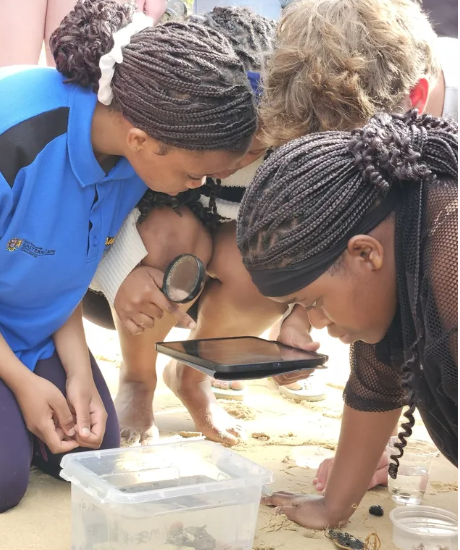
At the Two Oceans Aquarium Foundation’s Ocean Campus, experiential learning is central to its teaching approach. 

This hands-on philosophy was recently demonstrated in a field trip that brought together 113 Grade 10 learners, 11 teachers and seven student teachers from the Eastern Cape.

Over 100 learners took part in the field trip. (Photo: Two Oceans Aquarium)

The trip, organised by Tim Barnard of St Andrew’s College and Rebotile Matabane of Solomon Mahlangu High School, aimed to connect classroom theory with real-world ocean experiences.

Matabane said that the trip encouraged collaboration among educators and learners. 

“That’s what the Boknes field trip was about: Practically linking what they were taught in the classroom to real life, exposing learners to the ocean environment, and creating communities that care about their environment,” she said.

Judy Mann-Lang, Executive of Strategic Projects at the Foundation, commended the organisers’ dedication, saying that Barnard and Matabane’s “hard work and preparation ensured that each day’s activities happened on schedule, optimising the use of time and space despite the logistics to work around”. 

Barnard said it was a privilege to work with a passionate team. 

“The world needs more people who understand the ocean, its ecosystems, challenges, and importance to all life on Earth. By choosing Marine Sciences, you’ll gain practical skills, scientific knowledge, and experience that can lead to exciting careers in marine biology, conservation, research, and more,” he said.

Marine Sciences is taught through a multidisciplinary lens, exploring the connections between “water, sediments, rocks, air, and marine organisms,” and how humans interact with each, according to the foundation.

“Marine Sciences explores human impact on ocean ecosystems and equips learners with a thorough understanding of conservation and sustainability,” it said.

For past pupil Andile Ngcongo, the subject sparked a lifelong curiosity. “Taking Marine Sciences with the Two Oceans Aquarium Foundation is an investment in your future, regardless of whether you want to get into the scientific field or just need a solid foundation for university courses,” she said.

“The subject requires no prior experience or knowledge of marine sciences, but it does ask that you show up with curiosity and enthusiasm.”

Ngcongo said her passion began in Grade 9 after reading that more than 80% of ocean species remain undiscovered. “It made me realise the negligence of the oceans, and inspired me to be part of the people who will fill in the blanks,” she said.

INSIDE EDUCATION

Uncategorized

Mpumalanga distributes learning kits to ECD centers in Govan Mbeki Local Municipality

By Charmaine Ndlela

The MEC for Education, Lindi Masina, and the Deputy Minister of the Department of Basic Education (DBE), Dr. Reginah Mhaule, visited the Isiqalo-Semfundo ECD Centre in the Govan Mbeki Local Municipality on Monday for a special event dedicated to supporting early childhood development.

Joined by the Govan Mbeki Local Municipality mayor Nhlakanipho Zuma, the officials handed over learning kits, school stationery, and other essential resources to five Early Childhood Development (ECD) centres in the municipality: Sinethemba, Sithembele, Isiqalo-Segundo, MaAunties, and Mahlubi.

The visit formed part of the Bana Pele drive, an initiative aimed at ensuring that all ECD programmes are regulated and comply with legal requirements.

The drive also focuses on quality assurance, ensuring that all centres meet established minimum norms and standards.

“The drive recognises the diverse contexts in which ECD programmes operate and seeks to support them in meeting these standards,” said Masina.

This initiative follows the launch of a new ECD registration drive by the Department of Education in April 2025.

Guided by the department’s 2030 Strategic Plan for Early Childhood Development Programs, the eCares system enables the government to deliver high-quality services to young children.

During her address, Mhaule highlighted the impact of the ECD Mass Registration Drive.

“Since the implementation of the ECD Mass Registration Drive, more than 7 million children are now able to access early foundational learning opportunities,” said Mhaule.

Educators at the event expressed appreciation for the continued investment in the foundation phase, calling it a confirmation of the government’s commitment to quality education from the very first step.

Masina commended the department’s efforts to empower every child.

“Together, we are building a generation of confident, capable, and inspired young learners,” said Masina.

She added that the Department of Basic Education aims to professionalise ECD centres and ensure that every child has access to a quality programme that provides three key elements: quality learning and development opportunities, a safe and nurturing environment, and good nutrition.

The revised 2025 National Budget includes R210 million in new funding for the ECD infrastructure grant in 2026/27 and 2027/28, marking the largest fiscal investment in early childhood development in South Africa’s history, supporting the Bana Pele Mass Registration Drive.

In 2025, the Thrive by Five Index showed that only 40% of children in early childhood programs meet developmental expectations, while 81% of Grade 4 students cannot read for meaning, underscoring the urgent need for improvement.

The Department of Basic Education continues to distribute learning resources to ensure that all learners progress together.

INSIDE EDUCATION

Life sentence for Rudolph Hufke, who murdered fellow Stellenbosch student in a drug-fuelled crime spree 
Uncategorized

Life sentence for Rudolph Hufke, who murdered fellow Stellenbosch student in a drug-fuelled crime spree 

Inside Education Reporter 

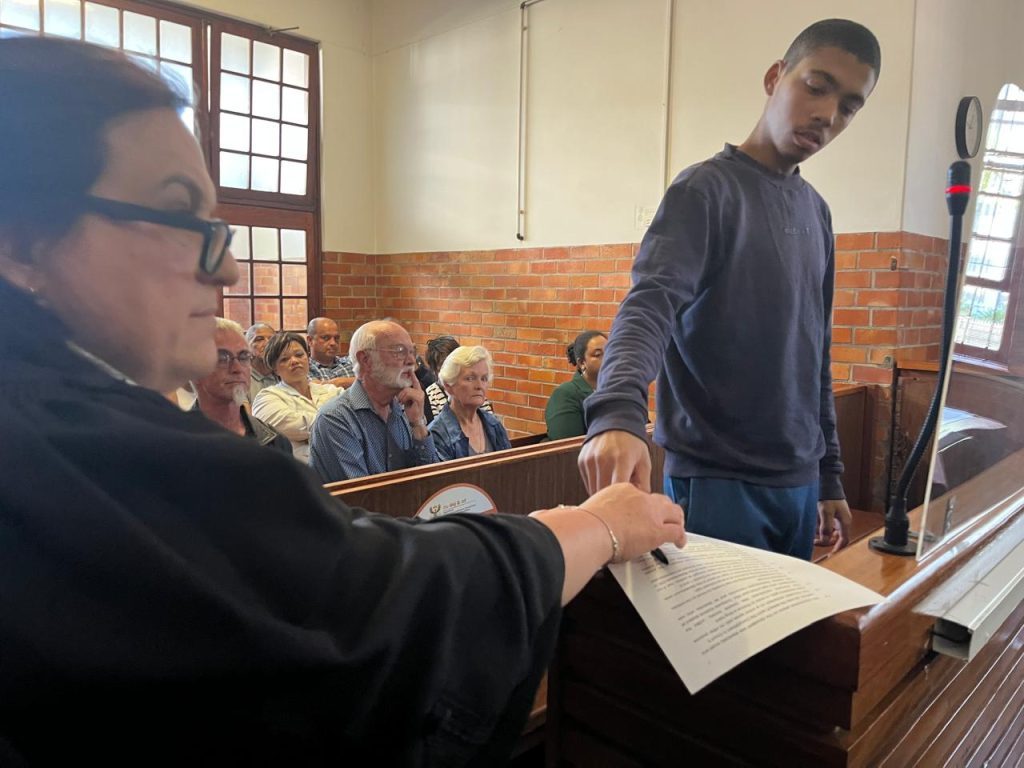
The Stellenbosch Regional Court has sentenced Stellenbosch University student Rudolph Hufke to life imprisonment plus 30 years for the murder and robbery of fellow student Jesse Mitchell, who was killed on his birthday, and the separate robbery of another victim. 

Twenty-year-old Hufke entered into a plea and sentencing agreement with the State. The court also declared him unfit to possess a firearm.

Hufke confessed to killing Mitchell, a 19-year-old BSc student, and robbing both Mitchell and Sikho Matimba during a violent 24-hour spree in October 2024. 

He admitted to carrying out both attacks in the university town’s streets while armed with a knife.

According to the plea agreement, on the afternoon of 15 October 2024, Hufke and an accomplice were walking along Jan Cilliers Street when they spotted Matimba approaching. 

“They decided to rob him,” the State said. 

After walking past him, Hufke’s accomplice “grabbed his backpack and pulled [it] off his back”. 

When Matimba resisted, Hufke pulled out a knife and tried to stab him. 

Matimba fought back, but Hufke struck him in the face with a rock before fleeing with his accomplice, who had run off with the stolen bag.

In the early hours of the following morning, Hufke went hunting for more victims along Borcherd Street. 

CCTV footage presented in court showed him walking with a man and woman before turning away. Moments later, Mitchell rode past on an electric bicycle. The footage captured Hufke stabbing him in the neck. 

Regional prosecutor William Da Gras, who led the State’s case alongside investigating officer Detective Sergeant Calvin Mosses, told the court that Hufke had attempted to conceal the weapon. 

“The accused attempted to push the knife he used into his pocket, but it fell on the ground,” Da Gras said. 

Police later recovered the knife and confirmed that “the accused’s fingerprints and DNA” were found on it.

The footage also showed Hufke strolling toward where Mitchell had collapsed and died. “He crosses the road towards where the deceased fell, and the headlight of a passing vehicle shows his silhouette where he picks up the deceased’s backpack with his belongings. He then walks off,” said Da Gras.

Prosecutors described the crimes as deliberate and vicious. 

In aggravation of sentence, Da Gras told the court that “the offences were committed with malice and forethought, and the accused preyed on victims he regarded as weak, vulnerable, and blindsided”. 

He said Hufke’s “unprovoked attack on the deceased was especially brutal and callous as was his assault on Matimba,” adding that Mitchell’s life “was brutally cut short on his birthday all for the euphoria of a drug induced high”. 

“He conducted a reign of terror in the Stellenbosch area which was only abated following his arrest,” Da Gras said, adding that the crimes sent shockwaves throughout the greater Stellenbosch area. 

He described Hufke as having “an alarming capacity for violence and a serious lack of self-control,” and said there was little prospect of rehabilitation. 

“There are no substantial and compelling circumstances justifying a sentence less than the prescribed minimum sentences”. 

The court sentenced Hufke to life imprisonment for Mitchell’s murder, 15 years’ direct imprisonment for the robbery with aggravating circumstances of Mitchell, and another 15 years for the robbery of Matimba. The sentences will run concurrently.

In a Victim Impact Statement read in court, Mitchell’s grandmother, Christina Mary Mitchell, said the murder continued to haunt her. 

“My deep anxiety is for the families of current students. I hope the sentence pronounced should be a deterrent to perpetrators and an assurance to parents of students of the safety of Stellenbosch.”

Western Cape Director of Public Prosecutions, Advocate Nicolette Bell, welcomed the ruling. 

She “applauded the prosecution and investigation team for the sterling work they did which forced the accused to plead guilty due to the inescapable and mounting evidence against him,” said National Prosecuting Authority spokesperson, Eric Ntabazalila.

INSIDE EDUCATION