Uncategorized

Nzimande punts drive for self-sufficient vaccine manufacturing in Africa

By Lebone Rodah Mosima 

Science and technology minister Blade Nzimande has said that Africa must build a resilient, inclusive, and self-sustaining vaccine ecosystem.

Nzimande was speaking at a strategic dialogue on local vaccine production in Johannesburg attended by Gavi board chair José Manuel Barroso, senior European Union and German diplomats, officials from the World Health Organisation (WHO) and other partners.

He said South Africa sees vaccine innovation as a pillar of its industrial and public health policy, driven by cooperation between the Departments of Science, Technology and Innovation, Department of Health, and the Department of Trade, Industry and Competition.

He named a series of milestones, including the establishment of Biovac as “a public private partnership that has become a cornerstone of our vaccine manufacturing landscape” and South Africa’s participation in the WHO-hosted mRNA Vaccine Technology Transfer Hub, which he said was “building next-generation vaccine R&D capacity in Africa”.

Nzimande said entities such as the Council for Scientific and Industrial Research (CSIR) and the South African Medical Research Council (SAMRC) “are supporting vaccine R&D and skills training for the next generation of scientists” and pointed to a National Vaccine Innovation and Manufacturing Strategy that aims “to consolidate our national efforts in vaccine development, translational research, and manufacturing”.

Through the Health Products Master Plan led by the trade and industry department, South Africa was “strengthening the broader pharmaceutical manufacturing value chain, ensuring that vaccine production is part of a coordinated industrialisation agenda,” he added.

Nzimande praised the South African Health Products Regulatory Authority (SAHPRA) and Biovac, saying: “I commend Biovac, and SAHPRA for their exceptional leadership and technical collaboration in strengthening local capacity and ensuring regulatory excellence.”

He said their work was “vital in strengthening regulatory systems and enabling South Africa to achieve WHO-Listed Authority status”.

Despite progress, Nzimande warned that several structural obstacles still threatened the sustainability of African vaccine manufacturing.

“Local producers face limited market access and uncertain demand, which undermines investment confidence,” he said.

“The existence of fragmented regulatory frameworks across Africa increases costs and time to market,” while there was “a need for sustained investment in skills, R&D infrastructure, and technology platforms to achieve full value-chain integration”.

He said the African vaccine market was expected to quadruple in value over the next decade.

“[T]he mRNA and other advanced platforms being developed in South Africa can be utilised to tackle a wide range of diseases and position the continent at the forefront of global innovation.”

Biovac’s work on an oral cholera vaccine, backed by international partners, “represents an inspiring example of local capability aligned with global needs,” Nzimande said.

“By 2029, we expect to see WHO prequalification and expanded manufacturing capacity for regional supply, marking a major stride for vaccine security in Africa.”

He said his recent meeting with Gavi chief executive Sania Nishtar reaffirmed South Africa’s commitment to regional vaccine manufacturing and “to building diversified, resilient supply chains”.

“We must therefore ensure that the next generation of African scientists and innovators are empowered to shape a future where no country or region of the world is left behind,” he said.

INSIDE EDUCATION

Uncategorized

World Toilet Day: Gwarube hails SA’s shift to off-grid, water-efficient school sanitation

By Lebone Rodah Mosima 

South Africa has embraced modern, water-efficient and off-grid sanitation technologies developed to ensure safe and dignified sanitation in schools, Minister of Basic Education Siviwe Gwarube said during her visit to Tsholetsega Public School in Kagiso to commemorate World Toilet Day 2025.

Gwarube visited the school to reflect on the progress made through the Sanitation Appropriate for Education (SAFE) Initiative, which aims to eliminate unsafe and undignified sanitation in all schools.

Alongside Gauteng West District Director Vusumzi Rajuile, ward councillor Motsamai Taunyane, DBE infrastructure officials and education partners, Gwarube said on X that World Toilet Day serves as a reminder of the “dignity, safety and learning” that begin with something as basic as access to proper sanitation.

“In this school, partnering with Waterloo, we have embraced modern, water-efficient and off-grid sanitation technologies,” she said.

She noted that facilities built in schools are sustainable and responsive to climate resilience.

The minister said these technologies are particularly useful in communities that still struggle with reliable running water, especially in deep rural areas.

“We saw how this worked well in Venda and in the rural Eastern Cape when I visited those sites earlier this year,” she said.

According to the DBE, it has reached 98% of its target for sanitation infrastructure — a “milestone” in its commitment to replacing unsafe facilities.

Gwarube stressed that the government will not tolerate contractors who fail to comply with project requirements.

“These delays rob our children of a basic right to safe and adequate sanitation at schools. We are strengthening accountability measures, and contractors who cannot deliver will be blacklisted by Treasury,” she said.

She reaffirmed the department’s commitment to “building safe, dignified spaces for every learner and educator” grounded in protection and integrity.

Rajuile expressed appreciation for the minister’s “steadfast commitment to enhancing sanitation and learning conditions in schools”.

World Toilet Day, an annual United Nations observance, calls for global access to safe sanitation, equitable services and responsible hygiene.

“For the DBE, the occasion provides a platform to reflect on advancements made through the SAFE Initiative, acknowledge collaborative infrastructure efforts and reaffirm its dedication to delivering secure, dignified, learner-focused sanitation in schools,” the department said.

Under the global tagline, “We will always need the toilet”, the South African Human Rights Commission (SAHRC) said the day underscores the essential role of sanitation in ensuring dignity for all.

The Commission said World Toilet Day serves as a moment to reflect on South Africa’s progress — and persistent challenges — in guaranteeing sanitation access.

It noted that “safe, hygienic, adequate sanitation is essential to living a dignified life”, and that the right to sanitation is recognised internationally as fundamental to the enjoyment of life.

The Sustainable Development Goals (SDGs) underscore this through Goal 6, which calls for adequate and equitable sanitation and hygiene for all by 2030, with particular attention to the needs of women, girls and vulnerable groups.

“South Africa has demonstrated significant progress in ensuring access to safe, hygienic and adequate sanitation,” the SAHRC said.

Statistics South Africa’s General Household Survey 2024 shows that access to improved sanitation (flush toilets and ventilated pit latrines) increased from 61.7% in 2002 to 83.1% in 2024. However, the figure has remained stagnant at 83% since 2018.

Despite progress, the SAHRC warned that millions still live without access to dignified sanitation.

Many continue to rely on unsafe practices such as open defecation and the bucket toilet system.

A recent SAHRC investigative report found that residents in several North West municipalities are forced to use toilets that deny them dignity due to a lack of basic sanitation — despite compulsory national water and sanitation standards requiring a functional toilet and hand-washing facility in every household yard.

The newly released 2025 School Readiness Monitoring Report also identifies poor sanitation — including the continued use of pit latrines — as one of the top five systemic issues affecting schools nationwide.

The Commission said it continues to receive complaints about inadequate sanitation for women and girl children, exposing them to heightened health and safety risks.

The SAHRC called on government and all sectors of society to intensify efforts to expand access to safe and dignified sanitation.

INSIDE EDUCATION

Principal and staff member fatally shot at Inxiweni Primary School in Ekurhuleni
Uncategorized

Principal and staff member fatally shot at Inxiweni Primary School in Ekurhuleni

By Levy Masiteng 

A horrific shooting has shaken the Tembisa community after a school principal and an administrative staff member were fatally shot at Inxiweni Primary School in Ekurhuleni.

The victims, 58-year-old principal Nozibele Tabu and 55-year-old administrator Nobantu Njomboni, were declared dead on the scene, the Gauteng Department of Education (GDE) confirmed.

The shooting occurred on Tuesday at around 5pm while the principal and colleagues were preparing for a meeting. According to preliminary reports, staff members in a nearby office heard gunshots and hid for safety.

When they emerged, they found Tabu and Njomboni lying in the passage of the administration block.

Emergency services were called immediately and declared both victims dead upon arrival.

Gauteng Education MEC Matome Chiloane described the incident as “senseless and brutal.”

“We are horrified by this act committed within a school, a place meant to be a sanctuary for teaching and learning,” Chiloane said.

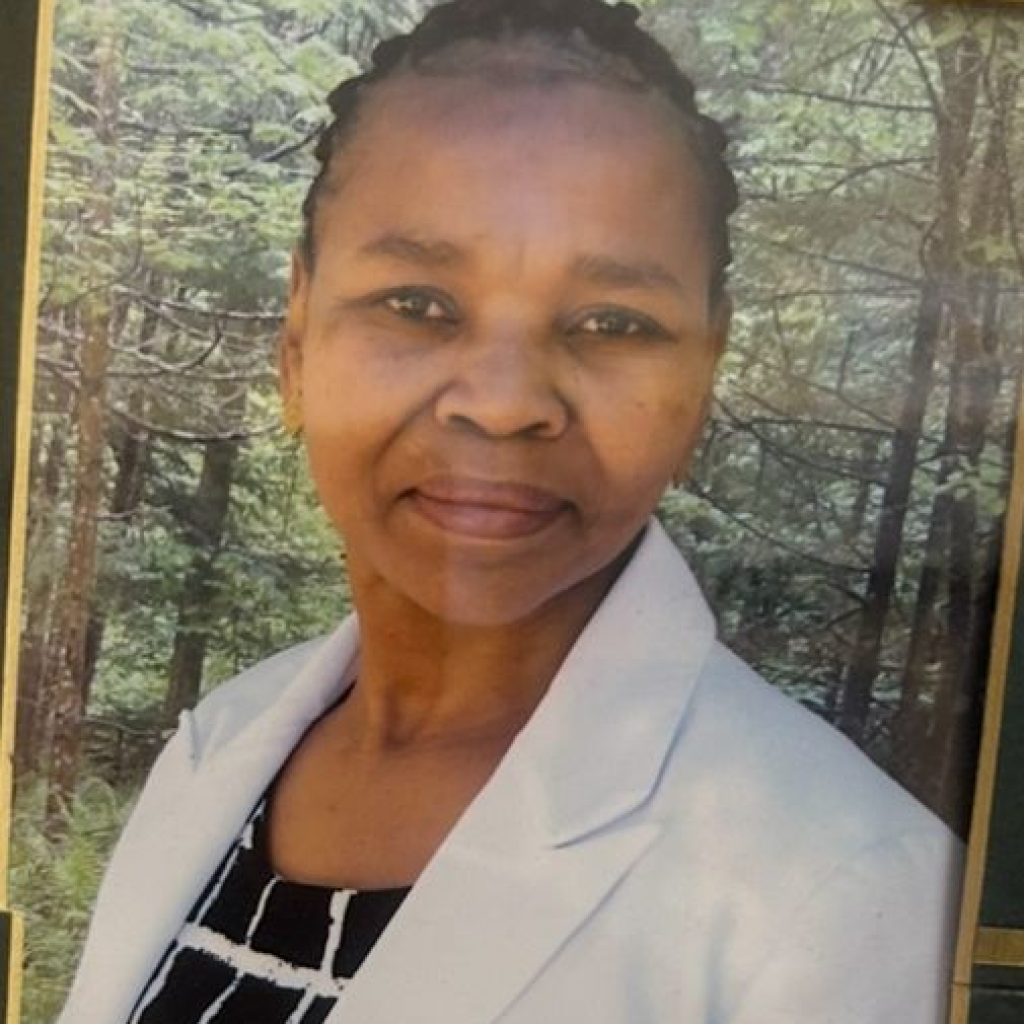
55-year-old administrative assistant, Nobantu Njomboni. PHOTO: X/Supplied

Gauteng Premier Panyaza Lesufi and Chiloane visited the school on Tuesday evening to assess the scene and convey condolences to the families.

Psychosocial support teams, including officials from the Ekurhuleni North District, will provide counselling and trauma support to learners on Wednesday, particularly those writing exams.

Chiloane urged law enforcement to act swiftly.

“We urge law enforcement authorities to move with speed to bring the perpetrator to justice,” said Chiloane.

Police investigations are underway.

INSIDE EDUCATION

Uncategorized

Tsolo principal, educator arrested for alleged assault of two Grade 12 pupils

By Charmaine Ndlela 

A 55-year-old school principal and his accomplice were arrested on Monday, 17 November, following allegations that they kidnapped and attempted to sexually assault two Grade 12 pupils from Tsolo High School in the Eastern Cape.

The incident allegedly occurred on 10 November at around 9pm at the school hostel.

Police spokesperson Lieutenant Colonel Siphokazi Mawisa said the case was opened after one of the pupils reported the matter to the Family Violence, Child Protection and Sexual Offences Unit.

According to police, the principal allegedly called one of the pupils to her hostel room before arriving with another learner.

The suspects then allegedly drove the pupils away, stopped near a forest where the principal pointed a firearm at them, and later proceeded to the Tsolo Municipality offices, where he allegedly attempted to sexually assault one of the girls.

Eastern Cape Education Department spokesperson Malibongwe Mtima confirmed the arrests and said a psychologist and a social worker have been deployed to the school to conduct a fact-finding mission and support the victims.

He described the incident as “unacceptable behaviour,” noting that it happened while the learners were writing their final examinations.

INSIDE EDUCATION

Uncategorized

Real-time bullying reporting system in Gauteng schools needed

By Palesa Nguqu

Bullying and violence in Gauteng schools remain a significant challenge, affecting learners’ mental health, academic performance and overall well-being, prompting calls for stronger intervention and monitoring mechanisms.

While the Gauteng Department of Education (GDE) has acknowledged the problem, experts and stakeholders say the response is not yet sufficient and are urging more proactive and innovative measures to ensure a safe and conducive learning environment for all pupils.

Advocates are calling for a comprehensive, centralised system to log and track bullying complaints in real time, whether they are reported formally or informally. They say such a system would help identify emerging trends, enable timely intervention and ensure that perpetrators are held accountable.

According to DA Gauteng Shadow MEC for Education, Sergio Isa Dos Santos, accountability and standardised protocols are essential.

“A real-time bullying incident reporting system, similar to the Western Cape Education Department (WCED) Safe Schools model, is essential, so every case can be recorded, tracked, and responded to swiftly.

“Quarterly incident reports from schools to district offices, and ultimately to oversight bodies, would greatly improve monitoring and responsiveness.”

Dos Santos has also called for the immediate referral of serious cases to psychosocial support services so that pupils at risk receive professional help as early as possible.

Another key recommendation is the introduction of anonymous reporting tools that allow learners to flag bullying without fear of victimisation. “Tools that allow students to report bullying without fear of retribution are vital for creating an environment where learners feel safe to speak out,” he said.

Evidence-based programmes that measure conflict resolution and establish early warning systems in high-risk areas were also emphasised as effective preventative measures aimed at tackling bullying before it escalates.

Partnerships with external organisations, NGOs, social workers, and community forums are seen as critical to strengthening mental health support and anti-bullying education, with advocates pointing to the Western Cape’s Safe Schools initiative as a model.

“These programmes can help parents and caregivers identify early warning signs and support children who experience bullying,” Dos Santos said.

INSIDE EDUCATION

Uncategorized

Gwarube flags infrastructure delays, safety gaps at Eastern Cape schools

By Levy Masiteng 

Minister of Basic Education Siviwe Gwarube identified serious shortcomings in school infrastructure and safety measures during oversight visits to two Eastern Cape schools, the Department of Basic Education (DBE) said on Monday.

The visits to Pellsrus Primary School and Humansdorp Senior Secondary School in the Kouga Local Municipality were aimed at assessing progress in infrastructure upgrades and reinforcing the implementation of national school safety measures, the department said.

At Pellsrus Primary School, Gwarube met the newly appointed contractor tasked with accelerating outstanding infrastructure work under the Sanitation Appropriate for Education (SAFE) initiative.

In a statement, the department said the engagement showed delays in sanitation upgrades, leading Gwarube to stress the need for faster action to provide learners with safe and dignified sanitation facilities.

“The oversight programme included a structured walkabout of the school premises to verify that previous delays in sanitation upgrades were being resolved and that project timelines were being realigned to ensure learners access safe, reliable, and dignified sanitation facilities without further deferment,” said DBE spokesperson, Terence Khala.

At Humansdorp Senior Secondary School, Gwarube led a school safety briefing, reviewed the school’s safety documentation and highlighted the importance of compliance with the National School Safety Framework (NSSF).

“A key highlight of the visit was the signing of the School Safety Pledge, a collective affirmation by learners, educators, and the community to uphold a culture of respect, protection, and shared responsibility in creating secure and enabling learning environments,” Khala said.

In September, a learner at Humansdorp Senior Secondary was stabbed to death by classmates, who have since been arrested.

Gwarube said of her visit to the school: “I came to assess the school’s safety protocol with SAPS, and to ensure their protocols for dealing with violent crimes and misconduct are living and implementable documents. The learners signed the inaugural anti-bullying pledge, vowing to be champions of a violence-free school. We cannot fight violence in schools [alone]. We need to work together as government departments, schools, parents, communities and learners.”

At both schools, she stressed the need to prioritise infrastructure resilience and school safety. “These oversight visits demonstrate the Department’s strategic prioritisation of infrastructure resilience and school safety as interdependent pillars of an effective and equitable education system,” she said.

The DBE said it remains committed to ensuring that every learner in the Eastern Cape and across the country benefits from a schooling environment that is safe, dignified and conducive to learning.

INSIDE EDUCATION

Uncategorized

Section 27, provincial data shatters DBE’s 98% pit latrine eradication claim

By Thapelo Molefe

More than seven years after the Sanitation Appropriate for Education (SAFE) initiative was launched with the promise of eradicating pit latrines in schools, Section27 insists the government’s progress claims do not match conditions on the ground.

While the Department of Basic Education (DBE) maintains that 98% of the 3,372 schools identified in its 2018 audit have now been completed, Section27 says the state’s reporting is “inaccurate” and obscures the true scale of unsafe sanitation still facing learners. 

Provinces themselves also concede there are hundreds of schools that continue to rely on pit toilets, contradicting the national narrative of near-total eradication.

Section27 attorney Thato Gaffane, who has been monitoring conditions specifically in Limpopo, told Inside Education that the ongoing presence of pit latrines, more than 30 years into democracy, reflected persistent and constitutional failure.

“We are very concerned about the state of infrastructure in schools, particularly when it comes to pit latrines,” she said. 

“It’s been over 30 years of democracy, over 12 years of the Michael Komape judgment… but unfortunately, they’ve not fast-tracked them. We’re still experiencing the very same issues that we have been fighting against for the past 30 years.”

The concerns Gaffane highlights are grounded in detailed research by Section27.

After the death of five-year-old Komape in a dilapidated pit latrine in Limpopo in 2014, a court ordered the Limpopo Department of Education (LDE) to provide a full list of rural schools with pit toilets. 

Section27 collected data from 86 schools in the province between May and July 2018 and found that nearly half still had unlawful pit toilets, with 19 schools omitted entirely from the LDE’s official list. 

Schools such as Allegraine Primary, Dithamaga Primary, Loboli Secondary, and Utjane Primary were among those not listed, despite unsafe or non-compliant facilities. Many children were forced to use bushes, and some schools were waiting years for replacements.

The DBE insists it has nearly completed the job. Ministerial spokesperson Lukhanyo Vangqa said the department was “determined to turn the page on one of the most painful chapters in our democracy, the use of pit latrines in schools”.

He added that, In April, the minister announced that 96% of the pit latrines identified in the 2018 SAFE Initiative audit had been eradicated and that the figure has since risen to 98%.

According to the DBE, 3,302 of the 3,372 projects listed in the original audit are complete, with the remaining 70 confined to KwaZulu-Natal and the Eastern Cape.

But provincial reporting contradicts that picture.

The Eastern Cape Department of Education confirmed that 427 schools in the province still rely on pit latrines as their primary form of sanitation, a figure vastly higher than the DBE’s national remaining total. 

Provincial spokesperson Malibongwe Mtima said these schools were part of a three-year rollout to replace unsafe sanitation, noting that “60 projects have already been allocated to an Implementing Agent for implementation”.

Mtima said the province was installing Ventilated Improved Pit (VIP) toilets and other dry sanitation technologies, which are “sustainable in rural and remote areas where access to reliable water supply remains a challenge”.

The Eastern Cape also confirmed it inherited 16 stalled projects after donor partners withdrew funding, forcing the province to redirect them to the Schools Infrastructure Backlogs Grant.

“These projects experienced delays,” Mtima said, adding that they have now been reallocated to ensure continued implementation.

KwaZulu-Natal, which originally had 1,377 schools with pit toilets, reported that 1,291 have been upgraded. However, 32 schools remain under construction, and 54 have been closed after being declared “non-viable”. 

Provincial spokesperson Mlu Mtshali said the 32 outstanding schools “were earmarked for completion during the end of 2024/25 financial years,” but budget cuts delayed the work. 

“They are currently undergoing construction and are targeted for completion during 2025/26,” Mtshali said.

Section27 disputes official progress claims, saying they are not credible without independent verification. Gaffane said this was especially evident in Limpopo, where the provincial department reported to court that only five schools still had pit toilets. 

“Regrettably, there’s still far more schools that need adequate infrastructure,” she said.

“That reporting is inaccurate and doesn’t reflect the reality on the ground.”

She added that even in Limpopo, where some new sanitation infrastructure has been installed, dangerous pit toilets remain standing.

“You would think that when you build a different alternative facility… you would abolish the pit latrines. But unfortunately, the department has not been doing that.”

Gaffane said mobile toilets that were intended as short-term stopgaps have, in some cases, become semi-permanent despite poor maintenance. She noted that Limpopo schools were among those affected.

“There’s been prolonged usage in some areas… they are overly used, and they no longer appear to be a temporary measure.”

The DBE acknowledged the complexities of implementing school infrastructure across provinces but maintains that oversight mechanisms are in place. 

“Each project has a dedicated Professional Service Provider (PSP) that provides independent monitoring and management of the construction site,” Vangqa said.

He added that the department conducts regular oversight visits to assess progress, quality and performance.

He admitted, however, that recent changes in education infrastructure financing have weakened national oversight.

“Fiscal reforms… have devolved greater implementation responsibility to provinces,” he said.

“Though this consolidation improves efficiency, it reduces the DBE’s direct oversight of project execution.” 

The department is also “deeply concerned when provinces return unspent infrastructure allocations to the National Treasury while learners continue to endure overcrowded or unsafe school environments.”

The Eastern Cape confirmed it had previously returned unspent funds in 2016, although it did not elaborate on the reasons. 

The province cited several ongoing “challenges”, including poor contractor performance, business forum disruptions, vandalism of new facilities, climate-related disasters, and schools resisting the demolition of unsafe toilets. High-risk districts include Alfred Nzo, OR Tambo and Amathole.

Section27 said that failures in planning, contracting and oversight lie at the heart of the SAFE initiative’s slow progress. 

“The biggest failure was that there was no risk assessment that was done or the risk assessment that was done was inadequate,” Gaffane said. 

She cited cases where contractors went unpaid for months, engineers were not compensated, and work stalled because community members demanded hiring commitments. 

“It really just shows you how the DBE has gone about the project,” she said. 

“You would think that if you’re going to embark on such a big and important initiative… you would do a risk assessment.”

Gaffane said the persistence of pit latrines represents a direct breach of learners’ constitutional rights. 

“You simply cannot say that someone is afforded that particular right if they’re not able to study while enjoying other rights — the right to a clean and safe environment, the right to dignity, the right to equality,” she said.

As deadlines continue to be missed, Section27 warned of the consequences.

“It means more risk to learners… who are going to continue to study with this infrastructure that is being declared inappropriate by the court,” Gaffane said.

She pointed to conditions at Thamsanqa Secondary School in the Eastern Cape as an example.

“Learners are studying in an environment where there’s no roof… the toilet, there’s a pit toilet and at the back of the pit toilet there’s such a huge hole… if you slip and fall, you could literally fall into the pit toilet.”

The DBE maintains it will complete the remainder of the 2018-identified schools by the end of the current financial year.

INSIDE EDUCATION
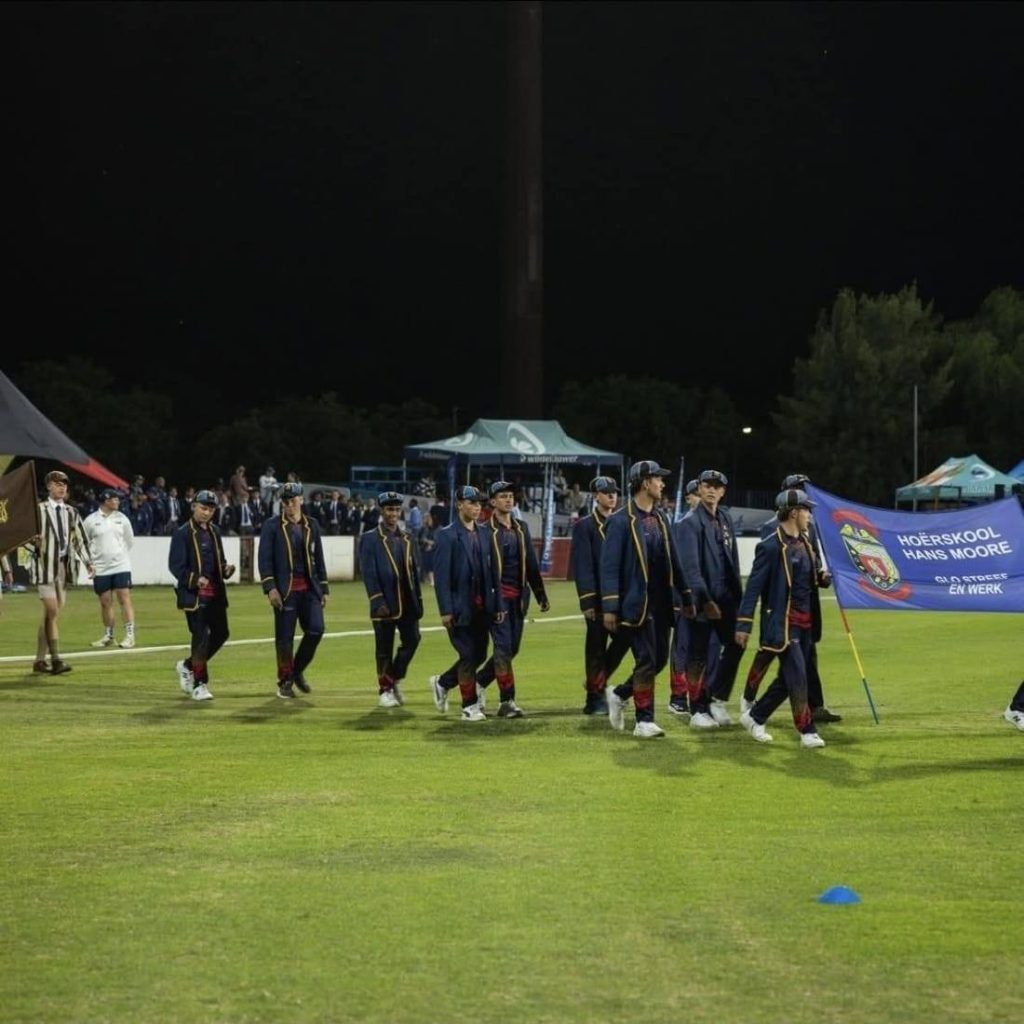
Bishops edge Wynberg in Western Province thriller as Hans Moore storm to Easterns crown
Uncategorized

Bishops edge Wynberg in Western Province thriller as Hans Moore storm to Easterns crown

By Johnathan Paoli

The second volume of the Switch Schools SA20 delivered two absorbing provincial finals over the weekend, showcasing the depth of South Africa’s schoolboy cricket talent.

In Cape Town, Bishops Diocesan College completed a historic clean sweep of regional titles with a nerve-jangling eight-run victory over Wynberg Boys’ High School.

Up in Gauteng, Hoërskool Hans Moore produced one of the most dominant batting displays of the competition to claim the Easterns title with a ruthless 10-wicket win over Hoërskool Marais Viljoen.

A packed Frank Reid Field witnessed a gripping finale on Saturday as Bishops lifted the Western Province Boys’ title.

Put in to bat first, the hosts compiled a competitive 138 runs for 8 wickets thanks to a composed captain’s knock from Alex Vincent.

Opening the innings, Vincent struck 38 off 40 balls, anchoring the innings while partners fell around him.

Cameron Macbeth added a brisk 28, while Litha Mbiko’s lively 28 off 18 balls gave the total a late push.

Wynberg’s bowlers, however, ensured Bishops never fully broke free.

Nicholas Stafford was outstanding in the swirling wind, taking 4/11 from three overs in one of the standout spells of the tournament.

Wynberg’s reply began steadily, with openers Fawaaz Hendricks (18) and Qaeed Shaik (26) laying a solid platform. But the chase began to wobble after both were run out in quick succession.

That sudden shift in momentum left Wynberg’s middle order vulnerable, and Bishops pounced through disciplined bowling and sharp fielding.

Wynberg skipper Michail Tarentaal fought valiantly, crafting a fluent 48 from 37 deliveries to give his team hope.

But with wickets tumbling at the other end and the run-rate climbing, the pressure proved too much.

Vincent returned at the death to claim 2/20, closing out a memorable all-round performance and sealing an eight-run win.

While Bishops celebrated another slice of history, both teams earned qualification for the regional Phase 2 competition in Stellenbosch in January.

It was a day that underlined Bishops’ resilience under pressure and reaffirmed Wynberg’s grit after their semi-final win over Rondebosch.

Vincent’s performance across the day, including 3/24 and a rapid 25 in the semi-final against SACS, earned him Player of the Day honours.

His leadership, strategic bowling changes and willingness to take responsibility in key overs drew praise from supporters and coaches alike.

If the Western Province final was a tightrope, the Easterns final at St Benedict’s College was a steamroller.

Hoërskool Hans Moore powered to a thumping 10-wicket victory over Hoërskool Marais Viljoen.

Bowling first, Hans Moore’s spin-focused attack kept Marais Viljoen in check, restricting them to 123 all out.

Isaac Aube set the tone with a superb 2/15, while Jack Bevolo (2/22) and Kearan Weyers (2/28) provided consistent control.

Marais Viljoen’s batting effort was anchored by Jared Mentz (29), with Rieshaeel Hashim (25) and Hendre Cilliers (21) offering valuable support.

Hans Moore opener Xavier van Biljon delivered one of the most destructive knocks in schools cricket, smashing 83 not out off just 29 balls.

His innings included a staggering 10 sixes and four fours, 76 of his runs coming in boundaries, as he dismantled the bowling with clean, effortless power.

At the other end, Weyers backed up his strong bowling display with an authoritative 35 not out off 23 deliveries.

Together, the pair raced at nearly 15 runs per over, wrapping up the chase in only 8.3 overs to spark jubilant celebrations from the Hans Moore camp.

The emphatic victory not only handed Hans Moore the Easterns title, but also thrust Van Biljon into national attention as one of the most exciting emerging talents of the competition.

As the Switch Schools SA20 regional finals came to an end, both schools have earned a place in the next phase, which will be held next year.

INSIDE EDUCATION

Uncategorized

Gauteng education accuses Sunday World, DA of manufacturing matric security tender claims

By Lebone Rodah Mosima 

The Gauteng Department of Education (GDE) has accused the Democratic Alliance (DA) of an “obsession” and a campaign to assassinate Premier Panyaza Lesufi’s character, following a Sunday World article alleging corruption in school security tenders linked to matric exams.

In a statement issued on Monday, the department said it rejected the “misleading and sensationalist” online article published on Wednesday, 12 November, headlined, “Matric exams at risk amid alleged Gauteng school security tender corruption – DA”.

“This unfortunate article, which appears to rely solely on a statement issued by the Democratic Alliance (DA), irresponsibly questions the integrity of the National Senior Certificate (NSC) examinations in the province”, the GDE said.

Sunday World reported that the DA had received information from an alleged whistleblower claiming senior GDE officials were engaging in systemic corruption in security tenders for “the protection of matriculation exam papers”.

The newspaper wrote that the GDE “preselected certain companies to receive tenders in exchange for kickbacks ranging from 10% to 20%”, based on the whistleblower’s claims.

The GDE said it was “deeply concerning” that Sunday World published the allegations “without any credible evidence”.

The department said the DA had become desperate in its search for “any opportunity to portray the Premier in a negative light”. It said the article was based “purely on hearsay” and had “chained” these allegations as facts without obtaining direct comment from the department.

“This approach reflects a troubling disregard for journalistic ethics and defeats the impartiality that reporting should embody,” the GDE said.

“We strongly believe that the article is misleading. It amplifies speculation and manufactures a crisis where none exists”.

The department said it condemned the spread of unverified information during the matric examination period.

It added that since the start of the NSC examinations there had been no record of “any breach in security that could compromise the integrity or facilitation of the NSC examination process in Gauteng”.

“We can confirm that all storage and distribution points have been allocated adequate security in line with norms and standards”, the GDE said.

The department said it was adamant that no question papers or scripts had been reported as compromised, and that “all papers are handled exclusively by GDE Examination officials, not by any external service providers”.

Gauteng Education MEC Matome Chiloane said it was “unfortunate [and] irresponsible for anyone to opportunistically share information that questions the integrity of the NSC examinations without any basis”.

INSIDE EDUCATION

MEDIA STATEMENT | The GDE vehemently refutes and rejects the misleading and sensationalist article published online by Sunday World on Wednesday, 12 November 2025, with the headline “Matric exams at risk amid alleged Gauteng school security tender corruption – DA”. pic.twitter.com/hUkngZOu5X

— Gauteng Department of Education (@EducationGP1) November 17, 2025

Uncategorized

Grassy Park teenager still missing after being swept to sea in Cape Town

Inside Education Reporter

A 15-year-old boy from Grassy Park remained missing on Monday after being swept to sea at Noordhoek Beach on Cape Town’s Atlantic coast, despite an extensive air, sea and shoreline search, the National Sea Rescue Institute (NSRI) said.

Spencer Oldham, NSRI Hout Bay station commander, said the alarm was raised on Sunday at 4.30pm.

“NSRI Hout Bay duty crew and the CoCT (City of Cape Town) water rescue network crew were activated following eyewitness reports of a teenager being swept out to sea at Noordhoek Beach, Cape Town, below Chapmans Peak Drive.”

The teenager was trying to recover a ball that had washed off nearby rocks when he disappeared in the surf.

“[He] may have been caught in rip currents and he was swept out to sea before disappearing,” said Oldham.

Multiple emergency services were dispatched to the scene.

“NSRI rescue swimmers, CMR (Cape Medical Response), CoCT Law Enforcement, CoCT DRM (Disaster Risk Management) and the SA Police Services responded.”

Two NSRI rescue craft already at sea on routine training joined the search, and further vessels were launched from Hout Bay and Kommetjie.

“NSRI Hout Bay (at sea at the time conducting routine training) dispatched the NSRI rescue craft Nadine Gordimer and Albie Matthews and the NSRI Hout Bay rescue craft Spirit of Gabby was launched while the NSRI Hout Bay rescue vehicle responded.

“NSRI Kommetjie were alerted and launched the NSRI rescue craft Rescue 26 Alpha and the NSRI Kommetjie rescue vehicle responded.

“NSRI Simonstown dispatched NSRI crew and their NSRI rescue vehicle.”

An EMS/AMS Skymed rescue helicopter was deployed to assist with the aerial search, while police water units were put on standby.

“WC Government Health EMS Metro Control dispatched the EMS/AMS Skymed rescue helicopter. Police WPDS (Water Policing and Diving Services) were alerted.”

Oldham said the search took place in difficult sea and weather conditions.

“On arrival on the scene an extensive search commenced for the teenager in the surf zone in strong South Easterly winds gusting to 45 knots.”

By nightfall there was still no trace of the boy.

“Despite the extensive air, sea and shoreline search there remains no signs of the missing teenager. Police WPDS will continue in ongoing search efforts. Thoughts and care are with the family and friends of the missing teenager in this difficult time.”

Noordhoek is a wide, open Atlantic beach facing powerful swells driven by the cold Benguela Current and strong seasonal winds, conditions that can generate strong rip currents and heavy surf, according to safety advisories and the NSRI’s public guidance on coastal hazards.

The NSRI says rip currents are the single biggest danger visitors face at South African beaches and has warned that they can form wherever there are breaking waves, often intensifying around sandbanks, channels and tidal changes.

Travel and safety notes for Cape Town’s coastline describe several Atlantic and False Bay beaches, including Noordhoek and nearby False Bay spots, as exposed areas where rip currents are common and formal lifeguard protection is limited or seasonal, urging swimmers to treat the surf with caution.

The incident at Noordhoek comes after a series of drownings and near-drownings along Cape Town’s coastline over the past two seasons, many of them linked to rip currents.

On New Year’s Day 2024, two men drowned and a third man went missing at Sonwabe Beach on the False Bay side of the peninsula after being caught in rip currents, according to NSRI reports and local media.

In November 2024, a 12-year-old girl drowned and a 34-year-old man who tried to rescue her went missing in strong rip currents at Monwabisi Beach, also on the False Bay coastline, prompting a multi-day search by NSRI crews and police divers.

A December 2024 public advisory by NSRI and community newspapers said an average of about 56 people drown in South Africa each year because of rip currents, and urged beachgoers to visit only lifeguarded beaches and obey safety flags and instructions.

INSIDE EDUCATION