Uncategorized

Women professionals in STEM are few, but there is more to this than just gender inequality

By Mateboho Green

The morning session of the University of Pretoria’s 7th Women in Science Event ignited a lively debate, frequently punctuated by roaring laughter from the audience in the Future Africa auditorium on 8 August 2025.

During the Q&A segment following the panel discussion themed ‘Closing the Gender Gap in STEM’, an individual in the audience posed a question to Dr Phethiwe Matutu, CEO of Universities South Africa.

Question: When it comes to diversity in STEM disciplines, it is vital to see people who look like us—women we can look up to, especially black women if we, ourselves, are black. If we want more women to pursue science, we must encourage girls to be themselves in the field, rather than model themselves after the males who dominate it. So, how do we create spaces for women to be authentic and still succeed at the same rate? And how do we take intersectionality further?

Dr Matutu: That’s an important question, which one could explore at great length. I’ve heard young black women engineers say they started drinking beer and watching rugby—(laughter), just to have something in common to discuss with their peers. I thought the beer was a bit much [laughter] until I found myself drinking wine while teaching at Stellenbosch University [located in the heart of South Africa’s winelands] many years ago, for six years. Everyone frowned upon my not drinking wine. It wasn’t a negative influence but a genuine attempt by my colleagues to embrace me and assimilate me into their culture.

In another personal example, my daughter recently completed her degree in mechatronics and is now pursuing her master’s. She has started saying things like, ‘I’m sweating my balls off’—[laughter]—and I thought, ‘What balls is she talking about?’ That’s what happens when a woman is immersed in a male-dominated environment. It’s a reflection of how dominant male culture can influence the behaviour of a lone woman in their midst.

Speaking of women feeling the need to emulate men in male-dominated environments—I’m a mathematician by profession. I was the first woman from a South African university to earn a PhD in pure mathematics [wide applause].

Throughout university, I never had a female mathematics lecturer. I was taught exclusively by men until I obtained my PhD. So, I did not quite have mentors like me to emulate. Recently, at Rhodes University, a 23-year-old female Master’s student was being celebrated for earning a distinction at the master’s level in mathematics. Everyone assumed she was the first—until I pointed out that I had achieved the same 33 years ago. It’s just that no one knew.

In the STEM disciplines, it is easy to be perceived as a rarity—because women mathematicians are few and far between.

On a lighter note, however, I’ve never felt compelled to look like a man [applause], despite that I still proudly sport my natural hair — much against some of my close associates’ nudges to switch to weaves, supposedly to look more “feminine.”

Ms Thato Semono, Head Girl at Tuks Sports High School: “For me, being authentic is about girls understanding their roots—recognising the sacrifices others have made to help them reach their goals. We need more campaigns to ensure information is accessible to everyone. Girls from disadvantaged backgrounds, in particular, often lack exposure to existing opportunities. It’s equally important to instil in them a sense of contentment with who they are.”

Ms Susan Byakika, Coordinator of the Women in Hydrogen programme at the German Development Agency (GIZ) in South Africa, also directed a question to Dr Matutu.

Question: After engaging with several university researchers and lecturers, I’ve noticed a recurring challenge: many conduct research in isolation, with little to no industry exposure. Yet they’re expected to publish academic papers to progress in their careers. The absence of industry partners who could otherwise enhance the relevance of their research often hinders their advancement. What opportunities exist within USAf to bridge these gaps and address the challenges holding researchers back? If entities like the GIZ, where I work, support academia-industry platforms, how can we connect with them, particularly through USAf?”

Dr Matutu: Applied research is important. The Department of Science, Technology and Innovation previously ran a programme focused on linking universities to industry. This was later transferred to the Department of Trade and Industry to foster university–private sector collaboration. The facility is called the Technology and Human Resources for Industry Programme (THRIP). That might well be your solution.

Otherwise, individual universities do seek, develop and maintain bilateral partnerships with industry for research and many other purposes.

Dr Leno Seboka, Medical Physicist at the Steve Biko Academic Hospital and Lecturer at UP, channelled her question, on the PregiDose Mobile App, to Dr Essop: I agree that therapists often forget their dosimeters. I also acknowledge that radiography remains a male-dominated field, and many women feel hesitant to approach us for dosimeters. I’m curious: does your application cater to physicians as well? We once had an intern who became pregnant but withheld the information, fearing it would delay her graduation. If your app is accessible to medical physicists, it could be a valuable resource for women in our field.”

Dr Essop: I’m venturing into uncharted territory now. I’m in the process of commercialising my product and have applied to the Technology Innovation Agency (TIA), whose process is quite rigorous—they want a clear understanding of the target market. What’s fascinating is that radiation exposure isn’t confined to X-ray departments; it’s present in theatres, orthopaedic theatres, and diagnostic procedures for kidney and gallstones—we’re everywhere.

The app is not just for radiographers; it’s relevant to orthopaedic surgeons, medical physicists, and anyone involved in therapeutic or diagnostic radiography. So yes, it has broader applicability. If we secure funding, we intend to expand access to the wider market that needs it.

At my last count, there were around 6,000 female radiographers in the field. Realistically speaking, only 6% are likely to be pregnant at any given time, so this underscores the need to broaden the app’s reach.

The audience’s other questions – based on the morning’s presentations, were directed at the UP Director of Internationalisation and Strategic Partnerships, Dr Rakeshnie Ramoutar-Priesch (middle, above), who had welcomed the guests to the event; the keynote speaker for the day, the Deputy Minister of Science, Technology and Innovation, Ms Nomalungelo Gina (right); and the Vice Principal: Research, Innovation and Postgraduate Education, Professor Sunil Maharaj (left), who stood in for the University’s Vice-Chancellor and Principal, Professor Francis Petersen.

We share edited versions of some of those questions below.

A Medical Biological Scientist and an aspiring doctoral candidate, Ms Mmapulane Setumo, inquired about alternative funding instruments suitable for women above the age of 35, beyond which they no longer qualify for funding by the National Research Foundation.

Question: What funding opportunities are there for women in employment to pursue doctoral studies, to augment what one is likely to get from their department, which is usually inadequate, and in addition to what one might have saved for PhD study purposes?

Dr Rakeshnie Ramoutar-Prieschl: At UP, funds are available for part-time assistants through the University’s Department of Research and Innovation. Even within your department, you can inquire about other opportunities from your Dean.  Another prospect is the Department of Higher Education and Training, which funds universities’ doctoral programmes through the Universities’ Capacity Development Programme grants.

“We therefore want to collaborate with UP to encourage our researchers and innovators, and to reinforce the notion that there is life in science, and that science is cool.”

So, Ms Anele Msomi, from the GIZ, asked: Deputy Minister, is that invitation open to other institutions, like ourselves? We’re currently working on a technology programme that we want to filter down to the grassroots to ensure we help everybody.  How can we tap into this opportunity?

Deputy Minister: This opportunity is not limited to UP.  All universities and civil society organisations may submit proposals to our Grassroots Innovators through the Technology Innovation Agency (TIA), our seed funding instrument. Go to their website for details

Deputy Minister of Science, Technology and Innovation, Ms Nomalungelo Gina (left): Don’t rule out industry role players – I know a few PhD scholars who have accessed private companies’ research funds. Private companies fund doctoral research, incentivised by the tax rebates they get in return.

As part of her keynote address earlier, Deputy Minister Gina had congratulated the University of Pretoria for their Sci-Enza programme that teaches science to school learners of all ages in a fun way and, in the process, also instils teachers’ interest in the subject.

She had also mentioned Grassroot Innovators, a facility of her department, which works closely with higher education institutions, schools and communities to promote innovation.  “We protect your intellectual property; ensure that your innovation ideas come to fruition, through funding, and we also help you scale up your idea.

Reducing maths teaching to maths literacy is a major problem

Question by an audience member from UP’s Department of Health Sciences to Deputy Minister and Professor Maharaj: Most of us have identified the issue of STEM in high school, with many schools opting to offer mathematics literacy over pure maths. Even the quality of maths lit is not that great. Have you discussed this with DBE? We tend to celebrate a mediocre 100% pass rate.  As universities, we assume, when we receive school leavers with 7 As, that they are the best students we could attract.  Yet we see such learners struggling a lot. Basic education is seriously lacking. We seem to be going backwards – not as women, but as a country in STEM education.

Deputy Minister: We just started a tripartite alliance of three departments: DSTI, DHET and DBE. What you are raising is one of our joint focus areas, addressing STEM subjects in the context of teacher training and education. We are not yet there, but through the pipeline of teachers we’re trying to produce, we should begin to see better results, over time.  This also touches on the curriculum – what are universities teaching student teachers?

Professor Sunil Maharaj, Vice-Principal: Research, Innovation and Postgraduate Education at UP (right)This is a perennial problem. It is regrettable that 30 years into our democracy, we still see maths performance declining. If you look at Grade 12 results, the number of maths and science students has not increased – in fact, it has gone down. Whether they are male or female is immaterial – it is the culture of mediocrity that we must learn to curtail.  The day we change the 30% pass rate is the day we will begin to move forward. Because of that 30% pass requirement, schools are attaining a 100 % pass rate, which looks very nice in newspapers. The ‘high performers’ go on a stage at the end of every year, attracting corporate awards. But if South Africa is to build a strong economy and become globally competitive, we need scientists, and good mathematics is important in their development.  I look forward to the day the government decides ‘we don’t offer maths lit anymore’ — a difficult political decision it will be to make.

This is a national problem

“But we, as collective universities, cannot see this as a sole Basic Education problem,” Professor Maharaj continued.  “We must work together.  We inherited many of these issues and need to play our role. As part of our corporate social investment (CSI) programmes, universities must put more interventions in place to support students through the use of tutors and the many bridging programmes. That must be the solution until such time as the system changes.

“On a positive note, it’s interesting to see the extent to which the students who did not come in with impressive high school results go on to excel, downstream, when given appropriate support. Many had no access to good maths teachers, or got a good teacher for only three out of the 10 months of schooling in a year.  So, they come in with low marks, not because they are not bright, but because they were not given a firm maths foundation. We must continue to support such learners.”

Dr Matutu: Should we be concerned by the absence of diversity in our STEM fields? If 60% of graduates from our undergraduate degrees are women,  should we be concerned by the under-representation of men, and about what kind of society are we creating? If women are more represented in Human, Social and Life Sciences, should we not be promoting inclusion across disciplines such as Engineering, Physics and Mathematics for a more equitable society?

Professor Maharaj: I agree — 60% of our graduates are women, and yes, we are concerned about what happens to men. At UP, a fair number of women in engineering are in Mechanical or Chemical Engineering. We must also undertake a granular assessment of all our programmes to see what is happening. Male numbers at the postgraduate level are concerning, even though the numbers differ between programmes. It is incumbent upon us to put interventions in place to address these issues on a departmental or programmatic level.

Dr Ramoutar-Prieschl (left)Gender dominance in specific disciplines is an issue for the gender equal future we are trying to create. We cannot disenfranchise one gender in favour of the other.

Deputy Minister: You are pointing to social disorders in our society. We solve one problem and create another – and need to strike a good balance in our programmes. The focus on the girl child tends to lead to an unintended consequence of disadvantaging the male child. We need to address that challenge by examining practices at our institutions, in civil society and in our youth. Unless we address it, it will create a major problem for our country.

UNIVERSITY OF SOUTH AFRICA

Uncategorized

Enhancing teacher education through PrimTEd

By Janine Greenleaf Walker

Interventions aimed at improving teacher education and development in South Africa  – particularly concerning the teaching of languages and mathematics – are beginning to pay dividends.

This message emerged from an entity involved in teacher education at Universities South Africa’s Education Deans’ Forum (EDF) meeting on 15 August.

The Primary Teacher Education (PrimTEd) project began as an initiative of the Department of Higher Education and Training (DHET). It is part of the Teaching and Learning Development Capacity Improvement Programme (TLDCIP) that covers areas of primary teacher education.

Since 2016, PrimTEd has assessed standards for measuring Initial Teacher Education (ITE) programmes for primary school teachers’ English and mathematics levels and abilities. It also tracked their development by testing both first-year and fourth-year students. It has now been expanded to measure student teachers’ knowledge in foundation phase literacy in IsiXhosa, Sepedi and English as a First Additional Language (EFAL).

The project also facilitates communities of practice (CoP) among lecturers from the 20 public and private universities involved in PrimTEd, to garner their support and inputs in the design and uptake of these assessments. Lecturers engage in research, standard setting, item writing, and collaborative dialogue based on research outputs produced by colleagues across all participating universities.

Professor Maureen Robinson who currently works for the educational consultancy, Kellelo, was previously a Dean of Education at Stellenbosch University for five years, and for 10 other years served the Cape Peninsula University of Technology (CPUT) in a similar capacity. She reported to the EDF on the progress that PrimTEd has made to date.

isiXhosa and Sepedi glossaries

She said PrimTed had developed isiXhosa and Sepedi glossaries to standardise the languages, and to enable quality assurance and testing. “Extensive piloting of the (updated) maths and English test and pre-piloting of isiXhosa and Sepedi has been done. If you are going to create a benchmark test across universities, you want to be very confident that the testing is valid and that the resulting information is useful. It’s been an intense and long process developing and checking these tests, which included Rasch analysis,” she said.

Professor Robinson dealt with the nuances between Home Language (HL) Knowledge and HL Practice: “It’s not just about what English, Sepedi, isiXhosa or maths content student teachers know; it’s also about what they know about the teaching of these subjects. This takes into consideration the pedagogy, the theory and practice of teaching that subject. That’s really what these tests are aimed at.”

She urged deans to encourage their maths and language staff to join the CoP meetings and administer PrimTEd testing at their universities.

Maths pilot testing

Her colleague, Dr Qetelo Moloi, a Quantitative Analysis Expert at Kelello, shared some of the findings of the PrimTEd maths pilot testing that has taken place.

He said that between 2016 and 2022 they used what they now refer to as PrimTEd 2.0, which has now been changed to PrimTEd 3.0.

“We have developed a standard that can be used across the institutions of higher learning, and this is not only about content. The process is now at the stage where we have piloted more than 500 items of maths with standards attached to them”

“We have tested more than 3000 first-year students and more than 1000 in year four. It is worth noting that there is good progress from first to fourth year – evidence that students improve their performance as they progress through their degree. We also have fewer students functioning at the basic level and more functioning at a higher level of competency– evidence that the interventions in place are bearing fruit.”

Key changes to ISPFTED

Mr Haroon Mahomed, Executive Manager: Teacher Education and Development (TED) Policy and Planning, updated the EDF members on the status of the Integrated Strategic Planning Framework for Teacher Education and Development (ISPFTED), currently being revised. He also updated them on the National Policy Framework for Teacher Education and Development (NPTED).

According to Mahomed, TED policy in South Africa is guided by ISPFTED. It aims to improve the quality of teaching and learning in schools by enhancing teacher education and development opportunities. It focuses on improving access to quality education and development for both current and prospective teachers. 

The first TED summit took place in 2009, and ISPFTED was launched in 2011. The second TED summit, held at the end of 2021, developed resolutions in six key areas, namely,  teacher standards and professionalism, teacher recruitment and retention, teacher education, system deployment, career paths and accountability.

The 2011 ISPFTED framework, Mahomed said, laid the groundwork by outlining strategies for teacher development, recruitment and professionalisation. It has been undergoing revision since the 2021 TED Summit, and this 2025 framework builds upon this foundation, focusing on further improving teacher quality and ensuring a well-rounded education system for all learners. 

Key changes include:

Context and content updating – Including the impact of Covid, rapid technological advances between 2011 and 2025 and inclusive education including mother-tongue based bilingual education.

Governance and coordination – Proposal to strengthen governance through the establishment of a National Council for Teacher Education and Development (NCTED). 

Alignment – Process to align the ISPFTED with the NPFTED, previously not aligned, resulting in many challenges with mandates.

Adjustment of outputs and activities – Outputs increased from four to eight, and activities were adjusted, based on SMART (Specific, Measurable, Achievable, Relevant and Time-bound) principles for ease of planning and implementation; planning was streamlined, and goals were made more achievable.

Budget – Current budget information was updated with an increase to around R2 billion and how these funds can be used more effectively and efficiently. A  70% skills levy can be used for TED.

Collaboration: The roles of various role players including higher education institutions, Sector Education and Training Authorities, the South African Council for Educators, the Education Labour Relations Council and unions to be clarified.

Mahomed asked the EDF to provide feedback, adding that in-depth dedicated workshops could be arranged at universities in collaboration with the Education, Training and Development Practices Sector Education and Training Authority (ETDP SETA).

The updated ISPFTED policy document will be tabled at the Heads of Education Departments Committee (HEDCOM) meeting later this year and later taken to the Council of Education Ministers (CEM).

“In terms of current projection, we could complete this work by the end of this year with HEDCOM and CEM to advise on the further rollout of this process in 2026.”

Changes to Grade R qualifications

Ms Nombulelo Sesi Nxesi, CEO of ETDP SETA, said there had been a change to Grade R teaching: “A decision has been taken that all Grade R teachers must have a Bachelor of Education (BEd) in Foundation Phase Teaching. We are no longer going to be funding a Grade R diploma for employment purposes.”

For the unqualified or underqualified Grade R teachers, transitional measures are currently being developed in consultation with the Education Labour Relations Council (ELRC) and HEDCOM. This framework will ensure that teachers are appropriately qualified for the specific developmental and pedagogical needs of learners at this critical early stage of education. 

University of South Africa

Uncategorized

KZN last province to start preliminary exams as national focus turns to Class of 2025

By Johnathan Paoli

KwaZulu-Natal (KZN) has officially become the last province in South Africa to commence its 2025 matric preliminary examinations, joining the rest of the country in preparing learners for the all-important National Senior Certificate (NSC) finals in October.

The KZN Education Department confirmed that its 2025 matric cohort began writing their trial examinations on Monday, with the assessments scheduled to conclude on 2 October.

Education MEC Sipho Hlomuka encouraged pupils to take the prelims seriously, stressing that they are an essential stepping stone to academic success.

“As a department, we motivate, inspire and encourage our Grade 12 learners to manage their time wisely and to use the preliminary exams as a rehearsal for the finals. We urge learners to revise past papers, maintain balance, and study in focused sessions,” Hlomuka said.

These exams, widely regarded as a “dress rehearsal” for the final NSC papers, will test the readiness of more than 200,000 Grade 12 learners in the province, the largest matric population in the country.

The MEC extended best wishes on behalf of the province, saying that the department stood firmly behind learners as they entered the final stretch of their schooling careers.

The start of the matric prelims has been staggered across the country.

Eastern Cape was the first province to begin on 25 August, followed by Gauteng, the Northern Cape, and North West before the end of the month.

Limpopo, Mpumalanga, and the Free State opened their exam sessions in early September, while the Western Cape commenced on 5 September.

KZN’s later start, on 8 September, places it at the tail end of the rollout.

According to the Department of Basic Education (DBE), the varying schedules allow provinces to align with logistical needs, curriculum completion, and local considerations.

Basic Education Minister Siviwe Gwarube previously said the different dates should not detract from the shared national commitment to support learners.

“To our matric class of 2025, as you begin your preliminary examinations, I want to commend you for the dedication and resilience that have brought you this far. Prelims are an important milestone; use them to sharpen your preparation for the final exams,” she said.

Gwarube emphasised balance, reminding learners to rest, exercise, and stay positive during what can be an anxious period.

Across the country, teachers, parents, and communities have been called upon to rally behind learners.

The DBE has provided tools such as its Mind the Gap study guides, Practical Assessment Task guidelines, and access to past exam papers online.

These resources, available across subjects like Accounting, Life Sciences, Agriculture, and Life Orientation, are designed to bolster learners’ confidence and help them master challenging content.

The Zero Dropout Campaign and education specialists have encouraged practical study strategies such as breaking subjects into manageable sections, practising active recall, and applying the Pomodoro method, 25 to 50 minutes of study followed by short breaks.

The 2025 prelims come against a backdrop of continued challenges, from school disruptions in the Western Cape to communities still recovering from flood damage in parts of the Eastern Cape and KwaZulu-Natal earlier this year.

The prelims pave the way for the NSC final examinations, which begin on 21 October with Computer Applications Technology in the morning and Eastern Languages in the afternoon.

The finals will run until 26 November, concluding with the Music Paper.

As the largest province to write last, KwaZulu-Natal will be closely watched as a barometer of national readiness.

With nearly a quarter of South Africa’s matric candidates based in KZN, their performance will weigh heavily on the national pass rate and the future skills pipeline.

INSIDE EDUCATION

Uncategorized

New sports facility unveiled at Phulong Secondary in Kwa-Thema

By Johnathan Paoli

Kwa-Thema in Springs on the East Rand became the latest township to benefit from a state-of-the-art multi-purpose sports facility, thanks to a partnership between Nedbank and Kaizer Chiefs.

Explaining the choice, Kaizer Chiefs Marketing and Commercial Director Jessica Motaung highlighted the club’s commitment to empowering women’s football.

“We are very deliberate in our choice. The facility is not only helping the school or the community, but also providing a suitable training ground for women’s football. That is why we made sure the Home Sweepers train here,” Motaung said.

The facility was officially handed over to Phulong Secondary School, marking a milestone for the community and for women’s football in particular.

The handover forms part of the Nedbank Cup legacy project, which allows the competition winners to select a school that will benefit from a multipurpose sports court.

Chiefs, crowned 2025 Nedbank Cup champions, exercised this privilege by choosing Phulong Secondary, home to over 1,500 learners and a school deeply embedded in the Kwa-Thema community.

The facility will not only serve Phulong learners but also provide a home ground for Springs Home Sweepers Football Club, a women’s team with which Chiefs have established a strategic partnership.

The partnership between Chiefs and Home Sweepers has grown steadily in recent years, with the two sides working together to develop pathways for women players.

Home Sweepers owner and former Banyana Banyana coach, Joseph Mkhonza, expressed heartfelt gratitude for Chiefs’ investment in Kwa-Thema.

“We appreciate everything Chiefs has done for this community. Chiefs had six former players from this community. This community deserves better than what they’ve been getting,” Mkhonza said.

The unveiling was attended by Sport, Arts and Culture Deputy Minister Peace Mabe, who welcomed the initiative as a model for public-private partnerships.

“Partnerships should be fostered with the private sector and this is a step in the right direction. We appreciate Chiefs and Nedbank for this initiative. Let this court become a space for discipline, hard work, talent, and teamwork,” Mabe said.

Learners at Phulong Secondary were equally enthusiastic.

Grade 10 pupil Lindokuhle Gumbi said the project would inspire hope in the school.

“As a school we feel grateful because we don’t usually receive sponsors because of the area we are in. Hopefully, this will inspire dreams for many people,” Gumbi said.

In addition to the court, Chiefs donated sports attire and presented a framed, signed Amakhosi jersey to the school as a symbol of unity and opportunity.

On social media, Nedbank framed the handover as a continuation of the Nedbank Cup’s community impact.

Nedbank Chairperson Daniel Mminele said the initiative aligned with the bank’s belief in the importance of township communities.

“At Nedbank, we recognise that townships are the heartbeat of South Africa’s entrepreneurial spirit, culture, and economic resilience. Through projects like this, we hope to nurture that resilience by creating spaces where young people can thrive,” Mminele said.

Founded in 1969, Phulong Secondary has a proud history spanning 56 years.

The school currently has 1,514 learners enrolled and has produced many achievers, including a learner who won the Southern African Society for Co-operative Education Choral Eisteddfod in July.

The multipurpose sports court adds another feather to its cap, enhancing both its sporting and cultural offerings.

Principal and staff members said the facility would not only improve physical education but also provide a safe, structured environment for learners to pursue their sporting ambitions.

The Kwa-Thema court is the 10th facility built under the Nedbank Cup legacy initiative.

Since its inception, past winners of the Cup have been able to select schools of their choice to receive similar facilities, ensuring that communities across South Africa benefit from footballing success.

For Chiefs, the project reflects their broader philosophy of transforming victories on the field into victories for communities.

As the ribbon was cut and the first learners took to the new court, the occasion represented more than just a handover but a promise of opportunity, growth, and empowerment for Kwa-Thema’s youth.

INSIDE EDUCATION

Uncategorized

Gwarube launches Thrive by Five Index, calls for urgent action to strengthen early learning foundations

By Johnathan Paoli

Basic Education Minister Siviwe Gwarube has urged a renewed national focus on early childhood development (ECD), warning that South Africa’s long-term educational success depends on the foundations laid in pre-school years.

Speaking at the launch of the 2024 Thrive by Five Index in Sandton on Monday, Gwarube said the findings provide both a sobering reality check and a roadmap for urgent action

“Literacy does not begin when a child learns to read in Grade 1. It begins in the preschool years, in the way a child holds a pencil, in the stories they hear, and in their earliest attempts at writing. If the beginning of the story is weak, the chapters that follow will always be harder to write,” she said.

The Thrive by Five Index, conducted by DataDrive2030 in partnership with the department, assessed more than 5 000 four-year-old children across 1 388 early learning programmes (ELPs) nationwide.

It is the largest survey of its kind on the continent and the first comprehensive post-COVID snapshot of pre-school development.

Gwarube stressed that the availability of high-quality data was crucial to shaping education policy.

“The 2021 Index confirmed the correlation between poverty and poor outcomes, and the 2024 Index reinforces this. That clarity has guided us to double our efforts in making the case for investing in the early years. The R10 billion for ECD support announced by the Minister of Finance [Enoch Godongwana] shows that we are on the right course,” she said.

One of the most striking findings was the stark inequality between high- and low-fee preschools.

Only 42% of enrolled children were found to be developmentally on track, with those in well-resourced centres twice as likely to thrive as those in underfunded programmes.

Fine motor coordination and visual motor integration emerged as the weakest domain, with just 29% of children on track, undermining the ability to transition into reading and writing in primary school.

The minister highlighted another critical challenge: the home environment.

Among enrolled children, only 11% of households had more than five children’s books, while 26% had none. For non-enrolled children, the figure rose to 77%.

To address the gap, the department has partnered with UNICEF and Book Dash to create Stories for Joy, a multilingual collection of storybooks that will be made freely available online.

Gwarube underlined that early childhood development is not only about education but also about health, nutrition, and safe communities.

She outlined four areas of government’s commitment.

In terms of finance and investment, she said it remained important to make subsidies predictable and remove barriers for the poorest children.

In order to facilitate empowering practitioners, the department is planning on investing in training and strengthening pedagogical practices.

Gwarube called for integrated services by partnering with health departments and supporting parents.

Lastly, she emphasised strengthening Grade R and ensuring it bridges gaps for those who start behind and builds on strengths for others.

“The Thrive by Five Index is not just a measure, it is a movement to ensure every child starts school ready to learn, to grow, and to thrive. By 2030, no child should be left behind because of where they were born or how much their parents earn,” she concluded.

DataDrive2030 Executive Director Sonja Glese presented the findings with a stark demonstration: attendees were asked to stand according to colour coded dots representing children on track, falling behind, or far behind.

Most stood in the “falling behind” categories.

Glese highlighted three key obstacles: nutrition, programme quality, and access.

While stunting among enrolled children stood at 7%, she warned that even mild malnutrition can set children back by months of learning.

She also revealed that only 27% of ELPs were rated good, while 30% were inadequate, with strong teaching strategies present in just 17%.

“ECD qualifications alone are not enough, we need to focus on what truly matters in the classroom: curiosity-driven, interactive teaching,” Glese said.

The plight of non-enrolled children was particularly alarming. Only 18% were on track, while more than half were far behind. Most lived in homes with no books and had never been read to.

Despite the challenges, Glese struck a note of optimism.

“We have evidence that poor outcomes for poor children are not inevitable. Some children in difficult circumstances do exceptionally well, showing us what is possible. If we make this a national priority, we can change their story,” she said.

The Thrive by Five Index is set to be repeated every three years until 2030, providing an evolving picture of South Africa’s progress.

Both Gwarube and Glese framed the Index as a rallying point for collective action across government, civil society, and families.

INSIDE EDUCATION

Uncategorized

KZN school shooting suspect found almost five years after the incident

By Palesa Nguqu

A suspect involved in the killing of a KwaZulu-Natal school principal has been killed in a shoot-out with police at a hostel in Soweto in Johannesburg on Sunday.

The 40-year-old suspect was linked to the murder of Zwelebantu Zuma, a Msinga school principal who was shot and killed in his office at the school in 2020.

According to the South African Police Service (SAPS) the suspect was a person of interest in various other cases in KwaZulu-Natal involving car hijacking and possession of an unlicensed firearm.

He was tracked down by a tactical unit of the SAPS.

SAPS spokesperson Brigadier Athlenda Mathe said in statement on Monday, “Members of the National Intervention Unit(NIU) tracked down the suspect to a hostel in Mapetla Soweto. When the suspect noticed the presence of the police, he began shooting and the NIU returned fire fatally wounding him.’’

Two other accused in the case of the murder of Zwelabantu Zuma are already serving life sentences, while another died before the case went to trial.

SAPS is still on the lookout for one suspect.

INSIDE POLITICS

SA celebrates national coding winners in honour of Mandela
Uncategorized

SA celebrates national coding winners in honour of Mandela

The South African winners of the #Coding4Mandela national championship will represent the country to compete for the World Cup. Image: Youtube.com/Tangible Africa

By Johnathan Paoli

The winners of the 2025 #Coding4Mandela National Championships have been crowned, following a record-breaking season that saw more than 50,000 learners participate in July’s regional tournaments.

Tangible Africa, an initiative of Nelson Mandela University (NMU) and the Leva Foundation, develops offline-friendly coding games such as Rangers and Juicy Gems to promote 21st-century skills through play.

“Our vision is to make the #Coding4Mandela movement an annual, national event in South Africa, preparing teachers and learners for the roll-out of the gazetted Coding and Robotics curricula,” said Andre Greyling, Head of Computing Sciences at NMU.

Leva Foundation CEO Ryan le Roux highlighted the global reach of the programme:

“Tournaments are one of three main components of Tangible Africa’s activities. The World Cup has now caught the attention of major role players. It is always amazing to see how excited educators on other continents are about an application developed in Gqeberha.”

Global Engagement Manager Jackson Tshabalala emphasised the growing interconnectedness among young people:

“From looking at social media posts by participating teams over the past week, it is clear that the digital connection among learners from diverse backgrounds brought about by the nationals has great added value. At the world champs, where part of the event involves teams interacting via Zoom before the tournament, this takes on an exciting global scale.”

The virtual finals, held late last month, brought together 147 winning teams across three age categories, competing through the new Tangible Tournament app. Each team coded from their own school, with their solutions transmitted to Tangible Africa’s headquarters in Gqeberha for evaluation.

After a day of intense competition, the national champions emerged:

• Stanger Manor Primary School (KwaDukuza, KwaZulu-Natal) in the primary category.

• Southlands Secondary School (Chatsworth, KwaZulu-Natal), which clinched victories in both the Grades 8–9 and Grades 10–12 divisions.

Building on this success, a squad of 48 South African teams was announced to represent the country at the Tangible World Cup on 30 September. The global event will feature hundreds of teams from more than 25 countries, with Tangible Africa and the Leva Foundation leading South Africa’s preparations.

For learners, the impact extends beyond competition. Some schools have launched coding clubs, while others report participants securing bursaries and career opportunities in technology.

INSIDE EDUCATION

EFF slams move to criminalise student debt 
Uncategorized

EFF slams move to criminalise student debt 

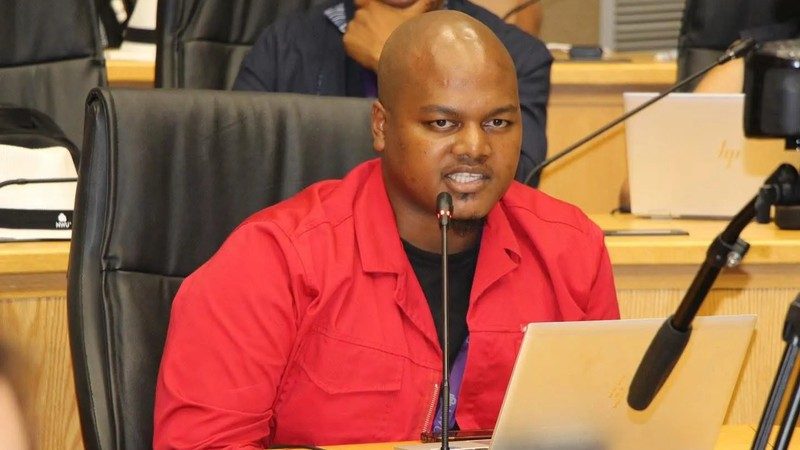
EFF MP Sihle Lonzi says new student fees regulation seeks to exclude students from the economy. Picture: i-Report

By Johnathan Paoli

The Economic Freedom Fighters (EFF) has written to the Chairperson of Parliament’s Portfolio Committee on Higher Education, Science and Innovation, Tebogo Letsie, requesting an urgent joint sitting with the Portfolio Committee on Trade, Industry and Competition to address what it describes as “a devastating and anti-poor” draft regulation that threatens millions of students across South Africa.

EFF’s Sihle Lonzi, a member of the Higher Education Portfolio Committee, penned the strongly worded letter, warning that the proposal would entrench economic exclusion for poor and working-class youth.

“It is no secret that the majority of students struggling to pay university fees come from poor and working-class communities, ravaged by the legacy of apartheid and ongoing structural inequality. This proposed amendment to the law will punish them for being poor by turning their unpaid fees into permanent scars on their credit records,” Lonzi argued.

The regulation in question, published in Government Gazette 53154, proposes that universities and other higher education institutions be permitted to report unpaid student fees to credit bureaus.

This, according to the EFF, would effectively criminalise student debt by saddling young graduates with blacklisted credit records.

The EFF contends that blacklisting young graduates for unpaid fees will create long-term economic consequences, barring them from accessing loans for housing, cars, or business start-ups, and trapping them in generational poverty.

“This is a life sentence, keeping our youth trapped in cycles of poverty and exclusion, before they even have a fair chance to build their futures,” Lonzi said.

The party insists that the draft regulation undermines the very principle of education as a liberating force.

It has called for a coordinated parliamentary response, demanding Letsie convene a joint sitting between the two committees to scrutinise the department’s proposals.

Alongside its opposition to the draft regulation, the EFF previously released the first draft of its Student Debt Relief Bill, 2025, which it describes as a legislative breakthrough aimed at dismantling the “structural crisis” of student debt in South Africa.

According to the EFF, more than 500,000 students nationwide are weighed down by institutional debt. Of these, around 300,000 have completed their academic requirements but are unable to graduate or obtain certificates due to outstanding fees.

In 2022 alone, over 120,000 students were barred from graduating. Student debt, which stood at R16.5 billion in 2021, has ballooned further.

“This is not failure; this is poverty being weaponised,” Lonzi said, stressing that debt exclusion is not simply a financial issue but a structural barrier to economic mobility.

The Bill proposes the creation of a state-backed Student Debt Relief Fund, through which eligible students may apply to have their debts cancelled.

Importantly, the fund would reimburse universities and colleges, protecting institutional finances while lifting the burden off students.

The draft legislation also seeks to compel all higher education institutions to release qualifications to students who have completed their studies, regardless of outstanding balances.

EFF national spokesperson Sinawo Thambo framed the Bill as “a people’s bill, grounded in the pain and suffering of students who have been excluded for too long”.

He argued that clearing debt would empower graduates to enter the workforce and stimulate the economy.

“This is not simply about financial relief; it is about restoring dignity, enabling graduates to work, to specialise, to start businesses, and to participate in the economy,” Thambo said.

Parliament has opened a 30-day public consultation period on the draft Bill, inviting written submissions from students, academics, trade unions, civil society organisations, and the general public.

The EFF has also announced nationwide consultative meetings at universities and TVET colleges to refine the legislation and build momentum.

INSIDE EDUCATION

Uncategorized

VUT launches Green Hydrogen Centre to drive SA’s clean energy transition

By Akani Nkuna

The Vaal University of Technology (VUT), in collaboration with Standard Bank, has launched a Green Hydrogen and Alternative Energy Hub to safeguard the environment and advance sustainable energy education, research, and innovation.

The initiative aims to cut carbon emissions while empowering students and driving economic growth in the Vaal Triangle and beyond.

Speaking at the official launch on Thursday, VUT Vice-Chancellor Khehla Ndlovu said South Africa has responded through the Hydrogen Society Roadmap, a national strategy that positions hydrogen as a key pillar of the country’s just energy transition.

“Here, in the heart of the Vaal, we know that industries are energy-intensive and that communities bear the burden of pollution and unemployment. We also know that our people carry the ambition to innovate, to engineer, to lead. That is why this Centre matters. It is not just about technology—it is about justice, jobs, and the joy of building a sustainable future,” said Ndlovu.

Ndlovu, speaking during the launch at the VUT Southern Gauteng Science & Technology Park in Sebokeng, said that the state-of-the-art facilities are designed to accelerate South Africa’s green energy transition through multidisciplinary academic collaboration and strategic partnerships.

The Centre will produce hydrogen gas from waste products and renewable-powered systems, incorporating the ideas of both academics and students to develop practical solutions that make hydrogen a viable tool in addressing the challenges of climate change.

Ndlovu stated that the Centre will be critical in equipping students with skills, research opportunities, and real-world experience to meet growing industry demand.

He also highlighted the significance of its Sebokeng location, offering students first-hand exposure to the effects of carbon emissions in an industrial area.

“It houses our Advanced Manufacturing Precinct, Technology Transfer Office, and innovation labs that connect researchers with local and global networks. Its mission has always been to foster industrial renewal through science and technology,” he added.

“By situating the Green Hydrogen Centre here, we anchor it within a space designed for applied research, skills development, and enterprise incubation.”

The Vice-Chancellor further emphasised that the Centre will provide green energy solutions specifically tailored for South African industry, arming the next generation of engineers, scientists, and entrepreneurs with essential knowledge for the green economy.

“[The Centre] will empower communities by creating jobs, nurturing skills, and ensuring that the benefits of innovation are felt beyond the laboratory, in homes and in local enterprises. The ripple effects are profound: reduced carbon emissions, strengthened energy security, new business opportunities, and, above all, hope,” said Ndlovu.

During an interview with Inside Education outside the Centre, Ndlovu further reiterated the institution’s commitment to decarbonising the entire Sebokeng area and mitigating the health hazards posed by polluting firms.

“We have received R600,000 from Standard Bank and we are matching that amount for the initial costs. We also have our master plan for Sebokeng—not just the campus but the surrounding area—where we are committed to bringing in more buildings to decarbonise the region,” Ndlovu told Inside Education.

Meanwhile, Standard Bank Head of Business and Commercial Banking South, Simone Cooper, reaffirmed the bank’s commitment to funding projects across sectors to combat carbon emissions.

She said the bank has allocated R33.6 billion in sustainable finance for infrastructure and R19.8 billion for new renewable energy power plants over the past year, resulting in an estimated cumulative installed renewable capacity of 1,703 megawatts.

“In the past year alone, our climate-focused approach has resulted in R2.4 billion in green finance for homes, R2.2 billion mobilised for planet-smart agriculture, and R2.9 billion provided to 1,500 businesses for renewable energy solutions. This represents a 27% increase in green energy generation capacity, reaching 235 megawatts,” Cooper added.

INSIDE EDUCATION

Uncategorized

Manamela calls for sustainable funding in higher education

By Rafieka Williams

The Department of Higher Education and Training (DHET) Deputy Minister, Buti Manamela, said Wednesday that stabilising student funding remains a top priority in order to ensure the long-term sustainability of tertiary education.

Manamela delivered a keynote address at the Portfolio Committee on Higher Education’s Strategic Planning Workshop, held in Cape Town from 2 to 4 September 2025.

He told particpants at the workshop that the DHET is adopting a long-term approach to managing challenges in the sector, with a particular focus on funding.

“There has to be urgent reforms with regard to the national skills fund, there are ministerial recommendations on the table which I think we need to accelerate in their implementation and some of that work would require us to come to committee in terms of legislative changes as it relates to the national skills fund,” Manamela said.

“(These are) discussions that would require us to consider bold decisions if we are to have sustainable student funding model. ”

He told participants that the DHET has engaged with National Treasury to address funding stability in the higher education sector, suggesting the reprioritisation of resources to plug the shortfall in the National Student Financial Aid Scheme (NSFAS).

Manamela added that the department is also working to position Technical and Vocational Education and Training (TVET) colleges, community colleges, and government departments as central to skills development for school leavers.

However, he cautioned that governance inconsistencies remain a major obstacle to progress.

“There are urgent issues around governance challenges, filling up vacancies with the University of South Africa forum and the college council, TVET’s and the guidance principals of the university and colleges,” Manamela said.

“We are prioritizing stabilizing governance of councils and TVET colleges, finalising the process for the accounting authorities of sector education training authorities and the process for the chairperson of SETA’s.”

Manamela said that by stabilising governing councils, the department could help restore stability to institutions, noting that governance failures and financial misconduct have hampered its ability to deliver.

Referring to the ongoing challenges with Sector Education and Training Authorities (SETAs), he revealed that investigations by the Auditor-General (AG) and the Special Investigating Unit (SIU) have uncovered serious concerns.

“We have had engagements with both the AG and the SIU and, of course, we are concerned with the volume of the work they are doing within our universities and TVET colleges, and the investigations happening there,” he said.

Manamela also urged the sector to reconnect with the original purpose of TVET colleges, established two decades ago.

“I said to the team at the department, we are supposed to be the factory of the brains and thoughts and thinking and skills in the country, we have to show that, that is what we are. Building capacity of our department,” he said.

INSIDE EDUCATION