Uncategorized

Nkabane applauds 17-year-old UP Actuarial Science graduate making history

By Johnathan Paoli

In a moment that has inspired the nation, Higher Education and Training Minister Nobuhle Nkabane has congratulated Mongiwa Hazel Ntuli, who has made history by becoming one of the youngest graduates in the University of Pretoria’s history.

Nkabane commended Ntuli for her resilience and brilliance, praising the young graduate’s achievement as critical for inspiring those wanting to study STEM (Science, Technology, Engineering and Mathematics) subjects.

“Hazel’s success is not only a personal triumph but a national beacon of hope. It comes at a time when South Africa is facing a critical decline in the number of learners enrolling in STEM subjects,” the minister said on Thursday.

At just 17, Ntuli completed her Bachelor of Science in Actuarial Science, a rare and rigorous achievement made even more extraordinary by her age.

Hailing from Rosettenville in Johannesburg, her story is one of exceptional academic talent, discipline and ambition, with her journey through education beginning with an extraordinary moment in Grade 3, when she mistakenly wrote a Grade 4 test and outperformed every learner in that grade.

Recognising her giftedness, teachers encouraged her to fast-track her learning, ultimately propelling her into university by the age of 14.

Actuarial science, which combines mathematics, statistics and financial theory to assess risk, is known for its academic intensity and professional rigour.

Nkabane described Ntuli’s decision to pursue such a demanding path and succeed in it as a powerful testament to her determination and intellect. She said it signalled the promise of a future generation that could contribute significantly to South Africa’s economic and developmental goals.

Her success has not come without challenges; entering university at 14 meant navigating academic pressure, social differences and high expectations from herself and others.

Yet she thrived, thanks to her internal drive and the supportive environment at UP.

In interviews, Ntuli credits her lecturers, mentors, residence house mother and faith for carrying her through.

“I always remind myself of why I started,” she shared.

Now 18, Ntuli is currently pursuing her Honours degree and is already setting her sights on a Master’s and an MBA.

She reflects on her time at UP as transformative.

“UP gave me mentorship, financial support and access to events that connected me with thinkers and leaders in STEM. It opened my eyes to what’s possible,” she said.

The minister highlighted Ntuli’s journey as a compelling argument for expanding access to quality education and providing targeted support for high-potential learners, regardless of their background.

“Her story affirms why early identification of talent and inclusive academic spaces matter. Hazel is not only breaking boundaries in the academic space; she is breaking intergenerational barriers, becoming the first graduate in her family, and lighting the way for countless others,” she said.

The young graduate’s journey has sparked conversation on social media and beyond, with a YouTube video by UP documenting her story drawing admiration and encouragement from viewers across the country.

In the video, she speaks with quiet confidence about her academic path, her dreams for the future and her advice for others.

“If an opportunity is presented to you, just do it. Take it with both hands and reach for those stars,” Ntuli encouraged.

In her final words, the minister urged young people, particularly girls, to take inspiration from Ntuli’s achievements.

INSIDE EDUCATION

Uncategorized

DA slams Gauteng education over municipal debt decision

By Levy Masiteng

The Democratic Alliance (DA) in Gauteng is demanding that the Gauteng education department immediately suspends its decision to make no-fee-paying schools responsible for paying their utility bills and historical debt. 

This comes after the department formally transferred the responsibility of paying municipal accounts back to schools in Eldorado Park on Tuesday.

According to the department, the transfer is in line with the South African Schools Act.

DA provincial education spokesperson Sergio Isa Dos Santos said the decision was “reckless and absurd” because the GDE department has failed to pay these bills, leading to disconnection notices for some schools.

He said the party was concerned that these schools, which served underprivileged communities, could not afford to pay these utility bills and would be severely impacted.

“Learners will be taught in dark classrooms and not have water due to the failure of these schools to pay municipal accounts and historical debt.” 

During an oversight inspection at Eldorado Park schools, the DA discovered that 34 non-fee-paying schools were compelled to pay municipal debts without proper consultation, assessment and training.

Dos Santos said letters issued to schools on 18 March 2025 stated that, from 1 April 2025, schools would be responsible for the timely payment of municipal services and supplementing allocated funds through fundraising.

This included Willow Crescent Secondary School, which received a monthly allocation of R53,000, but has a municipal debt exceeding R638,000. 

Another school, Ernest W. Hobbs Primary, has outstanding debt of over R4.7 million. 

Dos Santos said the decision was not financial management, but “financial dumping”.

In response, the department said that the six fee-paying schools in Eldorado Park were formally informed in 2023 that the responsibility would be returned to them, and the nine no-fee schools received similar notification this year. 

The department took over these responsibilities in April 2024 due to concerns over “poor financial management” by some school governing bodies (SGBs), but has since transferred the responsibility back to the schools. 

Dos Santos said he had submitted urgent questions to education MEC Matome Chiloane in the Gauteng legislature to determine why schools were not consulted.

However, the department said that legally the HOD may withdraw or reinstate such functions without consultation.

“Section 21 of the Schools Act allows for schools to apply for additional functions; it does not require consultation before such functions are reinstated or withdrawn,” the department said in a statement.

Meanwhile, the department has encouraged schools to strengthen their financial management strategies and raise additional funds under Section 36 of the Act to ensure they can meet operational obligations. 

Dos Santos said the DA would work closely with municipalities to ensure schools were not disconnected or penalised over municipal debt.

INSIDE EDUCATION

Uncategorized

TVET fundamental for labour force with international credentials: Higher Education

By Johnathan Paoli

South Africa’s Technical and Vocational Education and Training (TVET) system is crucial for inclusive development and its qualifications must be recognised globally, says Higher Education and Training Minister Nobuhle Nkabane.

“The TVET system is the backbone of inclusive development and we must align it to global standards and market needs. Recognition is no longer a choice, but a global necessity,” Nkabane told a G20 Education Working Group seminar on the mutual recognition of qualifications in a global context.

Earlier in the day, she visited the Orbit TVET College’s Mankwe Campus in the North West, where she spoke about the sector’s role in equipping young people with skills aligned to a rapidly evolving economy.

A key announcement came with a R13 million donation of advanced training equipment from China’s Yalong Intelligent Equipment Group.

This investment, which was secured during President Cyril Ramaphosa’s recent working visit to China, marks a milestone in public-private collaboration.

“This is not just a donation, but a legacy investment into the future of technical education in South Africa,” Nkabane said.

The equipment will be used to enhance practical instruction for artisans and lecturers, preparing students for global platforms like WorldSkills.

The minister also acknowledged Huawei’s continued support for digital skills development through its ICT Academies, calling on more international and local partners to invest in post-school education.

“Private sector innovation must walk hand-in-hand with education reform,” she urged, encouraging Sector Education and Training Authorities (SETAs) to expand industry collaboration.

Delegates toured the Mankwe campus to assess infrastructure needs and opportunities for development.

A student cultural showcase added a vibrant local flavour to the visit, reflecting the community-centred ethos of South Africa’s TVET institutions.

Later in the day, the G20 seminar on mutual recognition of qualifications brought together policymakers, researchers and education leaders from G20 nations, guest countries and global organisations at Sun City.

Nkabane positioned mutual recognition of qualifications as essential to academic mobility, labour migration and sustainable development.

Under the G20 Presidency’s theme of Solidarity, Equality and Sustainability, the seminar highlighted the importance of harmonising education systems across borders.

Nkabane outlined four key benefits of mutual recognition: improved academic and labour mobility, greater policy coherence, enhanced resilience and increased economic opportunity.

South Africa’s commitment to qualification mobility is reflected in its National Qualifications Framework, which supports formal, workplace-based, and prior learning.

The country is also an active participant in the Southern African Development Community Qualifications Framework and the African Continental Qualifications Framework. It has ratified both the Addis and Unesco global conventions on qualification recognition.

However, Nkabane acknowledged challenges such as misaligned qualification structures and regulatory systems.

She proposed innovation, particularly through micro-credentials, as a solution.

Commending the Potential of Micro-credentials in Southern Africa initiative, she argued for flexible, skills-based learning recognition to complement traditional pathways.

“Ultimately, recognising a qualification is about recognising a person. It’s about dignity, opportunity, and unlocking potential,” she said.

Higher Education and Training Deputy Minister Mimmy Gondwe further reinforced South Africa’s educational leadership during two key addresses at the seminar and a welcome reception.

Marking Africa Day, Gondwe emphasised the continent’s aspirations for unity and empowerment. She called on G20 stakeholders to ensure that education systems reflected the diversity and potential of African learners, particularly women and youth.

“Women must not only benefit from education—they must shape its future,” she said.

Gondwe also presented the G20 Education Working Group’s three thematic priorities: foundational learning, mutual qualification recognition and professional development for a changing world.

“These themes are not abstract. They are tools for rethinking education systems from the ground up,” she said.

Jako Olivier of the Commonwealth of Learning, who participated virtually, emphasised micro-credentials’ growing impact on youth employment and international skills portability.

He called for global interoperability and quality assurance, aligning with Unesco and Commonwealth initiatives.

At the evening reception, delegates enjoyed South African cuisine and live cultural performances.

Gondwe encouraged guests to explore the North West province and deepen their connection to the country’s education and cultural landscapes.

Throughout the day’s proceedings, the role of private sector and international cooperation was consistently praised.

By linking TVET revitalisation with international recognition frameworks, the country is positioning itself as a leader in skills development and cross-border mobility.

The ministry emphasised that with Africa’s voice amplified and global partnerships deepening, the G20 Education Working Group has taken a bold step toward a future where every learner’s journey is recognised and every skill counts.

INSIDE EDUCATION

Uncategorized

Childhood education and development a collective responsibility: G20 seminar

By Johnathan Paoli

Early Childhood Care and Education (ECCE) is crucial not only in shaping individual futures but also in securing a nation’s long-term prosperity, according to Basic Education Minister Siviwe Gwarube.

“If we are to re-imagine education in SA, then we need to improve the outcomes across the board, and we need to start at the beginning. Investing in the early years of a child’s life is not just an optional extra, it is the most strategic and cost-effective investment a society can make,” Gwarube said on Tuesday.

She was speaking at a seminar under the theme “New Solutions for Population-Level Access to Quality ECCE” hosted by her department and the G20 Education Working Group.

Gwarube stressed the collective responsibility of all stakeholders to reflect, learn and lead together.

Opening the seminar in the North West, Basic Education director-general Mathanzima Mweli underscored the importance of investing in the first five years of a child’s life, noting that these formative years were crucial for brain development, school readiness and long-term national prosperity.

He urged delegates to move beyond diagnosing challenges to co-designing scalable and sustainable ECCE systems.

“Early childhood is not a soft issue—it is a hard prerequisite for equity, productivity and national development,” Mweli asserted.

Deputy Minister Reginah Mhaule, representing the North West provincial government, emphasised the need to uphold dignity and respect in how societies treated young children.

She encouraged participants to adopt actionable commitments that would build solid educational foundations, especially in under-resourced communities.

In her keynote address, Gwarube framed ECCE as both a social justice issue and the most cost-effective economic investment a country could make.

She highlighted stark access gaps. Only 44% of children aged 0–5 were enrolled in ECD programmes, with rural and non-English-speaking populations most affected.

Gwarube emphasised the transformative impact of the 2022 migration of ECD responsibilities to the department and called for authentic partnerships with grassroots providers.

She also outlined key department interventions, including a forthcoming Quality Assurance Framework, an ECD workforce development strategy, enhanced data systems and engagement with National Treasury to secure long-term financing.

Notably, Treasury has increased the per-child daily subsidy from R17 to R24 and allocated R10 billion in additional ECCE funding, which is expected to expand access to over 700,000 more children.

Gwarube also stressed the importance of mother tongue instruction in early learning.

“Language is not only an academic tool, but a vessel of identity, belonging and power,” she said.

The seminar featured high-level panels and research-led sessions on global and regional ECCE innovations.

Dr Catherine Draper from the University of the Witwatersrand spotlighted the crucial “next 1000 days” between ages 2 and 5.

While the first 1000 days were widely recognised, Draper argued that the following phase was equally vital for reinforcing or redirecting developmental trajectories.

Her session called for a life-course approach and multisectoral collaboration to address cognitive, social and emotional needs in early childhood.

Elizabeth Lule, the executive director of Early Childhood Development Action Network (ECDAN), introduced a systems thinking approach, highlighting how ECCE must integrate health, education, nutrition and social protection to respond to global shocks like pandemics, conflict and climate change.

She said that siloed interventions could not meet the needs of the 43% of children under five in low middle income countries (LMICs) at risk of developmental failure.

Systems thinking, she argued, built resilience, enhanced equity and enabled scale.

Rebecca Hickman of SmartStart presented Canada’s path to universal ECCE, focusing on leveraging community strengths and grassroots networks.

She urged governments to move from being sole providers to enabling inclusive ecosystems through partnerships and integrated planning.

Ben Hewitt of Theirworld emphasised the urgent need for bold investments in ECCE, proposing innovative funding mechanisms like social impact bonds and excise taxes.

He noted that a 2.1% GDP investment in childcare could enable over 10 million South African women to enter the workforce within three years.

Sibongile Khumalo of DataDrive2030 shared insights from the Thrive by Five Index, which showed that just 46% of children enrolled in early learning programmes were school-ready.

Data revealed stark inequalities along socio-economic lines, reinforcing the need for targeted, evidence-based interventions to narrow development gaps.

Unicef’s Hana Yoshimoto presented a four-part strategy to mobilise parental and community involvement in foundational learning.

She said that by promoting home learning environments, supporting positive parenting and advocating for family-friendly policies, communities could drive equity and child development from the ground up.

The seminar concluded with a robust dialogue exploring how to achieve equitable ECCE access.

Delegates emphasised local government support, the value of public-private partnerships and the importance of closing the policy-implementation gap.

They reaffirmed that ECCE was a shared responsibility and that its success depended on collective action, bold leadership and unwavering commitment to the rights and potential of every child.

INSIDE EDUCATION

Skills for a future workforce
Uncategorized

Skills for a future workforce

By Thebe Mabanga

Skills are more than just an ability to perform a task well. Rather, they shape livelihoods and responsible citizens, enhance a country’s competitiveness and are a crucial ingredient for achieving inclusive growth and tackling unemployment, poverty and inequality.

As South Africa looks at ways to tackle the skills deficit, it is exploring the possibility of sending its young unskilled and unemployed people to China to acquire artisan skills.

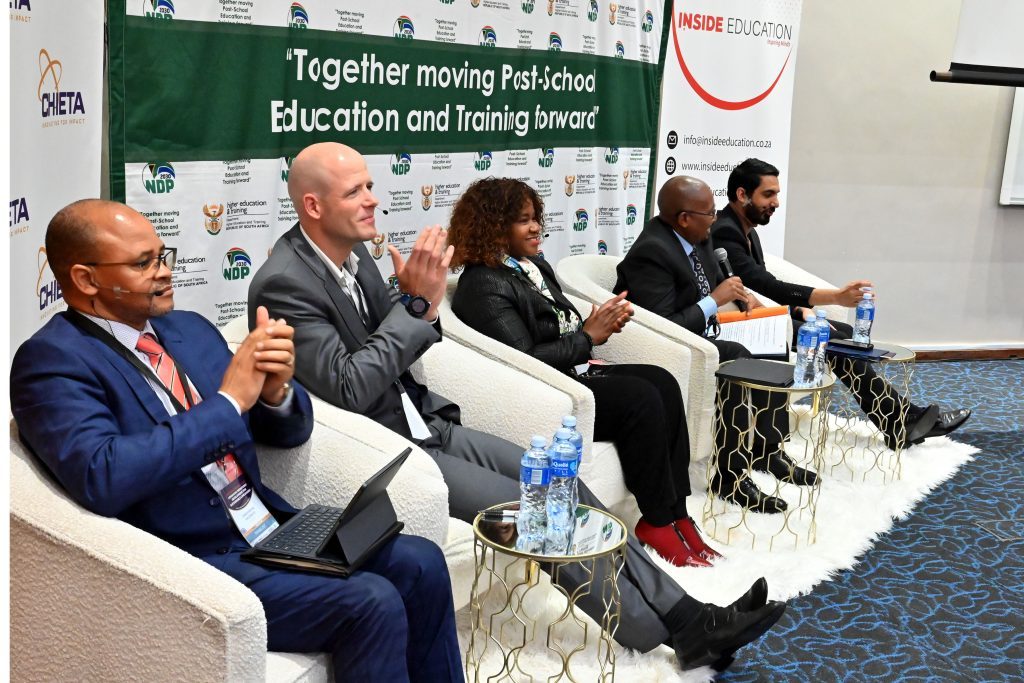
This emerged at the National Skills Dialogue hosted by the Chemical Industries Education and Training Authority (Chieta) and Inside Education. The dialogue focused on bridging the skills gap to build sustainable livelihoods taking skills, and the job they give access to, beyond mere survival.

The dialogue’s keynote address was delivered by Higher Education and Training Minister Nobuhle Nkabane.

Chieta CEO Yershen Pillay called on attendees to look at skills broadly.

“Skills do not meet a market demand; they satisfy a human need.”  said Pillay, who added that stakeholders must look “at the needs of society, not just demand”.

He said this allowed society to view skills as a means to a job.

“A job can change a day; livelihoods can change a lifetime,” he said.

Promoting partnerships

Nkosinathi Sishi, the director-general of the Department of Higher Education and Training, said the dialogue must promote partnerships among different Sector Education and Training Authorities and between SETAs and other role players.

Nkabane argued that skills were enablers of inclusive growth and critical for the implementation of the Medium-Term Development Programme for the period to 2029.

She called on SETAs to embrace digital education into their training to prepare workers for the future.

The minister also reiterated her call, first made at the beginning of the month at the board induction for the National Skills Authority (NSA), for the country to focus on the 3,8 million young people who were not in employment, education or training.

She noted that her department had a fruitful preliminary discussion with her counterparts in China about the possibility of sending young people to China to acquire some skills

Panel discussion

The dialogue included a panel discussion following the minister’s address.

Department director-general Nkosinathi Sishi said: “Workforce development is no longer just a policy imperative; it’s a national survival strategy. We must change how we measure success if we are to become globally competitive.”

Sishi argued that livelihoods take many forms including those of digital nomads and the self-employed and South Africa must update its Master Skills Plan to reflect this.

Sithembile Mbuyisa, the General Executive for Human Capital at the South African Nuclear Energy Corporation (NECSA), said it offered training in portable artisanal skills that could be used in different environments, not just in nuclear, where South Africa was building a multi-Purpose reactor.

NECSA has capacity to train about 450 artisans at a time. South Africa has a target of producing 30,000 artisans per year and in the 2023/24 financial year, it produced 26,500 artisans.

The development skills should start sooner than later, said Myuyisa and National Student Financial Aid Scheme (NSFAS) interim CEO Waseem Carrim.

Carrim told the dialogue that skills development must be viewed holistically, starting at Early Childhood Development (ECD), or even the first four years of a child’s life which the United Nation’s referred to as the first 1000 days, to allow them to progress through the schooling system.

He noted that 70% of NSFAS beneficiaries were social grants recipients, which suggested that the scheme funding gave social mobility to an important group that may not have access to it.

Mbuyisa said that NECSA had found gaps in foundation education and cognitive skills.

NSA executive officer Zamokwakhe Khuzwayo estimated that SETAs have assisted three million people to access the job market.

However, to increase these numbers, they needed to understand provincial economic drivers to design programmes that suited provincial needs.

Afrox Africa managing director Sebastian Satchleben said during the panel discussion that South Africa’s private sector offered a good skills training programme that allowed learners to “apply their knowledge”.

However, the success of the programme was dependent on the learning culture in a workplace.

Like Mbuyisa, he said the one of the most important skills students should be taught is critical thinking.

Pannelists participate in the National Skills Dialogue. Photo: Eddie Mtsweni

Issues from the floor

One of the issues raised by the delegates was entrepreneurship and how current skills development curricula did not place emphasis on driving candidates towards starting their own businesses.

Sishi responded by saying that his department has a R1 billion entrepreneurship training programme that it ran in conjunction with the Department of Small Business Development.

Another conference participant, who holds a master’s in mathematics, said a shortcoming for South Africa’s skills development programme was that there was no clear agenda why the country was developing. For example was it to develop skills to industrialise the economy or was the country plugging gaps to meet an immediate need?  The delegate said that without a clear guide, skills programmes would respond to varying needs without focus. 

According to Nkabane, the Medium-Term Development Programme was supposed to guide the skills development agenda.

Another delegate asked whether there was funding in the system for post graduate studies?

Carrim admitted that if he and the Higher Education and Training Department motivated for post graduate funding, they would likely be turned down by the National Treasury.

“It is simply not a priority,” he said.

This was because post graduate studies could be funded in several other ways, starting with working and saving up to fund studies. Employers and the private sector as well as institutions also offered higher level funding through grants and scholarships.

A principal for a Soweto-based Technical and Vocational Education and Training college pointed out that funding by SETAs for TVET colleges was simply inadequate.

He said that in his institution, there was a programme where a SETA funded a handful of students, which was a drop in the ocean compared to his overall need, even just for that programme.

Pillay conceded that resources were limited, and funding must be spread across cooperatives, community colleges and other training institutions, not just TVET colleges.

He noted that a bigger problem with TVET funding was that the colleges offered 30% of the training, which was theory. A total of 70% came from practical or workplace training, and these placement opportunities were limited due to poor economic growth.

The NSA’s Khuzwayo said it was challenging to find host employers to match trainees.  In some instances, there were declining positions, especially in factories as many of them had closed.

In another instance, “employers are willing to host learners, but there are no willing participants”, he said.

JET Skills Desk

Sishi told participants that one of the ways the department was responding to changing skills needs was by establishing a Just Energy Transition (JET) Skills Desk to understand the skills needed in areas such as renewable energy.

He called on South Africa to assume a global leadership role in skills development just as it had in areas such as climate change and sustainability for example.

“Everywhere we go, the world is looking for answers for existence from us,” Sishi said. 

Skills was one area where South Africa could take the lead, he said.

A report on the dialogue will be compiled for the Higher Education and Training Department with the aim of helping chart forward the country’s workplace development agenda.

Video By: Kgalalelo Setlhare Mogapi

INSIDE EDUCATION

Uncategorized

Unemployment and education on African Development Bank Agenda

By Edwin Naidu

Ahead of potentially defining presidential elections in the history of Africa’s premier development institution, one of the leading candidates has vowed to transform the lives of young people on the continent by tackling unemployment as a priority.

“Looking at the unemployment data, we currently have about 10 million graduates on the continent who are leaving high school.

“We create about 3 million jobs a year, which fell during COVID-19. It’s picking up on average. But you’re still talking about six million or seven million kids looking for jobs yearly, so those numbers don’t look good. We need to do much more,” said Dr Samuel Munzele Maimbo, a former World Bank senior executive.

The African Development Bank is the largest development finance institution on the continent, with a shareholder capital of approximately US318 billion.

Zambia’s Maimbo, the former vice president for budget, performance review and strategic planning at the World Bank in Washington, is locked in a five-way battle for the presidency against a highly fancied South African candidate and the only woman in the field, Sowetan-born Swazi Tshabalala.

“Young people are top priorities, and I intend to throw everything at the (unemployment) problem, including the kitchen sink, by doing three things,” he said.

“One must acknowledge that creating jobs is a lifelong experience, starting with how we treat our children when they are young and invest in their education. One area that I’m concerned about is the state of our vocational training schools and that we need to expand those programmes quickly, because if we are trying to add value, if you’re trying to industrialise, we cannot keep importing mechanics and plumbers, you’ve got to expand that programme, that’s one,” he told Inside Education.

Maimbo said it was also about being selective about which sectors to invest in aggressively.

“If I think about the film and creative industry, every single time you see a South African film on Mzansi, you know that there are 40 other jobs behind that. The film industry is quite generous regarding the academic background of people who enter it.

“I want to connect South African and Nigerian filmmakers and build studios where young entrepreneurs and filmmakers can expand. Ultimately, job creation will come if we double down on continental free trade and the trade volume on the continent.

“Hence, those are the three priorities that I want to focus on and make sure that we consistently pick sectors and support programmes that have the potential to create as many jobs as we possibly can,” he said.

Maimbo said the biggest challenge on the continent was unemployment, which he was committed to addressing through job creation and a strong education focus.

“The solution to that is growing our economies as quickly as we possibly can, how, when we do that, we invest in our people’s education and health and make sure that those are well financed and adequately supported, we invest in industries, we select those industries that have the potential to create jobs,” he said.

“My plan for Africa depends on institutional excellence and financial innovation at the AfDB and strategic partnerships with regional and global institutions. I have developed practical, realistic methods for achieving this.”

The African Development Bank in Abidjan was established in 1964 after 25 of the continent’s government leaders met in Khartoum, Sudan, to agree on the bank’s mission: to serve Africa’s development and shape the continent’s development and unity.

Six decades later, the bank is about to elect a new president. Nigerian Akinwumi Adesina has been at its helm since 2015.

The election for a new president takes place on Thursday. More than 6000 delegates, including African heads of state and government, finance ministers, central bank governors, development partners, private sector representatives, civil society leaders, academics, think tanks and opinion leaders, NGOs and other stakeholders, are expected to participate in the event under the theme “Making Africa’s Capital Work Better for Africa’s Development”.

The five contenders for the Presidency are Maimbo, Tshabalala, Hott Amadou from Senegal, Tah Sidi Ould from Mauritania and Tolli Abbas Mahamat from Chad.

Maimbo has been endorsed for the presidency by the Common Market for Eastern and Southern Africa and the Southern African Development Community. However, the South African government has backed Tshabalala, with President Cyril Ramaphosa saying it is time the bank has a woman at the helm.

Until October 2024, Tshabalala served as the bank’s senior vice president and CFO and was the second highest-ranking officer after the current president.

Tshabalala taking over the reins from Adesina will provide continuity in the bank’s leadership, thinking, and strategic direction.

With her pedigree and being an insider, she will expand on the work already carried out by the outgoing president.

A key priority will be pivoting the AfDB’s strategic focus towards the development needs of southern Africa, which has lagged relative to other regions in financing development projects by the bank.

In this context, South Africa’s candidature will significantly assist in changing this dynamic and ensuring that southern Africa receives adequate funding from the bank.

It will also present the opportunity for greater partnership between the AfDB, the Development Bank of Southern Africa and other regional institutions.

Edwin Naidu is the Editor for Inside Education.

INSIDE EDUCATION

Uncategorized

DA wants review of E.Cape alcohol ban

By Lungile Ntimba

The Democratic Alliance in the Eastern Cape will table a motion this week in the provincial legislature calling on education MEC Fundile Gade to engage with school communities, governing bodies and civil society to revise the blanket ban on all alcohol-related events on school premises, including fundraising functions.

The new policy, which was introduced by the department and came into effect on 1 March, bars the sale and consumption of alcohol on all public school premises.

It aims to combat alcohol and drug use among learners and is supported by the National Association of School Governing Bodies (NASGB). 

The DA argues that the policy was implemented without any stakeholder consultation and failed to consider the financial struggles faced by under-resourced schools in the province.

“While we support the department’s objective of protecting learners from the risks associated with underage drinking, this decision reflects a lack of nuance,” DA MPL Horatio Hendricks said in a statement on Monday.

“Rather than addressing the underlying causes of youth alcohol abuse, the department has chosen to penalise schools that are already struggling under severe financial constraints.”

According to the DA, many schools in the province often relied on fundraising events to generate funds for essential infrastructure and learning materials due to inadequate financial support from the government.

Hendricks argued that these events occurred after school hours, without the participation of learners and adhered strictly to national and provincial laws, including the South African Schools Act and relevant liquor laws.

He warned that denying schools lawful opportunities to raise funds without offering alternatives would only worsen the financial strain on the education system.

“If the department is truly committed to creating safe and supportive learning environments, then it must start by addressing the chronic underfunding of Eastern Cape schools,” Hendricks said.

“No school should be forced to rely on fundraising to meet basic operational needs. However, as long as that remains the reality, it is neither reasonable nor fair to prohibit schools from pursuing lawful means of financial support.”

He said the party was opposed to a blanket prohibition and instead supported a balanced and evidence-based approach that protected learners while supporting the sustainability of our public schools.

INSIDE EDUCATION

Uncategorized

Menlopark crowned champions after commanding St Anne’s Cup performance

By Johnathan Paoli

Hoërskool Menlopark sealed a memorable triumph at the second edition of the St Anne’s Cup, lifting the prestigious title after a 2-0 victory over Our Lady of Fatima in Sunday’s final at St Anne’s Diocesan College.

The Pretoria-based school capped off a weekend of high-quality hockey with a performance defined by poise, unity and attacking flair.

“I’m extremely proud of our performances this weekend. We took it one game at a time, relying on our team principles, tons of grit, and sisterhood,” said head coach Brad Brook.

Menlopark’s journey to the title was anything but straightforward.

Finishing second in Pool A, they faced a daunting path through the knockout stages.

A tense 2-1 quarterfinal victory over 2024 runners-up Durban Girls’ College (DGC) tested their mettle, before they survived a dramatic penalty shootout against Free State powerhouses Eunice in the semifinals.

Brook praised his squad’s depth and resilience.

“We’re fortunate to have great depth in our squad. Different players stood up across the five games and delivered when it mattered most,” he said.

Among the standout performers was captain Zoe Badenhorst, whose tireless work rate and sharp finishing earned her the Striker of the Tournament award.

Meanwhile, Annika Kloppers walked away with the Goalkeeper of the Tournament accolade after a series of key saves, especially in the semifinals and the final.

But it was Carlia Potgieter who stole the spotlight in the final, netting both goals in a composed, match-winning performance.

Menlopark took early control of the final, enjoying the lion’s share of possession in the opening chukka.

They created six penalty corner opportunities across the match, with two coming within the first ten minutes.

However, Our Lady of Fatima’s goalkeeper Kayla Driver produced a string of top-class saves to keep the scores level at 0-0 after 15 minutes.

The Pretoria side upped the tempo in the second chukka, with Monique Gerber leading wave after wave of attacks down the flanks.

Despite several more set-piece chances, Driver held firm until the final seconds of the chukka.

A long, speculative ball from midfield found its way into Fatima’s circle, where Potgieter pounced to flick it into the back of the net, giving Menlopark a 1-0 halftime lead.

Early in the third chukka, Gerber made a baseline run and cut the ball back to Potgieter, who finished to double the lead.

Our Lady of Fatima, who had spent much of the match pinned in their half, began to show more urgency.

They created two penalty corners in the third chukka and five more in a frantic final quarter, but Kloppers and the Menlopark defence refused to buckle.

A last-ditch move by Fatima coach Matthew Smith to withdraw Driver in favour of an extra outfield player with a minute left did little to change the outcome.

“Our defence was immense, when it got tight at the end, our players scrambled, blocked, and made sure we stayed in front. I couldn’t be prouder,” Brook said.

In the 3rd/4th place playoff, Eunice produced a dominant performance to dispatch St Mary’s DSG (Kloof) 4-0.

Hosts St Anne’s edged out DGC on penalties after a 2-2 draw to finish fifth.

Waterkloof claimed seventh place after defeating St John’s DSG in another shootout.

St Anne’s coach and one of the tournament organisers, Morne Odendaal, described the second edition of the St Anne’s Cup as marking another significant step forward for the competition, which expanded from eight to twelve teams this year.

“This tournament is about showcasing skill, building friendships and fostering the next generation of talent. And this weekend delivered that in spades,” Odendaal said.

He said that with exciting hockey, strong team performances and individual brilliance on display, the future of schoolgirl hockey in South Africa looks as bright as ever.

INSIDE EDUCATION

Uncategorized

Gauteng education dept reaffirms quality, inclusive education amidst critical issues

By Johnathan Paoli

The Gauteng education department says its committed to transparency, accountability and collaboration with stakeholders to ensure safe, well-managed learning environments across the province.

Issuing an update addressing critical issues affecting three distinct areas, spokesperson Steve Mabona maintained on Monday that the department was dedicated to upholding education standards despite the challenges it was currently navigating.

“The Gauteng department of education remains resolute in its mission to provide quality, inclusive and responsive education to all learners in the province.

“These issues are being attended to with the necessary diligence, and the department continues to work collaboratively with school communities, school governing bodies (SGBs) and relevant stakeholders,” Mabona said.

The department responded to serious allegations of misconduct at the Unity Secondary School in Benoni.

In November last year, a complaint was lodged by an applicant who alleged they were asked to deposit R17,000 into a teacher’s bank account in exchange for a teaching post.

Mabona confirmed that the accused teacher denied the claim, and due to the complainant’s lack of cooperation, the case was closed for insufficient evidence.

Further concerns were raised regarding a reported R450 annual contribution allegedly being demanded by parents to access learner report cards.

Mabona clarified that the fee was a voluntary donation, approved at the school’s annual general meeting, with flexibility for parents to contribute according to their means.

This practice complied with Section 37(1) of the South African Schools Act.

To address governance concerns, including SGB access to financial records, the department conducted financial management and governance training at the beginning of April, followed by a capacitation workshop by the national Basic Education department on 12 April.

Since then, all SGB members have been given access to financial statements and communication channels have been strengthened.

Academically, the school has seen a decline in its matric pass rate, dropping from 98% in 2020 to 86% in 2024.

In response, the department has introduced Professional Learning Communities, which is teacher training in key subjects and curriculum support from subject advisors.

Learners are being supported through the Secondary School Intervention Programme, Saturday and holiday classes, and residential study camps.

Mabona confirmed that staffing vacancies include two departmental head posts and one deputy principal post, which would be advertised mid-year, and expected to be filled by August.

He said the school principal’s qualifications have been verified and no disciplinary action was pending.

Allegations of death threats against staff led to temporary relocation to the district office late last year, but with no evidence provided, affected staff have since returned to the school.

The department also addressed the fire that broke out at Riverlea High School on 27 April, causing extensive damage.

Mabona said the cause was currently under investigation by the South African Police Service’s forensic unit.

To ensure minimal disruption to learning, four mobile classrooms were delivered to the school at the beginning of May.

Repairs were scheduled for the 2025/2026 financial year at an estimated cost of R2.5 million.

No funding has been made available yet as procurement processes are ongoing.

He said fire safety measures have been implemented, including the delivery of fire blankets and first aid kits, and the school has conducted basic firefighting training for learners and staff.

However, a fire alarm system is not yet installed due to financial constraints.

Mabona stated that collaboration with Johannesburg’s Emergency Management Services was planned for the second quarter to train the school safety committee.

Firefighting equipment, which was last serviced in May last year, was due for re-servicing by the end of the month.

Addressing other concerns, the department confirmed that funding to schools of specialisation has been reduced due to broader budget constraints.

However, Mabona maintains his department’s commitment to supporting specialised subjects aligned with each school’s approved business plan.

All state-employed educators’ salaries and infrastructure needs (excluding minor maintenance) continued to be covered.

Schools were expected to supplement funding through Section 36(1) of the Schools Act, enabling SGBs to raise additional resources.

Equipment and other specialisation costs may be covered by school allocations or external sponsorships.

While schools were encouraged to seek donor funding, Mabona said the department did not track these details directly.

As public entities with legal autonomy under Section 15 of the Act, schools managed their own budgets and contractual agreements.

The department maintains that there are no systemic shortfalls and that additional funding requirements must be addressed by the schools themselves.

INSIDE EDUCATION

Uncategorized

Women scientists on continent praised as part of Africa Day

By Johnathan Paoli

In celebration of Africa Day, the International Centre for Genetic Engineering and Biotechnology (ICGEB) in Cape Town acknowledged the vital role of African women in science through its pioneering WomEn ScienTists in AfRica (WE-STAR) Fellowship Programme.

ICGEB director Luiz Zerbini said that the work done by both the centre and the Science, Technology and Innovation Department strengthened female participation in life sciences and the programme was a significant milestone in African scientific advancement.

“This partnership with the department not only empowers women researchers, but also strengthens scientific ecosystems across the continent. We are deeply honoured to be considered for the Science Diplomacy Award,” Zerbini said.

As part of this year’s Africa Day commemorations, the ICGEB announced that it was a finalist for the prestigious NSTF-South Science Diplomacy award, recognising institutions using science to bridge global divides and tackle collective challenges.

The programme is a joint initiative between ICGEB and the department . It offers 12-moth mobility fellowships to early-career African women scientists, allowing them to carry out research at the ICGEB laboratories in Cape Town.

The programme is focused on macro research areas including health (both infectious and non-communicable diseases), sustainable and effective agriculture and bioinformatics.

ICGEB’s Fellowship and Training Programme exemplifies this mission, fostering international cooperation and capacity building across the continent.

The current WE-STAR cohort includes three outstanding fellows, namely Chiamaka Jessica Okeke and Chibuzor Onyinye Okonkwo from Nigeria, and Sabrine Hdira from Tunisia.

Okeke, born in Surulere, Nigeria joins the Bioinformatics Unit from Rhodes University in Makanda, Eastern Cape.

Her research focuses on developing a computational pipeline to study genetic mutations associated with Wilms’ tumor, the most common pediatric kidney cancer.

“I’m honoured to have been selected for the fellowship. It’s an incredible opportunity to expand my expertise in bioinformatics. I truly admire ICGEB’s commitment to supporting African women scientists through mentorship and collaboration,” she said.

Hdira, from Tunis in Tunisia, joins the Plant Systems Biology Group from the Centre of Biotechnology of Borj-Cedria.

Her project focuses on the gene NHX1, associated with salt and drought resistance in forage crops for sheep and other livestock farming.

Using genome editing, she aims to advance climate-resilient crop breeding strategies.

“As an African woman scientist, this fellowship allows me to gain exposure to cutting-edge technologies and work in a world-class environment. ICGEB’s emphasis on capacity building and collaboration is deeply inspiring,” Hdira said.

Onkonko, who is from Owerri in Nigeria, joins the Biopesticides Group from the University of Calabar.

Her research explores biopesticides and agroecological strategies to enhance climate-resilient agriculture across Africa.

“I’m grateful to ICGEB and the department for this opportunity. I’m excited to contribute to sustainable agricultural practices that ensure food security across the continent. This fellowship is not only about research, it is about building the skills, networks and confidence to make a real impact,” she said.

Through initiatives like WE-STAR, Zerbini said the centre would continue to champion the inclusion of African women in science, reaffirming its commitment to equity, innovation and international scientific collaboration.

INSIDE EDUCATION