Uncategorized

Bana Pele summit pledges majority of ECD funds to children

By Thapelo Molefe

In a groundbreaking move to reshape the future of Early Childhood Development (ECD) in South Africa, stakeholders at the Bana Pele 2030 Roadmap Leadership Summit have set an ambitious funding benchmark—80% of every rand raised for ECD must go directly to children. 

This bold commitment, spearheaded by leaders in government, civil society and business, aims to ensure that financial resources are not swallowed by administrative overheads but instead serve the nation’s youngest citizens where it matters most.

The summit, which brought together experts and policymakers from across sectors, reinforced a child-first approach to ECD funding, emphasising the urgent need to simplify bureaucracy and enhance investment in early learning initiatives. 

“The money must go to the child,” was the rallying cry echoed throughout the discussions at the summit, as stakeholders stressed the importance of ensuring direct impact rather than diluting funds into operational costs.

Beyond the financial pledge, the roadmap lays the foundation for lasting change by prioritising multi-sectoral collaboration. Stakeholders agreed to align their efforts with national development plans to drive efficiency, sustainability, and measurable impact.

“There will be no quick wins here,” the summit participants acknowledged. “This is about staying the course, making strategic investments, and seeing them through to 2030.”

Basic Education Minister Siviwe Gwarube addressed critical questions about funding and the path forward for ECD expansion. Speaking to Inside Education, the minister addressed questions on the R10 billion allocated in last week’s budget to ECD.

“The finance minister has allocated R10 billion that will go towards early childhood development, which is some of the work that we are doing here today with the Bana Pele ECD summit, because we want to make sure that we expand and extend early childhood development to every single child in South Africa. Currently, 1.3 million children in the country don’t have access to quality ECD, and we want to make sure that there is universal access,” Gwarube stated.

Video by: Katlego Tshekoesele

The minister also explained how funding will be structured, with provinces expected to follow the 80-20 budgeting principle—80% allocated to employee costs and 20% to goods and services. 

She also addressed the quality of ECD practitioners and their training.

A major obstacle to ECD accessibility remains the complex regulatory framework that hinders registration of centres and programmes. 

The Bana Pele mass registration drive emerged as a crucial solution, with commitments to simplify compliance, reduce red tape and equip local governments with the tools to support practitioners in meeting requirements without compromising quality.

A pressing concern raised during the summit was the financial insecurity faced by ECD practitioners, with 90% of them earning below minimum wage. Stakeholders acknowledged that a sector built on the backs of underpaid workers was unsustainable. 

The roadmap includes efforts to elevate and professionalise the sector, ensuring fair wages and creating opportunities for young, innovative minds to enter the field.

“We are building an ECD sector that is not just about care but is also a legitimate, economically productive industry,” the stakeholders said. “We need to recognise the incredible human beings who are shaping the foundation of our future generations.”

While access remains a key focus, participants were quick to highlight that access without quality was meaningless. The roadmap calls for rigorous tracking of both short-term and long-term outcomes, ensuring that investments translate into tangible improvements in childhood education and development.

Business Leadership South Africa chairperson Nkululeko Nyembezi emphasised that investing in ECD was critical to building South Africa’s future. 

“The quality of early learning determines the kind of country we leave behind,” she noted.

Highlighting research showing up to 17 times return on investment in ECD, Nyembezi urged a shift from fragmented efforts to a coordinated national strategy.

She stressed that corporate support should not rely on legislation but on a partnership model, with business already investing R11 billion annually in education. 

“The private sector is stepping up, but greater alignment with national plans is needed,” she said.

Nyembezi commended the department for bringing structure and coherence to the sector and called for a united effort in executing the roadmap. 

“Sustainability depends on collective action—investment in ECD is an investment in resilience, leadership and a stronger society,” she concluded.

With the 2030 goal set, the real work begins now.

INSIDE EDUCATION
Uncategorized

Urgent funding reforms needed to bridge ECD gaps

By Thapelo Molefe

South Africa’s ambitious goal of achieving universal access to quality early childhood development (ECD) by 2030 is facing a major hurdle – a critical funding shortfall. 

While the government has pledged R10 billion over the next three years, experts warn that without immediate private sector involvement and innovative financial mechanisms, millions of children will remain without proper early learning support.

Discussions at the Bana Pele 2030 Roadmap Leadership Summit on Monday made it clear that traditional subsidy models are insufficient to meet the growing demand. To truly transform the ECD sector, the conversation has shifted towards strategic financial partnerships, leveraging private capital and ensuring outcome-based accountability.

The R10 billion allocation announced during last week’s Budget is largely focused on operational costs such as subsidies, nutrition and practitioner stipends. However, Basic Education Department acting director for ECD, Janeli Kotze, highlighted a crucial gap.

“We’re covering operational costs, but what’s missing is the capital investment required to create new ECD centres and improve training. That’s where partnerships with the private sector and new financial instruments come into play,” she said during a panel discussion.

Many ECD practitioners remain undertrained and underpaid, leading to inconsistencies in the quality of services offered to children in vulnerable communities.

Education budget and policy analyst at the National Treasury, Spencer Janari, echoed this sentiment, stressing that strategic spending must be prioritised. 

“It’s not just about throwing money at the sector. We need to ensure that each investment builds on the next, so we’re not left with fragmented, short-term funding that doesn’t yield sustained progress.”

Despite the planned subsidy increases, 800,000 children remain outside the ECD support system. The government’s goal is to reach 1.5 million children by 2027, but that still falls short of the department’s 2030 target of 2.3 million children.

“The funding must do two things simultaneously,” Kotze emphasised. “It must increase access for the remaining children and improve quality across the board. This is not sequential—we must work on both at the same time.”

The government has outlined a structured plan for the R10 billion allocation to ensure sustainable growth in the sector. 

A substantial portion of the funds will go towards increasing subsidies for existing ECD centres, ensuring they can cover operational costs such as salaries for practitioners, food and nutrition for children and education materials. 

Another priority is expanding access to underserved areas by funding new ECD centres in rural and underprivileged communities, providing the necessary infrastructure, learning materials and ensuring compliance with health and safety regulations.

Beyond infrastructure, a key focus will be on practitioner training and support, with significant investment allocated to upskilling educators through certification programmes, mentorship and ongoing professional development to enhance the quality of teaching. 

Recognising the inefficiencies in subsidy distribution, the government will also develop a digital tracking system to streamline registration and funding allocation, allowing real-time monitoring of enrolment and expenditure. 

Additionally, part of the funding will serve as an incentive to attract private sector contributions through co-funding mechanisms, such as social impact bonds and blended finance models. 

Finally, the allocation includes provisions for nutrition and health programmes, supporting school feeding initiatives, health check-ups and sanitation improvements to create a safe and nurturing environment for young learners.

One of the strongest calls during the discussions was for private investment to catalyse the expansion of ECD programmes. 

Ilifa Labantwana chief economist Laura Droomer championed the idea of an ECD Outcomes Fund, a blended financing model that would incentivise private investors by linking returns to measurable improvements in early learning outcomes.

“We need private funding to catalyse new practitioners into the workforce,” Droomer explained. “Match funding models, social impact bonds and public-private partnerships are all tools we must leverage to reach our 2030 goals.”

A proposed outcome-based financing model will allow investors to fund ECD programmes upfront and be repaid by the government and donors if specific educational and developmental benchmarks are met. This approach ensures accountability and impact-driven spending.

Additionally, match funding has been presented as a key tool to unlock larger investments. Under this model, private sector contributions will be matched by government funds, ensuring that every rand invested delivers a greater impact.

Experts also pointed to international models where social impact bonds have been used successfully to drive innovation and accountability in education funding.

Another key concern raised is the bureaucratic challenges preventing ECD centres from accessing subsidies. With a largely paper-based registration system, tracking and allocating subsidies efficiently has been difficult. 

Many new practitioners struggle to register their programmes due to cumbersome processes, resulting in thousands of children missing out on much-needed early education opportunities.

Panellists agreed that a streamlined digital system that simplified registration was urgently needed to ensure funding reached new centres faster.

Without such reforms, even the additional financial injections will struggle to make an immediate impact. 

They said developing a national ECD tracking system would provide real-time data on enrolment, funding allocation and programme effectiveness.

“There is no point in increasing subsidies if the system cannot efficiently distribute them,” Kotze noted. “We need a transparent, digitised system that allows for real-time monitoring and ensures every cent is being used effectively.”

Ilifa Labantwana CEO Zaheera Mohamed also stressed the need for a collaborative funding approach to maximise impact. 

“We need to move beyond isolated investments. A unified, transparent funding platform will allow us to pool resources effectively, scale innovative solutions and ensure long-term sustainability,” she said.

Mohamed stressed the importance of a multi-sector approach, where private companies, philanthropic organisations and government entities worked together to create a long-term financial model for ECD.

The summit acknowledged that quality ECD for all is critical to help break the cycle of poverty in the country and promote long-term education, health and economic development.

INSIDE EDUCATION

Uncategorized

Time to measure the return on investment in education

By Edwin Naidu

South Africa’s pro-poor policies have had a positive effect on post-apartheid society, particularly in the realm of education. These policies have opened doors and provided opportunities that were previously inaccessible. However, the one thing missing is the impact, particularly on government spending on education.

As a nation led by a businessman, the need for efficiency in government spending is paramount to successful outcomes. However, in cases like Cyril Ramaphosa’s, where it is handed on a silver platter as a post-apartheid empowerment beneficiary, the true value for money is often lost.

Many of his ilk, like Tokyo Sexwale, Saki Macozoma and others, have benefitted from the post-apartheid redress push, but at what cost to the efficiency of our education system?

As business leaders who were propped up because of their Robben Island or political and trade union connections, one must ask whether the return on investment was paramount in their outlook when running the corporations they did.

Why is this not important when running the affairs of a country mired in debt?

Finance Minister Enoch Godongwana pays lip service to improving the effectiveness and efficiency of spending. But when traffic authorities still hide in the bush on highways to install cameras to trap people speeding while unemployed civilians control robots, it speaks volumes about a government that cares for its people.

In his Budget speech, the minister mentioned undertaking an audit of ghost workers, starting with national and provincial departments. This is doomed to fail. Whatever happened to setting targets for government ministers and measuring performance—or non-performance? It did not seem to amount to much, but it was hot air.

The review aims to reduce duplication and improve operational efficiencies across over 100 active labour market programmes in over 20 public institutions.

Thirty years after democracy, the bloated bureaucracy created by itself decides to embark on a review without considering whether the fat at the top should first be cut.

Instead of dispensing with experience in its ranks, the Cabinet has earmarked R11 billion for a retirement initiative aimed at attracting younger people to public service.

Godongwana should have known that salaries make up 76 percent of provincial education spending in the annual government budget. This means that only R24 out of every R100 of the budget is left for funding school infrastructure, meals for learners from poor backgrounds, and stationery and textbooks, amongst other things.

Acknowledging that learner-teacher ratios remain higher than preferred, more teachers are needed in classrooms. Godongwana has earmarked R19.1 billion over the medium term to keep approximately 11,000 teachers in classrooms.

He said early childhood development is the foundation for building the next generation of citizens who contribute economically and socially to this great nation. Despite this, the subsidy for ECD has not increased from the 2019 level of R17 per day per child.

To remedy this, an additional R10 billion over the medium term is allocated to increase the subsidy to R24 per day per child. The extra funding will also support increased access to ECD for approximately 700,000 more children up to four. What does it seek to achieve? And what should happen to those who don’t ensure it succeeds?

The government must be applauded for expanding access to historically disadvantaged population groups, thus contributing to redress for past injustices. For instance, 10% of Black South Africans born in the 1950s and 1960s completed 12 years of education. By contrast, those born in the 1980s who completed their schooling in the late 1990s saw this figure rise to approximately 30%.

According to 2021 household survey data, nearly 60% now attain this milestone. Some improvements in the system have been attributable to highly intentional pro-poor education policies:About 10 million learners receive daily meals at school and do not pay school fees (~80%).

These policies help alleviate the financial burden on vulnerable households and create meaningful opportunities to attend and progress through school. Policies to screen and identify children for special educational needs have also helped ensure that more than 90% of 7 to 15-year-old children with disabilities now attend school.

But it is time for the minister to consider whether the investment in education equates to credible learning for school-going children and opportunities for varsity graduates?

Although school dropout rates remain a concern, completion rates have steadily improved. It is time to assess whether education is serving South Africa or whether the government is merely throwing money down an open drain in the name of redress?

We need better investment strategies that assess the return on investment in our greatest asset—its people.

Edwin Naidu is the Editor of Inside Education.

INSIDE POLITICS

Govt should have focused on ECD: Ramaphosa
Uncategorized

Govt should have focused on ECD: Ramaphosa

By Thapelo Molefe

President Cyril Ramaphosa has admitted that the South African government should have prioritised early childhood development when the country became a democracy.

Speaking at the Bana Pele 2030 Roadmap Leadership Summit in Johannesburg on Monday, the president acknowledged the delay, but emphasised that it was “better late than never” as the new administration had committed to significantly expanding access to early learning programmes.

“This is something we should have done 30 years ago,” Ramaphosa said. 

“We have made mistakes, but it’s never too late to do the right thing. We are here today because of our shared belief in the profound importance of Bana Pele – putting children first.”

Ramaphosa’s admission set the tone for a landmark event focused on ensuring universal access to quality ECD by 2030.

He underscored the profound impact of early education, noting that investing in ECD was not just about schooling, it was about shaping the nation’s future workforce, breaking cycles of poverty and fostering economic growth.

“We are all aware that 80% of children in South Africa cannot read for meaning by the age of 10. That is unacceptable,” Ramaphosa said. “If we are serious about changing this, then ECD must be treated as an urgent priority.”

Last week, Finance Minister Enoch Godongwana announced an additional R10 billion investment ECD over the next three years during his Budget speech.

Ramaphosa has described it as a necessary step to “secure the future of our children and of South Africa itself”.

He stressed that this funding would be used to ensure that children under five received quality education, proper nutrition, healthcare and a safe learning environment.

Before introducing the president, Basic Education Minister Siviwe Gwarube addressed the summit, recalling her own childhood and emphasising the transformative power of early learning.

“The future of this country begins in early childhood development,” Gwarube declared.

“Research shows that the best return on investment is in the first five years of a child’s life. If we fail them then, we fail them forever.”

She pointed out the stark inequalities in access to ECD, with wealthier children far more likely to be developmentally on track than their peers in underprivileged communities. 

“Currently, 1.3 million children between the ages of three and five are not attending any ECD programme. Most of these children come from poorer communities, which means we are entrenching inequality from the very start,” she said

“We cannot allow this disparity to continue… We must shift away from a mindset of scarcity to one of collaboration and abundance.”

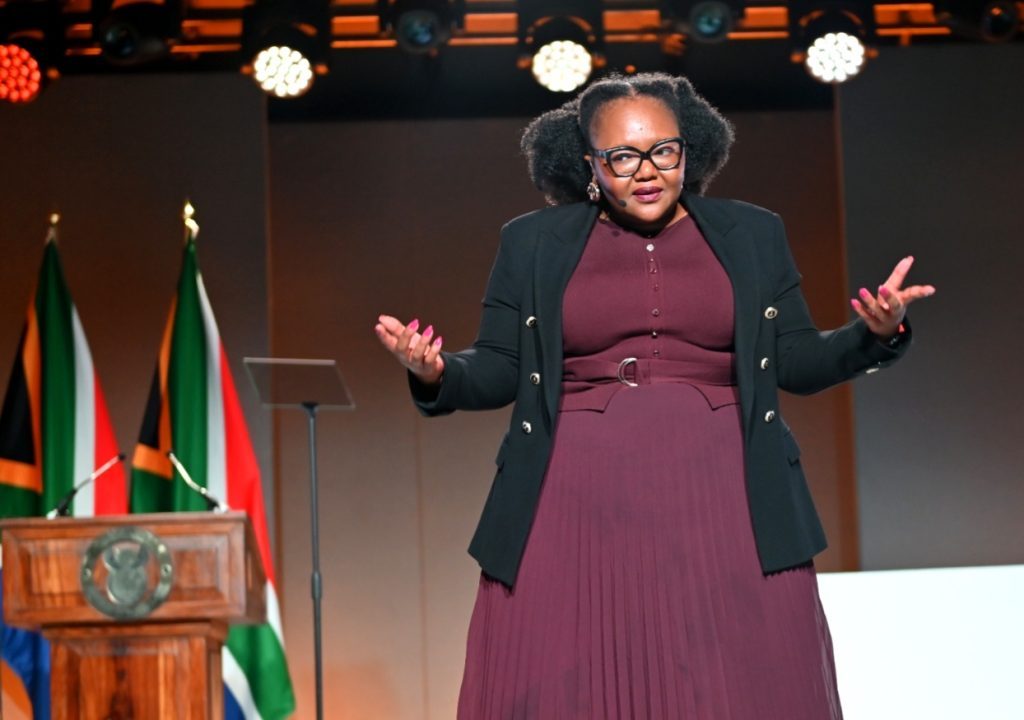
Basic Education Minister Siviwe Gwarube at the ECD summit in Johannesburg. Picture: Eddie Mtsweni

Both Ramaphosa and Gwarube emphasised that achieving the ambitious goal of universal access to ECD by 2030 would require unprecedented cooperation between the government, private sector partners and civil society.

“We don’t have all the answers,” Gwarube admitted. “We need to work together, to be willing to learn, adapt and innovate. There is no playbook for getting 1.3 million more children into quality early learning. We are writing that playbook now.”

Ramaphosa echoed her call for leadership, acknowledging the challenges ahead but insisting that the country had no choice but to push forward. 

“We have a clear goal: 1.3 million more children in early learning by 2030,” he stated. “If we work together, we can do it.”

“Investing in early childhood education yields significant economic returns,” Ramaphosa noted.

“Studies show that every rand spent on ECD saves up to seven rands in future costs related to remedial education, social services and criminal justice.”

The message was clear that the time to act is now, and the future of South Africa depends on it.

Video by Katlego Tshekoesele

INSIDE EDUCATION

Uncategorized

Nkabane applauds Pandor on new university position

By Lungile Ntimba

Higher Education and Training Minister Nobuhle Nkabane has congratulated former Caniest minister and educator Naledi Pandor on her recent appointment as an honorary professor in education at the University of Pretoria.

Nkabane said this was a remarkable achievement and a fitting recognition of Pandor’s significant impact on the country’s higher education sector. 

Pandor served in various Cabinet positions, including minister of education, science and technology, and most recently international relations and cooperation.

The minister noted that Pandor’s visionary leadership has been instrumental in reshaping the higher education system, promoting social justice and equality through progressive policies.

“South Africa has positioned itself at the forefront of science, technology and innovation, thanks to the solid foundation laid by Dr Pandor,” she said in a statement on Monday.

“Her unwavering commitment to building an inclusive and coordinated higher education sector is commendable.”

Nkabane praised the university’s decision, saying Pandor’s knowledge and passion for transformation would enrich it and the broader higher education community.

“Her academic achievements, including her doctoral research on transformation in the South African higher education context, reflect her deep commitment to shaping a progressive and inclusive sector,” she said.

Nkabane also expressed her personal admiration for Pandor.

“It is an honour to stand on the shoulders of giants like Dr Pandor, whose mentorship and guidance continue to inspire me. 

“I consider her a mentor, mother and a constant source of wisdom as we navigate the challenges facing our higher education system. Her contribution to the sector is invaluable, and I wish her every success in this exciting new chapter,” the minister said in a statement.

INSIDE EDUCATION

Uncategorized

How good are South African kids at maths? Trends from a global study

By Vijay Reddy

School mathematics in South Africa is often seen as a sign of the health of the education system more generally.

Under the racial laws of apartheid, until 1994, African people were severely restricted from learning maths. Tracking the changes in maths performance is a measure of how far the country has travelled in overcoming past injustices. Maths is also an essential foundation for meeting the challenges of the future, like artificial intelligence, climate change, energy and sustainable development.

Here, education researcher Vijay Reddy takes stock of South Africa’s mathematical capabilities. She reports on South African maths performance at grades 5 (primary school) and 9 (secondary school) in the Trends in International Mathematics and Science Study (TIMSS) and examines the gender gaps in mathematics achievement.

What was unusual about the latest TIMSS study?

The study is conducted every four years. South Africa has participated in it at the secondary phase since 1995 and at the primary phase since 2015. The period between the 2019 and 2023 cycles was characterised by the onset of the COVID-19 pandemic, social distancing and school closures.

The Department of Basic Education estimated that an average of 152 school contact days were lost in 2020 and 2021. South Africa was among the countries with the highest school closures, along with Colombia, Costa Rica and Brazil. At the other end, European countries lost fewer than 50 days.

Some academics measured the extent of learning losses for 2020 and 2021 school closures, but there were no models to estimate subsequent learning losses. We can get some clues of the effects on learning over four years, by comparing patterns within South Africa against the other countries.

How did South African learners (and others) perform in the maths study?

The South African grade 9 mathematics achievement improved by 8 points from 389 in TIMSS 2019 to 397 in 2023. From the trends to TIMSS 2019, we had predicted a mathematics score of 403 in 2023.

For the 33 countries that participated in both the 2019 and 2023 secondary school TIMSS cycles, the average achievement decreased by 9 points from 491 in 2019 to 482 to 2023. Only three countries showed significant increases (United Arab Emirates, Romania and Sweden). There were no significant changes in 16 countries (including South Africa). There were significant decreases in 14 countries.

Based on these numbers, it would seem, on the face of it at least, that South Africa weathered the COVID-19 losses better than half the other countries.

However, the primary school result patterns were different. For South African children, there was a significant drop in mathematics achievement by 12 points, from 374 in 2019 to 362 in 2023. As expected, the highest decreases were in the poorer, no-fee schools.

Of the 51 countries that participated in both TIMSS 2019 and 2023, the average mathematics achievement score over the two cycles was similar. There were no significant achievement changes in 22 countries, a significant increase in 15 countries, and a significant decrease in 14 countries (including South Africa).

So, it seems that South African primary school learners suffered adverse learning effects over the two cycles.

The increase in achievement in secondary school and decrease in primary school was unexpected. These reasons for the results may be that secondary school learners experienced more school support compared with primary schools, or were more mature and resilient, enabling them to recover from the learning losses experienced during COVID-19. Learners in primary schools, especially poorer schools, may have been more affected by the loss of school contact time and had less support to fully recover during this time.

This pattern may also be due to poor reading and language skills as well as lack of familiarity with this type of test.

Does gender make a difference?

There is an extant literature indicating that globally boys are more likely to outperform girls in maths performance.

But in South African primary schools, girls outscore boys in both mathematics and reading. Girls significantly outscored boys by an average of 29 points for mathematics and by 49 points for reading in the 2021 Progress in International Reading Study.

These patterns need further exploration. Of the 58 countries participating in TIMSS at primary schools, boys significantly outscored girls in 40 countries, and there were no achievement differences in 17 countries. South Africa was the only country where the girls significantly outscored boys. In Kenya, Zimbabwe, Zambia and Mozambique, the Southern and Eastern Africa Consortium for Monitoring Educational Quality (SEACMEQ) reading scores are similar for girls and boys, while the boys outscore girls in mathematics. In Botswana, girls outscore boys in reading and mathematics, but the gender difference is much smaller.

In secondary schools, girls continue to outscore boys, but the gap drops to 8 points. Of the 42 TIMSS countries, boys significantly outscored girls in maths in 21 countries; there were no significant difference in 17 countries; and girls significantly outscored boys in only four countries (South Africa, Palestine, Oman, Bahrain).

In summary, the South African primary school achievement trend relative to secondary school is unexpected and requires further investigation. It seems that as South African learners get older, they acquire better skills in how to learn, read and take tests to achieve better results. Results from lower grades should be used cautiously to predict subsequent educational outcomes.

Unusually, in primary schools, there is a big gender difference for mathematics achievement favouring girls. The gender difference persists to grade 9, but the extent of the difference decreases. As learners, especially boys, progress through their education system they seem to make up their learning shortcomings and catch up.

The national mathematics picture would look much better if boys and girls performed at the same level from primary school, suggesting the importance of interventions in primary schools, especially focusing on boys.

Vijay Reddy is a Distinguished Research Specialist at the Human Sciences Research Council.

INSIDE EDUCATION

Uncategorized

CSIR reading initiative hailed as a success

By Lungile Ntimba

The Council for Scientific and Industrial Research (CSIR) completed the first phase of its Ngiyaqonda! Project with the official handover of mobile devices at Ebuhleni Primary School in Soweto this week.

The project was launched to help tackle the literacy crisis in South African schools. A report from the 2030 Reading Panel evealed that approximately 80% of Grade 3 learners cannot read for meaning in any language.

It said in a statement that without this essential skill, many children were unable to reach their full potential, with the impact being most severe in disadvantaged communities.

Ngiyaqonda! is isiZulu for “I understand”. The research and development initiative integrates speech and text technologies into an Android application that guides learners to compose sentences in their home language as well as in English and is designed to enhance reading skills.

Funded by the Sport, Arts and Culture Department, it also incorporates artefacts developed in previous research projects funded by the South African Centre for Digital Language Resources.

The application was piloted with isiZulu-speaking Grade 3 learners at Ebuhleni, Sepedi-speaking Grade 3 learners at Pheladi-Nakene Primary School in Mamelodi and Afrikaans-speaking learners at Laerskool Die Krans throughout 2023 and 2024.

The CSIR said that in recognition of the pilots’ success and the positive social impact of the project, the CSIR donated the devices used at Ebuhleni Primary School during a project close-out event.

It said piloting in schools was a vital component of projects like Ngiyaqonda! because it helped the project team assess its efforts in real-world settings.

However, South Africa’s infrastructure challenges, such as connectivity and electricity issues, made it essential to cultivate strong relationships with pilot schools, the CSIR said.

These partnerships provided a crucial foundation for identifying and addressing any challenges that may affect application usage. By donating tablets to schools like Ebuhleni and Pheladi-Nakene, the CSIR was not only supporting future pilots, but also helping to overcome some of these infrastructure challenges to ensure smoother implementation in the future.

“By donating these devices to our pilot schools, we hope to strengthen our relationships with them and demonstrate our commitment to continuing work on this critical issue,” said CSIR senior researcher Laurette Marais.

“Without their willingness to invest time and energy, as well as share essential practical insights with us, no amount of technological development would move the needle on South Africa’s literacy challenges.”

She said the success of the project underscored the importance of the government, research institutions and end-users collaborating to maximise the social impact of technology. 

The CSIR has applied for additional funding to advance to phase two of the project.

INSIDE EDUCATION

Uncategorized

Healthy eating for children essential to fight SA obesity, says education deputy minister

By Edwin Naidu

Eat your veggies! That was the message from Deputy Minister of Basic Education, Reginah Mhaule, during World Obesity Day earlier this month.

While the government says it has made strides in ensuring that children get balanced meals through the National School Nutrition Programme (NSNP), it is important that parents and caregivers do the same at home. It is also advocating for schools to come on board and start their own vegetable gardens.

South Africa, like many parts of the world, is facing a growing obesity crisis. Governments, health professionals, advocates and the public need to urgently transform our systems and build a healthier future for people.

The National Food and Nutrition Security Survey by the Human Sciences Research Council (HSRC), which is the first in-depth nationwide study into food and nutrition since 1994, found that almost half of South Africa’s adult population was overweight or obese.

Some of the significant findings are:

69% of obese adults lived in food-insecure households where families had few dietary choices and were forced to eat food with little nutritional value.

More than two-thirds (67.9%) of females were either overweight or obese. There were higher incidences of obesity among women than men.

Adults aged 35 to 64 had a significantly greater prevalence of obesity than younger age groups. This could be explained by differences in metabolism and the fact that youngsters are more active than adults.

KwaZulu-Natal reported a higher prevalence of obesity (39.4%) compared to the other provinces. More research is needed to explore this finding and whether cultural factors are behind this.

The HSRC made the following recommendations to help address malnutrition in South Africa:

Focus on areas with high levels of malnutrition

Encourage families to produce their food to supplement social grants

Invest in food banks at fruit and vegetable markets strategically located close to vulnerable households

Help impoverished households survive seasonal hunger

Launch campaigns to educate the public on the benefits of consuming nutrient-rich foods and dietary diversity

As recommended by local and international health professionals, healthy eating at school and at home can prevent obesity in children.

“For the past three decades, the government has been serving healthy meals to school-going children in various communities through the NSNP. This flagship programme remains one of the most impactful nutrition interventions, which is currently feeding more than nine million learners nationally,” Mhaule told parents and caregivers at Northbury Park Secondary School in KwaZulu-Natal.

“The programme promotes the rights of children to basic education and the right to basic nutrition, as enshrined in the Constitution. Access to sufficient healthy food and clean water is a basic human right.”

Mhaule has called on schools to initiate vegetable gardens and be green to win the battle against obesity among learners.

She said the culture of growing food has the potential to improve household food security, conquer malnutrition and hunger and promote healthier lifestyles through physical activities.

The deputy minister has also urged schools, tuck shop operators, vendors and local authorities to work together as community involvement was essential to ensure food safety and healthy options.

Tuck shops needed to lead by example following the government launching the reviewed Guidelines for Tuck Shop Operators, she said.

“Don’t sell food cooked in reused cooking oil or items with excessive sugar, salt or colourants. Tuck shops must be cleaned daily to prevent contamination. Prepare food daily and avoid leftovers,” Mahule said.

“All tuck shop operators must always ensure compliance by displaying their Certificate of Acceptability. Safe food means healthy learners. Let’s all work together towards changing the systems so that our children can lead healthier lives and a healthier future.”

The involvement of health systems, government systems, food systems, the media and environmentalists in healthy eating advocacy will assist local and international communities in suppressing the increasing rate of obesity among global citizens, especially school-going children.

INSIDE EDUCATION

Uncategorized

Curro Esports Indaba shapes the future of gaming and education

By Alicia Mmashakana

More than 170 teachers, esport coaches, school managers, tech leaders and esport professionals from South Africa and Namibia recently gathered to share knowledge and learn new skills on gaming and education.

The 2025 Curro Esports Indaba is a yearly event, which brings together top experts in gaming, education and technology industries at Future Africa, University of Pretoria.

“Esports is more than just gaming – it’s a gateway to equipping learners with future-ready skills that translate into real-world success,” Curro esports project manager Magdeleen de Kock said in a statement.

“At the Curro Esports Indaba, we’re equipping teachers and coaches with the tools to help learners thrive in a digital world while ensuring Curro remains at the forefront of esports education in South Africa.”

The Indaba kicked off with discussions about the intersection of technology and professional gaming.

Busisiwe Masango of Goliath Gaming and Glenn du Toit, who is the country manager of Acer Africa, discussed how examined how technological advancements were shaping the industry.

Du Toit gave a keynote address titled “Building an AI Framework: Developing a Relevant Generation”, emphasising the importance of artificial intelligence in preparing esports professionals for the future.

“When cognitive skills (powered by AI) become a commodity, our product changes to one where our ability to be relevant is our differentiator. This differentiator is not driven through technology, it’s about being more human,” said Du Toit.

Breakaway sessions were held throughout the indaba and covered a variety of topics such as LAN setup, coaching strategies, tournament hosting and content creation.

Julia Robson, brand ambassador for Acer Africa, led a session on streaming and esports identity, while Ruan Kruger facilitated an advanced Valorant coaching workshop.

The sessions focused on key themes such as shoutcasting, playing strategies, game design, building learners’ identity and team leadership.

Nick Holden, who is the co-owner of the African Cyber Gaming League (ACGL), and some of the best local South African shoutcasters, Ultrism and Kruger, wrapped up the first day with a pro-level session on what it takes to be a professional shoutcaster.

Stephen Reid and Heather Drolet from Endless Computers led a discussion on how game development skills and prepared students for real-world careers. They said how gaming promoted creativity, problem-solving and digital literacy.

“It was so powerful to see teachers being so eager to learn how to move their learners from consumer, to creator, to contributor, to career, thank you, Curro, for giving your teachers this opportunity,” said Reid.

Curro project coordinator Johan van Lill, who spoke about the “benefit of play”, emphasised how competitive gaming aided learner development.  He then led a discussion on mental health strategies for pro coaches and players.

Members of the SA School Esports Association also presented a road map for promoting competitive gaming into educational environments.

“By combining cutting-edge technology, education, and community development, the 2025 Curro Esports Indaba proved that Esports is more than just a game – it’s a vital educational tool for mainstream education, skill development, and future career opportunities,” said De Kock.

INSIDE EDUCATION

Uncategorized

Empowering young innovators, a pathway to 5G advancement

By Johnathan Paoli

In a showcase of young talent and scientific ingenuity, Otto du Plessis High School learner Christopher May has demonstrated the potential of student driven innovation in advancing South Africa’s technological landscape.

With the guidance and resources provided by Mandela University’s Centre for Broadband Communications (CBC), May’s Fractal Geometry Antenna Project not only earned him a silver medal but also positioned him as a key contributor to the country’s future in 5G technology.

CBC senior researcher and director David Waswa described May’s project as exemplifying the role of youth-led research in shaping the next generation of telecommunications.

“Fractal antennas are known for their unique properties, allowing for efficient designs that can operate over multiple frequency bands, making them increasingly relevant in 5G networks,” he said.

The innovative fractal antenna design offers efficient frequency utilisation, a critical component in expanding 5G networks.

His success in the project, bolstered by the silver medial and a R40,000 bursary from Wits University, underscores the significance of investing in young minds for technological progress.

Under the leadership of Waswa, the CBC has been instrumental in supporting young innovators.

Master’s student Sandi Bangani and PhD student Lillian Mutia played key roles in testing May’s antenna, providing critical mentorship and access to advanced technology.

Over three days, May utilised state of the art equipment to measure bandwidth, signal quality and radiation patterns, validating his theoretical findings.

Waswa praised the importance of such practical exposure to May’s future.

“This hands-on experience not only enhanced his understanding of antenna design but also provided him with practical skills that will serve him in his future studies and career,” he said.

He further highlighted how projects like these illustrated the real-world applications of fractal geometry in improving the efficiency of 5G technology.

The CBC’s commitment to nurturing young talent extends beyond this project.

Through its STEM outreach programme, YeboTutor, the centre provides online tutoring in mathematics and science for Grade 11 and 12 learners, ensuring broader access to high-quality education.

Additionally, CBC hosts outreach tours for disadvantaged schools, striving to bridge the gap in STEM education and create more opportunities for young innovators.

May’s achievements bring attention to the critical role that young researchers can play in advancing South Africa’s technological infrastructure.

As the country continues to develop its 5G capabilities, Waswa said that supporting budding scientists and engineers was imperative to staying competitive in the global digital economy.

5G technology promises enhanced connectivity, faster data speeds and more reliable networks, all of which are essential for economic growth, smart cities and digital transformation.

By fostering innovation at an early stage, institutions like CBC are ensuring that South Africa has the necessary talent pool to drive these advancements.

Waswa said projects like May’s fractal antenna design could pave the way for more efficient and cost-effective communication technologies, making 5G more accessible across the nation.

Mutia praised May’s dedication, noting that his curiosity and commitment to applying fractal geometry to antenna design were truly inspiring.

Bangani echoed this sentiment, emphasising that May’s success served as a beacon of possibility for other young learners, and that with the right support and resources, young people could make significant contributions to the ever-evolving field of technology

“This antenna project stands as a testament to the exciting future of communications technology, where unconventional approaches such as fractal geometry could redefine design efficiency and signal clarity,” he said.

As the nation continues its journey into the digital future, one thing remains clear: empowering young innovators today will shape the technological breakthroughs of tomorrow.

INSIDE EDUCATION