Uncategorized

Buti Manamela | Africa steps foward at G20

Buti Manamela

The G20 Leaders’ Summit concluded this weekend with the usual choreography of diplomacy, but behind the photo-ops and the carefully weighted communiqués lies a deeper shift that deserves attention, especially from those of us on the African continent.

For once, education did not appear as a footnote to economic policy; it emerged as a structural pillar of global development. With the adoption of the Leaders’ Declaration, the G20 has signalled that the future of higher education in Africa is no longer a regional concern. It is a global priority.

This new posture is long overdue. Africa’s population is young, dynamic and growing, and by 2050 one in every four young people entering the world’s labour markets will be African.

Whether viewed through the lens of economics, geopolitics or human development, this demographic shift represents the single most consequential trend of the 21st century. The G20 finally acknowledges this as an opportunity that depends entirely on the decisions we make in education today.

The Declaration recognises what African policymakers and students have known for decades: that access to higher education remains deeply unequal and, without intervention, will widen the chasm between those who benefit from the knowledge economy and those who remain trapped outside it.

The reality is stark. Africa south of the Sahara still has the lowest tertiary enrolment levels in the world. Rural communities remain underserved, digital access is uneven, and too many young people enter the labour market without the skills demanded by a fast-changing world. The G20 has now placed these issues on the global agenda with unprecedented clarity.

What stands out in this year’s commitments is the centrality of digital transformation. The world has moved beyond seeing online learning as a temporary solution introduced during COVID-19. It is now recognised as a structural enabler of mass inclusion.

Digital platforms open the doors to students who live far from campuses or who balance work and study. They lower costs, enable new forms of personalised learning and allow institutions to expand without relying solely on physical infrastructure. For a continent like Africa, where the demand for higher education far outstrips the ability to build campuses, the commitment to digital ecosystems is not an innovation—it is a lifeline.

Equally significant is the emphasis on educational mobility. The commitment to improve the recognition and portability of qualifications, to expand micro-credential frameworks and to enable learners and workers to move more freely across borders is transformative.

For countries like South Africa, and for millions of African students, mobility is the difference between being confined to local opportunities and being part of a genuinely global workforce. The Leaders’ Declaration positions mobility as a strategic necessity for a world seeking resilience, innovation and talent. 

These global commitments align closely with what we have been pursuing through South Africa’s G20 Presidency. Our focus on solidarity, equality and sustainability has shaped the education agenda from early childhood development to higher learning, from digital governance to skills recognition, and from teacher professionalisation to international partnerships.

At home, we are modernising curricula, expanding occupational qualifications, strengthening NSFAS, transforming the TVET system, and building international partnerships that connect our institutions to global knowledge networks. The G20’s commitments validate this direction and create a platform for accelerating our reforms.

Perhaps the most important shift reflected in the Declaration is the recognition that higher education is fundamental to economic transformation. It is no longer acceptable to imagine universities and colleges as institutions that merely produce graduates.

They must become engines of innovation, hubs of research and experimentation, and catalysts for entrepreneurship. They must develop the scientific, digital, cognitive and creative capabilities that African economies will depend on in the decades ahead. They must prepare not only job seekers, but job creators.

There is, of course, a gap between commitments and implementation. Declarations do not change systems; governments do. The test for the global community and for African governments in particular, will be whether these commitments find expression in budgets, partnerships, and sustained reforms.

For South Africa, this means deepening digital infrastructure, strengthening cross-border recognition mechanisms, expanding access to blended learning, transforming the TVET sector, and continuing the difficult work of ensuring that NSFAS serves the students who need it most.

Yet despite these challenges, this G20 Summit marks a quiet turning point. For the first time, the world’s most influential economies have acknowledged that Africa’s education challenges and opportunities are global determinants of growth.

They have recognised that access is not a matter of charity but of shared prosperity. They have implicitly accepted that the future of global labour, innovation and stability will be shaped in classrooms, lecture halls, training workshops and digital platforms across our continent.

The task now is to turn the Declaration into action. If we do so with urgency and ambition, the G20 Summit of 2025 will be remembered as the moment when the world finally understood that Africa’s young people are not a problem to be solved, but a potential to be unlocked, and that higher education is the key that opens that door.

Buti Manamela is the Minister of Higher Education and Training

INSIDE EDUCATION
Uncategorized

Gwarube thrilled by IBSA leaders endorsement

By Johnathan Paoli

Basic Education Minister Siviwe Gwarube has welcomed the endorsement by the leaders of India, Brazil, and South Africa for the establishment of the IBSA Network on Quality Foundational Learning, describing it as a significant step toward uniting Global South partners behind stronger early learning systems.

The announcement was made on the sidelines of the G20 Leaders’ Summit, where President Cyril Ramaphosa reaffirmed the three countries’ commitment to deepening cooperation in foundational literacy, numeracy, and early childhood development.

Gwarube said the leaders’ acknowledgement of work undertaken by the three education ministries reinforced the priority placed on early cognitive, socio-emotional and foundational skills.

“I commit myself, my department and the whole country to playing a leading role in mobilising global support for quality foundational learning as the cornerstone of human development and economic growth,” she said.

The new Network will act as a collaborative platform, uniting IBSA countries in advancing strong early learning outcomes from the earliest years through the early primary grades.

While the full modalities of participation are still to be finalised jointly by the three nations, South Africa has already signaled that it sees value in enabling broader international collaboration over time.

The Basic Education Department believes that, through consensus, opportunities could be created for participation by other countries, development partners, international organisations and philanthropies working toward similar goals.

“South Africa stands ready to drive the next phase of cooperation, deepening the exchange of evidence-based policies and practical solutions across the Global South and beyond, and supporting stronger early learning systems that work for all children,” said the minister.

Ramaphosa echoed this sentiment during his remarks at the IBSA Leaders’ Dialogue, noting that the three countries were actively shaping global governance rather than merely participating in it, and that education cooperation would be integral to building a more equal and sustainable global future.

“I am therefore delighted that we will be signing a collaboration agreement on foundational learning as a follow up of the agreement that has been signed by the three IBSA Education Ministers,” he said.

The G20 Summit’s focus on quality Early Childhood Care and Education (ECCE), strengthened teaching, improved foundational competencies and more inclusive learning systems closely aligns with the objectives of the IBSA Network.

This alignment, Gwarube said, reflects growing global recognition that early childhood development and strong early-primary schooling were among the most important investments any country can make in its social and economic wellbeing.

The minister also noted that the Network’s ambitions dovetail with South Africa’s national priorities, including better learning environments, improved access to digital tools, strengthening teacher support and addressing the barriers facing children in rural and vulnerable communities. She said that strengthening teaching, improving instructional quality, expanding inclusive digital access and ensuring that no child is left behind remain central to this commitment.

The department plans to use the presidency to accelerate coordinated action across partner countries, ensure that the Network gains momentum, and position foundational learning as a driving force behind human development in the Global South.

She added that South Africa is honoured to lead this effort at a time when global education systems face persistent inequalities, learning losses and resource constraints.

The Network, she explained, will serve as a mechanism to share innovations, strengthen capacity and build more resilient early learning systems capable of supporting every child to develop strong literacy and numeracy foundations.

With IBSA education ministers already having signed a cooperation agreement earlier in the year, Gwarube said the leaders’ endorsement at the G20 Summit strengthens momentum for implementation.

The department said it will focus on outlining the Network’s structure, establishing areas of joint work, and expanding mechanisms for technical exchange among the three countries.

INSIDE EDUCATION

Uncategorized

Early childhood education at the center of G20 education declaration

By Johnathan Paoli

South Africa’s 2025 G20 presidency has placed education firmly on the global agenda, with the Leaders’ Declaration outlining ambitious commitments to transform the early learning environment and strengthen international cooperation in higher education.

The declaration emphasises that Early Childhood Care and Education (ECCE) and the recognition of qualifications across borders are foundational to building equitable, future-ready societies.

Early Childhood Development (ECD) emerges as a key pillar of the G20’s education priorities and the world leaders endorsed a comprehensive approach to ECCE policy development that draws on both government and community values.

The declaration stresses that investment in early learning is essential not only for children’s cognitive and social development, but for countries’ long-term economic resilience.

It commits G20 members to strengthening the ECCE workforce, improving professional recognition and confronting persistent teacher shortages, especially in early and basic education.

This focus aligns closely with the country’s domestic education agenda, where foundational learning has been prioritised as the most effective intervention to reverse learning losses and improve long-term outcomes.

By supporting the integration of 21st-century teaching competencies and updated pedagogies, the declaration reinforces the need to empower early-years practitioners with the tools required to prepare learners for an increasingly complex world.

Technology inclusion is another major theme, with leaders warning that without decisive action, digital divides will continue to undermine educational equity.

The declaration calls for expanded connectivity, appropriate digital infrastructure and inclusive access to learning technologies.
For ECCE, this means ensuring that even the earliest learning environments benefit from age-appropriate digital tools, while safeguarding equity across rural and low-income settings.

Beyond foundational learning, the G20 has also sharpened its focus on higher-education cooperation.
Clause 111 of the declaration reaffirms global support for the UNESCO Global Convention on the Recognition of Qualifications concerning Higher Education, urging greater cohesion among regional and international frameworks.

Leaders commit to advancing mutual recognition processes during the 2025–27 work programme, subject to national standards and regulations.

For South Africa, whose G20 education themes include Mutual Recognition of Qualifications, this commitment is significant.
It positions the country to champion a more coherent global qualifications ecosystem, enabling South African graduates to access international study and employment opportunities more easily, while attracting foreign talent to local institutions.

The declaration’s combined emphasis on early childhood development, educator professionalisation, digital inclusion, and qualifications mobility reflects the interconnected nature of modern education systems.

As South Africa concludes the G20, its presidency is expected to translate these high-level commitments into coordinated global policy actions.

With foundational learning, teacher development and higher-education alignment now embedded in the G20’s shared agenda, many hope the coming year offers a pivotal opportunity to reshape the global architecture of learning, beginning in the earliest years and extending across borders.

INSIDE EDUCATION

Uncategorized

Gondwe shuts down illegal traditional medicine college in Ladysmith

By Levy Masiteng 

The Deputy Minister of Higher Education and Training, Mimmy Gondwe, has shut down the Mhlabuhlangene School of African Medicine in Ladysmith, KwaZulu-Natal, for operating illegally and offering unaccredited qualifications. 

The department also opened a case against the institution at the Ladysmith Police Station.

The shutdown followed multiple warnings and instructions issued to the owner to register the institution with the DHET and obtain proper accreditation, all of which were ignored. 

The department said that the institution had been offering programmes ranging from a Diploma in African Medicine for R8,500 to a PhD in Healing Science and Facilitation for R18,500, none of which were recognised or accredited.

Upon arrival, Gondwe found that the institution was still operating, and an employee called the owner, who spoke directly with her. 

Gondwe instructed that the institution be closed with immediate effect to protect students from fraudulent programmes. According to the department.

“We are not against African or traditional medicine, but we strongly oppose unregistered institutions offering unaccredited qualifications that mislead and exploit learners,” said Gondwe.

The campaign was conducted in partnership with Alfred Duma Local Municipality, the South African Police Service (SAPS), the South African Qualifications Authority (SAQA), the Council on Higher Education (CHE), the Department of Home Affairs, and the Department of Employment and Labour.

“The campaign is aimed at protecting students and parents from unregistered institutions offering unaccredited qualifications including fraudulent PhD programmes,” Gondwe said. 

“This is the fourth awareness campaign led by the Deputy Minister this academic year across three provinces with large student populations,” said Essack Shaheeda, the director of Private Higher Education in the DHET. 

“We are committed to protecting students and communities from illegal and unregistered institutions operating outside the law.”

The department urged students and parents to verify the accreditation and registration of institutions before enrolling.

INSIDE EDUCATION

Uncategorized

Nzimande punts drive for self-sufficient vaccine manufacturing in Africa

By Lebone Rodah Mosima 

Science and technology minister Blade Nzimande has said that Africa must build a resilient, inclusive, and self-sustaining vaccine ecosystem.

Nzimande was speaking at a strategic dialogue on local vaccine production in Johannesburg attended by Gavi board chair José Manuel Barroso, senior European Union and German diplomats, officials from the World Health Organisation (WHO) and other partners.

He said South Africa sees vaccine innovation as a pillar of its industrial and public health policy, driven by cooperation between the Departments of Science, Technology and Innovation, Department of Health, and the Department of Trade, Industry and Competition.

He named a series of milestones, including the establishment of Biovac as “a public private partnership that has become a cornerstone of our vaccine manufacturing landscape” and South Africa’s participation in the WHO-hosted mRNA Vaccine Technology Transfer Hub, which he said was “building next-generation vaccine R&D capacity in Africa”.

Nzimande said entities such as the Council for Scientific and Industrial Research (CSIR) and the South African Medical Research Council (SAMRC) “are supporting vaccine R&D and skills training for the next generation of scientists” and pointed to a National Vaccine Innovation and Manufacturing Strategy that aims “to consolidate our national efforts in vaccine development, translational research, and manufacturing”.

Through the Health Products Master Plan led by the trade and industry department, South Africa was “strengthening the broader pharmaceutical manufacturing value chain, ensuring that vaccine production is part of a coordinated industrialisation agenda,” he added.

Nzimande praised the South African Health Products Regulatory Authority (SAHPRA) and Biovac, saying: “I commend Biovac, and SAHPRA for their exceptional leadership and technical collaboration in strengthening local capacity and ensuring regulatory excellence.”

He said their work was “vital in strengthening regulatory systems and enabling South Africa to achieve WHO-Listed Authority status”.

Despite progress, Nzimande warned that several structural obstacles still threatened the sustainability of African vaccine manufacturing.

“Local producers face limited market access and uncertain demand, which undermines investment confidence,” he said.

“The existence of fragmented regulatory frameworks across Africa increases costs and time to market,” while there was “a need for sustained investment in skills, R&D infrastructure, and technology platforms to achieve full value-chain integration”.

He said the African vaccine market was expected to quadruple in value over the next decade.

“[T]he mRNA and other advanced platforms being developed in South Africa can be utilised to tackle a wide range of diseases and position the continent at the forefront of global innovation.”

Biovac’s work on an oral cholera vaccine, backed by international partners, “represents an inspiring example of local capability aligned with global needs,” Nzimande said.

“By 2029, we expect to see WHO prequalification and expanded manufacturing capacity for regional supply, marking a major stride for vaccine security in Africa.”

He said his recent meeting with Gavi chief executive Sania Nishtar reaffirmed South Africa’s commitment to regional vaccine manufacturing and “to building diversified, resilient supply chains”.

“We must therefore ensure that the next generation of African scientists and innovators are empowered to shape a future where no country or region of the world is left behind,” he said.

INSIDE EDUCATION

Uncategorized

World Toilet Day: Gwarube hails SA’s shift to off-grid, water-efficient school sanitation

By Lebone Rodah Mosima 

South Africa has embraced modern, water-efficient and off-grid sanitation technologies developed to ensure safe and dignified sanitation in schools, Minister of Basic Education Siviwe Gwarube said during her visit to Tsholetsega Public School in Kagiso to commemorate World Toilet Day 2025.

Gwarube visited the school to reflect on the progress made through the Sanitation Appropriate for Education (SAFE) Initiative, which aims to eliminate unsafe and undignified sanitation in all schools.

Alongside Gauteng West District Director Vusumzi Rajuile, ward councillor Motsamai Taunyane, DBE infrastructure officials and education partners, Gwarube said on X that World Toilet Day serves as a reminder of the “dignity, safety and learning” that begin with something as basic as access to proper sanitation.

“In this school, partnering with Waterloo, we have embraced modern, water-efficient and off-grid sanitation technologies,” she said.

She noted that facilities built in schools are sustainable and responsive to climate resilience.

The minister said these technologies are particularly useful in communities that still struggle with reliable running water, especially in deep rural areas.

“We saw how this worked well in Venda and in the rural Eastern Cape when I visited those sites earlier this year,” she said.

According to the DBE, it has reached 98% of its target for sanitation infrastructure — a “milestone” in its commitment to replacing unsafe facilities.

Gwarube stressed that the government will not tolerate contractors who fail to comply with project requirements.

“These delays rob our children of a basic right to safe and adequate sanitation at schools. We are strengthening accountability measures, and contractors who cannot deliver will be blacklisted by Treasury,” she said.

She reaffirmed the department’s commitment to “building safe, dignified spaces for every learner and educator” grounded in protection and integrity.

Rajuile expressed appreciation for the minister’s “steadfast commitment to enhancing sanitation and learning conditions in schools”.

World Toilet Day, an annual United Nations observance, calls for global access to safe sanitation, equitable services and responsible hygiene.

“For the DBE, the occasion provides a platform to reflect on advancements made through the SAFE Initiative, acknowledge collaborative infrastructure efforts and reaffirm its dedication to delivering secure, dignified, learner-focused sanitation in schools,” the department said.

Under the global tagline, “We will always need the toilet”, the South African Human Rights Commission (SAHRC) said the day underscores the essential role of sanitation in ensuring dignity for all.

The Commission said World Toilet Day serves as a moment to reflect on South Africa’s progress — and persistent challenges — in guaranteeing sanitation access.

It noted that “safe, hygienic, adequate sanitation is essential to living a dignified life”, and that the right to sanitation is recognised internationally as fundamental to the enjoyment of life.

The Sustainable Development Goals (SDGs) underscore this through Goal 6, which calls for adequate and equitable sanitation and hygiene for all by 2030, with particular attention to the needs of women, girls and vulnerable groups.

“South Africa has demonstrated significant progress in ensuring access to safe, hygienic and adequate sanitation,” the SAHRC said.

Statistics South Africa’s General Household Survey 2024 shows that access to improved sanitation (flush toilets and ventilated pit latrines) increased from 61.7% in 2002 to 83.1% in 2024. However, the figure has remained stagnant at 83% since 2018.

Despite progress, the SAHRC warned that millions still live without access to dignified sanitation.

Many continue to rely on unsafe practices such as open defecation and the bucket toilet system.

A recent SAHRC investigative report found that residents in several North West municipalities are forced to use toilets that deny them dignity due to a lack of basic sanitation — despite compulsory national water and sanitation standards requiring a functional toilet and hand-washing facility in every household yard.

The newly released 2025 School Readiness Monitoring Report also identifies poor sanitation — including the continued use of pit latrines — as one of the top five systemic issues affecting schools nationwide.

The Commission said it continues to receive complaints about inadequate sanitation for women and girl children, exposing them to heightened health and safety risks.

The SAHRC called on government and all sectors of society to intensify efforts to expand access to safe and dignified sanitation.

INSIDE EDUCATION

Principal and staff member fatally shot at Inxiweni Primary School in Ekurhuleni
Uncategorized

Principal and staff member fatally shot at Inxiweni Primary School in Ekurhuleni

By Levy Masiteng 

A horrific shooting has shaken the Tembisa community after a school principal and an administrative staff member were fatally shot at Inxiweni Primary School in Ekurhuleni.

The victims, 58-year-old principal Nozibele Tabu and 55-year-old administrator Nobantu Njomboni, were declared dead on the scene, the Gauteng Department of Education (GDE) confirmed.

The shooting occurred on Tuesday at around 5pm while the principal and colleagues were preparing for a meeting. According to preliminary reports, staff members in a nearby office heard gunshots and hid for safety.

When they emerged, they found Tabu and Njomboni lying in the passage of the administration block.

Emergency services were called immediately and declared both victims dead upon arrival.

Gauteng Education MEC Matome Chiloane described the incident as “senseless and brutal.”

“We are horrified by this act committed within a school, a place meant to be a sanctuary for teaching and learning,” Chiloane said.

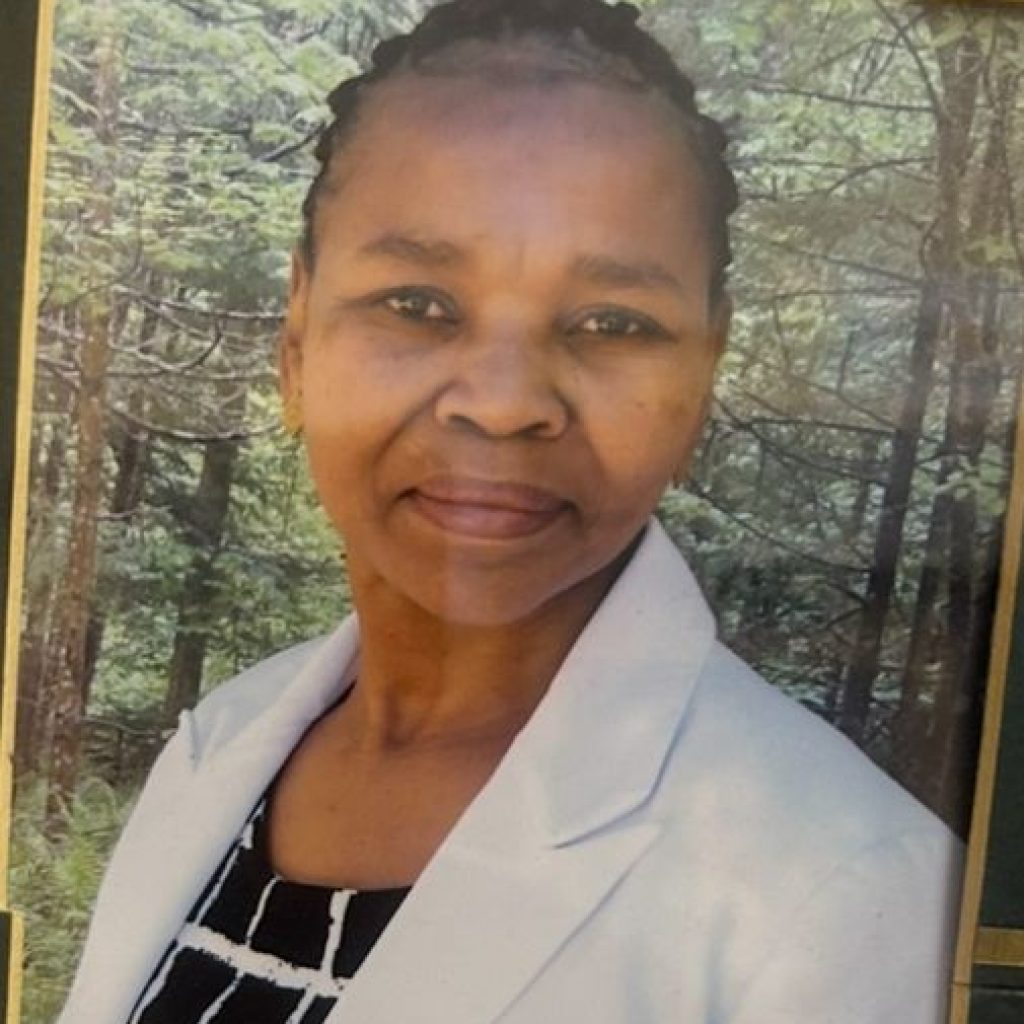
55-year-old administrative assistant, Nobantu Njomboni. PHOTO: X/Supplied

Gauteng Premier Panyaza Lesufi and Chiloane visited the school on Tuesday evening to assess the scene and convey condolences to the families.

Psychosocial support teams, including officials from the Ekurhuleni North District, will provide counselling and trauma support to learners on Wednesday, particularly those writing exams.

Chiloane urged law enforcement to act swiftly.

“We urge law enforcement authorities to move with speed to bring the perpetrator to justice,” said Chiloane.

Police investigations are underway.

INSIDE EDUCATION

Uncategorized

Tsolo principal, educator arrested for alleged assault of two Grade 12 pupils

By Charmaine Ndlela 

A 55-year-old school principal and his accomplice were arrested on Monday, 17 November, following allegations that they kidnapped and attempted to sexually assault two Grade 12 pupils from Tsolo High School in the Eastern Cape.

The incident allegedly occurred on 10 November at around 9pm at the school hostel.

Police spokesperson Lieutenant Colonel Siphokazi Mawisa said the case was opened after one of the pupils reported the matter to the Family Violence, Child Protection and Sexual Offences Unit.

According to police, the principal allegedly called one of the pupils to her hostel room before arriving with another learner.

The suspects then allegedly drove the pupils away, stopped near a forest where the principal pointed a firearm at them, and later proceeded to the Tsolo Municipality offices, where he allegedly attempted to sexually assault one of the girls.

Eastern Cape Education Department spokesperson Malibongwe Mtima confirmed the arrests and said a psychologist and a social worker have been deployed to the school to conduct a fact-finding mission and support the victims.

He described the incident as “unacceptable behaviour,” noting that it happened while the learners were writing their final examinations.

INSIDE EDUCATION

Uncategorized

Real-time bullying reporting system in Gauteng schools needed

By Palesa Nguqu

Bullying and violence in Gauteng schools remain a significant challenge, affecting learners’ mental health, academic performance and overall well-being, prompting calls for stronger intervention and monitoring mechanisms.

While the Gauteng Department of Education (GDE) has acknowledged the problem, experts and stakeholders say the response is not yet sufficient and are urging more proactive and innovative measures to ensure a safe and conducive learning environment for all pupils.

Advocates are calling for a comprehensive, centralised system to log and track bullying complaints in real time, whether they are reported formally or informally. They say such a system would help identify emerging trends, enable timely intervention and ensure that perpetrators are held accountable.

According to DA Gauteng Shadow MEC for Education, Sergio Isa Dos Santos, accountability and standardised protocols are essential.

“A real-time bullying incident reporting system, similar to the Western Cape Education Department (WCED) Safe Schools model, is essential, so every case can be recorded, tracked, and responded to swiftly.

“Quarterly incident reports from schools to district offices, and ultimately to oversight bodies, would greatly improve monitoring and responsiveness.”

Dos Santos has also called for the immediate referral of serious cases to psychosocial support services so that pupils at risk receive professional help as early as possible.

Another key recommendation is the introduction of anonymous reporting tools that allow learners to flag bullying without fear of victimisation. “Tools that allow students to report bullying without fear of retribution are vital for creating an environment where learners feel safe to speak out,” he said.

Evidence-based programmes that measure conflict resolution and establish early warning systems in high-risk areas were also emphasised as effective preventative measures aimed at tackling bullying before it escalates.

Partnerships with external organisations, NGOs, social workers, and community forums are seen as critical to strengthening mental health support and anti-bullying education, with advocates pointing to the Western Cape’s Safe Schools initiative as a model.

“These programmes can help parents and caregivers identify early warning signs and support children who experience bullying,” Dos Santos said.

INSIDE EDUCATION

Uncategorized

Gwarube flags infrastructure delays, safety gaps at Eastern Cape schools

By Levy Masiteng 

Minister of Basic Education Siviwe Gwarube identified serious shortcomings in school infrastructure and safety measures during oversight visits to two Eastern Cape schools, the Department of Basic Education (DBE) said on Monday.

The visits to Pellsrus Primary School and Humansdorp Senior Secondary School in the Kouga Local Municipality were aimed at assessing progress in infrastructure upgrades and reinforcing the implementation of national school safety measures, the department said.

At Pellsrus Primary School, Gwarube met the newly appointed contractor tasked with accelerating outstanding infrastructure work under the Sanitation Appropriate for Education (SAFE) initiative.

In a statement, the department said the engagement showed delays in sanitation upgrades, leading Gwarube to stress the need for faster action to provide learners with safe and dignified sanitation facilities.

“The oversight programme included a structured walkabout of the school premises to verify that previous delays in sanitation upgrades were being resolved and that project timelines were being realigned to ensure learners access safe, reliable, and dignified sanitation facilities without further deferment,” said DBE spokesperson, Terence Khala.

At Humansdorp Senior Secondary School, Gwarube led a school safety briefing, reviewed the school’s safety documentation and highlighted the importance of compliance with the National School Safety Framework (NSSF).

“A key highlight of the visit was the signing of the School Safety Pledge, a collective affirmation by learners, educators, and the community to uphold a culture of respect, protection, and shared responsibility in creating secure and enabling learning environments,” Khala said.

In September, a learner at Humansdorp Senior Secondary was stabbed to death by classmates, who have since been arrested.

Gwarube said of her visit to the school: “I came to assess the school’s safety protocol with SAPS, and to ensure their protocols for dealing with violent crimes and misconduct are living and implementable documents. The learners signed the inaugural anti-bullying pledge, vowing to be champions of a violence-free school. We cannot fight violence in schools [alone]. We need to work together as government departments, schools, parents, communities and learners.”

At both schools, she stressed the need to prioritise infrastructure resilience and school safety. “These oversight visits demonstrate the Department’s strategic prioritisation of infrastructure resilience and school safety as interdependent pillars of an effective and equitable education system,” she said.

The DBE said it remains committed to ensuring that every learner in the Eastern Cape and across the country benefits from a schooling environment that is safe, dignified and conducive to learning.

INSIDE EDUCATION