Uncategorized

World Bank calls for urgent reforms in SA’s education system

By Thapelo Molefe

South Africa’s education system faces critical challenges as learning outcomes stagnate and budgets decline, according to a recent World Bank report. 

Speaking at the launch of the 15th South Africa Economic Update this week, the programme leader for human development at the World Bank, Elizabeth Ninan, highlighted the urgent need for foundational learning reforms and improved resource allocation.

“There are overdue reforms in the education space, particularly related to foundational learning,” Ninan stated.

“At the same time, we are facing a tight fiscal environment where budgets in real terms are going down, while the number of children entering the system is growing.”

The report underscores SA’s struggle with early-grade reading proficiency, a fundamental building block for learning. 

Despite progress made in the early 2000s, reading levels have plateaued. Alarmingly, 81% of Grade 4 learners cannot read a simple text with comprehension.

Luis Crouch, co-author of the report, emphasised the scientific basis of reading education. 

“Reading has to be explicitly taught until it becomes as automatic as speaking. There are proven interventions that have worked in countries like Brazil, Kenya and India,” he explained. 

“These interventions revolve around the five T’s’- teaching, text, time, testing and targeted instruction.”

While SA has successfully piloted interventions to improve learning outcomes, Crouch emphasised the need for nationwide implementation. 

“South Africa is ready to take these interventions to scale. It requires coordinated effort from the Department of Basic Education down to schools in a ‘zippered-up’ way,” he said. 

“Other countries have done it, and South Africa can too. If implemented effectively, improvements in reading can be seen within a few years.”

Ninan echoed this sentiment, stressing the importance of integrating learning interventions. 

“It’s not just about workbooks or teacher training in isolation; these elements need to come together in the classroom, supported by strong school leadership,” she said.

“Scaling up these efforts is what we call the overdue reform.”

The report also examines the implications of a declining education budget. In real terms, South Africa’s basic education budget has decreased from R338 billion in 2019-2020 to a projected R323 billion in 2024-2025. 

This decline comes despite the country prioritising education, spending about 4% of GDP, comparable to other upper-middle-income countries such as Brazil and Botswana.

With 75% of the budget allocated to teacher wages, Ninan emphasised the need for better accountability and resource distribution. 

“There needs to be a balance between teacher support, motivation and accountability,” she noted. “Currently, the system lacks strong consequences for underperformance, which needs to be addressed.”

The report also raises concerns over inequitable spending among schools. Public funding per learner should favour low-income students, yet disparities remain. 

“In one province we analysed, per-learner spending for teachers was roughly equal across all school quintiles in primary education, but significantly higher in wealthier schools at the secondary level,” Ninan explained. 

“More needs to be done to ensure that the best resources are allocated to the schools serving the most disadvantaged students.”

The World Bank suggests leveraging private sector involvement through models such as collaboration schools, where NGOs support public schools with teacher coaching and assessments. 

In the Western Cape, such partnerships have yielded promising results, with language scores improving by 8-12 percentage points over three years.

“There’s potential to explore other models, such as charter schools or hybrid approaches, to bring innovation to the system,” Ninan suggested. “The key is to identify what works and scale it up effectively.”

The report concludes with three priority actions: focusing on the five T’s to improve foundational learning, establishing clear learning benchmarks and strengthening early childhood development programmes.

“These benchmarks developed in all official South African languages provide clear targets for teachers, parents and school leaders,” Ninan said.

“For example, a Grade 1 child in Nguni languages should be able to sound out 40 letters correctly. These are simple, concrete targets that can drive progress.”

With the right interventions and systemic improvements, the report argues, South Africa can significantly improve learning outcomes and ensure that its education system is both equitable and effective.

INSIDE EDUCATION
Uncategorized

INSETA is on the cutting edge of insurance skills development

By Xolisa Phillip

INSETA is pushing the envelope of what SETAs can do because of the fast-changing insurance landscape brought on by digital innovation.

The National Skills Development Plan (NSDP) directs SETAs to develop the public higher education system by working with universities, universities of technology, TVET colleges and, increasingly, Community Education and Training (CET) colleges.

“Insurance is one of those sectors where technology has moved ahead,” says Leslie Kwapeng, INSETA’s executive manager of operations.

The education and training authority is establishing a DigiHub at the Coastal TVET College in Durban to keep in step with the rapid Fourth Industrial Revolution (4IR)-related developments affecting the sector.

Kwapeng explains: “We thought we should have some kind of centre of excellence, where all those in the digital space who want to be incubated in these new technologies can have access to cutting-edge technology, covering the areas of drone piloting, robotics, generative AI, programming and data analysis.”

The DigiHub “has us all excited”, Kwapeng enthuses.

The Department of Higher Education and Training (DHET) strongly encourages SETAs to collaborate with TVET colleges and CETs.

“We are heeding that call,” he says. 

As INSETA prepares to usher in the 2025-30 strategic term, it has placed greater priority on 4IR skills.

This is informed by data coming from the insurance sector, showing a shift in demand from information communication technology (ICT) to 4IR skills.

A major employer in the insurance sector is planning to introduce an Insurtech business and requires 4IR skills. The company approached INSETA for assistance to develop such skills

“They said to us that some of the functions [in the Insurtech] were so specialised they had to hire people from Norway, the US and India because those skillsets were not available in South Africa,” Kwapeng notes.

“We have to look into having those skills here. Our responsibility is to close that gap.”

That is why the entire envelope of 4IR skills is enjoying prominence at INSETA.

“We have realised that is where the world is moving – that is also where the world of insurance in South Africa is moving. Ours is to ensure we are responsive to providing those skillsets,” Kwapeng says.

There are 10 emerging occupations in the insurance industry; of those 10, about six involve ICT or 4IR skills.

“Data analytics is a big issue, especially when you look at the kind of support it has to offer the insurance industry,” Kwapeng states.

Data analytics assist the underwriting side of insurance while robotics and drones are useful when assessing damage claims.

When Bree Street in Johannesburg experienced an underground explosion 18 months ago, drones were deployed to ascertain the extent of the damage. This is increasingly becoming the case, especially in the context of climate change-induced damage and other disasters that make it difficult to access some sites and locations. 

Together with the Durban University of Technology (DUT), “we have done work exploring some of these areas [in 4IR], especially drone technology,” says Kwapeng.

DUT is INSETA’s research chair for 4IR. The partnership has produced research called Job Shift, looking at how occupations are evolving in the insurance sector.

“They have done work on AI and how the use of 4IR is affecting small businesses, as well as other research output within the 4IR space,” Kwapeng says.

This all forms part of the NSPD and DHET directive that SETAs be proactive in post-school education and training. In addition to DUT, INSETA has partnered with other institutions.

The University of Cape Town has produced two papers for INSETA on the insurance industry and the University of the Witwatersrand is working on a 10-volume document that focuses on the insurance sector called Body of Knowledge.

INSETA is also collaborating with the University of KwaZulu-Natal on developing insurance sector-specific qualifications, including a post-graduate diploma in insurance risk management.

INSETA has long-standing partnerships with 24 TVETs, which offer a good blend of learning and practical skills through work-integrated learning, says Kwapeng.

“We are looking to increase that number.” 

“TVET colleges offer the practical element, which we pay for as a SETA. We link up learners coming from TVET colleges, most of whom are from townships and rural areas, with insurers. Many get absorbed at the end of their work integrated learning,” Kwapeng states.

INSETA is looking to expand its partnership with TVET colleges with a particular focus on reaching rural areas. The SETA recently opened an office in Kroonstad, a rural town in the Free State; and in Rustenburg.

Kwapeng adds: “We often run career development or career exhibitions in partnership with the TVET colleges … [and] invite employers.”

Kwapeng says INSETA is particularly proud of the Insurance Sector Student Fund (ISSF), a co-funding bursary fund funded by the SETA and 14 employers.

“So far we are the only SETA that has done this.” 

INSETA has funded 400 individuals through the ISSF. About 60% are unemployed youth and around 40% are employees of the sector who not only come from the 14 co-funders, but also other employers in insurance.

INSETA recently entered a partnership with the National Skills Fund, which will result in an additional R400 million being pumped into the ISSF over the next three years. It normally run the fund on R30 million per annum.

Kwapeng emphasises further that a SETA has three core functions. The first is education quality assurance.

“It deals with the accreditation of assessors and moderators; and the accreditation of courses and occupational qualifications. It includes certification and the like.”

The second is learning programmes. INSETA funds learnerships and internships. Through this channel, the SETA engages with employers, assists small businesses and labour unions, and provides bursaries.

The third is skills planning and research. Learnerships are useful and popular.

“At the end of a learnership, you get a certificate,” Kwapeng explains. “The three popular courses in which we offer learnerships are short-term insurance, long-term insurance and wealth management, which leads to the career path of being a financial adviser.”

INSETA’s Learnership for Youth Programme is the single biggest expenditure item. Insurers, including Discovery and OUTsurance, absorb a substantial number of learners who undertake the programme, according to Kwapeng. 

For internships and learnerships, the SETA makes special provisions to accommodate the needs of participants with disabilities and those who live in rural areas. A typical stipend is R6500. INSETA provides a 5% top-up for disabled participants and those in rural areas.

The socioeconomic impact of the work-integrated programme has exceeded INSETA’s expectations, says Kwapeng.

He recalls having recently attended a graduation at Maluti TVET College, where the class representative of the cohort relayed how the stipend from the SETA had a transformative effect on the households of participants.

The learner said the stipend not only helped the beneficiaries,0 but some participants used some of the funds to educate their siblings, who went on to matriculate and landed their own learnership opportunities.

INSIDE EDUCATION

Uncategorized

Landlords are not allowed to demand deposits: NSFAS

By Johnathan Paoli

The National Student Financial Aid Scheme (NSFAS) called upon private accommodation providers this week to desist from demanding deposits or “top-up” payments from students.

NSFAS spokesperson Ishmael Mnisi said that following reports of landlords requiring students to pay additional fees before being allowed access to the accommodation was unacceptable in terms of the Standardised Fixed-Term Lease Agreement between them and the scheme.

“The Lessor may not require or permit the Lessee to pay a deposit, top-up payments, or any other forms of payment to the Lessor or any other person in connection with this agreement, including payment of rent while awaiting payment from NSFAS,” Mnisi said.

He clarified certain situations in which the student may be liable.

Mnisi said that any students who were defunded by NSFAS incorrectly, were not liable up until the date of being defunded.

However, where a defunded student chose to continue occupying the leased premises notwithstanding being defunded, they would be liable for the payment of rent.

Where a student was defunded due to a misrepresentation by either the student or their guardian, they must vacate the property immediately and would be financially liable.

If a student moved accommodation providers without the prior approval of NSFAS, the scheme may refuse to pay any rental to the new landlord.

There is an ongoing dispute between NSFAS and landlords, with the Private Student Housing Association (PSHA) engaging the scheme for payment owed from last year.

PSHA CEO KagisHo Mamabolo confirmed last month that a debt of R44 million remained outstanding, and gave the scheme two weeks to finalise repayment or evictions would begin.

Mnisi has, however, reiterated that no lessor shall have recourse against the student for any default in the payment of rent by NSFAS.

INSIDE EDUCATION

Uncategorized

Real Madrid to launch first SA football academy

By Johnathan Paoli

The Real Madrid Foundation has officially announced the establishment of its first South African football academy, marking a historic milestone in the club’s global expansion.

The academy, created in partnership with Generation Schools, will bring world-class football training to young athletes in Cape Town and Johannesburg, seamlessly integrating elite coaching with academic excellence and personal development.

The first Real Madrid Foundation Academy will open at Generation Schools Imhoff campus in the Kommetjie area of Cape Town.

A second academy is scheduled to launch in Modderfontein, Johannesburg, in the second quarter of the year.

This expansion will further extend Real Madrid’s esteemed training philosophy across South Africa, providing more young footballers with access to top-tier coaching.

The academy will cater to children aged six to 17, offering a structured development programme built on three key pillars –  the player, the game and the mindset.

These pillars encompass six critical training areas, namely physical, technical, tactical, mental, competition,# and Real Madrid Foundation values, ensuring a holistic approach to player development.

With a curriculum designed to maintain continuity in training, the academy will integrate technical-tactical routines that define Real Madrid’s signature playing style.

To further enhance development, the academy will field three elite teams to compete in the 2025 local football association season, alongside additional developmental teams to accommodate players at various skill levels.

Real Madrid Foundation Technical Director in South Africa and Head Coach, Alberto Giménez is expected to lead the academy.

Supporting him in this mission, the Rising Stars Centre of Excellence Sporting Director Richard Mcenery said his vision was to cultivate a hub of excellence that fosters teamwork, leadership and respect, which were values synonymous with Real Madrid’s rich history.

Football legend Roberto Carlos has similarly thrown his support behind the initiative, highlighting its significance beyond sport.

“We are delighted to bring the Real Madrid Foundation’s values and training philosophy to South Africa. This initiative is about more than just football; it’s about using sport as a tool to foster education, integration, and social development,” he said.

INSIDE EDUCATION

Gauteng to focus on growing and supporting agricultural students
Uncategorized

Gauteng to focus on growing and supporting agricultural students

By Johannah Malogadihlare

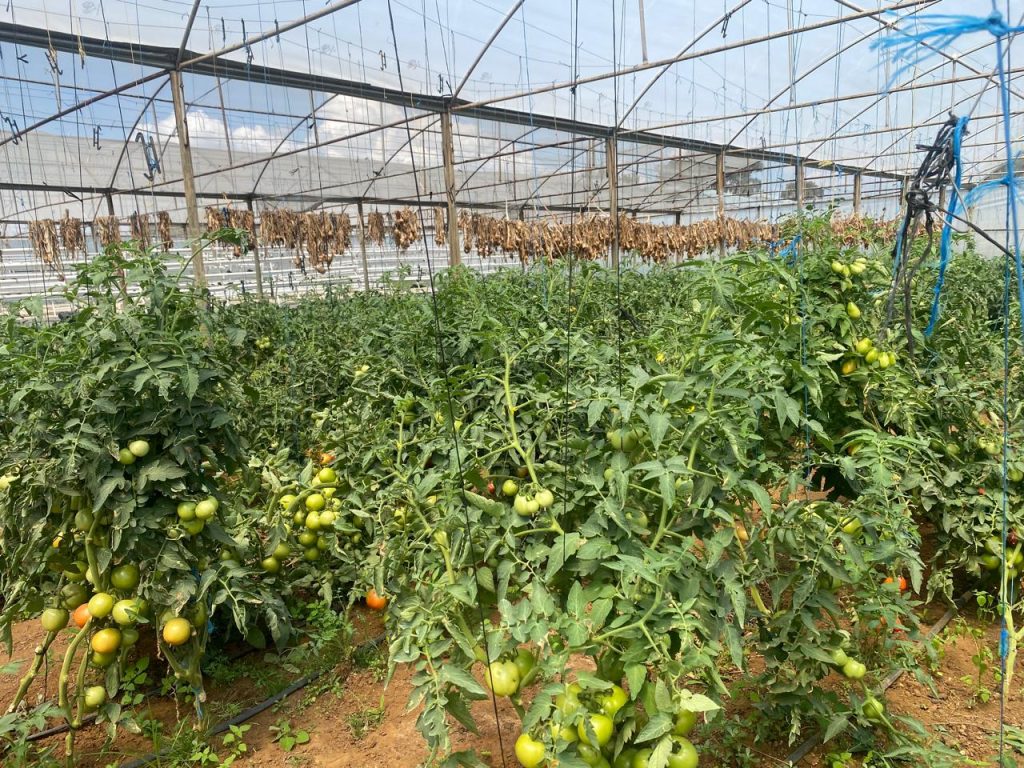
Gauteng agriculture and rural development MEC Vuyiswa Ramokgopa is seriously concerned about the declining rate of enrolment in agricultural studies, both at secondary and tertiary level.

“It is a problem. This indicates that young people broadly are not seeing agriculture as an industry that is aspiring to get into,” she told Inside Education.

She was speaking while visiting the Ekurhuleni Agricultural College.

“We want aspirant agricultural economists, technologists, farmers and agri-processors to flock to Gauteng to come attend institutions such as this because they should represent the highest level of agricultural education in our country,” Ramokgopa said.

While highlighting the need for students to acquire skills in the sector, she also stated reasons to invest in such skills.

“We feel it’s important to engage with you at this level, the agricultural sector in South Africa is globally revived. All over the world people look at the South African agricultural sector as a beacon of excellence we have in the commercial sector. We are leading in terms of technology, genetics, productivity and techniques,” she said.

The MEC said the department had offered graduates skills programmes and absorbed 68 students this year from the province.

Additionally, Ramokgopa said as the older generation of farmers were looking to retire, the department needed to ensure that young people were equipped with skills to be able to take over.

The department emphasised that agricultural skills were in demand globally. The only way students could differentiate themselves with their competitors, was to build relationships in the industry and participate in internships to gain work experience.

“It’s not about creating people who will go into the job market, but we need to create the models, entrepreneurs, businesses and future leaders in the industry,” Ramokgopa said.

However, Ramokgopa mentioned that she was encouraged by the progress that has been made by the college since it started operating.

Ekurhuleni Agriculture College. Picture Supplied.

The college was established five years ago and provides students with 70% of practical experience and 30% theoretical work.

She said it was important to expose students to entrepreneurial and tech skills, which would help enhance productivity.

“Agriculture is not about seeds, spade, shovel and ground; it’s about being able to mind the data and to produce most efficiently for where you are with what you have,” said Ramokgopa.

Furthermore, she addressed challenges faced by state-owned farms and that the department would also invest in existing land to run incubation programmes of the department.

“The idea now is to aggregate our investment, but also aggregate the power of procurement that the state has, to be able to ensure sustainability of these enterprises,” said Ramokgopa.

The department is looking at establishing its own state-owned farms in 2026, to be located in different regions of Gauteng.

“The purpose of these farms is to help address some of the challenges that we have experienced and that we have had from small-scale farms,” she noted.

The department wanted to use provincial or municipal land to incubate farmers who were new to the industry to be able to help them with research and drive their commercialisation.

The MEC also mentioned that the province’s agriculture sector was set to benefit from a government partnership between the Hunan province in China and Gauteng.

Video by: Katlego Tshekoesele

INSIDE EDUCATION

Uncategorized

Learners must be tech savvy

By Johnathan Paoli

Basic Education Deputy Minister Reginah Mhaule has emphasised the crucial role that investments in STEM (Science, Technology, Engineering, and Mathematics) education play in the country’s economy, calling for more to be done in preparing South African learners for the digital future.

Addressing learners, educators and stakeholders, Deputy Minister Mhaule officially launched two new robotic labs at Cingani High and Soqhayisa Secondary School in Motherwell, Gqeberha.

The initiative, a collaboration between the Shoprite Foundation, Future Nation College and the department, is set to provide learners with critical skills in robotics, coding, and digital literacy.

“If we fail to equip our young people with relevant, future-fit skills, we risk turning what should be our greatest asset into a burden. This represents a crucial step towards ensuring that South African learners are not left behind in the technical revolution,” Mhaule said.

The launch also included the unveiling of a Consumer Studies kitchen at Cingani, providing learners with practical culinary and business skills, further broadening their career prospects.

Africa is the youngest continent, with over 60% of its population under the age of 25, and that by 2060, projections indicate that Africa will have the largest working-age population globally.

Mhaule cautioned that while this demographic advantage has great potential, it must be matched with a robust education system to ensure that the youth were equipped with the skills necessary to drive innovation and economic growth.

She said the world was rapidly evolving with artificial intelligence, big data, automation and digital transformation, which was reshaping industries.

The labs aim to provide learners with hands-on experience in these technologies, positioning them for future career opportunities in data science, engineering and robotics.

Mhaule lauded Shoprite for its investment in education, emphasising the importance of public-private partnerships in driving sustainable development.

She referenced the Embedded Systems Theory, which highlighted the interdependence between businesses and the communities in which they operate.

“Businesses do not operate in isolation. They are embedded within the communities they operate in, and the success of companies such as Shoprite is directly tied to the well-being of the societies in which they operate. A thriving community creates a thriving economy, which in turn creates a stronger consumer base and workforce for businesses,” Mhaule said.

The deputy minister highlighted the reality that the government alone could not address the vast educational needs of the country.

Collaborations with the private sector, civil society and academia were necessary to transform the education system effectively.

The launch serves as a model of what can be achieved when different sectors work together to equip learners with essential skills.

Mhaule directed a passionate appeal to the learners benefiting from the new labs, urging them to take full advantage of the resources provided.

She said the launch marked a significant milestone in integrating robotics and coding into the South African school curriculum; and with technology-driven education gaining momentum, initiatives like the Shoprite Robotics Centre would be instrumental in ensuring that learners were adequately prepared for the digital age.

Shoprite Foundation Managing Trustee Maude Modise reiterated the company’s commitment to investing in education as a means of fostering economic growth and social development.

Modise stated that Shoprite recognised the importance of equipping young people with skills that would make them employable in a technology-driven world.

“Technology has the ability to transform lives. By investing in technology education, the Shoprite Foundation is supporting a future where young people have the necessary skills and opportunities to succeed in a world where demand continues to grow for roles such as artificial intelligence and machine learning specialists, as well as robotics engineers,” she said.

The deputy minister said that the opening of the labs in Motherwell sets a precedent for future collaborations between government and private enterprises in addressing educational challenges.

She said the initiative aligned with South Africa’s broader strategy of integrating digital skills into the curriculum and ensuring that learners were well prepared for the demands of the 21st-century job market.

Mhaule expressed her gratitude to Shoprite for their visionary leadership and investment in education, emphasising that such initiatives played a crucial role in shaping the nation’s future.

She said the launch followed the successful roll-out of two robotics labs in KwaZulu-Natal in January last year, and were expected to serve as a model for future educational investments, ensuring that South African learners remained competitive in an increasingly digital world.

INSIDE EDUCATION

Uncategorized

Ramaphosa vows to put education first in 2025

By Johnathan Paoli

President Cyril Ramaphosa has announced the government’s plan to strengthen the country’s education system, focusing on inclusivity, quality and alignment with economic needs.

This will help equip young South Africans with the skills and knowledge necessary for personal success and national development.

In his 2025 State of the Nation Address, Ramaphosa outlined a comprehensive strategy to enhance South Africa’s education system.

“Central to our efforts to end poverty and to develop our economy is to provide decent, quality education to every young South African,” he said.

This address, the first under the Government of National Unity, emphasised early childhood development (ECD), foundational literacy, teacher training, legislative reforms, technical and vocational education and support for higher education students.

Ramaphosa underscored the importance of ECD as the bedrock of future learning and development.

He announced plans to register and formalise existing ECD centres, ensuring they were equipped with the necessary facilities, trained educators and quality learning materials.

The president described the initiative as aiming to provide every child with access to quality early learning, recognising that the early years were crucial for cognitive and social development.

A significant focus was placed on ensuring that every child could read for meaning in the foundation phase by implementing mother tongue-based bilingual education, which has been shown to improve literacy and numeracy outcomes.

The Funza Lushaka Bursary Scheme was expected to continue to prioritise students aspiring to teach in the foundation phase.

Ramaphosa said that by attracting and training passionate educators for early grades, the government aimed to strengthen the quality of education from the ground up.

The president highlighted the signing of the Basic Education Laws Amendment Act (Bela) last year, praising it as a pivotal move to make education more accessible and inclusive.

He confirmed that Basic Education Minister Siviwe Gwarube would introduce national policy, norms and standards and regulations to empower all partners to support the implementation of the Act.

To align education with economic needs, Ramaphosa said the government was increasing the production of artisans through Technical and Vocational Education and Training colleges, and combining formal learning with job training, drawing on successful international models.

The president called on the private sector to offer young people experiential learning opportunities during their studies, fostering a skilled workforce ready to meet market demands.

Addressing the financial challenges faced by the missing middle, the government is implementing Phase 1 of a comprehensive student funding model supporting approximately 10,000 students in its first year.

The president lauded the matric class of 2024 for achieving the highest pass rate in the country’s history, with 87% of learners passing their exams and nearly half obtaining a bachelor pass, describing it as reflecting the dedication of learners, educators, parents and communities in striving for academic excellence.

He underscored the government’s dedication to providing equitable education opportunities for every South African child, by stating that over 10.5 million learners attended public school where they were not required to pay fees.

Meanwhile, Solidarity welcomed the president’s commitment to developing the education sector, but warned against undue influence from radical elements and empty promises.

The union agreed with Ramaphosa’s announcement of the norms and standards of Bela, but maintained that it should have been established before the implementation of the legislation.

AfriForum CEO Kallie Kriel criticised the president as “not practicing what he is preaching”, describing Bela as an attack that encouraged division by targeting a specific community.

However, the Democratic Alliance was satisfied with the focus on education. praising Gwarube’s efforts in placing ECD first.

Party leader John Steenhuisen praised the development of ECD as a DA policy, which would ensure that every child received the best possible start in life and a testament to the impact of the party on policy making.

INSIDE EDUCATION

Uncategorized

Hundreds of classrooms refurbished and built in Gauteng

By Johnathan Paoli

The Gauteng government has announced a significant expansion in educational infrastructure to meet the growing demands of the province’s rapidly increasing population.

The province’s infrastructure development department reported on Wednesday that 309 newly built classrooms and 58 refurbished classrooms would be ready this year, accommodating a total of 12,478 learners.

MEC Jacob Mamabolo emphasised the government’s commitment to improving educational facilities as a cornerstone for enhancing the quality of education.

“The programme is transforming the old school infrastructure in the province and promotes equality through extensive construction work which gives schools a new lease of life,” Mamabolo said in a statement.

The new classrooms are expected to cater to 10,506 learners, while the rehabilitated and refurbished spaces will accommodate an additional 1972 students.

Mamabolo said this initiative was part of a broader strategy to address the educational infrastructure backlog, which has been exacerbated by socio-economic migration to the province.

According to the 2021 Statistics South Africa report, Gauteng saw an influx of approximately 479,400 people between 2016 and 2021, significantly increasing the demand for resources.

The Rehabilitation and Refurbishment Programme targets schools constructed from inappropriate materials, such as asbestos, and aims to reduce the reliance on mobile classrooms.

The initiative not only improves learning conditions, but also fosters equality across township schools.

Key projects in the 2025 pipeline include the construction of Simunye Secondary School in Westonaria, the upgraded Ribane Laka Secondary School in Mamelodi and the Semphato Secondary School in Soshanguve, and the new Braamfischerville Primary School in Soweto.

He said the focus on the Dr W.K. du Plessis School for Learners with Special Educational Needs in Springs and Athlone Girls High School in Honeydew further highlighted the government’s inclusive approach to education.

The department was also prioritising the completion of Nancefield Primary School in Eldorado Park and Rust-Ter-Vaal Secondary School in Sedibeng.

New contractors have been appointed to ensure the timely delivery of these projects following the termination of previous contracts.

INSIDE EDUCATION

Uncategorized

Gwarube calls for reframing education as an economic imperative

By Thapelo Molefe

Education must no longer be seen as just a social investment, but rather as a vital economic tool driving national growth, competitiveness and productivity, according to Basic Education Minister Siviwe Gwarube.

Speaking at the launch of the World Bank’s economic update for South Africa, with a special focus on basic education, Gwarube said on Tuesday that rethinking the role of education was essential to unlocking South Africa’s economic potential.

“We need to reframe education as a fundamental driver of economic strategy,” Gwarube stated.

“Nations that have made long-term investments in education, like South Korea and Singapore, have seen their economies transform. It’s time for South Africa to follow suit.”

The minister’s call underscores the need for education to be embedded in national economic policy.

“Education is not just a social service; it is a macroeconomic policy tool that must be embedded in our national economic strategy,” she explained.

Gwarube also addressed the current challenges facing SA’s education system, citing troubling findings from global assessments like the Trends in International Mathematics and Science Studies (TIMSS), the Southern and Eastern Africa Consortium for Monitoring Educational Quality, and the South African Systematic Evaluation. 

These reports reveal that a significant number of South African learners are struggling with foundational literacy and numeracy, putting them at a distinct disadvantage in a world increasingly driven by technology and science.

“Reports reveal that a majority of South African learners who reach the age of 10 cannot read for meaning in any language. And by Grade 5, learners are underperforming in math and science compared to their global counterparts,” Gwarube said. 

“This puts them at a huge disadvantage as they move forward in a world where technological and scientific advancement is accelerating.”

Despite these challenges, Gwarube also highlighted recent successes, such as the record number of Bachelor passes achieved by the Class of 2024, which opens the doors for over 355,000 learners to gain access to higher education. 

“This is a milestone worth celebrating,” she said, adding that it showed progress in improving access to education in South Africa.

“However, we cannot ignore the structural weaknesses that still persist and hold us back.”

Gwarube outlined a strategic approach to address the weaknesses in SA’s education system and drive transformation. Her three-pronged strategy focuses on broadening access to early childhood education to ensure that every child has quality early learning opportunities before entering Grade R. 

She also emphasised the importance of strengthening the foundational phase of learning by prioritising teacher training, curriculum reforms and resources for young learners to ensure they acquired strong literacy and numeracy skills. 

Additionally, Gwarube highlighted the need to scale up mother-tongue-based bilingual education to enhance comprehension and cognitive development, particularly during the foundational years.

“Investing in early education provides the highest return on investment, and we must ensure every child in SA has access to quality early learning,” Gwarube emphasised.

While the minister’s plan may sound simple, she stressed that achieving these goals would require a concerted effort from multiple sectors. 

“We need strong partnerships in the private sector, research institutions and development agencies to support our efforts,” she explained.

“Government cannot drive these changes alone. We need investment in resources, systems support and research to ensure the necessary reforms are implemented effectively.”

As part of her broader reform agenda, Gwarube also announced the formation of the Education and Training Council (NETC), a new advisory body that would work closely with the government to provide strategic insights on education policies and ensure that funding models for public schools were equitable and sustainable.

“Since assuming our responsibilities last year, the deputy minister and I have critically examined how we spend our precious resources. Every cent must be spent efficiently to benefit learners and educators,” Gwarube stated.

“The funding models must be aligned with the needs of the sector, ensuring that resources are allocated where the greatest need exists.”

She also addressed the current financial pressures facing provincial education departments, acknowledging that the state’s financial constraints could impact the rollout of education programmes. 

“In these economic times, we must ensure that every cent available for education is spent in ways that maximise benefits for learners and educators. We cannot afford any waste,” Gwarube said.

The minister also noted the importance of evidence-based decision-making in education reform, referencing the valuable insights provided by reports like the World Bank Economic Update. 

“Reports, such as this one, are invaluable for helping us make informed decisions and ensuring that resources are allocated to the areas where they are most needed,” she said.

The minister concluded her speech by reinforcing the moral imperative of transforming the education system. 

“Education is an economic necessity, not just a social programme. It is the foundation of South Africa’s future prosperity, and we must be relentless in our pursuit of educational excellence,” she said. 

“Anything less, would be an absolute disservice to the millions of children who look to us as leaders to change their futures.”

INSIDE EDUCATION

Uncategorized

Five-star DHET spends millions on venue hiring and hotel accommodation

By Edwin Naidu

Given his love for the limelight, there is no doubt that the former Minister of Higher Education, Dr Blade Nzimande, loves being in the spotlight.

Under his watch, the Department of Higher Education and Training spent R80 million over five years on various workshops. Since January 2024, the DHET has spent close to R40 million on events.

Nzimande passed the baton to Dr Nobuhle Nkabane on 3 July following her appointment to the Government of National Unity portfolio.

However, during his tenure, the department spent millions on national chains, smaller boutique hotels and conference centres for events and workshops involving government officials, schools and academics. Not all this was the Minister’s choice, but it was under his stewardship. He should have kept a close eye on the government purse strings.

As Minister of Science, Technology and Innovation, Nzimande’s many forays in South Africa and abroad will surely be scrutinised soon. He must be one of the most prolific government officials on social media. But questions about oversight under his watch at DHET are just starting.

On 7 January 2025, MP Tabiso Wana asked him about the costs of hiring venues.

Specifically, the question sought detailed information on the expenditure by the Minister’s department and each entity reporting to him over the past five years and since January 1, 2024.

The inquiry asked for a comprehensive breakdown of costs, including the name and address of each venue, the reason for the hire, the attendees, the total price and any additional related expenses.

The Minister responded by stating that a consolidated input report detailing the departmental events and associated costs was prepared in response to the question.

While one does not dismiss these as a waste of time, one must consider the amount of time spent on deliberations, not to mention the expense. In many cases, the motivation was that the department in Pretoria could not host meetings for more than 50 attendees. Hence, alternative venues in the city were needed at luxury hotels. Occasionally, delegates were accommodated at these hotels over two to three days during workshops.

While the DHET has long been in disarray, with senior officials in acting positions, Parliament has heard that they have been tardy in filling hundreds of posts. But it has no problems spending millions of taxpayers’ monies on conferences at five-star venues.

This summary encapsulates the essence of Ms Wana’s inquiry and the Minister’s response, focusing on the financial aspects of venue hiring for departmental events in recent years.

This piece by no means suggests any wrongdoing. Still, when the government has been talking about tightening the purse strings, it does not make sense to dish out millions to luxury hotels and conference venues when the Department of Public Works should have facilities it can use for such purposes.

Universities and Technical Vocational Education and Training (TVET) colleges also have large venues that could be used better and cost-effectively. Nzimande’s leadership of the South African Communist Party should have made him uncomfortable with making the capitalist hoteliers rich through these expensive gatherings. But then the Minister who reportedly loves his Merlot – and Beemer can’t park a government luxury vehicle anywhere, right?

Therefore, as some would argue, white monopoly capital is the biggest beneficiary of government spending, which is, to put it mildly, a disgrace because, on the one hand, the government talks about transformation but supports the status quo by making the fat-cat owners richer.

Full marks to his successor, Dr Nkabane, for making this information available transparently. It’s a positive step to unpacking how the DHET deals with its venue hire or accommodation challenges.

This becomes imperative when one considers the country’s financial challenges. According to the International Monetary Fund, the government’s high debt burden and debt-servicing costs are draining the economy, along with high unemployment and slow economic growth.

Venue hiring and luxury hotels are not necessities. Government departments should rein in spending that appears to have gotten out of control. Why pay tens of millions for facilities that the State has in abundance? One can imagine millions would be saved.  

Let’s hope DHET will better manage taxpayers’ resources under Minister Nkabane’s guidance and communicate its work at these conferences so the public understands how it contributes to the national learning agenda.

Edwin Naidu is the Editor of Inside Education.

INSIDE EDUCATION