Uncategorized

Ticket sales open for Joburg Zoo Mother’s Day Concert

By Lebone Rodah Mosima

Johannesburg Zoo is expecting more than 8,000 people at its annual Mother’s Day Concert on Sunday, 10 May 2026, with Ami Faku set to headline the four-hour live music event.

Johannesburg City Parks and Zoo (JCPZ) said that the concert will take place at the zoo and will combine live music, family activities, guided tours, and picnic spaces.

This year’s line-up includes The Soil, Bongi Archi, Phoebe Mgxaji, Matthew Mole, Chubby Cheeks, and The Phoenix Orchestra, conducted by Richard Cock.

JCPZ said the event would “blend world-class entertainment, culture and family-friendly activities into a truly unique celebration of mothers”.

The concert will run from 12:00 to 16:00, following a morning programme of guided heritage tours through the zoo from 09:15 to 11:45. Gates will open at 08:30.

The event will also include a kiddies corner with face painting, jumping castles, arts and crafts, and interactive animal experiences.

Other activities include heritage tours, an adopt-an-animal initiative, food vendors and picnic-friendly spaces.

“Guests are encouraged to bring picnic baskets or enjoy curated food offerings available on-site,” JCPZ said.

Entry will be controlled through designated gates, and JCPZ has encouraged visitors to arrive early “to ensure a seamless guest experience”.

JCPZ said the concert would continue to play a role in promoting social cohesion and strengthening its position as a community-centred organisation.

The event will be supported by a safety and operations plan aimed at ensuring a secure and smooth experience for attendees.

“The Mother’s Day Concert at Joburg Zoo has become a signature highlight on Johannesburg’s events calendar, a space where music, nature and community come together to honour mothers in a meaningful and memorable way,” JCPZ said.

Tickets are available via Webtickets at https://bit.ly/41iNTDr.

Adult tickets cost R150, while tickets for children aged three to 12 and pensioners cost R80.

INSIDE EDUCATION

The post Ticket sales open for Joburg Zoo Mother’s Day Concert appeared first on Inside Education..

Uncategorized

OPINION| Artificial Intelligence in Education: Why South African schools and universities must adapt

By Robyn Shepherd

Artificial intelligence (“AI”) is no longer a distant technological concept; it has become an everyday tool in workplaces, homes, and, increasingly, classrooms. Students today have access to AI-powered tools that can assist with research, summarising information, drafting written content, analysing data, and solving complex problems.

While these technologies create new opportunities for learning and efficiency, they also present significant challenges for educational institutions. Many schools and universities have responded cautiously, with some attempting to restrict or ban AI use entirely. 

However, in the South African context, such an approach is unlikely to be sustainable.

Artificial intelligence is rapidly becoming integrated into modern life and the future workforce.

Instead of avoiding AI, educational institutions must focus on developing digital literacy and implementing clear policies to regulate the responsible use of these technologies.

The Evolution of Technology in Education

Education has historically evolved alongside technological advancements. Tools that were once viewed with suspicion, such as calculators, computers, and the internet, are now essential components of the learning environment.

Artificial intelligence represents the next stage in this evolution.

Students entering professional fields such as law, finance, engineering, healthcare, and technology will inevitably encounter AI in their daily work.

If educational institutions fail to equip students with the skills needed to navigate these technologies responsibly, graduates may find themselves unprepared for the realities of the modern workplace. For this reason, the focus should not be on eliminating AI from education, but rather on teaching students how to use it responsibly, critically, and ethically. 

The Importance of Digital Literacy

A key component of adapting to artificial intelligence is developing digital literacy. Digital literacy goes beyond simply knowing how to use technology; it involves understanding how digital systems operate, recognising their limitations, and critically evaluating the information they produce.

In the context of artificial intelligence, students must learn that AI-generated outputs are not inherently accurate or unbiased. 

AI systems rely on data patterns and algorithms, which means they can produce incorrect, misleading, or incomplete information. Without the ability to critically assess AI outputs, students may become overly reliant on automated tools, undermining independent thinking and academic integrity.

Teaching AI literacy is therefore essential to ensuring that students remain active participants in the learning process rather than passive consumers of automated information.

Developing Clear Institutional AI Policies

Alongside digital literacy, educational institutions must develop clear and comprehensive policies governing the use of artificial intelligence. One of the primary concerns surrounding AI in education is academic integrity.

Institutions must therefore clearly define when the use of AI tools is permissible and when it may constitute academic misconduct.

For example, using AI to generate ideas or assist with research may be acceptable, while submitting entirely AI-generated work as one’s own would undermine the purpose of academic assessment.

Establishing transparent guidelines helps students understand the boundaries of acceptable conduct while allowing technology to remain part of the educational process.

Transparency is also an important element of responsible AI use. Institutions may consider requiring students to disclose when AI tools have been used in the preparation of assignments, research, or projects.

Such disclosures encourage honesty and accountability while acknowledging that AI can be a legitimate support tool when used appropriately.

In addition, traditional assessment methods may need to evolve. Greater emphasis may be placed on oral presentations, in-class assessments, and practical demonstrations of understanding to ensure that students are genuinely engaging with the material.

The South African Legal Framework

From a legal perspective, the use of artificial intelligence in educational institutions must also be considered in the context of South African law. The Constitution of the Republic of South Africa, 1996, protects fundamental rights that may be implicated in the digital learning environment, including the rights to dignity, privacy, and access to education.

These rights remain relevant in online and technologically mediated environments, meaning that educational institutions must ensure that the adoption of AI technologies does not compromise students’ rights.

In addition, the Protection of Personal Information Act 4 of 2013 (POPIA) plays a significant role in regulating the collection, storage, and processing of personal data.

Many AI platforms operate by analysing large volumes of data, which may include students’ personal information. Schools and universities must therefore ensure that any AI technologies used within their systems comply with POPIA’s requirements relating to lawful processing, consent, and data security.

Failure to do so could expose institutions to legal risk and undermine students’ privacy rights.

Balancing Innovation and Protection

Ultimately, the challenge facing educational institutions is not simply technological, but also ethical and regulatory.

Schools and universities must balance the need to prepare students for a rapidly evolving digital world with the responsibility to protect them from the risks associated with emerging technologies.

Achieving this balance requires thoughtful policy development, ongoing educator training, and collaboration between academic institutions, legal professionals, and technology experts.

Conclusion

Artificial intelligence will continue to shape the future of education and the broader professional landscape. Attempting to ignore or prohibit these technologies may hinder rather than protect students.

A more effective approach is to embrace the reality of AI while equipping students with the knowledge and skills needed to use it responsibly.

By prioritising digital literacy, implementing clear policies, and ensuring compliance with South Africa’s legal framework, educational institutions can create learning environments that both safeguard students and prepare them for the demands of a technologically advanced society.

Written by Robyn Shepherd, Attorney, SchoemanLaw Inc 

The post OPINION| Artificial Intelligence in Education: Why South African schools and universities must adapt appeared first on Inside Education..
Soshanguve learners unveil home-built electric vehicle
Uncategorized

Soshanguve learners unveil home-built electric vehicle

By Levy Masiteng 

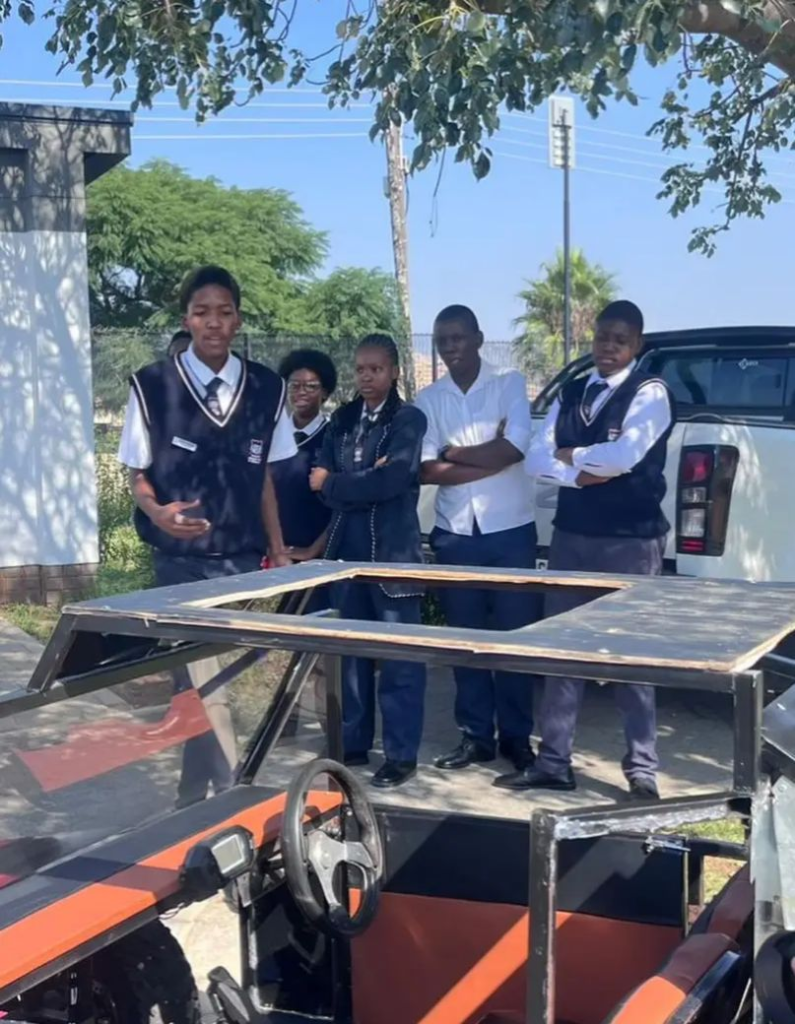
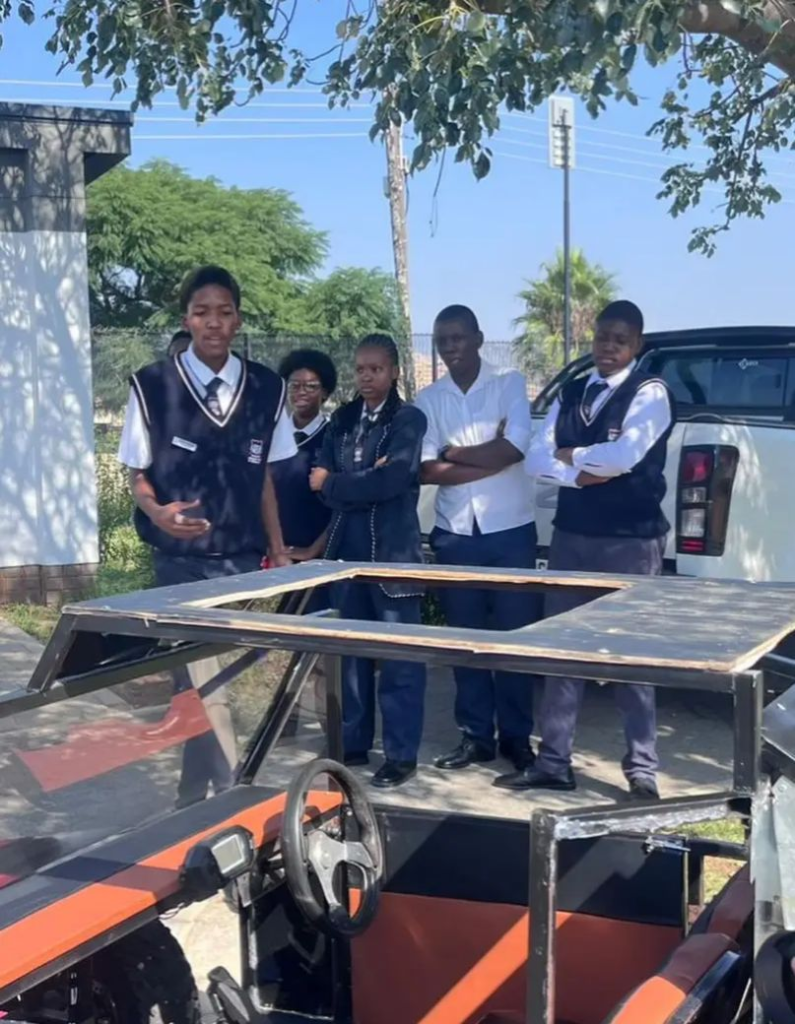
Learners at Lethabong Maths, Science and ICT School of Specialisation in Soshanguve have unveiled a home-built electric vehicle, the EV LMSI 1000.

The Gauteng Department of Education said international media visited the school to observe the impact of partnerships aimed at advancing innovation, skills development and quality education.

“The unveiling marks a significant milestone for the department’s Schools of Specialisation programme, as learners demonstrated not only technical skills but the ability to design and build solutions aligned with the future of mobility,” it said.

The EV LMSI 1000 is the latest in a series of learner-led innovations at the school, which focuses on automotive studies, science and ICT.

The institution was established as part of Gauteng’s drive to equip young people with industry-relevant skills, particularly in the automotive sector linked to the Tshwane economic corridor.

Learners have previously developed projects including a solar-powered transport system and autonomous vehicle models designed and built on campus, reflecting a growing foundation in engineering and digital technologies.

As South Africa expands its electric vehicle ecosystem, including charging infrastructure initiatives led by Eskom, such projects position learners within a rapidly evolving industry.

Educators and partners said the EV LMSI 1000 is not only a school project but a symbol of what can be achieved through collaboration between education, industry and policy.

Photos: X/DBE

INSIDE EDUCATION

The post Soshanguve learners unveil home-built electric vehicle appeared first on Inside Education..

Uncategorized

Woman who drove into a tea party outside a London school charged over death of 2 girls

A woman who drove a Land Rover into a tea party outside a London primary school celebrating the last day of classes in 2023, killing two 8-year-old girls and injuring several other people, was charged Friday with dangerous driving, authorities said.

Prosecutors said they decided to charge Claire Freemantle, 49, with two counts of causing death by dangerous driving and seven counts of causing serious injury by dangerous driving after the Metropolitan Police reopened its investigation and discovered new evidence.

The London police force apologized for how it initially treated the crash and said it had referred its own officers to a watchdog agency looking into police misconduct.

Freemantle was originally not charged after prosecutors said she had an epileptic seizure. She had issued a statement expressing her “deepest sorrow” but said she had no recollection of what occurred.

Defense lawyers questioned why prosecutors reversed their original decision not to charge Freemantle and said she will plead not guilty when she makes her first court appearance June 16 in Westminster Magistrates’ Court.

It’s not clear what new evidence police found, but the reinvestigation came after complaints by the parents of Nuria Sajjad and Selena Lau, who were killed in the crash outside the private Study Preparatory School in Wimbledon, south London, on July 6, 2023.

The driver plowed through a fence and into the side of the school building. More than a dozen people were treated for injuries at the scene and 10, including several pupils, were taken to the hospital for treatment.

AP

The post Woman who drove into a tea party outside a London school charged over death of 2 girls appeared first on Inside Education..

Uncategorized

Reforms to South Africa’s technical colleges keep failing students and employers: why?

By Stephanie Allais

South Africa’s 50 public technical and vocational education and training (TVET) colleges are, in the main, struggling institutions. In many, throughput rates – how many students qualify in the expected time – are low. Some lecturers are under-qualified and under-resourced. Relationships with employers, which are crucial for the type of training that these colleges offer, are uneven.

Colleges are hard pressed to provide training to young people with weak schooling behind them and no clear path to employment ahead. The youth unemployment rate is almost 44%.

The response to problems in the sector has been reform: rename the colleges, restructure them, give them new governance models, new qualification types, new funding arrangements. Over 30 years of democracy, South Africa has done all of these things, repeatedly. It has not worked.

And now there’s another round of changes being rolled out. There is little clearly documented explanation of what the new system is and how it will work in practice. But colleges have been instructed that most current qualification offerings will be phased out and replaced by new “occupational” qualifications.

In 2024 I wrote a paper tracing the history of the technical and vocational training sector, drawing on published literature, my research on skills development and my own involvement in South Africa’s education and training policy processes. The paper sets out why the sector is not working and what it needs to succeed.

In my view, based on the history of the sector, there is a serious risk that the latest reforms will make things worse.

Thirty years of the same mistake

South Africa’s policy vision and funding model for TVET colleges has, like that of many other countries, been to base funding on student enrolment for programmes that are linked to employer demand. It assumes colleges will respond to what employers want, and channel young people into jobs.

It has a long and largely unsuccessful track record, with problems in many countries – most extensively documented in Australia and the UK, the originators of the broad policy model.

The problem is structural. Funding institutions only through enrolments in specific programmes provides no institutional stability. It creates no incentive to invest in equipment, lecturers, or long-term relationships with employers. It treats colleges as if they were competing as private training providers.

When the programmes that attract funded enrolments change – as they do, repeatedly – colleges are left with stranded staff, obsolete equipment, and no financial buffer. And when new funding is made available, for new programmes, they don’t have lecturers who can teach them.

Private institutions tend not to offer manufacturing-related programmes – those are expensive. They focus on business-related programmes, which are cheaper.

Consider the National Technical Education Diploma (Nated) qualifications, the government-funded programmes that colleges have provided for decades. First, they were to be phased out. Then, when the National Development Plan created TVET enrolment targets, colleges were told to expand them. Colleges have built up staffing around them and enrolled students in them.

Now, the Department of Higher Education and Training has instructed colleges to phase them out. What replaces them are “occupational qualifications”.

The occupational qualifications problem

The department defines an occupation as a set of jobs whose main tasks and duties are characterised by a high degree of similarity (skill specialisation).

The theory behind occupational qualifications is sound: link qualifications to specific occupations, make workplace experience part of the qualification, and graduates will have credentials that employers recognise and value.

The framework has thousands of occupations.

The problem – and here is where our new research (not yet published online) is indicating an uncomfortable finding – is that many of the “occupations” to which these new qualifications are linked do not really exist in workplaces and labour markets. And there is little publicly available information about them.

Some “occupations” have special skills that need special training, and others are really just jobs.

For example, in our research (not yet online) across 53 food and beverage manufacturing plants, we found that there are artisan trades like millwrighting, fitting and turning, and electrical work which fit the idea of an occupation.

But machine operators don’t fit that description. Yet machine operators are among the new qualifications to be offered. The employers we visited don’t need those qualifications. They would rather hire someone they can train themselves, to use the equipment in their plant.

Training in a “knowledge module” like “personal mastery and interpersonal relationships” is not specific to the “occupation” of operating a machine.

You cannot create an occupation by developing a qualification for it. It works the other way: the occupation must exist before you create a qualification for it.

This is not an abstract concern. Colleges are now being instructed to gain accreditation to offer these qualifications, to hire staff to teach them, to find workplace placements for students doing them – all on the assumption that there is a real occupational destination at the end.

For artisans, this assumption holds: there are real occupations that translate to opportunities in the workplace. But for the majority of new occupational qualifications being developed, far more analysis is needed.

What institutions actually need

Colleges cannot become strong institutions through enrolment-driven funding alone, any more than a school can become strong by being paid per pupil with no base funding for teachers or classrooms. And calling qualifications “occupational” does not mean that they will lead to work where there is no meaningful occupation in labour markets or workplaces.

Institutions need a stable core – employed lecturers, maintained equipment, administrative capacity – that allows them to function as institutions rather than as collections of projects cobbled together from different funding streams.

Some of them may be better off offering second-chance matric (secondary school leaving certificate) programmes instead of narrowly focused programmes where there are few real opportunities for employment in the surrounding areas, and no way colleges can find work placements for their learners.

Pockets of genuine excellence exist in the current system: colleges with good employer relationships and real employment outcomes for graduates. What they have in common is principled management, experienced staff, and enough stability to build relationships over time. The system should be trying to replicate those conditions.

In my view, what needs to happen is this:

  • colleges should be funded with a core institutional grant, and enabled to provide a mix of training that reflects their local economic contexts
  • occupational qualifications should be rolled out only where employers need them.

Otherwise the latest reforms risk repeating the errors of the past 30 years. Colleges and young people deserve better than that.

Stephanie Allais is Faculty member, Centre for Researching Education and Labour, University of the Witwatersrand.

THE CONVERSATION

The post Reforms to South Africa’s technical colleges keep failing students and employers: why? appeared first on Inside Education..

Uncategorized

South Africa faces concerns over draft school pregnancy rules as comment deadline extended

By Charmaine Ndlela

The Equal Education Law Centre, the Western Cape Children’s Commissioner and Ilitha Labantu have raised concerns over the Department of Basic Education’s draft regulations on managing learner pregnancy, warning that gaps could undermine implementation.

The Department of Basic Education has extended the deadline for public comment to May 24, 2026, after civil society groups requested more time to broaden participation.

The extension follows the gazetting last month of the draft regulations under the South African Schools Act, as amended by the Basic Education Laws Amendment Act.

The regulations aim to ensure pregnant learners can remain in school and return after childbirth, supported in a non-discriminatory environment. Schools would be required to provide academic, psychosocial and health support, reinforcing the constitutional right to basic education.

A key provision introduces mandatory reporting in certain cases. Where a learner under 16 falls pregnant, schools would have to report the matter to the Department of Social Development and the South African Police Service.

While intended to address potential statutory offences and protect minors, the measure has raised concerns among stakeholders about its practical implications.

Basic Education Minister Siviwe Gwarube said the regulations build on progress made in addressing learner pregnancy.

“We have moved away from a painful past where young girls were expelled or forced out of school due to pregnancy. These practices contributed to high dropout rates. The regulations reaffirm our commitment to dignity, inclusion and equal opportunity,” she said.

In a joint submission, the organisations welcomed the intent of the regulations but said significant gaps remain.

They cited a lack of clarity on implementation, particularly in under-resourced schools, as well as unclear roles across departments, limited detail on funding, insufficient operational guidance for schools, and capacity constraints in school health and support systems.

Without a clear implementation plan, the groups said, the regulations risk being ineffective despite their policy intent.

They also called for a stronger rights-based approach, with greater emphasis on learners’ dignity, privacy and best interests, improved accountability mechanisms, and clearer recognition of learner fathers.

“The regulations must be responsive, practical and adequately resourced,” the organisations said.

INSIDE EDUCATION

The post South Africa faces concerns over draft school pregnancy rules as comment deadline extended appeared first on Inside Education..