Uncategorized

16 Cuban-trained SA doctors graduate as Mandela-Castro programme marks 30 years

By Charmaine Ndlela

Sixteen South African medical doctors graduated in the Eastern Cape on Friday through the Nelson Mandela/Fidel Castro Medical Programme, as government marked 30 years of a scheme aimed at strengthening healthcare in rural and underserved communities.

The graduation ceremony was held at the East London International Convention Centre and hosted by the National Department of Health in partnership with Walter Sisulu University and Cuban medical universities.

Eastern Cape Department of Health MEC Ntandokazi Capa said during her address that 3,277 South African doctors had completed their training through the programme since it was launched in 1996.

The programme was established by former South African President Nelson Mandela and former Cuban President Fidel Castro to address the country’s shortage of medical doctors, particularly in rural, underserved and previously disadvantaged communities.

The programme provides medical training opportunities to students from disadvantaged communities, with students undergoing medical studies in Cuba before returning to South Africa for clinical integration at local universities. Graduates are expected to serve in South Africa’s public health system after completing their training.

Capa said the graduates were already making a significant contribution to South Africa’s public healthcare system.

“Today, as we speak, 3,277 medical doctors have completed this programme and they are serving in our clinics, hospitals and rural health districts because we need to address past healthcare imbalances, improve the allocation of health resources and ensure access to care for vulnerable populations,” she said.

She congratulated the new graduates, describing them as doctors trained with a strong foundation in primary healthcare, disease prevention and community-based care.

“We celebrate the remarkable academic achievement of this new cohort of medical doctors who are now ready to serve the people of South Africa with compassion as part of strengthening the health system, especially in underserved and previously disadvantaged areas,” she said.

Capa said South Africa needed a proactive healthcare system focused on preventing disease rather than only treating illness, adding that the graduates would play an important role in responding to both communicable and non-communicable diseases.

She also urged the graduates to support the implementation of the National Health Insurance, saying they would form part of the backbone of South Africa’s public healthcare system and help the country move towards universal health coverage.

“You have been trained with a purpose to close the gap of inequality, to bring care where there is none, and to serve with humility, excellence and empathy,” she said.

She encouraged the graduates to take up placements in rural communities, township health facilities, district hospitals and under-resourced primary healthcare clinics.

“The greatest need for doctors in South Africa is in rural areas, township facilities, district hospitals and under-resourced primary healthcare facilities. You must consider your deployment as a calling, not a punishment.”

She thanked the people of Cuba, the Cuban government and Cuban medical faculties for teaching and mentoring South African students, saying the partnership had strengthened South Africa’s health system.

“The relationship between SA and Cuba is rooted in diplomacy and solidarity. Cuba was there for our people during the difficult days of the struggle for freedom, and we are glad that it continues to stand with us in building human capacity, particularly in the health sector. We remain grateful for that.”

She urged the newly qualified doctors to remain open to growth and continuous learning.

“Learning is an ongoing process, and the discipline of medicine will continue to evolve, just as it does in other fields, such as technology,” she said.

“Congratulations, Class of 2026! South Africa is proud of you, the health sector cannot wait to welcome you,” Capa said.

INSIDE EDUCATION

The post 16 Cuban-trained SA doctors graduate as Mandela-Castro programme marks 30 years appeared first on Inside Education..

Uncategorized

SA turns to young agricultural economists to tackle food security, jobs crisis

By Lebone Rodah Mosima

South Africa needs more agricultural economists to help tackle food security, rural development, trade, climate change and job creation, the Department of Agriculture said at a student symposium in Pretoria on Friday.

The department, in collaboration with the Agricultural Research Council and the University of Limpopo, hosted the symposium for third-year BSc Agricultural Economics students at the ARC VIMP Campus in Roodeplaat.

The event brought together students, academics, policymakers and industry professionals to discuss agricultural economic issues, policy debates, innovation trends and emerging opportunities in the sector.

Acting Chief Director of Sector Capacity Development Mmaserame Macucwa said agricultural economists had a critical role to play in addressing some of South Africa’s most pressing development challenges, including employment creation, rural development, trade, climate change and inclusive economic growth.

“Agricultural economics remains one of South Africa’s critical and scarce skills, with growing demand for professionals capable of informing policy, analysing markets, managing risk, and driving innovation across agricultural value chains,” Macucwa said.

“Students must actively engage with experts to build professional networks and prepare themselves to lead the sector through emerging challenges and opportunities.”

The department said the symposium was aimed at connecting students with industry experts and exposing them to the knowledge and networks needed to support innovation, strengthen food security and help shape the future of South African agriculture.

University of Limpopo academic Dr Mmaphuti Nkoana said the engagement gave students an opportunity to better understand the workplace and the expectations of potential employers in the agricultural sector.

Nkoana said the university offered modules that complemented one another, including those recommended by stakeholders who could employ students in future. Practical exposure through experiential learning and engagement with industry was important in preparing students for work, Nkoana said.

“We saw it befitting to say that we engage with the stakeholders to host our students in these kinds of podiums or symposiums, so that our students can get more information about what is happening in the working environment,” Nkoana said.

“These students here, they are willing to gather more information from different stakeholders, just to capacitate or build their future from now.”

Nkoana said students could also contribute to research projects and seminars by using such platforms to raise and discuss challenges facing South Africa.

Macucwa said the Department of Agriculture remained committed to strengthening partnerships with higher education institutions to develop the next generation of agricultural professionals.

She said she was confident that young economists could contribute meaningfully to the future of South African agriculture.

INSIDE EDUCATION

The post SA turns to young agricultural economists to tackle food security, jobs crisis appeared first on Inside Education..

Limpopo rolls out 465 winter learning centres in bid for 90%+ matric pass rate
Uncategorized

Limpopo rolls out 465 winter learning centres in bid for 90%+ matric pass rate

By Charmaine Ndlela

The Limpopo Department of Education has launched 465 Winter Enrichment Learning Centres across the province to support 93,500 Grade 12 learners ahead of the National Senior Certificate (NSC) examinations, as it targets a matric pass rate of more than 90% this year.

The department said it was confident its intervention programmes would help the province surpass the 90% pass mark.

“During the winter enrichment classes, nearby feeder schools will be clustered, with a minimum of three schools participating at each centre. Some learners will attend residential camps, while others will be transported from various locations to participate in the programme,” departmental media liaison Isaac Mahlangu told Inside Education.

“The goal of the department is to achieve a 90% plus matric pass rate in the province. We are maintaining that target, and it remains the objective of the department,” Mahlangu said.

The Winter Enrichment Programme, which runs until 10 July, is aimed at strengthening learner performance through intensive revision, curriculum support and targeted interventions in key subjects.

The programme is being implemented at 465 centres across Limpopo, including walk-in centres and residential camps, to ensure learners from different communities have access to academic support.

According to the department, the classes are designed to address learning gaps, reinforce critical concepts and improve learner performance ahead of the final examinations.

Learners will receive intensive tuition, revision sessions and supplementary learning materials throughout the programme.

Limpopo Education MEC Mavhungu Lerule-Ramakhanya thanked educators for sacrificing part of their school holidays to conduct the classes and acknowledged School Governing Bodies (SGBs) for helping ensure the programme was properly organised.

She also urged parents to continue supporting and monitoring learners during the winter programme.

Lerule-Ramakhanya is expected to visit several learning centres during the programme to monitor its implementation and engage with learners and educators.

“The department remains committed to improving educational outcomes and creating opportunities that empower learners to reach their full potential,” she said.

“The enthusiastic participation of learners, educators and support staff reflects a shared commitment to academic excellence.”

INSIDE EDUCATION

The post Limpopo rolls out 465 winter learning centres in bid for 90%+ matric pass rate appeared first on Inside Education..

Uncategorized

Africa Skills buys former Telkom campus to build major artisan training hub

By Lebone Rodah Mosima

Africa Skills Training and Management Services has bought Telkom’s former learning campus in Olifantsfontein, Gauteng, with plans to redevelop the site into one of the country’s largest artisan training hubs.

The 24.7-hectare property, which includes more than 23,500 m² of purpose-built education and training facilities, was acquired by the vocational training company as part of a corporate disposal transaction handled by Broll Auctions and Sales.

Africa Skills Chief Business Development Manager Phillip Harmse said the company had been eyeing the property for some time because its other Gauteng campuses were smaller and full.

“We have had our eye on this property for some time. Our other campuses in Gauteng are smaller and full, so we were struggling with capacity, and this location is perfect. It offers easy access and will serve a significant need in the country,” Harmse said.

“We are happy with the deal we secured for premises of this size, and our intention is to stay true to the building’s origins and history, redeveloping the campus into a work-integrated vocational education and innovation hub for the manufacturing, mining and agricultural sectors.”

Programmes at the campus will include training for millwrights, boilermakers, welders, electricians and plumbers, alongside a new agricultural offering covering plant production, fruit, grains and a poultry-focused livestock component.

“Our qualifications combine theory, practical training and workplace experience over three years, with students spending half their time on campus and half placed with companies so that they add value to employers from day one,” Harmse said.

Existing lecture halls, classrooms and accommodation facilities will be supplemented by modern hybrid learning environments, artisan workshops, agricultural training infrastructure and sustainable campus improvements, developed in collaboration with industry and education partners.

The first intake is targeted for February 2027, with around 2,000 students expected at the campus once enrolment plans are finalised.

“The expansion of Africa Skills into a new, larger premises is in response to a need for additional vocational capacity,” Harmse said.

“South Africa’s labour market requires roughly 30 000 artisans a year, while the country currently produces only 15 000 to 20 000.”

Broll Auctions and Sales Director Jayson-lee Collins said the property was sold through a competitive auction process, with five registered bidders bidding on the day.

“The education sector, from a property perspective, is seeing a strong uptick in transactions. We have concluded some of the country’s biggest property transactions in the educational sector in the past two years including the sale of Johannesburg’s FNB Conference Centre on Grayston Drive and Mayfair Convent.”

The disposal of the Olifantsfontein campus formed part of Telkom’s strategy of unlocking value from non-core assets while enabling new investment and economic development.

INSIDE EDUCATION

The post Africa Skills buys former Telkom campus to build major artisan training hub appeared first on Inside Education..

Uncategorized

merSETA extends 2026/27 discretionary grant deadline after guideline changes

Staff Reporter

The Manufacturing, Engineering and Related Services Sector Education and Training Authority (merSETA) has extended the closing date for its 2026/2027 Discretionary Grant Funding Window by two weeks, giving stakeholders more time to submit applications after amendments to grant guidelines were approved.

merSETA said the funding window, which was originally scheduled to close on June 29, 2026, will now close on July 13, 2026.

“The extension takes effect immediately and applies to all applicable discretionary grant funding windows.”

It said the decision followed updates to the Discretionary Grant Guidelines and Funding Window Guidelines, which were approved to align with the Department of Higher Education and Training Directive on transitional arrangements.

As part of the amendments, merSETA has adopted a revised policy position on legacy, or pre-2009, qualifications.

“These qualifications may continue to be funded on a controlled transitional basis, provided that funding remains aligned to South African Qualifications Authority-approved extension periods and that enrolments and learner achievements are completed within the prescribed timelines,” it said.

The revised position was aimed at ensuring continued compliance with national regulatory requirements while giving certainty to employers and training providers involved in skills development initiatives.

Organisations and institutions that have already submitted applications may ask for their submissions to be reopened so they can incorporate amendments arising from the revised guidelines.

Applicants who need to amend submitted applications must contact the relevant Management Information Systems Support team. External stakeholders should email missupport@merseta.org.za, while internal stakeholders should email MISTechnical@merseta.org.za.

“Each request will be assessed and facilitated on a case-by-case basis. No manual or informal amendments outside the online application system will be permitted,” merSETA said.

Applicants have been encouraged to visit the merSETA website to access the updated Discretionary Grant Funding Window Guidelines and application information.

INSIDE EDUCATION

The post merSETA extends 2026/27 discretionary grant deadline after guideline changes appeared first on Inside Education..

Uncategorized

Wife, brother-in-law and hitmen sentenced for brutal murder of Botshabelo teacher

Staff Reporter

The High Court in Bloemfontein, sitting in Botshabelo, has sentenced four people, including the wife and brother-in-law of slain teacher Fezile Mnyobisi, for his brutal and premeditated murder.

Vusimuzi Daniel Nqele, 43, and Moeketsi Innocent Manko, 35, were each sentenced to life imprisonment. Abdool Rahman Thamando, 35, the brother-in-law of the deceased, was sentenced to 20 years’ imprisonment, while Halimmah Thamando Mnyobisi, 38, the wife of the deceased, was sentenced to life imprisonment.

All four accused were convicted of murder, read with the provisions of Section 51(1) Part I Schedule 2 of Act 105 of 1997, relating to premeditated murder.

The case stemmed from events on Friday, 15 September 2023, when Botshabelo police received an alert from a local hospital regarding a suspected murder. A patrol vehicle was immediately dispatched.

Upon arrival, police were told that 35-year-old Fezile Mnyobisi, a teacher at Refihlile Primary School in C-Section, had been brought to the hospital by his wife in a private vehicle. He was declared dead on arrival.

Preliminary investigations revealed that Mnyobisi had sustained more than 30 stab wounds to his torso. Botshabelo police initially registered a case of murder and robbery at the Botshabelo Police Station.

Police said an intense and multi-disciplinary investigation by the Provincial Criminal Record and Crime Scene Management, alongside the Investigative Psychology Section, led to warrants of arrest being issued.

Hitmen Nqele and Manko were intercepted and arrested in November 2024 for murder and conspiracy to commit murder. Further investigation led to the arrest of Mnyobisi’s brother-in-law, Abdool Rahman Thamando.

Police said the final arrest was made on 26 November 2024 at about 16:00, after intelligence-led leads helped the tracking team trace Halimmah Thamando Mnyobisi, who had been on the run.

She was found hiding at a luxury residential complex in Sandton, Gauteng, where she was staying with her alleged boyfriend. She was arrested and brought to face justice alongside her co-conspirators.

Police said the conviction followed work by Detective Warrant Officer Lehlohonolo Tloanyane and Detective Sergeant Lebohang Nkopane, under the leadership of Captain Sandile Dladla, in close consultation with State Advocate Mpemvane from the National Prosecuting Authority.

During sentencing, the presiding officer said: “Most brutal Gender-Based Violence cases are perpetrated by males, but this time around, it is a female who stands accused. This sentence should serve as a lesson to those who still think that because women are generally regarded as vulnerable, they are not capable of such brutal and heinous acts.”

Free State Provincial Commissioner Lieutenant General Thabang Solly Lesia lauded the investigating team and the prosecution for securing what he described as a watertight case.

“This sentence sends an unequivocal message that the law will not hesitate to strike down heavily on anyone who orchestrates the destruction of human life, regardless of their gender,” Lesia said.

“It is deeply disturbing when a spouse, who is meant to be a protector, becomes the architect of such a gruesome betrayal and violent crime. We hope this life sentence brings a sense of closure to the family and colleagues of Mr. Mnyobisi. I highly commend our detectives and the NPA for closing every loophole and ensuring that these perpetrators face the full might of the law.”

INSIDE EDUCATION

The post Wife, brother-in-law and hitmen sentenced for brutal murder of Botshabelo teacher appeared first on Inside Education..
Uncategorized

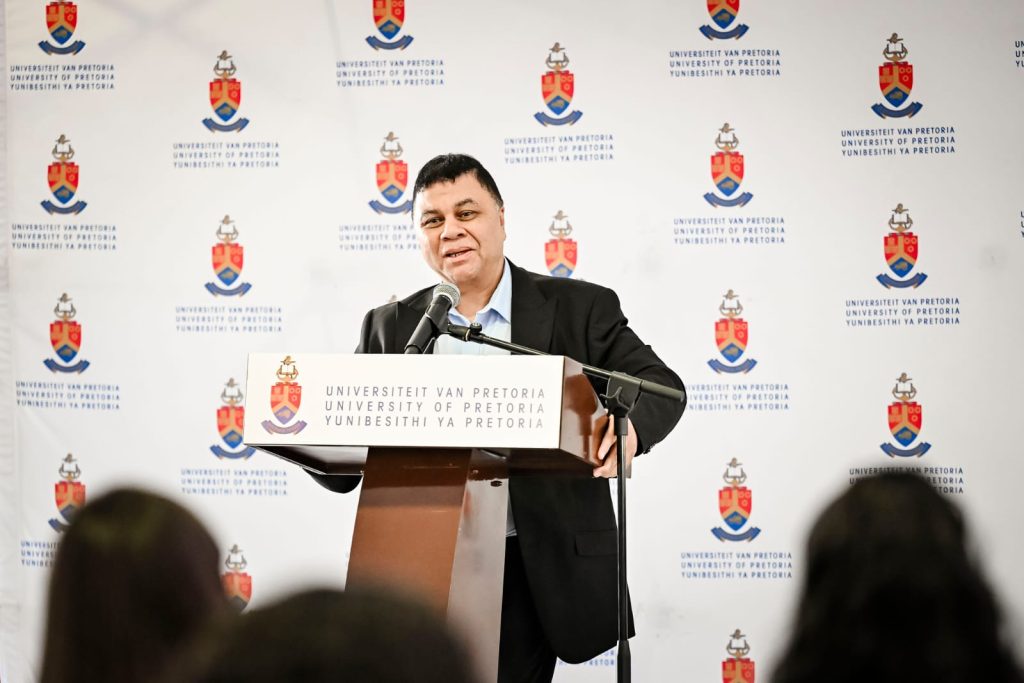
KZN leads ABC Motsepe schools choral finals after day two

By Lebone Rodah Mosima

KwaZulu-Natal led the 2026 ABC Motsepe South African Schools Choral Eisteddfod after the first two days of national competition, with 11 trophies as choirs from across the country headed into the final stretch of the four-day championships.

The championships run from June 30 to July 3 at Moreleta Kerk in Pretoria. They are delivered by the departments of Basic Education and Sport, Arts and Culture, in partnership with the Motsepe Foundation, and bring together top-performing school choirs from all nine provinces after district and provincial rounds.

The KZN Department of Education said the province was leading after Day Two with 11 trophies, making it the early frontrunner in the national standings.

In the secondary schools section, the Eastern Cape’s Nolitha won the Special Schools SID Own Song Choice category, followed by North West’s Temogo and Gauteng’s Adelaide Tambo.

KZN’s Newtown won the Special Schools MID, PD, Deaf and Blind category for Ngothando, ahead of North West’s Christiana and Limpopo’s Setotolwane.

KZN also scored strongly in the choir categories, with Aquadene taking first place in Mixed Choirs Western, ahead of Limpopo’s Klaas Mothapo and Gauteng’s Curtis Nkondo.

Klaas Mothapo then won the Mixed Choirs African category for Thuto by P Mamabolo, with Mpumalanga’s D.M. Motsaosele Secondary School second and Aquadene third.

The Mpumalanga Department of Education congratulated D.M. Motsaosele on Thursday, saying the choir had delivered “a performance that resonated with grace, passion and musical excellence”.

“This remarkable achievement is a testament to the visionary leadership and musical excellence of Mr G. Zunguza, whose dedication, discipline and inspiring direction guided the choir to this national milestone,” the department said.

Mpumalanga’s Shongwe won the Mixed Double Quartet for Farm and Small Schools with Silent Worship by GF Handel. KwaZulu-Natal’s Einsiedeln placed second, while Gauteng’s Kudung finished third.

In the primary section, the Eastern Cape’s Lingomsolethu Primary School won the Special Schools SID Own Choice category, followed by KZN’s Thuthukani Primary School and Free State’s Leboneng Primary School.

Mandela Park Primary School from the Eastern Cape also stood out after securing first place in both the Boys’ Choir and Mixed Choirs African categories.

KZN’s Grantham Park Primary School picked up the Best Conductor award, with Ms ZZ Luhlolongwane named as conductor.

The final results are expected after the closing day of competition on Friday.

INSIDE EDUCATION

The post KZN leads ABC Motsepe schools choral finals after day two appeared first on Inside Education..
Uncategorized

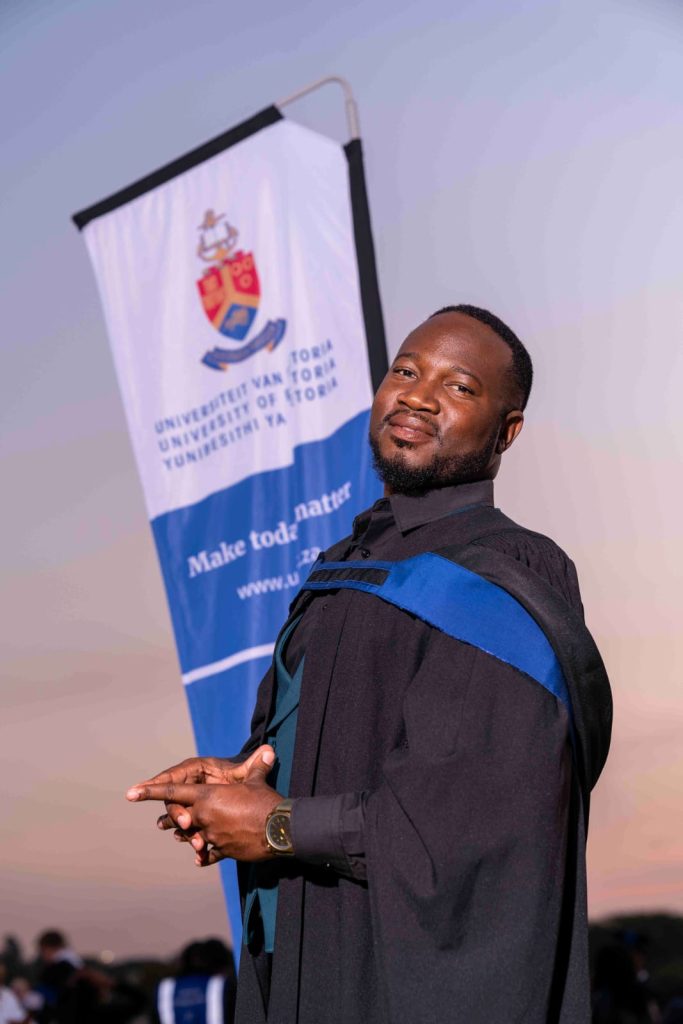
Chikunga calls on private sector to help tackle youth jobs crisis and food insecurity

By Lebone Rodah Mosima

Minister in the Presidency for Women, Youth and Persons with Disabilities Sindisiwe Lydia Chikunga has called for stronger public-private partnerships to tackle South Africa’s youth unemployment crisis and food insecurity, saying government cannot solve either challenge on its own.

Chikunga was speaking on Wednesday at the launch of KFC Africa’s Impact Report in Bryanston, Johannesburg, under the theme: “Private Sector as a Partner in Youth Economic Inclusion and Food Security.”

“I also wish to commend KFC Africa for being one of the key corporate partners of the Youth Employment Service (YES) — the substantive public-private partnership that has transitioned more than 200,000 young South Africans from being labelled as “unemployed” to being registered as “employed” through a twelve-month work experience placement in the private sector,” Chikunga said.

“KFC’s participation in the YES architecture demonstrates, first-hand, how the transition from learning to earning can be operationalised at scale.”

Chikunga placed KFC Africa’s work within the broader Presidential Youth Employment Intervention (PYEI), which she said was government’s national response to youth unemployment and required a strong coalition between government, business and civil society.

She said the PYEI’s performance since its launch was now publicly documented, with interventions reaching millions of young South Africans across different employment and earning pathways.

“The SA Youth platform, which is the digital gateway of the PYEI, currently holds active registrations of more than 2.36 million young people, who are matched to opportunities in the labour market on an ongoing basis,” she said.

“The Employment Services of South Africa (ESSA) system has placed more than 402,515 young people into work experience, learnerships, and formal employment through PYEI-aligned partnerships.”

However, the latest PYEI fourth-quarter update places current SA Youth registrations at more than 5.9 million and ESSA registrations at more than 5.36 million. Since its launch in 2020, the PYEI has facilitated access to more than 2.5 million temporary earning opportunities through SA Youth and a further 422,667 opportunities through ESSA.

The call for deeper partnerships comes as South Africa continues to battle high levels of youth unemployment. According to Statistics South Africa’s first-quarter 2026 labour data, 4.7 million young people aged 15 to 34 were unemployed, while the unemployment rate stood at 60.9% for those aged 15 to 24 and 40.6% for those aged 25 to 34.

Chikunga said partnerships had to be backed by strong knowledge management and must be able to answer the critical questions of any strategic mission, allowing government and its partners to anticipate, respond to and navigate uncertainty.

She said the launch showed how private-sector partnerships could be implemented at scale.

“What we are launching today is indicative of what a partnership can look like when it is executed at scale,” she said.

“I therefore want to make a substantive call to KFC and its associated stakeholders. Our young people must be trained, integrated, and transitioned into viable businesses across the food, agricultural value chains, and related industries — from primary production, to logistics, and distribution to the food services, hospitality sector, and into the digital platforms that increasingly mediate all of these.”

Chikunga said every young South African involved in agriculture, food services or hospitality should have a clear pathway into sustainable economic activity.

She said youth economic inclusion could not be reduced to short-term participation, but had to mean the meaningful integration of young people into productive enterprises on terms that promoted ownership, agency and real prospects of wealth accumulation.

Turning to food security, Chikunga said South Africa’s challenge was not only the availability of food, but whether households could access it consistently and affordably.

“Too often, food security is viewed through a narrow and limited lens. Food security is not about the mere availability of food,” she said.

“Food is abundantly available — yet the marginalised remain food-insecure. The gap between availability and access is the substantive analytical question.”

She said food security also had to be understood through the lens of reparative justice, including the restoration of the rights of historically marginalised communities and their sovereignty over food systems.

Chikunga said South Africa could only be considered food-secure when all people had access to sufficient, safe and nutritious food that met their dietary and cultural needs, while also addressing the historical injustices that shaped current food inequities.

She identified several areas where the private sector could support youth economic participation and food security at scale.

These included supporting young South Africans to work the land, with specific attention to young women and persons with disabilities; helping emerging farmers transition into sustainable agribusinesses; investing in extension services, technical mentoring, market access, off-take agreements, supply-chain integration and patient capital.

She also said young South Africans and African entrepreneurs needed better access to local, continental and international markets, including opportunities created through the African Continental Free Trade Area, which brings together a market of about 1.4 billion people with a combined GDP of approximately US$3.4 trillion.

Chikunga said government and business also had to scale up youth employment in food, hospitality and distribution through targeted skills programmes, franchise expansion, enterprise development and the integration of youth-owned SMEs into supply chains.

She said the private sector could further support young people by helping expand affordable, high-speed data access in townships, rural areas and informal settlements, where many young people live and where digital platforms increasingly shape access to opportunity.

Chikunga said partnerships such as those with KFC Africa showed what was possible when social impact initiatives were linked to broader national priorities.

“You can count on our partnership and we very much look forward to working with you well into the future,” she said.

INSIDE EDUCATION

The post Chikunga calls on private sector to help tackle youth jobs crisis and food insecurity appeared first on Inside Education..

Uncategorized

OPINION| Why SA universities are turning off the AI polygraph 

Dr Mario Landman

By 2026, the initial panic that greeted the launch of generative AI in higher education has transitioned into a complex, high-stakes standoff. 

At the heart of this conflict are AI checkers – software designed to catch students using tools like ChatGPT. 

However, a growing number of institutions, including major South African universities, are now switching these detectors off, sparking a fundamental rethink of what it means to learn and be assessed in a digital age.

The primary reason for the retreat from AI detection is a lack of accuracy.

AI detectors do not know if a machine wrote a text; instead, they measure statistical signatures like “perplexity” (how predictable the language is) and “burstiness” (variation in sentence rhythm). 

But as generative models have evolved to mimic human style more effectively, these signatures have become blurred. 

Independent evaluations show that while some tools claim 99% accuracy, their effectiveness drops to between 60% and 80% as soon as a student manually edits or adds “humanise” when prompting the AI. 

Furthermore, newer models like Claude 3 generate natural-sounding prose that frequently evades mainstream checkers.

For many administrators, using such probabilistic tools to make life-altering disciplinary decisions is becoming an unacceptable risk to due process.

The crisis of fairness and bias 

For South African institutions, the most damaging aspect of AI detection is documented bias against non-native English speakers. 

Research has shown that detectors disproportionately flag ESL (English as a Second Language) students because their writing often uses more formal, standardised structures that the software mistakes for machine-generated patterns.

One landmark study found a 61.3% false positive rate for TOEFL essays written by Chinese students, compared to just 5.1% for native speakers. In a multilingual country like South Africa, where English is often a second or third language, relying on these tools creates a systemic equity crisis that risks unfairly penalising students from disadvantaged backgrounds.

The devil’s bargain of efficiency 

The complexity is deepened by what scholars call a “devil’s bargain” in modern academia.

AI can automate lesson planning for lecturers and generate plausible essays for students, creating an appearance of productivity while hollowing out actual learning. This leads to the rise of “shallow knowledge workers” –  graduates who are proficient in prompt manipulation but deficient in critical analysis and independent reflection.

By switching off AI checkers, universities are forced to confront this erosion of cognitive capacity. Rather than attempting to detect the machine, they are redesigning the work to make human thinking visible.

The way forward 

The emerging way forward in South African higher education is a shift from “policing” to “stewardship”. The focus is moving toward:

  • Authentic Assessment: Moving away from take-home essays toward oral defences (viva voce), in-class writing benchmarks, and practical demonstrations.
  • AI-integrated Assessment frameworks: Implementing clear frameworks that define acceptable AI use across different assessment contexts. This may include a tiered approach where AI use is prohibited, permitted for specific parts of an assessment, or fully integrated into the assessment process without penalty, provided its use is transparent and aligned with the learning outcomes.
  • Process-Based Grading: Grading the “learning journey” by requiring students to submit research logs, drafts, and “Epistemic Meta-Reflections” where they justify their interaction with AI.
  • Human-in-the-Loop Frameworks: Implementing automated grading only when it includes mandatory human review to ensure factual accuracy and fairness.
  • Transparency and Disclosure: Replacing bans with disclosure requirements, where students must cite which tools they used and for what purpose.

As South Africa finalises its Draft National AI Policy – which ironically ran into an early roadblock after it was found the first iteration was drafted by AI – the higher education sector has an opportunity to ground AI governance in the philosophy of Ubuntu, with its emphasis on interdependence, human dignity, and collective responsibility. 

The goal should not be to win an unwinnable technological race, but to establish a renewed contract of trust: one in which AI is used as a scaffold for thought, not a substitute for it.

Mario Landman is Executive: Educational Technology and Innovation at The IIE and ADvTECH’s Academic Centre of Excellence. 

INSIDE EDUCATION

The post OPINION| Why SA universities are turning off the AI polygraph  appeared first on Inside Education..