Uncategorized

UCT leads continental push to redefine excellence in higher education

By Charmaine Ndlela 

The University of Cape Town (UCT) has partnered with Applied Higher Education (AppliedHE) to launch the All-Africa Rankings Initiative, aimed at developing an African-informed framework for measuring excellence across the continent’s public and private higher education institutions.

UCT Vice-Chancellor Professor Mosa Moshabela said the project represents a fundamental shift in how African universities are recognised, adding that the continent should play a leading role in defining its own standards of excellence rather than relying solely on global ranking systems.

“This All-Africa Rankings Initiative does not begin with rankings; it begins with listening, collaboration and co-creation,” Moshabela said.

ALSO READ: Five teachers face disciplinary action as Gauteng targets troubled Khutsong school

 “It starts with a fundamental question: What should excellence in African fourth-generation universities look like in the 21st century?”

He said that the answer cannot be determined by a single university or country, but must emerge through collaboration among university leaders, governments, policymakers, industry, researchers and communities across Africa.

The initiative will officially begin with the inaugural All-Africa Higher Education Xchange, which will be co-hosted by UCT and AppliedHE from 31 August to 1 September 2026 at the Southern Sun Cape Sun Hotel in Cape Town. The gathering will bring together higher education stakeholders from across the continent to help shape a rankings framework that reflects Africa’s priorities, strengths and aspirations.

Among the areas expected to shape the framework are graduate employability, innovation and entrepreneurship, societal and economic impact, digital transformation, artificial intelligence, transformation and inclusion, public policy contributions, African and international partnerships, and the advancement of African knowledge systems.

ALSO READ: DSTI urges University of Limpopo to lead Africa in emerging Exposome Science research

“Our objective is not simply to determine who ranks first. It is to ask a far more important question: what kind of university does Africa need for tomorrow, and how do we measure what matters most,” Moshabela said.

He said that the project is not intended to replace existing global rankings but to complement them by ensuring African perspectives play a greater role in shaping how institutional excellence is measured worldwide.

“We believe that the universities with the greatest impact in the decades ahead will be those that combine academic excellence with societal relevance; global engagement with local responsiveness; innovation with inclusion; entrepreneurial thinking with sustainable development; and knowledge creation with human flourishing,” Moshabela said.

He called on universities and stakeholders across the continent to participate in the initiative, saying the collaborative process presents an opportunity for Africa to redefine how excellence in higher education is recognised, measured and celebrated.

“Together, we can help define how African universities are recognised, measured and celebrated, and, in doing so, write the next chapter of African higher education.”

INSIDE EDUCATION

The post UCT leads continental push to redefine excellence in higher education appeared first on Inside Education..
Five teachers face disciplinary action as Gauteng targets troubled Khutsong school
Uncategorized

Five teachers face disciplinary action as Gauteng targets troubled Khutsong school

By Thapelo Molefe

Five teachers at Badirile Secondary School in Khutsong are facing disciplinary action for allegedly failing to report for duty, as the Gauteng Department of Education (GDE) moves to restore order at the school following reports of violence, gangsterism and serious misconduct.

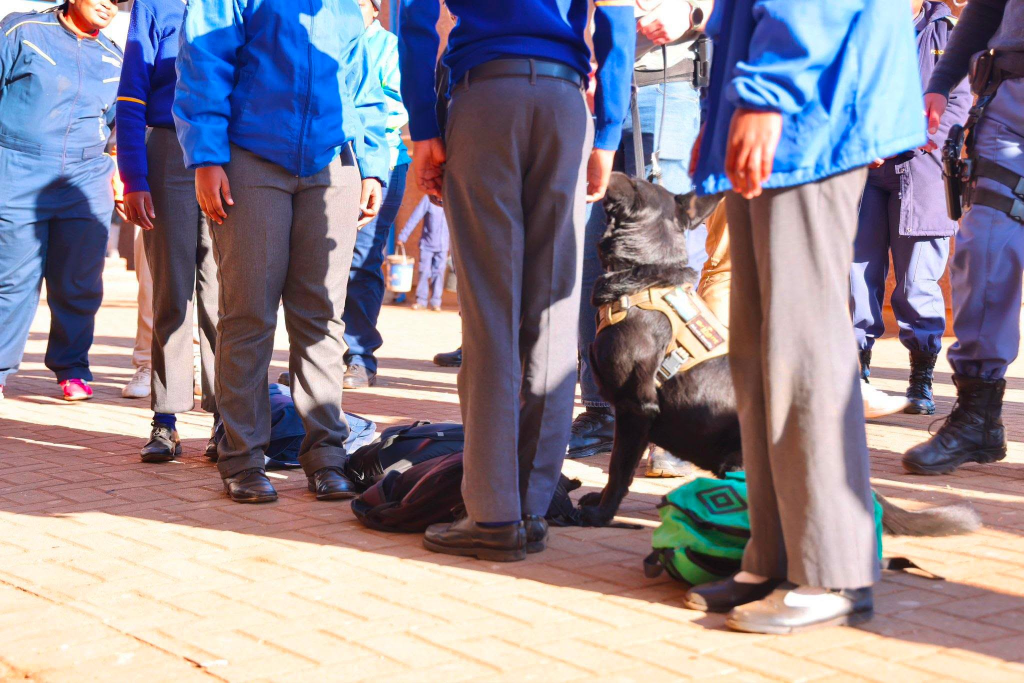
Gauteng Education MEC Lebogang Maile said on Tuesday he had instructed the department’s labour relations unit to institute disciplinary proceedings against the five educators after concerns about their attendance emerged during a South African Police Service (SAPS)-led school search-and-seizure operation.

Maile alleged the educators were habitual absentees, with some reportedly arriving only to sign the attendance register or reporting for duty under the influence of alcohol.

“We’ve been told about five notorious educators who don’t come to school, who don’t teach, who go to taverns during school hours. Before I leave, I’m getting a report from the school attendance register because I’m immediately instructing our labour relations to charge and act against them,” he said.

He added that other teachers at the school had submitted a petition raising concerns about the conduct of the five educators.

The department has placed Badirile Secondary School under close monitoring as it works with police to address violence, bullying, gangsterism and poor discipline.

Maile described the school as being plagued by serious incidents, including learners allegedly threatening teachers with criminals and illegal miners.

“There are kids here who threaten teachers that they will call zama zamas and criminals to murder the educators. We’ve got kids here who are gangsters,” he said.

According to Maile, a murder occurred at the school earlier this year, while a recent complaint circulated on social media highlighted allegations of bullying.

He also raised concerns about learners who were attending the school premises but not classes, including an 18-year-old Grade 9 learner who, he said, came to school primarily to access meals without participating in lessons.

The school is currently without a principal. Maile said he had instructed the district to appoint an acting principal while the recruitment process for a permanent principal is finalised.

“We want to make sure that in the next coming few weeks, there is order here. Apart from crime and violence, bullying and gangsterism, at the centre is ill-discipline,” he said.

The MEC also directed the district director to meet with educators and the school governing body, while a parents’ meeting will be convened as part of efforts to restore discipline.

The operation at Badirile formed part of a broader SAPS-led School Search and Seizure Operation conducted in Khutsong and Orange Farm.

Maile later joined SAPS, the Gauteng Provincial Traffic Police, Gauteng Crime Prevention Wardens, private security and other law enforcement agencies at Thetha Secondary School and Duzenendlela Special School in Orange Farm.

The operations included searches, learner screening and engagements with school management to identify safety concerns.

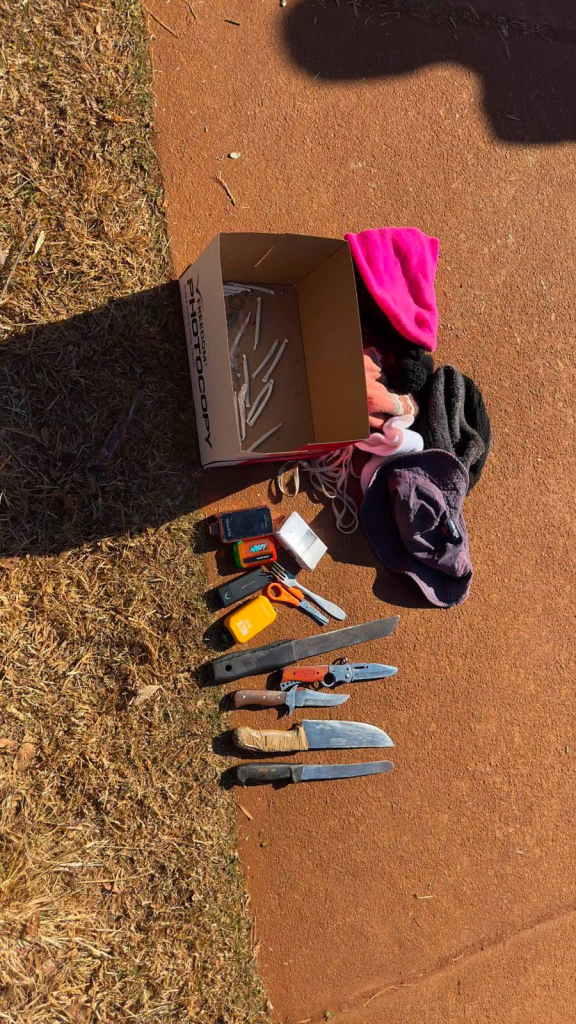
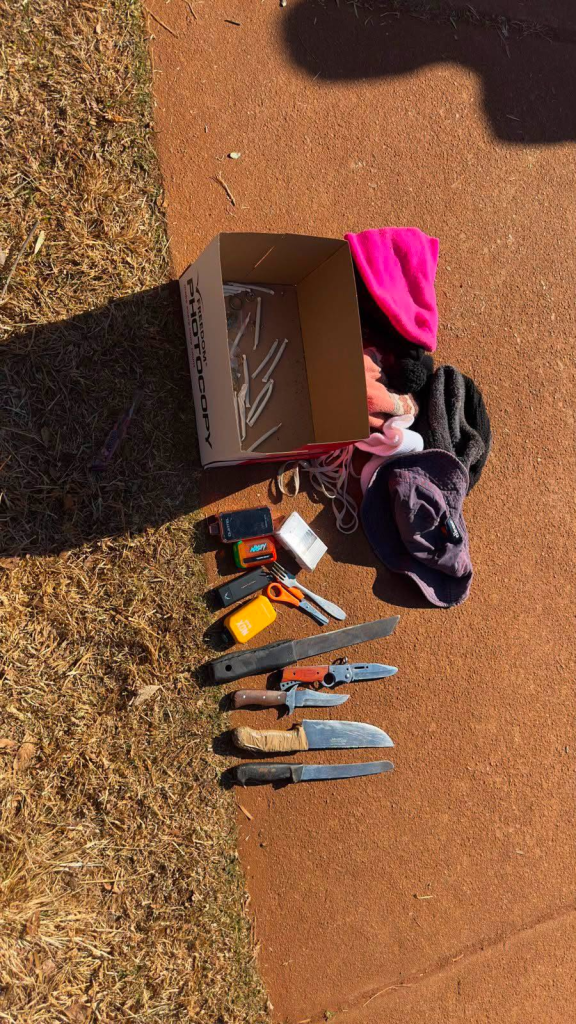
Maile said weapons were recovered at Badirile Secondary School, while dagga was found at another school. At a separate school, officials identified a learner who allegedly stole door and window handles from the premises to sell them.

He said the findings underscored that challenges in schools reflected wider societal problems.

“Schools are a microcosm of society. They reflect what is happening in society. If we don’t solve societal problems, they will find expression in our schools,” he said.

Maile rejected calls for the reintroduction of corporal punishment as a response to ill-discipline, saying teachers should instead exercise effective classroom management.

“We cannot replace wrong with wrong. Corporal punishment was wrong, it will remain wrong. Corporal punishment is violence,” he said.

The search-and-seizure operations form part of the province’s ongoing school safety interventions following complaints about violence and crime at schools.

Maile said similar operations would be conducted regularly in partnership with SAPS and other law enforcement agencies.

INSIDE EDUCATION

The post Five teachers face disciplinary action as Gauteng targets troubled Khutsong school appeared first on Inside Education..
DSTI urges University of Limpopo to lead Africa in emerging Exposome Science research
Uncategorized

DSTI urges University of Limpopo to lead Africa in emerging Exposome Science research

By Lebone Rodah Mosima

The Department of Science, Technology and Innovation (DSTI) has encouraged the University of Limpopo’s Centre for Global Change to deepen its engagement with international research networks and position itself as Africa’s leading hub for the emerging field of Exposome Science.

Deputy Minister Nomalungelelo Gina made the remarks during a visit to the Centre for Global Change on Tuesday, where she described the University of Limpopo as a national asset whose role extends beyond teaching to advancing social justice, transformation and development.

“For this reason, government remains committed to strengthening historically disadvantaged institutions and enhancing their capacity to serve as centres of excellence in research, innovation and human capital development,” Gina said.

ALSO READ: Ntuli urges African scholars to turn research into policy in changing global order

“These institutions are central to building an inclusive knowledge economy and ensuring that the benefits of science and innovation reach all communities.”

Gina said the visit coincided with the conclusion of National Science Month, during which the department promoted the role of science, technology and innovation in driving national development.

Referring to the department’s theme, “Putting Science, Technology and Innovation at the Centre of Government, Industry, Education and Society,” she said scientific research is critical to addressing challenges such as climate change, food insecurity, water scarcity and environmental degradation.

“These are precisely the issues that the Centre for Global Change seeks to address through its research and capacity-building programmes,” she said.

“Its work in climate resilience, adaptation, food systems, water security, soil science and sustainable agriculture is not only academically relevant but essential to South Africa’s future development.”

Gina also congratulated the university on graduating the first cohort of students from its Climate Change Mitigation and Adaptation Short Learning Programme, saying the graduates would help communities, institutions and government respond to the impacts of climate change.

She said the DSTI, through the National Research Foundation, has deliberately invested in building scientific capacity at rural-based and emerging universities.

“The Centre for Global Change stands as a flagship example of this commitment,” she said.

Gina warned that climate change is already affecting communities across South Africa, including Limpopo, which has experienced severe flooding, prolonged heatwaves, increasing pressure on agriculture and worsening water insecurity.

“These challenges threaten livelihoods, weaken developmental gains and place vulnerable communities at greater risk,” she said.

She said South Africa must develop locally relevant, scientifically grounded solutions, with universities playing a central role in producing research, skilled professionals and evidence to inform public policy.

ALSO READ: Parliament urges TVET colleges to strengthen industry links and tackle governance concerns

“They produce the scientists, engineers, planners, environmental specialists and policymakers who will shape our response to climate change,” she said.

“They generate evidence that informs public policy and translate knowledge into practical solutions that strengthen communities.”

Gina said the future of South Africa’s agricultural systems, water resources, biodiversity and rural livelihoods would depend on the quality of research, innovation and partnerships emerging from institutions such as the University of Limpopo.

She urged universities to work more closely with communities, farmers, municipalities and industry to develop climate-smart solutions and promote sustainable resource management.

Highlighting South Africa’s growing role in Exposome Science, Gina said she recently attended discussions at UNESCO in Paris on the rapidly developing field, which examines how cumulative environmental exposures affect human health throughout a person’s lifetime.

“It recognises that our wellbeing is influenced not only by genetics but also by factors such as climate conditions, air and water quality, food systems, occupational environments and the broader social context in which people live,” she said.

“What makes this field particularly important is that it enables scientists to understand how multiple environmental factors interact to influence health outcomes and development.”

She said Exposome Science offers new opportunities to better understand the links between environmental conditions, human health and sustainable development as climate-related risks continue to grow.

ALSO READ: Dube-Ncube: eduCate Maths & Science programme expands to Grade 10 and 11 learners

According to Gina, South Africa is among the countries contributing to the expanding global scientific field, creating opportunities for local researchers to shape international knowledge while developing solutions tailored to African challenges.

“The Centre for Global Change is exceptionally well positioned to become a leading African hub in this field,” she said.

“Its work at the intersection of climate change, environmental sustainability, agriculture, water security and community resilience aligns strongly with the objectives of Exposome Science.”

Gina said although the challenges facing the country remain significant, science, innovation and collaboration provide an opportunity to build a more sustainable, resilient and prosperous future.

INSIDE EDUCATION 

The post DSTI urges University of Limpopo to lead Africa in emerging Exposome Science research appeared first on Inside Education..
Gauteng records 210 055 school applications in four hours
Uncategorized

Gauteng records 210 055 school applications in four hours

By Lebone Rodah Mosima

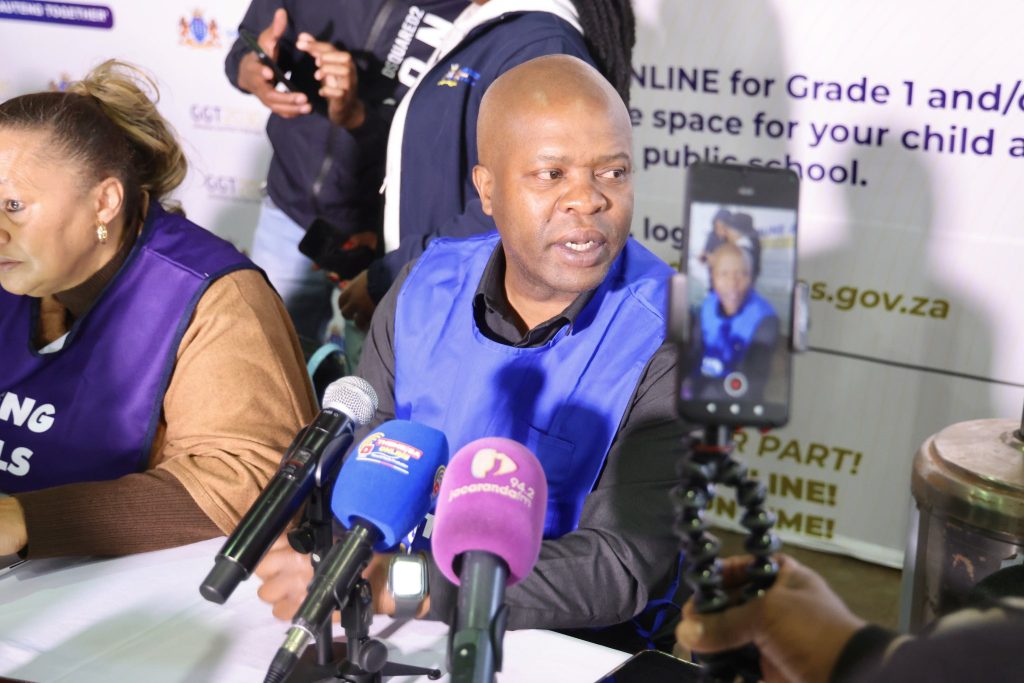
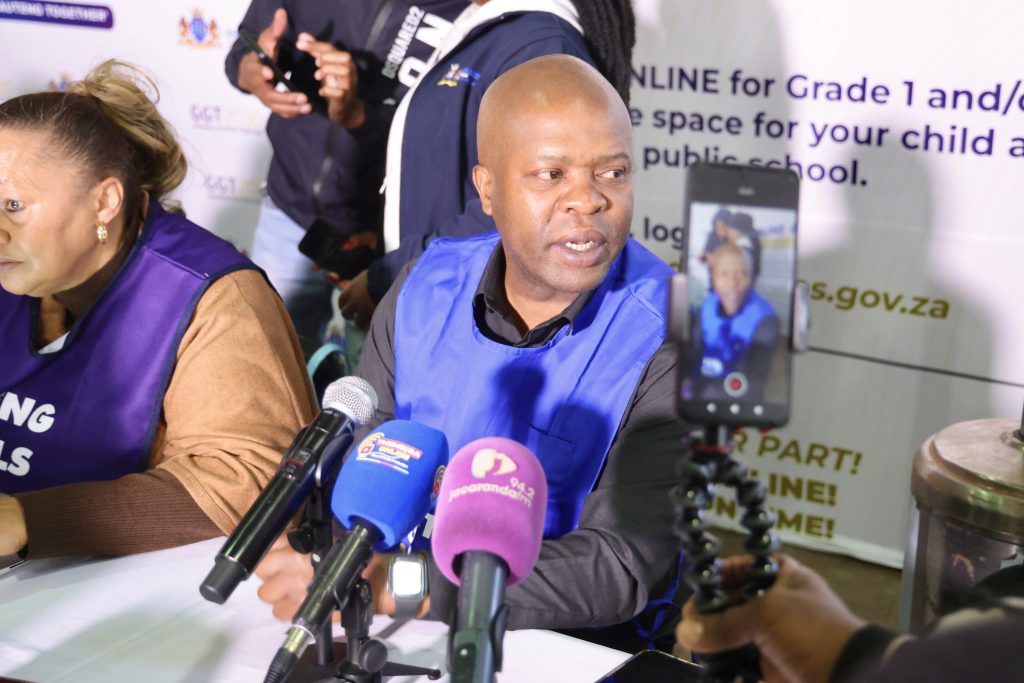
Gauteng’s online admissions system recorded 210 055 Grade 1 and Grade 8 school applications within its first four hours on Wednesday, according to the provincial Department of Education.

The system opened at 08:00 and had reached the figure by noon, with Education MEC Lebogang Maile urging parents and guardians not to wait until the closing days of the application period.

ALSO READ: continental push to redefine excellence in higher education

The total represents applications submitted to schools rather than necessarily 210 055 individual learners, as parents are required to apply to between three and five schools for each child.

The department said 12 058 parents had already joined the online queue between 07:30 and 07:59, before the system officially opened.

It said the application process had proceeded smoothly without any major technical incidents.

The highest demand during the opening hours was recorded in the Ekurhuleni South and Tshwane West education districts.

Among secondary schools, Hoërskool Langenhoven in Tshwane West received 1 168 applications, followed by Alberton High School with 1 098 and Hoërskool Akasia with 917.

At primary-school level, Rachel de Beer Primary School received 474 applications, Laerskool Akasia received 461 and Laerskool Voortrekker Eeufees received 411.

The figures are expected to change as more parents submit applications during the month-long admissions period.

Gauteng currently provides public education to 2 415 346 learners at 2 111 public ordinary schools across the province’s 15 education districts, according to the department.

The province has 1 417 public primary schools and 694 secondary schools, including 37 Schools of Specialisation.

The department said learner enrolment had increased by more than 23 000 over the past year, equivalent to the capacity of approximately 19 additional schools accommodating about 1 200 learners each.

The Gauteng Online Admissions System was introduced in 2015 to replace physical queues outside schools with a centralised digital application and placement platform.

ALSO READ: Gwarube hails SA learners after two crack top 10 at world spelling champs

The department said the number of learners placed through the system had increased annually for 10 consecutive years, with approximately 400 000 entry-grade learners placed during the 2025 admissions cycle.

Improvements introduced for the 2027 admissions process include greater system stability during periods of high demand, faster processing times, enhanced document verification and automated SMS reminders and notifications.

Parents can also view each school’s Language of Learning and Teaching, Home Language and First Additional Language offerings before submitting an application.

The department said the changes followed consultations with parents, school governing body associations, principals, district officials and provincial call-centre agents.

Maile urged parents and guardians to apply early to allow enough time to upload documents and resolve any outstanding issues.

Parents must complete all five application steps, apply to at least three and no more than five schools, and upload or submit certified supporting documents within seven days of submitting their applications.

ALSO READ: Gauteng starts HPV vaccination campaign for Grade 5 girls

The department also warned parents about fraudsters and scammers who falsely claim to represent it or promise guaranteed school placements in exchange for money.

It said that the online admissions process was free and that no person, company or organisation was authorised to charge parents or influence learner placements.

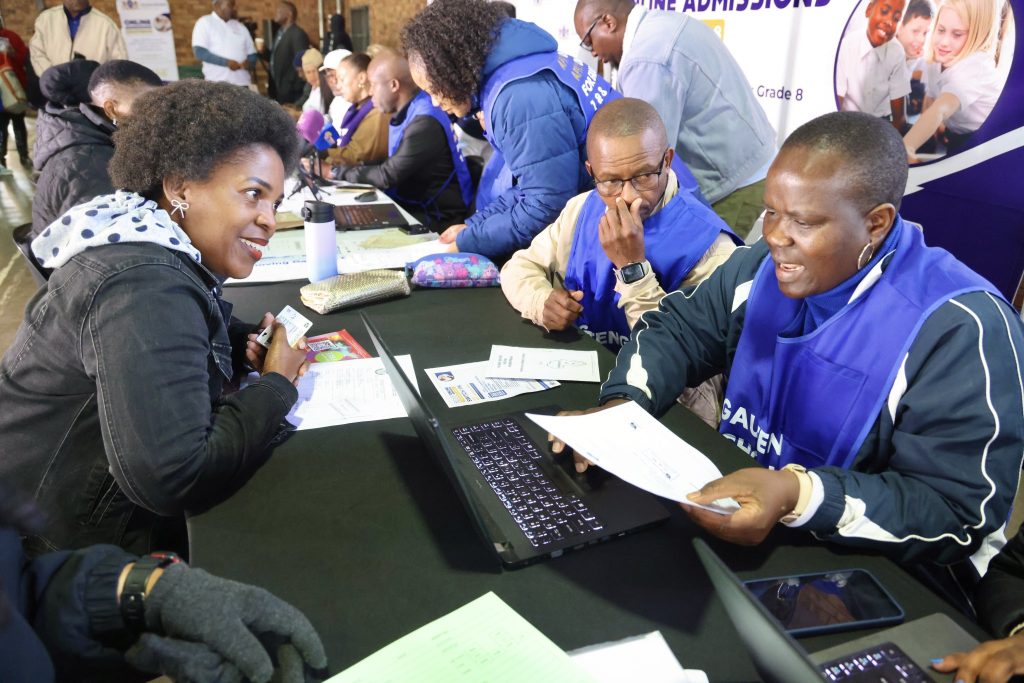
Parents who need assistance can visit the department’s 48 decentralised walk-in centres, 15 district offices, the provincial head office or any public school in Gauteng.

The department also encouraged young people to assist parents, grandparents and elderly community members who may have difficulty using the online system.

Applications are scheduled to close on Friday, 4 September 2026. Parents and guardians can apply through the official Gauteng admissions website at https://www.gdeadmissions.gov.za./

INSIDE EDUCATION

The post Gauteng records 210 055 school applications in four hours appeared first on Inside Education..
Uncategorized

Gwarube hails SA learners after two crack top 10 at world spelling champs

By Thapelo

Basic Education Minister Siviwe Gwarube has hailed South Africa’s six-member World Spelling Bee team after two learners finished among the world’s top 10 and the country secured fourth place at the inaugural championships in Shanghai, China.

Gwarube on Monday hosted a virtual welcoming ceremony for the learners and their parents, congratulating them on what the Department of Basic Education described as one of South Africa’s strongest performances on the international academic stage.

The team finished fourth among more than 20 participating nations, with all six learners progressing beyond the competition’s artificial intelligence-enabled preliminary assessment.

Speaking during the engagement, Gwarube said the team’s achievement demonstrated that South African learners could compete with and outperform the best in the world when given the necessary support.

“The team’s success is a powerful reminder that South African learners are capable of competing with and outperforming the best in the world when provided with the right opportunities, dedicated educators and strong foundations,” she said.

She also commended the learners’ parents for the sacrifices they had made to support their children and thanked educators, departmental officials and partners who had helped create pathways for talented learners to progress from school and provincial competitions to continental and global platforms.

Gwarube said South Africa’s fourth-place finish was further evidence that the country’s education system was producing learners capable of excelling in highly competitive international environments.

“The achievement reflects the growing impact of sustained investments in literacy, reading and foundational learning, while reinforcing the Department’s commitment to raising standards of academic excellence across the country,” she said.

ALSO READ: Grey College beats Grey High 59-26 in Bloemfontein derby

The minister said South Africa’s recent success at both the African Spelling Bee Championships and the World Spelling Bee Championships showed that the country’s learners were increasingly being recognised as world-class competitors.

The Department of Basic Education said it would continue working with its partners to strengthen and expand the National Spelling Bee Programme across all nine provinces to ensure more learners have access to opportunities that promote reading, literacy and academic excellence.

INSIDE EDUCATION

The post Gwarube hails SA learners after two crack top 10 at world spelling champs appeared first on Inside Education..
Uncategorized

Lucky Dube school of performing arts opens in Mpumalanga

By Lebone Rodah Mosima

The Mpumalanga government has officially opened the Lucky Dube Secondary School of Performing Arts, the province’s first no-fee public secondary school dedicated to performing arts, in Ermelo, Msukaligwa Local Municipality.

The institution is named in honour of the late South African reggae legend, who was born in Ermelo. Dube was shot and killed by three gunmen in 2007 while dropping off one of his children in the Rosettenville suburb of Johannesburg.

Speaking at the official handover on Monday, Mpumalanga Education MEC Lindi Masina said the school marked a significant milestone in expanding access to specialised arts education while investing in the future of young people.

ALSO READ: South African learners crack world’s top 10 as country records best-ever spelling bee finish

Masina said the institution honours Dube’s legacy as one of South Africa’s most celebrated international musicians.

“We gather in Ermelo, the birthplace of an international icon whose voice carried the hopes of ordinary people across continents and whose music became a powerful instrument for justice, unity, peace and human dignity,” she said.

She said the school reflected government’s commitment to ensuring every child, regardless of background, has access to quality education and opportunities to develop their talents.

“This magnificent institution stands as tangible evidence that democracy continues to transform lives through education. It demonstrates the commitment of the Mpumalanga Provincial Government to building a society in which every child, regardless of background or circumstance, is afforded an equal opportunity to realise their God-given potential,” Masina said.

She described the school as both an educational and economic development initiative that would contribute to youth empowerment while supporting South Africa’s goals of inclusive economic growth and job creation.

“This school is therefore an economic and youth empowerment development project,” she said.

Masina thanked the Mpumalanga Department of Public Works, Roads and Transport, led by MEC Thulasizwe Thomo, for delivering what she described as a world-class institution.

“You have built a stage upon which generations of dreams will perform,” she said.

The Education Department, she said, would continue investing in specialised music equipment, recording studios, performance venues, dance facilities, creative technologies, learning resources and industry partnerships to ensure learners receive world-class training.

“We commit ourselves to ensuring that this institution becomes one of the finest Schools of Performing Arts in South Africa,” she said.

ALSO READ: Grey College beats Grey High 59-26 in Bloemfontein derby

Masina also thanked the Dube family for supporting the project.

“His name no longer belongs only to history; it belongs to the future. It belongs to every learner who will discover a hidden talent inside these classrooms. It belongs to every child who will dare to dream beyond their circumstances,” she said.

As the province’s first no-fee public performing arts school, the institution will provide specialised training in music, dance, drama and other creative disciplines.

Masina said learners would be equipped for careers as composers, producers, actors, dancers, choreographers, directors, sound engineers, stage technicians and creative entrepreneurs.

Reflecting on Dube’s legacy, she said his journey from Ermelo to international success demonstrated that talent could flourish regardless of one’s background.

“From this school shall emerge many more voices. Perhaps the next international recording artist, the next award-winning actor,” she said.

“It is for this reason that this day is about much more than infrastructure; it is about possibility.”

She said the school would help nurture a new generation of artists capable of representing Mpumalanga, South Africa and the continent on the global stage.

“Happy Birthday, posthumous Lucky Dube. May your legacy continue to inspire us to educate with purpose, to create with courage, and to serve with humility,” Masina said.

INSIDE EDUCATION

The post Lucky Dube school of performing arts opens in Mpumalanga appeared first on Inside Education..
Uncategorized

Opinion| Using Recognition of Prior Learning to bridge South Africa’s skills gap

 By EsméNortjé

Across South Africa, a persistent problem is holding back economic growth. Industries are struggling to fill important roles, yet thousands of experienced professionals are stuck in junior positions.

These workers have spent years mastering their jobs, but they cannot move up because they lack the specific formal certificates that many companies demand. This creates a gap where the talent required to solve complex problems already exists, but remains unaccredited and underused.

ALSO READ: Lucky Dube school of performing arts opens in Mpumalanga

Moving beyond traditional pathways

Recognition of Prior Learning, or RPL, is a strategic way to solve this problem. It is a structured process that identifies, assesses, and formalises the skills people have gained through years of work, informal training, and life experience. In matching this real-world experience against the requirements of national qualifications, RPL provides a legitimate and faster path to professional certification.

This is not about skipping academic standards. It is about acknowledging that learning happens in many places. Whether knowledge was gained through years of financial management or hands-on industrial experience, RPL ensures that this expertise is recognised with a formal certificate.

Clearing up common misconceptions

The uptake of RPL is often slowed by common misunderstandings. One major myth is that RPL is a shortcut or an easy way to get a qualification. In reality, the opposite is true. A credible RPL process is demanding. It requires candidates to provide solid, verifiable evidence of their skills. It often requires more effort and reflection than traditional classroom learning.

There is also a fear that RPL might lower the value of professional qualifications. This is not the case. Once a qualification is earned through RPL, it is identical to one earned through a traditional course. The final certificate carries the same weight, the same regulatory standing, and the same professional value.

Finally, it is important to remember that RPL is not a one-size-fits-all solution. Every person has a different career history. Because of this, the assessment process must be customised to look at each individual’s specific experience and match it to national standards.

 Driving compliance and career growth across industries

While the benefits of RPL are highly visible in regulated industries like financial services, real estate, and business, it is a tool for every sector of the economy. From manufacturing and retail to the creative arts and hospitality, any individual who has gained skills on the job or in the real world can benefit.

In regulated fields, RPL is a vital bridge for meeting strict compliance rules, allowing experienced individuals to align their years of practice with official standards without having to stop their careers to complete basic academic modules.

ALSO READ: Gauteng to take over OWLAG campus as Winfrey expands scholarship programme

However, in less regulated industries, the impact is just as significant. It provides a way for skilled artisans, technical workers, and service professionals to prove their competence and move into supervisory or management roles. More than compliance, RPL is a universal tool for career growth. It provides a sense of professional dignity that is often denied to those who built their careers outside of the university system.

When a worker finally receives a certificate that reflects their true job responsibilities, the impact on their confidence and career path is immediate. It makes faster promotions possible and gives employees the credentials they need to succeed in a competitive job market. It unlocks the potential that has been sitting in junior roles for far too long, regardless of the industry.

Building a stronger skills ecosystem

Making RPL a standard part of South Africa’s skills strategy requires a team effort across three areas. First, policymakers and professional bodies must treat experience-based learning with the same respect as traditional theory.

The focus should always be on what a professional can actually do in a high-pressure environment. Second, the responsibility for quality falls on accredited institutions. As interest in RPL grows, it is essential that candidates partner with institutions that have the expertise to guide them through the complex process of gathering evidence.

Third, employers must look at their existing staff with a fresh perspective. Companies that invest in the RPL journey of their employees are not just offering a benefit; they are securing their own future by creating clear paths for succession.

When a business follows structured hiring practices while embracing the formal recognition of existing skills, it builds a more loyal and capable workforce. The ability to drive the South African economy forward is already present within our own organisations. Embracing a rigorous, outcomes-based approach to recognising prior learning means that we can formalise this expertise and ensure that our workforce is ready for the future.

Esmé Nortjé is HET Academic Manager at Chartall Business College.

INSIDE EDUCATION  

The post Opinion| Using Recognition of Prior Learning to bridge South Africa’s skills gap appeared first on Inside Education..
Uncategorized

Learners receive trauma support after fatal shooting of Tsakane teacher

By Lebone Rodah Mosima

The Gauteng Department of Education has deployed trauma support teams to Michael Zulu Primary School after an educator was shot dead while walking alongside a group of learners less than a kilometre from the Tsakane school.

The District Integrated School Support Team is providing trauma debriefing to affected learners, while other departmental teams have met educators and staff and arranged counselling for the educator’s family.

ALSO READ: Opinion| Using Recognition of Prior Learning to bridge South Africa’s skills gap

The 29-year-old educator was attacked at the corner of Dunge and Masinga streets at about 7 am on Monday while on his way to school.

“The motive for the shooting remains unknown,” the department said.

The South African Police Service has opened an investigation into the killing.

Gauteng MEC for Education Lebogang Maile expressed shock and sadness following the shooting.

“On behalf of the Gauteng Provincial Government, MEC Maile extends his heartfelt condolences to the family of the deceased, his colleagues, learners and the entire Michael Zulu Primary School community.”

The department said the loss of an educator was a profound tragedy, not only for the school but for society as a whole.

It said educators dedicated their lives to nurturing, mentoring and preparing the next generation, and no family or school should have to endure such a loss.

“The District Integrated School Support Team was deployed to provide trauma debriefing to affected learners, while the Circuit Team, the Integrated School Support Programme (ISSP) and Safe Schools Management met with educators and staff to provide support and outline the Department’s response,” the department said.

“Further psychosocial support has been arranged through the PMD Unit, while the Department is also working closely with the educator’s family to ensure they receive the necessary counselling and support.”

The department said the incident was a painful reminder that the fight against crime could not be left to law enforcement agencies alone and required a united societal response.

Through its “It Takes a Village to Raise a Child” community outreach campaign, the department said it continued to mobilise parents, communities, faith-based organisations, traditional leaders, community policing forums, civil society and all spheres of government to combat crime and protect learners and educators.

“Safe schools can only exist in safe communities.”

ALSO READ: Gauteng to take over OWLAG campus as Winfrey expands scholarship programme

The department called on residents to reject criminality, cooperate with law enforcement authorities, report those responsible for violent crime and play an active role in safeguarding schools and neighbourhoods.

“An attack on an educator is an attack on the future of our children and on the values that bind our communities together.”

Maile urged anyone with information that could assist the investigation to cooperate fully with SAPS so those responsible could be brought to justice.

“The Department will continue to support the school community during this difficult period and remains committed to working with all stakeholders to ensure that every learner and every educator can learn and work in an environment that is safe, secure and conducive to quality education,” it said.

INSIDE EDUCATION

The post Learners receive trauma support after fatal shooting of Tsakane teacher appeared first on Inside Education..

Ixopo’s little star shines at Little Miss South Africa finals
Uncategorized

Ixopo’s little star shines at Little Miss South Africa finals

By Charmaine Ndlela 

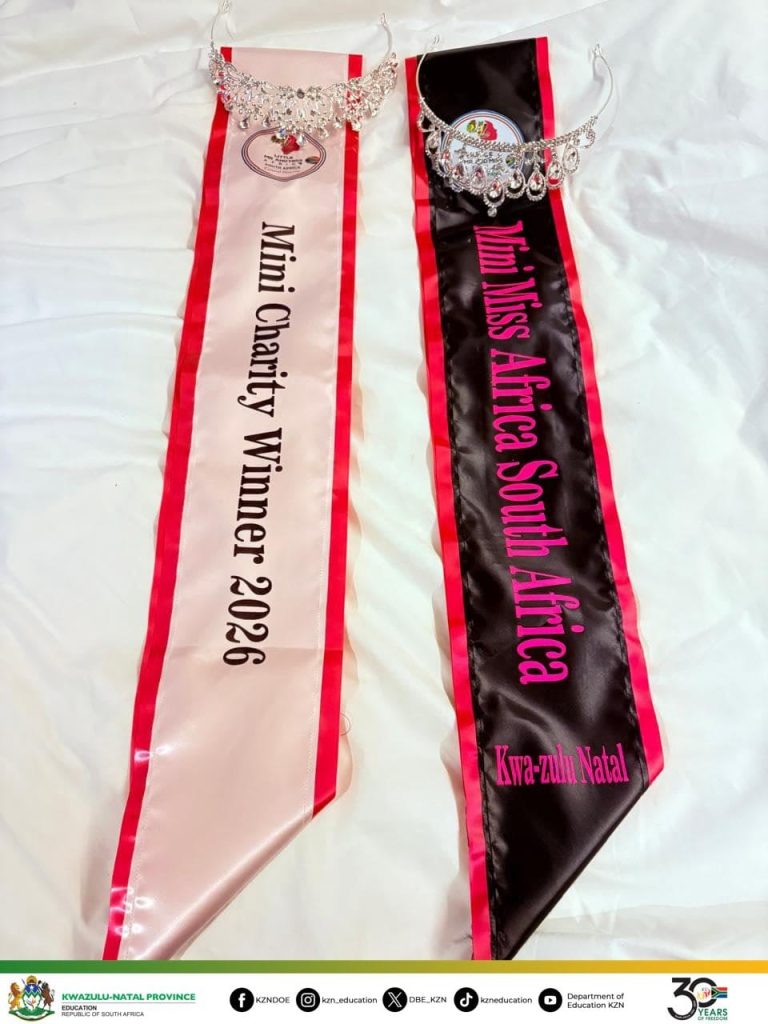
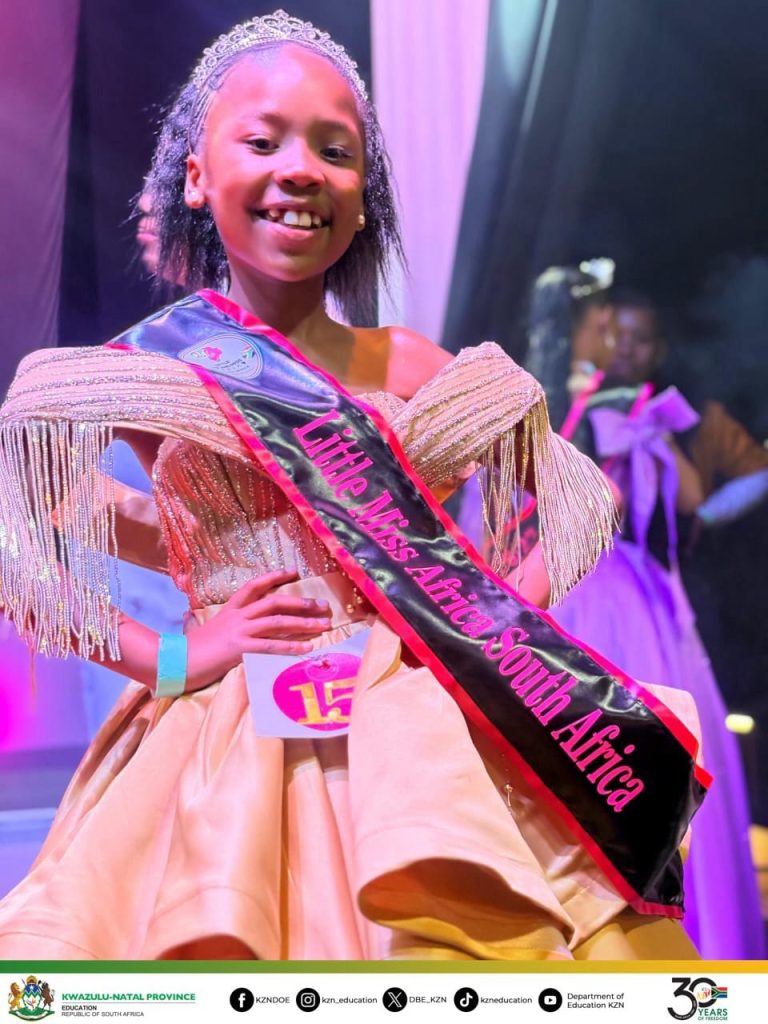
Lanca Damoyi, a Grade 5 learner at Ixopo Primary School, has been crowned second princess at the Little Miss South Africa 2026 National Finals.

Representing KwaZulu-Natal, Lanca received the title at the finals held at The Barnyard Theatre in Menlyn, Pretoria, this weekend. The competition is organised by Little Mister and Miss Africa – South Africa.

ALSO READ: Mlambo-Ngcuka honoured by University of Warwick for global leadership

The KwaZulu-Natal Department of Education hailed the achievement as an example of the excellence learners can attain when their talents are nurtured inside and outside the classroom.

“Her achievement is a testament to confidence, discipline and determination, inspiring learners across the province to pursue their dreams with excellence,” the department said in a statement.

“This achievement reflects the importance of nurturing learners’ talents beyond the classroom and highlights the role of schools in supporting holistic development. It also serves as an inspiration to other learners to pursue excellence in their chosen fields through dedication, discipline and perseverance,” it said.

ALSO READ: Dube-Ncube: eduCate Maths & Science programme expands to Grade 10 and 11 learners

The department also congratulated Lanca’s family, educators and the Ixopo Primary School community on the achievement, saying it was a proud moment for the school and the province.

INSIDE EDUCATION

The post Ixopo’s little star shines at Little Miss South Africa finals appeared first on Inside Education..

Uncategorized

Gauteng starts HPV vaccination campaign for Grade 5 girls

By Lebone Rodah Mosima

The Gauteng Department of Health started its latest Human Papillomavirus (HPV) vaccination campaign on Monday, targeting eligible Grade 5 girls aged nine and older at participating primary schools.

“The campaign, which forms part of the Integrated School Health Programme (ISHP), will run from 3 August 2026 to 9 October 2026 at participating independent primary schools across Gauteng,” the department said.

ALSO READ: Ixopo’s little star shines at Little Miss South Africa finals

“Thereafter, vaccination teams will visit outstanding public primary and special schools to reach eligible learners who may have been missed during the earlier campaign, as the majority of public schools were covered during the rollout conducted earlier this year.”

The campaign also includes eligible learners who missed previous vaccination opportunities.

The routine school vaccination programme provides a single HPV vaccine dose to eligible Grade 5 girls. National guidance recommends an additional dose for learners living with HIV or with other immunocompromising conditions.

Cervical cancer is the second-most common cancer among women in South Africa after breast cancer, but many cases can be prevented through HPV vaccination and regular cervical cancer screening.

“HPV is a common virus that affects both males and females. While more than 200 types of HPV exist, types 16 and 18 are responsible for over 70% of cervical cancer cases,” the department said.

“The HPV vaccine used in the public health programme, Cervarix, is safe and highly effective in protecting against these high-risk strains.”

The department said its HPV vaccination programme achieved substantial reach across public and independent schools during the 2025/26 implementation period.

Of 1,500 targeted public schools, vaccination teams reached 1,498 and vaccinated 72,249 Grade 5 girls.

In the independent-school sector, teams reached 530 of the 664 targeted schools, or 79.8%, and vaccinated 9,740 Grade 5 girls.

“Public schools recorded a learner coverage rate of 80%, compared to 37.7% in independent schools,” the department said.

“Several challenges affected vaccine uptake, particularly in independent schools.

These included schools declining access to vaccination teams, learner absenteeism on vaccination days, which affected 1,830 learners, and the non-return of 24,327 parental consent forms.”

ALSO READ: Mlambo-Ngcuka honoured by University of Warwick for global leadership

The department said misinformation and vaccine hesitancy also contributed to lower vaccination rates at some schools.

The Gauteng departments of health and education have since strengthened engagement with schools and communities and intensified public education efforts to improve participation and vaccine uptake.

“A recent study published in The Lancet Global Health found that South Africa’s school-based HPV vaccination programme reduced infections caused by HPV types 16 and 18 by 83% among young women, including those living with HIV,” the department said.

“The findings demonstrate the substantial public health benefits of achieving high HPV vaccination coverage.”

The research compared the prevalence of HPV types 16 and 18 among 17- and 18-year-old girls before and after the introduction of South Africa’s earlier two-dose school vaccination programme. It found that the prevalence of the two strains was 83% lower in the post-vaccination cohort, with similar benefits among girls living with and without HIV.

The department said the success of the latest campaign depended on parental and community support.

Learners under the age of 12 require consent from a parent, guardian or caregiver. Children aged 12 and older may consent to medical treatment when they are sufficiently mature and have the capacity to understand its benefits, risks and implications.

“Parents and guardians are urged to read the information provided by schools, complete the consent forms, and return them promptly to ensure eligible learners do not miss the opportunity to receive protection against cervical cancer,” the department said.

INSIDE EDUCATION

The post Gauteng starts HPV vaccination campaign for Grade 5 girls appeared first on Inside Education..