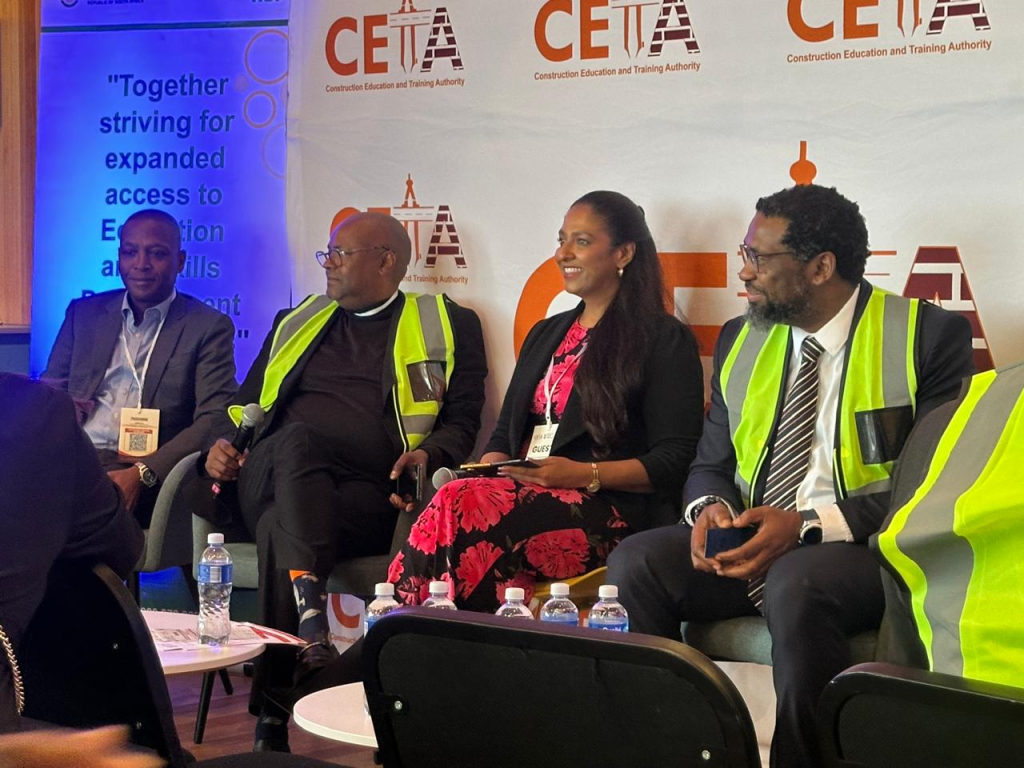
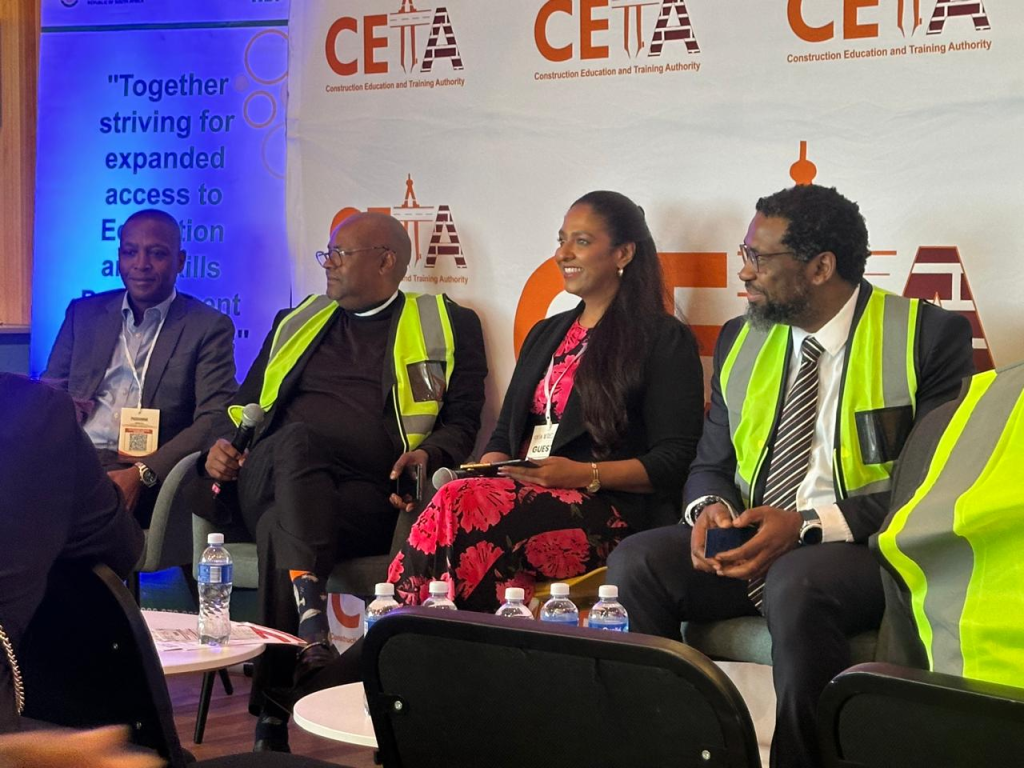
The Construction Education and Training Authority (CETA) has partnered with the V&A Waterfront on the iconic precinct’s new R24 billion development programme over the next 10 to 15 years.
CETA is the lead partner in a work-based skills and learning programme linked to the V&A Waterfront’s expansion, which will develop an additional 5,500 square metres land over the next decade and a half.
The development is expected to support 120,000 direct and indirect jobs during this period.
Joining CETA in the partnership are the Transport Education and Training Authority (TETA), the Culture, Arts, Tourism, Hospitality and Sport Sector Education and Training Authority (CATHSSETA), the Wholesale and Retail SETA (W&R SETA) and the Services SETA.
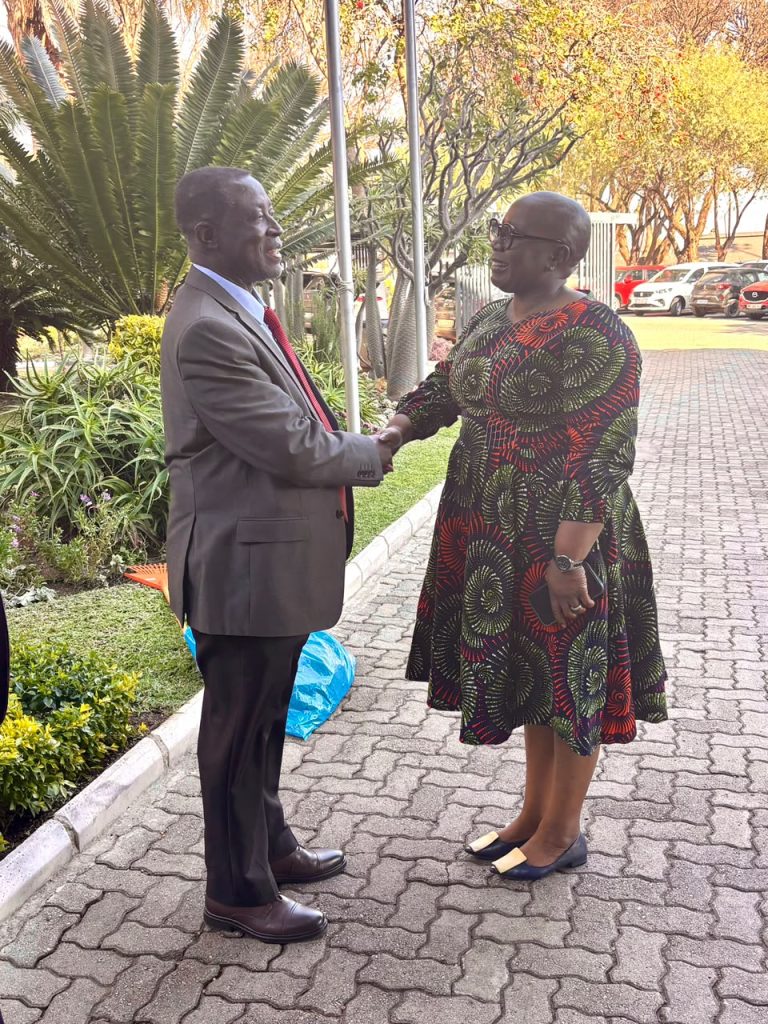
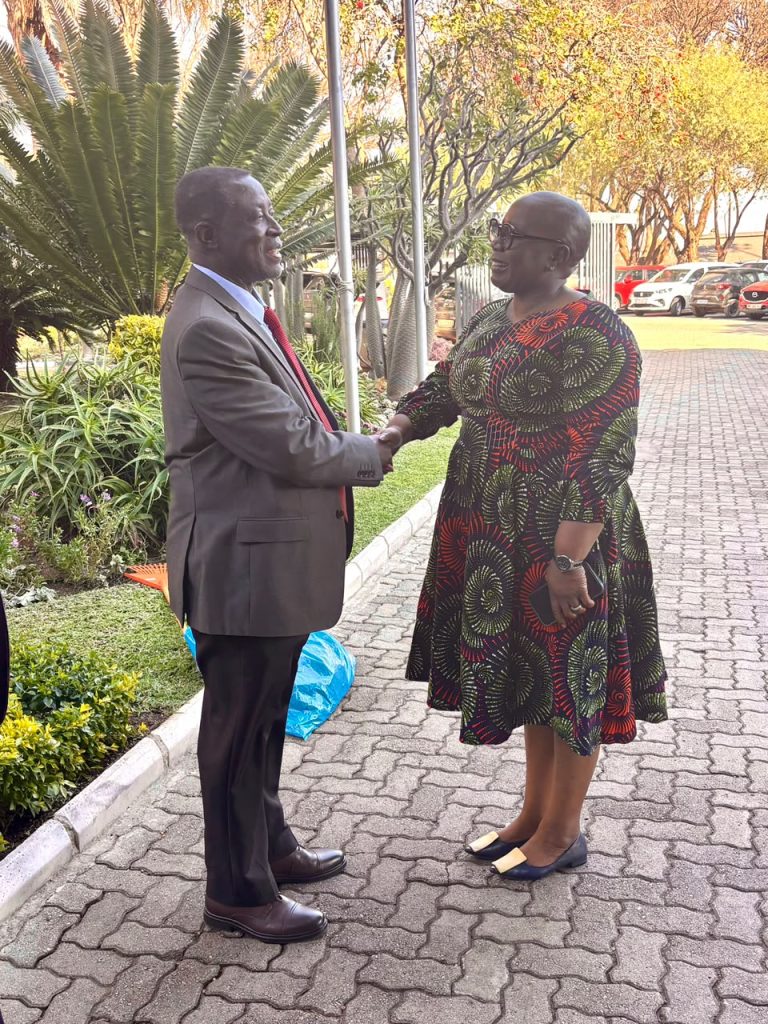
Speaking at the launch of the programme at the Cape Town tourist destination, Higher Education and Training Minister Buti Manamela praised the partnership, describing the V&A Waterfront development as “more than a construction site”, but rather “a classroom” and training centre where unemployed young people will gain employment while taking pride in “building something for the country”.
Manamela said the partnership underscores the importance of Work-Integrated Learning (WIL) as part of government’s skills development drive.
He said the department aims to secure 100 major employers as Work-Integrated Learning partners by the beginning of next year.
CETA administrator Oupa Nkoane said he hopes the initiative will become a template for similar partnerships in future.
He revealed that CETA is expected to announce a comparable partnership with the Airports Company South Africa (ACSA) later this month.
Nkoane said learners participating in the programme will spend more than half of their training on site rather than in the classroom, providing them with practical workplace experience.
He added that CETA has allocated R320 million over three years to the V&A Waterfront project alone.
The programme also places a strong emphasis on entrepreneurship.
W&R SETA chief executive officer Tom Mkhwanazi said the authority was drawn to the partnership because of the V&A Waterfront’s significant retail component as one of the country’s leading shopping destinations.
Learners placed through the programme are expected to benefit from employment and business opportunities in the retail sector once the development is completed.
National Skills Fund (NSF) chief executive officer Melissa Erra said the fund can help scale successful programmes, expanding them from around 100 beneficiaries to significantly larger numbers when replicated through similar partnerships.
She added that the NSF also supports artisans, electricians and other tradespeople who want to become entrepreneurs by helping them acquire tools and providing entrepreneurship training.
Some of the V&A Waterfront upcoming development include a residential development, boutique hotel and a retirement facility.
Employees of the National Student Financial Aid Scheme (NSFAS) have opened a theft case against a former board member accused of stealing 10 laptops intended for under-resourced schools in the Eastern Cape.
NSFAS said on Thursday that the former board member, who led the scheme’s delegation during the Eastern Cape Donation Drive in March 2026, allegedly kept the laptops instead of delivering them to the designated schools.
A total of 30 laptops had been earmarked for distribution to six high schools, with each school due to receive five laptops for communal use.
“There were 30 laptops earmarked for distribution to six high schools, with each receiving five laptops for communal use,” NSFAS said.
NSFAS administrator Professor Hlengani Mathebula said he was shocked that a board member of an organisation tasked with supporting financially disadvantaged students was allegedly responsible for such conduct.
“I am pleased that NSFAS employees have decided to pursue justice on behalf of the voiceless learners. Criminality can only thrive when witnesses turn a blind eye to such matters,” Mathebula said.
He said the organisation should be associated only with leaders and employees of integrity, warning that corruption has a devastating impact on young people.
“This act by our colleagues is exemplary. It testifies to the fact that we are turning the corner as an organisation, as employees are reclaiming their organisation from the grubby hands of those who have been manipulating it for their own self-enrichment while our children suffered the indignity wrought by poverty,” he said.
“Children from impoverished backgrounds need all the help they can get from all of us.”
Mathebula said he was appalled that someone in a position of trust had allegedly stolen from children in need.
“It doesn’t get worse than that,” he said.
He expressed confidence that the South African Police Service (SAPS) would investigate the matter thoroughly and ensure justice for the intended beneficiaries.
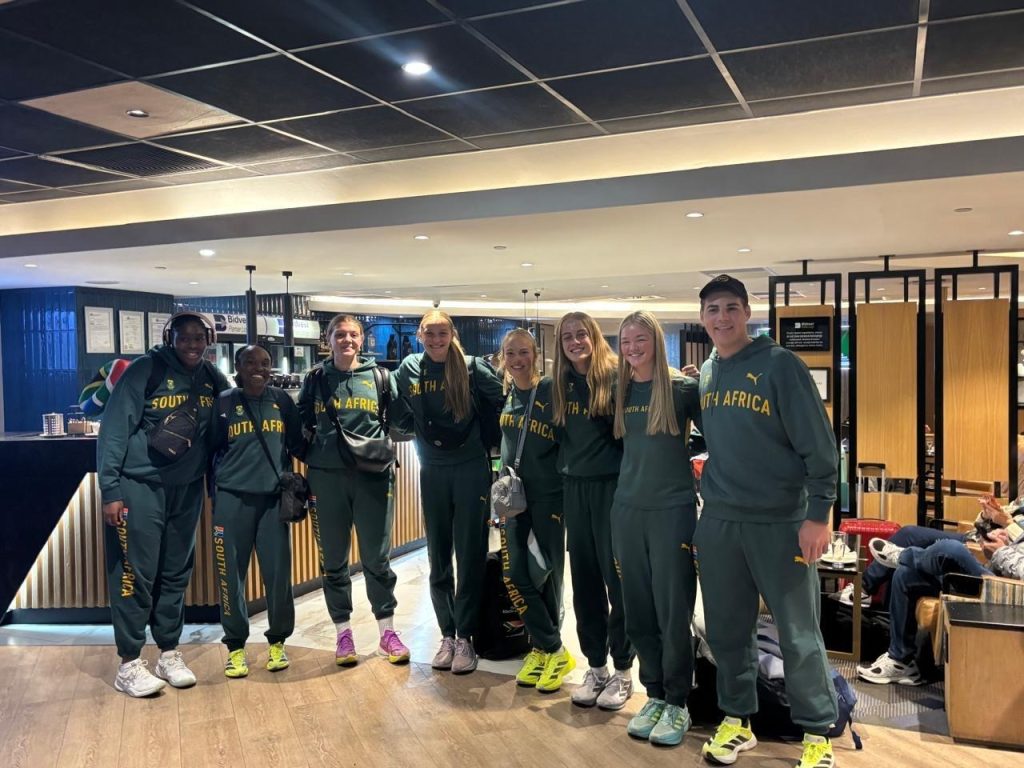
South Africa added another medal to its World Athletics U20 Championships haul in Eugene, Oregon, on Friday morning SA time as Marko Ferreira claimed bronze in the men’s 100m final, building on Jaco van Dyk’s shot put bronze from the opening day.
Ferreira, who had won his semifinal in 10.13 seconds on Wednesday, crossed the line in 10.16 to finish third behind American Tate Taylor and Jamaica’s Gary Card.
Taylor produced one of the performances of the championships so far, winning gold in 9.94 seconds, with Card taking silver in 10.05. Ferreira’s podium finish gave South Africa another reason to celebrate after Van Dyk opened the country’s medal account a day earlier.
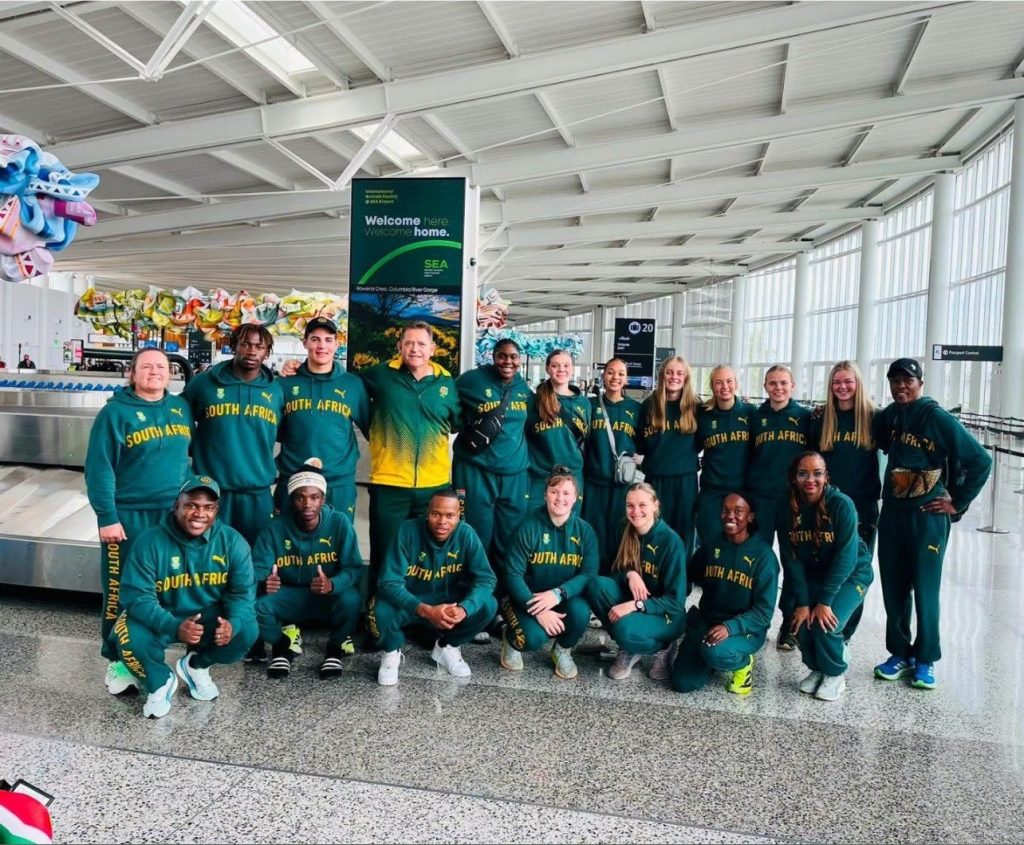
The championships, which run from 5 to 9 August at Hayward Field at the University of Oregon, have already delivered several impressive performances from South Africa’s 51-member team.
For Van Dyk, Wednesday marked the biggest achievement of his young career.
The 16-year-old booked his place in the men’s shot put final after throwing 19.09 metres during the qualifying round before producing an even better performance under the lights.
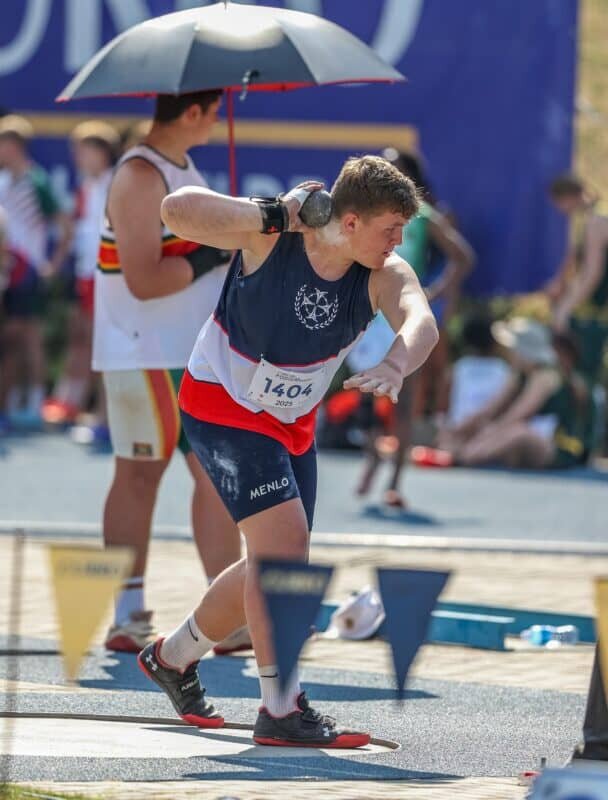
Van Dyk launched the shot 19.80m to set a new personal best and secure bronze.
Brazil’s Alessandro Borges won gold with a throw of 20.35m, while South Korea’s Si-hoon Park claimed silver after reaching 20.31m.
Speaking after the competition, Van Dyk said the medal represented months of sacrifice finally paying off.
“It was an amazing feeling fighting back in getting the right distance, all the hard work paying off from January trying to qualify was insane,” he said.
The young thrower also offered simple advice to aspiring athletes.
“Just give your best, anything can happen. You can come first, you can come last, but always give your best,” he said.
South Africa also produced one of the performances of the opening day in the mixed 4x400m relay, where the team twice lowered the national under-20 record within hours.
Ryno Riekert, Zanté van der Merwe, Abelines Schoeman and Isabella Gunter stopped the clock in 3:22.12 during the morning heats, breaking the existing South African junior record and comfortably qualifying for the evening final.
Team management made one change for the medal race, bringing Davida Strong into the line-up in place of Van der Merwe.
The revised quartet of Riekert, Strong, Schoeman and Gunter went even quicker, clocking 3:21.48 to finish sixth and lower the South African U20 record for a second time on the same day.
Riekert said he was happy with the performance, although the demanding conditions made the race physically taxing.
“Ran the first leg, it’s hot and my hammies [hamstrings] are burning, but it felt very good,” he said.
Schoeman said he was impressed by the atmosphere at Hayward Field.
“It was an incredible experience for me, the people are very nice, the track is actually incredible and it was a very nice experience,” he said.
Gunter echoed those sentiments.
“It was an incredible experience, something I have never felt before,” she said.
The United States won the mixed relay in 3:15.31, the fastest U20 performance in history.
South Africa’s field-event athletes also laid down markers on the opening day.
Jan-Hendrik Heymans produced the best throw of the men’s javelin qualifying competition, launching the spear 76.02m to finish more than six metres ahead of the next-best qualifier.
Compatriot Marques Olivier also progressed comfortably after throwing 68.77m to qualify sixth overall, putting both South Africans into Friday night’s final.
Long jumper Ashlynn Norman also advanced from qualifying with a jump of 6.11m. Norman had entered the championships having jumped a season best of 6.46m in Johannesburg in April.
Ferreira had initially emerged as South Africa’s strongest sprint prospect after winning his 100m semifinal in 10.13.
Mukona Manavhela came agonisingly close to joining him in the final, finishing fourth in his semifinal in 10.38 and missing qualification by one hundredth of a second.
Rume Burger narrowly missed out on the women’s 100m final after placing fourth in her semifinal in 11.53, six hundredths outside the qualifying positions.
South Africa’s middle-distance athletes also enjoyed a productive opening day.
Werner Gouws advanced to the men’s 800m semifinals after finishing third in his heat in 1:47.54, while Emile Els also progressed after placing third in his race in 1:51.11.
Carise van Rooyen joined them by taking third in her women’s 800m heat in 2:06.52 to secure a semifinal place.
Distance runner Njabulo Hlatshwayo finished 15th in the men’s 5,000m final in 14:13.90 in his first global championship appearance.
Attention now turns to Friday’s third day of competition, where South Africa has another packed programme and several realistic opportunities to progress deep into the championships.
Heymans and Olivier will be among the country’s headline performers when they contest the men’s javelin final after their strong qualifying performances.
Gouws and Els return for the men’s 800m semifinals, while Van Rooyen contests the women’s 800m semifinals.
Several South Africans will also begin their individual campaigns on Friday.
Marine Grobler and Stephane Hook are entered in the women’s javelin qualification, while Daniel von der Heyden begins the decathlon.
Tumi Ramokgopa and Megan Nieman are entered in the women’s 100m hurdles, Michaela Spocter in the women’s high jump and Jayden Parkin in the men’s 110m hurdles.
Burger and Sarah Reed are entered in the women’s 200m, while Manavhela returns in the men’s 200m after narrowly missing the 100m final.
Tshiamo Motsamai and Levi Fick are due to compete in men’s long jump qualification. The Friday evening session also includes the 800m semifinals and the men’s javelin final.
Another athlete attracting attention in the South African squad is 400m hurdler Matodzi Ndou, who arrived in Eugene after setting a South African U20 record of 48.64 seconds earlier this season.
The performance broke the previous national junior mark of 48.73 held by Sokwakhana Zazini, one of South Africa’s most accomplished junior hurdlers.
Zazini went on to win the men’s 400m hurdles gold medal at the 2018 World U20 Championships in Tampere, Finland, clocking 49.42 in the final. Qatar’s Bassem Hemeida won silver in 49.59, while Brazil’s future Olympic and world medallist Alison dos Santos took bronze in 49.78.
South Africa has a strong history in the 400m hurdles, producing athletes including LJ van Zyl, Llewellyn Herbert, Ockert Cilliers, Alwyn Myburgh and Cornel Fredericks at senior international level.
The encouraging start in Oregon has come after the team’s build-up was overshadowed by a public funding dispute between Athletics South Africa and Sports, Arts and Culture Minister Gayton McKenzie.
ASA maintained before the championships that it had not received its annual government grant by the expected end-of-June deadline, forcing the federation to seek alternative funding and resulting in some athletes’ families contributing towards travel costs.
Acting ASA president John Mathane said the federation had received no departmental funding and had relied on private donors, while ASA covered accommodation costs.
McKenzie disputed the suggestion that his department had jeopardised the team’s participation, saying he had personally approached private companies and secured R4 million after learning there was insufficient funding available to send the team to the United States.
Mercedes-Benz South Africa (MBSA) has announced a R6 million investment to expand the Kutlwanong Centre for Maths, Science & Technology’s Promaths Programme in kuGompo, Eastern Cape.
According to MBSA, the initiative is aimed at improving Mathematics and Physical Science performance while exposing learners to career opportunities in science, technology, engineering and mathematics.
The programme will support selected Grade 10 and 11 learners from 18 feeder schools in the Buffalo City Metro District through supplementary academic tuition, teacher development, career guidance and industry exposure.
“As a company synonymous with innovation and technology, we recognise the importance of STEM education in shaping future opportunities for South Africa’s youth. Through our collaboration with Kutlwanong NPC, we are intentional in our support of learner performance in Mathematics and Physical Science, increasing their exposure to STEM-related pathways,” said Mercedes-Benz South Africa chief executive officer Taryn Woodbridge.
The partnership comes as South Africa seeks to increase the number of people qualified for science, engineering and technology occupations identified as being in high demand.
Founded in 2005, Kutlwanong provides supplementary Mathematics and Physical Science tuition, primarily to learners from township and rural communities.
Its Promaths Programme offers tuition outside normal school hours, while also supporting teachers and helping learners prepare for tertiary education and STEM-related careers.
According to Kutlwanong, the organisation has assisted more than 43,000 township youths and produced more than 13,500 Mathematics and Physical Science distinctions since it was established.
The partners said the expanded programme would provide structured academic support beyond the classroom and expose learners to STEM careers through career guidance and engagement with industry.
Teacher development will also form part of the initiative, according to the partners.
“We are excited to welcome Mercedes-Benz South Africa as a strategic partner in our mission to improve educational outcomes. Their support enables us to extend the reach of the Promaths Programme, benefiting both learners and educators. Together, we will continue to encourage academic excellence and help more young people realise their potential,” said Kutlwanong Centre for Maths, Science & Technology head of education and acting chief executive officer, Collen Mkhomazi.
MBSA and Kutlwanong said the partnership aimed to improve learner performance and expand access to STEM-related study and career opportunities.
“We are proud to partner with Kutlwanong NPC on this initiative and look forward to seeing the positive impact it will have on learners and their future prospects,” said Woodbridge.
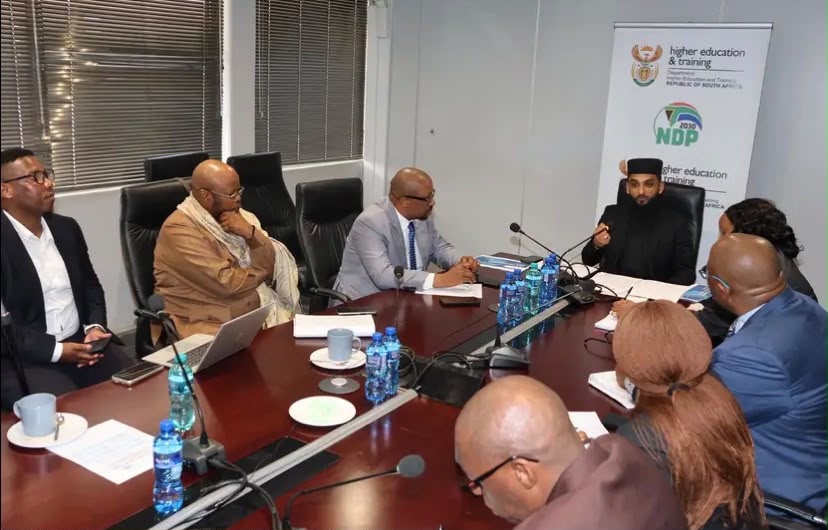
The Transport Education Training Authority (TETA) has committed to paying outstanding bursary allowances owed to 104 students by Friday, while a further 108 beneficiaries will undergo an expedited documentation and verification process next week.
Deputy Minister of Higher Education and Training Yusuf Cassim announced the commitments on Wednesday following an engagement with TETA over delays in student bursary allowances and apprenticeship stipends.
Cassim met TETA officials at the authority’s offices in Randburg on Tuesday after his helpdesk received complaints from students and apprentices who had gone for months without receiving financial support.
Among those affected were students from the Durban University of Technology and apprentices linked to Delen Digital Solutions and Corporate Training.
The Department of Higher Education and Training said the delays had left many beneficiaries struggling to cover basic living expenses while continuing with their studies or training.
Although Cassim acknowledged TETA’s explanation of the operational challenges that contributed to the backlog, he stressed that students and apprentices should not bear the consequences of administrative inefficiencies.
Following the meeting, TETA committed to finalising payments owed to 104 students by Friday, 7 August 2026.
A further 108 beneficiaries whose applications require outstanding documentation will undergo an expedited verification process, which is expected to be completed by Friday, 14 August.
Their payments will be processed once the required documentation has been received and the verification process has been completed.
TETA also committed to developing a new payment model that will make greater use of existing university payment systems in an effort to reduce administrative burdens and improve payment turnaround times.
According to the department, the revised system is expected to be introduced during the next academic year in partnership with higher education institutions.
The Deputy Minister’s helpdesk will also escalate TETA bursary-related complaints directly to the authority to allow for faster intervention and the resolution of student queries.
“Students shouldn’t have to choose between studying and worrying about allowances. Through my engagement with TETA, I have emphasised that these payments must be prioritised and completed urgently,” Cassim said.
He said he would continue to intervene when delays in financial support threatened students’ academic progress.
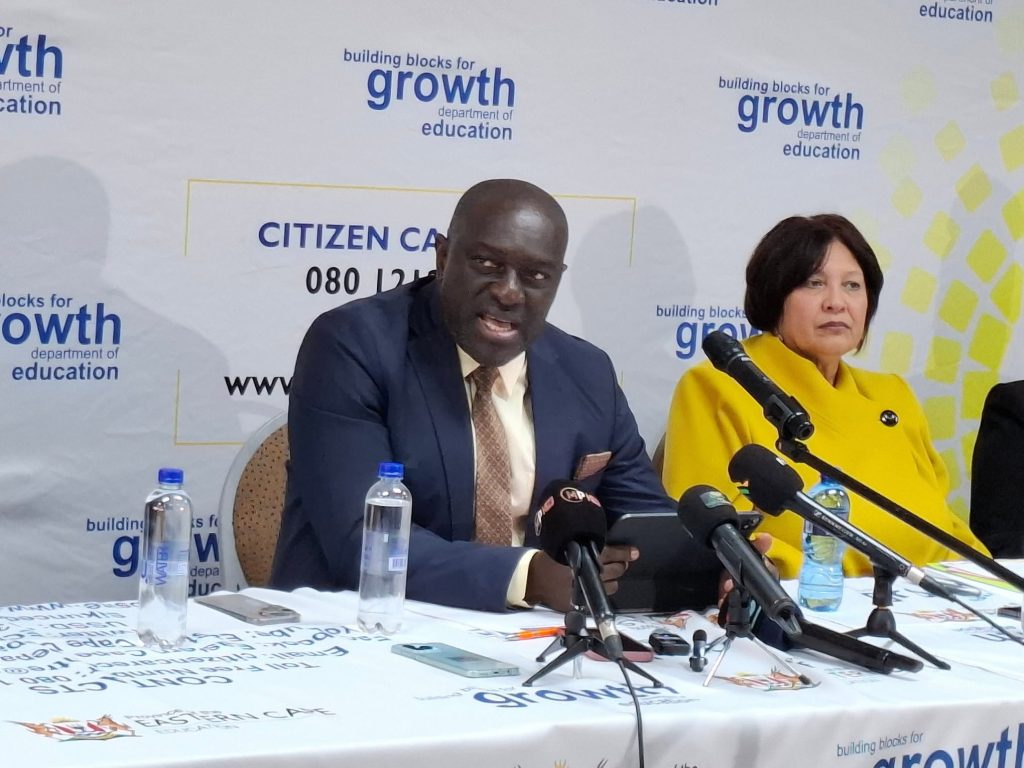
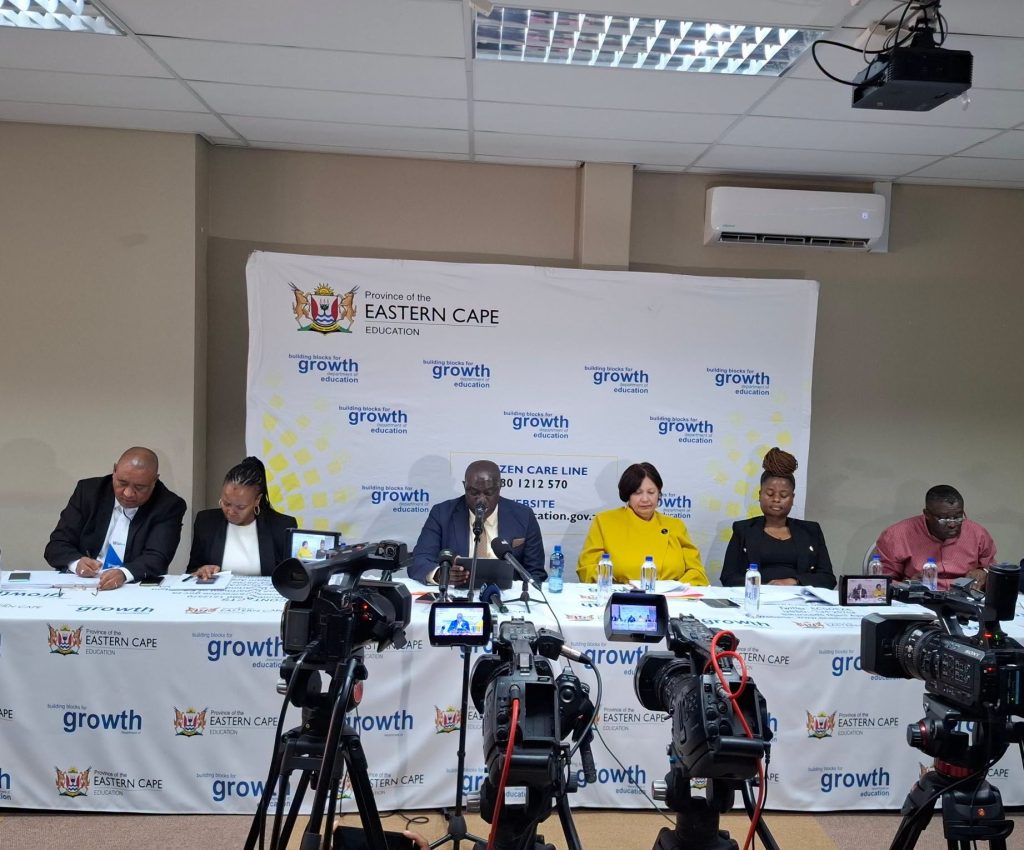
The Eastern Cape Department of Education has infrastructure commitments of R4.069 billion against an available allocation of R2.319 billion, leaving an estimated R1.7 billion funding shortfall as 320 planned projects remain deferred and numerous disaster-damaged schools await rehabilitation.
In a statement outlining its mid-year performance, the department detailed progress and challenges across its academic, infrastructure, employment and extracurricular programmes.
The department said it remained committed to providing safe, functional and conducive learning environments despite significant fiscal constraints and the growing impact of natural disasters.
For the 2026/27 financial year, it has been allocated R2.319 billion through the Education Infrastructure Grant for infrastructure development.
This includes R41.5 million received through the Infrastructure Programme Compliance Scoring Incentive System and R354.8 million transferred from the School Infrastructure Backlogs Grant to accelerate the eradication of pit latrines at schools across the province.
The statement separately refers to a R2.389 billion infrastructure programme divided among 24 strategic priorities, although it does not explain the R70 million difference between that amount and the stated R2.319 billion available allocation.
The largest allocations include R508 million for replacement schools and natural-disaster projects, R372 million for sanitation, R266 million for maintenance and additional classrooms, and R267 million for programme support and non-infrastructure activities.
A further R34.5 million has been allocated through the Early Childhood Development Grant for the construction and maintenance of 61 ECD centres during the financial year.
The department said disasters in May 2026 damaged 166 schools, with repairs and reconstruction expected to cost about R455 million.
The June 2025 floods, which claimed the lives of learners, damaged a further 169 schools and require an estimated R472 million for recovery.
However, the department has received only R170 million for disaster recovery, leaving numerous schools awaiting rehabilitation.
The unfunded commitments have affected the department’s infrastructure planning, resulting in the deferment of 320 projects.
Although R90 million was allocated for planning during the current financial year, the department estimates that about R1.1 billion will be required to implement those projects in future years.
Overall infrastructure commitments now stand at R4.069 billion against the R2.319 billion allocation, resulting in the stated shortfall of approximately R1.7 billion.
Of this, R1.1 billion relates to deferred projects in the planning phase, while R572 million represents reductions affecting projects already under construction in stages five and six.
The department also reported a 0.6 percentage-point decline in Grade 12 performance during Term 1 compared with the same period in 2025.
Term 2 performance declined to 78%, approximately three percentage points below the corresponding 2025 result, prompting the department to call for more intensive academic support during the third term.
It said its intervention programme would focus on strengthening curriculum leadership, improving teacher development, expanding learner-support programmes and increasing monitoring and accountability.
On infrastructure delivery, the department said it completed 177 projects across all education districts during the 2025/26 financial year, including eight new and replacement schools.
It also completed 375 additional classrooms, 25 Grade R classrooms and 94 water infrastructure projects, significantly improving water access in rural communities.
A further 75 maintenance projects and 14 ECD maintenance projects were completed, while improved sanitation facilities, security fencing, electricity upgrades and specialist teaching spaces were delivered at several schools.
Twenty-two school-construction projects remained under implementation at the end of the financial year, providing a pipeline for delivery during 2026/27.
The department said the R354 million received through the School Infrastructure Backlogs Grant had been ring-fenced for the eradication of pit latrines at 123 schools.
However, its 2026/27 programme provides for sanitation infrastructure to be completed at 63 of the 123 targeted schools during the current financial year.
The total amount needed to eradicate pit latrines at all affected Eastern Cape schools is estimated at approximately R3.2 billion.
Between 2025 and June 2026, the department officially handed over 13 newly completed schools, representing an investment of more than R725 million.
The department also highlighted progress under its 2026/27 Annual Recruitment Plan, which covers posts at head office, district offices, schools, youth programmes, hostels and non-teaching support services.
The plan includes 6,683 youth-programme posts, 1,661 non-teaching support posts at schools and 883 hostel-support posts.
Through the Basic Education Employment Initiative, the department created 28,709 employment opportunities across all 12 education districts during the previous financial year.
To date, 975 school-based posts, including principals and Grade R practitioners, have been filled, while a further 1,145 posts have been advertised.
The advertised posts include 788 departmental head positions, 210 deputy principal posts and 147 principal posts.
The department also celebrated the Eastern Cape’s performance at the 2026 South African Schools Choral Eisteddfod National Championships, where the province won 13 trophies and finished second overall behind KwaZulu-Natal.
At the separate National Education Excellence Awards, the province received seven awards, while all 12 Eastern Cape districts were recognised for achieving pass rates above 80% in the 2025 National Senior Certificate examinations.
KwaZulu-Natal Premier Thamsanqa Ntuli has called on African scholars to move beyond academic debate and play a direct role in shaping public policy, saying the continent’s future will depend on how effectively research is translated into action in an increasingly multipolar world.
Speaking at the opening of the e 10th MBALI International Conference in Richards Bay on Tuesday, Ntuli urged academics from across Africa and beyond to move beyond producing research papers and help governments develop evidence-based policies.
“I do not ask you to cheer for this government. I ask you to help us think,” Ntuli said.
“To stress-test our policies before the world does. To bring evidence where we bring instinct. To challenge us when we are wrong, and to build with us when we are right.”
Addressing delegates under the theme, African Awakens: Possibilities, Progress, Partnerships in a Multipolar World, Ntuli said Africa was entering a defining era as global power becomes increasingly dispersed, creating opportunities for the continent to shape its own future.
“It is a world where Africa can no longer be spoken about. Africa must speak for herself,” he said.
Ntuli argued that Africa’s greatest challenge is no longer generating ideas, but implementing them.
“Africa has never lacked ideas. Africa has too often lacked the bridge between the idea and the implementation. Scholars, you are that bridge,” he said.
He challenged universities to become centres of innovation that deliver practical solutions to unemployment, inequality, climate change and economic development.
“Progress is possibility with a deadline. It is the research that becomes policy. It is the paper that becomes a programme. It is the theory that walks off the page and into a community,” he said.
The premier said meaningful development depends on stronger partnerships between government, academia, business and communities, adding that collaboration, rather than competition, will determine whether Africa benefits from a changing global economy.
Ntuli also defended KwaZulu-Natal’s Government of Provincial Unity, describing coalition governance as a necessary response to the province’s democratic mandate rather than a political compromise.
“It means no single party governs alone. It means compromise is not weakness. It means consensus is not defeat,” he said.
He said the Government of Provincial Unity (GPU) reflects a world in which no single political ideology has all the answers.
“Our people, through their vote, did not choose this path because it was easy. They chose it because it was necessary,” Ntuli said.
Linking the conference to South Africa’s upcoming hosting of the 46th SADC Heads of State and Government Summit in Durban, Ntuli said both platforms are focused on how Africa can build sustainable economic power on its own terms.
He identified infrastructure development, agricultural growth and mineral beneficiation as key priorities, arguing that the continent must stop exporting raw materials while importing finished products.
“Why must Africa always export the raw, and import the refined?” he asked.
Reflecting on the conference’s 10-year milestone, Ntuli praised the University of Zululand for transforming itself from its apartheid-era legacy into an institution that now attracts leading scholars from across the continent.
“The university, once dismissed as a ‘bush university’, now hosts one of Africa’s leading intellectual gatherings,” he said.
Hosted by the University of Zululand in partnership with Absa at the Bon Hotel Waterfront in Richards Bay, the conference marks a decade since the inaugural MBALI International Conference was launched in 2016.
The conference, running from August 4 to 6, has brought together academics, policymakers and industry leaders to examine Africa’s role in an evolving global political and economic landscape.
The Portfolio Committee on Higher Education has urged Technical and Vocational Education and Training (TVET) colleges to strengthen partnerships with industry and align their curricula with labour market demands to ensure graduates leave with skills that meet employers’ needs.
The call was made on Monday during the committee’s oversight visit to Gert Sibande TVET College in Standerton, Mpumalanga, where Members of Parliament assessed the institution’s governance, leadership and operational challenges.
The committee said TVET colleges across the country should work more closely with industry to ensure training remains relevant and avoids producing graduates with outdated skills that reduce their employment prospects.
“The committee recommended that TVET colleges in the various locations across the country should partner with industries, ensure that the curriculum was aligned with industry needs and avoid producing outdated skills that might not be needed and could negatively affect students when looking for work,” the committee said.
Portfolio Committee chairperson Tebogo Letsie said well-managed TVET colleges could play a key role in addressing South Africa’s skills shortage while expanding access to post-school education.
“If they do what they are supposed to be doing, these institutions can be the country’s response to access to higher learning. Our universities do not have enough spaces to accommodate the thousands of young people who pass matric every year. We need to move to occupational studies as a response to country and industry needs for skills,” Letsie said.
The committee said stronger alignment between training programmes and industry requirements would improve graduates’ employability while helping to address critical skills shortages in key sectors of the economy.
The oversight visit also highlighted several governance concerns at the college.
Committee members questioned why several senior management positions remained filled in an acting capacity, warning that prolonged acting appointments could undermine institutional stability.
They also sought explanations for the suspension of the recruitment process for a permanent college principal after concerns were raised about the legality of requiring the Nyukela Senior Management Service pre-entry certificate.
Members further requested clarity on the employment of foreign nationals in positions not classified as scarce skills and the reinstatement of an official who had previously been dismissed after being found guilty of tampering with student marks before successfully appealing through the Department of Higher Education.
“Having an acting principal and other senior posts occupied in acting capacity is causing instability in the leadership of the institution. We would like the department to look into that and address the situation. The issue of foreign nationals employed in non-scarce skills jobs is in violation of the Employment Service Act; it is against the law. We are not xenophobic; we are protecting the laws of the country,” Letsie said.
The leadership of Gert Sibande TVET College and the Department of Higher Education undertook to submit comprehensive written responses to all issues raised during the oversight visit.
The Department of Science, Technology and Innovation (DSTI) has encouraged the University of Limpopo’s Centre for Global Change to deepen its engagement with international research networks and position itself as Africa’s leading hub for the emerging field of Exposome Science.
Deputy Minister Nomalungelelo Gina made the remarks during a visit to the Centre for Global Change on Tuesday, where she described the University of Limpopo as a national asset whose role extends beyond teaching to advancing social justice, transformation and development.
“For this reason, government remains committed to strengthening historically disadvantaged institutions and enhancing their capacity to serve as centres of excellence in research, innovation and human capital development,” Gina said.
“These institutions are central to building an inclusive knowledge economy and ensuring that the benefits of science and innovation reach all communities.”
Gina said the visit coincided with the conclusion of National Science Month, during which the department promoted the role of science, technology and innovation in driving national development.
Referring to the department’s theme, “Putting Science, Technology and Innovation at the Centre of Government, Industry, Education and Society,” she said scientific research is critical to addressing challenges such as climate change, food insecurity, water scarcity and environmental degradation.
“These are precisely the issues that the Centre for Global Change seeks to address through its research and capacity-building programmes,” she said.
“Its work in climate resilience, adaptation, food systems, water security, soil science and sustainable agriculture is not only academically relevant but essential to South Africa’s future development.”
Gina also congratulated the university on graduating the first cohort of students from its Climate Change Mitigation and Adaptation Short Learning Programme, saying the graduates would help communities, institutions and government respond to the impacts of climate change.
She said the DSTI, through the National Research Foundation, has deliberately invested in building scientific capacity at rural-based and emerging universities.
“The Centre for Global Change stands as a flagship example of this commitment,” she said.
Gina warned that climate change is already affecting communities across South Africa, including Limpopo, which has experienced severe flooding, prolonged heatwaves, increasing pressure on agriculture and worsening water insecurity.
“These challenges threaten livelihoods, weaken developmental gains and place vulnerable communities at greater risk,” she said.
She said South Africa must develop locally relevant, scientifically grounded solutions, with universities playing a central role in producing research, skilled professionals and evidence to inform public policy.
“They produce the scientists, engineers, planners, environmental specialists and policymakers who will shape our response to climate change,” she said.
“They generate evidence that informs public policy and translate knowledge into practical solutions that strengthen communities.”
Gina said the future of South Africa’s agricultural systems, water resources, biodiversity and rural livelihoods would depend on the quality of research, innovation and partnerships emerging from institutions such as the University of Limpopo.
She urged universities to work more closely with communities, farmers, municipalities and industry to develop climate-smart solutions and promote sustainable resource management.
Highlighting South Africa’s growing role in Exposome Science, Gina said she recently attended discussions at UNESCO in Paris on the rapidly developing field, which examines how cumulative environmental exposures affect human health throughout a person’s lifetime.
“It recognises that our wellbeing is influenced not only by genetics but also by factors such as climate conditions, air and water quality, food systems, occupational environments and the broader social context in which people live,” she said.
“What makes this field particularly important is that it enables scientists to understand how multiple environmental factors interact to influence health outcomes and development.”
She said Exposome Science offers new opportunities to better understand the links between environmental conditions, human health and sustainable development as climate-related risks continue to grow.
According to Gina, South Africa is among the countries contributing to the expanding global scientific field, creating opportunities for local researchers to shape international knowledge while developing solutions tailored to African challenges.
“The Centre for Global Change is exceptionally well positioned to become a leading African hub in this field,” she said.
“Its work at the intersection of climate change, environmental sustainability, agriculture, water security and community resilience aligns strongly with the objectives of Exposome Science.”
Gina said although the challenges facing the country remain significant, science, innovation and collaboration provide an opportunity to build a more sustainable, resilient and prosperous future.
Five teachers at Badirile Secondary School in Khutsong are facing disciplinary action for allegedly failing to report for duty, as the Gauteng Department of Education (GDE) moves to restore order at the school following reports of violence, gangsterism and serious misconduct.
Gauteng Education MEC Lebogang Maile said on Tuesday he had instructed the department’s labour relations unit to institute disciplinary proceedings against the five educators after concerns about their attendance emerged during a South African Police Service (SAPS)-led school search-and-seizure operation.
Maile alleged the educators were habitual absentees, with some reportedly arriving only to sign the attendance register or reporting for duty under the influence of alcohol.
“We’ve been told about five notorious educators who don’t come to school, who don’t teach, who go to taverns during school hours. Before I leave, I’m getting a report from the school attendance register because I’m immediately instructing our labour relations to charge and act against them,” he said.
He added that other teachers at the school had submitted a petition raising concerns about the conduct of the five educators.
The department has placed Badirile Secondary School under close monitoring as it works with police to address violence, bullying, gangsterism and poor discipline.
Maile described the school as being plagued by serious incidents, including learners allegedly threatening teachers with criminals and illegal miners.
“There are kids here who threaten teachers that they will call zama zamas and criminals to murder the educators. We’ve got kids here who are gangsters,” he said.
According to Maile, a murder occurred at the school earlier this year, while a recent complaint circulated on social media highlighted allegations of bullying.
He also raised concerns about learners who were attending the school premises but not classes, including an 18-year-old Grade 9 learner who, he said, came to school primarily to access meals without participating in lessons.
The school is currently without a principal. Maile said he had instructed the district to appoint an acting principal while the recruitment process for a permanent principal is finalised.
“We want to make sure that in the next coming few weeks, there is order here. Apart from crime and violence, bullying and gangsterism, at the centre is ill-discipline,” he said.
The MEC also directed the district director to meet with educators and the school governing body, while a parents’ meeting will be convened as part of efforts to restore discipline.
The operation at Badirile formed part of a broader SAPS-led School Search and Seizure Operation conducted in Khutsong and Orange Farm.
Maile later joined SAPS, the Gauteng Provincial Traffic Police, Gauteng Crime Prevention Wardens, private security and other law enforcement agencies at Thetha Secondary School and Duzenendlela Special School in Orange Farm.
The operations included searches, learner screening and engagements with school management to identify safety concerns.
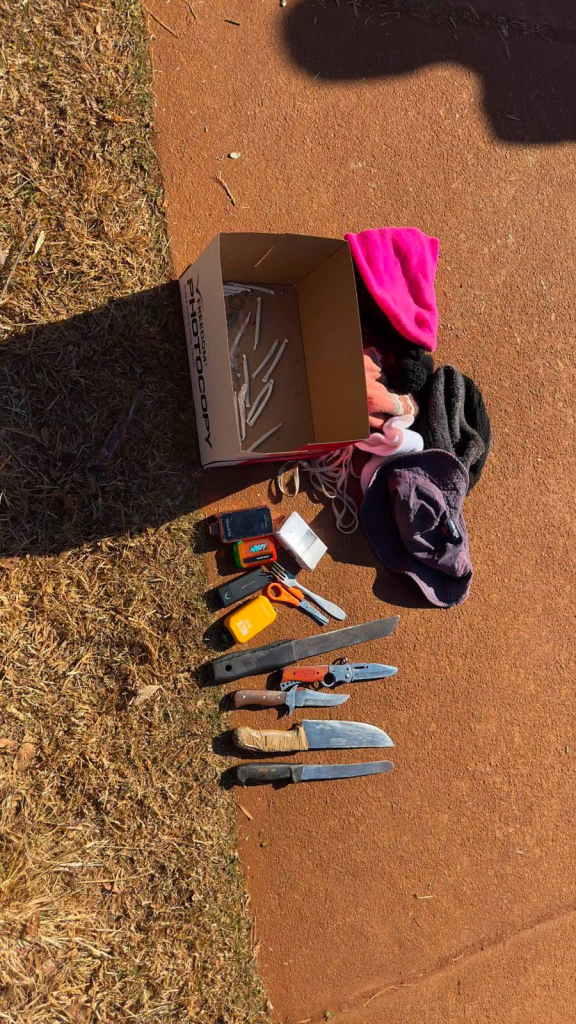
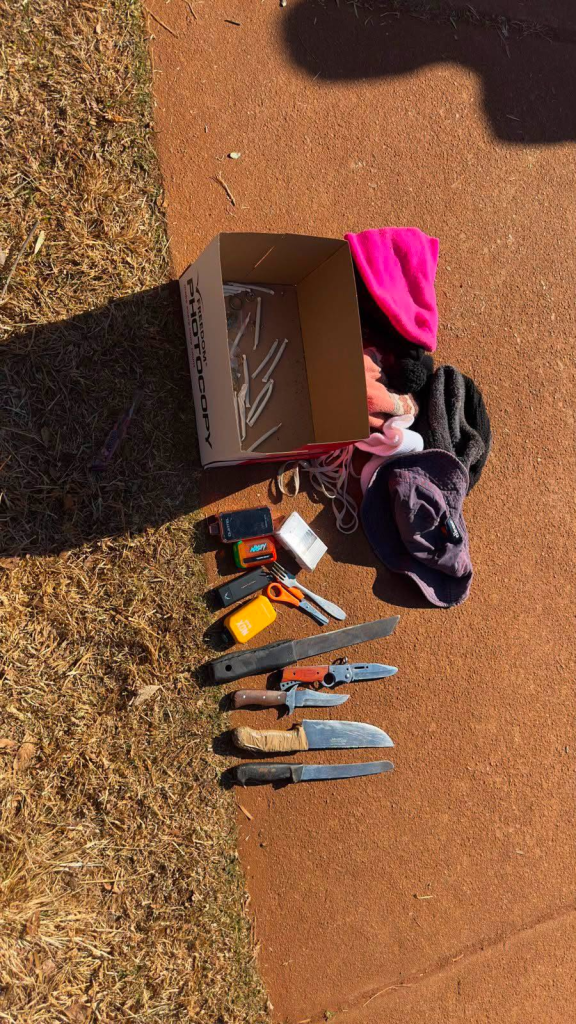
Maile said weapons were recovered at Badirile Secondary School, while dagga was found at another school. At a separate school, officials identified a learner who allegedly stole door and window handles from the premises to sell them.
He said the findings underscored that challenges in schools reflected wider societal problems.
“Schools are a microcosm of society. They reflect what is happening in society. If we don’t solve societal problems, they will find expression in our schools,” he said.
Maile rejected calls for the reintroduction of corporal punishment as a response to ill-discipline, saying teachers should instead exercise effective classroom management.
“We cannot replace wrong with wrong. Corporal punishment was wrong, it will remain wrong. Corporal punishment is violence,” he said.
The search-and-seizure operations form part of the province’s ongoing school safety interventions following complaints about violence and crime at schools.
Maile said similar operations would be conducted regularly in partnership with SAPS and other law enforcement agencies.