GDE appoints law firm to probe death of Grade R pupil in Coronationville
Uncategorized

GDE appoints law firm to probe death of Grade R pupil in Coronationville

By Levy Masiteng 

The Gauteng Department of Education (GDE) said it is finalising the appointment of a law firm to probe the circumstances surrounding the death of a Grade R boy learner from Bernard Isaacs Primary School in Coronationville, Johannesburg.

It said the firm will be formally introduced to the bereaved family and the school community by Gauteng Education MEC Matome Chiloane on Tuesday.

ALSO READ: WATCH: State of the Nation Address 2026

The boy died on Monday, the department said. He reportedly sustained injuries while on the school premises and was later hospitalised. The parents were notified later the same day that their child had died.

The department said the law firm would establish the full facts and circumstances surrounding the incident, and would ensure transparency in the process.

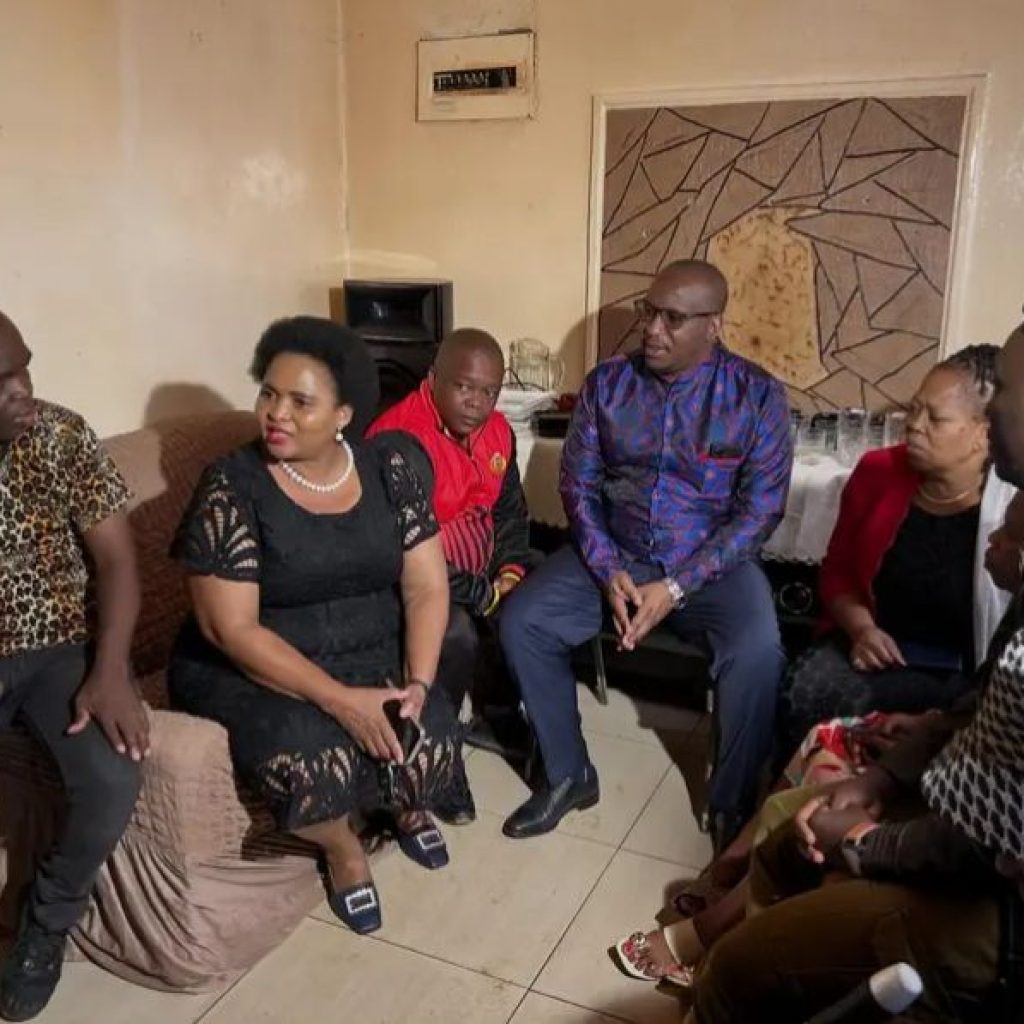
Chiloane visited the family on Friday to offer condolences and support during their “unimaginably painful period”.

“We stand with the family in their time of sorrow and will continue to provide the necessary support as investigations proceed,” he said.

He said the department was committed to ensuring a thorough and impartial investigation.

“It is important that we allow an independent process to unfold so that the family and the broader school community can have clarity on what transpired,” he said.

INSIDE EDUCATION

Uncategorized

SETAs to be reduced to improve governance – Ramaphosa

By Charmaine Ndlela

President Cyril Ramaphosa has announced plans to reform and reduce the number of Sector Education and Training Authorities (SETAs) to improve governance and strengthen South Africa’s skills development system.

Delivering his 2026 State of the Nation Address (SONA) on Thursday, Ramaphosa said the reforms are aimed at strengthening industry participation, improving training quality and better aligning skills development with the needs of the economy.

ALSO READ: Cape Peninsula University students hold protest outside SONA

He said government will enhance the role of Technical and Vocational Education and Training (TVET) colleges as primary sites for occupational training and artisan development.

“To support effective workplace-based learning, we will increase the proportion of the skills development levy returned to employers, restoring it to its original level of 40%,” he said.

Ramaphosa also announced that the National Skills Fund will be transformed into a more agile, outcomes-driven instrument focused on helping unemployed youth gain workplace experience and access employment opportunities. He said this would build on initiatives such as Jobs Boost.

“These reforms will ensure that the various training programmes we have in government are a door to opportunity, not a dead end,” he said.

Addressing the growing number of matriculants entering the post-school system, Ramaphosa said government will expand access to higher education.

“To absorb the increasing number of young people passing matric, we will expand opportunities for young people to enter institutions of higher learning,” he said.

He has directed the ministers of Finance and Higher Education to develop proposals for building more universities and TVET colleges focused on specialised areas of study.

ALSO READ: Limpopo launches state-of-the-art DZJ Mtebule school upgrade

Ramaphosa also identified the shortage of student accommodation as an urgent challenge.

“An immediate problem is the great shortage of student accommodation at our institutions of learning. I have directed the minister of higher education to address this challenge, working together with financial institutions on innovative methods through which government can provide student accommodation,” he said.

Reaffirming the broader reform agenda, Ramaphosa said reducing the number of SETAs would strengthen the overall system.

“We will reform and reduce the number of sector education and training authorities to improve governance, strengthen industry participation, raise the quality of training and better align skills development with the needs of the economy,” he said.

He concluded by emphasising that national development depends on strong communities that care for their children.

INSIDE EDUCATION

Uncategorized

SONA| SETAs to be reduced to improve governance

By Charmaine Ndlela

President Cyril Ramaphosa has announced plans to reform and reduce the number of Sector Education and Training Authorities (SETAs) to improve governance and strengthen South Africa’s skills development system.

Delivering his 2026 State of the Nation Address (SONA) on Thursday, Ramaphosa said the reforms are aimed at strengthening industry participation, improving training quality and better aligning skills development with the needs of the economy.

He said government will enhance the role of Technical and Vocational Education and Training (TVET) colleges as primary sites for occupational training and artisan development.

“To support effective workplace-based learning, we will increase the proportion of the skills development levy returned to employers, restoring it to its original level of 40%,” he said.

Ramaphosa also announced that the National Skills Fund will be transformed into a more agile, outcomes-driven instrument focused on helping unemployed youth gain workplace experience and access employment opportunities. He said this would build on initiatives such as Jobs Boost.

“These reforms will ensure that the various training programmes we have in government are a door to opportunity, not a dead end,” he said.

Addressing the growing number of matriculants entering the post-school system, Ramaphosa said government will expand access to higher education.

“To absorb the increasing number of young people passing matric, we will expand opportunities for young people to enter institutions of higher learning,” he said.

He has directed the ministers of Finance and Higher Education to develop proposals for building more universities and TVET colleges focused on specialised areas of study.

Ramaphosa also identified the shortage of student accommodation as an urgent challenge.

“An immediate problem is the great shortage of student accommodation at our institutions of learning. I have directed the minister of higher education to address this challenge, working together with financial institutions on innovative methods through which government can provide student accommodation,” he said.

Reaffirming the broader reform agenda, Ramaphosa said reducing the number of SETAs would strengthen the overall system.

“We will reform and reduce the number of sector education and training authorities to improve governance, strengthen industry participation, raise the quality of training and better align skills development with the needs of the economy,” he said.

He concluded by emphasising that national development depends on strong communities that care for their children.

INSIDE EDUCATION

Uncategorized

SONA| Ramaphosa says Grade R to be made compulsory

By Charmaine Ndlela

President Cyril Ramaphosa announced during the State of the Nation Address (SONA) on Thursday that Grade R will be made compulsory as part of efforts to strengthen early childhood development.

He said the Department of Basic Education is expanding access to early childhood development (ECD) through the Bana Pele mass registration of ECD facilities and increased subsidies for ECD learners.

“By making Grade R compulsory, we are getting all children off to a good start. We are intensifying efforts to fix the basic education system, with a focus on early learning, literacy and numeracy, and mother-tongue-based bilingual education,” Ramaphosa said.

The President also congratulated the Class of 2025 for achieving an 88% matric pass rate — the highest in the country’s history.

He said the result reflects both the commitment of learners and government interventions aimed at improving learning and teaching.

“Last year we saw the highest matric pass rate, with more than two-thirds of all bachelor passes coming from schools in the most disadvantaged communities,” he said.

Ramaphosa applauded the Class of 2025 for the sacrifices that contributed to their achievement.

However, he raised concern about the high dropout rate in the final years of schooling, saying more learners must be supported to write matric and take gateway subjects such as mathematics and science.

Nationally, the percentage of matric learners taking mathematics has declined from 46% in 2011 to 34% in 2023. In 2024, the number of learners registered for mathematics dropped to 255,762 — down by more than 12,000 from the previous year.

“To absorb the increasing number of young people passing matric, we will expand opportunities for young people to enter institutions of higher learning,” he said.

INSIDE EDUCATION

Uncategorized

Cape Peninsula University students hold protest outside Ramaphosa SONA

By Marcus Moloko

Scores of students from the Cape Peninsula University of Technology (CPUT) are staging a picket roughly 100 metres from the Cape Town City Hall while President Cyril Ramaphosa delivered the State of the Nation Address (SONA).

The protest, held roughly 100 metres from the venue, highlighted the growing student housing crisis.

Many demonstrators carried luggage, blankets, and placards, saying they had nowhere to sleep after being evicted from residences earlier in the day.

Students claim they have been left homeless due to ongoing evictions from university residences.

CPUT declared its residences full earlier this month, directing thousands of students to seek private accommodation.

Reports from SABC News and Daily Maverick revealed that many students, particularly from the Eastern Cape and KwaZulu-Natal, have been sleeping on pavements and in campus hallways while awaiting placements.

The protesters are demanding urgent intervention from government, citing unresolved funding issues and the lack of stable student housing. They are reportedly waiting for feedback from Minister of Higher Education Buti Manamela following Ramaphosa’s address.

“We are carrying our bags because we have nowhere to go tonight. We want answers, not promises,” one student told reporters at the scene.

A heavy police guard blocked the students’ path, keeping them approximately 100 metres away from the president’s address at City Hall.

This picket follows a week of escalating tensions at CPUT. Earlier in February, the university confirmed that its residences had reached capacity, leaving thousands without accommodation. The crisis has intensified as evictions continued, with students forced out of housing even on the day of the SONA.

INSIDE EDUCATION

Uncategorized

SONA: Manamela says NSFAS effective on bursaries with missing middle to be addressed

By Marcus Moloko

Minister of Higher Education and Training, Buti Manamela, has reiterated that the National Student Financial Aid Scheme (NSFAS) continues to serve as a critical pillar of student access in South Africa.

Speaking before President Cyril Ramaphosa’s State of the Nation Address (SONA), Manamela confirmed that more students have been approved for funding in the 2026 academic year, widening participation.

ALSO READ: Joburg ramps up youth role in air quality policy ahead of Wanderers conference

For the 2026 academic cycle, NSFAS has provisionally approved 626,935 first‑time applicants, while 427,144 continuing university students successfully met academic progression requirements.

To ensure a smooth start to the year, NSFAS disbursed R3.6 billion in allowances to universities and R679 million to TVET colleges in early February.

These upfront payments cover registration, tuition, and initial living expenses, preventing students from being excluded from registration due to financial barriers.

Manamela emphasized that this proactive disbursement reflects NSFAS’s effectiveness in stabilizing the academic calendar and safeguarding access for vulnerable students.

While Manamela acknowledged that NSFAS has performed well in dispensing bursaries, challenges remain in addressing the “missing middle” students from households earning between R350,000 and R600,000 annually.

“The money is there, but we’ve had only a few students applying. We have instructed our department to work together with NSFAS and the University of South Africa forum, alongside all stakeholders, to see how we can effectively use those resources to unlock potential,” Manamela said.

He further admitted that while bursary distribution has been effective, the loan scheme has faced hurdles.

ALSO READ: WATCH: Ramaphosa opens Nelson Mandela Rules training academy at Drakenstein prison

“There have been some challenges, and we’re hoping that the team we’ve put in place to look at how we can effectively deal with the challenge of the missing middle will be able to deliver a turnaround. We should be able to communicate something in the next few days,” he added.

Manamela also touched on the broader issue of capacity in the post‑school education system. Responding to questions about the promise of building two new universities, he said: “we’ll have to hear from the President what he says today about infrastructure in the post‑school education and training system. There’s more demand for university seats, and even more demand for TVET college seats. The important thing now has become the establishment of those universities legally. We’re exploring means to do that, and as soon as we can mobilize sufficient resources, we should be able to broaden out.”

He stressed that expansion is not limited to new institutions.

“Certain universities have individually grown, which means more space. So it’s not just about building two more universities, but also about growing the existing stock of universities, which is much more cost‑effective.”

INSIDE EDUCATION

Uncategorized

Joburg ramps up youth role in air quality policy ahead of Wanderers conference

By Levy Masiteng 

Young people in Johannesburg are moving into environmental policymaking after a city-backed workshop aimed at preparing them to help shape the metro’s response to air pollution, the City of Johannesburg said.

The Air Aware Pre-Conference Workshop on Air Pollution Policy and Implementation was held on Monday at the South African Institute of International Affairs (SAIIA) headquarters in Braamfontein, ahead of the Air Aware: Youth-Led Conference on Air Pollution Policy and Implementation on 26 February at the Wanderers Club.

The workshop included group engagements in which participants provided written inputs for a youth statement on air pollution and health impacts in Johannesburg, which the city’s Environment and Infrastructure Services Department (EISD), working with Breathe Cities and the SAIIA Youth Programme, said would be presented directly to policymakers.

Musa Mahlatji, deputy director for air quality management at the city, said the metro remained committed to inclusive environmental governance.

“By creating space for youth voices in air quality management and policy dialogue, we are building a generation that understands the impacts of pollution and is ready to champion cleaner, safer air for everyone,” he said.

In its statement, the city said discussions covered air quality and public health impacts, clean mobility solutions, waste-to-value and no-burn alternatives, youth accountability and governance, 2030 clean air futures, and the development of school-level air quality action platforms.

“It enabled them to gather credible air quality evidence and learn how to communicate it effectively in advocacy and policy spaces,” the city said.

One participant, Paseka Molejane, said the engagement was both educational and necessary.

“These conversations are vital. We have learned more about air pollution and the solutions the city is implementing. Improving air quality requires educating communities and sharing this information widely,” he said.

The city said air pollution remains one of Johannesburg’s most serious environmental and public health challenges, disproportionately affecting children and young people in marginalised communities.

Youth@SAIIA Project Coordinator and Youth Air Champion, Lehlohonolo Jack, said young people should be included in environmental governance.

“Young people bring lived experiences and future-focused solutions that strengthen policy platforms. Their inclusion ensures that decisions taken today reflect the realities and aspirations of the next generation,” Jack said.

INSIDE EDUCATION

Uncategorized

WATCH: Ramaphosa opens Nelson Mandela Rules training academy at Drakenstein prison

By Charmaine Ndlela

President Cyril Ramaphosa on Wednesday officially launched the Nelson Mandela Rules Training Academy at the Drakenstein Correctional Facility between Paarl and Franschhoek in the Western Cape, saying the facility marked a new chapter in the country’s history.

Formerly known as Victor Verster Prison, the site was the last place Nelson Mandela was imprisoned before his release in 1990.

The academy is the first of its kind in Africa and forms part of correctional services’ efforts to adopt and embody the principles of the United Nations Standard Minimum Rules for the Treatment of Prisoners — known as the Nelson Mandela Rules — adopted by the UN General Assembly in 2015.

The training academy will serve as a centre for learning and rehabilitation, helping to shape improved correctional practises.

“Having spent 27 years in prison, Mandela championed the fair and humane treatment of all people. Mandela believed offenders deserve dignity, respect and humane treatment, and that justice is measured not by how harshly punishment is administered, but by how faithfully human dignity is upheld, even in difficult circumstances,” said Ramaphosa in his keynote address.

The facility will serve South African officials as well as the wider global corrections community.

🇿🇦President @CyrilRamaphosa officially opens the Nelson Mandela Rules Training Academy at the Drakenstein Correctional Facility in the Western Cape, marking a significant milestone in advancing human rights, humane correctional practices, and the protection of the dignity of… pic.twitter.com/1xVfCz7yRf

— The Presidency 🇿🇦 (@PresidencyZA) February 11, 2026

Ramaphosa noted that visitors to the academy are welcomed by artwork created by offenders, saying, “This is not incidental. It is deeply symbolic. It reflects the very essence of rehabilitation. It is about unlocking human potential, creativity and self-worth.”

He added, “The furniture that fills this academy has also been produced by offenders within our correctional system. Every table, every chair, every crafted piece speaks to the power of skills development, meaningful work and the desire for change.”

Speaking about the facility’s transformation, Ramaphosa said, “Today we open a repurposed, renovated and expanded facility transformed into a modern training academy. One cannot help but marvel at the quality of workmanship. It fills me with pride to appreciate work of such high standard being produced by local hands, by men and women within our correctional system.

“The training academy will be a success through partnership with the United Nations Office on Drugs and Crime, the custodian of the Nelson Mandela Rules. The academy will ensure that training, practise and policy are guided by the values Mandela stood for,” Ramaphosa said.

“This facility symbolises the humanisation of corrections, the elevation of dignity, and the global pursuit of justice rooted in humanity.”

He also paid tribute to correctional services officials.

“Every day, correctional officials operate under difficult and sometimes dangerous conditions. Their responsibility extends beyond custody and security. They are tasked with transforming lives and instilling hope where there is often despair.”

Acknowledging challenges in the sector, Ramaphosa said, “We appreciate and acknowledge the challenges posed by overcrowding and resource constraints. However, I take great encouragement from the efforts within the department to advance self-sufficiency and sustainability, skills development and productive work, ensuring that correctional facilities become places of rehabilitation rather than mere containment.”

The centre was unveiled on the 36th anniversary of Mandela’s release from prison on 11 February 1990.

INSIDE EDUCATION
Uncategorized

Scholar transport to fully resume in Gauteng from Monday after two-week shutdown – GDE

By Levy Masiteng 

Gauteng’s education department said scholar transport services across the province were expected to fully resume from Monday, 16 February, after a meeting with transport operators resolved issues, including outstanding payments and learner verification processes.

Gauteng MEC for Education Matome Chiloane gave the update on Tuesday after “a constructive engagement” aimed at stabilising the programme and restoring uninterrupted access to education for learners.

ALSO READ: Limpopo launches state-of-the-art DZJ Mtebule school upgrade

The meeting involved associations representing about 250 contracted scholar transport service providers, operating an estimated 3,600 buses and transporting roughly 238,000 learners daily across Gauteng, the department said.

The meeting followed the suspension of services by some operators related to delayed payments.

“The discussions were extensive and frank, with all parties acknowledging that the continued disruption of learner transport was untenable and not in the best interest of learners, parents or communities,” the department said.

It said the talks resulted in “a shared commitment to normalise services while outstanding matters are addressed through the appropriate administrative and financial processes”.

ALSO READ: Roedean denies antisemitism claim after King David tennis forfeit sparks SAJBD backlash

The department said all matters within its mandate were resolved, including “resolution of payment matters, including confirmation that outstanding invoices for November 2025 will be processed and paid by the end of the current week”.

It also reached agreement on “processes related to learner verification and confirmation of transported learners, including clarity on the learner verification forms currently signed at schools and the department’s transition towards a digitised system”.

Following the resolutions, operators committed to consult with their members on a phased resumption of services, taking into account logistical challenges linked to the earlier suspension, including “the temporary removal of vehicles for safety and asset protection reasons,” the department said.

“In principle, full scholar transport operations across the province are expected to resume from Monday, 16 February 2026, marking the return to normal service delivery,” it said.

ALSO READ: KZN prepares emergency response as SAWS issues storm, flooding alert

Chiloane said the department remained concerned about the impact of disruptions on learners, including academic setbacks and exposure to unsafe transport alternatives.

“We acknowledge the frustration and distress experienced by learners, parents and communities during this period. The disruption of scholar transport services is not a situation we take lightly, and we regret the inconvenience caused,” Chiloane said.

“We are encouraged by the progress made and remain confident that the resolutions reached will lead to the full normalisation of scholar transport services across Gauteng, ensuring that learner safety, dignity and access to education remain protected at all times,” he said.

INSIDE EDUCATION

Uncategorized

Gauteng says 1,174 Grade 1 and Grade 8 learners still unplaced

By Levy Masiteng 

Gauteng’s education department said 1,174 learners applying for Grade 1 and Grade 8 admission in 2026 remained unplaced.

The department said on Tuesday that capacity pressures in high-demand areas, particularly in Johannesburg and Ekurhuleni, contributed to lack of placements.

ALSO READ: ActionSA’s Khumalo under fire after suspect shooting in Ekurhuleni Drug raid

“The majority of learners who applied for placement in Gauteng for Grade 1 and Grade 8 have already been successfully placed in public schools across the province,” the department said.

The unplaced learners include 882 Grade 1 learners and 292 Grade 8 learners, the department said.

ALSO READ: KZN prepares emergency response as SAWS issues storm, flooding alert

“While placement at preferred schools may not always be immediately possible, we are actively working with schools to identify available spaces and finalise outstanding placements as a matter of urgency,” it said.

“We wish to reassure parents that all qualifying learners will be accommodated, and ongoing engagements with schools aim to ensure fair and timely placement,” it added.

INSIDE EDUCATION