Uncategorized

Gina takes graduate opportunities to rural KZN

By Lebone Rodah Mosima

The Department of Science, Technology and Innovation used a Freedom Month event in one of KZN’s most rural municipalities to show how technology can be used to close service-delivery, safety, and youth-opportunity gaps.

Deputy minister Dr Nomalungelo Gina hosted the community engagement on democracy and science at Oqondweni Hall in Mbazwana, where about 250 community members, including young people and older residents, were exposed to government services, SAPS drone technology and internship opportunities through the Human Sciences Research Council (HSRC).

Other institutions to take part in the event were the Department of Justice and Constitutional Development, the Department of Social Development and the Independent Electoral Commission.

ALSO READ: Manamela charts path for sustainable higher education funding

“All the institutions that you see here today are using science, technology and innovation to improve service delivery to communities countrywide. For example, South Africa uses digital technology to manage social grants for millions of citizens because digitalisation increases efficiency and financial inclusion,” Gina told the crowd.

“Access to scientific knowledge, innovation and opportunities is essential for participating fully in our democracy, and for building a more equal and prosperous society,” she said.

Gina said democratic South Africa had, since 1994, invested in science and innovation as tools for transformation, inclusion and development. She said democracy was strengthened not only through political rights, but also through equitable access to knowledge, innovation and practical solutions that respond to everyday community challenges.

Local residents were given the opportunity to interact directly with government departments and agencies on issues including justice, social development, safety, employment and access to public services.

Nqubeko Mbhele, an Information Technology expert at the HSRC, told the community that research helped government better understand people’s needs and improve services in areas such as health, education, safety, jobs and social support.

“From visiting households across the country to strengthening community voices, the HSRC continues to ensure that democracy works for the people by putting their lived experiences at the centre of decision-making,” said Mbhele.

The HSRC also promoted its internship graduate programme, which has benefited more than 7,000 unemployed graduates since 2005 by providing workplace experience and research skills in science, engineering and technology, as well as in humanities and social sciences.

ALSO READ: Malatsi withdraws draft AI Policy

Mbhele encouraged youth in the area to further their studies so they could access opportunities created through democracy and science-based development programmes.

In one of the most practical demonstrations of the day, Warrant Officer Owen Howard, a SAPS drone pilot in KwaZulu-Natal, flew a Matrice M30 drone fitted with wide, zoom and thermal cameras, as well as a laser rangefinder.

“Years ago, the SAPS did not have this technology to locate a missing person in the bush, for example. Now we can use thermal imaging to help find missing persons without immediately deploying a helicopter,” said Howard.

Resident Lindiwe Mabika said the event gave her useful information about science, technology and future opportunities. Mabika said her main focus was to continue her studies in primary health.

“The information I received today will help me plan for a better future for myself. I am also grateful to have known about the HSRC internship programme. Hopefully, I will be one of its beneficiaries in the future,” said Ms. Mabika.

Senamile Khumalo, 36, from Heifer Project South Africa (HPSA), said communities benefited when they were exposed to information and support that could help them improve their lives.

“I am particularly hopeful that the youth in the area stand to benefit the most. It was also encouraging to hear those government initiatives that can assist in protecting the young and elderly in our community,” Khumalo said.

Khumalo also appealed to young people to join HPSA, a community development organisation that partners with impoverished rural communities to fight poverty through agricultural development.

“At HPSA, we provide rural youth with training support to learn how to take care of livestock and to start their own farming businesses,” she said.

The event also gave Gina an opportunity to assess how science, technology and innovation were being applied in the local municipality to improve service delivery.

The ministry said the engagement demonstrated how the District Development Model could improve socio-economic conditions by aligning local, provincial and national government planning.

uMhlabuyalingana Local Municipality is situated in the north-eastern part of KwaZulu-Natal and has a population of about 163,694 people. The rural municipality is heavily dependent on subsistence farming, with major agricultural initiatives including fruit processing and livestock farming aimed at alleviating poverty.

According to the municipality, 18% of the population has had no formal education, 57% did not complete Grade 12, and only 8% completed Grade 12 or higher.
INSIDE EDUCATION

Uncategorized

Manamela weighs NSFAS board options after new resignations

By Johnathan Paoli

Higher Education Minister Buti Manamela has accepted a series of resignations from the National Student Financial Aid Scheme (NSFAS) board, including acting chairperson Dr Mugwena Maluleke and board member Karabo Mohale, raising concerns about whether the board can continue to function lawfully.

In a statement on Wednesday, ministerial spokesperson Matshepo Seedat said Manamela had accepted the resignations as part of a wave of departures from the scheme’s board.

ALSO READ: Gwarube calls for Treasury probe into R1.6bn textbook tender

“The cumulative effect of these and other resignations has significantly reduced the number of remaining voting members of the Board, raising serious concerns regarding the Board’s ability to continue to constitute itself lawfully and to discharge its statutory and fiduciary responsibilities,” Seedat said.

Maluleke stepped down as both board member and interim chairperson with effect from Monday, citing personal and academic commitments.

Mohale, who chaired the Human Resources and Organisational Development Committee, has also resigned, with the ministry saying it had noted her reflections on institutional challenges, including organisational redesign, executive capacity and governance systems.

The ministry is now assessing the legal and governance implications of the shrinking board, including whether it remains capable of exercising oversight and taking decisions under the applicable legislative framework.

ALSO READ: Maile rules out disruptions at Bovet Primary amid overcrowding concerns

Seedat said the minister had initiated formal engagement with the remaining board members, giving them an opportunity to make representations on the current situation and propose lawful and practical alternatives to ensure stability.

She said the process was aimed at ensuring procedural fairness before any further action was taken.

The latest departures come amid mounting instability at NSFAS.

Maluleke had only recently assumed the role of acting chairperson in November last year, following the resignation of his predecessor.

His appointment, made by Manamela in terms of the NSFAS Act, was intended to stabilise the board during a turbulent period.

At the time, NSFAS described him as a seasoned educationist and trade unionist with extensive experience in governance, policy development, stakeholder engagement, and organisational leadership.

NSFAS had expressed optimism that his leadership would help strengthen governance and reinforce the scheme’s mandate to support students in need.

Maluleke’s appointment followed the dramatic resignation of former board chairperson Dr Karen Stander, who stepped down with immediate effect late last year.

ALSO READ: 48% of Gauteng schools face severe overcrowding

In a letter to Manamela before her departure, Stander warned that NSFAS was facing severe governance failures and risked institutional collapse.

She cited allegations of racism, bullying and threats to her family, describing a “toxic environment” that made it impossible for her to continue in her role.

In her resignation letter, Stander also outlined several alleged incidents of interference and procedural irregularities involving senior management and department officials, including what she alleged was the irregular appointment and extension of acting CEO Waseem Carrim’s tenure, as well as attempts to influence the composition of board committees.

Carrim has rejected allegations against him.

Stander further alleged that governance structures were being undermined by efforts to centralise financial decision-making powers and interfere with internal oversight mechanisms.

Despite the leadership turmoil, the department has sought to reassure students and institutions that NSFAS operations remain unaffected, with funding disbursements continuing as normal.

ALSO READ: Manamela charts path for sustainable higher education funding

The spokesperson said NSFAS remained central to the government’s efforts to expand access to higher education and that stabilising the institution was a priority.

She said the department would continue engaging Parliament, the National Treasury and other oversight bodies as the process unfolds, and that further updates would be provided in due course.

INSIDE EDUCATION

Uncategorized

World Cup dream awaits 20 lucky Bafana fans

By Lebone Rodah Mosima

The Department of Sport, Arts and Culture (DSAC) has launched a competition that will send 20 South African football supporters to the 2026 FIFA World Cup to watch one of Bafana Bafana’s group-stage matches live.

The department said on Wednesday that the Mzansi to the World Cup “Lucky Fans” Competition was aimed at celebrating the country’s football culture and giving ordinary fans “a once-in-a-lifetime opportunity to experience the 2026 FIFA World Cup live”.

ALSO READ: Newark family murder accused abandon bail

The World Cup will be jointly hosted by the United States, Mexico, and Canada, with the tournament scheduled to kick off on 11 June 2026. Bafana Bafana are due to open the tournament against Mexico at the Estadio Azteca in Mexico City.

“Through this competition, twenty (20) passionate South African supporters will be selected to travel to either the United States or Mexico to attend one of Bafana Bafana’s group-stage matches,” the department said.

It said the initiative formed part of its commitment to using sport to unite the country, promote national pride, and showcase South Africa’s energy and spirit on the global stage.

Fans from all 16 PSL clubs will be able to represent their teams, while additional wildcard entries will be included to ensure supporters without club affiliations also have a chance to participate.

ALSO READ: Julius Mkhwanazi, Kagiso Lerutla granted bail in fraud, corruption case

“To enter, members of the public are required to visit the official DSAC website, where they can access the submission link and competition details,” the department said.

Participants must upload a 30-second video at https://dsacevents.dsac.gov.za/DSAC_LuckyFan_WC26/ showing their passion for football, club loyalty, and why they believe they deserve to represent South Africa at the World Cup.

Entries opened at 8 am on Wednesday, 29 April, and will close at 5 pm on Friday, 1 May 2026.

Winners will receive a fully sponsored travel package, including international flights, accommodation, match tickets, and ground transport.

The winners will be announced on 5 May 2026 at 8 am.

INSIDE EDUCATION

Uncategorized

Gwarube calls for Treasury probe into R1.6bn textbook tender

By Charmaine Ndlela

Basic Education Minister Siviwe Gwarube has called for an urgent investigation into alleged irregularities in a R1.6 billion textbook procurement process for Grade 1 to 3 learners.

The move follows a News24 investigation which reported that Lighthouse Publishers (Pty) Ltd — a company with no established publishing track record — was awarded a substantial portion of the tender shortly after its registration.

Gwarube confirmed that she has written to Finance Minister Enoch Godongwana, requesting the National Treasury to probe the matter.

“I have noted with serious concern media reports containing allegations of procurement irregularities in the textbook procurement process,” she said.

The tender affects learning materials for more than 13.7 million learners, raising concerns about the potential impact on the education system.

According to reports, Lighthouse Publishers was registered just three days after tender specifications were issued, yet received over a quarter of approvals for foundation phase materials — potentially earning more than R285 million.

Gwarube warned that any compromise in the procurement process could have far-reaching consequences.

“Any compromise in the integrity of textbook procurement directly threatens the ability of the education system to function effectively and undermines the constitutional right of every child to access basic education,” she said.

She stressed that the National Treasury, as the custodian of procurement compliance, is best placed to assess the allegations before further action is taken.

“Should the investigation uncover malfeasance, I will not hesitate to act. Any and all those implicated will be dealt with,” she said.

The developments have triggered broader political concern, with ActionSA calling for a transparent and comprehensive investigation into the tender process, stressing the need to safeguard public funds and protect learners’ interests.

In a separate development, Parliament’s Portfolio Committee on Social Development has raised alarm over allegations involving the Minister of Social Development.

Committee chairperson Bridget Masango said claims reported by Daily Maverick suggest that a state-paid employee may have been used for private domestic work and allegedly forced to return part of her salary.

“If true, this is not just a technical breach of rules but a violation of public trust. Public money is not personal money,” Masango said.

She added that the allegations raise serious concerns about compliance with the Public Finance Management Act and ethical governance standards.

The committee has requested a full briefing from the department and indicated that the minister will be called to account.

“As part of its oversight responsibility, the committee will formally request a full briefing from the department. The Minister will also be invited to appear before the committee to respond to these allegations,” Masango said.

INSIDE EDUCATION

Uncategorized

Maile rules out disruptions at Bovet Primary amid overcrowding concerns

By Thapelo Molefe

Gauteng Education MEC Lebogang Maile has ruled out further disruptions at Bovet Primary School in Alexandra, urging parents to avoid protests that interfere with teaching despite ongoing overcrowding challenges.

Maile visited the school on Tuesday, following a protest by parents last week Monday over poor infrastructure and severe overcrowding at the school, which has nearly 3,000 learners.

Meeting with the school governing body, Maile stressed that while concerns are valid, disruptions to schooling cannot be justified.

ALSO READ: Manamela charts path for sustainable higher education funding

“We don’t want any school to be disrupted. There is no excuse for disruption for something else,” he said.

The MEC said the department is exploring ways to ease pressure at the school, including the possible use of nearby vacant land to create additional space.

“There is a piece of land that is vacant, which could be used to decongest, but we are told that the ownership is not yet confirmed,” Maile said.

He added that longer-term solutions include redistributing learners to nearby schools, which may require some schools to introduce Xitsonga and Tshivenda language streams currently offered at Bovet.

The visit forms part of a provincial effort to engage communities on education challenges, with Alexandra among 45 areas identified for outreach.

ALSO READ: Malatsi withdraws draft AI Policy

“It’s a very difficult task. It’s not going to be easy, and we understand that we have to talk to the communities in order to resolve these issues,” Maile said.

The Gauteng Department of Education has acknowledged that overcrowding remains a widespread issue, particularly in densely populated areas such as Alexandra.

INSIDE EDUCATION

Uncategorized

48% of Gauteng schools face severe overcrowding

By Thapelo Molefe

Nearly half of Gauteng’s public schools are operating above capacity as overcrowding continues to worsen across the province.

Gauteng Education MEC Lebogang Maile, briefing the media on Tuesday, said 1,021 of the province’s 2,111 public schools are over-subscribed, representing 48% of all schools. This includes 41% of primary schools and 64% of secondary schools.

Learner enrolment in the province has more than doubled over the past three decades, rising from 1.4 million in 1995 to 2.8 million in 2026. The system continues to grow by more than 50,000 learners each year, driven by migration and rapid urbanisation.

ALSO READ: Manamela charts path for sustainable higher education funding

“The issue is widespread and systemic rather than isolated to a few districts,” Maile said.

The province faces a shortage of school space, particularly at secondary level, where there is a deficit of more than 88,000 places. At the same time, 252 schools are not at full capacity, highlighting imbalances in learner distribution.

“The rate of infrastructure delivery is not keeping pace with the growing demand for learner placement in the province,” Maile said. 

High-pressure areas include townships and urban centres in Johannesburg, Tshwane and Ekurhuleni, where demand continues to outpace infrastructure delivery.

Maile said Gauteng requires at least 200 new schools to stabilise the system, but current funding allows for only about seven new schools to be built each year.

ALSO READ: Malatsi withdraws draft AI Policy

“We are implementing a range of interventions to expand capacity, but the scale of demand continues to outstrip available resources,” he added. 

To address the crisis, the provincial government is rolling out interventions including new school construction, partnerships with the Development Bank of Southern Africa, and the use of prefabricated classrooms as a temporary measure.

Maile urged communities and the private sector to help protect school infrastructure and support efforts to address the overcrowding.

INSIDE EDUCATION

Uncategorized

Manamela charts path for sustainable higher education funding

By Marcus Moloko

Minister of Higher Education and Training, Buti Manamela, has outlined a solid plan to secure the future of the country’s universities, acknowledging both the achievements and the challenges of the current funding model.

Speaking at the 11th Annual Conference of the Centre for Global Higher Education (CGHE) at Kellogg College, University of Oxford, on 23 April 2026, Manamela described what he called a “paradox” in South Africa’s higher education system.

“The South African state has never spent more on higher education, and the South African university has rarely felt more fragile,” he said to delegates.

He explained that while the government paid tuition fees for approximately 62 percent of undergraduate students, universities themselves had grown poorer in real terms.

The block grant that sustained academic salaries and research had grown below inflation, infrastructure budgets were cut, and student debt ballooned to R23 billion, much of it unrecoverable.

The Minister traced this paradox back to the #FeesMustFall movement of 2015 – 2016, which led to the introduction of fully subsidised higher education for students from low-income households in 2017.

While he praised the policy’s impact, he noted that NSFAS‑funded students completed their degrees at rates about ten percentage points higher than the general cohort.

ALSO READ: Deputy Minister Gungubele strengthens digital partnerships

“Young people from working‑class and rural households who, a decade ago, would simply not have been at university, are now there, and are succeeding,” Manamela said.

He acknowledged that the grant‑based model had, however, squeezed other parts of the higher education budget, diverting funds away from infrastructure and research.

To address this, Manamela announced the department had prepared a four‑tier student funding framework for Cabinet approval, with implementation targeted for 2027.

This framework included:

  • Full grants for the poorest students.
  • Income‑contingent loans for the “missing middle.”
  • Bursaries for scarce and critical skills and
  • A reformed tier of private contributions.

Manamela emphasised that lessons from international research, particularly on the risks of poorly designed loan schemes, would shape the policy.

He also committed to a complete overhaul of NSFAS, citing late payments and fraud in accommodation funding.

“We are not tweaking that system. We are rebuilding the student financial aid administrative architecture for the long term,” he said.

On tuition fees, he called for a formal regulatory framework to replace the current annual compact with vice‑chancellors. This, he argued, would help narrow inequalities between historically advantaged and disadvantaged institutions.

ALSO READ: Maile to conduct oversight visit at Bovet Primary School

Beyond financing, Manamela indicated the need to rebuild public trust in universities. He warned that graduate unemployment and perceptions of elitism threaten the political coalition sustaining public funding.

He also highlighted plans to expand access through differentiation and articulation, integrating agricultural colleges, strengthening TVET pathways, and creating dignified alternatives to traditional universities.

“A gross enrolment ratio of approximately twenty‑five percent is too low for a country with our demographic pressure and our skills deficit. We will not get to forty percent by building more universities of the 1960s kind,” he said.

The minister urged the international audience to see South Africa not only as a cautionary tale but also as a country committed to treating higher education as a public good.

“Poverty cannot be a fee a student pays to remain poor,” he said.

“I would rather govern a higher education system that is trying, imperfectly and sometimes clumsily, to make education a public good, than govern one that has given up on the attempt.”

INSIDE EDUCATION

Maile to conduct oversight visit at Bovet Primary School
Uncategorized

Maile to conduct oversight visit at Bovet Primary School

By Marcus Moloko

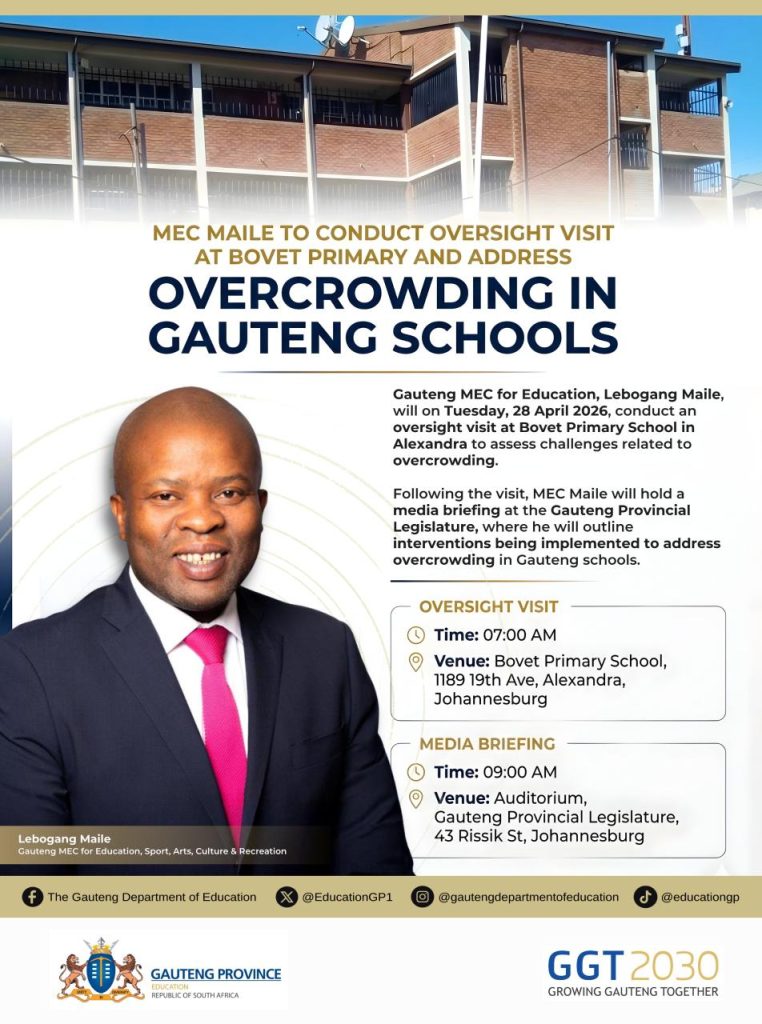
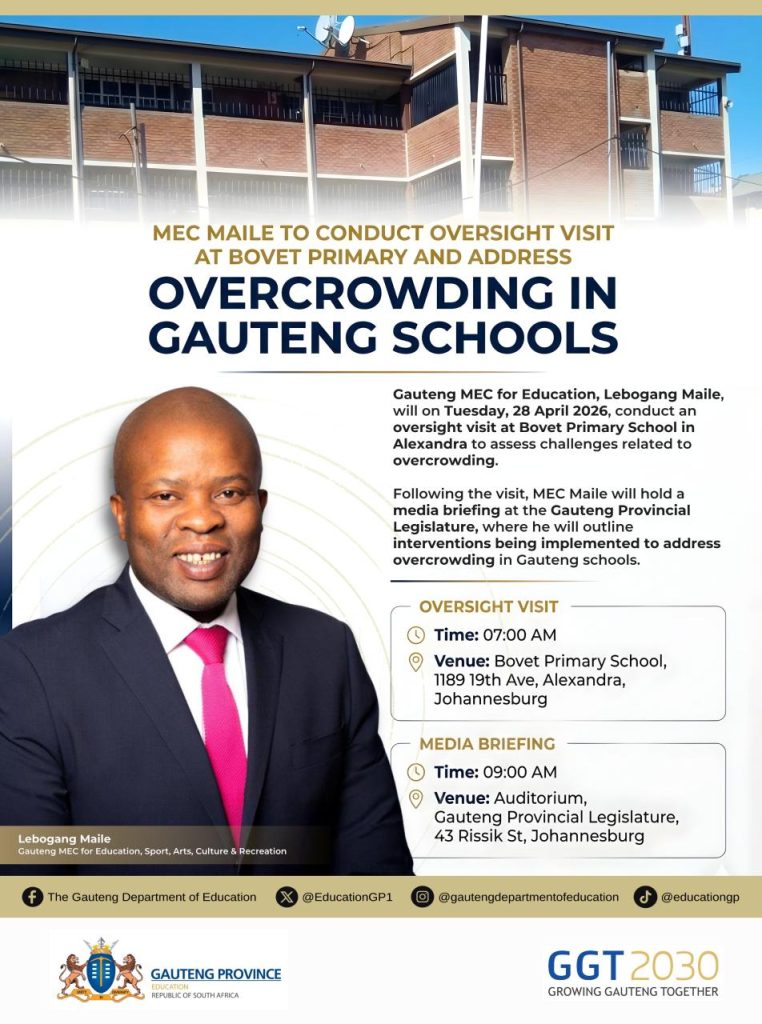
Gauteng MEC for Education, Lebogang Maile, is set to lead an oversight visit at Bovet Primary School in Alexandra on Tuesday.

The visit comes amid mounting concerns about overcrowding in Gauteng schools, particularly in densely populated areas such as Alexandra and Ivory Park.

Following the school inspection, MEC Maile will brief the media at the Gauteng Provincial Legislature Auditorium at 09:00 AM, where he is expected to outline interventions aimed at easing classroom congestion and improving learning conditions.

ALSO READ: Deputy Minister Gungubele strengthens digital partnerships

The Gauteng Department of Education has acknowledged that overcrowding undermines teaching quality, learner safety, and long-term educational outcomes.

Maile’s briefing is anticipated to address both immediate relief measures and long-term infrastructure plans.

INSIDE EDUCATION

Uncategorized

Malatsi withdraws draft AI Policy

By Marcus Moloko

Communications and Digital Technologies Minister Solly Malatsi has withdrawn the Draft National Artificial Intelligence (AI) Policy after it was revealed that the document contained fictitious references, raising serious questions about oversight in South Africa’s digital policy environment.

The draft policy, which was approved by Cabinet on 25 March 2026 and published in the Government Gazette on 10 April 2026 for public comment, was intended to guide the country’s approach to artificial intelligence.

ALSO READ: Maile to conduct oversight visit at Bovet Primary School

Members of the public had until 10 June 2026 to submit feedback. However, the process has now been halted following confirmation that the reference list included fabricated sources.

“This failure is not a mere technical issue but has compromised the integrity and credibility of the draft policy. As such, I am withdrawing the Draft National Artificial Intelligence Policy,” Malatsi said.

The Minister explained that internal investigations revealed the most plausible explanation was the inclusion of AI‑generated citations without proper verification. He said this lapse undermined the importance of human oversight in the use of artificial intelligence.

ALSO READ: Deputy Minister Gungubele strengthens digital partnerships

“South Africans deserve better. The Department of Communications and Digital Technologies did not deliver on the standard that is acceptable for an institution entrusted with the role to lead South Africa’s digital policy environment. This unacceptable lapse proves why vigilant human oversight over the use of artificial intelligence is critical. It’s a lesson we take with humility,” Malatsi said.

The draft policy had sought to extend South Africa’s initial AI framework by embedding principles of intergenerational equity, ensuring that innovation benefits both current and future generations. It also aimed to establish national priorities and sector-specific strategies across manufacturing, energy, infrastructure, transport, and trade.

Earlier this month, Deputy President Paul Mashatile highlighted the importance of the policy during the launch of the Fourth Industrial Revolution (4IR) lab and a Centre of Specialisation in Mpumalanga for artisan training. He said government was developing a comprehensive response to AI, positioning it as a tool to drive economic growth and competitiveness.

ALSO READ: DUT stars again selected for 2026 Telkom Netball League

Malatsi has confirmed that consequence management would follow for those responsible for drafting and quality assurance.

Malatsi concluded by reaffirming the government’s commitment to digital transformation, but acknowledged that the credibility of future policies must be safeguarded through stronger verification measures.

INSIDE EDUCATION

Deputy Minister Gungubele strengthens digital partnerships
Uncategorized

Deputy Minister Gungubele strengthens digital partnerships

Marcus Moloko

The Department of Communications and Digital Technologies (DCDT) has reaffirmed its commitment to advancing South Africa’s digital transformation agenda through closer collaboration with industry leaders.

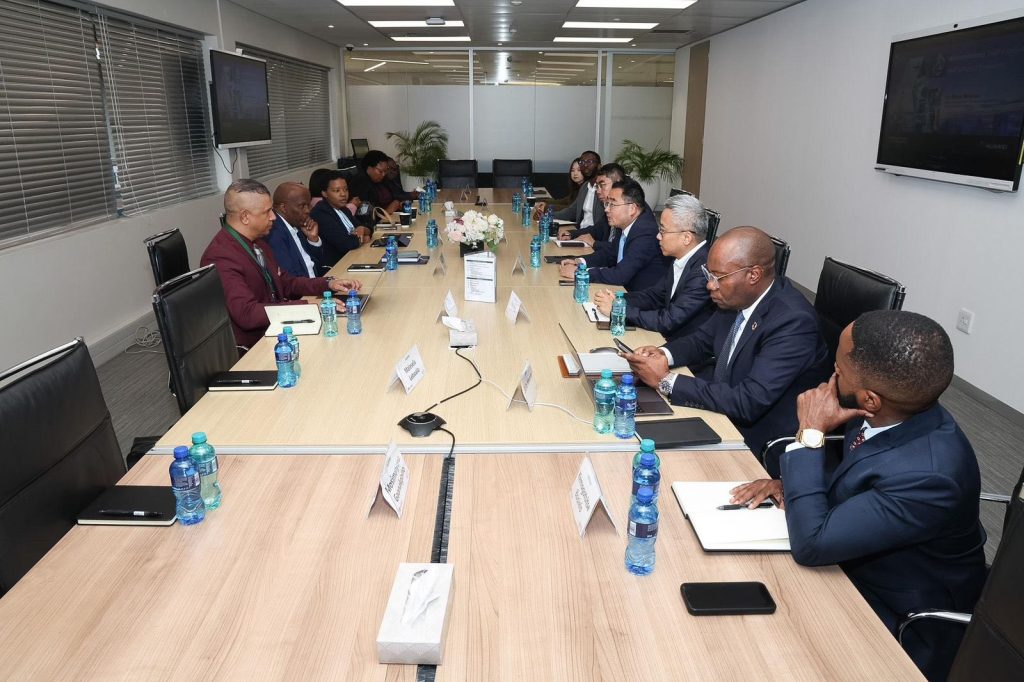
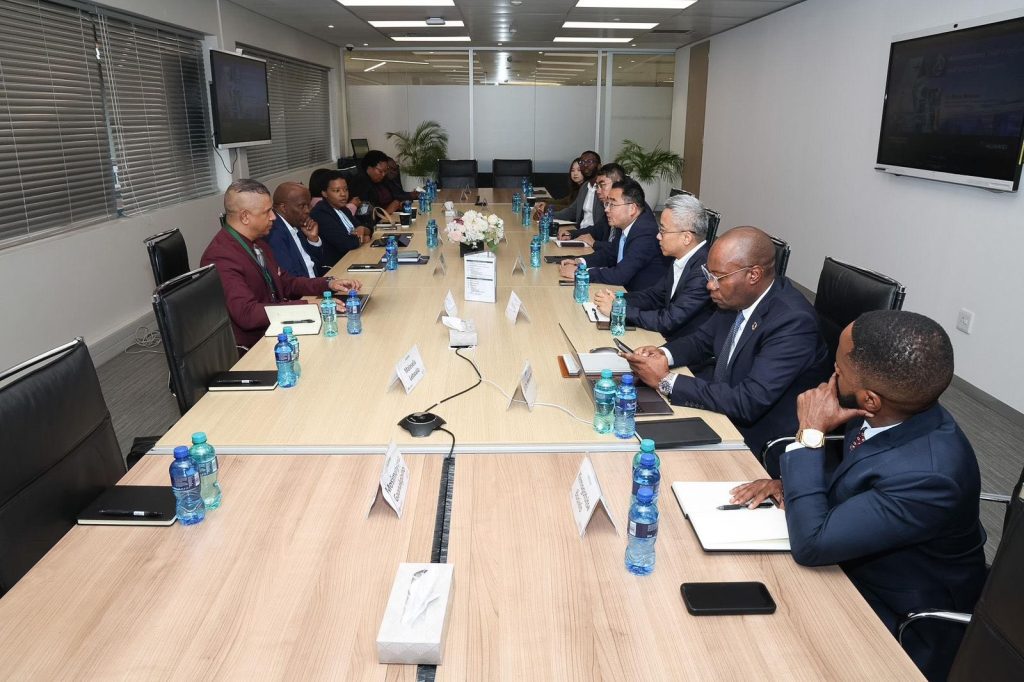
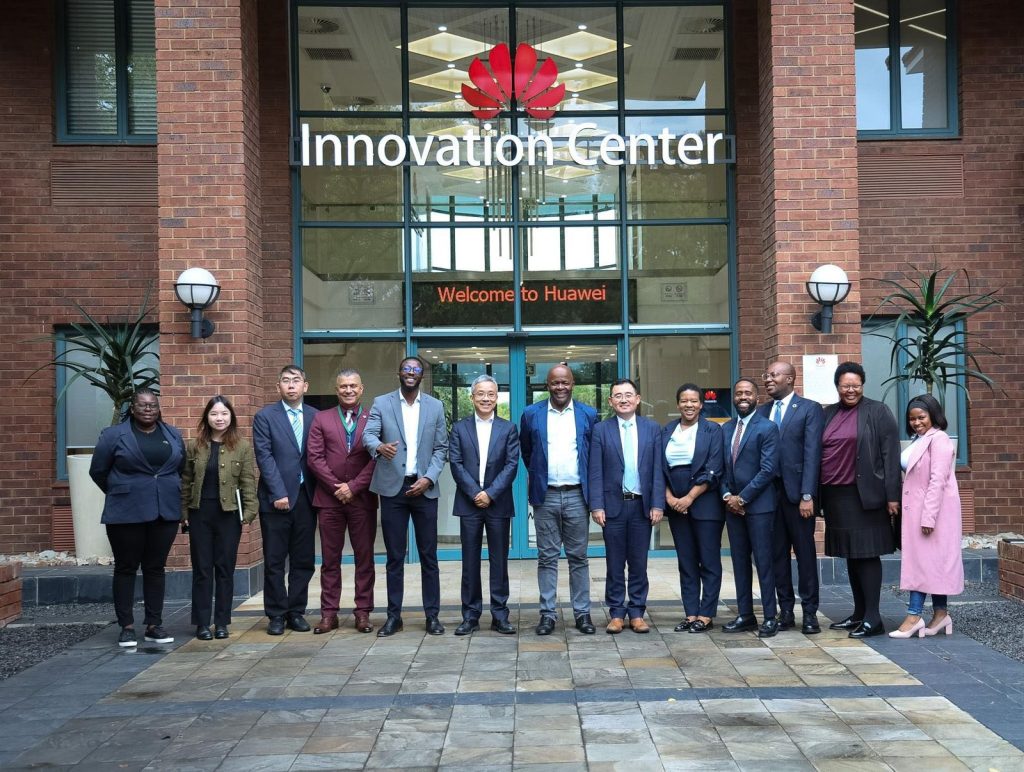
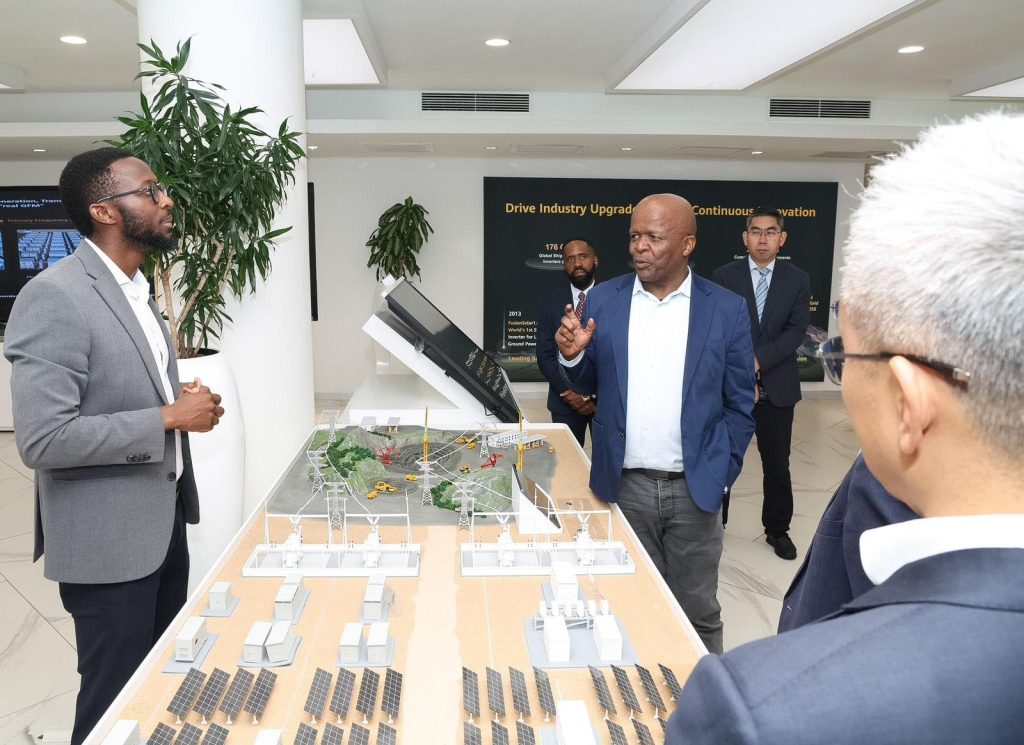
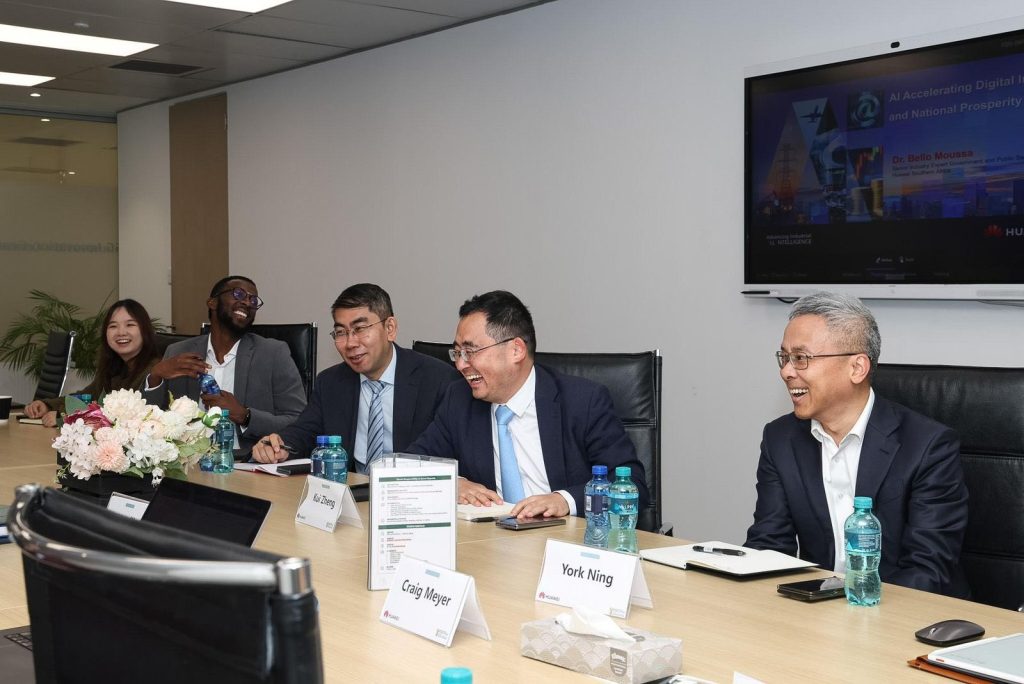
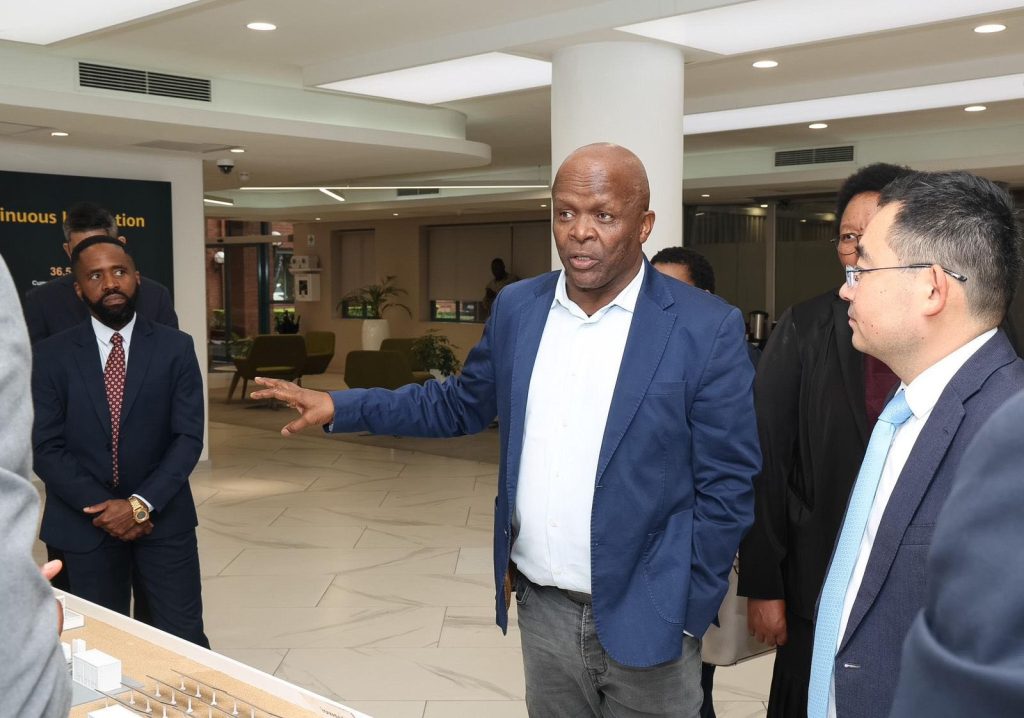
On an official invitation, Deputy Minister Mondli Gungubele visited Huawei Technologies South Africa’s Office Park in Woodmead this week.

During the engagement, the Deputy Minister met with Mr. Kui Zheng, the newly appointed CEO of Huawei Enterprise South Africa.

ALSO READ: WATCH: Morolong closes North West media Summit with call for collaboration and sustainability

Discussions focused on ICT priorities, digital infrastructure, technology transfer, and strategies to accelerate digital inclusion.

“This visit presents an opportunity to strengthen the partnership between government and industry, engage on current ICT priorities, and gain insights into Huawei South Africa’s latest developments and capabilities,” the Department said.

Deputy Minister Mondli Gungubele visited the Huawei Office Park in Woodmead following an official invitation. Photo:

The Huawei engagement formed part of a broader programme of strategic site visits, which also included AM Hengtong Africa Telecoms in Kempton Park. There, discussions centered on leveraging projects such as the PEACE Cable system to expand international connectivity and position South Africa as a regional digital hub.

ALSO READ: EFF sub regional secretary Loyiso Mangisa laid to rest

The department said partnerships of this nature are vital for implementing the National Digital Economy Masterplan, which aims to build a connected, inclusive, and globally competitive digital society.

“Engagements of this nature are critical in fostering innovation, accelerating digital inclusion, and building a connected South Africa,” the Department said.

INSIDE EDUCATION