Uncategorized
By Dr Thabo Mashongoane
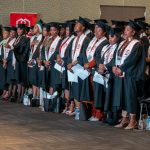
The Mining Qualifications Authority (MQA) commemorated its 30th anniversary at Gallagher Estate in Midrand, underscoring three decades of advancing skills development in South Africa’s mining and minerals sector.
The milestone event reflected on the institution’s achievements while setting out priorities for a sector facing technological change, energy transition pressures, and rising demand for artisanal and technical skills.
ALSO READ: Fumes at Wentworth school linked to container-cleaning operation
Established in 1995, the MQA has played a central role in coordinating training, learnerships and workplace-based skills programmes aligned to industry needs.
Between the 2003/04 and 2024/25 financial years, the MQA implemented an extensive set of Sector Education and Training Authority (SETA) programmes, resulting in 458 941 beneficiaries completing sector-funded programmes of which 987 435 were skills programmes.
Over this period the MQA allocated R11 972 320 603 in discretionary grants to support these development efforts.
The anniversary was not only a celebration but a call to strengthen collaboration across government, industry and training institutions.
ALSO READ: Social development targets Eastern Cape in push to lift orphan grant uptake
The sector needs a dedicated body to coordinate skills development, and SETAs have accumulated a body of knowledge that is invaluable. SETA funds a significant proportion of students in the post-school system, contributing to broader access to education and training.
The mining industry is evolving rapidly as artificial intelligence and other advanced technologies become increasingly integrated into its operations.
The sector now provides training for the operation of robotic systems used in hazardous underground environments, reducing risk to workers. Simulated machinery training and mock mine environments form part of the MQA’s training offering, enabling learners to gain practical experience under supervised conditions before entering production sites.
The MQA is also responding to South Africa’s Just Energy Transition.
As coal operations wind down in certain areas, reskilling initiatives are being introduced to support affected workers. These include programmes to retrain artisans, such as electricians transitioning to solar technology installation and maintenance.
We have to collaborate as we cannot continue training in silos. There is a need for SETAs to pool resources for cross-cutting priorities such as green hydrogen and renewable energy skills.
Close to 900 000 learners wrote matric examinations last year and improving pass rates, together with a growing number of bachelor-level passes, have increased demand for higher education and vocational training opportunities.
South Africa’s 26 public universities now serve approximately 1.1 million students, up from around 400 000 in the mid-1990s, yet capacity remains constrained for a developing economy of the country’s size. This system is under pressure and needs to expand.
ALSO READ: Teacher suspended after video humiliates Grade 1 pupil
Universities, Technical and Vocational Education Training (TVET) colleges and SETAs must work in alignment to accommodate the expanding pipeline of learners.
The current mining sector outlook is stable, despite global challenges, and the industry remains a key contributor to the economy amid ongoing global volatility.
The rally in the gold price over the past year has strengthened investor interest and has the potential to stimulate demand across other minerals. When this occurs, the industry must be prepared to supply the required skills.
As the MQA marks 30 years, its leadership maintains that the next phase will require deeper partnerships, innovation in training delivery and responsiveness to structural shifts in the economy.
The anniversary celebration also reaffirmed the Authority’s mandate to ensure that the mining and minerals sector has the skills base necessary to operate safely, competitively, and sustainably in a changing global environment.
This will include maintaining the four-year clean audit opinion we have received from the Auditor General and the 100% performance we have achieved over the past two financial years.
Dr Thabo Mashongoane is the Chief Executive Officer of the MQA.