Uncategorized
By Lebone Rodah Mosima
Former President, Thabo Mbeki, said 62.1% – equivalent to more than six out of ten – children are identified as multidimensionally poor, which he referenced to a statement released by Statistics South Africa (STATS SA) on the July 2020 Report on Children Poverty in South Africa.
In his keynote address at the Nelson Mandela Children’s Foundation (NMCF), in Bryanston, Mbeki outlined the concerning problem of poverty in children, by STATS SA report, which further stated that “Rural Child poverty fell from 86% in 2006 to 64.3% in 2023.”
ALSO READ: Limpopo suspends schooling in flood-affected districts
“Obviously, it would be difficult to claim that the soul of the nation is informed by the philosophy of ubuntu when it still has so many millions of children living in poverty,” Mbeki said.
“Of course, it is obvious that we cannot seriously consider the situation of the children in South Africa outside the context of society as a whole.’
Mbeki further said such situations of children, could have been better if it were not for certain interventions made to ensure that democratic South Africa fails.
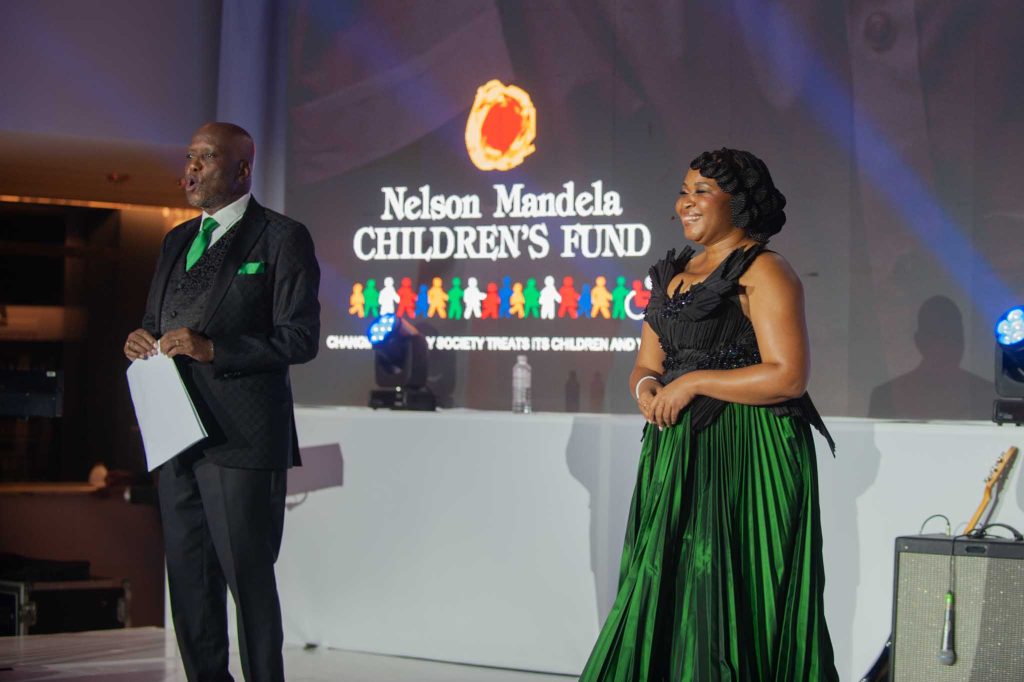
However, he said that he believes that the Nelson Mandela Children’s Fund will play a critical role in helping shape the outcome of the National Dialogue discussion about the SA’s children.
In Celebration of the NMCF’s 30th Anniversary since its adoption in 1996, he questions in the country’s commitment to children as well as the societal language eloquence being put to practice.
“In this regard, it is important that, as has been said, we must go back to basics,” he said.
“To do this means that we must fully internalise the understanding that millions of our people engaged in a protracted both to achieve political emancipation as well as realise liberation from poverty and underdevelopment.”
ALSO READ: Calls for action after bullied Mthatha child allegedly hanged herself
He said that the government must position the important work this Fund has been doing for three decades.
Adding that the Reconstruction and Development Programme (RDP) which Mbeki outlined through the constitutional act where says “No polical democracy can survive and flourish if the mass of our people remain poverty, without land, without tangible prospects for a better life.”
He also stated the Section 28 of the Bill of Rights on children’s rights, where he said that it is paramount that the supreme law of the Republic places child’s welfare above all other interests in every matter affecting their life.
“Our constitution fundamentally aspires to be a caregiving document,” he said.
“It does not just prohibit cruelty to children; it also imposes a positive obligation – on the state, on institutions, and on all of us- to ensure that every child is held, nourished, and protected.”
President Cyril Ramaphosa, said South Africa currently is a far cry from the apartheid past where the majority of the children were denied their rights to education, shelter, safety and to an environment that is conducive to their health well-being and growth.
“As a democratic nation, we have invested substantially in Early Childhood Development in Basic Education in child nutrition and in health care for children, and all of these processes are continually upscaling on an ongoing basis,” Ramaphosa said.
ALSO READ: WaterCAN launches annual school water testing week
“We have an extensive social welfare net that today reaches more than 13 million children from impoverished families.”
Ramaphosa said that, over the past few decades the NMCF has amplified the voices of children who might otherwise have gone unheard.
He also added that the Fund has also turned compassion into action, built partnerships that extend far beyond borders and despite the progress that has been made, too many children still face hunger and poverty on the African continent and in home countries.
“More than a quarter of South African children under the age of five started to eat non-vegetarian food, despite the many efforts that we continue to make,” he said.
“We therefore need to redouble our efforts to make sure that we create our country of salty and non-vegetarian food; behind every suggestion is a child whose potential risks are being diminished before it has even begun to unfold.”
He said that these realities have empowered the government, civil society, businesses and communities to act with urgency of compassion by accelerating action through the fifth national plan for children and the national strategy to strengthen coordination across departments of government and various social partners.
He emphasised that the government is prioritising the first 1,000 days of a child’s life, by expanding aid charity development, development processes in strengthening the school and the power of school nutrition programmes.
“We are supporting parents and caregivers to create natural environments, where children feel safe, valued and supported,” he said.
“As government we cannot walk this journey alone. The success of the Nelson and Mandela Children’s Fund reminds us that lasting change is worth the part to the donors, to the educators, to activist, to community leaders and to young advocates gathered this evening.”
He commends the parents who are present for bringing a deeper vision to life every day, as well as honouring the promise “that every child, whether born in a rural village, an informal settlement or a city centre, deserves an opportunity.
“We need to continue to build a South Africa and an Africa where every child is empowered to realise their true potential, because when we care for our children, we are not only shaping their future, but safeguarding the future of a nation.”