Category: Uncategorized

Gwarube and Malatsi hand over smart tablets to Cape Town learners
Uncategorized

Gwarube and Malatsi hand over smart tablets to Cape Town learners

By Lebone Rodah Mosima

Minister of Basic Education Siviwe Gwarube and Minister of Communications and Digital Technologies Solly Malatsi have handed over smart learning tablets to learners at the Forest Village Leadership Academy in Cape Town, in what they described as a joint effort to bridge South Africa’s digital divide.

The initiative forms part of the government’s ongoing drive to expand digital access in education through public–private partnerships.

In July, the ministers handed out tablets at Glenvista Primary School in Johannesburg.

Speaking on X about the Forest Village handout on Friday, Gwarube said: “These smart tablets, donated by Primedia, form part of our ongoing drive to expand school connectivity, digital literacy, and access to coding and robotics education within South Africa’s basic education system.

“These tablets will help support learners in building competence in reading, mathematics, and digital skills, laying a strong foundation for lifelong learning and opportunity.”

Gwarube said the handover was a testament to “the power of partnerships”.

She said that both departments have been handing over smart devices around the country with the support of corporate partners.

“[W]e know that in South Africa, the digital device still remains very much along the lines of those who have access to economic opportunities and those who do not,” she said.

Gwarube acknowledged that parliament had expressed dissatisfaction with the department’s pace in expanding connectivity. She said the initiative was part of efforts to ensure every learner has access to a device.

She said that the handover demonstrated government’s commitment to making sure no learner is left behind in the digital age.

She also described the initiative as an important step in preparing learners for the 21st century, encouraging early engagement with technology and building a foundation for success in a rapidly changing economy.

Malatsi said the handover “forms part of our drive to bring smart devices to underserved communities, helping young learners explore coding, robotics and STEM subjects so they can thrive in the digital world”.

INSIDE EDUCATION

Maharishi Invincibility Institution pushes plan to turn Joburg CBD into education and opportunity hub
Uncategorized

Maharishi Invincibility Institution pushes plan to turn Joburg CBD into education and opportunity hub

By Johnathan Paoli

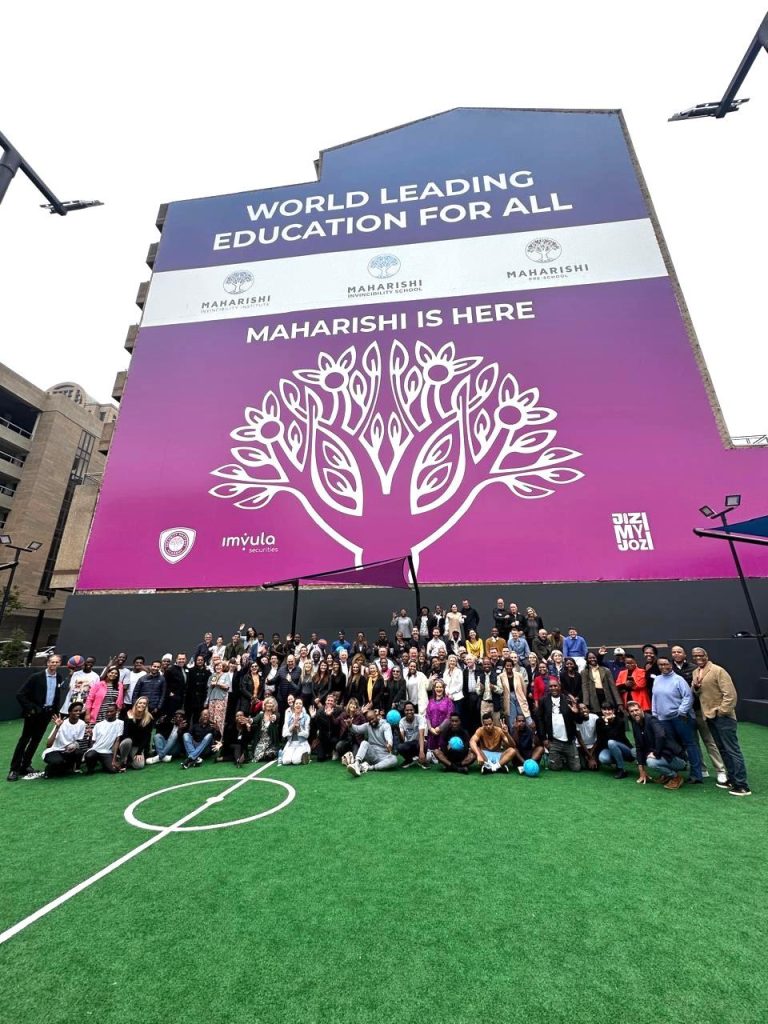
The Maharishi Invincibility Institute (MII) has outlined an ambitious plan to reshape education and urban development in Johannesburg, combining holistic, consciousness-based learning with demand-driven skills development and community transformation.

Speaking at the institute’s breakfast, MII CEO Dr. Taddy Fletcher, emphasised the urgent need to rethink education in a rapidly changing economy where traditional degrees are no longer sufficient to guarantee employment.

“Today, a B.Com. or a computer science degree isn’t enough. The world is moving too fast and is too specialized. Employers care most about the quality of the human being they’re empowering. Attitude is everything. If a person can put their heart and soul into work, they can grow quickly, and that’s what we nurture here,” he said.

The institute’s approach integrates internationally recognized degrees with Level 4, 5, and 6 qualifications accredited by sector education authorities, complemented by local and international industry exams.

Students gain practical work experience for at least three years, participate in entrepreneurship programs, and often start their own businesses, even if they do not plan to become entrepreneurs, ensuring graduates are adaptable and highly employable.

The results have been striking.

Through its partnership with Bright, MII has achieved a 100% job placement rate for graduates in the insurance sector, with Bright committed to employing 1,000 graduates over ten years.

Fletcher cited other programs, including the Cybersecurity Academy and the Human Interface Academy, which combine work experience, technical training, and leadership development to produce highly skilled professionals ready to enter critical sectors.

Research shows that at least one year of quality work experience triples a young person’s chances of securing employment.

MII extends this further, ensuring students have access to three years of structured work experience, mental health support, remedial education, nutrition, physical activity, and meditation.

Published research, including a British journal study, has shown that daily meditation over 60 days significantly reduces PTSD and depression among students, transforming both their well-being and their learning outcomes.

Financial accessibility remains central to the institute’s philosophy.

While students pay only 200 rand a month, MII operates a “Learn and Earn” system, where students contribute to funding scholarships for their peers.

Last year, this model generated nearly 15 million rand, with projections close to 20 million rand in 2025.

Coupled with perpetual maintenance and bursary funds, these initiatives ensure the institute can educate future generations sustainably.

Dr. Fletcher also highlighted MII’s role in urban revitalization through what it calls the “Michelangelo Principle”—removing what is not essential to reveal the inherent beauty of Johannesburg’s CBD.

Projects include the Josie Field of Dreams, the city’s first full-size soccer field, and the redevelopment of buildings into multi-purpose sports and cultural centers.

These initiatives provide safe, functional, and inspirational spaces for students and the community.

Safety and professional development are reinforced through a three-year Security Master Academy developed with CAP Security, training students to commander-level security positions rather than short-term certifications.

Other urban improvements include solar-powered streetlights and public space upgrades, enhancing both safety and sustainability.

MII aims to establish an “Education Town” that will eventually host over 10,000 students by 2031–2034, forming a cluster comparable to Boston’s higher education ecosystem.

By integrating institutions such as Wits Business School and the University of Johannesburg, the city could support 150,000 students, positioning Johannesburg as Africa’s leading education and trading hub.

International recognition reinforces the institute’s innovative model.

Stanford University cited MII in its 2025 publication, Reimagining Higher Education, as one of the twelve most innovative educational institutions globally, and one of only two from Africa.

Locally, MII has leveraged Black Economic Empowerment policies to integrate youth into the economy, assisting partner companies in achieving level-one BEE status while fostering graduate employment.

Dr. Fletcher concluded with a vision that combines social impact and economic transformation.

Through holistic education, practical skills, entrepreneurship, urban revitalization, and community engagement, the Maharishi Invincibility Institute is positioning itself as a transformative force in South Africa, redefining how young people learn, work, and contribute to society.

PHOTO: Eddie Mtsweni

INSIDE EDUCATION
Uncategorized

Takealot, DHET partner to bridge skills gap

By Levy Masiteng

The Department of Higher Education and Training (DHET) and Takealot have partnered to bridge the gap between education and employment by offering industry-relevant skills training and e-commerce business opportunities to young people, through the Takealot Township Economy Initiative.

The signing ceremony of the memorandum of understanding between the DHET and Takealot took place at Takealot in Kempton Park on Wednesday.

During the ceremony, both organisations said the partnership aims to equip students with the skills and knowledge needed to thrive in the digital economy.

Deputy Minister of Higher Education and Training, Mimmy Gondwe, said that the initiative has four main initiatives. The first was the adoption of three TVET colleges near its distribution centres in Kempton Park, Durban, and Cape Town, to provide students with work-integrated learning opportunities and industry experts to support curriculum development.

The second initiative included an expansion of Takealot’s bursary programme. Gondwe said her department will match the funding, thereby enabling more students to access education, particularly in high-demand skills areas such as ICT, logistics, and e-commerce retail.

Gondwe said that Takealot will also use its logistics and delivery network to ensure timely delivery of textbooks to students across various campuses, nationwide.

The fourth initiative involves the township economy, whereby the partners will support township entrepreneurs and small to medium-sized enterprises to participate in the digital economy, providing training, funding, and access to Takealot’s platform.

Takealot CEO Frederik Zietsman said the company employed 7,500 people, supported 33,000 livelihoods, and hosted 50,000 sellers on its platform.

“[W]e empower multiple more people to earn a livelihood and to have careers within our ecosystem,” Zietsman said.

Gondwe said that staff and students will benefit from mentorship, career guidance, and volunteerism from Takealot employees, and that more importantly, Takealot will extend free access to online learning resources, offering a global college catalogue of skills training directly to students.

Gondwe also emphasised the importance of public-private partnerships in addressing the country’s high unemployment rate.

“Today’s MoU builds on our Takealot Township Economy Initiative agreements in Mpumalanga and Gauteng and now takes them national, with clear roles, measurable outcomes, and shared accountability,” she said.

Zietsman highlighted the company’s commitment to using e-commerce to improve lives.

“Our purpose statement is truly our conviction. We live day in, day out, with the conviction of using e-commerce to change lives in South Africa for the better.”

The Takealot Township Economy Initiative aims to create 20 000 new opportunities by 2028.

Zietsman said Takealot had already supported over 130 TVET learners through work-integrated learning programmes and has a “Yes for Youth” programme that supports over 120 learners and graduates.

INSIDE EDUCATION

Uncategorized

KZN launches school safety programme to tackle violence, crime

By Thapelo Molefe

KwaZulu-Natal (KZN) Premier Thamsanqa Ntuli on Thursday unveiled a province-wide School Safety Programme aimed at addressing rising incidents of violence, crime, and drug abuse in schools.

Speaking at the Archie Gumede Conference Centre in Durban, Ntuli said the initiative was a bold commitment to inspire new hope by creating safer, stronger, and more prosperous communities, starting with schools.

Since January 2024, KZN has recorded more than 2,300 cases of sexual harassment, violence, theft, gang activity, drug abuse and faction fighting in schools.

“These are not just statistics. They are broken lives, interrupted education, and communities in distress. We cannot and will not stand by,” Ntuli told delegates.

The School Safety Programme will recruit and train student ambassadors to champion accountability and create safer school environments, while also establishing confidential reporting channels for learners to raise concerns about bullying, gender-based violence, and substance abuse.

In addition, security infrastructure will be strengthened through the installation of CCTV cameras in 20 schools across eThekwini, King Cetshwayo, and Amajuba districts. 

The initiative will further promote arts, culture, and sports as preventative tools, using platforms such as poetry, debates, and other activities to encourage positive social messaging and awareness.

The programme will be implemented through a Memorandum of Understanding between the Departments of Community Safety and Liaison, Education, Sport, Arts and Culture, and the South African Police Service.

The launch was attended by representatives from law enforcement, senior government officials, educators, and community leaders, reflecting a broad commitment to making schools safer.

Ntuli emphasised that the responsibility for safe schools extended beyond the government.

“School safety is a collective responsibility. Communities must guard against vandalism and crime. Parents must remain present and guide their children. Learners, your voices matter, your leadership matters,” he said.

He warned that the province’s future depended on ensuring that schools remained “true havens of growth.”

“The safety of our children is non-negotiable. It is the foundation on which our province and our nation will stand or fall. No child in KwaZulu-Natal should ever fear walking into a classroom, and no parent should fear sending their child to school,” Ntuli said.

INSIDE EDUCATION

Uncategorized

CETA-funded beneficiary tops PDBA at GIBS

By Thebe Mabanga

Trailblazing academic and sector policy expert Jeanette Mosia is a focused, deeply spiritual mother of two who uses her success not only to uplift her family but also to show young people that their background does not define their future.

Her latest accomplishment is to finish top of her class in the Postgraduate Diploma in Business Administration (PDBA) at the University of Pretoria’s Gordon Institute of Business Science (GIBS), in a programme funded by the Construction Education and Training Authority (CETA).

Her life mantra, displayed as her WhatsApp status is: “Distraction leads to deception, deception leads to dislocation, dislocation leads to disruption.”

It is taken from renowned evangelist Bishop Dale Bronner’s sermon and means that if you are distraction from your purpose, it can lead you to be deceived by life’s temptation and once dislocated from your path, it can ruin your life, career, and family life.

“For me it highlights the importance of having a stubborn and resolute focus regardless of what life throws at you.” says Mosia.

“ What looks like a small distraction can lead you into a negative chain, you can easily entangle yourself in a web that you do not know how to get out of.”

It is this single-minded determination that allows her to juggle her work as a programme manager at the Trade and Industrial Policy Strategies (TIPS) in Pretoria, running her ministry with her husband, Bonngwe Mosia, whom he credits for support and running their household with two small children and juggling studies which following the PDBA, now involves taking on an MBA in October.

The fourth of five children and the first to graduate in her family, Mosia was born in Makhubung village outside Mahikeng in the North West.  

After completing her high school in Mmabatho, she studied at the University of Cape Town (UCT), where she obtained a BSc in Construction Studies in 2008, followed by an Honours the year after and an MSc in Project Management in 2012.

For the CETA funded programme, she was alerted by a friend and former colleague and promptly applied for a four-month International Executive Development Programme.

It was literally while undergoing orientation in April 2024 that she learnt that she will be doing a yearlong programme that requires her to attend class one week every month.

Mosia, 39, believes this was divine intervention as she may never have agreed to such a commitment willingly given her work and ministry.

She has now seen it through with flying colours.

She notes that her favourite part of the program was doing immersion in Dubai, Shenzhen in China and Hong Kong as these gave her firsthand experience of how other countries do business and transform cities as well as the value of strong leadership and commitment to development.

CETA funds such programmes to help build leadership not just for the South African built environment but for the broader corporate sector.

“My goal when I joined the programme was  to facilitate my transition from technical roles to more strategic and executive roles and I am ready for it.” says Mosia.

Mosia says between a full-time job, studying, raising small kids, and co-leading a church ministry with her husband, she does not get to have much time left to herself.

The two activities that “ignite her soul” are ballroom dancing, which she has not done in years, and completing a road race, which she cannot do consistently but compensates for it with daily walks.  

She has time to occasionally read for pleasure and counts John Maxwell as among her favourite authors for his bible centered philosophy on leadership.  

CETA, with its aim to provide skills development services to the construction sector and implement the objectives of the National Skills Development Strategy, plays a crucial role in ensuring that the construction sector is equipped with the critical and scarce skills necessary for economic sustainability and global competitiveness.

The CETA officially entered into a Memorandum of Understanding (MoU) with the University of Pretoria’s Gordon Institute of Business Science (GIBS) in 2024 to foster collaboration and strengthen the South African construction and built-environment sector.

In terms of the MOU, Gibs will design and deliver specialised learning programmes tailored to the needs of professionals within the construction sector.

These programmes span from entrepreneurial development to executive leadership development programme, and engage in thought-leadership, research, and skills planning.

CETA chief executive Malusi Shezi says the construction Seta aims to train 120 women to occupy key positions within the construction industry.

“We have made it clear that 60% of the beneficiaries of the international executive development programme is women. This was to ensure that women occupy key positions within the construction sector, which was traditionally dominated by men, says Shezi.

“We did not want a situation where companies would say we are not hiring women because we cannot find them. We have now made it possible for them to put women in key executive positions. We made sure we increase the pool so that there is no reason for companies not to transform. Women deserve to be given opportunities.”

Professor Morris Mthombeni, dean of GIBS, says collaborative partnerships with institutions such as CETA hold immense value “as they enable us to collectively develop innovative solutions for the skills challenges facing our nation.”

INSIDE EDUCATON

Uncategorized

Parliament warns of possible Operation Dudula disruptions at SA schools

By Thapelo Molefe

Parliament has urged parents of foreign national learners to exercise vigilance amid warnings that Operation Dudula activists could attempt to block children from accessing schools on Wednesday.

The Chairperson of the Select Committee on Education, Sciences and the Creative Industries, Makhi Feni, said the committee was deeply concerned by social media posts suggesting the group intended to disrupt schooling.

“We condemn this conduct from Operation Dudula activists, and we call on them not to distract school operations. Learning time is of essence and especially this close to preliminary and final examinations,” Feni said.

He called on the Department of Basic Education to implement measures to safeguard schools and ensure that any individuals who threaten learners are held accountable.

Operation Dudula, known for previous illegal demonstrations at healthcare facilities, has not publicly confirmed the planned action but has faced criticism for targeting foreign nationals in various sectors.

The group’s organisational leader Zandile Dabula, recently announced that Operation Dudula will launch a larger campaign at the end of December, continuing into January 2026, aimed at preventing foreign children particularly those without legal documentation from enrolling in public schools in South Africa. 

Dabula said members of the movement would be stationed at schools to enforce the policy.

Civil society organisations have condemned the plans. Equal Education (EE) and the Equal Education Law Centre (EELC) argue the proposed campaign violates the Constitution and a landmark High Court ruling affirming the rights of all children in the country to basic education, regardless of documentation status.

The issue of foreign nationals in South Africa, especially undocumented migrants, has been contentious for years, sparking protests, policy debates and tension over access to limited resources such as housing, healthcare and education.

Feni warned that any attempts to block access to schools could traumatise young learners and escalate into broader criminal activity. 

“These violent actions have the potential to be such a traumatic experience for young children and must be stopped. The uncoordinated activism by Operation Dudula is a concern, and could likely be hijacked by criminal elements,” he said.

He further appealed to principals to remain vigilant and to prioritise the safety and welfare of learners under their care.

INSIDE EDUCATION

Uncategorized

Jozi My Jozi launches Babize Bonke campaign to revitalise Johannesburg

By Johnathan Paoli

As Johannesburg gears up to host the G20 Summit later this year, the city’s creative heartbeat was on full display with the launch of Babize Bonke, a bold new campaign by the Jozi My Jozi movement.

Staged along the inner-city Main Street walkway, the launch showcased art, music, and stories of resilience from local champions who are reshaping Johannesburg from the ground up.

Among the eight champions celebrated in the campaign is Dr. Taddy Blecher, education pioneer and CEO of the Maharishi Invincibility Institute.

Inside Metros reached out to the pioneer, who described the Babize Bonke platform as a chance to connect Johannesburg’s revival directly to improving security in the area and opportunity.

“Johannesburg has always been a place of resilience and reinvention. The world will be watching us later this year. What we need to show is that Joburg is not defined by its problems but by the creativity, compassion, and determination of its people. Campaigns like Babize Bonke prove that,” Blecher reflected.

Blecher’s contribution to the campaign is rooted in the philosophy he has carried for decades: that transformation is not only about physical infrastructure, but about human capacity.

The campaign emphasises making the invisible visible.

For decades, he has been giving a platform to young people from backgrounds where talent often goes unnoticed.

Many of his institute’s students come from households with little or no income, yet graduate with globally recognised qualifications, entrepreneurial skills, and employment opportunities.

This follows the launch of the Security Mastery Academy (SMA), a partnership between the Maharishi Invincibility Institute and CAP Security launched last year; which seeks to professionalise the security sector while simultaneously creating opportunities for young people to play a direct role in Johannesburg’s regeneration.

“This academy is about mastery on two levels. On one level, we’re training consummate professionals who can meet the demands of a sector critical to South Africa’s safety and stability. On another level, we’re helping individuals achieve personal mastery through holistic training, from martial arts to stress management, from leadership skills to Transcendental Meditation,” Blecher said.

The programme is structured over three years, moving from security officer training to supervisory and commander levels.

Graduates are guaranteed employment, ensuring that the pathway leads not only to skills but to livelihoods.

Jozi My Jozi has broadened its scope with a series of initiatives designed to restore safety, dignity, and opportunity across Johannesburg’s inner city.

Through the Light Up Jozi campaign, the movement is raising R300 000 to install solar-powered lights in darkened areas, expanding on the successful revitalisation of the Nelson Mandela Bridge with plans to add solar panels along key corridors.

This work ties into broader efforts to repurpose derelict buildings for job creation, open arts and reading spaces for children, and establish technology centres offering coding, robotics, and AI training for youth while providing adult skills development during the day.

Partnerships with schools are central to identifying safety concerns, career opportunities, and sport facility needs.

Early Childhood Development (ECD) is another critical pillar, with Jozi My Jozi working alongside the Oppenheimer Memorial Trust and the Education department to register and upgrade under-resourced centres in the inner city and Soweto.

The aim is to bring them up to Bronze Level standards, unlocking government funding and creating sustainable environments for children and educators.

By strengthening ECD infrastructure, the initiative seeks to empower communities and ensure that young learners receive the foundation needed for future success.

At the same time, Jozi My Jozi is addressing homelessness through collaborations with NGOs such as MES, U-Turn, and the Johannesburg Homeless Network.

This includes renovating shelters, piloting containerised housing solutions, and launching a citywide “Point in Time Count” to establish accurate data on Johannesburg’s homeless population.

Together, these efforts reflect Jozi My Jozi’s community-driven vision of a safer, revitalised Johannesburg that balances immediate social challenges with long-term sustainable growth.

With the G20 Summit set to spotlight Johannesburg in November, initiatives like these demonstrate

As Jozi My Jozi continues to rally businesses, communities, and creatives under its “coalition of the doing,” Blecher sees these initiatives as demonstrating how civil society and business are stepping up to redefine the city’s story.

INSIDE EDUCATION

Uncategorized

KZN transport gets tough on scholar transport after 20 injured in latest crash

The KwaZulu-Natal Transport Department has announced a province-wide clampdown on unroadworthy scholar transport vehicles after a crash on Monday in Impendle left at least 20 learners injured.

MEC Siboniso Duma said traffic inspectors, working with municipal authorities, would be tasked with removing reckless drivers and unsafe minibuses from the road.

Duma confirmed on Tuesday that the driver involved in Monday’s accident had been arrested. He was found to hold only a learner’s licence and no Professional Driving Permit (PrDP), in violation of the National Land Transport Act.

“In KwaZulu-Natal, there are many unroadworthy vehicles used in private scholar transport,” Duma said. “We will remove from our road networks reckless drivers who are behind the spike in accidents that have destroyed families and cut short the lives of innocent people.”

Last week, a school taxi crashed into a crèche in iMbali, Pietermaritzburg, leading to the deaths of five children. Eight others were injured.

The latest accident occurred when a minibus taxi carrying learners aged between eight and 15 plunged off the KwaKhetha Bridge in Impendle. The children were taken to various healthcare facilities, where some are still recovering.

Spokesperson Ndabezinhle Sibiya said the department would also hold urgent talks with the South African National Taxi Council (SANTACO) in the province to address the increasing number of accidents involving scholar transport.

In addition, the department will partner with the Vehicle Testing Association, part of the Retail Motor Industry Organisation, to strengthen roadworthy checks. All minibuses will be tested at accredited municipal or private testing facilities, aligned with their designated route permits.

“The KwaZulu-Natal Department of Transport remains committed to prioritising the safety and well-being of all learners across the province,” the department said in a statement.

INSIDE EDUCATION

Uncategorized

DA demands empowered social workers as Gauteng learner pregnancies escalate

By Johnathan Paoli

The Democratic Alliance (DA) in Gauteng has called for urgent empowerment of social workers, health workers, and caregivers to report cases of statutory rape, as alarming new statistics reveal that tens of thousands of school-age girls in the province fell pregnant in 2024. 

DA Gauteng leader and official opposition leader Solly Msimanga said the figures underscored a growing crisis of child sexual abuse and statutory rape that is being ignored by authorities and too often normalised in communities. 

“Statutory rape is a serious violation, and men who commit such a crime inflict lasting harm on a vulnerable individual. The failure by law enforcement agencies to take action against men who commit this offense is deeply troubling, as it compromises the principles of consent and respect, leaving young girls vulnerable to predatory individuals who have lost all sense of morality,” Msimanga said. 

According to data disclosed by Gauteng Health and Wellness MEC Nomantu Nkomo-Ralehoko in the provincial legislature, 23,691 pregnancies were recorded among girls between the ages of 10 and 19, last year. 

Of these, 18,851 resulted in deliveries at public health facilities, while 4,840 were terminated. Disturbingly, 521 of these pregnancies involved girls between the ages of 10 and 14.

While pregnancies among learners are rising, police reports of child rape and statutory rape are falling.

Gauteng’s Clinical Forensic Medical Services and Thuthuzela Care Centres recorded 474 cases reported to the South African Police Service in 2022/23, 257 cases in 2023/24, and just 242 between April and December 2024. 

Msimanga said the discrepancy pointed to a breakdown in enforcement of Section 110 of the Children’s Act of 2005, which obliges teachers, healthcare workers, social workers, and caregivers to report suspicions or evidence of child sexual abuse. 

“The failure to act enables predators to continue abusing children, while families are sometimes bribed into silence. This not only protects perpetrators but entrenches a culture of impunity,” he said. 

The Gauteng Health Department’s statistics highlight that the problem cuts across the province. 

Johannesburg recorded 7,245 cases of teenage pregnancy, followed closely by Ekurhuleni with 6,893, and Tshwane with 5,752. The West Rand and Sedibeng recorded 2,014 and 1,787 respectively.

The DA has requested further data on which schools reported the highest numbers of learner pregnancies and how many girls who gave birth managed to return to school. 

However, Inside Education reached out to the Gauteng Education Department who admitted it does not keep such records. 

Msimanga cautioned that poverty and inequality fuel the problem, with transactional sex between older men and vulnerable girls increasingly common. 

In some cases, families accept money or goods in exchange for silence.

The DA is demanding that the provincial departments of Education, Health, Social Development, and Community Safety collaborate more effectively to equip and empower social workers, health professionals, and caregivers to report statutory rape to SAPS; ensure all reported cases are promptly investigated and prosecuted; provide education to girls that reinforces their right to refuse unwanted sexual advances, even from adults in positions of authority; and strengthen partnerships with parents and community leaders to create safe environments for children. 

Msimanga added that the DA will also push for answers on the prevalence of sexually transmitted infections and HIV among the affected age group. 

The DA’s Gauteng intervention is part of a broader national probe into the child pregnancy crisis.

DA Social Development spokesperson Alexandra Abrahams recently revealed that in the Eastern Cape, 117 girls between the ages of 10 and 14 gave birth between April and July 2025, while 4,752 teenagers aged 15 to 19 delivered babies during the same period.

“These figures are only the tip of the iceberg. Pregnancies that end in termination or miscarriage, or those that go unreported, make the true scale far greater,” Abrahams said.

The DA cited the reported drugging and sexual assault of learners from Khomani Primary School in Diepkloof earlier this year as proof that some incidents occur beyond the direct oversight of teachers and parents. 

Msimanga said a DA-led administration would ensure that professionals are trained to enforce the Children’s Act, statutory rape cases are properly investigated and prosecuted, and schools are staffed only with vetted teachers and officials.

INSIDE EDUCATION

SA gymnastics gold medallist improves her game at World Challenge in Paris
Uncategorized

SA gymnastics gold medallist improves her game at World Challenge in Paris

By Rafieka Williams

Team South Africa gymnast Caitlin Rooskrantz produced a strong performance at the Paris World Challenge Cup this past weekend, finishing fourth in the uneven bars final.

Rooskrantz competed alongside teammates Buhle Nhleko, Zelmé Daries and Naveen Daries. In the vault event, Daries placed 12th while Nhleko finished 16th, according to Gymnastics South Africa.

A University of Johannesburg marketing graduate and uneven bars gold medallist, Rooskrantz achieved her personal best international score at the championship. Her return to the world stage comes a year after her 2024 Olympic campaign was cut short by an unexpected floor injury.

Back on the international circuit, Rooskrantz went head-to-head with Algeria’s Kaylia Nemour, the reigning Olympic champion. The International Gymnastics Federation (FIG) noted: “Nemour will be the only reigning Olympic champion among a field of more than 400 men’s and women’s gymnasts in the City of Light.”

In the uneven bars final, Nemour claimed the top spot, with France’s Célia Serber taking second and teammate Lorette Charpy in third.

The World Cup qualifiers were held on Saturday, 13 September, with all 10 finals concluded on Sunday, 14 September. Supporters and fans took to social media to celebrate Rooskrantz’s achievement and applaud Team South Africa’s showing in Paris.

Source: facebook/Gymnastics SA

INSIDE EDUCATION