Category: Uncategorized

Uncategorized

Real Madrid to launch first SA football academy

By Johnathan Paoli

The Real Madrid Foundation has officially announced the establishment of its first South African football academy, marking a historic milestone in the club’s global expansion.

The academy, created in partnership with Generation Schools, will bring world-class football training to young athletes in Cape Town and Johannesburg, seamlessly integrating elite coaching with academic excellence and personal development.

The first Real Madrid Foundation Academy will open at Generation Schools Imhoff campus in the Kommetjie area of Cape Town.

A second academy is scheduled to launch in Modderfontein, Johannesburg, in the second quarter of the year.

This expansion will further extend Real Madrid’s esteemed training philosophy across South Africa, providing more young footballers with access to top-tier coaching.

The academy will cater to children aged six to 17, offering a structured development programme built on three key pillars –  the player, the game and the mindset.

These pillars encompass six critical training areas, namely physical, technical, tactical, mental, competition,# and Real Madrid Foundation values, ensuring a holistic approach to player development.

With a curriculum designed to maintain continuity in training, the academy will integrate technical-tactical routines that define Real Madrid’s signature playing style.

To further enhance development, the academy will field three elite teams to compete in the 2025 local football association season, alongside additional developmental teams to accommodate players at various skill levels.

Real Madrid Foundation Technical Director in South Africa and Head Coach, Alberto Giménez is expected to lead the academy.

Supporting him in this mission, the Rising Stars Centre of Excellence Sporting Director Richard Mcenery said his vision was to cultivate a hub of excellence that fosters teamwork, leadership and respect, which were values synonymous with Real Madrid’s rich history.

Football legend Roberto Carlos has similarly thrown his support behind the initiative, highlighting its significance beyond sport.

“We are delighted to bring the Real Madrid Foundation’s values and training philosophy to South Africa. This initiative is about more than just football; it’s about using sport as a tool to foster education, integration, and social development,” he said.

INSIDE EDUCATION

Gauteng to focus on growing and supporting agricultural students
Uncategorized

Gauteng to focus on growing and supporting agricultural students

By Johannah Malogadihlare

Gauteng agriculture and rural development MEC Vuyiswa Ramokgopa is seriously concerned about the declining rate of enrolment in agricultural studies, both at secondary and tertiary level.

“It is a problem. This indicates that young people broadly are not seeing agriculture as an industry that is aspiring to get into,” she told Inside Education.

She was speaking while visiting the Ekurhuleni Agricultural College.

“We want aspirant agricultural economists, technologists, farmers and agri-processors to flock to Gauteng to come attend institutions such as this because they should represent the highest level of agricultural education in our country,” Ramokgopa said.

While highlighting the need for students to acquire skills in the sector, she also stated reasons to invest in such skills.

“We feel it’s important to engage with you at this level, the agricultural sector in South Africa is globally revived. All over the world people look at the South African agricultural sector as a beacon of excellence we have in the commercial sector. We are leading in terms of technology, genetics, productivity and techniques,” she said.

The MEC said the department had offered graduates skills programmes and absorbed 68 students this year from the province.

Additionally, Ramokgopa said as the older generation of farmers were looking to retire, the department needed to ensure that young people were equipped with skills to be able to take over.

The department emphasised that agricultural skills were in demand globally. The only way students could differentiate themselves with their competitors, was to build relationships in the industry and participate in internships to gain work experience.

“It’s not about creating people who will go into the job market, but we need to create the models, entrepreneurs, businesses and future leaders in the industry,” Ramokgopa said.

However, Ramokgopa mentioned that she was encouraged by the progress that has been made by the college since it started operating.

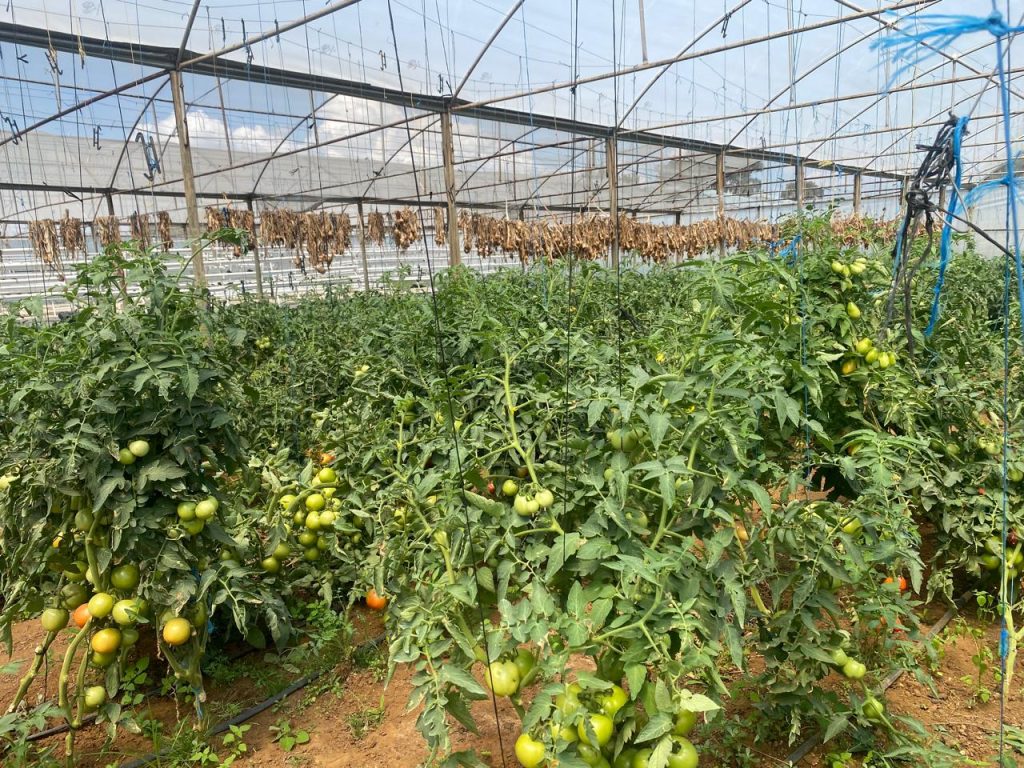
Ekurhuleni Agriculture College. Picture Supplied.

The college was established five years ago and provides students with 70% of practical experience and 30% theoretical work.

She said it was important to expose students to entrepreneurial and tech skills, which would help enhance productivity.

“Agriculture is not about seeds, spade, shovel and ground; it’s about being able to mind the data and to produce most efficiently for where you are with what you have,” said Ramokgopa.

Furthermore, she addressed challenges faced by state-owned farms and that the department would also invest in existing land to run incubation programmes of the department.

“The idea now is to aggregate our investment, but also aggregate the power of procurement that the state has, to be able to ensure sustainability of these enterprises,” said Ramokgopa.

The department is looking at establishing its own state-owned farms in 2026, to be located in different regions of Gauteng.

“The purpose of these farms is to help address some of the challenges that we have experienced and that we have had from small-scale farms,” she noted.

The department wanted to use provincial or municipal land to incubate farmers who were new to the industry to be able to help them with research and drive their commercialisation.

The MEC also mentioned that the province’s agriculture sector was set to benefit from a government partnership between the Hunan province in China and Gauteng.

Video by: Katlego Tshekoesele

INSIDE EDUCATION

Uncategorized

Ramaphosa vows to put education first in 2025

By Johnathan Paoli

President Cyril Ramaphosa has announced the government’s plan to strengthen the country’s education system, focusing on inclusivity, quality and alignment with economic needs.

This will help equip young South Africans with the skills and knowledge necessary for personal success and national development.

In his 2025 State of the Nation Address, Ramaphosa outlined a comprehensive strategy to enhance South Africa’s education system.

“Central to our efforts to end poverty and to develop our economy is to provide decent, quality education to every young South African,” he said.

This address, the first under the Government of National Unity, emphasised early childhood development (ECD), foundational literacy, teacher training, legislative reforms, technical and vocational education and support for higher education students.

Ramaphosa underscored the importance of ECD as the bedrock of future learning and development.

He announced plans to register and formalise existing ECD centres, ensuring they were equipped with the necessary facilities, trained educators and quality learning materials.

The president described the initiative as aiming to provide every child with access to quality early learning, recognising that the early years were crucial for cognitive and social development.

A significant focus was placed on ensuring that every child could read for meaning in the foundation phase by implementing mother tongue-based bilingual education, which has been shown to improve literacy and numeracy outcomes.

The Funza Lushaka Bursary Scheme was expected to continue to prioritise students aspiring to teach in the foundation phase.

Ramaphosa said that by attracting and training passionate educators for early grades, the government aimed to strengthen the quality of education from the ground up.

The president highlighted the signing of the Basic Education Laws Amendment Act (Bela) last year, praising it as a pivotal move to make education more accessible and inclusive.

He confirmed that Basic Education Minister Siviwe Gwarube would introduce national policy, norms and standards and regulations to empower all partners to support the implementation of the Act.

To align education with economic needs, Ramaphosa said the government was increasing the production of artisans through Technical and Vocational Education and Training colleges, and combining formal learning with job training, drawing on successful international models.

The president called on the private sector to offer young people experiential learning opportunities during their studies, fostering a skilled workforce ready to meet market demands.

Addressing the financial challenges faced by the missing middle, the government is implementing Phase 1 of a comprehensive student funding model supporting approximately 10,000 students in its first year.

The president lauded the matric class of 2024 for achieving the highest pass rate in the country’s history, with 87% of learners passing their exams and nearly half obtaining a bachelor pass, describing it as reflecting the dedication of learners, educators, parents and communities in striving for academic excellence.

He underscored the government’s dedication to providing equitable education opportunities for every South African child, by stating that over 10.5 million learners attended public school where they were not required to pay fees.

Meanwhile, Solidarity welcomed the president’s commitment to developing the education sector, but warned against undue influence from radical elements and empty promises.

The union agreed with Ramaphosa’s announcement of the norms and standards of Bela, but maintained that it should have been established before the implementation of the legislation.

AfriForum CEO Kallie Kriel criticised the president as “not practicing what he is preaching”, describing Bela as an attack that encouraged division by targeting a specific community.

However, the Democratic Alliance was satisfied with the focus on education. praising Gwarube’s efforts in placing ECD first.

Party leader John Steenhuisen praised the development of ECD as a DA policy, which would ensure that every child received the best possible start in life and a testament to the impact of the party on policy making.

INSIDE EDUCATION

Uncategorized

Learners must be tech savvy

By Johnathan Paoli

Basic Education Deputy Minister Reginah Mhaule has emphasised the crucial role that investments in STEM (Science, Technology, Engineering, and Mathematics) education play in the country’s economy, calling for more to be done in preparing South African learners for the digital future.

Addressing learners, educators and stakeholders, Deputy Minister Mhaule officially launched two new robotic labs at Cingani High and Soqhayisa Secondary School in Motherwell, Gqeberha.

The initiative, a collaboration between the Shoprite Foundation, Future Nation College and the department, is set to provide learners with critical skills in robotics, coding, and digital literacy.

“If we fail to equip our young people with relevant, future-fit skills, we risk turning what should be our greatest asset into a burden. This represents a crucial step towards ensuring that South African learners are not left behind in the technical revolution,” Mhaule said.

The launch also included the unveiling of a Consumer Studies kitchen at Cingani, providing learners with practical culinary and business skills, further broadening their career prospects.

Africa is the youngest continent, with over 60% of its population under the age of 25, and that by 2060, projections indicate that Africa will have the largest working-age population globally.

Mhaule cautioned that while this demographic advantage has great potential, it must be matched with a robust education system to ensure that the youth were equipped with the skills necessary to drive innovation and economic growth.

She said the world was rapidly evolving with artificial intelligence, big data, automation and digital transformation, which was reshaping industries.

The labs aim to provide learners with hands-on experience in these technologies, positioning them for future career opportunities in data science, engineering and robotics.

Mhaule lauded Shoprite for its investment in education, emphasising the importance of public-private partnerships in driving sustainable development.

She referenced the Embedded Systems Theory, which highlighted the interdependence between businesses and the communities in which they operate.

“Businesses do not operate in isolation. They are embedded within the communities they operate in, and the success of companies such as Shoprite is directly tied to the well-being of the societies in which they operate. A thriving community creates a thriving economy, which in turn creates a stronger consumer base and workforce for businesses,” Mhaule said.

The deputy minister highlighted the reality that the government alone could not address the vast educational needs of the country.

Collaborations with the private sector, civil society and academia were necessary to transform the education system effectively.

The launch serves as a model of what can be achieved when different sectors work together to equip learners with essential skills.

Mhaule directed a passionate appeal to the learners benefiting from the new labs, urging them to take full advantage of the resources provided.

She said the launch marked a significant milestone in integrating robotics and coding into the South African school curriculum; and with technology-driven education gaining momentum, initiatives like the Shoprite Robotics Centre would be instrumental in ensuring that learners were adequately prepared for the digital age.

Shoprite Foundation Managing Trustee Maude Modise reiterated the company’s commitment to investing in education as a means of fostering economic growth and social development.

Modise stated that Shoprite recognised the importance of equipping young people with skills that would make them employable in a technology-driven world.

“Technology has the ability to transform lives. By investing in technology education, the Shoprite Foundation is supporting a future where young people have the necessary skills and opportunities to succeed in a world where demand continues to grow for roles such as artificial intelligence and machine learning specialists, as well as robotics engineers,” she said.

The deputy minister said that the opening of the labs in Motherwell sets a precedent for future collaborations between government and private enterprises in addressing educational challenges.

She said the initiative aligned with South Africa’s broader strategy of integrating digital skills into the curriculum and ensuring that learners were well prepared for the demands of the 21st-century job market.

Mhaule expressed her gratitude to Shoprite for their visionary leadership and investment in education, emphasising that such initiatives played a crucial role in shaping the nation’s future.

She said the launch followed the successful roll-out of two robotics labs in KwaZulu-Natal in January last year, and were expected to serve as a model for future educational investments, ensuring that South African learners remained competitive in an increasingly digital world.

INSIDE EDUCATION

Uncategorized

Hundreds of classrooms refurbished and built in Gauteng

By Johnathan Paoli

The Gauteng government has announced a significant expansion in educational infrastructure to meet the growing demands of the province’s rapidly increasing population.

The province’s infrastructure development department reported on Wednesday that 309 newly built classrooms and 58 refurbished classrooms would be ready this year, accommodating a total of 12,478 learners.

MEC Jacob Mamabolo emphasised the government’s commitment to improving educational facilities as a cornerstone for enhancing the quality of education.

“The programme is transforming the old school infrastructure in the province and promotes equality through extensive construction work which gives schools a new lease of life,” Mamabolo said in a statement.

The new classrooms are expected to cater to 10,506 learners, while the rehabilitated and refurbished spaces will accommodate an additional 1972 students.

Mamabolo said this initiative was part of a broader strategy to address the educational infrastructure backlog, which has been exacerbated by socio-economic migration to the province.

According to the 2021 Statistics South Africa report, Gauteng saw an influx of approximately 479,400 people between 2016 and 2021, significantly increasing the demand for resources.

The Rehabilitation and Refurbishment Programme targets schools constructed from inappropriate materials, such as asbestos, and aims to reduce the reliance on mobile classrooms.

The initiative not only improves learning conditions, but also fosters equality across township schools.

Key projects in the 2025 pipeline include the construction of Simunye Secondary School in Westonaria, the upgraded Ribane Laka Secondary School in Mamelodi and the Semphato Secondary School in Soshanguve, and the new Braamfischerville Primary School in Soweto.

He said the focus on the Dr W.K. du Plessis School for Learners with Special Educational Needs in Springs and Athlone Girls High School in Honeydew further highlighted the government’s inclusive approach to education.

The department was also prioritising the completion of Nancefield Primary School in Eldorado Park and Rust-Ter-Vaal Secondary School in Sedibeng.

New contractors have been appointed to ensure the timely delivery of these projects following the termination of previous contracts.

INSIDE EDUCATION

Uncategorized

Gwarube calls for reframing education as an economic imperative

By Thapelo Molefe

Education must no longer be seen as just a social investment, but rather as a vital economic tool driving national growth, competitiveness and productivity, according to Basic Education Minister Siviwe Gwarube.

Speaking at the launch of the World Bank’s economic update for South Africa, with a special focus on basic education, Gwarube said on Tuesday that rethinking the role of education was essential to unlocking South Africa’s economic potential.

“We need to reframe education as a fundamental driver of economic strategy,” Gwarube stated.

“Nations that have made long-term investments in education, like South Korea and Singapore, have seen their economies transform. It’s time for South Africa to follow suit.”

The minister’s call underscores the need for education to be embedded in national economic policy.

“Education is not just a social service; it is a macroeconomic policy tool that must be embedded in our national economic strategy,” she explained.

Gwarube also addressed the current challenges facing SA’s education system, citing troubling findings from global assessments like the Trends in International Mathematics and Science Studies (TIMSS), the Southern and Eastern Africa Consortium for Monitoring Educational Quality, and the South African Systematic Evaluation. 

These reports reveal that a significant number of South African learners are struggling with foundational literacy and numeracy, putting them at a distinct disadvantage in a world increasingly driven by technology and science.

“Reports reveal that a majority of South African learners who reach the age of 10 cannot read for meaning in any language. And by Grade 5, learners are underperforming in math and science compared to their global counterparts,” Gwarube said. 

“This puts them at a huge disadvantage as they move forward in a world where technological and scientific advancement is accelerating.”

Despite these challenges, Gwarube also highlighted recent successes, such as the record number of Bachelor passes achieved by the Class of 2024, which opens the doors for over 355,000 learners to gain access to higher education. 

“This is a milestone worth celebrating,” she said, adding that it showed progress in improving access to education in South Africa.

“However, we cannot ignore the structural weaknesses that still persist and hold us back.”

Gwarube outlined a strategic approach to address the weaknesses in SA’s education system and drive transformation. Her three-pronged strategy focuses on broadening access to early childhood education to ensure that every child has quality early learning opportunities before entering Grade R. 

She also emphasised the importance of strengthening the foundational phase of learning by prioritising teacher training, curriculum reforms and resources for young learners to ensure they acquired strong literacy and numeracy skills. 

Additionally, Gwarube highlighted the need to scale up mother-tongue-based bilingual education to enhance comprehension and cognitive development, particularly during the foundational years.

“Investing in early education provides the highest return on investment, and we must ensure every child in SA has access to quality early learning,” Gwarube emphasised.

While the minister’s plan may sound simple, she stressed that achieving these goals would require a concerted effort from multiple sectors. 

“We need strong partnerships in the private sector, research institutions and development agencies to support our efforts,” she explained.

“Government cannot drive these changes alone. We need investment in resources, systems support and research to ensure the necessary reforms are implemented effectively.”

As part of her broader reform agenda, Gwarube also announced the formation of the Education and Training Council (NETC), a new advisory body that would work closely with the government to provide strategic insights on education policies and ensure that funding models for public schools were equitable and sustainable.

“Since assuming our responsibilities last year, the deputy minister and I have critically examined how we spend our precious resources. Every cent must be spent efficiently to benefit learners and educators,” Gwarube stated.

“The funding models must be aligned with the needs of the sector, ensuring that resources are allocated where the greatest need exists.”

She also addressed the current financial pressures facing provincial education departments, acknowledging that the state’s financial constraints could impact the rollout of education programmes. 

“In these economic times, we must ensure that every cent available for education is spent in ways that maximise benefits for learners and educators. We cannot afford any waste,” Gwarube said.

The minister also noted the importance of evidence-based decision-making in education reform, referencing the valuable insights provided by reports like the World Bank Economic Update. 

“Reports, such as this one, are invaluable for helping us make informed decisions and ensuring that resources are allocated to the areas where they are most needed,” she said.

The minister concluded her speech by reinforcing the moral imperative of transforming the education system. 

“Education is an economic necessity, not just a social programme. It is the foundation of South Africa’s future prosperity, and we must be relentless in our pursuit of educational excellence,” she said. 

“Anything less, would be an absolute disservice to the millions of children who look to us as leaders to change their futures.”

INSIDE EDUCATION
Uncategorized

SARB launches MPC Schools Challenge

By Staff Reporter

Provincial briefings for the 2025 Monetary Policy Committee (MPC) Schools Challenge have commenced.

The flagship initiative, which is now in its 13th year, is hosted by the SA South African Reserve Bank (SARB), in partnership with the Department of Basic Education and the Independent Examinations Board.

Its aim is to ignite a passion for Economics among Grade 12 learners, while showcasing career opportunities in central banking.

Designed as a practical exploration of monetary policy, the competition equipped learners with valuable knowledge and skills that extended beyond the classroom, the Bank said in a statement.

Over 400 schools from the nine provinces are expected to participate in the challenge, giving thousands of learners from both public and private institutions a chance to compete.

It said finalists would receive cash prizes, educators would be recognised for their guidance, and each member of the winning team would secure a bursary to support their higher education.

Participants would also benefit from masterclasses by SARB economists, gaining insights into monetary policy and presentation skills. 

Eligible Grade 12 learners studying Economics and Pure Mathematics form teams of four to represent their schools. Each team assumes the role of the SARB’s MPC and is tasked with crafting an essay modelled on the Bank’s bi-monthly MPC statement.

The essays are reviewed by SARB economists and external moderators, with the top teams advancing to present their policy recommendations in a simulated MPC press conference. 

“The challenge serves as a launchpad for future economists and central bankers, with previous participants having secured roles at the SARB after completing their studies. It is a unique opportunity for learners to develop critical thinking, teamwork and public speaking skills,” the statement said.

The in-person provincial briefing sessions offer participants a chance to meet SARB experts, refine their skills and learn about the competition. A hybrid session is also held to accommodate schools in remote areas.

INSIDE EDUCATION

Uncategorized

How can you tell if your child is ready for a smartphone? What are the alternatives?

By Joanne Orlando

The start of the school year means some parents will be asking a big question: is it time for a child’s first phone?

Safety concerns, particularly around travel to and from school, or being home after school without a parent, often drive this decision. There can also be huge social pressure if many of a child’s friends have a phone.

But it doesn’t have to be inevitable. How can you tell if your child is ready for a smartphone? What are the alternatives? And how do you set achievable, healthy boundaries if your child does get a phone?

Why a phone is a big decision

Many parents will be aware of the concerns about children’s wellbeing around technology, including potential harms to mental health, if they are exposed to inappropriate content, bullying or simply use the phone too much.

Studies also show it can lead to dependence on the phone and distraction or lack of focus at school and in general. So, it’s important to make good choices and provide family support alongside this.

How do you know if your child is ready for a phone?

Appropriate phone ownership does not necessarily depend on a child’s age but on a child’s readiness and family circumstances.

Recent studies show children who receive phones based on readiness rather than age show better long-term digital habits. These include managing the constant distraction of phones and good judgement around the content they regularly browse and engage with.

You can look at a child’s readiness for a phone in several ways:

How responsible are they with the technology they already use?

Do they follow family guidelines around screen time?

How willing are they to discuss their online experiences with you? Do they come to you if there is a problem or something they don’t understand?

Do they have a basic understanding of digital privacy and security?

What’s their decision-making like offline? What are they like with family, friends and other responsibilities?

Non-phone options

If you decide yes, your child is ready, they don’t necessarily have to go straight to a smartphone with all the bells, whistles and apps.

For basic safety requirements, such as travel to school, a smartwatch or basic phone can allow your child to receive and make calls and texts, but without accessing the internet.

If you want to prioritise social connection (so a child isn’t left out with friends), you could start with a shared family tablet featuring supervised messaging apps. This allows children to maintain friendships within set boundaries.

How to manage the transition to a phone

As children demonstrate growing independence and digital maturity, they can progress to restricted smartphones with parental controls, gradually earning more privileges through demonstrated responsibility.

Or your child could have a smartphone with regular “check ins”. Here, parents and the child discuss and review common challenges such as managing notifications, apps the child is permitted to use and where the phone can be used.

This approach acknowledges full smartphone access isn’t an immediate necessity but rather the final stage in a thoughtful digital progression.

Research indicates families who implement this graduated approach report fewer conflicts around technology as well as better long-term digital habits in their children.

The key lies in matching technology access to genuine needs rather than perceived social pressure, while maintaining clear boundaries and open communication.

Three vital ‘new phone’ conversations to have

Even though many schools now have phone restrictions during school hours, planning for healthy use outside of school is extremely important.

There are three vital “new phone” conversations to have with your child, to make sure things get off to the right start.

1. Friend requests: these can be over the top and often overwhelm children and parents. You do not have to say yes to all of them. Decide how to manage the continuous stream of requests and how to cull unnecessary contacts.

2. Screen time: there will likely be a “screentime spike” when your child gets their own device. This is exacerbated by the constant temptation to just zone out and browse content. Decide together on workable “no-tech” times and zones in the home. For example, no phones in the car and no phones after 9pm, or restrictions on browsable content such as YouTube or Tiktok. Parents can assist children to use in-built screentime features in the phone that shut down such apps during restriction times.

3. Notifications: because of multiple group chats and new friends, there will be never-ending pings and notifications. This will encourage even more screen time, sometimes well into the night. Go into the phone settings with your child and together decide which notifications to turn off (ideally, most of them). This will mean children have fewer distractions and more sleep, and the entire household will be more peaceful.

Orlando is a Researcher for Digital Literacy and Digital Wellbeing, Western Sydney University.

The Conversation

Uncategorized

Landmark deal signed to beef up higher education

By Johnathan Paoli

An agreement seeking to strengthen higher education institutions, address sectoral challenges and enhance university-industry engagement has been signed by Universities South Africa (USAf) and the Technological Higher Education Network South Africa (THENSA).

The Memorandum of Understanding will explore universities’ engagement with industry beyond traditional bursary support, with USAf CEO Phethiwe Matutu highlighting the need for work-integrated learning as a potential foundation for bridging the gap between graduates and the job market.

“Many school leavers know nothing about life post-school; many are clueless about the National Student Financial Aid Scheme and applying to universities or TVET colleges.

“Similarly, at universities, some students struggle to see the link between acquiring qualifications and understanding where to apply their skills in industry, despite having careers offices at each university,” she said.

The CEO advocated for a structured approach to equipping students with career-readiness skills through internships, mentorship programmes and hands-on learning opportunities in collaboration with industry leaders.

THENSA CEO Henk de Jager echoed these sentiments, asserting that universities must actively ensure graduates were work-ready.

De Jager reaffirmed the consortium’s commitment to engaging with industry stakeholders to enhance employability and skill development initiatives within the higher education sector.

Another key focus of the MoU is the acute shortage of space for students at universities.

Matutu stressed the necessity of collaborating with the Higher Education and Training Department to find innovative solutions to accommodate increasing student enrolments.

“We, therefore, need to look into how we could enhance the capacity of universities to absorb more school leavers. What can the DHET do from their side to capacitate universities, and what can we, as universities, do on our end in preparation for 2026? We need to explore what is possible,” she said.

Engagements with the department are expected to focus on infrastructure expansion, increased funding and alternative educational pathways to mitigate the growing demand for higher education.

De Jager agreed that given limited resources, collaboration and strategic planning with the government and private sector partners was essential for sustainable expansion.

Under the MoU, joint learning programmes will be implemented to foster entrepreneurial skills among university students.

It calls for the pooling of resources to secure funding from both local and international partners.

It stresses the need for strengthening regional global partnerships to enhance knowledge exchange, as well as facilitating initiatives to support innovation, incubation and commercialisation in higher education.

The agreement further calls for developing models to assess the effectiveness of academic and industry partnerships as well as any additional projects that support the advancement of the country’s higher education sector.

One of the key international programmes highlighted during the signing was the Erasmus Plus initiative of the European Union. This programme offers opportunities for student and faculty, youth exchanges and capacity-building projects.

De Jager emphasised that participation in such initiatives would strengthen South African universities and enhance their global competitiveness.

Additionally, THENSA has established collaborations with the United Kingdom, Finland, Germany, Ireland, Switzerland and the United States.

These partnerships focus on entrepreneurship, climate change response and technology transfer, areas where the synergy between USAf and THENSA could yield significant benefits.

USAf director of Entrepreneurship Development in Higher Education (EDHE), Edwell Gumbo, stressed the importance of integrating entrepreneurship into university curricula.

Gumbo highlighted the reliance on departmental funding, which currently accounted for 80% of EDHE’s financial support, and emphasised the need to attract additional private sector investment.

THENSA operations and partnership director Christelle Venter revealed that a US Fulbright scholar would be assisting universities in the ethical use of Artificial Intelligence in 2025, an initiative to be extended across all 26 public universities through USAf.

Beyond the MoU, the two organisations discussed multiple avenues for further collaboration, including expanding engagement with universities in India to strengthen academic and research partnerships, as well as PhD training opportunities in Ireland through the Irish Consulate.

Additionally, the UK-sponsored Research and Innovation Systems Africa programme was identified, which THENSA recommended expanding through USAf.

The USAf-THENSA partnership marks a critical step in fostering innovation, expanding higher education access and ensuring graduates are well prepared for the evolving job market.

The organisations have stressed that this collaboration promises to drive transformative change in the country’s higher education landscape, ultimately benefiting students, universities and industry stakeholders alike.

INSIDE EDUCATION

Uncategorized

Report reveals concerns behind high matric pass rate

By Johnathan Paoli

A new report from the Stellenbosch University has underscored concerning challenges behind the recent matric exams, including grade promotion leniency, failure in mastering foundational skills and uneven learner development.

The Research on Socioeconomic Policy study, authored by Servaas van der Berg, Chris van Wyk and Martin Gustafsson, offers an analysis of the education system, revealing that while the Covid-19 pandemic disrupted learning and influenced promotion policies, the long-term effects could be detrimental.

“The report highlights how policy decisions, systemic challenges and learning disruptions, exacerbated by the Covid-19 pandemic, have shaped educational outcomes,” the report states.

During the pandemic, the report found that leniency in grade promotion was implemented to counteract learning disruptions caused by school closures.

While reducing grade repetition and increasing matric pass rates, it also led to unintended consequences.

By 2022, matric pass rates were 21% higher than pre-pandemic projections; however, the data suggests that three-quarters of this increase resulted from policy changes rather than actual academic improvement.

Learners, particularly in no-fee schools and poorer provinces, advanced without fully mastering foundational skills, creating significant learning gaps in key transition years, such as Grade 4 and Grade 10.

The report also examined the implications of early entry into Grade 1.

South African policy allows learners to start Grade 1 after turning five-and-a-half-years old, but application of this rule varies widely across provinces.

In wealthier provinces and quintile 5 schools, stricter adherence to a calendar-year rule ensures that children start school closer to age six.

However, in provinces like KwaZulu-Natal and Limpopo, higher numbers of younger learners enter Grade 1, leading to increased repetition rates, particularly among boys who may not be developmentally ready.

Grade 4 represents another critical transition, as it marks the shift from instruction in the Home Language to English as the primary language of learning.

The report confirmed that learners with poor Grade 3 Home Language proficiency are more likely to struggle in Grade 4, leading to higher repetition rates and weaker performance.

Boys are disproportionately affected by these challenges, further widening gender disparities in learning outcomes.

Subject selection in the Further Education and Training phase (Grades 10–12) plays a pivotal role in shaping learners’ future career opportunities, with the choice between Mathematics and Mathematical Literacy particularly consequential.

While Mathematics is a prerequisite for STEM (Science, Technology, Engineering, and Mathematics) and commerce-related university programmes, many learners, especially in underprivileged schools, opt for Mathematical Literacy to improve their pass rates.

The report highlights the urgent need to strengthen early-grade mathematics instruction to better prepare learners for high school and beyond.

It provides new insights into teacher deployment patterns using South African School Administration and Management System data from six provinces, examining two key aspects.

The “learner-following” approach in Foundation Phase (Grades 1–3), referring to the practice of a teacher following the same learners across multiple grades, with evidence suggesting that this strategy can reduce grade repetition and improve learning continuity.

On teacher specialisation in the Intermediate Phase (Grades 4–7), the report finds that school size strongly influences subject specialisation, with smaller schools offering fewer opportunities for subject-specific teaching.

This has implications for teacher training and deployment, particularly in rural areas.

The findings emphasise the need for targeted interventions to address systemic challenges in South Africa’s education system.

Strengthening early-grade literacy and numeracy is essential to ensure that learners progress with a solid academic foundation. While reducing grade repetition is beneficial, the report finds that promotion policies must be balanced with adequate learning support to prevent knowledge gaps.

It says more support is needed for learners moving from Home Language instruction to English in Grade 4, and improving Mathematics education in earlier grades can help more learners pursue STEM-related careers.

Expanding learner-following practices and increasing subject specialisation in smaller schools can enhance teaching effectiveness, the document reads.

The report finds that by leveraging robust data systems, policymakers, educators and stakeholders can develop more effective strategies to support learner success and drive long-term improvements in South Africa’s education system.

INSIDE EDUCATION