Category: Uncategorized

Uncategorized

Gwarube enters race for DA deputy federal chairperson

By Thapelo Molefe

Basic Education Minister Siviwe Gwarube has officially launched her bid for the position of Deputy Federal Chairperson of the Democratic Alliance (DA) ahead of the party’s federal elective congress in April.

Gwarube confirmed her candidacy on her social media platforms on Monday, ending weeks of speculation regarding her move into the party’s top federal structure. 

“Yes it is true, I am running! Democrats, I am happy to announce that I have accepted the nomination for Deputy Federal Chairperson,” she wrote.

Gwarube framed her candidacy as a strategic necessity for the party’s national ambitions. 

“The truth is simple: we need to be the largest party in South Africa in order to bring the change so desperately needed in our country,” she said. 

Her campaign emphasises the need for a leadership core capable of organising and expanding support across every province and community.

Gwarube’s platform is built on the premise that internal electoral growth is the primary driver of national political change, asserting that “only a growing DA can deliver a growing SA.” 

By specifically contesting the “number one” deputy spot, Gwarube is positioning herself as the most senior of the three deputy chairs typically elected, a role that serves as a critical bridge between the federal executive and grassroots structures.

The announcement comes as the DA prepares for its elective congress, taking place in April in Gauteng. The party is facing a significant leadership transition following the announcement that Federal Leader John Steenhuisen will not seek re-election earlier last month.

Gwarube has seen a rapid rise within the DA since entering Parliament in 2019.

She has served as national spokesperson, deputy chief whip, and chief whip before her 2024 appointment as Minister of Basic Education within the Government of National Unity (GNU).

Her international profile was further elevated in 2025 when she was selected for the World Economic Forum’s Young Global Leaders programme.

As a prominent figure in the party’s reformist wing, Gwarube’s entry adds further weight to a leadership race that includes Cape Town Mayor Geordin Hill-Lewis, who is running for Federal Leader, and Gauteng leader Solly Msimanga, who is contesting the Federal Chairperson position.

The nominations window for leadership positions remains open until March 23, 2026. The results of the April congress are expected to define the leadership team that will steer the DA into the next general election cycle.

INSIDE EDUCATION

Uncategorized

The greatest risk of AI in higher education isn’t cheating – it’s the erosion of learning itself

By Nir Eisikovits and Jacob Burley

Public debate about artificial intelligence in higher education has largely orbited a familiar worry: cheating. Will students use chatbots to write essays? Can instructors tell? Should universities ban the tech? Embrace it?

These concerns are understandable. But focusing so much on cheating misses the larger transformation already underway, one that extends far beyond student misconduct and even the classroom.

Universities are adopting AI across many areas of institutional life. Some uses are largely invisible, like systems that help allocate resources, flag “at-risk” students, optimize course scheduling or automate routine administrative decisions. Other uses are more noticeable. Students use AI tools to summarize and study, instructors use them to build assignments and syllabuses and researchers use them to write code, scan literature and compress hours of tedious work into minutes.

People may use AI to cheat or skip out on work assignments. But the many uses of AI in higher education, and the changes they portend, beg a much deeper question: As machines become more capable of doing the labor of research and learning, what happens to higher education? What purpose does the university serve?

Over the past eight years, we’ve been studying the moral implications of pervasive engagement with AI as part of a joint research project between the Applied Ethics Center at UMass Boston and the Institute for Ethics and Emerging Technologies. In a recent white paper, we argue that as AI systems become more autonomous, the ethical stakes of AI use in higher ed rise, as do its potential consequences.

As these technologies become better at producing knowledge work – designing classes, writing papers, suggesting experiments and summarizing difficult texts – they don’t just make universities more productive. They risk hollowing out the ecosystem of learning and mentorship upon which these institutions are built, and on which they depend.

Nonautonomous AI

Consider three kinds of AI systems and their respective impacts on university life:

AI-powered software is already being used throughout higher education in admissions review, purchasing, academic advising and institutional risk assessment. These are considered “nonautonomous” systems because they automate tasks, but a person is “in the loop” and using these systems as tools.

These technologies can pose a risk to students’ privacy and data security.

They also can be biased. And they often lack sufficient transparency to determine the sources of these problems. Who has access to student data? How are “risk scores” generated? How do we prevent systems from reproducing inequities or treating certain students as problems to be managed?

These questions are serious, but they are not conceptually new, at least within the field of computer science. Universities typically have compliance offices, institutional review boards and governance mechanisms that are designed to help address or mitigate these risks, even if they sometimes fall short of these objectives.

Hybrid AI

Hybrid systems encompass a range of tools, including AI-assisted tutoring chatbots, personalized feedback tools and automated writing support. They often rely on generative AI technologies, especially large language models. While human users set the overall goals, the intermediate steps the system takes to meet them are often not specified.

Hybrid systems are increasingly shaping day-to-day academic work. Students use them as writing companions, tutors, brainstorming partners and on-demand explainers. Faculty use them to generate rubrics, draft lectures and design syllabuses. Researchers use them to summarize papers, comment on drafts, design experiments and generate code.

This is where the “cheating” conversation belongs. With students and faculty alike increasingly leaning on technology for help, it is reasonable to wonder what kinds of learning might get lost along the way. But hybrid systems also raise more complex ethical questions.

One has to do with transparency. AI chatbots offer natural-language interfaces that make it hard to tell when you’re interacting with a human and when you’re interacting with an automated agent.

That can be alienating and distracting for those who interact with them. A student reviewing material for a test should be able to tell if they are talking with their teaching assistant or with a robot.

A student reading feedback on a term paper needs to know whether it was written by their instructor. Anything less than complete transparency in such cases will be alienating to everyone involved and will shift the focus of academic interactions from learning to the means or the technology of learning. University of Pittsburgh researchers have shown that these dynamics bring forth feelings of uncertainty, anxiety and distrust for students. These are problematic outcomes.

A second ethical question relates to accountability and intellectual credit. If an instructor uses AI to draft an assignment and a student uses AI to draft a response, who is doing the evaluating, and what exactly is being evaluated?

If feedback is partly machine-generated, who is responsible when it misleads, discourages or embeds hidden assumptions? And when AI contributes substantially to research synthesis or writing, universities will need clearer norms around authorship and responsibility – not only for students, but also for faculty.

Finally, there is the critical question of cognitive offloading. AI can reduce drudgery, and that’s not inherently bad. But it can also shift users away from the parts of learning that build competence, such as generating ideas, struggling through confusion, revising a clumsy draft and learning to spot one’s own mistakes.

Autonomous agents

The most consequential changes may come with systems that look less like assistants and more like agents.

While truly autonomous technologies remain aspirational, the dream of a researcher “in a box” – an agentic AI system that can perform studies on its own – is becoming increasingly realistic.

Agentic tools are anticipated to “free up time” for work that focuses on more human capacities like empathy and problem-solving. In teaching, this may mean that faculty may still teach in the headline sense, but more of the day-to-day labor of instruction can be handed off to systems optimized for efficiency and scale.

Similarly, in research, the trajectory points toward systems that can increasingly automate the research cycle. In some domains, that already looks like robotic laboratories that run continuously, automate large portions of experimentation and even select new tests based on prior results.

At first glance, this may sound like a welcome boost to productivity. But universities are not information factories; they are systems of practice.

They rely on a pipeline of graduate students and early-career academics who learn to teach and research by participating in that same work. If autonomous agents absorb more of the “routine” responsibilities that historically served as on-ramps into academic life, the university may keep producing courses and publications while quietly thinning the opportunity structures that sustain expertise over time.

The same dynamic applies to undergraduates, albeit in a different register. When AI systems can supply explanations, drafts, solutions and study plans on demand, the temptation is to offload the most challenging parts of learning. To the industry that is pushing AI into universities, it may seem as if this type of work is “inefficient” and that students will be better off letting a machine handle it.

But it is the very nature of that struggle that builds durable understanding. 

Cognitive psychology has shown that students grow intellectually through doing the work of drafting, revising, failing, trying again, grappling with confusion and revising weak arguments. This is the work of learning how to learn.

Taken together, these developments suggest that the greatest risk posed by automation in higher education is not simply the replacement of particular tasks by machines, but the erosion of the broader ecosystem of practice that has long sustained teaching, research and learning.

An uncomfortable inflection point

So, what purpose do universities serve in a world in which knowledge work is increasingly automated? One possible answer treats the university primarily as an engine for producing credentials and knowledge. There, the core question is output: Are students graduating with degrees? Are papers and discoveries being generated? If autonomous systems can deliver those outputs more efficiently, then the institution has every reason to adopt them.

But another answer treats the university as something more than an output machine, acknowledging that the value of higher education lies partly in the ecosystem itself.

This model assigns intrinsic value to the pipeline of opportunities through which novices become experts, the mentorship structures through which judgment and responsibility are cultivated, and the educational design that encourages productive struggle rather than optimizing it away.

Here, what matters is not only whether knowledge and degrees are produced, but how they are produced and what kinds of people, capacities and communities are formed in the process. In this version, the university is meant to serve as no less than an ecosystem that reliably forms human expertise and judgment.

In a world where knowledge work itself is increasingly automated, we think universities must ask what higher education owes its students, its early-career scholars and the society it serves. The answers will determine not only how AI is adopted, but also what the modern university becomes.

THE CONVERSATION

Uncategorized

Department engages UFS over chemicals found in sanitary products

By Lebone Rodah Mosima

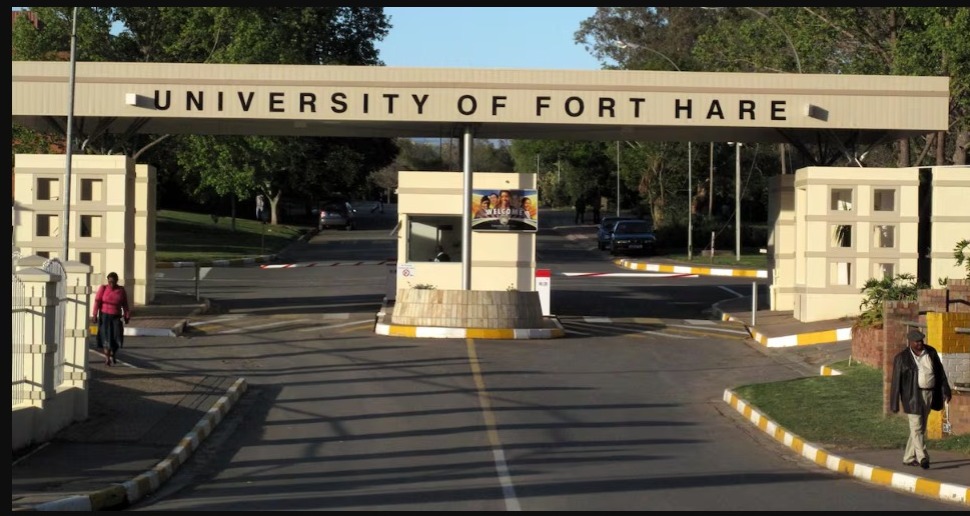
The Department of Women, Youth and Persons with Disabilities (DWYPD) has engaged the University of the Free State (UFS) following the release of a peer-reviewed study identifying endocrine-disrupting chemicals (EDCs) in various sanitary pads and pantyliners sold in South Africa.

The research, conducted by a multidisciplinary UFS team and published in the journal Science of the Total Environment, was an in vitro laboratory detection study and did not involve human subjects.

The department said there is currently no directive to withdraw any products from the market but stressed that transparent, science-led policy would guide government’s response.

“The Department notes the significance of the research findings, which highlight the detection of certain chemicals associated with potential hormonal interference,” it said in a statement on Sunday.

“While the study does not establish immediate or short-term health harm, it raises important concerns regarding long-term exposure and cumulative health risks.”

The department also welcomed a call by the National Consumer Commission to investigate the findings and review regulations to ensure menstrual health products are safe, affordable and accessible.

It reiterated its commitment to work with the Department of Health, the South African Bureau of Standards, consumer protection agencies, manufacturers, suppliers and civil society groups to assess and strengthen regulatory frameworks, enhance quality assurance and promote transparency in menstrual hygiene products.

The department also urged calm while investigations continue and pledged to keep the public informed.

“Menstrual dignity is not a privilege; it is a right. The health and safety of women and girls in South Africa will remain a priority,” it said.

UFS Senior Director of Communication and Marketing Lacea Loader said the products tested contained at least two types of EDCs, including phthalates, bisphenols and parabens, regardless of marketing claims.

“These substances are known for their potential to interact with the body’s hormonal systems. The study raises concerns about cumulative exposure over time, particularly considering the prolonged and repeated use of menstrual products across a woman’s reproductive lifespan,” Loader said.

She stressed that the research does not claim short-term use of menstrual products causes specific health conditions, nor does it make findings of unlawful conduct, regulatory non-compliance, negligence or intentional wrongdoing by any manufacturer, supplier or distributor.

Any determinations regarding compliance with legislation fall within the mandate of relevant regulatory authorities, she said.

Loader added that the study highlights a knowledge gap, calls for further scientific and clinical investigation, and underscores the need for greater transparency around chemical composition in consumer products and stronger regulatory standards aligned with current scientific evidence.

“The purpose of the scientific research conducted at the university is not to create fear, anxiety or panic, but to inform and empower consumers, policymakers and health professionals through robust data and scientific evidence,” she said.

INSIDE EDUCATION

Uncategorized

Weekend roundup | Strike on Iranian primary school kills dozens, Vodacom foundation rolls out R1.5m, Manamela says skills development is a mandate

A primary school in southern Iran was struck during Saturday’s joint US-Israeli military operation, killing at least 148 people who were mostly schoolgirls, according to Iranian authorities.

The attack came as the US and Israel launched joint military action against Iran on Saturday, beginning in Tehran and expanding across the country.

For the full story, click the link below

______________________________________________________________________________

ALSO READ: Vodacom foundation rolls out R1.5m School of Excellence at Lavelilanga Secondary in Komani

The Vodacom Foundation this week launched a R1.5 million School of Excellence (SoE) model at Lavelilanga Secondary School in Komani, marking a significant boost for digital learning and infrastructure development in the Eastern Cape.

The R1.5 million investment over the first 12 months is said to go towards upgrading facilities, strengthening digital infrastructure and deploying dedicated ICT and psychosocial support staff, at the school. 

_________________________________________________________________________

ALSO READ: Manamela says skills development is a mandate, not a favour

Higher Education Minister Buti Manamela says skills development is central to South Africa’s growth and restoring dignity to previously disadvantaged and vulnerable youth, stressing that it is not a favour but a constitutional mandate of government and its entities.

“Skills development is not a favour that we do for South Africans. It is an important investment that we make for the future of our country. If we get it right, it means we are unlocking growth, dignity and social cohesion,” Manamela said on Thursday.

For the full story, click the link below.

INSIDE EDUCATION

Uncategorized

Strike on Iranian primary school kills dozens, authorities say

A primary school in southern Iran was struck during Saturday’s joint US-Israeli military operation, killing at least 148 people who were mostly schoolgirls, according to Iranian authorities.

The attack came as the US and Israel launched joint military action against Iran on Saturday, beginning in Tehran and expanding across the country.

Mohammad Ashouri, governor of Hormozgan province, said Shajareh Tayebeh primary school in the coastal city of Minab was struck at 10.45am.

Some 170 schoolgirls were present, Ashouri said, adding that he hoped rescue operations would find survivors trapped under rubble. The Minab judiciary said 148 people had been killed and 95 injured. The semi-official ISNA news agency said on Sunday that the death toll had risen to 153.

State television showed the destroyed school with benches under debris, while mothers screamed in the school’s courtyard.

The Islamic republic described the attack as an example of what it called US and Israeli atrocities. President Masoud Pezeshkian said it was “savage” and “inhumane”.

The foreign ministry spokesperson, Esmail Baghaei, called it a “war crime”.

Neither the US nor Israel has commented on the reason for the strike, but the US military said it was aware of reports of civilian casualties in Iran from its joint operation with Israel.

“We are aware of reports concerning civilian harm resulting from ongoing military operations. We take these reports seriously and are looking into them,” said Captain Tim Hawkins, a spokesperson for US Central Command, which oversees American operations in the region.

“The protection of civilians is of utmost importance, and we will continue to take all precautions available to minimise the risk of unintended harm.”

Nadav Shoshani, a spokesperson for the Israel Defense Forces, said on Sunday that the force was “not aware of any IDF operations in that area” of the school.

The strike raised anger among some US politicians. Marjorie Taylor Greene — the former Republican congresswoman who resigned her seat at the start of the year after falling out with President Donald Trump — wrote on X on Saturday: “I did not campaign for this. I did not donate money for this. I did not vote for this, in elections or Congress. This is heartbreaking and tragic.”

“And how many more innocent will die? What about our own military? This is not what we thought MAGA was supposed to be. Shame!”

Iranian state television reported that “many” civilians had been killed across the country, describing the strike on the school in Minab as the most tragic incident so far. It did not provide further details on overall civilian casualties.

Ali Alizadeh, governor of Lamerd in southern Iran, said the joint operation targeted four residential neighbourhoods in that area, including a sports hall, killing at least 15 civilians and injuring many more.

Several rounds of attacks targeted various neighbourhoods in Tehran.

A text message sent to residents urged people to evacuate the capital if possible and move to safer areas “due to the continuation of the joint US and Zionist regime operation against Tehran and other major cities”.

Roads leading from Tehran to coastal cities along the Caspian Sea in the north have been converted to one-way routes and are crowded with residents fleeing over fears that residential buildings could be targeted.

During the June 2025 war with Israel, which centred on Tehran, officials said more than 8,500 buildings were damaged, 650 were completely destroyed and more than 1,000 civilians were killed nationwide.

Additional reporting by Steff Chávez in Washington

Financial Times

Uncategorized

Vodacom foundation rolls out R1.5m School of Excellence at Lavelilanga Secondary in Komani

By Levy Masiteng 

The Vodacom Foundation this week launched a R1.5 million School of Excellence (SoE) model at Lavelilanga Secondary School in Komani, marking a significant boost for digital learning and infrastructure development in the Eastern Cape.

The R1.5 million investment over the first 12 months is said to go towards upgrading facilities, strengthening digital infrastructure and deploying dedicated ICT and psychosocial support staff, at the school. 

ALSO READ: MQA Lekgotla: Manamela says skills development is a mandate, not a favour

The Foundation said it will enhance a refurbished computer centre, improved security systems, sanitation upgrades and reliable connectivity. 

“The model also provides at least two ICT coordinators to offer technical support to teachers and learners, as well as psychosocial professionals to address challenges such as violence and gender-based violence,” the foundation added.

The investment was funded by the Foundation together with their partner the Eastern Cape Department of Education.

They said they aim to entrench a culture of academic excellence by integrating technology, infrastructure upgrades and psychosocial support into the school environment.

ALSO READ: Early childhood development gets R12.8bn boost in budget

“Public-Private Partnerships like the launch of this Vodacom Educational Ecosystem are essential in helping us overcome the challenges in providing the quality education that South Africa’s Constitution promises and envisages,” Eastern Cape MEC for Education, Fundile Gade said. 

The ecosystem further includes connectivity provisions and access to a zero-rated Vodacom e-learning platform.

Zakhele Jiyane, Vodacom SA Managing Executive for the Eastern Cape Region, said the initiative reflects the company’s broader social purpose.

“Through our work with the Vodacom Foundation, we are dedicated to advancing quality education and creating meaningful opportunities for learners and educators. Bringing this to Lavelilanga exemplifies our commitment to leveraging innovative, technology-enabled solutions that transform lives.”

The launch formed part of Vodacom’s broader Educational Ecosystem, introduced in 2019 to support government’s Vision 2030 goals and expand access to quality education in previously disadvantaged communities. 

The Foundation said each SoE is strategically located near an Early Childhood Development (ECD) centre, a Teacher Centre and a Vodacom ICT Youth Academy hub, ensuring learners benefit from a comprehensive, community-linked support system. 

Principal Sisanda Hexana welcomed the partnership, describing it as transformative for the school community.

“We are incredibly grateful to Vodacom for this exceptional partnership and the incredible doors this Educational Ecosystem will open for our learners and the wider Zingquthu community.”

ALSO READ: Winde touts early-grade gains and R1.5bn school build in Western Cape SOPA

Nationally, the Vodacom Schools of Excellence model currently supports 39 schools, 39 ECD centres and 10 Youth Academy centres. 

To date, more than 1,800 young people have been trained in accredited ICT skills through Vodacom’s Youth Academy programme, with many now deployed across supported schools and communities.

Meanwhile, the Eastern Cape currently hosts six Schools of Excellence, including Lavelilanga, supported by Vodacom’s comprehensive ecosystem model with an investment of over R5 million to date.

“We believe that access to quality education is the key to breaking the cycle of poverty and empowering young learners to reach their full potential,” Jiyane, said. 

INSIDE EDUCATION

MQA Lekgotla: Manamela says skills development is a mandate, not a favour
Uncategorized

MQA Lekgotla: Manamela says skills development is a mandate, not a favour

By Akani Nkuna

Higher Education Minister Buti Manamela says skills development is central to South Africa’s growth and restoring dignity to previously disadvantaged and vulnerable youth, stressing that it is not a favour but a constitutional mandate of government and its entities.

“Skills development is not a favour that we do for South Africans. It is an important investment that we make for the future of our country. If we get it right, it means we are unlocking growth, dignity and social cohesion,” Manamela said on Thursday.

He was speaking at the Mining Qualifications Authority (MQA) Mining Skills Lekgotla held at the Gallagher Convention Centre, where mining and government leaders reflected on the role of the MQA over the past three decades.

Manamela called for stronger partnerships between the mining industry, Technical and Vocational Education and Training (TVET) colleges and city colleges to align training with industry demand.

Since his appointment, Manamela has maintained that the state of post-school education and training is closely linked to the country’s economic performance and overall development.

“Part of the ambition should be the commitment that the mining industry needs in terms of potential partnerships with specific TVET colleges or the sector as a whole. Given the work done in partnership with industry around the just energy transition and related skills proposals, this is an opportunity to look at commitments towards a skills resolution,” he said.

He emphasised that cohesion across industry players was critical to ensure that skills development translates into real job opportunities and helps combat youth unemployment.

“If we continue at the pace at which we are going, we will reproduce exclusion and frustration. Given the role mining plays in our economy, institutions in the sector carry a bigger responsibility to ensure continued skills development for young people,” he said.

“The responsibility rests with all of us to ensure that the next 30 years of the MQA are defined not only by longevity, but by impact.”

The minister also spoke about the reform and repositioning of the Sector Education and Training Authorities (SETAs).

“We want SETAs including the MQA to function as sectoral convenors and system integrators not just as grant disbursing entities. The President was clear in the SONA that we require a skills revolution that is responsive to the economy we are building, not the economy we inherited. Skills revolution that prepares young people not just to survive but to contribute meaningfully to industrialisation, to beneficiation and to inclusive growth,” said Manamela.

MQA CEO Thabo Mashongoane at the 2026 MQA Mining Skills Lekgotla in Midrand. PHOTO: Eddie Mtsweni

MQA chief executive Thabo Mashongoane, speaking at the same event, said the authority’s 30-year history has been marked by adaptive growth and transformation, with a focus on lecturer and graduate development, support for women and learner funding aimed at expanding access for previously excluded groups.

He said the MQA is fast-tracking digitisation, Fourth Industrial Revolution (4IR) and green mining skills, alongside adult education and literacy programmes, to ensure the sector remains competitive in what he termed the “Future Skills Focus Era” of the 2020s.

“We are engaging with universities to ensure that their mode of delivery incorporates 4IR and digitalisation components so that we build skills that enable better work in the mining sector,” Mashongoane said.

According to the MQA Discretionary Grants Expenditure Report for 2003–2025, nearly R12 billion has been spent over the period. The TVET College Support Programme received just over R664 million, while the Internship Programme accounted for R1.9 billion and the Learnership Programme R1.5 billion.

The Artisan Development Programme received more than R3 billion, underscoring the authority’s focus on strengthening technical skills and supporting economic growth in the mining sector.

Entertainers performing at the 2026 MQA Mining Skills Lekgotla in Midrand. PHOTO: Eddie Mtsweni

INSIDE EDUCATION

Uncategorized

Winde touts early-grade gains and R1.5bn school build in Western Cape SOPA

By Thapelo Molefe   

Education took centre stage during Premier Alan Winde’s 2026 State of the Province Address on Wednesday night, where he presented improved early-grade test scores, record matric results, and expanded school infrastructure as evidence of progress in the province.

“Education is the key to independence, economic inclusion and employment,” Winde said during his address in George.

ALSO READ: Only 3 in 10 pupils read at grade level in early years, Reading Panel says

The Premier cited results from the province’s 2025 systemic tests, written by more than 91,000 Grade 3 learners. According to the figures presented, the mathematics pass rate has increased from 44.3% in 2021 to 62% in 2025. Language pass rates rose from 36.9% to 51.2% over the same period. 

“They achieved their highest results ever,” Winde said.

According to the Premier, these gains come after the introduction of a structured language programme in all primary schools since 2024. Teachers in Grades 1 to 3 were trained in the science of reading, and additional time was allocated to reading and mathematics during the school day. 

“Teachers in Grades 1 to 3 were trained in the science of reading, and teacher and learner support materials were provided to all our schools,” he said.

ALSO READ: Deputy ministers back local suppliers after visit to disability employment factories

Winde said the province is “bucking this trend through innovation and agility,” referring to the national literacy crisis. He added that the #BackOnTrack programme, which provides additional academic support, “is working, which will keep more children in school and out of a life of poverty.”

Infrastructure expansion has accompanied the academic interventions. Nine new schools opened in the past year in high-demand areas in Cape Town and along the Garden Route, and 15 more are under construction. Ahead of the 2026 school year, 175 new classrooms have been added to existing schools.

“We are building schools faster than most other provinces combined,” Winde said.

The Western Cape Education Department has set aside R1.5 billion this year for new schools and classroom construction. The province now has just under 1,500 schools, with enrolment continuing to grow as families move to the province.

School nutrition remains a significant part of the education strategy. More than 550,000 learners receive a free meal each school day. 

“A learner with a full stomach is more likely to stay in school,” Winde said.

At the end of the schooling system, the province recorded its highest-ever matric pass rate in 2025 at 88.2%, alongside a bachelor’s pass rate of 49.2%. 

ALSO READ: Only 3 in 10 pupils read at grade level in early years, Reading Panel says

“Our Matrics did us proud once again,” Winde said. Learners with special education needs achieved a 91.9% pass rate.

The Premier also highlighted the Khulisa Care pilot programme, which provides nutritional support to undernourished pregnant women and mothers of low-birth-weight babies. He said early intervention is necessary because malnutrition and stunting are linked to poorer educational outcomes later in life. 

“When children begin life with strong foundations of nutrition, stimulation and care, they have a much better chance of succeeding at school and into adulthood,” he said.

INSIDE EDUCATION

Uncategorized

Early childhood development gets R12.8bn boost in budget

Des Erasmus

Early childhood development (ECD) will receive an additional R12.8 billion over the next three years, Finance Minister Enoch Godongwana said on Wednesday while delivering his budget speech.

This would expand services to an extra 300 000 children while maintaining a per-child, per-day subsidy of R24, he said.

ALSO READ: Only 3 in 10 pupils read at grade level in early years, Reading Panel says

Godongwana said the extra funding forms part of wider education allocations, with spending on education the largest component of consolidated expenditure at 23.7% over the medium term.

Basic education will receive R22.7 billion for carry-through costs announced in May 2025, with ECD receiving the majority of those funds, he said.

He said that R9.9 billion would support “employee compensation and other pressures in education”.

He said increased allocations would align the National School Nutrition Programme to food inflation to keep meals flowing to over 9.9 million learners in almost 20 000 schools.

Godongwana said additional allocations to the provincial equitable share included R342 million to “progressively equalise Grade R teacher pay”, alongside other items such as funding for the presidential employment initiative.

He said basic education was a pillar of the social wage, and that it, together with health and social protection, would make up 70.3% of the social wage in 2026/27, supporting 13.6 million school children.

ALSO READ: Deputy ministers back local suppliers after visit to disability employment factories

Regarding skills and training, he said government was reforming the national skills ecosystem.

The skills development levy, Sector Education and Training Authorities and the National Skills Fund “have not yielded the outcomes we expected”, he said.

He said government would explore reorganising training through “a dual-training skills acquisition system” and look at how institutions could equip job-seekers and graduates with artisanal skills.

Addressing long-term higher education infrastructure needs, he called for proposals under the Budget Facility for Infrastructure that could include “the development of new tertiary institutions like the proposed Ekurhuleni University and student accommodation”.

INSIDE EDUCATION

Uncategorized

Only 3 in 10 pupils read at grade level in early years, Reading Panel says

By Charmaine Ndlela

Only about 30% of pupils in Grades 1 to 3 can read at the expected level, while 15% of Grade 3 pupils cannot read a single word correctly, the 2030 Reading Panel said on Tuesday as it released its 2026 report on early-grade literacy.

The report found the share of Grade 3 pupils unable to read a single word increased to about 25% in Sepedi and Xitsonga.

ALSO READ: Deputy ministers back local suppliers after visit to disability employment factories

The panel was convened by former deputy president Phumzile Mlambo-Ngcuka. It meets annually to drive progress towards the goal that children can read for meaning by age 10 by 2030.

The Umlambo Foundation, which hosts the Reading Panel conference and works with the panel around the convening, is a non-profit founded by Mlambo-Ngcuka. It focuses on  improving education outcomes in public schools.

Basic Education Minister Siviwe Gwarube said during her keynote address at the event, held at Melrose Arch in Johannesburg, that the findings reinforced that South Africa’s learning crisis starts early, not in later grades.

“International and national assessments have long indicated that learning gaps begin in the early grades and not in matric, not in the intermediate or senior phase, but in the foundation phase itself,” she said at the event.  

“The survey gives government a clearer picture of where children are falling behind. It shows specific weaknesses in areas such as letter-sound recognition and oral reading fluency.  

“Literacy is the only way we can unlock economic opportunities for our learners in the future,” she said.

ALSO READ: Lesufi moves to ease placement crisis with 18 new schools

She called for more community involvement and urged parents and caregivers to read with children at home. “It all starts in the home,” she said.

The country’s early literacy challenges have also been flagged in international assessments. The PIRLS 2021 study, released in 2023, found that 81% of South African Grade 4 learners could not read for meaning in any language.

INSIDE EDUCATION