Category: Uncategorized

Uncategorized

Maletswai learners participate in World AIDS Day Interdepartmental Learner Dialogue

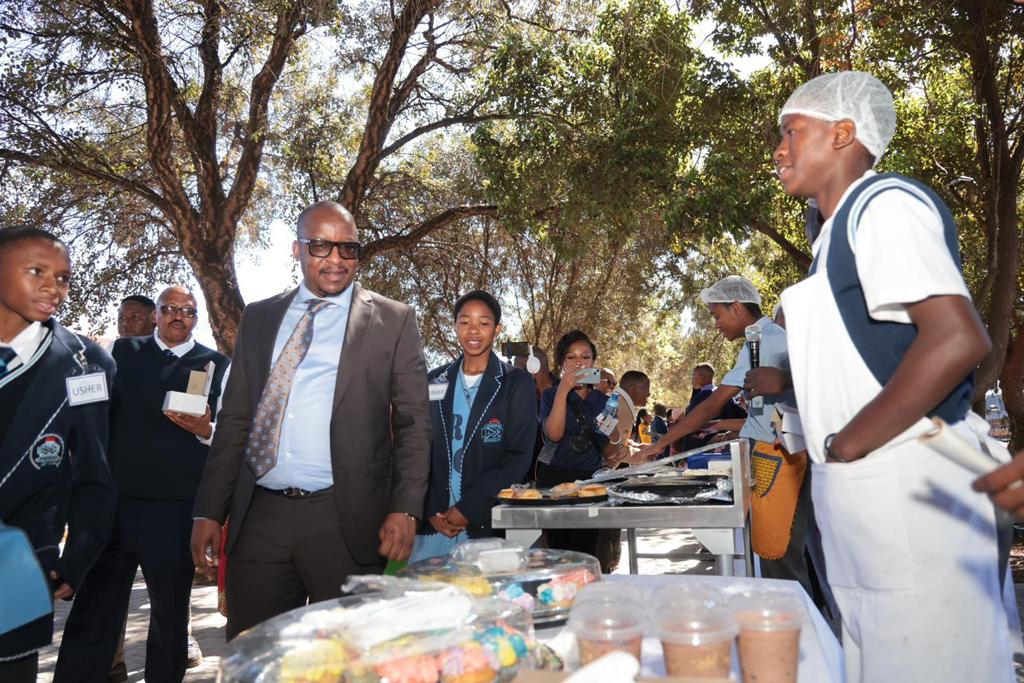
LEARNERS from six schools across the Joe Gqabi District Municipality and surrounding areas took part in the Inter-Departmental Learner Dialogue by the The Eastern Cape Department of Education together with the Department of Social Development, and the Eastern Cape AIDS Council (ECAC) recently.

ECAC leads in the coordination of World AIDS day commemoration. Interdepartmental dialogue was one of the build up events which precedes the world AIDS day. The buildup aimed at raising awareness and to get the youth and entire community to converse on HIV/AIDS, TB, STI, LGBTQI+ and other social behavioural issues and focus on the implementation of CSE.

Maletswai learners entertained the crowd with educational performances which were then followed by the DOE Debate which was facilitated by the Learner Support Agents (LSA).

The debate topic was: The Department strives to have healthy schools which are inclusive centers for learning and teaching, and accommodative to LGBTQI+ community. Learners debated on whether LGBTQIA+ community should be accommodated in schools or not.

The second dialogue was led by Department of Social Development, Social Worker, Noxolo Hendricks, who is a facilitator of “YOLO” which is a Social and Behaviour Change Programme targeting youth between the ages 15-24 years, both in and out of school.

“YOLO has 5 building blocks with 12 sessions. Today we implemented in Session 7: Risky Behaviours. The purpose of the program is to change Social and individual behaviors to reduce issues of HIV transmission, STI and teenage pregnancy”, said Hendricks.

Grade 8 learner from Mehlomakhulu SS School in Hersherl, Okuhle Tapane, who took part in the learner dialogue said that from the Risky Behaviours topic, she learned that learners are always trying to impress friends and end up getting involved with older men who promise to buy them nice things and a fancy lifestyle.

“I believe that this leads to unprotected sex and being infected with diseases. I would advise learners to focus on school and self love, money won’t buy you happiness or help you progress in school” said Tapane.

Acting Director, School Health, Safety and Learner Enrichment, Pam Gxuluwe stated that it is the duty of the directorate to oversee the health of learners and to make sure that children perform well at school.

“Today’s programme is very important in  building awareness on World AIDS Day and understanding what the day is all about. We have learners that are affected and infected by HIV/AIDS, some were born with it and some lost their parents to HIV/AIDS.

Living with a parent who’s HIV+ can be hard on children and can badly affect their performance at school. This is why we implemented this programme as a tool to empower and educate them that living with HIV/Aids is not the end of the world.”

She added that the learner dialogues will help children to talk about their experiences and challenges. It will help them heal and know that there are others living with the same conditions and where to go for help.

Siphosethu Zimba| Eastern Cape Education News

Uncategorized

NSFAS spent R12 billion on student accommodation – Nongogo

THE National Student Financial Aid Scheme reportedly spent over R12 billion on student accommodation, but many students have been living in unfavourable housing conditions that are taking forever to be resolved and improved.

CEO of the NSFAS, Andile Nongogo, says NSFAS spends a significant amount of money on student accommodation and should therefore have a significant influence on how that money is spent.

Therefore, NSFAS has decided to take a proactive role in regards to student accommodation for students funded by the bursary scheme.

Nongogo said this would be done through the scheme’s administration of the entire student accommodation approach, as well as increasing student accommodation capacity for NSFAS beneficiaries.

“Last year, we spent approximately 12 billion [Rand] on student accommodation, yet we had no say in costings and we were not part of the process of accrediting accommodation. The decision was made for NSFAS to be fully involved in the process to manage costs and prevent susceptible fraudulent instances”, said the CEO.

Accommodation is a major concern for students who are NSFAS beneficiaries, as there is a frequent struggle to secure a place at campus or private residence’s, due to the common shortages of university accommodation.

In order to curve some of the difficulties students face when trying to find accommodation, NSFAS is in the process of creating a “Student Accommodation Portal.”

The portal will reportedly allow the accreditation of accommodation providers, grading of the proposed accommodation, assigning the cost-based grading, and allocating accommodation to students.

Additionally, students will be able to log queries on the portal related to their allocated accommodation, such as maintenance and relocation requests. This process will apply to both privately and institution-owned accommodation.

The creation of this Portal would be to ensure that places of residences meet the requirements to properly be accredited by deploying a team to assess the state of accommodation registered on the portal.

“As part of the consultative process, NSFAS held a student accommodation summit in June 2022 and Public, Private Partnerships (PPPs) on student accommodation provision was one of the topics that took Centre stage,” he stressed.

NSFAS will provide accommodation funds based on the grading system residences would have to undergo. This process will also allow NSFAS to determine and decide what it is prepared to pay, thus making savings in the process. NSFAS will work with DHET and DBSA (as it has a model to determine the cost) in assigning costs to grades.

Although students may find success when it comes to finding and securing accommodation, the living conditions make the experience unbearable.

The University of Zululand (UniZulu) serves as one such example.

Complaints of “inhumane” conditions in reference to student accommodation, struggles to find accommodation, and compromised safety while at off-campus residences have been plaguing the thousands of students at the university.

The gloomy conditions students find themselves living in have made their university experience unbearable. The students have said that not only was their accommodation uncomfortable, but it has also affected their ability to study.

Most toilets have no doors and electrical wiring hangs loose from the ceiling in the bathrooms. Students have complained that there was no hot water to shower, and that on some weekends, the electricity trips and they were left without power to cook and charge their phones until the Monday, when someone would arrive to fix it.

A room meant for two people now houses six, students do not have desks, have to cook in the rooms because there are no communal kitchens and only have two tiny cabinets to store their groceries and clothes.

On top of the stressful living conditions, students also live in fear of the crime in the area, worried for their safety as they are targeted by criminals.

“You can’t study here. We just come here to eat and sleep and study at the library. But the library closes at 11pm. And sometimes you want to come back and study, but you find someone chilling with their friends and you can’t chase them away, or you find another person cooking. It’s just chaotic. It’s hell, actually,” said one of the students.

In order to deal with the situation of students who are stranded or otherwise living in unfavourable accommodation conditions, the Department of Higher Education and Training (DHET) has taken steps to ensure that the institution builds more residences by undertaking a feasibility study.

NSFAS beneficiaries are often last on institutions’ accommodation lists due to the perception of non- or late payment.

To avoid this, a potential beneficiary will be required to indicate whether they are in need of accommodation when they apply for funding. Once registered at an institution, they will be required to upload their proof of registration on the portal and will be assigned accommodation.

This process will consider issues of proximity to campus, especially for first-year students, with the aim of providing certainty to students regarding accommodation, ideally before they leave home in pursuit of their studies.

Skillsportal

Uncategorized

Gauteng MEC ‘deeply’ concerned about community violence spilling over to schools

WENDY MOTHATA

Community violence often gives rise to subsets of associated violence that impact on schools, according to Gauteng MEC of Education, Matome Chiloane.

Chiloane was speaking at the department’s school safety indaba held in Boksburg on Saturday.

He said that schools in violent communities often exhibit traits of violence.

He said these are schools wherein learners attend with very life-threatening weapons such as knives, pangas and, in some instances, pistols.

“It’s important that as we address the topical matter of school safety, we must not do so devoid of context,” said Chiloane, adding that schools are a microcosm of their communities.

“By implication, a school will always reflect the community in its immediate environs. In a way, what transpires in our communities will, without fail, manifest itself in our schools.”

Chiloane said non-violent communities breed peaceful schools, while “the contrary is also true.”

“Another example is that communities where drugs are easily accessible and substance abuse is rife will invariably have a spillover effect on our schools,” he said.

The MEC said that the Department must find a way to cushion schools from social ills that are troubling the communities.

“It goes without saying that social ills such as violence and substance abuse cannot coexist with a conducive, quality learning and teaching environment.”

“The learner to learner and learner to teacher violence that is now so prevalent because it is usually captured on phones and made to trend on social media must be condemned with all the contempt it deserves. It is for this reason that when dealing with possible solutions to school safety, we will need a collaborative, holistic, and comprehensive approach that involves all stakeholders.”

“These solutions must not just be limited to infrastructure safety, they must also include how we will ensure the safety of our learners, educators, and the entire school community at large.”

As part of the immediate interventions, Chiloane said almost all the no fee schools will have a minimum of four patrollers keeping the schools safe during the imminent holidays.

“In total, we will have 5378 patrollers deployed to our schools, and the visible policing (VISPOL) unit has also been alerted to pay particular attention to the 245 identified hotspots.”

Chiloane used the opportunity to address the backlog of school infrastructure in the province.

“I feel compelled to also share that to address the backlog of school infrastructure in the province, the Department has introduced a Self-Build program. This program enables schools that are competent and able to build additional classrooms to accommodate the needs of the school.”

“Through this program, we will cumulatively upgrade and refurbish 100 schools by the end of this term of office. This program sees the department transfer funds directly to schools, and this fund is then managed by our principals.”

INSIDE EDUCATION

Uncategorized

TVET colleges critical to seizing the development opportunities of a just transition

South Africa’s skills policies are not in line with its environmental commitments and the country needs to significantly improve its technical and vocational education and training (TVET) ecosystem to produce the skills required to develop and capitalise on the just transition.

“Environmental challenges are cross-cutting issues. They do not belong to one sector, and the transition involves multiple systems, but our skills system does not have the capacity to deal with cross-cutting skills requirements,” University of the Witswatersrand Future of Work Programme research centre director Presha Ramsarup said this week.

Part of the aim of the Future of Work Programme is to develop a mechanism to coordinate the development of green and just transition skills.

“We are working to determine how jobs will change. Employers do not understand what about a job will change. South Africa needs to develop employer, sectoral and system level tools for sector education and training authorities to identify changes in skills requirements and adapt training courses in line with the needs of industry,” she said.

For example, the centre is investigating whether domain knowledge within occupations is changing, whether the materials, tools, products and services in occupation are changing and, from this, whether the researchers can define what occupational changes will be, Ramsarup noted.

“This will help us to identify hotspot areas where jobs are starting to change. From this, occupational analysis and research will help to inform skills planning methods and models required for a just transition.”

Meanwhile, energy industry organisation the South African National Energy Association (SANEA) conducted a desktop study of more than 200 reports relating to South Africa’s skills and education systems.

“South Africa does not have an integrated view of what is needed to support the just climate transition, although many skills are common across many of the technologies, including renewables energy generation and green hydrogen for example,” said SANEA secretary-general Wendy Poulton.

The skills interventions are also not market-driven, neither are they based on value chains, she added.

“South Africa’s economy is also coal-based and the impact of the energy transition will be much bigger than for less carbon-intensive economies. From our research, we are seeing that the energy skills gap is widening amid deteriorating energy security. These are significant issues for South Africa in terms of climate change adaption and decarbonisation,” she said.

There are a few no-regret options open to the country that are common in all the modelled scenarios, namely increasing renewable energy generation and energy efficiency measures, as well as a drive to prosumerism, Poulton highlighted.

However, questions about the timing of changes in the energy market remain, including when and how green hydrogen will be introduced amid declining coal and oil use.

“Lots of skills are required no matter what scenario or pathway is taken,” she noted.

Sectoral master plans can help role-players understand what the future demand will be, said Department of Science and Innovation (DSI) hydrogen and energy chief director Dr Rebecca Maserumule.

Understanding the demand for skills is necessary to ensure that the education and training system is responsive to the needs of the labour market and reduces mismatches, concurred Department of Higher Education and Training (DHET) system monitoring and labour market intelligence director Mamphoku Khuluvhe.

“We need to ensure that skills are not a constraint to growth of the economy and specific economic sectors, nor to our efforts to address climate change,” she said.

Cooperation with industries to identify sectors that will be affected by the energy and climate transition of the economy is critical, and value chains must be included to ensure all stakeholders are part of the transition, Khuluvhe said.

“We need to think about what processes need to be in place to enable people to find employment in the short-, medium- and long-term, as the economy and economic sectors transition,” she emphasised.

It is critical that the TVET system be an active part of the transition in order to match the changes in industry with changes in education and training, noted Maserumule.

A green hydrogen development document, developed in cooperation with the DHET and SANEA, showed that, if South Africa were to move to using its sunshine and wind to produce green hydrogen and use it in many sectors, it could create up to 3.2-million jobs in the economy, with the highest number of jobs being created in the green iron and steel industry, followed by the platinum group metals sector and then the power generation sector.

“TVET colleges can be a critical enabler of the hydrogen economy. For example, the green hydrogen economy can revive the iron and steel sector, but we need to develop a clear master plan and need to understand how to transition education and training to develop new skills or reskill employees,” Maserumule illustrated, based on Hydrogen Society projections.

“We need to ensure adequate and sustained funding for TVET colleges, so that students can become the green artisans and technicians that we need.

“This will require capacitating colleges, improving governance within them and the TVET system, and ensuring accountability across the national departments responsible for progress, including the DHET and DSI,” she emphasised.

Meanwhile, funding for skills development to underpin a just climate transition is a global challenge, said United Nations Educational, Scientific and Cultural Organisation (Unesco) policies and lifelong learning systems director Borhene Chakroun.

“Green funds and economic stimulus packages for green transitions, such as that extended to South Africa, typically include allocations for education and training that are less than 3% of the total funding available. Therefore, it is important to speak about how green transition resources are allocated,” he said.

Attention is being paid to funding the green economy, but less so for education and training, which has implications for greening initiatives.

Further, and importantly, Unesco research has indicated that the first 1 000 days of a child’s life are critical, and investments must include foundational education and early childhood development, Chakroun emphasised.

Universities also play an important role in the green transition, in terms of research, experimentation and innovation, as well as to irrigate and feed the broader education system with skills and educators, he added.

However, there is little articulation of what feeder jobs will allow people to transition to new jobs in a green economy, noted Ramsarup.

South Africa’s national plans and sectoral master plans must think about occupational pathways for students entering the industry and for those currently employed, thereby avoiding graduates not having the required skills for future jobs and employees not being able to move to new jobs, she advised.

Engineering News

Uncategorized

‘China Bookshelf’ project launched at University of the Western Cape, South Africa

THE “China Bookshelf” project was launched at the University of the Western Cape in South Africa on Nov. 3, 2022. Initiated by China Energy Investment Corporation Longyuan South Africa Renewables, it is the first project of its kind undertaken by a Chinese company in South Africa.

The project is based in the library of the Confucius Institute for Chinese Medicine in the main teaching building of the University of the Western Cape, where Longyuan South Africa Renewables built the bookshelves and provided a total of 360 books in different categories such as Chinese series, anti-epidemic documentaries, cultural development, literary works, technological innovation and Chinese language teaching.

The opening day was attended by representatives from the University of Johannesburg, Rhodes University and Stellenbosch University in South Africa, the University of Sussex in the UK and Zhejiang Normal University in China.

To fully showcase Chinese culture to South African university students, the site also introduced Chinese tea culture, Chinese medicine and other related knowledge through a combination of scenes and displays.

Umesh Bawa, Director of International Relations Office at the University of the Western Cape, and Zeng Liren, Chinese Co-Director of the Confucius Institute for Chinese Medicine, attended the opening ceremony and delivered speeches, in which they acknowledged the opportunity and platform provided by the project for students from both countries to exchange and learn, and highlighted Longyuan South Africa Renewabale’s sponsorship and support for the event and its positive contribution to China-South Africa friendship and cooperation.

SUPPLIED

Government must ensure quality inclusive education for children with disabilities:Ramaphosa
Uncategorized

Government must ensure quality inclusive education for children with disabilities:Ramaphosa

EFFORTS must be made to ensure quality inclusive education for children with disability, President Cyril Ramaphosa told delegates at the Summit on Economic Empowerment for Persons with Disabilities in Ekurhuleni on Thursday.

“We need to provide quality inclusive education for children with disabilities. This entails improving and strengthening reasonable
accommodation support measures for learners in both special and ordinary schools,” Ramaphosa said.

[EXHIBITION]: Economic Empowerment of and for Persons with a Disability

The theme for this year’s #DRAM2022 is “Empowering persons with disabilities through resourceful, sustainable and safe environments”.#LeaveNoOneBehind pic.twitter.com/FpNHu4B6pq

— Presidency | South Africa (@PresidencyZA) December 8, 2022

He urged stakeholders to ensure that children with disabilities in ordinary schools have accessible learning materials no matter where
the school is located.

[EXHIBITION]: Economic Empowerment of and for Persons with a Disability

The theme for this year’s #DRAM2022 is “Empowering persons with disabilities through resourceful, sustainable and safe environments”.#LeaveNoOneBehind pic.twitter.com/fHmR0lDDJq

— Presidency | South Africa (@PresidencyZA) December 8, 2022

The government has developed a process to review Education White Paper 6 on Inclusive Education towards developing full-service
schools and inclusive methods in mainstream schools.

Ramaphosa emphasised that all children, including children with disabilities, need to receive a quality education wherever they are
and whatever their circumstances.
“Let us work together to build an inclusive and transformative society where the needs of all are advanced with equal priority and equitable resourcing. Let us work to give practical meaning to the principle of ‘nothing about us, without us,” said Ramaphosa.

“Let us emerge from this summit not only with a clear sense of what needs to be done to empower persons with disabilities for economic and financial inclusion, but also with a renewed determination to make it happen.”

Ramaphosa directly asked Minister of Women, Youth and Persons with Disabilities Maite Nkoana-Mashabane to ensure that barriers
that impede the meaningful participation of persons with disabilities in all areas of public life are practically removed.
All areas in which persons with disabilities face discrimination through, for example, increasing job and training opportunities, promoting
inclusive education and ensuring access to health care services must urgently be removed.

These outcomes include the prohibition of discrimination on the basis of disability across the employment value chain, and that persons
with disabilities have equal access to just and favourable conditions of work.

He said role players can assist to enable persons with disabilities to access technical and vocational guidance programmes, placement
services and continuing training.

In an effort to actively promote employment opportunities and career advancement for persons with disabilities, appropriate policies
will be looked into which will include affirmative action programmes, incentives and other measures.

The President promised to mobilise collective resources in both public and private to promote opportunities for self-employment,
entrepreneurship and the development of cooperatives.

For its part, the government has introduced targeted programmes on economic empowerment that include a procurement
target of 7% for companies owned and run by persons with disabilities.

INSIDE EDUCATION

Uncategorized

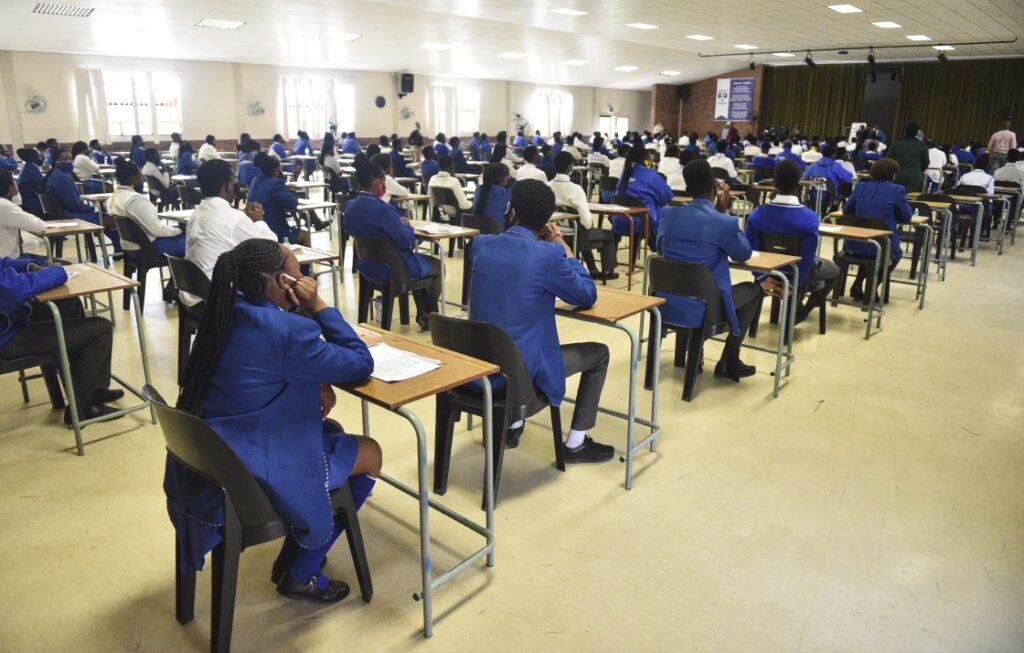
53 Grade 12 Etwatwa pupils write rescheduled paper

WENDY MOTHATA

THE Gauteng Education MEC, Matome Chiloane is on Thursday visiting Etwatwa in Ekurhuleni to extend his well wishes to the 53 matriculants from Phandimfundo Secondary School for their rescheduled Economics examination paper.

This follows an incident where the matriculants were allegedly prevented from writing their Economics Paper 1 exam on November 1, 2022, due to false reports of service delivery protests in the area at the time.

Spokesperson Steve Mabona said the Department of Basic Education gave these learners a concession to write this paper on Thursday, December 8, 2022.

“The Department of Basic Education gave these learners a concession meaning that they can write this paper, which they could not write in the initial stages. So, the MEC will be wishing them well before they write their examination,” he said.

Rewrite opportunities have been granted in the following selected subjects:

Mathematics Paper 2: Mpumalanga Department of Education
Mathematical Literacy Paper 1: Eastern Cape Department of Education
Mathematical Literacy P2: Mpumalanga Department of Education, Eastern Cape Department of Education and North West Department of Education
Economics P1: Gauteng Department of Education
English First Additional Language Paper 1: Limpopo Department of Education and Western Cape Department of Education

According to the department, some of the reasons for the missed examinations include:

– Candidates who experienced technical glitches during the writing of Computer Applications Technology Paper 1 and Information.
– Technology Paper 1 or who, due to load shedding. could not complete the examination.
– 53 Economics P1 candidates from Phandimfundo Secondary Gauteng who missed the exam due to the principal’s actions.
– 1 127 candidates from seven schools in Witbank, Mpumalanga, who missed exams due to community protest actions.
– Two pregnant learners from the Western Cape and Limpopo, who were not allowed to write English P1.
– Three learners from the North West, who missed Maths Literacy Paper 2 due to flooding.
– Four learners from the Eastern Cape, who missed Maths Literacy P1 and P2 due to the principal’s actions.

Marking sessions will commence on 10 December and conclude on 22 December 2022. The department said that all PEDs are on track with their marking preparations.

Basic Education Director-General Hebert Mweli is today visiting various marking centres in Gauteng and engaging with markers. Marking of the #2022NSCExams has started.#MatricExams #MatricClassOf2022 pic.twitter.com/wlolsrlqx3

— Inside Education (@Inside_Edu) December 8, 2022

“Scripts are currently in storage. Scripts will be moved to marking centres from the 7/8 December 2022,” the Department of Basic Education said.

-INSIDE EDUCATION

Ramaphosa urges Science Forum to use science to fight poverty, restore human dignity 
Uncategorized

Ramaphosa urges Science Forum to use science to fight poverty, restore human dignity 

President Cyril Ramaphosa urged participants at the World Science Forum to explore ways to use science in restoring human dignity, reducing inequality and poverty. 

He delivered a keynote address at the opening session of the World Science Forum (WSF) in Cape Town on Tuesday. 

“Today more than ever, science is called upon to assist humanity in responding to the key challenges of our time, including disease, climate change and food insecurity,” Ramaphosa said. 

President Cyril Ramaphosaand Minister Dr Blade Nzimande meeting and greeting exhibitors at their various stalls as they entered Exhibition hall 2, World Science Forum opening session

Delegates must ensure that the Forum will not only be a platform for vibrant discussion, but will also lead to concrete actions harnessing science as an instrument for social justice, he added. 

The theme for the Forum is Science for Social Justice. He told delegates that inequality within and between countries is neither just nor sustainable.

For the event to be successful, he said it must inspire concerted global action for science to challenge and address inequality, injustice, poverty, environmental destruction and marginalisation.

“By hosting this Forum, South Africa is demonstrating its strong commitment to international cooperation in science. Science progresses when nations work together,” Ramaphosa said. 

It is the first World Science Forum taking place in Africa, it is hoped that it will contribute to advancing the African agenda for science, affirming the crucial contributions Africa has to make in enriching global science.

Access to significant collective resources, including cooperation instruments, which can be mobilised for investment in science for social justice.

He said there is a need for collective will and determination to ensure science makes a difference by informing policy that will create a more just and equal world.

Ramaphosa urged delegates to critically consider what role science should play in protecting and enhancing human dignity and in fighting poverty, unemployment and inequality.

Ramaphosa cited the inequality in access to vaccines during the COVID-19 pandemic as an example of a gross violation of human rights and contributed to further loss of life.

The global scientific community demonstrated the value of cooperation in responding with unprecedented urgency to produce COVID-19 vaccines.

Yet, the benefits of that extraordinary scientific work did not benefit all of humanity equally.

This experience, Ramaphosa said, has informed South Africa’s development of a national vaccine manufacturing programme, which includes a partnership with the World Health Organisation through hosting the mRNA technology transfer hub in Cape Town.

-INSIDE EDUCATION

Uncategorized

Ramaphosa opens World Science Forum

President Cyril Ramaphosa is delivering the keynote address at the opening session of the World Science Forum (WSF) in Cape Town.

The President’s participation in the World Science Forum will be a highlight of South Africa’s first hosting of this global forum under the auspices of the Department of Science and Innovation.

The theme for the forum, which will be held at the Cape Town International Convention Centre from 6 to 9 December 2022, is “Science for Social Justice”. 

The WSF takes place every two years and is among the most significant science gatherings worldwide, where scientists from all over the world engage on the role science should play in society.

South Africa’s hosting of the event itself creates significant economic activity in the host city of Cape Town, as well as industries countrywide that support such an occasion.

In hosting this forum, South Africa is looking to promote global debate that inspires action, provide support for African leadership in global science policy discussions, and to promote South Africa as a strategic partner for global science collaboration in response to societal challenges.

Established by the Hungarian Academy of Sciences, in collaboration with the United Nations’ Educational, Scientific and Cultural Organization (UNESCO), the gathering will see renowned thought leaders deliberate on various topics that include science for human dignity, science for climate justice, science diplomacy for multilateralism, and science for Africa and the World.

The event will be a platform for more than 900 leading scientists and decision-makers from politics and industry, representatives of civil society, and the media to express their views on new challenges facing science in the 21st century.

A series of pre-events has also been organised, including a Science Journalism Programme, discussions about the green hydrogen economy, an air-quality fun run in Sea Point and Khayelitsha, excursions to scientific facilities in and around Cape Town, a robotics boot camp for learners, a Women in Science film festival and a breakfast function with the international Square Kilometre Array Organisation.

The Opening Ceremony is taking place at the Cape Town International Convention Centre. 

-Inside Education 

Uncategorized

Section27 granted leave to appeal corporal punishment judgment involving two ‘violent’ teachers

WENDY MOTHATA

Section27, which represents the Centre for Child Law and two parents, was on Tuesday granted leave to appeal the corporal punishment judgment case involving the South African Council of Educators (SACE). 

The case concerns two ‘violent’ teachers who imposed corporal punishment on school learners. 

On Tuesday, Judge Dawie Fourie of the High Court of South Africa, Gauteng Division in Pretoria, granted  Section27’s application for leave to appeal.

Section27 spokesperson, Julia Chaskalson, said the two teachers who imposed corporal punishment on the learners received lenient sentences from SACE.

Chaskalson said Section27 wants the names of the two teachers to be struck off the roll of educators for 10 years.

 “Section27, on behalf of the Centre for Child Law and two parents, will now proceed to file papers at the Supreme Court of Appeal (SCA) in Bloemfontein. The children of the parents we represent were severely injured by teachers, who – despite pleading guilty to corporal punishment – received very lenient sentences from SACE. Both teachers were fined R15,000 but only paid R5,000 each because R10,000 of the fines were suspended. They also received another suspended sentence of having their names struck off the roll of educators for 10 years, which means that the teachers are still in classrooms unless they are found guilty of another offence,” said Chaskalson. 

“We would like the SCA to order SACE to review these sentences so that these violent teachers are no longer allowed to teach after being found guilty of corporal punishment.”

In August 2015, a teacher beat a 7-year-old with a PVC pipe, causing a head injury. The teacher then allegedly assaulted another pupil and left him with a bloody nose. 

In a separate incident, in February 2019, a teacher beat and slapped a 10-year-old pupil over the head, causing her ears to bleed. 

After being granted leave to appeal on Tuesday, Section27’s Faranaaz Veriava said: “Advancing to the Supreme Court of Appeal is an important step towards better accountability for teachers who employ corporal punishment in classrooms.

“Despite corporal punishment being illegal since 1996, SACE continues to allow teachers off the hook when they are found guilty of corporal punishment. We need a stronger institutional response to enforce the corporal punishment ban so that classrooms are safe from violence.”

INSIDE EDUCATION