Category: Uncategorized

Uncategorized

Minister Launches National Plan for Post-School Education and Training

Staff Reporter

THE National Plan for Post-School Education and Training (NPPSET) is a roadmap for implementing the vision of the White Paper for Post-School Education and Training (WP-PSET).

Speaking during the launch last Thursday, Minster of Higher Education, Science and Innovation, Dr Blade Nzimande, said it was framed within the broader goals and priorities of the National Development Plan (NDP), which foregrounds the national efforts to address the triple challenges of unemployment, inequality, and poverty.

“It is an overarching instrument and a blueprint for guiding planning in our PSET sector. It aligns and integrates the work that is already underway and provides a policy framework for major transformative changes the Government wants to bring about across the PSET system and its nexus with society and the economy,” Nzimande said.

The National Plan for Post School Education and Training has six goals which are the drivers for the system.

The drivers seek to achieve the following:
• An integrated, coordinated and articulated PSET system;
• • Expanded access to PSET opportunities;
• • A responsive PSET system, with appropriate size and shape;
• • Improved relations between education and training institutions and
the world of work;
• • Improved quality of PSET provision; and
• • Improved efficiency and success of the PSET system
While the plan is already in implementation, it was formally introduced to the entire sector and the public on 7 September.

“Our launch of the Plan showcases the government’s continuous effort towards achieving an improved, transformed, expanded, responsive and articulated Post-School Education and Training (PSET),” Nzimande said.

The Department of Higher Education and Training has the single largest number of entities of all the national government departments, with over 110 departments making South Africa’s PSET sector one of the biggest in Africa.

When the Sixth Administration took over in 2019, Nzimande said spending on education as a proportion of overall government expenditure was 22.7% in 2019/20 and 7.2% of Gross Domestic Product (GDP), far exceeding the benchmarks set by UNESCO, which recommends allocating 15-20% of public spending to education and 4-6% of GDP to education.

“As we draw closer to the end of the Administration, this trajectory is continuing,” he said.

In 2021/22 he added that spending on education as a proportion of overall government expenditure was 22.6% and Gross Domestic Product (GDP) at 6.4% which continues to exceed the UNESCO benchmarks.

“This shows that the South African government continues to spend a large share of its national budget on education (both schooling and post-schooling). Our main challenge is to maximise the impact of this progressive educational investment,” Nzimande added.

In the quest to expand access to PSET opportunities various funding streams which include the National Skills Fund (NSF), the National Financial Aid Scheme (NSFAS), the National Research Foundation (NRF), the National Institute for Human and Social Sciences (NIHSS), Sector Education and Training Authorities (SETAs) and the International Scholarships Programme have been introduced.

On student funding the Minister said he will be submitting a clear proposal on a Comprehensive Student Funding Policy to Cabinet before the end of the year. This follows extensive consultations with financial institutions, student organizations, university and TVET College leaders, and international benchmarking.

“Through this we aim to introduce measures to specifically support categories of students in the so-called ‘missing middle’ income groups who are unable to access NSFAS funding.”

When NSFAS began in 1991, it had a budget of R21.4 million for the first cohort of about 7000 students. “We are proud to say that NSFAS is currently funding 1.1 million students with a budget allocation of R47,6 billion in the 2023 academic year,” Nzimande said.
Of this amount, universities have been allocated R38.6 billion and TVET Colleges R8.9 billion for the first time passing the one million mark. In 2023, SASSA beneficiaries account for 49% of the funded students in 2023.

“As we release the Plan today, I am confident that it will take the confidence of the people of South Africa in the country’s post-schooling system to the next level,” he said.

INSIDE EDUCATION
Bilateral agreement with Cuba to train teachers in SA
Uncategorized

Bilateral agreement with Cuba to train teachers in SA

Staff Reporter

A Cuban delegation spent time in South Africa earlier this month to monitor the training of local teachers in Mathematics and Science.

Following the bilateral agreement between the Department of Basic Education and the Ministry of Education of Cuba in 2016, a monitoring visit by a delegation from Cuba took place from 28 August to 1 September 2023.

As part of the agreement Cuba provided skilled Mathematics and Science specialists to assist in developing training programmes and materials that will benefit subject advisors and teachers to effectively use the Mathematics and Science teaching methods from Cuba.

“What we are tracking is the extent to which more learners can better understand the areas of Mathematics that have been covered and more importantly, how we can increase the number of learners who take up Mathematics, along with the number of teachers who are able to, after the training, improve on the outputs of teaching Mathematics to improve the learners’ performance in this subject,” said Deputy Director-General, Simoné Geyer.

Geyer added that further deliberations were underway to ascertain how Cuba and South Africa can work together to improve teaching in areas such as Early Childhood Development (ECD) and technical subjects that are taught in focus schools.

As a way forward, the Cuban delegation will look at the type of support required for the Cuban specialists who are already assisting in South Africa and how best they can be supported in ensuring that the outcomes of the bilateral agreement are met, and that they are adding value to the South African context of how Mathematics and Science can be taught.

The delegation also visited KwaZulu-Natal and the Free State Provinces, where they received first-hand experience on how the Cuban team is assisting in running teacher training workshops, Professional Learning Communities (PLCs) and providing direct support to learners.

The monitoring visit concluded with a debriefing session to ascertain the progress that has been made by the Cuban specialists in these subject areas.

INSIDE EDUCATION

Basic Education Minister hails NECT, celebrating a decade of educational excellence
Uncategorized

Basic Education Minister hails NECT, celebrating a decade of educational excellence

Edwin Naidu

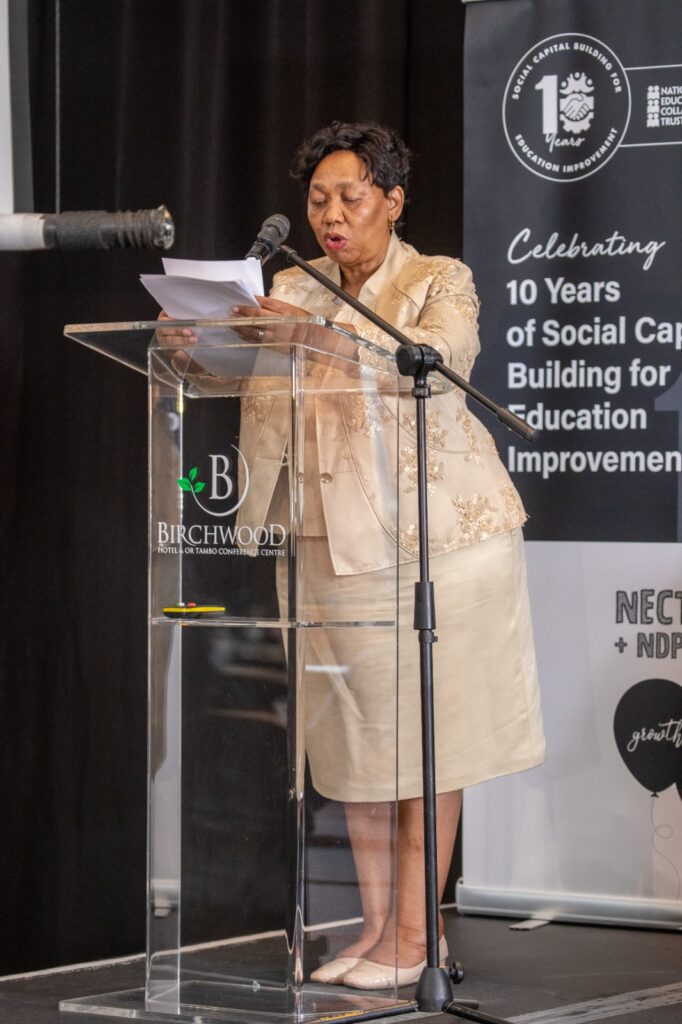
THE National Education Collaboration Trust (NECT) stands as the gold standard in public-private partnerships. It is our lodestar.

This was the message from Minister of Basic Education, Angie Motshekga, MP, at the NECT 10th Anniversary National Convention held at Birchwood Hotel, Boksburg earlier on Monday. 

Motshekga delivered the opening address at the event celebrating a decade of collaboration between the Basic Education sector and big business spearheaded by the Trust. 

“Today stands as a testament to our collective resolve as we reflect on a decade of tangible progress, steered by this year’s theme: “Reflections on Collaboration to Enhance Education Reform Efforts in South Africa.

“As we reflect upon a decade of relentless effort and collaboration, it becomes evident that our journey has been marked by remarkable partnerships between the Basic Education Department and the private sector,” Motshekga said. 

Sizwe Nxasana, the Chairman of the NECT Board and Trustees, Godwin Khosa: NECT CEO and Senior Management, organised labour and business partners, and guests, listened as the Minister reminded them how NECT has been a crucible of innovation, a platform where ideas transform into reality and visions materialised into tangible outcomes. 

“It has fostered environments where educational frameworks are not just conceived but are implemented with a rare synergy. The celebration today is not just a testament to our past achievements but a firm step into a future that holds unlimited potential.”

According to Motshekga, such collaborations have led to an influx of resources and expertise and fostered environments replete with innovation and efficiency, marking a confluence of the government’s foresight and the private sector’s agility a lived reality. 

She said the journey began with a vision to foster a society where collaboration forms the cornerstone of educational reform, and education foregrounds all societal endeavours, whether they are strategies to achieve faster economic growth, combat poverty, or address inequality.

This, she added, was a vision of a society where every stakeholder, from provincial departments or national to civil society, united to nurture the infinite potential residing in our young people. 

“Over these ten remarkable years, we have stood shoulder to shoulder, fostering basic education partnerships and showcasing the transformative power of collective effort,” Motshekga said. 

Motshekga credited these collaborative efforts for helping to enhance the curriculum, focusing on marrying tradition with innovation, and grounding learning in the rich cultural tapestry while integrating global perspectives to foster a holistic educational experience.

“Moreover, the inception of meticulous national reading plans is a testimony to our determined stride toward literacy excellence. 

Implemented across various educational districts, these plans are tailored to nurture the innate curiosity of our learners, guiding them progressively towards literacy proficiency,” she added. 

Furthermore, Motshekga said that the collaboration between the government and the private sector in education reforms has translated into a harmonised endeavour, improving the physical facilities in educational institutions, enhancing curriculum delivery, and fostering environments conducive to teaching and learning, among other initiatives. 

“As we move forward, we must acknowledge the diverse target market of practitioners ranging from mid-to-senior management and executives across the government, unions, private sectors, civil societies, and academia who have been the pillars supporting this monumental national endeavour. 

Your efforts have empowered us to reach this pinnacle: 10 years of systems improvements, 10 years of scientific interventions, and 10 years of remarkable progress. Truly a decade of educational excellence,” she said.

INSIDE EDUCATION

3000 Solar Installation Technicians to resume training
Uncategorized

3000 Solar Installation Technicians to resume training

Lerato Mbhiza

Gauteng Premier Panyaza Lesufi said close to 3 000 additional technicians will resume training sessions in a few weeks time. 

Lesufi joined MEC Matome Chiloane on Wednesday for an oversight visit at Denel Kempton Park Campus where more Solar Technician trainees from the 1st cohort are undergoing theoretical and practical training.

Lesufi said he had the honour to visit the Solar Installation Technicians in training and said there are still close to 3 000 additional technicians that must resume their training sessions in a few weeks’ time.

Chiloane addressed the Solar Technician trainees at Denel Kempton Park Campus and said the programme aims to go beyond addressing load shedding by nurturing specialists in renewable energy, thereby making a positive contribution to the economy. 

The department said the Solar Technician trainees will undergo both theory and practical training. Their training programme will provide them with additional skills beyond solar installation, enabling them to become operators, solar electricians or even open their own businesses.

“We are excited to have welcomed the first cohort of Solar Technicians trainees in Gauteng. These are young men and women who will usher in a new era of green energy and renewable energy in the province,” said Chiloane. 

One of the trainees Gordon Mogale (24) from Hammanskraal said he applied for the job because he’s interested in solar panel installation. 

He is part of the 1st cohort of Solar Technician Programme candidates training at Ekurhuleni Artisans & Skills Training Centre at Kempton Park.

INSIDE EDUCATION

Uncategorized

Gauteng Education MEC says Grade 1 and 8 online admissions process is a success

Gauteng Department of Education (GDE) has announced that the 2024 online admissions application period has been a success with 757 075 Grade 1 and Grade 8 applications processed.

 “This translates into a total of 324 756 Grade 1 applications and 432 219 Grade 8 applications. This success can be attributed to system improvements over the years, which is necessitated by continuous stakeholder engagements and technological advancements,” said MEC Matome Chiloane.

The application period ran from 15 June to 21 July 2023.

“We wish to announce that the 2024 Online Admissions Placement Period for Grade 1 and 8 will begin on 4 September 2023 and will continue throughout the remainder of the year until all learners are placed,” the MEC added.

From Monday, 4 September 2023, parents and guardians with complete applications will receive SMSes with placement offers to the contact numbers they used when applying. 

INSIDE EDUCATION

Gauteng Premier and Sports Minister handover Multipurpose Sports Court to Lofentse Girls High School in Orlando
Uncategorized

Gauteng Premier and Sports Minister handover Multipurpose Sports Court to Lofentse Girls High School in Orlando

Phuti Mosomane

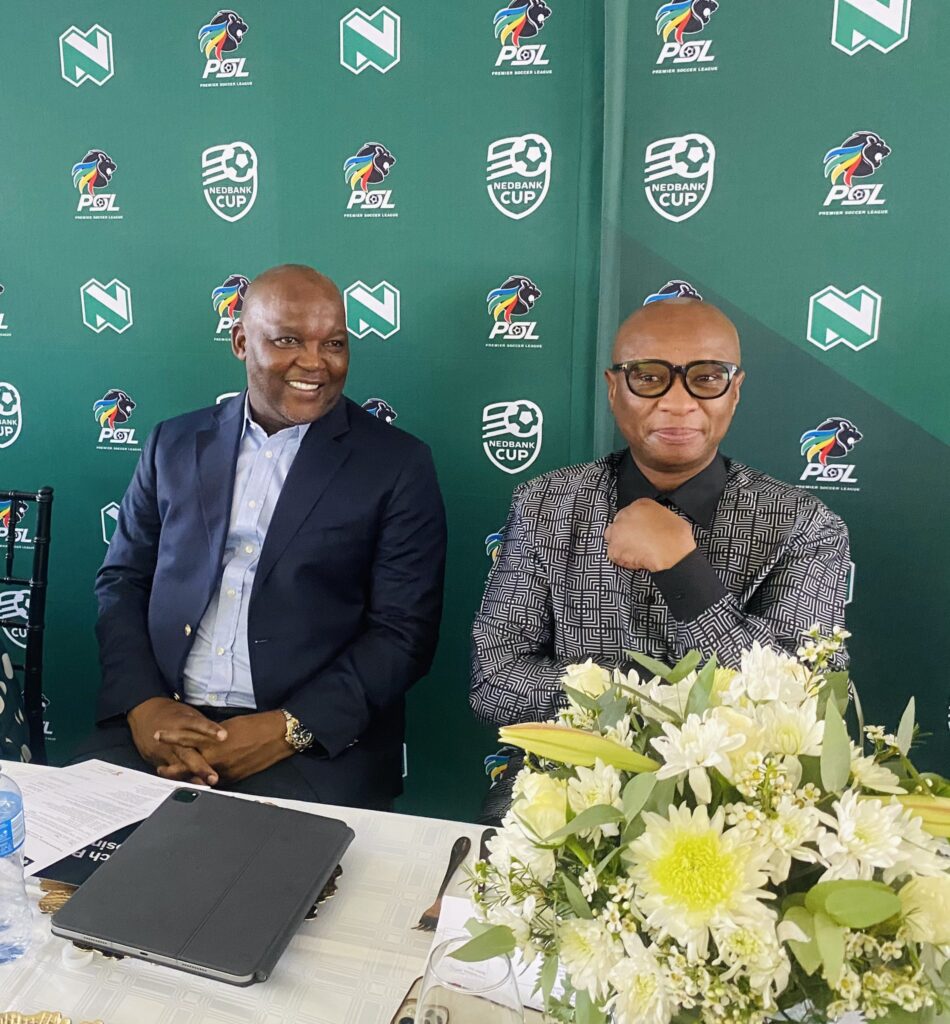
Gauteng Premier Panyaza Lesufi and the Department of Sport, Arts and Culture Minister Zizi Kodwa handed over the Pitso Mosimane Multipurpose Sports Court at Lofentse Girls’ High School in Orlando East on Tuesday.

This handover was conducted on behalf of Orlando Pirates Football Club, the winners of the 2022/2023 Nedbank Cup.

The multipurpose sports court was made possible through a partnership between Nedbank and The Sports Trust.

“It is significant that this handover takes place as the government mobilises stakeholders to deepen investment in women and grassroots sports development,” Kodwa said.

The department of Basic Education said the Multipurpose Sports Court handover ceremony serves as a platform to introduce and celebrate the profound impact of sports within schools and communities.

Kodwa said the former Bafana Bafana coach, Mosimane has raised the bar for football coaches in and outside of South Africa. 

“The multipurpose sports court unveiled in his name today at Lofentse Girls’ High School promises not only to benefit the school, but the wider Orlando community.

“The Pitso Mosimane Multipurpose Sports Court is an example of what is needed to help identify and nurture sporting talent. We need to see more of these facilities being built in rural and township communities. Well done Nedbank,” he said.

Lesufi thanked ⁦Nedbank⁩, Pitso Mosimane Soccer School and ⁦Orlando Pirates⁩ “for this amazing sports field investment in our township school.

“Our communities must protect this valuable resource.”

The school kit was distributed to the following schools: Lofentse Girls High School, Bona Secondary School, Zifuneleni Junior Secondary School, Orlando High School, Selelekela High School and Job Rathebe Secondary School.

Lesufi was also joined by Gauteng Education MEC Matome Chiloane in the ceremony. 

Chiloane said that the launch aligns with Gauteng Province’s commitment to promote active schools and create future sport stars.

“Today, we were privileged to participate in the handover of the Pitso Mosimane Soccer School Sports Court at Lofentse Girls High School. We strongly advocate for active learners at schools and take immense pride in sports legends like Coach Mosimane aligning with our vision,” Chiloane added.

INSIDE EDUCATION

Pendulum Swings Back to Universities, says Manamela
Uncategorized

Pendulum Swings Back to Universities, says Manamela

Johnathan Paoli

Deputy Minister of Higher Education, Science and Innovation, Buti Manamela, praised the recent think thank gathering regarding a perspective, aimed towards the future, specifically centering around the role of universities.

“The world is facing four major transformations- and they are all occurring at once. They are economic, including the dramatic decarbonisation of industry; technological, due to the merging of the digital and physical worlds and embedding of AI; geopolitical, driven by the shift from a unipolar to multipolar environment; and social, as citizens cope with massive changes and sometimes conflicting values,” deputy minister Manamela said.

Manamela was attending the EDHE Lekgotla and Studentpreneurs Indaba 2023, held at the University of the Western Cape on Monday.

In opening remarks to the Indaba, the deputy minister addressed the need to keep up with changes in relation to technology, social medial and the world at large.

Praising the role of universities in not only updating current scholastic frameworks but more importantly facilitating new technologies and opportunities for employment.

This follows on a recent shift away from universities towards a concentration upon TVET colleges, and what some have felt to be a neglect of the potential of new technologies and forms of entrepreneurship emanating from university level knowledge production.

“The heart of the EDHE programme is the task of helping us to find ways of making better use of the knowledge that our universities produce so that we can produce policy and institutional mechanisms that will extricate the economically marginalised sections our society such as young people, women, and rural communities from the trap of poverty, unemployment, and inequality,” Manamela said.

The deputy minister said that these discussion and pooling of intellectual and other forms of knowledge resources remains in line with the facilitation of a conducive platform for the sharing of good practices and emerging initiatives in university entrepreneurship.

INSIDE POLITICS

Uncategorized

DG expresses concern over mathematics performance

Staff Reporter

Basic Education Director-General, Mathanzima Mweli, this week, concluded the Western Cape and Free State leg of his national Reading Literacy engagements.

DG Mweli, together with his team of senior managers from the DBE, convened the engagements with district and provincial officials, primary and high school principals. The engagements, which took place from 28 August 2023 to 01 September 2023, commenced in George, Cape Town and proceeded to Bethlehem, Bloemfontein and lastly, Kroonstad to capacitate officials on the effective implementation of reading strategies and to increase support for the Class of 2023 to improve learning outcomes.

Mweli encouraged officials from both provinces to implement effective strategies, to strengthen learner support programmes for all grades, to lead to an education and training system of the highest quality through significantly improved learning outcomes as the National Development plan enjoins us to do.

“The Mathematics results in our country are very concerning and principals should ensure that teachers provide adequate support to struggling learners, in Mathematics and Languages in particular.”

In his presentation, Seliki Tlhabane, Chief Director for Mathematics, Science and Technology and Curriculum Enhancement Programmes, stated that Mathematics is not performing well, therefore the Basic Education Sector requires resources to improve learning outcomes of the subject: For too long our performance in Mathematics has been very low, both in the General Education and Training (GET), as well as Further Education and Training (FET) Bands.

He also emphasized that the Curriculum is structured in such a way that it is accessible to all learners, for instance there is low order content (Cognitive levels 1&2), Medium order content (Cognitive level 3), and High order content (Cognitive level 4).

All teachers should be able to teach learners well to at least do very well in Cognitive levels 1 and 2. 

He also emphasized the need for extensive monitoring by School Principals and School Management Teams.

The National and Provincial Education Departments will provide additional support to schools to ensure that struggling learners are given adequate resources and support through various intervention programmes.

In her presentation on leading basic school functionality from the front, Agnes Rasesemola, former principal of Sunrise View Secondary School in the North West Province, in sharing her journey as a School Principal concluded her presentation by making the following observations: “Control is an illusion; We need to focus on influence rather than control”; “Let us be Selfless: Serving is Leadership”; “Let us be the Thermostat of Positive School Culture”; Let us be accountable to our Teachers”; “Let us be the Cheerleaders and Praise our staff”; “The cow does not give milk, you have to milk it”

INSIDE EDUCATION

Uncategorized

UKZN leads the charge against Gender-Based Violence

Staff Reporter

The University of KwaZulu-Natal (UKZN) has announced key strategic interventions expected to bring about significant change in the fight against Sexual and Gender-Based Violence (SGVB).

The University is appointing a central strategic coordinator for SGBV response, has established a specialised SGBV Investigations Unit and plans to roll out an innovative Social Justice Educational Module, which will be compulsory for all students.

The announcement was made at a recent GBV Awareness Panel Discussion held on the UKZN Howard College Campus.

Executive Director for Corporate Relations at UKZN, Normah Zondo said the SGBV response official will be central in shaping and implementing the University’s comprehensive approach, focusing on enforcing accountability measures, enhancing preventive systems, and bolstering existing support and response mechanisms.

“This appointment is critical in instituting a zero-tolerance policy on SGBV across all university campuses. The coordinator will also oversee the revision of existing SGBV-related policies and manage systems for the monitoring, evaluating, and tracking of reported cases,” said Zondo.

The newly established SGBV Investigations Unit will prioritise maintaining the confidentiality of cases and ensuring the prevention of secondary victimisation for victims of SGBV. Ms Zinhle Dlamini from the University’s Risk Management Services spoke on the operations of the unit and support systems available to students.

The UKZN Gender-Based Violence Committee Chairperson, Dr Janine Hicks spoke on the Committee’s efforts to respond to GBV against students in Higher Education. 

“The University has been working hard to ensure that students are heard and that our GBV policies at UKZN align with the government’s response. We are delighted to have this institutional response to GBV!”

One of the speakers on the panel, Advocate Mzo Rusi, who heads the Sexual Offences and Community Affairs (SOCA) unit of the National Prosecuting Authority in KZN, explained the motivation for the establishment of the SOCA unit and Thuthuzela Care Centres, which prioritises on sexual offence matters. 

He provided information on the services at these centres and advised on the many essential measures and protocols for reporting a GBV case.

Chairperson of the UKZN ‘Men of Virtue’ project, Sanele Zuma, said that as much as men are perpetrators, some are also victims of GBV. He highlighted some of the work ‘Men of Virtue’ are doing to bring them on board as partners in the GBV response, which includes dialogues and psychoeducation on topics such as consent.

The panel responded to questions from the audience, many of whom opened up about their own personal experiences with GBV and the poor service or lack of response they’d received from the authorities placed to protect and support them.

INSIDE EDUCATION

Uncategorized

BELA passes constitutional muster, says chief legal adviser

Staff Reporter

Despite concern over its controversial intentions, there were no problems with the constitutionality of specific provisions of the Basic Education Laws Amendment (BELA) Bill, according to the government’s chief legal advisor.

Advocate Zuraya Adhikarie, the Chief Legal Adviser for the government’s Constitutional and Legal Services Office, said it received a request from the committee to advise on the legislative procedure following provincial public hearings and the constitutionality of specific provisions of the BELA Bill.

Last week, Adhikarie told the Portfolio Committee on Basic Education that clauses 4 and 5 of the Basic Education Laws Amendment (BELA) Bill did not traverse or deal with the principle of separation of power.

Adhikarie said the two clauses clarified the responsibilities and autonomy of the three-tier partnership initially envisaged by the Schools Act and were verified as correct in the judgments pronounced on the issues of admissions and language policy at schools.
She said their office received a request from the committee to advise on the legislative procedure following provincial public hearings and the constitutionality of certain provisions of the BELA Bill.

She said that, concerning meetings of the committee they had attended, the BELA Bill was still pursuing the correct legal process, in line with sections 29 and 76 of the Constitution.

“The motion of desirability taken on the bill after clause-by-clause deliberations points to the fact that the committee desires to proceed with the bill. The committee must proceed with the bill and adopt a report on it, and the bill itself, and refer these to the National Assembly in line with the relevant rules of Parliament,” she said.

Concerning the first part of the legal question, the committees considering Bills must consider a motion of desirability regarding NA rule 286(4)(i). The motion must be proposed after due deliberation. In other words, based on the Bill’s contents and the Committee’s deliberations, the Committee must decide whether it wants to proceed with the Bill. If the Committee adopts the motion, it must proceed to deliberate on the details of the legislation.

The committee was told that the motion of desirability taken on the Bill after the clause-by-clause deliberation points to the fact that the Committee desires to proceed. Hence, the Committee must proceed with the Bill adopt a report on the Bill and the Bill itself and refer these to the National Assembly in line with the relevant Rules of Parliament.

INSIDE EDUCATION