Category: Uncategorized

Uncategorized

DBE receives R95 million from European Union for school safety initiatives

By Lebone Rodah Mosima 

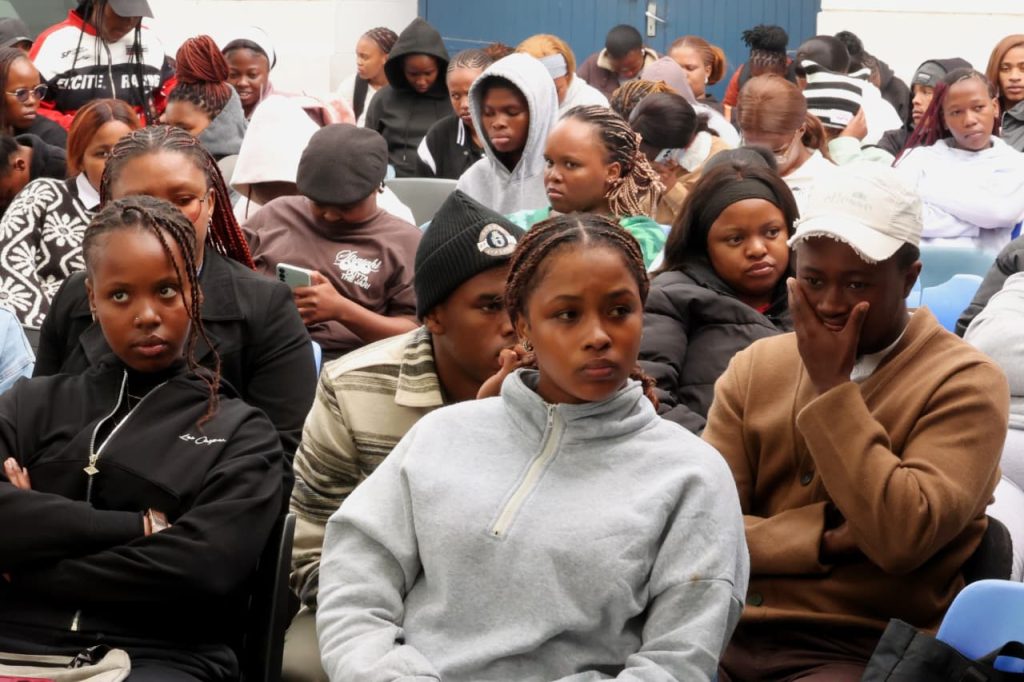
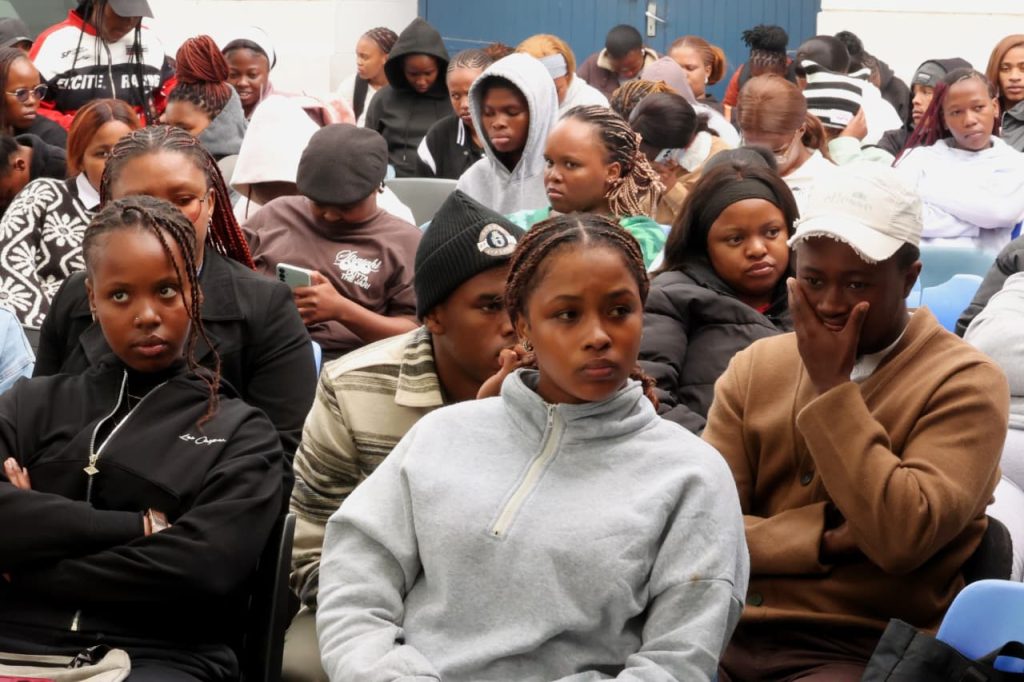
The European Union on Monday committed about R95.7 million toward a national programme to help prevent and respond to bullying and gender-based violence in South African schools, during the Basic Education Department’s Back-to-School Campaign at Eldorado Secondary School, Johannesburg.

EU Ambassador to South Africa, Dr Sandra Kramer, said the funding reflected the bloc’s commitment to learner safety and wellbeing and formed part of its long-standing cooperation with the country.

“We partner with the Republic of South Africa in the field of education because education matters,” she said. 

During her keynote address, Basic Education Minister Siviwe Gwarube thanked the EU for its donation and said that intimidation, violence, and abuse undermined learning outcomes and the dignity of learners. She called for consistent prevention and response measures in schools.

“We welcome this contribution and we commit to ensuring that it delivers real impact in the lives of our learners and in the lives of others around the country”, Gwarube said. 

She said international partnerships have sent a strong message that learner safety is a global priority and that “South Africa is not alone in this fight”. 

A public commitment would be signed with learners, education leaders, and partners to reinforce accountability and action in creating safer schools, she said.  

“As a government, we are clear. Schools must be places of care, discipline, and respect. Learners must feel protected by adults and that they are entrusted with their education”. 

Gwarube acknowledged that schools cannot address these challenges alone and called for collective action involving parents, communities, law enforcement, and social partners.

She encouraged learners who experience bullying to speak out, warned perpetrators that such behaviour would not be tolerated, and criticised the silence of bystanders, who enable abusers and fail to protect victims. 

“Being brave sometimes means standing up for somebody else, and gender-based violence is one of the greatest threats to the safety and well-being of our learners, particularly girls”, she said. 

The funding will strengthen prevention, education, psychosocial support, referral pathways, and school-based interventions to protect school learners. 

“The European Union stands with you in solidarity. Every child, regardless of geography, can learn in peace and dignity,” Kramer said.

INSIDE EDUCATION

Uncategorized

Ramaphosa: The Class of 2025 shows the power of investing in education

By Cyril Ramaphosa

Last week, the Minister of Basic Education announced that the Matric Class of 2025 had made history by achieving the highest pass rate in our country’s history. More than 650,000 learners passed the National Senior Certificate, achieving a pass rate of 88%.

We congratulate all the learners and their teachers, families and communities for this great achievement. We applaud every learner who sat these exams. 

The matric results have shown a steady improvement over many years, both in the quantity and the quality of the achievements. They have contributed to a dramatic increase in the number of South Africans older than 20 who have a matric qualification, increasing from 30% in 2002 to 52% in 2024.

This outstanding achievement shows the value of the investment we are making in education and the efforts we have made to ensure that all children, regardless of their background and gender, have access to quality education.

Global experience has shown that one of the most effective ways to reduce poverty is to ensure that girl children receive a good education.

It is therefore significant that in 2025 more girls sat for the matric exams than boys, and that the pass rates of boys and girls were much the same.

A higher proportion of girls attained admission to Bachelor studies than boys, and nearly twice as many obtained distinctions. This bodes well for the continuation of their studies at universities and colleges.

It is also significant that more than two-thirds of all bachelor passes came from schools in the most disadvantaged communities, classified as quintiles 1-3.

This is both a testament to the determination of these learners and their teachers, and to the effectiveness of policies like no-fee schools and the child support grant.

Taken together with the expansion in recent years of funding for tertiary students from poor backgrounds, these results give us encouragement that many of these young people will be able to lift themselves and their families out of poverty.

We are encouraged by the fact that 90% of learners with special education needs passed matric and 52% achieved bachelor passes, both higher than the national average. Our task is now to ensure that more learners with special needs are able to write matric exams.

As we applaud these great results, we must acknowledge that challenges remain.

Of the 1.2 million children who started grade one in 2014, only 778,000 made it through to grade 12 in 2025. That’s nearly half a million young people who left school before finishing. As we strive to improve the quality of our matric results, we must work harder to ensure that more children complete their schooling.

Another challenge is the drop in performance in subjects like mathematics. While more learners are taking these subjects, we have seen a drop in the pass rates for mathematics and accounting. These are subjects that our learners need to excel at if they are to succeed in a rapidly changing economy.

In working to address these challenges, we are starting with the foundations of learning. In the same week that the results came out for the class of 2025, the class of 2037 started their first day of grade one.

From this moment, they are starting their preparations for matric and beyond.

That is why are placing greater emphasis and making more investment into the early years of schooling. We have made Grade R compulsory and embarked on an ambitious drive to register and provide subsidies to more early childhood development centres.

We are strengthening early grade reading, improving teaching materials and focusing on teacher development in the early grades.

By investing in children at the start of their school career, by giving them a solid educational foundation, we are preparing them for success.

We are working to ensure that they all finish their schooling, that they excel in matric and that they go on to thrive in everything they do.

The achievements of the Class of 2025 must inspire and encourage all the years of learners that are to follow.

Cyril Ramaphosa is President of South Africa.

INSIDE EDUCATION

Uncategorized

Eleven school children killed in Vanderbijlpark crash

By Charmaine Ndlela

The Gauteng Department of Education (GDE) has confirmed that 11 schoolchildren died on Monday on their way to school, after a private minibus taxi collided with a truck near Vanderbijlpark in the Vaal.

Emergency services are currently at the scene, and authorities have secured the area as investigations into the cause of the collision are underway.

ALSO READ: Hybrid learning urged as public universities hit limits on first-year intake

According to GDE spokesperson Steve Mabona, preliminary reports indicate that the 11 learners died at the scene, while five others sustained critical injuries and are receiving medical care.

“At this stage the scene remains active, and emergency services are still attending to the accident,” Mabona added.

Gauteng MEC for Education Matome Chiloane is making his way to the scene to oversee the emergency response and support efforts.

This is a developing story

INSIDE EDUCATION

Uncategorized

Hybrid learning urged as public universities hit limits on first-year intake

By Levy Masiteng 

South Africa’s universities are facing a daunting challenge: the number of matriculants qualifying for university far outstrips the spaces available.

Higher Education Deputy Director-General Sam Zungu has said public universities can accommodate about 230,000 new students this academic year, leaving well over 100,000 qualified learners without places.

Zungu has urged institutions to combine in-person teaching with online delivery to increase capacity, instead of waiting years for new infrastructure.

The chairman of parliament’s education committee, Tebogo Letsie, has ventilated the same concerns as Zungu.

He said public universities have capacity for about 235,000 first-year students, while more than 245,000 candidates obtained bachelor-level passes in the 2025 National Senior Certificate examinations.

“The number of candidates passing matric is higher than the opportunities available in these types of institutions,” Letsie said, attributing the shortfall to limited government subsidies and funding pressures affecting the National Student Financial Aid Scheme (NSFAS).

Universities are already feeling the pressure.

As previously published by Inside Education, the University of KwaZulu-Natal (UKZN) received more than 326,546 applications for just 9,124 first-year places.

The University of Johannesburg received 450,000 applications and 870,000 study choices for the 2026 academic year, but can accommodate only 11,200 first-year students.

At Stellenbosch University (SU), 106,578 individual undergraduate applicants are competing for an enrolment target of 6,074 places.  

The mismatch between demand and capacity is not new, but it has worsened as record numbers of learners achieve bachelor-level passes.

To address the crunch, experts are increasingly calling for expanded hybrid and distance learning.

Higher Education Minister Buti Manamela said the approach proved effective during the COVID-19 lockdown, when students transitioned to online learning platforms.

“The COVID-19 pandemic showed us that online learning is a viable solution,” he said in September 2025 during a media briefing on limited university spaces.

“The reality is that about 850,000 young people will be sitting for exams. If all of them pass, the system can only absorb half.”

Some universities have already started shifting in that direction. The University of the Witwatersrand (WITS) has increased its online and part-time course offerings to accommodate more students.

“We have grown in size by increasing alternative options of online and part-time courses as there are limits on the capacity of the physical infrastructure to grow,” said WITS Registrar, Carol Crosley.

The University of South Africa (Unisa), a long-established open distance and e-learning institution, has for years delivered degrees to hundreds of thousands of students across the continent, demonstrating that remote learning can work at scale.

Zungu acknowledged that significant barriers remain, including unreliable internet access, high data costs and a lack of devices, but said partnerships with telecom providers and subsidised resources could help ensure that tools adopted in an emergency become part of a long-term strategy to expand access.

INSIDE EDUCATION

Uncategorized

KZN education outlines criteria for NSC exam re-marking, re-writing

Staff Reporter

The KwaZulu-Natal education department has issued guidelines for National Senior Certificate (NSC) candidates on how to apply for re-marking or re-checking of their 2025 examination scripts.

It has also reminded candidates that registration for the May/June 2026 NSC exams (re-write or absence) closes on 6 February.

The province topped the country’s matric rankings for the Class of 2025 with a 90.6% pass rate.

“Candidates who are dissatisfied with their examination results may apply for a re-mark or recheck of their examination scripts upon payment of the prescribed fees,” the department said.

“Applications for remarking or re-checking must be submitted once only at the relevant District or Regional Office.”

The department said the prescribed fees are R120 for a re-mark and R30 for a re-check. Candidates can also ask to view their scripts after the re-marking or re-checking process is complete, at a fee of R20, it said.

“The Department reminds all candidates that the closing date for registration for the NSC May/June 2026 examinations is 06 February 2026,” it added.

The department said that candidates may only register for subjects for which they were registered in a previous November examination and for which a valid School-Based Assessment (SBA) mark exists.

“Candidates who were absent from one or more external examination papers in the November examinations due to valid reasons (such as illness, medical reasons, death in the immediate family, or other special circumstances) may apply.

“Candidates wishing to improve their overall achievement status or rewrite one or more subjects may register. Where a candidate was absent from one or more papers with valid reasons, all papers for the registered subject(s) must be written.

“Candidates affected by examination irregularities may be granted a provincial exemption, pending the outcome of investigations.

“Candidates who were unable to write or complete one or more examination papers for reasons other than illness or death in the immediate family must submit a written report from the school principal to the Head of Assessment and Examinations.

“Result queries must be submitted for investigation within 30 days after the release of results.

“Candidates must ensure that their names and identity numbers are correctly reflected on their statements of results and report any required corrections to the Department before 14 February 2026.”

Documentary proof substantiating reasons for absenteeism must be submitted at the relevant centres of registration.

INSIDE EDUCATION

Uncategorized

Endangered ‘bladder’ grasshopper rediscovered in KZN nature reserve

Staff Reporter

A rare insect last recorded by scientists in 1980 has been found again in KwaZulu-Natal’s Umtamvuna Nature Reserve, Ezemvelo KZN Wildlife has said.

The finding of the granulate bladder grasshopper (Prostalia granulata) highlights “the critical biodiversity value of smaller protected areas managed by Ezemvelo KZN Wildlife,”  Ezemvelo communications manager Musa Mntambo said.

Ezemvelo is the province’s conservation agency tasked with nature conservation of protected and non-protected areas in KZN. It also promotes eco-tourism facilities.  

“Previously, the granulate bladder grasshopper was known from only three imprecise historical locations in Mpumalanga, the KwaZulu-Natal Midlands, and the Eastern Cape,” said Mntambo in a statement.

South Africa’s national Red List assessment classifies Prostalia granulata as endangered.  

The species was photographed on 1 December in the reserve.

 “This discovery highlights how even relatively small protected areas play a vital role in conserving South Africa’s biodiversity, including species that are rarely seen and poorly understood, findings like this reaffirm the importance of ongoing research, monitoring and effective management of our protected areas.” said Dr Adrian Armstrong, Ezemvelo’s Animal Scientist (Herpetofauna & Invertebrates).

Situated on the KZN South Coast, Umtamvuna Nature Reserve was proclaimed a reserve in 1971 and later enlarged.

It is recognised for conserving the critically endangered Pondoland-Ugu Sandstone Coastal Sourveld grassland and a number of endangered plant species.

Rediscoveries can improve scientific understanding of where a species persists, but they do not necessarily mean it is secure. “Rediscovering a rare species doesn’t automatically mean it is saved,” Christina Biggs, Rewild’s lost species officer, wrote in a 2024 blog on what typically follows rediscoveries.

Mntambo said bladder grasshoppers are named for the swollen abdomen of the male. That abdomen, he said, “amplifies their distinctive calls that can be heard hundreds of metres away”.

The grasshopper can be identified by the tiny raised bumps, or granules, on its body.

“Despite its importance, Umtamvuna Nature Reserve faces several threats, including illegal livestock grazing, unauthorised burning and insufficient funding,” Mntambo said.

“A potential future threat to this endangered species is the drift of pesticides from neighbouring macadamia orchards,” he added.

INSIDE EDUCATION

Uncategorized

Chiloane slams baseless claims foreign nationals prioritised in Gauteng schools

By Levy Masiteng 

Gauteng education MEC Matome Chiloane has dismissed what he said were misleading and unfounded claims that the Gauteng Department of Education (GDE) prioritises foreign nationals over South African learners when placing children in public schools.

“We wish to reiterate that the department does not have a directive that instructs schools or officials to prioritise foreign nationals during learner placements,” Chiloane said. 

ALSO READ: WATCH: How floods, a cash crunch and staff shortages couldn’t stop KZN from topping 2025 NSC results

He added that no school is permitted to place foreign national learners ahead of South African learners, warning that any school or official found contravening admissions policies would face consequences.

The department said applications for Grades 2 to 7 and Grades 9 to 11 are handled directly by schools, unlike the online admissions system used for Grade 1 and Grade 8 placements, which limits the department’s ability to influence placements.

Schools have been opened since Wednesday, and the department said only 2,763 Grade 1 and Grade 8 learners remained unplaced across the province, including 735 Grade 1 learners and 2,028 Grade 8 learners. 

ALSO READ: St John’s College top achiever Siza Gule set for Harvard

“The only limitation that currently poses a challenge is the lack of capacity in schools, particularly in high-pressure areas. Despite this, the department is working diligently to identify available spaces and ensure that every learner is placed as fairly and efficiently as possible,” the department said.

The GDE Online Admissions system has already placed 27,140 late applicants for Grade 1 and Grade 8, including 14,273 Grade 1 learners and 12,867 Grade 8 learners. 

“We remain committed to ensuring that every child who qualifies for placement is accommodated at a public school in Gauteng,” Chiloane said. 

INSIDE EDUCATION

Uncategorized

Eastern Cape’s Unathi shines bright on NSC stage

By Charmaine Ndlela Ngazibini

Unathi Ntungwa, a 17-year-old matriculant from Isikhoba Nombewu Technical Science School in the Eastern Cape, has been honoured for achieving third position in the Technical Science category in the 2025 National Senior Certificate (NSC) exams.

The awards ceremony was held at the Mosaiek Theatre in Fairlands, Johannesburg.

ALSO READ: St John’s College top achiever Siza Gule set for Harvard

Speaking moments after being announced as the third-position learner, Ntungwa described the moment as an “unexpected turnout”, when talking to Inside Education, saying she was “shocked but also proud” with the result.  

She received 91% for Technical Sciences, which includes science, technology, engineering, and mathematics. For Technical Maths she scored 86%, for Engineering Graphics and Design 93%, for Civil Technology 92%, and for Life Orientation, 90%.

Ntungwa said she will be studying at the University of Johannesburg, where she will pursue a degree in Civil Engineering, driven by her passion for science and problem-solving.

ALSO READ: WATCH: How floods, a cash crunch and staff shortages couldn’t stop KZN from topping 2025 NSC results

Family support played a crucial role in her success, she said.

Ntungwa said she is thankful to her parents, who prayed for her while she was writing her final exams. She also extended appreciation to those who believed in her, motivated her, and inspired her.

She thanked her teachers for providing past exam papers and helping learners with research.

INSIDE EDUCATION

Uncategorized

Emthonjeni Juvenile Centre eyeing 10th straight 100% matric pass rate

By Lebone Rodah Mosima 

Emthonjeni Juvenile Centre, a correctional school in the Baviaanspoort management area in Gauteng, says it is on the brink of an academic milestone of 10 consecutive years with a 100% matric pass rate, as it awaits the 2025 National Senior Certificate (NSC) results for correctional services schools.

Correctional Services Minister Pieter Groenewald will officially announce the 2025 NSC matric results for correctional services schools on Monday at the Goodwood Correctional Facility in the Western Cape.

ALSO READ: Basic Education assures placement for all learners as schools open

The department said that over the years, correctional services schools have persistently recorded pass rates above the national average.

Emthonjeni said it is has high hopes as it prepares to celebrate “a decade of uninterrupted achievement”.

Specialising in rehabilitation through education, vocational training, and counselling, Emthonjeni has built a reputation for equipping incarcerated youth with the skills needed for reintegration into society.

Principal Kgaume Modiba said he was confident the Class of 2025 would maintain the centre’s record, which he attributed to the dedication of learners and teachers.

“The Class of 2025 represents a special decade of excellence, and we believe they will uphold this legacy,” Modiba said.

The centre’s ambitions extend beyond pass rates, encouraging learners to pursue higher education and qualify for admission, it said.

ALSO READ: Lesufi slams Gauteng’s slip to third in 2025 NSC rankings

Emthonjeni also recognised its 2024 cohort, which achieved a 100% Bachelor pass rate, and said its top learner from that group secured admission to the University of the Witwatersrand.

It said the current matriculants have already applied to various institutions following structured career guidance.

Class representative Tshepo Magagane, who is currently serving a 10-year prison sentence, said his matric journey was a turning point.

“Upon incarceration, completing matric became my primary goal. While some paint Grade 12 as intimidating, fear should never define a learner’s path”, Magagane said.

He said he aimed to secure seven distinctions across all subjects.

“My long-term goal is a career in Information Technology, but I have chosen Logistics as a practical alternative,” he said.

INSIDE EDUCATION

Uncategorized

Mpumalanga suspends Bushbuckridge classes for two days after flooding

By Charmaine Ndlela

Learners in Mpumalanga’s Bohlabela District will not return to school as planned after the provincial department of education temporarily suspended classes in the Bushbuckridge Local Municipality on Thursday and Friday because of heavy rain.

The department held a meeting with district directors and affected circuit managers on Wednesday, after persistent rains in the Bohlabela District significantly affected teaching and learning activities.

Mpumalanga Department of Education spokesperson Jasper Zwane said that while some learners and teachers managed to reach their schools, many struggled due to flooding and inaccessible roads.

Zwane said schools in the Nkangala and Gert Sibande districts continued with a smooth reopening, with no reported disruptions to daily activities.

In the Ehlanzeni District, school principals have been formally empowered to exercise discretion, guided by on-the-ground assessments, to ensure the safety of learners and staff.

Several schools around Masoyi and Hazyview have also temporarily suspended classes, with parents urged not to send children to school as safety risks remain high, including flooded roads, damaged infrastructure, and dangerous river crossings.

The suspension of classes follows a warning issued by the South African Weather Service (SAWS) on Wednesday, which declared an orange Level 9 weather alert for most parts of eastern Limpopo and Mpumalanga, including areas within the Ehlanzeni District. The district has a long history of flood-related disruptions during peak summer rainfall.

Zwane appealed to community members to remain cautious during the heavy rainfall.

“The department once again urges all community members to remain vigilant and to put safety first. We strongly appeal to everyone not to cross flooded rivers, submerged bridges, or unsafe roads under any circumstances,” he said.

Thousands of pupils across the country returned to classrooms on Wednesday, marking the official start of the 2026 academic year.

INSIDE EDUCATION