Uncategorized

Addressing unemployment through a plan lifting youth out of hopelessness


EDWIN NAIDU

South Africa looks back on another concluded Youth Month with a rallying call urging the youth to beat the deepening unemployment crisis by adopting a Mandela-like entrepreneurial spirit the iconic leader often spoke about.

However, with Mandela Month and Monday Day upon us, South Africa is staring down the barrel of an unemployment headache, with the outlook considerably worsening for the youth.

For the first quarter of 2023, young people experienced underemployment at far higher rates than older persons.
Underemployment is described as the total number of people in an economy who are unwillingly working in low-skill and low-paying jobs or only part-time.

This underscores the youth crisis, corroborated by StatsSA, which recorded South Africa’s unemployment rate in the first quarter of 2023 at 32,9 % and among the highest in the world.
One of the success stories of a national campaign to address the job challenge has been establishing a government programme to support youth to build their own enterprises.

To date, 45 988 financial and non-financial enterprise opportunities have been provided by the Department of Small Business Development and the National Youth Development Agency.
But this success story has been buried under shocking unemployment statistics. In the first quarter of 2023, the underemployment rate was 6,3% for those aged 15-24 and 5,2% for those aged 24-34, which is higher than the national rate of 4,9%. The lowest underemployment rate is recorded in the age groups 35-44 years and 55-64 years, at 4,6%.

In the first Quarter of 2023, the Quarterly Labour Force survey found 32.9% of South Africans jobless. Many more have given up looking for opportunities. In the first quarter of 2023, 44.7% of young people between 15 and 34 years were outside of employment, education or training.
Signs of improvement are not evident when one considers that in 2021, South Africa’s youth unemployment rate was 64.18%, a 4.56% increase from 2020.

“Unemployment among young South Africans is a national crisis that demands urgent, innovative and coordinated solutions. It is, therefore, essential that we implement a comprehensive plan to create no fewer than 2 million jobs for young people within the next decade,” said President Cyril Ramaphosa in 2020, announcing a national strategic plan to address this growing challenge.
Emerging from the global Covid-19 pandemic, South Africa has unprecedented levels of unemployment, prompting Ramaphosa to decide that the persistent and structural nature of youth unemployment means that the issue can no longer be addressed through isolated initiatives.
The situation requires an extensive, coordinated and sustained effort to respond to both the changing needs of the economy and those of young people in South Africa.

The persistent and structural nature of youth unemployment means that the issue can no longer be addressed through isolated initiatives; hence the presidential priority is to create the country’s most comprehensive effort to address youth unemployment to date.

In his 2020 State of the Nation Address, the President launched the ambitious multi-sector action programme, the Presidential Youth Employment Intervention (PYEI), expanding the range of opportunities for young people in South Africa.

Driven by a Project Management Office (PMO) in the Presidency, this initiative targeted youth, whether in further education or training, work experience, youth service, employment, or entrepreneurship. It recognises the great potential of South Africa’s young people and works towards a society where every young person has a path to progress.

Another success story has been the private sector-led Youth Employment Service, a core partner of the PYEI, which placed 30 535 young people in work experience opportunities in various sectors of the economy. YES has placed over 100,000 South Africans between the ages of 18 and 29 in local businesses for a year of work experience.

Through YES, R6 billion has been injected into the economy, enabling participants to support their families – making a real dent in youth unemployment in the country.

Against this backdrop, the PYEI Presidential Youth Employment Intervention (PYEI) was launched to accelerate the transition of young people from learning to earning.

Through a strong commitment to partnering and mobilising stakeholders in the ecosystem, the PYEI has made significant progress towards achieving this objective in the past financial year.
This involved driving systems change to address the barriers that young people face, aggregating existing opportunities and creating new opportunities for young people, and linking young people to opportunities and available support in a single network.

YES Chief Executive Officer Ravi Naidoo told Inside Education that in the past 12 months, 32 578 new jobs had been created, the total for the full period standing at 113 911, with 5 298 new jobs created in June.

“This is good, considering the economy is flat. YES, is the biggest programme with social impact that is 100% paid for by the private sector, without taxpayers’ money. A growing number of corporates, currently 1 517, corporates have paid to support the programme,” Naidoo said.

He said that after their training, a large number of YES candidates (43%) get work in the companies they trained at or in the same sector, 15% open their own business, while the remainder return to training, and some still cannot find jobs.

But through ensuring that the candidates placed in YES programmes are given relevant skills for the future, Naidoo said they hope to create marketable skills, such as drone pilot training, coding, barista making and creative career options.

One of the success stories is Chulumanco Lonwabo Nomtyala, a trailblazing developer and creator of Soft 4IR Apps, an app streamlining housing subsidy applications. Lonwabo aims to partner with municipalities, empowering individuals to access housing grants conveniently. His vision is to bring convenience and knowledge to those in need.

Another success story, Thobani May has had a transformative journey from struggle to success, fuelled by his participation in the YES programme. Now the owner of Eco Char, a charcoal production company focused on environmental restoration, Eco Char employs five people and contributes to uplifting its community.

As part of a revitalised National Youth Service (NYS), interventions focus on priority growth areas with employment potential for young people in digital, technology and global business services; agriculture; installation repairs and maintenance; social services; and the automotive sector.

This initiative sought to link young people to opportunities through a national network, the National Pathway Management Network, linking a growing number of young people to learning and earning opportunities.

Currently, more than 4 million young people are in the SA Youth platform network and the Employment Services South Africa (ESSA) platform.

During the financial year 2022/23, 330 181 earning opportunities were secured by young people on SA Youth, and a further 50 375 earning opportunities were secured.

The Department of Basic Education’s School Assistants programme, a flagship programme of the Presidential Employment Stimulus, created most of the opportunities secured by young people in the network. SA Youth facilitated all recruitments for this programme.

SA Youth is reaching young people who are most in need of support. The PYEI’s Revitalised National Youth Service created 47 234 opportunities for young people to engage in paid community service in 2022/23. For many, the opportunity was the first time in their lives they earned their own money and could enhance their contribution to their communities.

SA Youth reaches many of the poorest young people, with 73% reporting that they attended poorer-resourced schools (quintile 1-3). Moreover, 65% of the young people registered on the SA Youth network, who responded to a question about social grants, reported that they live in households where at least one member receives a grant.

In a recent report discussing the project’s impact, 47 234 young people secured earning opportunities, while 10 431 have moved into other opportunities.

The Department of Higher Education and Training placed 14 504 TVET learners and graduates into workplace experience opportunities, enabling many to complete their qualifications.

Additionally, the private sector-led Youth Employment Service, a core partner of the PYEI, placed 30 535 young people in work experience opportunities in various sectors of the economy in the last financial year.

YES has placed over 100,000 South Africans between the ages of 18 and 29 in local businesses for a year of work experience. Through YES, a total of R6 billion has been injected into the economy, enabling participants to support their families. Nearly two-thirds of participants come from households reliant on social grants, and 40% are employed upon programme completion.

In the next quarter, the PYEI is launching a pilot of a pay-for-performance mechanism to test whether a different financing model for skilling can improve employment outcomes for young people.

Instead of receiving payment for training activities and outputs, appointed contractors receive the bulk of their income only when they demonstrate that they have placed young people in earning opportunities.

Led by the Department of Higher Education and Training through the National Skills Fund, the pay-for-performance mechanism will see the NSF play the role of an Outcomes Funder.

The outcome of interest is the placement of young people into sustainable earning opportunities. The pilot will train and place a targeted 4 500 young people into earning opportunities in 2023/24. This proof of concept will inform a scale-up phase that will crowd private investment to reach more young people.

Basic Education Minister Angie Motshekga also said last month that the Department of Basic Education is implementing the Presidential Youth Employment Initiative to tackle unemployment among youth in South Africa.

“We also have a responsibility to create employment opportunities, particularly for the youth who are neither in employment, education, nor training,” said Motshekga.

In a rallying call for the Black Business Council and the private sector to join South Africa’s skills revolution, Minister of Higher Education, Science and Innovation, Dr Blade Nzimande, has reiterated the government’s commitment to creating opportunities for the country’s youth.

A sum of R1,7 billion was disbursed by the National Skills Fund towards its bursaries programme in 2021/22, benefiting students enrolled in undergraduate and postgraduate programmes in scarce and critical skills.

“The central mandate of the Department of Higher Education and Training (DHET) is to develop a skilled and capable workforce whilst broadening the skills base of our country to support an inclusive growth path,” he said at the Black Business Council summit.

Capacitating today’s youth to be job creators instead of job seekers is admirable and a sign of a maturing and progressive state. However, entrepreneurship goes beyond simply training the youth to start businesses – we must invest in helping the youth sustain new enterprises and therein lies the challenge, or is it an opportunity?

INSIDE EDUCATION
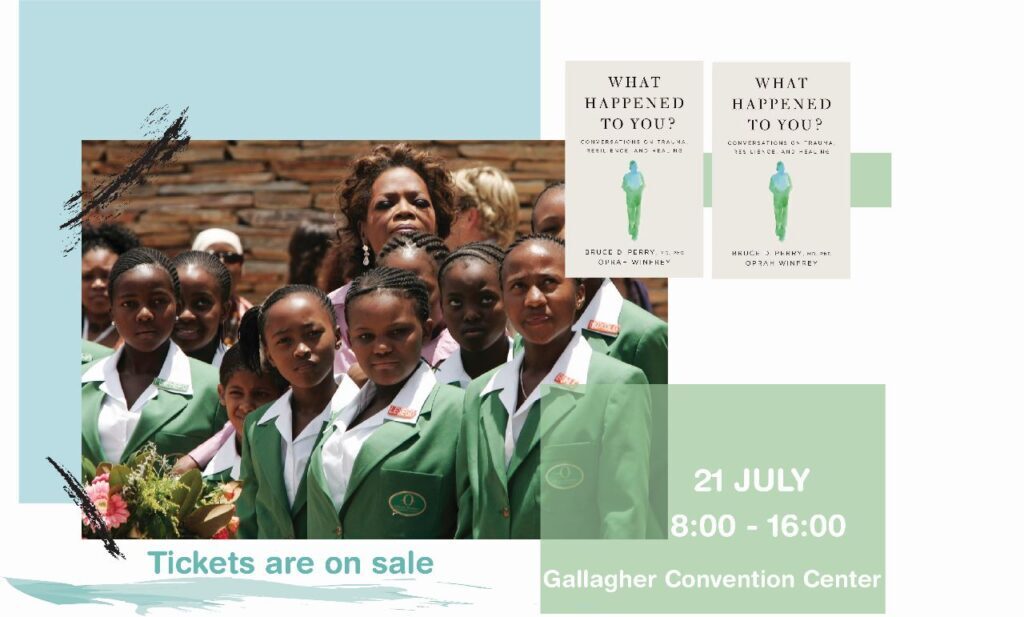
Unlock South Africa’s future by mediating the impact of trauma on learning
Uncategorized

Unlock South Africa’s future by mediating the impact of trauma on learning

Oprah Winfrey to speak live in South Africa during day-long conference focused on shifting the question in education from “What’s wrong with you?” to “What happened to you?”

Research indicates that traumatic exposure affects the development of the brain, especially in early childhood. This influences an individual’s day-to-day functioning, coping capacity and learning as well as their self-perception and relationships with others – effectively changing the trajectory of a person’s life.

With more than half of South African adults having been exposed to adverse experiences in their childhood, the effect on education and future success cannot be overlooked.

“Through the lens of a trauma-informed understanding, we can build a renewed sense of personal self-worth and ultimately recalibrate our responses to circumstances, situations, and relationships. It is, in other words, the key to reshaping our very lives,” says Ms Winfrey.

“I have seen first-hand the long-lasting impact that trauma can have on a person, and my intention is to share this approach with every educator, counsellor, physician and parent so they have the opportunity to implement this in their daily lives.”

That is why trauma-informed learning is necessary now more than ever, as it involves the awareness of both developmental adversities, and any other traumatic experience that touches the lives of learners.

Against this backdrop, the Oprah Winfrey Leadership Academy for Girls (OWLAG) is unlocking the foundation for empathetic, supportive, and effective educational practices in South Africa through the adoption of a trauma-informed curriculum based on the Neurosequential Model in Education (NME).

Developed by Child Psychiatrist, Dr Bruce Perry, the NME is a framework that helps support educators and learners in learning more about brain development and the impact of childhood trauma on a child’s ability to function in a classroom.

It emphasises the importance of recognising the sequential organisation of brain development and the influence of traumatic experiences on this process.

When applied to learning environments, the NME offers several valuable contributions in creating informed responses to trauma.

A special conference, on 21 July 2023 in Johannesburg, will unearth the key concepts from the best-selling book co-written by Ms Winfrey and Dr Bruce Perry, “What Happened To You,” relating to the Neurosequential Model and creating informed responses to trauma.

During the day-long conference, the Academy’s Founder, Ms Winfrey, will participate in a thought provoking and engaging conversation with Dr Katherine Windsor, Chairperson of the OWLAG Board of Directors, and experts in the field will provide insights and hands-on learning opportunities.

To learn more about the importance of NME, join other educators and counsellors to explore impactful strategies to mediate the impact of trauma on learning and teaching during the What Happened to You Conference taking place at Gallagher Convention Centre on 21 July from 8am to 4 pm.

INSIDE EDUCATION

Uncategorized

Education MEC saddened by suicide of two Ekurhuleni learners

LERATO MBHIZA

Gauteng Education MEC Matome Chiloane said he is saddened by the tragic and untimely death of two learners from Ekurhuleni who committed suicide.

The two learners, both girls – a Grade 8 learner from Geluksdal Secondary School and a Grade 12 girl learner from Nigel High School, took their own lives on Tuesday, and Thursday last week.

Unconfirmed reports say both learners consumed poison while one died instantly the other one died on her way to a clinic. 

“We wish to convey our deepest condolences to the families and school communities of these learners. Indeed, it is really concerning that learners will resort to taking their own lives. 

“We call upon learners to always seek assistance for necessary support to be provided. Our Psycho-Social Support Team will visit all affected schools to provide required support to the school community and families once Term 3 begins.

“Learners who may be experiencing abuse or need counseling are encouraged to contact Childline by simply dialing 116 for assistance,” said Chiloane.

According to the Department of Family Medicine, estimated suicide rates in South Africa is 23.5 per 100 000 people, which translates to about 14 000 deaths per annum. Suicide is also the second leading cause of death among young people aged 15–29 in the country.

INSIDE EDUCATION

Uncategorized

A Bipolar Self-Portrait: Living My Best Life Instead Of Suffering In Silence

Abigail George

I AM an author, poet and essayist. I am also a blogger, novelist and screenwriter. I have written over twenty books. I am forty-four years of age.

The reason I am writing this is to help someone in the same situation where I found myself twenty-eight years ago so they can benefit from my own funny, unique, sometimes hurtful, painful, uncomfortable and even humiliating personal experience.

I am writing this to answer the questions I had about myself, the discovery that my depression was not clinical depression but that it was manic depression, the onset of my mood swing and Christianity in my own life. If North America can be described as the “Prozac nation” by the North American author Elizabeth Wurtzel and the USA coined the terms “hype” and “spin”, then why is mental health such low on the list of priorities of the people we voted into power when it affects everyone around us directly or indirectly, in a significant manner or otherwise?

It is a psychiatric illness also known as a bipolar mood disorder or mood swings. I have lived with this debilitating, mysterious and deadly disease my whole life. I have struggled to overcome the stigma attached to this disease by people who are intimidated by anything they do not have any control over.

This is my story. Sometimes I imagine that I am standing on a stage giving a seminar when I say those words.

I am just like you. Nothing is extraordinary about my life except how I choose to live it. Some people have to have physical proof that something is amiss with their bodies. We put so much of our faith into the hands of healers. Faith is a supernatural force of will. Time, God, homoeopathy, holistic repatterning, reflexology, full body massage, tea, herbal infusions, therapists, psychiatrists and doctors are all healers. We don’t have time to visualise and reflect on what our bodies are trying to tell us why we are hurting.

The illness was there for a long time. Now when I look back, the truth about it is undeniable. It can be cured or, at best, prevented from recurring to the best of the patient, the doctor and the pharmacist’s ability.

I don’t believe in labels like gifted, talented, creative genius or eccentric.

It is such an acceptable illness that influences subtle nuances in an individual’s behaviour that it takes a cluster of specific symptoms to diagnose it. It takes charge of your brain’s serotonin and dopamine levels. The feel-good hormones in your brain are when your slow descent into a personal and very private hell begins (your secret pain).

I was raised in a liberal-minded household by parents who believed that love, happiness and peacefulness were greater aspirations than prestige, position and status. I am part of only a lucky few. I was taught not to bear grudges. I was told that when someone hurt my feelings, to ignore them and see them for who they were. I was introduced to being forgiving and understanding and that there wasn’t any difference between the rich and the poor children at my schools. I was taught that the noblest profession in the world was being a teacher and reinforcing values and excellence, as well as enriching wonderfully young lives filled with so much hope and promise.

My parents taught me by example. My father is a community leader, and my mother is a teacher.

The word stigma is a synonym for phobia or fear (for a better word). People choose to see the very best in someone, and their judgement is clouded when they ignore the rest. Acceptance is something that comes at a very high price. The denial of human dignity comes at a significant cost with unforeseeable circumstances.

The signs and symptoms of a hypomanic episode are as follows. You behave wild and free, have depressive slumps, and spiralling depression. You don’t sleep. You don’t nap. You are the focus and become the centre of the universe. You are beautiful, intelligent, and determined, but the reflection everybody else sees is militant, horribly annoying.

You feel humiliated in later introspection, while others feel uncomfortable in your presence. You were Dr Jekyll incognito and Mr Hyde in the flesh.

There is a genetic predisposition to depression and mania as well. My father’s side has had a history of mental illness, including alcoholism, depression and suicide. Depression is a devastating illness that affects millions of people worldwide. The more family values are on the decrease, the more suicide is on the increase.

People refer to their depression as sadness and stress. Mental health seems not to be a moot point for people in government.  To the world at large that is still suffering in silence, I say, break the silence and add a visible, outspoken voice. There are more of us out there than you realise. Keep on fighting. I did. I do every day, and as I take my first breath for the day, I thank God I am alive. It’s not brave when you’re not scared; sometimes, I have good days and bad days.

I had no idea I was sick for a long time. Later, in the beginning, stages, it defined who I was. My whole life revolved around hiding my disease. Sometimes it was easy to hide, and sometimes it wasn’t. It was cerebral. It was a catalyst. There was no scarring, no wound, no stitches and sutures required. I have changed. I have changed for the better only just these last few years. I am a more sociable person. I am kinder. My rough edges are softer. Perhaps it is a cliché, but it has become true. As the famous song goes, “We can find love if we search within ourselves”, but also, I believe, everywhere if we look hard enough.

People who have mental illness think they are a burden to society. Fact. The suicide rate amongst teenagers (the most vulnerable group) is growing. Fact. Social grants are also increasing due to a decrease in family values, growing up as orphans or having a single parent, poverty, unemployment, depression and stress. The list goes on. Rape, domestic violence, battered woman syndrome and the stigmatisation of mental illness are never-ending.

Fact. Some people continue to have blind faith in their medical aid or fund, that is, if they have one. Ignorance is like scar tissue, subterranean and lurking beneath the surface. Whoever said ignorance is bliss was duping her or himself. Unless a forum or a platform can be raised to break the silence and annihilate in one blow the stigma of mental illness and prejudice. Suffering in silence from depression and stress, families will break up, and kids will be caught in the crossfire of divorce. There is nothing more devastating in the world than a child who feels unloved and has no self-esteem.

Both Princess Diana and Mother Theresa said that the most significant disease today is the feeling of being unloved.

I felt bewildered when I read “The Girl in the Parisian Dress”, an article published in another famous women’s magazine on Ingrid Jonker, a celebrated South African poet. She was a genius that goes without saying, but also profoundly emotionally unstable because of her childhood and her past, and the one man whom she would never gain approval or love from – her father. You can’t colour happiness outside the edges of your life and imagine it’s a sea mist surrounding your body when inside, you’re backsliding and waning in gloom and doom. Everything around you is blacker than night. William Styron, an American writer, described depression as “darkness visible”, and that was the name of the book he wrote chronicling his depression as well. I think that no two words describe depression and stress better than “darkness visible”.

There is one thing that I have learned during the past eighteen years. The future is still in my power, even though the past cannot be changed. Mental illness is not a human stain. Currently, I am working on an anthology of my poetry, a collection of short stories, and I am beginning work on a novel co-authored with my father called “From hell to Eternity: A Memoir of Madness”. I have received grants from the National Arts Council which encouraged me to begin to write again. This time with both my survival and my experience in mind but to put together some of my earlier poetry in a collection entitled “Africa, Where Art Thou?”

Yes, my life has turned out rather unconventionally from who, what, and where I’d envisaged myself being, but not a day goes by now that I am not thankful. I do not question why I am here or my divine purpose. I am no longer driven by fear and uncertainties, and I behave self-consciously. Although there is still a sorrow here, I cannot reform, that yields stillness in quiet moments of reflection or contemplation; every event in my life composes furious life anew. Through all the infinite wisdom of my mistakes that came before, the love of my family remains. It is a reminder of what came before and what lies ahead in my future.

INSIDE EDUCATION

Uncategorized

Motshekga pledges to promote and strengthen ‘global collaboration’ at G20

STAFF REPORTER

BASIC Education Minister, Angie Motshekga, supported by Director-General Mathanzima Mweli, attended the G20 Intergovernmental Forum, which took place in Pune, India, last month.

The theme highlighted by the Indian G20 Presidency was: “Vasudhaiva Kutumbakam – One Earth, One Family, One Future” during the meeting from 19 to 22 June 2023.

The Group of 20 Countries (G20) is a leading forum of major economies that seeks to develop global policies to address the world’s most pressing challenges.

Due to South Africa’s advanced economy, South Africa became the first African country in the G20; and continues to be the only full member of the African continent. The Education Working Group (EWG) was established in 2018 under the Argentinian Presidency. Both the Department of Basic Education (DBE) and the Department of Higher Education and Training (DHET) actively participate in this forum.

Minister Motshekga attended the G20 Education Ministers on 22 June, where she delivered a Statement on behalf of South Africa.

“As South Africa, we strongly contend that expanding objective cooperation and collaboration within the G20 Member States will promote and strengthen global responsiveness, as well as focused research and innovation in areas prioritised by this Forum.

We have developed several responses to support the intended upward trajectory of the education enterprise post-COVID, including a recovery programme to reboot the system to recover lost ground to use the lessons we learned, such as streamlining our curriculum, strengthening our e-learning platforms, also working with our teacher unions to develop teaching skills and competencies, to build back better.

We will continue to reflect on the four priority areas to improve and strengthen the development, implementation, as well as monitoring and evaluation oversight of our national education legislation, policies and practices. This, we will do from primary education, including early childhood,” said Minister Motshekga, who represented the DBE and the DHET as one Ministry in the G20.

On the sidelines of the G20 Ministers of Education Meeting, Minister Motshekga held bilateral talks with the Minister of Education of Brazil, Mr Camilo Santana; the Second Minister for Education of Singapore, Dr Mohamad Maliki Bin Osman; and with the United Arab Emirates (UAE) Minister of Education, HE Dr Ahmed Belhoul Al Falasi. The Minister also met with the Deputy Secretary of the OECD, Mr Yoshiki Takeuchi.

INSIDE EDUCATION

Uncategorized

DBE, French Embassy rolls out inquiry-based science education teaching

STAFF REPORTER

THE Department of Basic Education (DBE), in partnership with the French Embassy, has embarked on a mission to revolutionise the teaching of Science in South African schools through the Inquiry-Based Science Education (IBSE) approach.

The approach is packaged through the La main à la pât (LAMAP) Project, a French acronym meaning stick your hands in the dough or to get involved in the thick of things.

The Project targets Grade 7 Natural Science teachers and advisors from 50 schools in five provinces, namely the Eastern Cape, Free State, KwaZulu-Natal, Limpopo and the Northern Cape.

The capacity-building session was attended by the French Embassy, represented by Mr Jerome Cosnard and the two French trainers, Messrs Fillipe and Gilles. Deputy Director-General for Basic Education, Mr Paddy Padayachee, opened the session. In addition, the Nkomazi Science Centre, Eskom Science Expo and the Cuban Specialists, led by Ms Yadeleidi Collot, made meaningful contributions to the quality of the week’s programme.

The Natural Science advisors and teachers were exposed to top-notch expertise in the hands-on approach to the teaching of Science. The group of 65 participants was divided into two equal sub-groups. One group was under the tutelage of science specialists from France who advanced the IBSE approach as an effective pedagogy for conceptual understanding of Science. Understanding the process of scientific investigations is one of the critical elements of this approach to science teaching. It calls upon several skills, such as asking questions, observing, predicting, creating experiments, analysing data and supporting conclusions with evidence. The process generally uses readily available resources and relatively inexpensive equipment, which augurs well for participation by a range of science educators anywhere in the country. 

The Nkomazi Science Centre, the Cuban Specialists and the Eskom Science Expo handled the second group. This group focussed on Grades 6, 7 and 8 Natural Science experiments using the science kits that the DBE supplied to schools. Although, in the beginning, the participants seemed overwhelmed, they quickly acclimatised to the LAMAP approach and engaged in active participation during the hands-on activities. 

Both groups handled the Senior Phase Natural Science curriculum using different approaches. The creation of the two groups was a strategic decision with subject advisors evenly spread across the two groups. The science advisors are the continuity and sustainability lifeblood of the project. Whilst the LAMAP Project is relatively small in reach, it is loaded with learnings that can be up-scaled in the system to improve the teaching and learning of science.

INSIDE EDUCATION

Uncategorized

UCT statement on the new THE Sub-Saharan Africa ranking

STAFF REPORTER

THE University of Cape Town (UCT) did not participate in the new Times Higher Education (THE) Sub-Saharan Africa (SSA) ranking released last week.

In a statement, UCT notes concerns about the proliferation of rankings, particularly at a time when universities in many parts of the world are reducing their funding dramatically.

This is particularly true of institutions on the continent. Each new ranking increases the resources required to participate. 

“While rankings can be useful as a benchmark and comparator, they can distract higher education institutions from focusing resources on their core business – which in our case is delivering excellence in research, teaching and learning, societal engagement and impact – in a manner that, as our Vision 2030 states, ‘unleashes human potential towards a fair and just society’,” it said in a statement.

UCT is already stretched to provide data for the many rankings in which it takes part and has yet to take on another easily. Sub-Saharan Africa ranking as it stands in this first cycle does not fit its mission.

The various metrics suggest that it is aimed at covering the vast diversity of higher education institutions on the sub-continent, which is admirable in its intent but needs to be revised with comparability. UCT positions itself as a research-intensive global university with relevance and impact in Africa, and it is important to us to be ranked against universities with a similar mission for the comparison to be meaningful.

“We have had further concerns with some of the metrics, which we have raised directly with THE,” said UCT.

Following this engagement with THE, UCT might, at a later stage, reconsider its participation should the ranking methodology evolve appropriately, and the resources to support participation be available within the university.

INSIDE EDUCATION

Uncategorized

UKZN Professor sees stars after Winning Annual Harry Oppenheimer Fellowship Award

STAFF REPORTER

SOUTH Africa takes a giant leap towards becoming a global leader in astronomy and astrophysics as Professor Sunil Maharaj of the University of KwaZulu-Natal (UKZN) has received the esteemed Annual Harry Oppenheimer Fellowship Award.

The accolade recognises Professor Maharaj’s exceptional work in gravitational processes within evolving stars, a key area bridging science, mathematics, and astronomy.

Under the creative partnership with the Square Kilometre Array (SKA), South Africa’s strategic vision of advancing astrophysics is being realised through this groundbreaking project. Professor Maharaj’s research explores the intricate workings of gravitational processes within stars, offering crucial insights into our understanding of the universe. This pursuit has been a fundamental scientific challenge since the early days of gravity research.

With a focus on collaborative efforts, this transformative project has brought together a dedicated team from South Africa, Tanzania, and India. Their collective expertise and contributions play an instrumental role in unravelling the mysteries of the cosmos. By fostering international collaboration, this initiative showcases the power of uniting diverse minds and resources towards a common goal.

Professor Maharaj’s achievement not only highlights the exceptional talent within South Africa but also underscores the nation’s commitment to fostering scientific excellence and becoming a leader in the field of astrophysics. The collaborative nature of this project serves as a testament to the power of international cooperation and knowledge sharing”, said Jonathan Oppenheimer, Chairman of the Trust. 

The award comes at a time when South Africa is making huge strides in astronomy, as SKA, the world’s largest radio telescope, is currently being constructed by South Africa jointly with Australia. Professor Maharaj adds that although South Africa is still catching up to developed countries in astronomy, the SKA is to the country’s advantage.

Upon winning the award, an elated Professor Maharaj said: “It has been a very humbling experience to be shortlisted for the award and to receive it. It surprised me as I thought it would go to something more observational and practical like a product or a cure for COVID”.

UKZN Vice-Chancellor and Principal Professor Nana Poku expressed immense pride. They congratulated Professor Maharaj on receiving this award, “His exceptional research in gravitational processes within evolving stars is a beacon of scientific excellence, demonstrating South Africa’s progress in astrophysics. This monumental achievement is a testament to Professor Maharaj’s unrivalled dedication and expertise and a clear demonstration of South Africa’s capability to be a global leader in astronomy. As we celebrate this momentous occasion, we look forward to further pioneering breakthroughs in astrophysics and other fields from our esteemed academic community.”

The Harry Oppenheimer Fellowship Award is granted to scholars of the highest calibre who are engaged in cutting-edge and internationally significant work that has particular application to advancing knowledge, teaching, research and development in South Africa and beyond.

INSIDE EDUCATION

Uncategorized

EWSETA link-up with RES4Afric and Nkangala TVET College boosts renewable energy sector

STAFF REPORTER

EWSETA, in partnership with RES4Africa and Nkangala TVET College, marks a significant milestone in the RE-skilling Lab program.

The successful upskilling of ten lecturers from Nkangala TVET College equips them with the necessary knowledge and expertise to deliver high-quality education in the renewable energy sector.

The partnership between EWSETA, RES4Africa, and Nkangala TVET College is crucial as South Africa focuses on defining the necessary skills and implementing them to prevent communities from being left behind during the just energy transition.

The collaboration emphasises the importance of collective efforts between government, the private sector, and local and international partners to enable communities to participate in the green economy with the proper knowledge and skills.

EWSETA applauds RES4Africa for working with their member industries to further support Nkangala TVET by significantly enhancing its training capacity in renewables. The state-of-the-art infrastructure, including inverter systems, photovoltaic panels, batteries, a wind turbine, and a solar pump, has bolstered Nkangala’s ability to provide comprehensive training that includes theoretical and practical exposure.

As a result, Nkangala TVET can now issue accredited formal certifications to students undergoing training recognised by the QCTO and EWSETA.

“With our progressive policies, emphasis on energy efficiency, and accessibility to renewable

energy, we aim to achieve a just energy transition that guarantees a fair and sustainable future for all in South Africa,” stated Candice Moodley, EWSETA’s  Corporate Services Executive, highlighting the importance of addressing poverty, inequality, and unemployment through reskilling and upskilling strategies and the capacitation of local communities through a strengthened Public Education and Training system.

As part of its commitment to fostering upskilling and re-skilling in the renewable energy and energy efficiency sector, EWSETA acknowledges the vital role of lecturers in training learners and emphasises the integration of renewable energy, energy efficiency, and entrepreneurship modules into the TVET curriculum to ensure the delivery of high-quality training that will not only lead to more excellent employability prospects but to self-employment.

EWSETA has also awarded the college an internship for 25 electrical students for 18 months.

Says Linky Nhlabathi, Electrical Lecturer (NCV) from the Nkangala TVET college, “The Renewable energy course on PV Solar Energy was a great experience. It is one of the skills that are relevant and responding to the needs of our community and the country, especially during this load-shedding crisis.

“My attitude and my lessons have changed in a way that I am enjoying my teaching.

 I want to encourage students and qualified electricians, especially females, to integrate the Renewable Energy course with the electrical trade as there are many employment opportunities available, which will also contribute to our economy.”

Industry experts are encouraged by EWSETA to collaborate closely with SETAs and TVETs, leveraging their expertise in curriculum reviews and the development of new qualifications. Moreover, the organisation invites industry partners to provide valuable work-integrated learning opportunities, such as internships, for TVET learners.

INSIDE EDUCATION

Uncategorized

Nzimande urges Black Business Council and the private sector to join the skills revolution buoyed by the R1.7 billion bursaries programme

EDWIN NAIDU

IN a strong rallying call for the Black Business Council and the private sector to join South Africa’s skills revolution, Minister of Higher Education, Science and Innovation, Dr Blade Nzimande, has reiterated the government’s commitment to creating opportunities for the country’s youth.

A sum of R1,7 billion was disbursed by the National Skills Fund towards its bursaries programme in 2021/22, benefitting students enrolled in undergraduate and postgraduate programmes in scarce and critical skills.

“The central mandate of the Department of Higher Education and Training (DHET) is to develop a skilled and capable workforce whilst broadening the skills base of our country to support an inclusive growth path,” he said on Friday in Kempton Park at the Black Business Council summit.

Addressing guests at the black-tie affair, including President of BBC Elias Monage and the Leadership Collective of the BBC; BBC Chief Executive Officer Kganki Matabane; the Minister said he was delighted to have joined the gathering under the theme: “20 years of the Broad-Based Black Empowerment Act – Accelerating Implementation, Creating Jobs and Growing the Economy”.

In his address on the topic: “Skills Development and the Fourth Industrial Revolution – Their Roles in Economic Transformation- Skills for the Future”, Nzimande said a variety of strategic interventions to support the college sector to remain relevant to the country’s economic needs had been undertaken.

This includes the establishment of thirty-four (34) Centres of Specialisation at twenty (20) TVET Colleges with an investment of R68 million, and sixteen (16) Colleges have thirty-three (33) Trade Test Centres.

The Centres of Specialisation are well positioned to prepare students for the workplace, or self-employment, by maintaining close working relationships with employers in their areas of study.

“I must indicate that through these centres, we now can conduct trade tests in all thirteen (13) of our priority trades at TVET Colleges. These trade test Centres have already trade tested over 500 people that have qualified as artisans,” he said.

When the department was established in 2009, Nzimande said there was only one trade test centre for the country at Indlela, which presented an obstacle in the pipeline of producing more artisans.

Entrepreneurship is an excellent priority following the entrepreneurship hubs at TVET Colleges to support students to move into self-employment after completing their programmes.

In collaboration with Universities South Africa (USAF), Nzimande said a national program called Entrepreneurship Development in Higher Education (EDHE) Programme that aims to build an entrepreneurship system in universities focused on developing student entrepreneurship, entrepreneurship in academia, and entrepreneurial universities has been introduced.

Concerning the 4IR in skills development, Nzimande has established the Ministerial Task Team to look into the implications of the 4th Industrial Revolution in the post-school education and training system.

Ten (10) colleges have introduced a new programme in Robotics as part of the curriculum transformation strategy for the TVET sector to ensure that colleges remain responsive to the needs of a changing economy.

“One of my priorities is to continue to work closely with the private sector, including the BBC, in a partnership for skills development and innovation,” he said.

Nzimande added that the department is also involved in the development of critical skills for the economy, which includes the Hydrogen Economy within the context of the Hydrogen Society Roadmap for South Africa, the Agriculture, Health and Energy sectors and the development of skills for both the public and the private sector.

As part of implementing this mandate, the Department of Higher Education and Training (DHET) will oversee an institutional landscape comprising twenty-six (26) universities, fifty (50) Technical and Vocational Education and Training (TVET) colleges, nine (9) Community Education and Training (CET) colleges, twenty-one (21) Sector Education and Training Authorities (SETAs), National Skills Fund (NSF), Quality Councils as well as Private Providers.

“Our key outcomes, in this drive, include, amongst others, expanding access to post-school opportunities and improving the quality of provision and the responsiveness of the post-school system,” he said.

INSIDE EDUCATION