Uncategorized

DA calls for forensic audit after more than R1m looted from Eastern Cape’s Ulwazi High

By Thapelo Molefe

The Democratic Alliance (DA) has called for a full forensic investigation into the alleged looting of more than R1 million at Ulwazi High School in Mdantsane, Eastern Cape, where funds meant to feed and support learners were allegedly spent on luxury meals, alcohol, and fuel.

In a statement on Tuesday, DA provincial education spokesman Horatio Hendricks said the revelations showed “a shocking abuse of public money that has robbed learners of both dignity and opportunity”.

The DA accused the principal and members of the School Governing Body (SGB) of treating the school’s account “as a private cash machine”.

“Ulwazi High is a no-fee school serving over 1,200 learners, yet children are being fed plain samp without fruit and often receive only one meal a day,” Hendricks said.

“Meanwhile, the principal and individuals linked to the School Governing Body have allegedly treated the school account as a private cash machine.”

Financial statements seen by the party show that more than R250 000 was spent at high-end restaurants such as Grazia Fine Food & Wine and La Grato, while over R450,000 was withdrawn from ATMs and another R226 000 in cash back from grocery stores.

Payments were also made to liquor outlets, lounges, and car washes using a card linked to the school’s account.

“This is a blatant violation of the South African Schools Act, which requires full documentation and approval of school expenditure,” Hendricks said.

“The money that should be feeding hungry children has instead funded fine dining and personal luxuries”.

Learners interviewed by the DA confirmed that they do not receive the full meals listed on the official menu of the National School Nutrition Programme (NSNP).

“Many learners report receiving only one meal a day instead of two, with fruit rarely provided despite being supplied and budgeted for,” Hendricks said.

The school now reportedly owes service providers over R375,000 in unpaid invoices, plunging the feeding scheme into debt.

Some members of the SGB allegedly benefited from food, fuel, and cash payments, in direct contravention of the Schools Act, which prohibits governing body members from being remunerated.

The scandal led to the suspension of principal Mihlali Makhalima by the Eastern Cape Department of Education on Friday.

An internal probe found that funds intended for school nutrition, maintenance, and learning materials were instead used for personal spending over a 16-month period.

Makhalima has denied wrongdoing, claiming that the expenses were related to school events and meetings. However, the investigation reportedly uncovered weak financial controls, unauthorised debit card transactions, and personal benefits to SGB members.

This latest scandal comes amid ongoing criticism of the Eastern Cape’s education system, which has been long plagued by corruption, infrastructure collapse, and mismanagement. 

Hendricks said the DA views the Ulwazi case as a symptom of a deeper governance crisis. 

“This kind of abuse robs learners of dignity and opportunity,” he said. 

“It is unconscionable that those entrusted with the welfare of children are enriching themselves while pupils go hungry.”

To address the crisis, the DA said it will table a motion in the Eastern Cape Legislature demanding urgent intervention, including a full independent forensic audit of Ulwazi High and its nutrition programme, criminal referrals under the Public Finance Management Act for all implicated individuals, and recovery of stolen funds through civil claims.

The party is also calling for lifestyle audits of school and district officials, and a province-wide audit of high-risk schools starting in Buffalo City.

“This cannot go unpunished. If the provincial government fails to act decisively, it will be complicit in the ongoing theft from the poorest children in this province,” Hendricks said.

“Public education funds belong in classrooms, not in restaurants and liquor stores.”

INSIDE EDUCATION
Uncategorized

Ramaphosa awarded honorary doctorate by University of Malaya

By Staff Reporter

President Cyril Ramaphosa has been conferred an Honorary Doctorate in International Relations by the prestigious University of Malaya in Kuala Lumpur, Malaysia.

The university bestowed the honour in recognition of President Ramaphosa’s exceptional leadership, his contributions to international relations, and his commitment to global development.

He is only the second South African to receive this distinction, following the late former President Nelson Mandela.

Delivering a public lecture titled “South–South Diplomacy in the 21st Century: Malaysia and South Africa,” Ramaphosa said the award was a tribute to the South African people’s enduring struggle for democracy and freedom.

“This honour, in the form of an Honorary Doctorate in International Relations, is being conferred at a time of great turbulence and uncertainty in the world,” he said.

“It recognises the principles and values that we have sought to advance in global affairs.”

Reflecting on the historic ties between South Africa and Malaysia, Ramaphosa highlighted the Malay-Indonesian heritage that shaped early South African society.

“Today, we pay tribute to the rulers and peoples of the Malay-Indonesian archipelago, whose exiles, workers, and scholars helped build the South African nation,” he said.

“The earliest recorded arrivals from that region were mostly enslaved people, brought against their will to provide labour to the Dutch colony at the Cape of Good Hope.”

Malaysia also stood in solidarity with South African freedom fighters in the struggle against apartheid.

“It is a source of great pride to us that the ties between Malaysia and South Africa have endured. Since the time of the early Cape Malay community, through the anti-apartheid struggle and into our democracy, our destinies have been intertwined.

“Our shared history may not have been of our making, but it has evolved into a principled solidarity. When we were liberated from apartheid bondage, Malaysia was at our side. When President Nelson Mandela was released from prison in 1990, [then] Prime Minister Mahathir Mohamed was one of the first foreign leaders he met with,” he said.

Ramaphosa also called for the deepening of friendship between South Africa and Malaysia.

“I receive this honorary doctorate with gratitude from the Universiti Malaya, an institution with a rich and proud history. I accept it on behalf of your brothers and sisters in South Africa, who owe the people of Malaysia and its noble leaders a great debt. Thank you for standing with us in our quest for dignity and justice,” he said.

INSIDE EDUCATION

Uncategorized

Eastern Cape celebrates young mathematical minds at awards ceremony

By Johnathan Paoli

The Eastern Cape Education Department has celebrated the foundational role mathematics could play in both the development of the individual learner as well as the growth of his or her community.

The department’s Primary Curriculum Directorate, in partnership with the Horizon Mathematics Competition (HMC) organisers, hosted the 2025 Horizon Mathematics Competition Awards at the Mandla Makupula Education Leadership Institute (MMELI) in East London.

The event celebrated not only academic excellence but also the growing confidence of learners who are discovering the joy and power of numbers, with Horizon Educational Trust Director Ian Turan stressing the essence of the day’s purpose and calling on the country to nurture future problem solvers and innovators.

“Mathematics helps strengthen reasoning skills and critical thinking. Maths will help you in any career,” Turan said.

For many learners, the competition marked the culmination of months of effort, beginning in their classrooms where they competed against peers before advancing to district contests.

Those who excelled at each stage secured their place at the provincial finals, representing the highest level of mathematical achievement in the Eastern Cape’s primary schools.

The steady growth in participation has made the HMC a cornerstone of the province’s education landscape, reflecting its success in promoting curiosity, discipline, and analytical thinking among young learners.

The department highlighted that the competition’s impact is evident not only in the enthusiasm it inspires but also in measurable academic outcomes.

Provincial and international assessments, including the Annual National Assessments (ANA), SEACMEQ V, and the 2023 Trends in International Mathematics and Science Study (TIMSS), have shown marked improvements linked to enhanced learner engagement with mathematics.

The department believes that fostering such engagement early is vital for long-term success in science, technology and engineering fields.

The awards ceremony itself was a celebration of excellence, with top learners recognised for their dedication and skill.

Each participant received certificates and medals, while the highest achievers took home practical prizes such as laptops, smartphones, bicycles, and scientific calculators.

In addition to individual recognition, the department honoured schools that demonstrated exceptional commitment to nurturing mathematical talent.

Institutions like New Generation Primary, Grey Boys Primary, and Maclear Methodist Primary stood out for their consistent support of learners and their innovative approaches to teaching mathematics.

Their success stories showed the essential role that schools and teachers play in shaping confident, capable learners.

Chief Education Specialist for Primary Curriculum, Lulama Kenene, applauded the learners for their perseverance and enthusiasm.

“Every participant is a winner. I want to say thank you to all our guests for joining us today,” he said.

He said that the competition is as much about participation and growth as it is about victory.

Chulekazi Xundu-Bula, Chief Director of Primary Curriculum, used the occasion to pay tribute to educators, describing them as the architects of the province’s academic future.

“Teachers, thank you for moulding our future leaders. Maths nurtures the ability to solve problems,” she said.

The department said that the competition had evolved into a flagship event that brought together communities, celebrates excellence and builds a foundation for academic confidence.

INSIDE EDUCATION

Uncategorized

‘Robot’ helps Tygerberg specialists on ward rounds during pandemic

Intensive-care specialists at Tygerberg Hospital have a new infection-resistant ‘colleague’ helping them do ward rounds on Covid-19 patients. “Quintin” – as ‘he’ is affectionately called – is a Double Robotic ‘robot’ that has been employed to help specialists do ‘virtual’ ward rounds – even from home – if they are unable to be physically present.

Coenie Koegelenberg, Professor of Pulmonology at Stellenbosch University’s Faculty of Medicine and Health Sciences (FMHS), started experimenting with options to perform virtual ward rounds in the intensive care unit (ICU) of Tygerberg Hospital shortly before South Africa’s lockdown, and is assured that ICU specialists can, indeed, run ward rounds remotely, using robots as tireless helpers that can’t get infected.

Tygerberg Hospital has a limited number of specialists in its general medical ICU at present.

“Between the specialists, we will share the workload of Covid-19 patients who end up in ICU. The odds of at least one or all of us falling ill are quite high, so we need to realistically plan for what could happen.

“If any of the specialists gets the virus and is unable to physically go to work, we will be able to function remotely using the robot, from a phone or a laptop,” said Koegelenberg.

“Using this device will enable us to provide a service if our skills sets are in short supply.”

The idea of using robots came about through “a combination of thoughts of many people,” Koegelenberg said. “We started wondering how we could help more people if we ourselves were to fall ill.”

His wife Dr Suretha Kannenberg, a dermatologist, had told him about this device.

“On Wednesday 18 March, on my way home after many meetings, I wondered whether ‘virtual’ ward rounds in many ICUs could be feasible. I phoned my wife and shared my thoughts. I had thought of using a fancy ‘nanny cam’ she bought a few years ago.

“She suggested using the Sunskill laboratory’s Double Robotic ‘robot’ instead. [Sunskill is a state of the art clinical training facility at the FMHS]. I was not familiar with this device. The next day I met with Professor Ian Vlok from the FMHS’ Division of Neurosurgery and the Sunskill facilities manager, Bronwyn Stockenstrom who gave me a ‘crash course’ on how to use the Double Robotic ‘robot’. The Sunskill lab without any hesitation agreed to have the robots be used in the ICU until the pandemic is over.

“On Friday Dr Usha Lalla (Tygerberg Hospital’s head of ICU) and I tested the device. We performed a full ICU ward round without entering the ICU. It was truly an eye opener and a potential game changer in this and future similar pandemics. It was a remarkable success! We both concluded (with more than 30 years of combined experience in ICU) that our physical presence was not required, and that the technology has great potential to be rolled out. This is, of course, anecdotal and not ‘true evidence’, but desperate times calls for desperate measures. Moreover, should one of us be under ‘self-quarantine’, we would be able to ‘work from home’.”

The “robot” that looks like an computer tablet and has two wheels, uses gyroscope and accelerometer sensors in its base and can be controlled with a desktop, tablet or smartphone. It enables communication between patient and doctor through a microphone and a zoom function and can relay vital signs of highly infectious patients.

Robots have also been used in Italy, where the pandemic has claimed many lives, including those of doctors.

The use of the robot at Tygerberg Hospital is yet another example of how the pandemic has brought ingenuity and collaboration to the fore.

“This has been a team effort – and such a bonding experience,” said Koegelenberg.

Vlok, who oversees activity at the Sunskill lab, said: “The Sunskill clinical training facility uses world class technology to further the skills training of our postgraduate students at Stellenbosch University. The robots have given us access to international and national experts in their fields for training with their virtual presence guiding the teaching and training. Now the same technology can allow us to carefully navigate and manage patients in a high-risk environment and reduce risk to our staff. I sincerely hope this initiative will not only have a positive effect during this pandemic but open the door for further innovation and collaboration.”

Courtesy: Stellenbosch University

Uncategorized

Wits welcomes top applicants for 2026

Wits University recently hosted its annual Top Applicants Function, welcoming some of the most outstanding applicants for 2026 to campus.

The event, organised by the School Liaison Office, gave prospective students the chance to experience Wits firsthand, meet the university’s deans, and interact with lecturers and researchers.

In his address, Wits Vice-Chancellor and Principal Professor Zeblon Vilakazi spoke about the future that awaits the next generation of Wits students.

“Whether you study engineering, medicine, law, economics, psychology or physics, what matters is that you find your why. Your why is your true north, your centre,” he said.

He emphasised the importance of using skills ethically in a world increasingly shaped by artificial intelligence.

“AI, like all other scientific machines, does not have a conscience of its own. It is us who impose that conscience on them. Therefore, we need to utilise these tools in a very ethical way.”

He also encouraged students to measure success not by titles or salaries, but by the impact they have on those around them.

“Don’t chase success for the sake of success. Measure your worth by the difference you make to those around you. We want you to be indispensable to your community, your country, this continent, and the world in general.”

A glimpse into Wits life

The function combined informative sessions with a welcoming atmosphere, allowing applicants to explore different faculties, learn about the courses they are interested in, and engage directly with departmental heads.

“We hope that by engaging with our academic leaders and experiencing campus life, applicants will feel prepared and excited to join Wits in 2026,” said Msimelelo Tshotyana from the School Liaison Office.

For many attendees, the experience was both eye-opening and affirming. Joshua Fynn, a top applicant from Amajuba High School, shared that the sense of belonging stood out most.

“I chose Wits because of the strong culture and the first-year students who welcomed me, not just as a number, but as part of the family,” he said.

“That strong culture really resonates with me.”

Parents and guardians were equally impressed. Le’Anne Ponen, who attended with her son, Carlin, said she was inspired by the environment and the people she met.

“From what I could see here, it’s very diverse, and I love that. There’s a spirit of excellence that flows through everything, even the response and feedback from the faculty were absolutely amazing,” she said.

The day was both inspiring and practical, giving prospective students and their families a clear sense of what life at Wits will be like and how they can make their mark on the world.

Courtesy: Wits University

Uncategorized

Phodisho Maganyela, 15, wins national youth essay competition

By Palesa Nguqu

Phodisho Samuel Maganyela, a 15-year-old Grade 10 learner from Lesedi Secondary School in the Tshwane District, Bronkhorstspruit, has won top honours in the 2025 Bokamoso Creative Essay Competition, held recently in Klipspruit, Gauteng.

Maganyela impressed judges with his imaginative yet practical essay on how young minds can engineer sustainable solutions to address South Africa’s pressing socio-economic and environmental challenges.

The competition, themed “Innovating for Impact: How Young Minds Can Engineer a Sustainable South Africa,” invited Grade 10 and 11 learners from no-fee and government-funded schools to submit essays proposing innovative ideas that could help shape the country’s future.

Entries were judged on originality, creativity, and relevance to issues such as energy and water security, waste management, infrastructure development, and equitable access to education.

Hosted by Knight Piésold in partnership with the Gauteng Department of Education (GDE), the initiative aims to promote youth engagement in sustainability and STEM (Science, Technology, Engineering, and Mathematics).

Maganyela’s essay stood out for its visionary ideas rooted in science and engineering principles.

Vishal Haripersad, Managing Director of Knight Piésold South Africa, praised the young winner and the broader initiative.

“This competition showcases the incredible creativity and potential of South Africa’s youth. Each essay reflects a deep awareness of the challenges we face as a nation and an inspiring determination to engineer positive change,” said Haripersad.

He added that mentorship lies at the heart of the company’s culture.

“This competition extends our values by supporting young thinkers long before they reach university or enter the workplace,” he said.

Haripersad said the company plans to expand the programme’s reach in future.

“Our vision for the Bokamoso Creative Essay Competition extends far beyond recognition — it’s about creating lasting impact. We aim to bring more engineers and scientists on board by offering bursaries and mentorships to students pursuing STEM careers, particularly in civil engineering,” he said.

He noted that Knight Piésold intends to include more under-resourced schools across South Africa by 2026 through stronger partnerships with educators, NGOs, and government departments.

“Through storytelling and visibility, we want to highlight learners whose ideas create real-world change. Sharing their journeys will inspire others and show how creativity and critical thinking in STEM can solve real problems,” Haripersad said.

“This initiative is not just an annual event. We remain engaged with schools throughout the year as part of our investment in future generations.”

The competition has already contributed to educational upliftment in Gauteng, providing resources and support to enhance STEM learning in under-resourced schools.

Crescentia Ngwenya from the Gauteng Department of Education commended the partnership.

“STEM education is a vital driver of innovation, economic growth, and global competitiveness. Initiatives like this inspire learners to pursue careers that will shape South Africa’s future,” said Ngwenya.

INSIDE EDUCATION

Uncategorized

WATCH: ANC ‘neglect’ blamed for flooded classrooms, broken roads at Zikhethele Secondary School

By Lebone Rodah Mosima

The Democratic Alliance (DA) says years of neglect and infrastructure failure in the ANC-led Lesedi Local Municipality have left pupils at the no-fee Zikhethele Secondary School in Devon, Johannesburg, struggling to learn in flooded and unsafe classrooms.

😱 Zikhethele Secondary School is in ruins following heavy rains in Lesedi Local Municipality. DA Cllr Mokete Motsamai is on the ground to expose the ANC’s government in Lesedi.

Read the full statement here: https://t.co/D3VeIwfMoz pic.twitter.com/02Bb30O92i

— DA Gauteng (@DAGauteng) October 27, 2025

In a statement on Monday, DA Midvaal councillor Mokete Motsamai said the party had conducted an oversight visit to the school as part of a broader assessment of governance and service delivery in the municipality.

“The oversight visit revealed a state of critical decline,” Motsamai said. “The road infrastructure surrounding the school is failing, marked by numerous potholes.”

The DA accused the municipality of failing to act despite repeated complaints from the community. “This clearly sends a message to these children that they are not valued and are forgotten by the ANC,” Motsamai said.

He said the absence of a stormwater drainage system had caused severe flooding on school grounds. “It was found that several classrooms have been flooded and are currently unable to be utilised by the school community, directly disrupting learning,” he said.

Residents told the oversight team that the problems had persisted since 2019, with no municipal intervention. “This leaves students broken and beaten down, as the feeling that there is no hope for change mounts, crushing motivation,” Motsamai said.

He added that the deterioration of infrastructure had “left learners and residents to bear the brunt of an unsafe and deteriorating environment, as well as a deeper sense of loss of dignity”.

The DA called on the municipality to urgently repair the damaged infrastructure and “restore the school and create a conducive learning environment so that students’ dreams can be rekindled”.

INSIDE EDUCATION

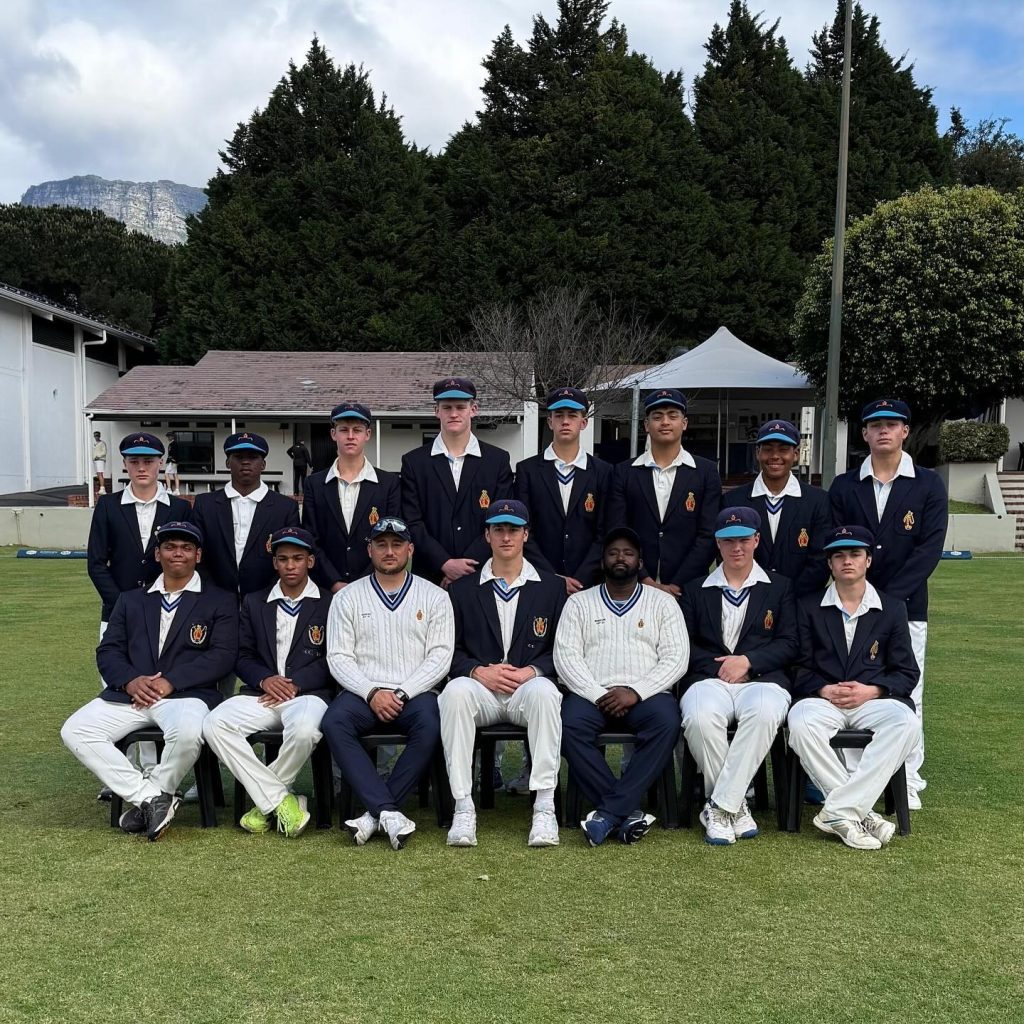
Weekend cricket heats up with top schools delivering thrilling performances
Uncategorized

Weekend cricket heats up with top schools delivering thrilling performances

By Johnathan Paoli

South Africa’s top cricketing schools produced a feast of action over the weekend, as teams across the country recorded impressive victories in a series of tightly contested fixtures that showcased leadership, composure, and individual performance.

Westville Boys’ High captain Seth Simpson turned in a classy all-round performance to steer his side to a six-wicket win over Michaelhouse during a match at home in Durban on Saturday.

“[It was a] competitive weekend of cricket for Westville, with strong performances across all age groups. Well done to all players and coaches for their hard work and commitment on the field,” the school said on social media.

After winning the toss, Michaelhouse elected to bat but struggled to find fluency, eventually bowled out for 155 runs in 47 overs.

Only Cody Sander (38 runs off 85 balls) and Rex Wardlaw (23) showed real resistance as Westville’s bowlers controlled the tempo.

Chasing 156, Westville began steadily before two quick wickets from Liam O’Dwyer briefly raised Michaelhouse’s hopes, but Simpson guided his side home with a composed, unbeaten 51 off 75, supported by Misbah Nair with 16 runs.

At Glenwood, Kearsney College survived a batting collapse of their own to secure a 24-run victory in a match dominated by bowlers.

Having posted 128 all out, thanks largely to Cole Young’s 31, Kearsney’s bowlers responded to dismiss Glenwood for 104.

Despite Kreesan Pillai’s brave all-round performance, Glenwood fell short.

In KwaZulu-Natal’s capital, Maritzburg College defeated St Charles College by six wickets in a spirited Pietermaritzburg derby.

Batting first, St Charles compiled a competitive 245 runs/7 wickets, built around a 100-run, third-wicket stand between Caleb Sharp (69 off 103) and Rico Honiball (63 off 79).

Late fireworks from AJ Bosman (43 off 28) added momentum, while College captain Daniel Nadasan and Sam Hughes contained the damage.

In reply, College lost Nadasan early but were steadied by Kyle de Bruyn and Akhil Bharath, who produced a fluent 84 off 112.

Dedekind, however, maintained an unbeaten 86 from 81 balls to carry his side to 249/4 and a deserved derby triumph with 13 balls to spare.

On the Jacques Kallis Oval in Cape Town, Bishops Diocesan College edged Wynberg Boys’ High by a single wicket in one of the weekend’s most dramatic encounters.

After Wynberg posted 229/9, anchored by opener Matthew Saunders’ 73 and Joshua Prince’s 41, Bishops responded with grit and balance rather than fireworks.

Despite spirited efforts from Ihsan Khan and Damien Harris, Wynberg couldn’t deny Bishops an away win at 230/9.

At Riverside, Pretoria, Northwood captain Kyle White produced a captain’s knock of 47 not out to secure a five-wicket win over Clifton College in a low-scoring affair.

Clifton were bowled out for 105, undone by Jordan Matthews and Ryan van Zyl.

Clifton’s Caleb Naicker tried to inspire a fightback with 3/21, but White’s composure alongside Luc Boyall saw Northwood home in the 33rd over at 106/5.

As the test cricket season rages on, organisers and participating schools praised the weekend’s activities as underlining the depth of South Africa’s youth talent, a reminder that the next generation of stars is already sharpening its skills.

INSIDE EDUCATION

Carinity Education schools set to celebrate World Teachers Day
Uncategorized

Carinity Education schools set to celebrate World Teachers Day

Teachers across Australia inspire, support, and empower young people every single day.

Ahead of World Teachers Day on October 31 we had a chat with some Carinity Education teachers about what they most enjoy about supporting students in our schools.

Belinda Skinner pictured teaching students at Carinity Education Glendyne, a special assistance school in Hervey Bay.

“I’m passionate about helping students rediscover their confidence and develop lifelong skills through creativity, compassion, and connection,” Carinity Education Glendyne teacher Belinda Skinner said.

Belinda was drawn to teaching at the Hervey Bay special assistance school because it provides “a safe and nurturing environment for young people who need education delivered differently”.

“Glendyne’s focus on tailored support and wellbeing aligns perfectly with my belief that every student deserves an education that meets them where they are and inspires them to grow.

“I love watching students experience success in ways they never thought possible: whether it’s mastering a literacy skill, creating an expressive artwork, or simply engaging with learning again after a difficult journey.

“Seeing that spark of pride and self-belief is the most rewarding part of teaching.”

Aden Bennett started teaching at Carinity Education Shalom after completing a month-long service-learning unit at the Townsville school, while he was studying at James Cook University.

Aden Bennett is “truly inspired” by the Carinity Education Shalom community.

His favourite thing about teaching at the Townsville school is “learning from my students and seeing the world through their diverse perspectives”.

“Building meaningful connections and relationships with young people is what makes me love coming to work every day,” Aden said.

“One of my fondest classroom memories was my first time teaching Business. Initially, I was dreading it because it was my first time teaching the subject.

“However, by the end of the term, the students and I had so much fun learning together and creating different ideas and products.

“It reminded me that teaching is just as much about curiosity and collaboration as it is about content.”

Cheryl Hendry began teaching at Carinity Education Rockhampton after seeing how some students need more assistance in the classroom to succeed.

Cheryl Hendry worked in the mainstream education system for 40 years before deciding to retire and spend time supporting her three grandchildren who were born hearing impaired.

She started working casually at Carinity Education Rockhampton after seeing “how difficult it is for students who need additional assistance in a regular classroom, to be successful”.

“My favourite thing about teaching is being able to share with young people the joy of learning. Being a lifelong learner is, I believe, something that shapes our lives in a positive way,” Cheryl said.

Some of Cheryl’s most memorable moments as a teacher have been outside of school, realising she has made a lasting impact on young people beyond the classroom.

“A student came back to school to tell me that he finally ‘got’ what I was talking about with the wisdom to be found in Shakespeare’s plays. He thanked me for that. That was important to me,” Cheryl recalls.

Belinda Culley is an at teacher at Carinity Education Southside in Brisbane.

Belinda Culley has also taught in both independent and state secondary schools and has “witnessed many students in desperate need of specialised support simply fall through the cracks”.

A teacher for 32 years, Belinda was drawn to the student-centred approach at Carinity Education Southside, an all-female special assistance school in Brisbane.

“It was clear that Southside prioritises the needs of students over data, and that really resonated with me,” the visual arts teacher said.

“I aim to create a classroom where every student feels seen and valued, using creativity and storytelling to inspire confidence, curiosity, and a belief in their own potential.

“One of the things I love most about teaching is the opportunity to nurture young people, especially those who may not have received the care and support they needed growing up.

“Being able to offer encouragement, consistency, and compassion can make a real difference in their lives, and it’s a privilege to be part of that journey.”

Uncategorized

DSTI launches landmark e-Mobility Energy Drive to showcase EV viability

By Lebone Rodah Mosima

The Department of Science, Technology and Innovation (DSTI), in collaboration with the South African National Energy Development Institute (SANEDI), the Uyilo e-Mobility Programme at Nelson Mandela University (NMU), and Volvo Cars South Africa, has launched the e-Mobility Energy Drive, a landmark initiative aimed at demonstrating the viability of electric vehicles (EVs) for long-distance travel in South Africa.

Taking place from 28–30 October 2025, the Energy Drive will culminate at the Uyilo e-Mobility Innovation Summit in Gqeberha, Eastern Cape. According to the DSTI, the summit is a flagship Transport Month event showcasing South Africa’s progress toward a sustainable mobility future.

The vehicle undertaking the drive—a Volvo XC40 Recharge Twin Motor Ultimate—will collect real-world data on EV performance, charging efficiency, and energy consumption over a route stretching from Johannesburg to Gqeberha, crossing Gauteng, the Free State, and the Eastern Cape.

“This initiative proves that clean mobility is not just a vision for the future, it is happening now,” said Mandy Mlilo, Acting Chief Director: Hydrogen and Energy at DSTI.

“Through strategic partnerships with SANEDI, Uyilo and Volvo, we are building public confidence in electric mobility, advancing our just energy transition goals and reducing our national carbon footprint.” 

The department and SANEDI said the Energy Drive will also raise public awareness around clean mobility and engage communities along the route.

A senior representative from the Uyilo e-Mobility Programme said the Energy Drive and Summit will serve as a powerful platform for collaboration between government, academia, and industry.

“The Uyilo e-Mobility Summit and this Energy Drive create a powerful platform to accelerate collaboration across government, academia, and industry,” said the senior representative from the Uyilo e-Mobility Programme.

“As we mark Transport Month, we are proud to position South Africa as an emerging leader in the global shift toward smart, sustainable mobility.” 

SANEDI CEO Dr. Titus Mathe added that the initiative highlights the nation’s growing capacity and commitment to cleaner transportation.

“This partnership reflects our nation’s growing capacity and commitment to cleaner transportation. By aligning research, innovation, and public engagement, we are driving tangible progress toward a low-carbon, energy-efficient future,” Mathe said.

The DSTI and SANEDI further said that the e-Mobility Energy Drive underscores South Africa’s commitment to building a resilient, sustainable transport ecosystem that supports economic growth, environmental sustainability, and energy justice.

INSIDE EDUCATION